Showing posts with label Susan Sarandon. Show all posts

11/02/2018

Movie Review: Viper Club (2018)


Now Playing 


Bookmark and Share

A mother desperately waiting for news about the safety of her son who's in harm's way overseas, Susan Sarandon has played this part before...or so I thought.

Of course with over a hundred and fifty credits to her name as an actress on IMDb, it’d be safe to assume that the Academy Award winner has played everyone before and – like most women over fifty – more than her fair share of mothers.

However, unlike her role as a distraught matriarch waiting to learn whether or not her son might have been killed in a war zone in director Robert Allan Ackerman's compelling if admittedly contrived adaptation of Ellyn Bache's novel Safe Passage, Sarandon's performance in Viper Club is – much like the film itself – quieter and more attuned to the struggles of daily life.


Attempting to illustrate the impact that our foreign policy decisions can have even on non-military personnel right here in the states, while Safe Passage's lofty ambitions get lost in the theatricality of its translation, Viper Club plays like an intimate docudrama as Sarandon tries to keep up a good front during the most harrowing of times.

Having lost touch with her son Andy (Julian Morris) roughly two months ago, hardworking emergency room nurse Helen Sterling (Sarandon) fears she's running out of time and options when she receives a twenty million dollar ransom demand for the freelance video journalist by the terrorists holding him hostage in a war zone overseas.

Overworked, over-stressed, and sworn to secrecy by the FBI and the state department – neither of whom speak to one another and instead ask Helen what the other agency had to say when she takes a long bus ride into New York City from Oneonta, New York to check in – as if reading her mind, they warn the determined single mother that it's against the law to pay the ransom.


Unable to provide her with any information since it's classified, she's urged to stall by negotiating the price down to an amount they never intend to pay. However, flooded by the roller-coaster of memories she's shared with her equally headstrong son (which come to life in flashback form throughout the film), Helen begins to take matters into her own hands.

And once her son's girlfriend (Sheila Vand) puts her in touch with friends of Andy's who belong to an international network of journalists, translators, contractors, and donors called the Viper Club – including fellow journalist Sam (Matt Bomer) and a wealthy socialite (played by Edie Falco) whose own son had been ransomed – they team up in an effort to bring her son home.

Shot in just twenty days, it's here where the film would've turned into a Taken style thriller if it had been made inside the big budget studio system, complete with a rewrite to give Helen a husband and put him in charge of Andy's fate while she frets at home.


Thankfully, screenwriters Jonathan Mastro and Maryam Keshavarz (who also directed) resist the temptation to adhere to genre expectations or cheap theatrics, instead dedicating the film "to international conflict journalists who put themselves in harm's way," in order to bring us the news and made as a "tribute" to those who've lost their lives, as the film's opening credits read.

And with the way the current administration labels the media the enemy of the people, Viper was timely even before the horrific murder of Jamal Khashoggi and the IEDs sent to CNN (and others) by a crazed bomber. But given this recent dangerous escalation both here and abroad for journalists (and even in cases that don't involve ransom), award-winning Iranian-American filmmaker Maryam Keshavarz's film has become that much more vital.


Made with both real sensitivity and a striking degree of authenticity to the point that it's generated criticism by the mother of murdered journalist James Foley who felt that Keshavarz "took" her story and labeled it fiction, while there are certainly enough parallels to be concerning, without knowing more about what went on behind-the-scenes it's hard to judge in that regard.

Shot using a handheld camera to put us in Helen's shoes and stay within her point-of-view, Keshavarz and cinematographer Drew Daniels (using softer 40mm lens often employed by Gordon Willis in the 1970s) keep Helen close to the center of the frame and seldom leave her side for more than a moment.

Giving us a window into a personal nightmare with far-reaching implications, the admittedly confusingly named Viper Club is sure to cause debate about not only what you might do in a similar situation but also the need to protect journalists worldwide.
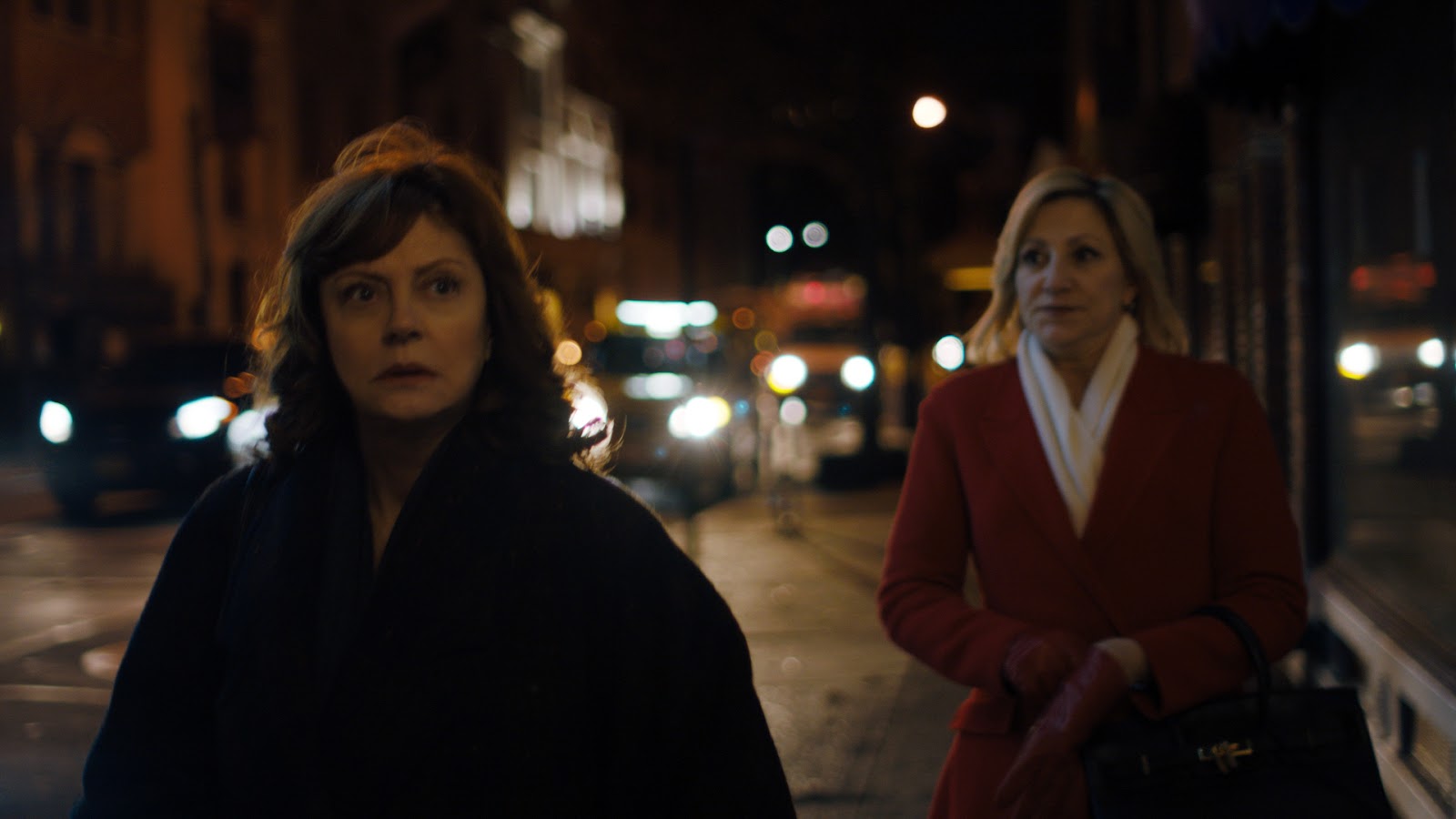

At a time in her career where Sarandon is frequently cast as the go-to mom from The Meddler to A Bad Moms Christmas, it's refreshing to see her given the opportunity to sing once again in more than one key opposite a talented cast of veterans and up-and-comers like scene-stealer Amir Malaklou as an uncertain new ER resident.

From first shot to last, Sarandon's deft ability to call up a wide range of emotion with a minimum of dialogue drives Keshavarz's haunting picture forward as she stands in for all mothers, holding her head up high while doing everything in her power to try and guarantee her son's safe passage home.


Text ©2018, Film Intuition, LLC; All Rights Reserved. http://www.filmintuition.com Unauthorized Reproduction or Publication Elsewhere is Strictly Prohibited and in violation of the Digital Millennium Copyright Act.  FTC Disclosure: Per standard professional practice, I may have received a review copy or screener link of this title in order to voluntarily decide to evaluate it for my readers, which had no impact whatsoever on whether or not it received a favorable or unfavorable critique. Cookies Notice: This site incorporates tools (including advertiser partners and widgets) that use cookies and may collect some personal information in order to display ads tailored to you etc. Please be advised that neither Film Intuition nor its site owner has any access to this data beyond general site statistics (geographical region etc.) as your privacy is our main concern.

9/08/2008

Autumn Hearts -- A New Beginning


Digg!

Originally published at Blogcritics in my Under the Radar Series

Since the dawn of DVD and the all important demand that a movie earn far more bang for its box office buck when those cute little book-like boxes hit the shelves as opposed to the overpriced multiplexes, there’s been a strange practice that affects mostly indie, foreign, and art offerings that typically don’t earn a major release save for a few precious film festival screenings. And that is precisely the practice of saddling a perfectly good film with a name change to something the marketing team hopes will be catchier or friendlier to passersby (or more accurately their wallets) strolling through Best Buy or Blockbuster.

In doing so, sometimes they go from a pretentious sounding title like Life/Drawing to Apartment 12 for a festival award-winning Mark Ruffalo romantic comedy from years past or name one film Leon in Europe and the same movie The Professional in America in the mid-'90s to attract our gangster-loving culture. However, in the unique case of director Paolo Barzman’s beautiful, tender, and heartbreaking 2007 film starring Susan Sarandon, Christopher Plummer, Max von Sydow, and Gabriel Byrne, neither the original title nor the DVD title will manage to benefit it in the least.

The film which screened as the closing night film at last year’s Toronto International Film Festival was first dubbed Emotional Arithmetic — a title taken directly from Canadian author Matt Cohen’s novel upon which it is based. And more recently, it was released as Autumn Hearts: A New Beginning. Therefore, sadly Barzman’s quality film went from a nonsensical and ultimately pretentious name to an overly simplistic one that at best conjures up warm, fuzzy images of Hallmark Hall of Fame films and at worst is one so innocuous that you’ll struggle to recall it as soon as you hit eject.


Adding to the confusion is that the film’s official website still uses the old name so it will be hard to track down for those who have been following it since its festival rounds last year and when trying to find information on the film, you have to try searching under both names. Thankfully, IMDb is smart enough to direct those typing in Emotional Arithmetic to the right page but search engines aren’t quite there yet, which is a shame because it’s a touching and affecting work played brilliantly by the leads via an "old fashioned style" concerned primarily with “the emotional journey of the characters,” as Gabriel Byrne notes in a worthwhile behind the scenes featurette on the DVD.

Additionally, as someone who believes that perhaps there have been so many WWII films that not only has it become its own genre but that some are hard to tell apart, Barzman’s film — like last year’s Oscar winning foreign film The Counterfeiters -- opened my eyes to something of which I was unaware. Instead of forcing Jewish prisoners to counterfeit funds to aid the German effort, in Hearts (and now I believe you’ll agree that title seems entirely inappropriate) I learned about about the existence of Drancy — a transit work camp that existed just outside of Paris, set up by eager French collaborators working with the Nazis as a stopping point before the Jews were transported to death camps.

The film opens in “Quebec’s Eastern Townships region” in September of 1985 as we meet the troubled Melanie Lansing Winters (Susan Sarandon), still haunted by her youth spent in Drancy so much so that she’s taken to devoting her life to collecting data regarding each and every human atrocity committed around the globe. She catalogs them in numerous file cabinets with names, dates, and numbers in the hopes that people will never forget. Married to the cold and bitter professorial husband David Winters (played by Christopher Plummer), as Hearts begins, his mood has also hit an all-time low after he was forced into retirement from academia following a heart attack and plans to sue. Although he seems to blame his wife for her inability to forget the past and move on, her loving and devoted grown son Benjamin (Roy Dupuis) and grandson Timmy (Dakota Goyo) who also live at their large homestead treat Melanie with kid gloves, walking on eggshells and gently reminding her to take her antidepressant medication.

Prone to breakdowns and stress, Melanie seems utterly ecstatic when she manages to get in touch with Jakob Bronski (Max von Sydow), the so-called “Poet of the Gulag,” who looked after her as a young girl in Drancy. After surviving the work camp, and later Auschwitz, and years of electroshock therapy in a psychiatric institution, he has finally been freed and agrees to come stay with Melanie in Canada for awhile. While her husband makes it clear that he’s less than thrilled that Melanie has invited what he fears is yet another most likely memory plagued, “emotionally unstable” survivor from the war to live with them, he’s in for a far ruder awakening when Jakob brings with him a surprise for Melanie. For instead of a trinket or bouquet, the gift arrives in the form of Christopher (Gabriel Byrne), another survivor from Drancy who — much like Sarandon’s character — had also lost his parents.

In black and white flashbacks, we realize the instinctually close bond the three shared in their hellish experience, with Jakob looking after the two kids and, once he was removed, making Christopher promise to take care of Melanie, the young girl with whom he was undoubtedly smitten. Briefly after their reunion at the airport, we realize that Christopher’s love for Melanie has increased considerably and the two awkwardly skirt around their feelings until finally confronting one another about what might have been had they managed to be together following Drancy in one of the film’s most moving scenes.

Although it’s been rightly argued that essentially “the film is designed like a stage play” and “hardly leaves the house or garden,” for this deceptively photographically idyllic (from one of Canada’s most gifted and award-nominated cameramen Luc Montpellier) and dialogue-heavy film, the staging seems not only appropriate but completely necessary to best serve the highly sensitive and relationship-based material. Cinematically, Hearts owes something to the works of Ingmar Bergman and even Woody Allen’s gloomier works like Interiors and September. And while there are endless arguments as everything is bared over the course of a painful yet air-clearing and cathartic twenty-four hour period that does seem a bit melodramatic at times, the actors all make it work and a great deal is equally owed to its talented director.


With a background mostly consisting of television credits and the realization that this is just his second feature film, it’s a remarkable achievement. Additionally, it’s one that seems tailor-made for the filmmaker after a little more digging on IMDb revealed that Barzman himself is no stranger to political conflict and global affairs, having been raised in exile until the early 1970’-s in France as the “son of blacklisted screenwriters Ben Barzman and Norma Barzman” following the McCarthy HUAC hearings of the 1950s. And while I fear that due to the title confusion, it may fall under the radar, in order to prompt you to seek it out (no matter which title you prefer), I’ll leave you with a visual reminder.

Theatrical Trailer:

3/22/2008

Enchanted

Director:
Kevin Lima

Forget the Roomba. When it comes to cleaning apartments, would-be fairy tale princess Giselle (Amy Adams) sings the Oscar nominated “Happy Working Song” and her mellifluously melodic voice attracts animal friends from all around who help her wash dishes, scrub floors and make everything zestfully clean in two minutes flat. Although I confess it’s strange, in the films from Walt Disney Studios, the presence of animals that speak, dance, sew and make up a lovely young woman’s entourage is nothing new but it’s a sight mostly found in their beloved feature-length animated works like Cinderella, Snow White and the Seven Dwarfs and The Little Mermaid. It’s a different proposition altogether when we see live action vermin and mosquitoes flee from New York City’s Central Park only to appear in the posh apartment of divorce attorney Robert Philip (Patrick Dempsey) yet that’s just one of many scenes of inventive hilarity in Disney’s best “princess” film in ages, director Kevin Lima’s Enchanted.

Beginning with a full ten minute animated sequence, the viewer is thrust into familiar territory as we meet the fair animated maiden Giselle (still voiced by Adams) who, on the day of her wedding to Prince Edward (James Marsden) is tricked by Edward’s evil mother, Queen Narissa (Susan Sarandon) into banishment as she plummets from the kingdom of Andalasia only to find herself climbing up from the sewer into modern day Time Square. Convinced that it’s only a matter of time before her prince will come, Giselle sets off looking for help and finds unlikely and mostly unwilling assistance in the form of handsome Robert Philip, who, about to venture into an unromantic engagement with the kind but bland Nancy Tremaine (Idina Menzel) is prodded into rescuing Giselle by his daughter Morgan (Rachel Covey).

Filled with lots of Dinsey in-jokes and references to the history of the animated division of the studio along with giving three actresses who voiced princesses in the past cameos in the film (Jodi Benson’s Ariel, Paige O’Hara’s Belle, and Judy Kuhn’s Pocahontas), the delightful and surprisingly engaging Enchanted managed to hook me soon after the live action sequence began, thanks to the creative script from Bill Kelly who wrote the similarly themed Blast from the Past. However, most of the film's charm comes from the unceasingly talented Adams who, with her variety of excellent performances in the past two years, has the makings of becoming one of our top leading ladies. The film’s soundtrack featuring lyrics by Stephen Schwartz and music by Alan Menken received two additional nominations for original song for the tracks “So Close” and “That’s How You Know” and Enchanted also earned recognition by the Phoenix Film Critics Society Awards as the Best Live Action Family Film of last year.

Romance & Cigarettes


Director: John Turturro


“There’s a lot of things in this pothole of a life that don’t make sense,” Nick Murder (James Gandolfini) tells his youngest daughter Baby (Mandy Moore) in writer/director John Turturro’s self-described “down and dirty musical love story,” produced by Joel and Ethan Coen, Romance & Cigarettes. Turturro originally had the first inklings of an idea for the film in the 1980’s before beginning to write it when portraying a struggling screenwriter himself in the 90’s in the Coens' Barton Fink and, after directing his two earliest pictures Mac and Illuminata, Turturro finally got the chance to bring this startlingly sexual, overwhelmingly crude, yet undeniably original musical to life.

Despite the production being postponed for nearly two years due to James Gandolfini’s commitment to the HBO series The Sopranos, Turturro spent those years securing the rights to the songs he’d chosen (IMDb) for his trashy firecracker salute to musicals that told the story of blue collar ironworker Nick Murder whose dressmaking wife Kitty (Susan Sarandon) discovers he’s been betraying her as well as bailing on his duty to his three daughters (Mandy Moore, Mary-Louise Parker, and Aida Turturro) by having an affair with the sultry, British, lingerie-selling redheaded harlot Tula (Kate Winslet).

Now dubbed a “whoremaster” by his betrayed wife who runs to church to take her frustration out with a stirring rendition of “Piece of My Heart” along with Eddie Izzard and the rest of the choir, Nick is relegated to the fact that according to him “marriage is combat” and he must fend for himself opposite his wife’s army (the three daughters) even if it means that Kitty will no longer be preparing his dinner. Nick ends up going to extremes to satisfy his "mistress in heat" Tula who we’re introduced to in a laughably over-the-top fire sequence and as Winslet plays the part (visibly having a ball), Tula is a woman whose dialogue is completely made up of foul lines that get even more shocking as she continues on and soon we realize that the relationship isn’t going to last even before she confesses that she “loses interest in a man as soon as he begins to care" about her. However, Turturro’s film busily occupies itself as a musical comedy of “remarriage” as Nick fights to try and win back his wife, who, meanwhile has been fantasizing about her first love Aidan Quinn and seeking revenge on the cheating Nick by conducting her own investigation along with her dangerous cousin Bo (Christopher Walken).

Despite a four star review from Roger Ebert, this Golden Lion nominee from the 2005 Venice Film Festival was labeled “loud and pointlessly crude,” by The Hollywood Reporter’s Ray Bennett (9/7/05) who cleverly summed up Romance & Cigarettes with the observation that “it looks more like something that might have been made by Jesus Quintana, the wild man of the bowling alley he [Turturro] played in The Big Lewbowski.” Definitely film fodder for an acquired taste, I found myself mostly disgusted by the cinematic train-wreck created by the indisputably talented writer/director and cast, even though admittedly it was oddly compelling at times. Ultimately, Romance & Cigarettes is an unnecessarily lewd offering that never failed to inspire genuine interest in the characters who populate each frame other than the initial involuntary shock that forced viewers to pay attention similar to the way that we can’t help but stare at a fire or traffic accident, terrified and drawn in by the twisted beauty but all the while hoping that everyone gets out in one piece.

3/01/2008

In the Valley of Elah

Director:
Paul Haggis

Inspired by a true story, this heart-wrenching and gritty drama follows career army veteran Hank Deerfield (Tommy Lee Jones) who gets a startling phone call from his son Mike’s base in New Mexico’s Fort Rudd stating that Mike (Jonathan Tucker) has gone AWOL just after returning to American soil from his time in Iraq.

Leaving his worried wife Joan (Susan Sarandon) behind, Hank sets off from Tennessee to try and find his son, assuming that he’s just disappeared for awhile to enjoy himself and blow off some much needed steam only to be devastated by the unspeakable aftermath following the discovery of his son’s charred remains. Caught between the bureaucracy of the army base that wants to take over the investigation of one of its own and the local police who struggle against that red tape daily, Hank fears that the crime will be covered up and conducts his own investigation after grudgingly receiving help from Detective Emily Sanders (Charlize Theron) who, tired of being ridiculed by her sexist male coworkers aids Hank in his quest.

With only a few clues to go on sent by Mike himself in the form of e-mailed photos and a fried cell phone containing brief video clips shot by Mike while in Iraq that Hank hires a hacker to try and unscramble, Hank and Emily go down a road of haunting deeds and outrageous lies that shocks them, and the audience, to their very core.

While largely ignored, as other Iraqi themed films were in the fall of 2007, In the Valley of Elah garnered rave critical reviews including prominent placement on top ten lists from noteworthy sources and also recognition in the form of an Oscar nomination for Jones as Best Actor, although his role in this was overshadowed by his even more potent supporting turn in No Country for Old Men which, like Elah, also costars Josh Brolin.

Written specifically for Theron and originally as a vehicle for Clint Eastwood who helped get the film greenlighted (IMDb), talented writer/director Paul Haggis (Crash) crafts a memorable and emotionally charged film that will not only haunt audiences for days but also admirably and subtly without preaching, make us wonder just what we are doing to another generation of young military men and women by sending them into foreign countries to fight wars that do not make any sense, yet they go bravely like David fighting Goliath in the biblical story where the film received its name.