Showing posts with label Canadian. Show all posts

9/06/2019

Movie Review: Genèse (2018)


Now Playing


AKA: Genesis

I know he likes me but does he like me? How do I ask her to be my girlfriend? What does he mean we should stay together but see other people?

Three Québécois teenagers navigate their first twinges of love, the devastation of heartbreak, the mysteries of desire, and other affairs of the heart in Philippe Lesage's new film Genèse, which follows in the footsteps of his previous pictures Copenhagen: A Love Story and The Demons in blending together memoir and fiction.

Often letting the camera linger on the behavior and body language of its main characters and the way that it changes when they're in front of a classroom, crowd, or alone, Genèse uses sumptuous, languorous visuals and its moodily atmospheric soundtrack to deposit us into the heart of the film in a way that recalls the work of Sofia Coppola and Wong Kar-wai.


Drawing on his background as a documentary filmmaker to establish the film's setting in and around private schools, colleges, and camps in Quebec, Lesage paints a picture of three teens, different both on the surface and in personality, who are looking for love.

In the film's strongest and most emotionally arresting storyline, we meet Guillaume (Théodore Pellerin) who, though always up for a laugh or impression as the class clown at his private boys school, is rather introspective and insecure deep down. Reading J. D. Salinger and listening to The Smiths, Guillaume is the type of dreamy eyed boy we would've had a crush on in high school, only to discover later on that he has a complicated crush of his own that might redefine his entire life.

Startled when her first serious boyfriend tells her that he thinks they should be free to sleep with other people, Guillaume's older half-sister Charlotte (Noée Abita) is sent reeling, moving from one relationship to the next (and always with the wrong guy), which has devastating consequences as the film continues and editor Mathieu Bouchard-Malo weaves the two plots together.


Venturing away from the city into a nature based coda, we're introduced to the stand-in for the filmmaker in the form of adolescent Félix (Édouard Tremblay-Grenier), who faces the first stirrings of love for a girl he becomes enamored of at summer camp. Though still filmed in a lush, contemporary style by cinematographer Nicolas Canniccioni, there's something delightfully old fashioned about the pacing and mood of the final section of Genèse, which feels as though it could be played side by side with François Truffaut's frothy 400 Blows follow-up and tale of first love, Antoine and Colette.

A welcome shot of instantly relatable nostalgia, Genèse's last act is played in a higher, lighter key than the rest of the picture. Yet, coming as it does after a shocking act of violence takes place, which is immediately glossed over by ignoring the aftermath, it takes a minute for the film (as well as the viewer) to convincingly ease back into the innocent reverie of summer flirtation and romance.

Inspired by real stories of assault that had been shared with Lesage by friends, while the stark, matter-of-fact portrayal alarms us enough, the film’s real misstep was in leaving these characters much too quickly before we truly know how they are, which gives the scene a cavalier aura that I can't imagine the filmmaker had intended. Yet tonal and structural misstep aside, Genèse manages to fall back into place when its last young protagonist falls in love.


Using music — especially "Outside" by Tops as a motif throughout — much like Xavier Dolan's Heartbeats, Genèse boasts a superb soundtrack that you'll find yourself wanting to Shazam multiple times throughout the film. Translating the characters' inner lives in a way we can easily understand through not only its musical counterpoint but also the way in which the camera holds on the faces of the trio as they try to reconcile reality with their hearts, Lesage invites us to take the journey as well — walking beside the teens in good times and bad. Like a secret diary come to life with all of its highs and lows, and the little things we know that will stay with us forever, Philippe Lesage's Genèse feels like the cinematic equivalent of a memory.


Text ©2019, Film Intuition, LLC; All Rights Reserved. https://www.filmintuition.com Unauthorized Reproduction or Publication Elsewhere is Strictly Prohibited and in violation of the Digital Millennium Copyright Act.  FTC Disclosure: Per standard professional practice, I may have received a review copy or screener link of this title in order to voluntarily decide to evaluate it for my readers, which had no impact whatsoever on whether or not it received a favorable or unfavorable critique. Cookies Notice: This site incorporates tools (including advertiser partners and widgets) that use cookies and may collect some personal information in order to display ads tailored to you etc. Please be advised that neither Film Intuition nor its site owner has any access to this data beyond general site statistics (geographical region etc.) as your privacy is our main concern.

3/29/2019

Movie Review: Level 16 (2018)


Now Available


Bookmark and Share

The dorms are named after flowers and the girls who live in them share their names with Golden Age movie stars.

Spending their days doing everything they can to stay sweet, clean, and submissive while reciting rules about feminine vice and virtues back to the adults in charge, the girls in writer-director Danishka Esterhazy's dystopian work of suspense graduate from one floor to the next and look forward to the day they get assigned to a family after they complete the eponymous Level 16.

A message movie with no shortage of ideas — most of which grow increasingly muddled as Esterhazy's film segues uneasily between feminist science fiction fare and dark thriller — while its origins reside firmly in The Handmaid's Tale, Level 16's wide-ranging plot elements recall everything from Never Let Me Go to 1984.


Running out of gas midway through the overly stoic feature, Level 16 fails to create a valid emotional connection between the film's audience and its characters.

Thus sadly, despite a strong turn by actress Katie Douglas who makes the most of what little she's been given in Esterhazy's meandering script, 16 changes course once again, ultimately morphing into a Shawshank Redemption styles ecape thriller after letting us in on a major foundational secret.

An ambitious if mostly uneven effort, although it's apparent early on that Esterhazy has an awful lot to say, with its chilly core and staccato plotting, the claustrophobic Level 16 feels more like a short lost in the running time of a feature film — or an old episode of The Twilight Zone starring an actress from Hollywood's Golden Age — than it does one cohesive and compelling 102 minute endeavor.


Text ©2019, Film Intuition, LLC; All Rights Reserved. http://www.filmintuition.com Unauthorized Reproduction or Publication Elsewhere is Strictly Prohibited and in violation of the Digital Millennium Copyright Act.  FTC Disclosure: Per standard professional practice, I may have received a review copy or screener link of this title in order to voluntarily decide to evaluate it for my readers, which had no impact whatsoever on whether or not it received a favorable or unfavorable critique. Cookies Notice: This site incorporates tools (including advertiser partners and widgets) that use cookies and may collect some personal information in order to display ads tailored to you etc. Please be advised that neither Film Intuition nor its site owner has any access to this data beyond general site statistics (geographical region etc.) as your privacy is our main concern.

Movie Review: Giant Little Ones (2018)


Now Playing 

Bookmark and Share

Jocks in the locker room, beautiful girls in the halls, a party while mom's away, and fights between friends.

Centered on popular high school swimmers Franky Winter (Josh Wiggins) and Ballas Kohl (Darren Mann) — two lifelong friends growing up in Ontario who have a falling out after a confusing drunken encounter on one's seventeenth birthday — at first glance, writer-director Kyle Behrman's Giant Little Ones is everything we've come to expect in a coming-of-age teen movie.


But, unafraid of silence and ambiguity and filled with hypnotic, unhurried takes which invite us to take a moment and figuratively breathe the same air that the characters do, it doesn't take us long to realize that there's so much more going on beneath the surface of this heartfelt and at times harrowing portrait of teenage sexuality than we might have imagined going in.

Refusing to pin a label on any of its main characters — besides the film's concerned parents who, played by Kyle McLachlan and Maria Bello are going through existential crises of their own — Kyle Behrman's intelligent, understated sleeper will resonate with those who've had enough of Hollywood's stereotypical whip smart, worldly teens with all the answers and are instead searching for something real.


With the artistry of a Sofia Coppola picture and potent performances by its ensemble cast, the character driven Giant is anchored by the staggering turns of leads Josh Wiggins and Darren Mann as two conflicted friends who go from brothers to enemies practically overnight, along with a moving performance by Taylor Hickson as a girl who finds herself unexpectedly caught in the middle.

Likewise, it's the type of film that's so thoughtfully conceived that even its peripheral characters feel just as fascinating and fully realized as the two at the heart of the endeavor. Intended as a film version of a pop song, Giant Little Ones is a small, tenderly crafted drama that's not only sure to stick with you but bound to take up a great space in your heart.


Text ©2019, Film Intuition, LLC; All Rights Reserved. http://www.filmintuition.com Unauthorized Reproduction or Publication Elsewhere is Strictly Prohibited and in violation of the Digital Millennium Copyright Act.  FTC Disclosure: Per standard professional practice, I may have received a review copy or screener link of this title in order to voluntarily decide to evaluate it for my readers, which had no impact whatsoever on whether or not it received a favorable or unfavorable critique. Cookies Notice: This site incorporates tools (including advertiser partners and widgets) that use cookies and may collect some personal information in order to display ads tailored to you etc. Please be advised that neither Film Intuition nor its site owner has any access to this data beyond general site statistics (geographical region etc.) as your privacy is our main concern.

9/21/2018

Movie Review: Little Italy (2018)


Now Available


Bookmark and Share

Grumpy Old Men, Miss Congeniality, and How to Lose a Guy in 10 Days director Donald Petrie returns to the setting that helped launch his successful career in 1988's Mystic Pizza with the Toronto based Little Italy.

Yet whereas Mystic was more of a coming-of-age dramedy with a pizzeria backdrop, given his new film's sunshine bright high key lighting and the nostalgic sounds of Perry Como's "Papa Loves Mambo" adding bounce to an upbeat opening voice-over by stars Emma Roberts and Hayden Christensen, there's no denying what genre Little Italy is right from the start.

A romantic comedy spin on Romeo and Juliet, the film takes place in and around rival pizza restaurants in Toronto's Little Italy. If Italy sounds familiar to you, it might be because not only has Shakespeare's tragedy been updated as a comedy many times before but the exact same premise has also made its way to the screen multiple times, including director Andy Wolk's 2005 New Jersey set cable romcom Pizza My Heart, from scripters Juliet and Keith Giglio, to name just one example.


A veritable big screen sitcom, Little Italy borrows heavily from the romantic comedy heyday of the 1990s and early 2000s, and especially the box office juggernaut My Big Fat Greek Wedding.

Similarly constructed with a lightweight fast-paced multi-character driven storyline – only this time where the B-plot romance darn near upstages the A-story – while Italy is ultimately average, it's sure to amuse those looking for a mindless Saturday night diversion.

Returning to Toronto after five years spent abroad at culinary school and working under Jane Seymour's "Gordon Ramsay but prettier and scarier" Chef Corrine, Nikki Angioli (Emma Roberts) discovers things don't change much in Little Italy, where her father Sal (Adam Ferrara) runs a pizzeria restaurant right next door to his former friend and business partner, Vince (Gary Basaraba).


Only there to change her visa from student to worker when a dream professional opportunity opens up in London, after Nikki runs into her childhood best friend, Leo Campo (Hayden Christensen), things start to get complicated and not just because he's Vince's son.

Sharing her passion for cooking organically and eager to update the menu at his headstrong father's place (which he knows will never happen), Leo and Nikki find themselves falling back into the familiar rhythm of friends with potential where it seems they're always just one moment away from amore.

Meanwhile while the two younger characters flirt with the idea of flirting, their respective grandparents – including Leo's grandpa Carlo (Danny Aiello) and Nikki's “Nonna” Franca (My Big Fat Greek Wedding MVP, Andrea Martin) – have already crossed that bridge.


Hiding away in the confessional at the local church before they're found out and subsequently driven to a nearby Starbucks in shame, Aiello and Martin steal focus from the rest of the talented cast including Alyssa Milano as Nikki's mom and Andrew Phung as Luigi, the gay, Asian owner of a local bar who feels far more at home living life as an Italian.

Having a ball as the conflicted lovers, while Roberts and Christensen do their best to elevate what is essentially a spicier version of a by-the-numbers, made for Hallmark Channel romantic comedy, one can't help think that the film might've been far more original if they'd been the B-plot to Aiello and Martin's A-storyline.

Unsure of its audience, the film takes things a bit too far with some of its more risqué humor including one just plain uncomfortable sequence where in a series of escalating pranks, Sal swaps out Vince's oregano for pot and its characters turn ridiculously horny and later in a poorly conceived weekly insult battle, the two fathers begin commenting on their children's looks and sexual prowess.


Never quite paying off on the ongoing feud between their parents and essentially relegating them to the background until the inevitable moment where the film's two love stories take center stage, Mambo Italiano screenwriter Steve Galluccio and Vinay Virmani's script is full of so many ideas and characters that you get the feeling they were trying to please every possible audience member.

Needless to say, it's no Mystic Pizza or Greek Wedding. Still while the recipe doesn't come together nearly as well as one of the film's many delicious looking pizzas that are sure to make your mouth water, under the buoyant direction of Petrie who knows comedy well enough to reassemble the ingredients alongside his energetic cast, Little Italy bounces back from its many missteps just enough to entertain you for its 102 minute running time.


Text ©2018, Film Intuition, LLC; All Rights Reserved. http://www.filmintuition.com Unauthorized Reproduction or Publication Elsewhere is Strictly Prohibited and in violation of the Digital Millennium Copyright Act.  FTC Disclosure: Per standard professional practice, I may have received a review copy or screener link of this title in order to voluntarily decide to evaluate it for my readers, which had no impact whatsoever on whether or not it received a favorable or unfavorable critique. Cookies Notice: This site incorporates tools (including advertiser partners and widgets) that use cookies and may collect some personal information in order to display ads tailored to you etc. Please be advised that neither Film Intuition nor its site owner has any access to this data beyond general site statistics (geographical region etc.) as your privacy is our main concern.

5/04/2018

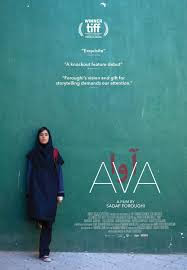
Movie Review: Ava (2017)


Now Playing in Select Theaters  

Bookmark and Share

As bold as it is angry, in writer/director Sadaf Foroughi’s semi-autobiographical feature filmmaking debut Ava, an eponymous seventeen-year-old girl on the cusp of graduation (played by Mahour Jabbari) struggles to come-of-age amid the repressive surroundings of a hypercritical home and school life in present day Tehran.

Used like a pawn by her Type A doctor mother as well as her more easygoing father who’s frequently out-of-town on business, in an early sequence wherein the two (played by Bahar Noohian and Vahid Aghapoor) argue about Ava as though she were not in the next room but the next town, it becomes obvious that Ava's guardians want radically different futures for their daughter.

While her dad wants to give Ava the freedom to choose her own career, after her seemingly impossible to please mother cruelly cuts Ava off from her best friend and violin in an effort that her daughter not repeat any of her own mistakes, Ava's ability to just keep her head down, obey, and follow orders soon reaches a breaking point.

An award-winning Canadian-Iranian feature fresh off the 2017 film festival circuit, while Foroughi’s work derives a great deal of conflict from its setting in the Middle-East, at its core, Ava is a universally relatable film about female adolescence, peer pressure, and teenage struggle with authority both in and out of the classroom.


And even though it isn’t nearly as successful from a structural standpoint, as many viewers have pointed out, Ava would make a surprisingly excellent double feature to last year’s thematically very similar (and likewise female helmed) Lady Bird.

However, unlike Greta Gerwig's multiple Oscar nominee, Ava bears much more in common with French New Wave titles such as Cleo From 5 to 7 and especially The 400 Blows (to which it pays homage in its final moments) than it does with most English language high school features, which makes sense given Foroughi's educational background pursuing post-graduate film study in France.


Nonetheless there are still some lyrical filmic touches throughout Ava including claustrophobic framing with mirrors and bars (which illustrate the way she’s being increasingly watched and isolated) that wouldn't have been out of place in The Virgin Suicides or Fish Tank.

Yet while it could raise some intriguing post-film discussion about the freedom the movie’s men feel in contrast to the women, Ava’s emotionally exhausting depiction of tyrannical female authority figures grows increasingly repetitive as it continues, particularly because the less three-dimensional some of its characters appear, the less Foroughi seems clear about exactly what it is that she wants to say and why.


Helping to keep it from spinning too far out of control, Ava is augmented by both the poetic edits of fellow award-winning Iranian-Canadian filmmaker Kiarash Anvari as well as Sina Kermanizadeh’s lush cinematography.

And while Ava would’ve undoubtedly been better served with either a shorter running time or sharper script (especially one that better represented Ava's mother's point-of-view for greater empathetic impact), overall it's still an ambitious and auspicious debut from Sadaf Foroughi that promises great things from the filmmaker to come.


Text ©2018, Film Intuition, LLC; All Rights Reserved. http://www.filmintuition.com Unauthorized Reproduction or Publication Elsewhere is Strictly Prohibited and in violation of the Digital Millennium Copyright Act.  FTC Disclosure: Per standard professional practice, I may have received a review copy or screener link of this title in order to voluntarily decide to evaluate it for my readers, which had no impact whatsoever on whether or not it received a favorable or unfavorable critique.

4/21/2015

DVD Review: The Captive (2014)


Now Available to Own   

  Photo Slideshow   


Meditations on loss both literal and figurative, the haunting yet humanistic films of Academy Award nominated writer-director Atom Egoyan are hard to shake.

As an audience of Alices ― in each puzzle-like picture we tumble through the rabbit hole ― landing headfirst in a contemporary but illusive Egoyan wonderland where we're quick to discover that nothing is as it seems.

Illuminating if ultimately unsettling, from The Sweet Hereafter to Felicia's Journey and beyond, Egoyan has spent his career holding up a microscope to the dangers that exist just below the surface of a world where smiles hide secrets and (much like objects in the rearview mirror) evil may be closer than it appears.

As the years go by, in Egoyan's latest aptly named effort The Captive, a heartbroken father played by Ryan Reynolds finds himself unable to look ahead ― literally and figuratively trapped in the past ― after discovering with a glance in his rearview that his nine year old daughter had vanished from sight.


Moving back and forth from past to present and in point-of-view, The Captive's maze-like narrative approach initially infuriates more than it fascinates.

Requiring us to figure out where each piece fits along the timeline while we struggle to process each scene ― we're introduced to multiple parties held captive by the same horrific moment, beginning with the kidnapped girl (who’s now an adult) as well as her captor who for years has been hiding in plain sight of both her parents and the police.


With this in mind it's no wonder that when the film screened at the Cannes Film Festival for its Palme d'Or qualifying showing, Egoyan's opus appeared under a title that emphasized the plural nature of its theme (as Un Captives) to better illustrate the grief of all involved.

Yet while it works either way, the singular name change suits the film well in not only ratcheting up the tension and immediacy but also by encouraging greater critical thinking on the part of the audience as we evaluate each captive one by one.

As a modern disciple of Hitchcock whose experimentation with the role of the viewer as voyeur has overwhelmed the Egyptian-born Canadian filmmaker's work since his American arthouse crossover hit Exotica roughly twenty years ago, Egoyan is clever enough to understand that in suspenseful storytelling, the true power comes from what isn't shown vs. what is visualized.


And this is especially imperative given the delicate subject matter of Captive which, to both the film as well as Egoyan's credit, feels far less exploitative than a typical episode of network television police procedural series.

Revisiting the same terrain he's explored throughout his undeniably eerie oeuvre including the complex and at times codependent relationship of good and evil that varies considerably from one film to the next, Captive plays particularly well as a thematic companion piece to Felicia's Journey.

While both films feel like updates on age-old fairy tales – echoing everything from Little Red Riding Hood to Hansel and Gretel to the aforementioned allusions to Alice in Wonderland, this time around he uses the cinematic looking glass to examine the role that storytelling plays on its own accord.

Trading in twisted role-play and dark storytelling on the deep web, we learn how a narrative can mean different things to different people.

However, unlike the way that the titular Felicia's Journey was placed in the hands of someone else, The Captive shows us in a variety of ways how words can keep not only hope but people alive as two of its characters make the choice to use the power of their stories to rescue themselves, whether or not they're in control in their current state.


A stronger execution of the same argument that he attempted to make in Chloe, although it’s structurally still something of a mess, The Captive grows bolder and more confident with time, resulting in one of Egoyan's most thrilling climaxes in years.

Nonetheless, the inclusion of an alternate ending on the newly released Lionsgate DVD makes you wish that he would've struck a greater balance between the two separate conclusions in order to give viewers a stronger sense of closure regarding one key subplot in particular.

Bolstered by its script as well as stellar support from Ryan Reynolds in an uncharacteristically serious turn ― despite its shortcomings, the film reminds viewers once again just how criminally underutilized he is in traditional leading man roles.

Intelligently crafted and undeniably suspenseful, like all of Egoyan's work, The Captive will linger in the mind for days.


Bookmark and Share

Text ©2014, Film Intuition, LLC; All Rights Reserved. http://www.filmintuition.com Unauthorized Reproduction or Publication Elsewhere is Strictly Prohibited and in violation of the Digital Millennium Copyright Act.  FTC Disclosure: Per standard professional practice, I may have received a review copy of this title in order to voluntarily decide to evaluate it for my readers, which had no impact whatsoever on whether or not it received a favorable or unfavorable critique.

3/06/2015

Movie Review: October Gale (2014)


Now Available   


An actress of great emotional depth and tremendous skill – over the past twenty years, Patricia Clarkson has honed her skills as a humanistic mathematician.

As such, she's made a career out of transforming even the most blandly underwritten one-dimensional characters on the page into fully realized three-dimensional individuals on the screen.

And given her propensity for navigating the rough terrain of heartbreak and misfortune as well as her innate understanding of the inner workings of the women she brings to life, we often see Clarkson in the role of head matriarch as the figurative captain of a ship she's trying to get back on course following a tragedy.


She does this once again in IFC's October Gale, which marks her second collaboration with her Cairo Time writer-director Ruba Nadda.

Therefore it's only fitting that the role of Helen, a recently widowed physician still mourning the death of her beloved husband, seems tailor-made for the star.

Yet by giving Clarkson her long awaited opportunity to play an ordinary woman turned action hero –due to extraordinary circumstances – Nadda raised the stakes for the actress and Gale to levels reminiscent of The River Wild and Dead Calm.


And once the plot starts to build after a clumsily edited, slow-moving, flashback soaked first act, the result is a mostly successful character driven thriller.

Set on a Canadian island, Gale finds the mild-mannered Helen fighting for her life after giving emergency first aid to a gunshot victim embodied by Scott Speedman's handsome stranger.

Soon stranded at the cabin by someone she thought she knew, when the man who shot Speedman's Will comes back to finish the job, Helen is forced to confront not only the harsh elements of the Canadian wild but also question just who exactly she can trust.


Although the pace quickens along with the peril, the overwhelming amount of bittersweet flashbacks (showcasing Helen and her husband in happier times) threatens to ground Gale to a halt before it even gets going.

Making the first half feel nearly twice as long– along with a sharper edit and tighter script, October Gale would've benefitted from a dual plotline – building greater momentum by introducing Will's storyline earlier on given both its complexity as well as the undeniably riveting nature of his character's own flashbacks.

Admittedly skirting the edges of romantic storytelling stereotypes and pushing the limits of logic a few times as Speedman's sensitive, classic literature loving "bad boy" Will goes from at-risk to Action Jackson a bit too quickly, the shortcomings in Nadda's ambitious Gothic tinged thriller are easily forgiven due to its overall genre novelty.


Buoyed by its core ensemble cast including a brief but effective cameo late in the film from Tim Roth, Gale is a flawed yet worthwhile work of moody Saturday night movie suspense that celebrates brains over brawn in its penultimate sequence.

A real world thriller anchored by a real woman instead of a Lara Croft or Wonder Woman type, the vital message of self-reliance, independence, and empowerment at any age provides this action movie with a role worthy of Clarkson, who visibly relishes showing us the kickass side of her usual melodrama-prone matriarch.
   

Bookmark and Share

Text ©2014, Film Intuition, LLC; All Rights Reserved. http://www.filmintuition.com Unauthorized Reproduction or Publication Elsewhere is Strictly Prohibited and in violation of the Digital Millennium Copyright Act.  FTC Disclosure: Per standard professional practice, I may have received a review copy of this title in order to voluntarily decide to evaluate it for my readers, which had no impact whatsoever on whether or not it received a favorable or unfavorable critique.

6/29/2009

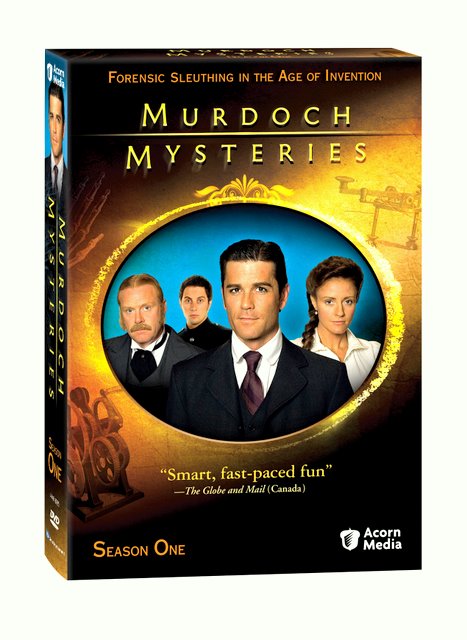
TV on DVD: Murdoch Mysteries: Season 1 (2008)


Now Available to Own on DVD


Previously Available


Photo Slideshow


Delicious
Bookmark this on Delicious
submit to reddit
Print Page

Digg!

MovieBlips: vote it up!

A major hit following its premiere in its Canadian homeland-- earning a whopping fourteen Gemini award nominations (our neighboring country's version of the Emmys), Murdoch Mysteries has been steadily building a fan-base in England as well as France where it began airing in syndication a few weeks ago.


And now the series-- which has actually wrapped and broadcast its second season in Canada-- has finally arrived for American audiences to savor both in this Acorn Media 4-disc slim-packaged DVD collection of the first season along with its scheduled run to debut on PBS on the thirtieth of June.


For devotees of author Maureen Jennings' Detective Murdoch series of novels which began back in 1997 with the title Except for Dying that has so far received six sequels in the collection as well as those who aren't fond of waiting for weekly installments of the series-- this beautifully transferred set is presented in its original 16x9 widescreen cinematic aspect ratio, with accompanying Dolby Digital surround, and contains subtitles for the deaf and/or hearing impaired.


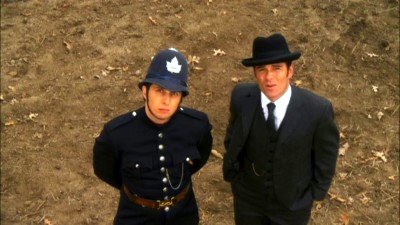
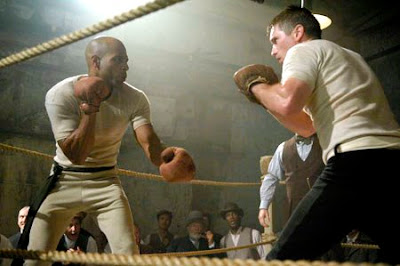
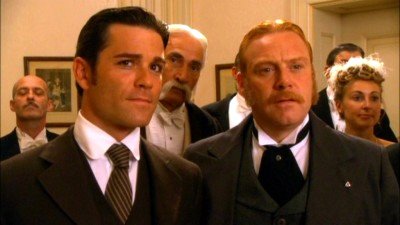
Also boasting episodic commentary by its handsome, naturally charming lead actor Yannick Bisson (who portrays the Toronto based Detective William Murdoch) and co-star Jonny Harris (who plays his eager, hardworking constable assistant and protege George Crabtree) along with the production designer and executive producer-- the set additionally features a photo gallery of the Victorian era series, interviews with Jennings and cast members, as well as cast and character filmographies and biographies respectively.


Smartly written and bolstered by the involvement of author Jennings who serves as a creative consultant on the Canadian series to ensure the novels are done justice, her work--which had actually been filmed previously as a series of mystery films called The Murdoch Mysteries-- makes for an intriguing blend of fantasy, historical fiction, police procedural, literary mystery, and period productions.


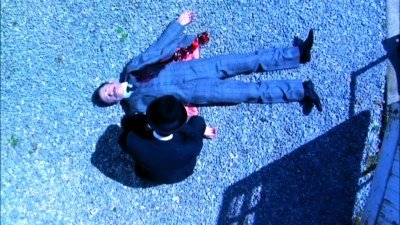
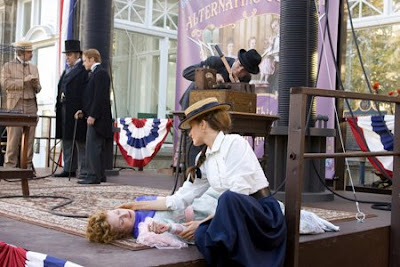
Set in 1895-- its titular character employs both newly discovered technologies such as early crime scene investigation methods and rudimentary forensic studies in his inventive and highly scientific pursuits to solve whatever crimes disturb his surroundings-- all the while rubbing elbows with individuals such as Nikola Tesla, Arthur Conan Doyle, and Prince Alfred.


What begins as an irresistibly clever gimmick of blending our popular whodunnit and penchant for Law and Order style crime scene series with the influence of Sherlock Holmes however soon gives way as the mysteries themselves become either fairly easy to solve or part of a predictable pattern where the inevitable "a ha" moment occurs in a rushed manner near the end of all thirteen episodes.


Our likable lead along with a terrific supporting cast such as the aforementioned Harris and Murdoch's obligatory tough-minded boss Inspector Brackenried (Thomas Craig) keeps things running smoothly but great credit for its success is due to the show's vintage Scully and Mulder dynamic. This is supplied in the form of the brainy, forward thinking, liberal and early feminist Dr. Julia Ogden (Helene Joy) whose knack for forensics makes her one of the area's top pathologists and a woman who shares a similar fascination for science, medical examination and experimentation to help rule in and out suspects and evidence as Murdoch's most trusted ally.


Although the involvement of a woman of her position in the time period seems a bit anachronistic-- Joy is a consistent bright spot in the series and along with Harris, helps sustain the sense of fun and excitement the opening episode promises before Murdoch's rather bland personality and over-abundance of Catholic guilt and ritual find you struggling not to hit the snooze button.


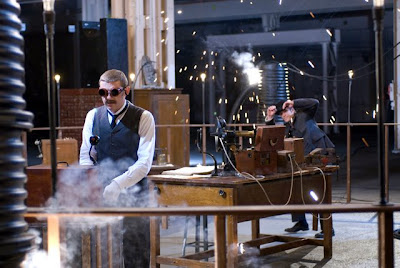
While budget does appear to be a problem in the filming of such a high concept period series as certain locations seem simply re-dressed throughout, the show hides this very well with a superlative usage of camera trickery by incorporating what the crew calls "Murdoch Vision" as we're given a doorway inside his overworked mind while he tries to use his own sense of logic blended with an overactive (yet always scientific) imagination to recreate crime scenes or explain things while we literally see what he's thinking.


It's a cool style that adds much needed flavor to the show when it threatens to become far too gimmicky (for example when Doyle arrives to help with a seance mystery?) and Murdoch begins to wear on the nerves for his pretty bland personality as he seems about as fascinating as a doorway when next to the flirtatious and bold Ogden and constable version of the boy scout Crabtree.


Still, despite a few clunks and the fact that possibly like its ITV cousin, one where the decision to film even fewer episodes (maybe six or so as seems to be popular in England) would've resulted in less obvious repetition, production challenges, and an over reliance on gimmicks-- it's still an entertaining set sure to appeal to fans of literary and historical mysteries.