Showing posts with label World War Two. Show all posts

9/21/2018

Movie Review: The Last Suit (2017)


Now Playing

Bookmark and Share

His destination is a place that must not be named, a place where such a profound horror occurred during World War II that – instead of saying Poland aloud – Holocaust survivor Abraham Bursztein (Miguel Ángel Solá) prefers to write it on a sheet and hold it up for the person with whom he's communicating... and even then only when he must.

Refusing to give both the word or the place power, Abraham, we discover is only going there to keep a promise to the Christian man who saved his life during the war. Running away from Argentina the night before his children are scheduled to move him into a retirement home, in this crowd-pleasing, award-winning film festival favorite from writer/director Pablo Solarz, Abraham embarks on a journey to revisit his past with the new friends he meets along the way.


Taking the long way around isn't just one of the themes of the movie, as it turns out that's precisely what writing the script was like for Solarz. Having penned his first draft of The Last Suit back in 2004, after giving the rights to a film company before it reverted back to him five years later, he wrote it a few more times, revealing in the production notes that, "After all of this, the last version is not... so different from the first. Sometimes it is necessary to go a long way away to connect the emotions that moved us at the beginning."

A deeply personal work, Suit was inspired by how history affects the generations from the way that his paternal grandfather would also refuse to say Poland aloud to "the ignorance of my parents about what had happened to their people," and his childhood "near obsessive curiosity...when you are forbidden to speak about certain subjects," that eventually led to him reading about another survivor's quest as an adult.


Wanting the audience's connection to the emotions of the film's lead character to take precedence over the plotline, Solarz's confession that he "was not interesting in unfolding a series of events," is evident in the film and it's what sets the unique work apart.

Alternating between heartbreaking flashbacks and silence to moments of humorous interactions with fellow travelers, including a younger man named Leo whom he intentionally annoys at first sight before coming to his rescue at the security checkpoint, The Last Suit follows in the tradition of other first rate Latin American "road" movies where the essence is in the journey rather than that nameless destination.


And because he chooses to move forward and continue on his mission where others would get sidetracked by misfortune or as in Abraham's case, the opportunity to reconnect with a daughter with whom he lost touch following a blow to his ego, The Last Suit is less episodic than other genre works by design.

Yet while the final cut feels like it's missing the rest of a key scene involving his daughter Claudia (Natalia Verbeke), we're able to deduce at least the outcome of the rest of their interaction based on Abraham's next step.


A bit coincidence heavy in places as he never fails to meet precisely the right person at precisely the right time, in the end we're so moved by his plight that we're happily willing to overlook it. The Last Suit is the second film I've seen from Solarz following his breakthrough script for Carlos Sorin's acclaimed 2002 award-winner Intimate Stories, which chronicled the plights of three individual characters.

It seems that Solarz is at his best when he charts the journeys we all take, including those that bring us back to a place we – like Abraham – might not be able to mention aloud, from where he fled following the war, only to return near the end of his life in order to keep his word to an old friend. Thus, Solarz reminds us that even in a place where Abraham experienced humanity's worst, it's only because somebody in the same location represented humanity's best that he is the man we see traveling today.


Text ©2018, Film Intuition, LLC; All Rights Reserved. http://www.filmintuition.com Unauthorized Reproduction or Publication Elsewhere is Strictly Prohibited and in violation of the Digital Millennium Copyright Act.  FTC Disclosure: Per standard professional practice, I may have received a review copy or screener link of this title in order to voluntarily decide to evaluate it for my readers, which had no impact whatsoever on whether or not it received a favorable or unfavorable critique. Cookies Notice: This site incorporates tools (including advertiser partners and widgets) that use cookies and may collect some personal information in order to display ads tailored to you etc. Please be advised that neither Film Intuition nor its site owner has any access to this data beyond general site statistics (geographical region etc.) as your privacy is our main concern.

4/27/2018

Film Movement Movie Review: Bye Bye Germany (2018)


Now Available on DVD


Bookmark and Share

A film about storytelling and all the ways that fact and fiction have the ability to mingle together for justification, in jest, or just to help us all get by, Bye Bye Germany zeroes in on a group of German Jews at a 1946 US Displaced Persons Camp in Frankfurt.

Helping to establish its tone as halfway between darkly comedic and bittersweet, although it's based upon two novels by Michael Bergmann (which the author adapted alongside the picture’s director Sam Garbarski), Germany begins with a tongue-in-cheek Coen Brothers style disclaimer that the film “is a true story and what isn't entirely true is nevertheless correct.”


Much like the deliberate, rock-a-bye gait of the three-legged dog Motek – who seems to serve both as a motif and the first image we see – Germany's characters can't move fast enough to outrun the past.

Haunted by the horrors of the war with each step forward that they take, the film's main characters are eager to do whatever they can to get the hell out of not only the displaced persons camp but Germany in general.

And hoping to get his papers in order and save for his new life in America like his friends and neighbors, David Bermann (Run Lola Run's Moritz Bleibtreu) is stopped by US Army investigator Sara Simon (Man of Steel's Antje Traue) after she notices a number of irregularities in government documents concerning how frequently his name appears in SS files.


Joking that he was “always on time” to the concentration camp as one reason why, David quickly realizes that he can't joke his way out of this one. Determined to clear up any misconceptions that he was working against his own people as some sort of Nazi collaborator, David sits for a series of private interrogations with the attractive American official – spinning a colorful web that Sara Simon as well as the viewer aren't quite sure we can fully accept, no matter how beautifully entertaining it is.

Wildly charismatic, quick-witted, and a natural leader, while we don't want to believe the worst about Bleibtreu's David during the war, our familiarity with David after the war peddling linens to Germans along with a small group of friends he'd recruited in order to (at least) double their savings for the new world make us question his sincerity right from the start.


Relying on small time Paper Moon style cons to move as much linen as possible by telling each customer what they want to hear, soon enough David finds himself working overtime to keep his secrets hidden in order to prevent his friends from finding out about the investigation and vice versa.

David's plight becomes twice as dangerous when he gets involved in a revenge mission much riskier than just going after German citizens' wallets after he and the guys encounter a suspected SS officer hiding in plain sight.

Utilizing a powerful change of scenery to disrupt the static nature of flashback interrogations as David decides to show Sara an important piece of his past firsthand, Garbarski and Bergmann know precisely how much information to dole out to viewers and when.


One of the strongest Film Movement releases in recent memory along with In Between, this touching, surprisingly funny, and exceptionally humanistic feature is sure to appeal to fans of the Oscar winning foreign film, The Counterfeiters.

Effectively playing upon multiple emotions – sometimes numerous times within the same scene – Bye Bye Germany uses everything from clever motifs to gentle, compassionate humor to break through its moments of tragedy.

Whether Germany moves back or forth to make a verbal point in jest or a symbolic one just to get by, Garbarski’s thesis on the important role that stories play in our lives is more than justified.


Text ©2018, Film Intuition, LLC; All Rights Reserved. http://www.filmintuition.com Unauthorized Reproduction or Publication Elsewhere is Strictly Prohibited and in violation of the Digital Millennium Copyright Act.  FTC Disclosure: Per standard professional practice, I may have received a review copy or screener link of this title in order to voluntarily decide to evaluate it for my readers, which had no impact whatsoever on whether or not it received a favorable or unfavorable critique.

1/13/2016

Warner Archive Collection DVD Review: Pillow to Post (1945)


Now Available to Own


Photo Slideshow


A fast-paced, free-spirited, and largely forgotten '40s comedic flag-waver starring one of the first ladies of the Hollywood thriller, Pillow to Post marks the first and only time that actress Ida Lupino ventured into Claudette Colbert style comedic terrain.

Diving headfirst into untested waters – as a headstrong woman who dares to go out on the road to prove to her father that she’s got what it takes to save the family business as a successful oil well supply saleswoman, Ida Lupino does much more than merely stay afloat.

Under the watchful eye of her Hard Way director Vincent Sherman, Lupino guides us through the delightfully daffy film’s multiple misunderstandings and mistaken identities which are played here for tongue-twisting screwball comedy laughs as opposed to topsy-turvy Film Noir plot twists.

Handling the filmic change of pace beautifully, our refreshingly charming lead scores laughs with grace, gusto, and enviable ease.


Although Pillow begins as an ode to working women doing their part to help the war effort, it isn’t too long before our heroine’s professional life takes a backseat to budding romantic complications. And as Sherman's picture gives in to genre demands, Post becomes a less successful look at man/woman relations in the workforce than the 1935 Joan Blondell comedy Traveling Saleslady.

Mistaken for a new army bride after one too many sleepless nights on the road, Lupino soon discovers that she can secure the mattress of her dreams if she manages to track down a lieutenant who’s willing to play her fake husband for the night.

Of course, unfortunately for our leads but fortunately for us, nothing goes according to what Lupino imagined would be a fairly simple plan.


And to everyone's credit, although Pillow threatens to collapse under the weight of its overstuffed plot as it careens to a chaotic conclusion, Post is bolstered by Lupino’s great chemistry with the solider in question as played by William Prince as well as some truly inspired support by a then decidedly against-type Sydney Greenstreet.

While it does feel like two completely different scripts were glued together using an out-of-place nightclub scene (that features Louis Armstrong and Dorothy Dandridge to boost interest), it’s hard to root against such a spirited picture, even if Post’s less-than-enlightened treatment of an African American cast member does wear on the nerves.


Both decidedly timeless and distinctly of its time period, scripter Charles Hoffman’s adaptation of Rose Simon Kohn’s play is reminiscent in spirit to country-set sex farces like The Importance of Being Earnest and also bears a lot in common with Frank Capra’s definitive Claudette Colbert comedy It Happened One Night.

Lost filmic treasure in the form of a rare fast-talking Ida Lupino ‘40s comedy, this flawed yet genuinely funny, feel-good wartime romance has been not only found but newly (re)released to the star’s grateful fans courtesy of another thoroughly enjoyable Warner Archive Collection DVD.


Bookmark and Share

Text ©2016, Film Intuition, LLC; All Rights Reserved. http://www.filmintuition.com Unauthorized Reproduction or Publication Elsewhere is Strictly Prohibited and in violation of the Digital Millennium Copyright Act.  FTC Disclosure: Per standard professional practice, I may have received a review copy of this title in order to voluntarily decide to evaluate it for my readers, which had no impact whatsoever on whether or not it received a favorable or unfavorable critique.

12/15/2015

TV on DVD Review: A French Village - Season 1


AKA: Un Village Français

Gripping right from the start (and long before the first bullet is fired), this sophisticated and naturally suspenseful period soap opera offers historical drama fans a fresh breath of French air following years of traditionally stagey WWII television fodder of the mothballs and museum reenactment variety.

Created for the network France 3 by Frédéric Krivine, Philippe Triboit, and Emmanuel Daucé, the critically well-received A French Village has been a long-running success since its 2009 debut.

Beginning its chronicle of the lives of more than a dozen characters during wartime sixty-nine years earlier in the summer of 1940, back in its native France A French Village is about to enter what is purported to be its seventh and final season.

While it will take awhile for those in the states to catch up to that extent, this newly released slim-packaged, space-saving, and instantly seductive four-disc first season Region 1 DVD set from MHz (which delivered Denmark’s superlative smash Borgen to western audiences) gives us a great place to start.

Impeccably well-researched yet refreshingly relatable, A French Village deftly avoids genre trappings by focusing just as intensely on the facts as it does on the deceptively real (but really fictional) figures that move the character-driven plot forward.

Lushly photographed and exceptionally well-crafted, while a Blu-ray edition would obviously be the best way to fully appreciate the high definition origins of Village, the technical specs of the DVD release are – much like the show itself – on par with a feature film.

Set in one of those picturesque communities where everyone knows everyone else (for better or worse), A French Village takes place in the fictional, titular French village of Villeneuve, which is situated near the edge of the Swiss border in France’s Jura province.

Easing us into the rhythms of life in the countryside, long before the Germans arrive in Villeneuve in full force, Village's writers and directors begin to foreshadow things to come, planting clues like seeds which begin to grow, shift, and change, until they evolve into some of the twelve episode first season’s most complicated plotlines.

Fraught with tension and laced with ironic twists and counterpoints such as in an unforgettable sequence where village schoolchildren stumble upon a cannon in the idyllic countryside while on a field trip – mere moments before bullets rip through the scene – the pilot is easily the standout of the series so far.

Begging to be watched in quick succession, although it’s easy to fly through the first disc as conflicts arise involving the birth and subsequent hasty adoption of a young baby by village doctor turned mayor Daniel Larcher (Robin Renucci), the action begins to cool down midway through the four-disc set.


Ramping up the drama as those in Villeneuve are forced to adapt to this "new normal," soon enough unexpected alliances start to form among residents from all walks of life as citizens band together to form an early version of the resistance.

Taking advantage of the slightly slower pace to flesh out the characters even more, the stresses of life in the occupied community test preexisting relationships, putting an even greater strain on the romantic and family lives ofVillage’s population.

Exploring the many shades of gray in between what perhaps during peacetime most would've deemed black or white or right or wrong, as Village starts incorporating action, intrigue, and espionage into some of the show's sudsiest love triangles, the series becomes dangerously addictive.

Demanding your attention over the course of its phenomenal four final episode run (which rivals the first disc in terms of binge-worthy greatness), Village's first season finale leaves you excited for things to come in the seasons to follow.

Although it is anchored by male main characters (as perhaps indicative of its patriarchal time period), A French Village earns bonus points for not discounting the community evident in its name in what amounts to a true ensemble effort.

Capably alternating between the dramatic, frantic, tragic, and romantic – sometimes within the same scene – the series moves seamlessly from classrooms to dining rooms to brothels and beyond, incorporating the point-of-views of numerous residents into each roughly sixty-minute episode.

Whether focusing on a young schoolteacher who finds her heart pulled in two very different directions or the young son of a communist who is forced to think quickly to keep his father’s secrets, the series juggles a number of plotlines and perspectives with the same level of care and commitment. And it's fascinating to see the personalities and priorities of Village's characters evolve over the course of a few months.


Guilty on occasion of cutting a few corners in logic, at times A French Village is so jam-packed with plot that we can’t help but feel a few scenes that offered greater clarification might have been left on the cutting room floor. Yet, to its immense credit, the show’s flaws are extremely few and very far between.

Abruptly cutting to the twelfth episode’s final credits immediately following a deadly confrontation between a handful of villagers that the show had been building up since the very first episode, needless to say, by the end of the successful first season, A French Village leaves us eager for the upcoming release of the second set from MHz.

A must for Francophiles and history buffs, A French Village is also ideally suited to Acorn Media enthusiasts who thought they’d exhausted their catalog of thematically and/or topically similar historical dramas from Upstairs, Downstairs to Foyle’s War and beyond.

An intelligently written and sharply executed stunner of a WWII soap about everyday people doing their best to adapt and survive during wartime, A French Village also serves as a vital reminder that while facts are important, you can't underestimate the role that humanistic storytelling plays in ensuring that history lives on.


Bookmark and Share

Text ©2015, Film Intuition, LLC; All Rights Reserved. http://www.filmintuition.com Unauthorized Reproduction or Publication Elsewhere is Strictly Prohibited and in violation of the Digital Millennium Copyright Act.  FTC Disclosure: Per standard professional practice, I may have received a review copy of this title in order to voluntarily decide to evaluate it for my readers, which had no impact whatsoever on whether or not it received a favorable or unfavorable critique.

10/16/2014

Blu-ray Review: Hangmen Also Die (1943)


Now Available to Own   

  Photo Slideshow   


AKA: Never Surrender; Lest We Forget; Hangmen Also Die! 

Even without any knowledge of the real-life complications, confrontations or compromises that comprised the offscreen push-and-pull power struggle of director Fritz Lang and his co-scripter Berlot Brecht on the 1942-43 production of their fact-based WWII passion project, viewers are able to sense clashes in tone, style, structure and character just by watching this – the final result.


Dubbed Hangmen Also Die by a quick-thinking secretary who garnered a hundred dollars and a place in motion picture history for her clever suggestion – as it turns out, even the question of what to call the work divided Lang and Brecht’s sole collaboration, ultimately resulting in the latter never making another hands-on picture in the United States.


Restored for Cohen Film Collection Blu-ray by Pinewood Studios and the British Film Institute (BFI), the legend of the Lang vs. Brecht title fight is in all reality just the tip of the iceberg of what amounts to an impressively made if disappointingly uneven tale of World War II suspense.

An anti-Nazi epic all the same and one given double the air of authenticity considering that it was crafted by German émigrés who’d fled Hitler’s stranglehold on their homeland during the time period, Fritz Lang had intended Hangmen to be another one of his efficiently executed, crisply-paced Noir thrillers.

With this in mind, the Austrian born director drew on both his personal and professional background as a German expressionist master craftsman who’d helped define the look of the Noir genre (in classics like Metropolis, M and Fury) along with the shadow heavy cinematography by legendary lensman James Wong Howe (Sweet Smell of Success).


Unfortunately by swinging like a pendulum around a large number of characters on both sides of the Czechoslovakian Resistance’s assassination plot to take out Moravia “Hangman” and Deputy Reich-Protector of Bohemia Reinhard Heydrich, Hangmen Also Die loses the taut rhythm and breakneck pace that grabbed hold of us in the nail-biter of a beginning.

Gradually getting bogged down by endless speechmaking, instead of the terse, suspenseful thriller Lang had intended, ultimately we're left with an overly-long message movie that’s far too light on tension.

And unfortunately after such an ambitious first act, Hangmen loses its steely focus on a core group of Czechs who have to improvise after part of their plot collapses and leaves the assassin without a getaway car.


For what started as a cat-and-mouse espionage movie (wherein everyday citizens must ask themselves how much they’re willing to risk and/or sacrifice when threatened by the Gestapo) soon begins to veer off in too many directions.

And this misstep escalates – magnifying the film's flaws – thereby making the already lengthy 135 minute work (which adds in an extra minute of previously unreleased footage) feel as long as Brecht’s original 280 page draft.

Whittled down to 190 screen-minutes by three additional writers and translators (all with different styles and interests in where they wanted to story to go), when added together, Hangmen had at any given time as least five storytellers assigned to the same overcrowded, undeniably complicated personal project with each one on a completely different page.


Needless to say, you're left with a prime example of too many cooks in the kitchen without a head chef corralling all the ingredients into one recipe. And as such it’s easy to understand why the film collapsed under the weight of a structure that's constantly shifting like a foundation after each new earthquake-like rewrite by talented scripters (including Angels With Dirty Faces scribe John Wexley).

A nonetheless worthwhile find for Lang fans, especially given Cohen’s lush restoration, Hangmen also offers a decidedly unique look at a different part of the war by focusing on brave, unsung Czech heroes who were willing to lay down their lives if it meant they were able to put the Third Reich’s notorious hangman in a literal or figurative noose.

And this goal clearly helped the film strike a chord with western audiences in its 1943 release as U.S. and British viewers (many of whose loved ones were fighting overseas) were only too happy to stand up and cheer for the demise of Hitler’s regime, which had forced so many artists like Lang and Brecht to leave their ancestral home.


Bookmark and Share

Text ©2014, Film Intuition, LLC; All Rights Reserved. http://www.filmintuition.com Unauthorized Reproduction or Publication Elsewhere is Strictly Prohibited and in violation of the Digital Millennium Copyright Act.  FTC Disclosure: Per standard professional practice, I may have received a review copy of this title in order to evaluate it for my readers, which had no impact whatsoever on whether or not it received a favorable or unfavorable critique.

8/26/2014

Blu-ray Review: Operation Petticoat (1959)


Now Available to Own 


Photo Slideshow   


Under the tutelage of his frequent cinematic collaborator and early mentor, the talented director Richard Quine, Blake Edwards penned the original and adapted scripts for a string of successful service comedy studio pictures from Sound Off to the On the Town inspired All Ashore.

Rounding out the series of 1950s-based WWII nostalgia driven films by co-writing the Jack Lemmon vehicle Operation Mad Ball, Edwards cemented a relationship with the star that would ultimately pay off in his greatest early achievement via the dramatic Days of Wine and Roses years later when he became an acclaimed genre and rule-breaking filmmaker in his own right.

After ten plus years of writing jokes and helming B-movies, Edwards had proven his track record with the then-trendy genre that played into the Greatest Generation’s experiences and sacrifices in the second world war now that the veterans had begun growing restless in the suburbs. Given the chance to move up the ladder in the same terrain, Edwards closed out the decade with a cinematic coup by taking advantage of the opportunity to climb it several rungs up to go straight to the top.


Earning his dues by trying to be the funniest, friendliest and/or fastest one in the room, Edwards was tapped to direct a big-budgeted WWII submarine-based servicemen sex comedy with a star-studded cast of marquee names playing larger-than-life characters.

Two years before he talked Audrey Hepburn into taking on an against-type role in Breakfast at Tiffany’s (which has since become synonymous with the star who rose to icon status with the film) and four years before he kicked off another picture-perfect collaboration with Peter Sellers in The Pink Panther franchise that illustrated his ease with physical pratfall based comedy, Blake Edwards took Petticoat to sea.

Embracing the challenge of blending high and lowbrow humor in the film’s shameless hybrid of sophisticated wordplay with silly slapstick and sight-gags, you see in Petticoat a filmmaker at play, practicing and getting better with a new prop, line-read, or ensemble approach here or there.


While like a few of his other earlier works, the results are uneven, Petticoat is one of his strongest precursors to Panther.

Whether scenes are filled with conman swagger or comedic klutziness, you can sense his filmic thought process being tested onscreen so that by the time he crossed paths with Sellers, it only took them one test-run (by way of the first, oh-so-slow Panther) to realize that chaotic rhythm – something fast-paced and with a beat you can laugh to – makes everything wittier.

And it’s this frantically fast and furiously funny approach that both professionals illustrated again and again both together (in The Party as well as the Panther series) and apart (in The Great Race for Edwards and Dr. Strangelove for Sellers).

Petticoat’s long-overdue arrival on this Blu-ray presentation from Olive Films offers the ideal opportunity for cinephiles to get a second chance at their first impression of Edwards which is too often linked with the absurd antics of Sellers in Panther, Dudley Moore in 10 or sadly, the misguided racist caricature of Mickey Rooney contrast with the loveliness of Hepburn in Tiffany’s.


Despite its contrivances and formulaic service comedy structure that couldn’t hold a candle to the then-recent Mister Roberts, upon revisiting Petticoat today you find an energetic, ambitious – if overlong old-fashioned ensemble comedy that highlights all roles from walk-ons to leads.

From the wild guests at The Party to all those taking part in The Great Race, Edwards is – like most writers – fascinated by people and the generosity with which he creates something scenes out of nothing parts is a breath of fresh air to the cardboard cutouts walking around in today's titles.

And while one can only imagine how stressful it’d be to direct cast members of the stature of Cary Grant – much like he did with Richard Quine and Jack Lemmon – Edwards reunited with Grant’s co-star Tony Curtis later on in a career where not only did he seem to play well with others collaboratively by working together to bring out the best in all but also by building on his background as a writer in understanding that the film begins on the page.

The result is a brilliantly written dialogue-heavy comedy with a peach of a part as a fast-talking operator (in the vein of Sgt. Bilko or Axel Foley) for Curtis whose multiple page per minute delivery helps punctuate the Oscar nominated script from Pillow Talk scribes Stanley Shapiro and Maurice Richlin.

While one shortcoming of the new high definition transfer is the shoddy sound and lack of subtitles to make sure every word lands, it's nonetheless a multilayered work that's pulsing with life. Lensed with care and attention, the cinematography by legendary Howard Hawks cameraman Russell Harlan (Red River, Rio Bravo) ensures we feel every bit of sexual tension and every close call aboard the perpetually doomed U.S.S. Sea Tiger that Cary Grant’s career officer is determined to save from the scrap heap and get back in fighting shape.


Pushing his hardwired military mandated morals and regulations aside, Grant opts to look the other way and let Curtis’s conman steal any available part that isn’t nailed down as the new supply registration officer with a habit of smuggling anything from people to toilet paper aboard the sub.

After a group of stranded female servicewomen are forced to stow away on a ship filled with men quickly driven to distraction – including Grant who fails to keep things professional after ill-timed flirting forces him to torpedo a truck instead of taking out the enemy who’s just discovered their position – understandably, it’s getting things off the vessel that proves to be Grant’s biggest problem.

Soon realizing that they’ll need to band together to get out of the war alive and keep the ship afloat – both of which are tested when a primer problem results in a bright pink submarine – the crackling chemistry and camaraderie helps buoy Edwards’s Operation whenever it begins to stay off course. Amazingly deriving some of its most memorable characters and craziest anecdotes from real life battle stories – Petticoat manages to hit mostly untroubled waters for a majority of its overly long running time.

Hilarious as the conman template for the talk-his-way-out-of-anything archetype later embodied by Eddie Murphy in Beverly Hills Cop, Tony Curtis (whose daughter Jamie Leigh was cast in what would’ve been essentially the love interest to his ‘59 part in the short-lived late ‘70s TV spin-off) nails his jokes although his character’s skirt-chasing antics seem about a overdone as the actor’s rather conspicuous eye makeup.


One of the highest grossing titles for the year, Operation Petticoat was also said to be one of the biggest regrets of Bob Hope’s professional life after he turned down a role in the film he later admired.

While the subpar sound quality and muddied color specs of the release pales in comparison to some of Olive’s previous titles (in Blu-ray or DVD) and make me wonder whether or not it was even restored before the 1080p upgrade, the film is still an entertaining men-in-uniform romp with a bit of war action and sex comedy mixed in for good and bad measure.

For admittedly the changes in tone work about as well as the extended flashback device does to bookend the uneasy blend of nostalgia and the ridiculousness that arises in this nonetheless enjoyable tribute to problem solving on a large scale.


However from a film studies standpoint, Petticoat can also be appreciated as a tribute to early Edwards (and therefore his mentor Quine) in not only foreshadowing later work but also showing you his movie-making method of madness.

Namely, as evidenced onscreen, it starts by surrounding yourself with a loyal, talented crew. Then by working in the fact-based offscreen elements, Edwards also uses everything at his disposal from a memo about toilet paper to the unexpected patriotism of a brassiere to make you laugh so hard that – like a magician using comedy instead of a wand as a misdirect – you don’t notice the trick that he’s actually making you think as well.

And now that we've just begun to digest his transition from writer to director, what we really need is a box set release of his ‘50s service comedies to reacquaint film lovers with the start of a brilliantly funny career due to his collaboration – before Moore, Sellers, Hepburn or Lemmon – with the underrated Richard Quine.

Bookmark and Share

Text ©2014, Film Intuition, LLC; All Rights Reserved. http://www.filmintuition.com Unauthorized Reproduction or Publication Elsewhere is Strictly Prohibited and in violation of the Digital Millennium Copyright Act.  FTC Disclosure: Per standard professional practice, I may have received a review copy of this title in order to evaluate it for my readers, which had no impact whatsoever on whether or not it received a favorable or unfavorable critique.

2/22/2010

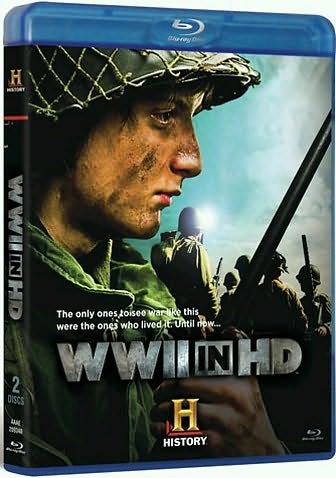
TV on Blu-ray Review: WWII in HD (2009)

Now Available to Own


Similar to the way that you can describe an individual in a single sentence, TV networks-- much like people-- can also be summed up even quicker and with the clarity of an actual antenna as opposed to the intuitive human kind. Thus, when it comes to characterizing the Peabody Award winning, educational History Channel, undoubtedly “World War II” would be one of the first impressions of the network that would spring to mind.

And indeed the channel has broadcast their fair share of in-depth military documentaries and analytical specials focusing on various aspects of the war from all sides that typically get little attention in traditional classroom environments or in the ever popular WWII genre of international filmmaking.

History Channel DVD Pre-Orders

Yet, just fifteen minutes of WWII in HD was enough for me to recognize that the passionate craftsmanship and painstakingly precise content on display in the ten hour televised portraiture was unlike any other televised war document I'd ever seen on disc, let alone on any television network.

Epic in scope, Frederic Lumiere's extraordinarily ambitious work was the result of a two-year global search that culled footage from over three thousand hours of archived reels and private collections to bring us never-before-seen candid clips cut together to immerse viewers in a tapestry of life during wartime in the 1940s.

Using an American approach that's similar to other WWII docs, the 2009 film which aired as a miniseries and has recently been released both on high definition Blu-ray and a DVD that keeps the HD in its name, is quick to differentiate itself from the pack.

Wisely it avoids a Band of Brothers signature by looking at one specific group or-- in the case of Saving Private Ryan and The Thin Red Line respectively, by centering on an individual mission or battle by incorporating first-person anecdotes from twelve unique individuals who served on behalf of the United States.


And although the ten episodes could all be considered standalone since it's easy to let yourself get caught up in the war stories wherever they take place and regardless of whose point-of-view we're following at any moment, when viewed consecutively from start to finish, it's much more powerful as Lumiere and his first-rate behind-the-scenes crew manage to weave a dozen separate accounts on the experience together by moving back and forth in not only who we're listening to but also in the presentation of the events.

Still, it has been argued that the film shouldn't be taken as literally as other documentaries since visually we're presented with a series of images compiled from thousands of hours of footage and not absolutely representational of what it looked like to the dozen involved.

Despite this, my personal belief is that the way that the first 16mm color footage was used and fragile film reels were preserved into “one of the largest military collections in the world,” should silence any critics, especially when you consider the fact that we're seeing images we've never been fortunate enough to explore before from Lumiere and company who ensure that we feel like we're truly part of the experience.

Likewise, as it should, great emphasis is placed on first-person interviews and recollections whether it's from read diaries or journals from the twelve Americans. Voiced by celebrities ranging from Ron Livingston to Steve Zahn to Amy Smart along with featuring clips from candid interviews with the living subjects, original news broadcasts and radio transmissions from the Library of Congress the series also benefits greatly Gary Sinise's clear-cut and compassionate narration that gives us a good bearing of time and place.

Augmented by the visions of everyday life or battlefield death transferred to pristine high-definition complete with a more startling soundtrack transfer to give us an unprecedented look at the horrors of war and the unsung heroics of humanity in the face of tyranny, we find ourselves moved by each of the people whom we feel we come to know as they move through the horrors of the war which at the start of the miniseries finds Hitler's soldiers occupying eleven countries containing seventy million people kept under the Nazi flag.

Following the takeover of Europe through Pearl Harbor, Guadalcanal all the way through D-Day, Iwo Jima and other key conflicts in both the Pacific and European “theaters,” the film chronicles everything up through the “fall of the Axis” and the end of the war.


And throughout we journey with a pacifist, a Japanese American soldier and a member of the Tuskegee Airmen who reveal the racism in the ranks of the service, along with a brave nurse whose optimism is challenged, journalists, soldiers, and-- in the most fascinating point-of-view from the start-- an Austrian Jewish immigrant who fled the Nazis but ended up battling the Japanese instead of Hitler.

Free Shipping on $75

With the absence of commercials, the History Channel's remarkable series drops down from ten to roughly seven and a half hours. Additionally this pulse-pounding Blu-ray release from A&E Television Networks delivers Lumiere's masterwork in the same crisp high definition that he had intended with full 1080 pixels as opposed to the loss of HD on DVD and gives viewers access to candid behind-the-scenes featurettes on how the remarkable miniseries came together along with character profiles to get an instant refresher on who the players are.

While the release of the 2-disc set does nothing to change History Channel's reputation as TV's WWII network, it does manage to set the bar high enough that you're wondering just how on Earth, History and other cable networks will top the film that ranks up there with The Discovery Channel's auspicious 2008 Sinise-narrated space-race series, When We Left Earth: The NASA Missions.

Text ©2010, Film Intuition, LLC; All Rights Reserved. http://www.filmintuition.com

Unauthorized Reproduction or Publication Elsewhere is Strictly Prohibited and in violation of the Digital Millennium Copyright Act.

FTC Disclosure:
Per standard professional practice, I received a review copy of this title in order to evaluate it for my readers, which had no impact whatsoever on whether or not it received a favorable or unfavorable critique.

5/26/2009

Warner Archive Collection DVD Review: Thousands Cheer (1943)


Now Available


After the devastating attack on Pearl Harbor on December 7, 1941, which resulted in an entire generation of soldiers, nurses, and other military personnel officially joining World War II-- Hollywood tried their best to pitch in as well.

In addition to actors who answered the call of duty and served their country-- major studios such as Warner Brothers and MGM offered up entertainment for the troops with both in-person appearances to boost morale as well as staging elaborate cinematic productions to raise money for the war effort.

And now-- more than sixty years later-- there have been so many World War II films crafted (from all different perspectives to offer an abundance of little known points-of-view) that essentially, WWII itself has become its own distinct sub-genre of war pictures.

So in an era where we typically screen more than-- and I'm underestimating here-- a dozen brand new World War II movies each and every year, it's intriguing to go back to the original era of the war to check out some of the studio tie-ins. And it's quite a rare treasure to take in this hard-to-find and newly released DVD from the incredible Warner Brothers Archive Collection, Thousands Cheer.

Originally, the film was made by MGM as a musical star-studded extravaganza that squeezes in so many marquee names working on the lot that the second half of the film feels like the mother of all “let's put on a show” paradigms especially considering it boasts Mickey Rooney and Judy Garland.

Basically two films in one-- the first hour of the movie directed by former MGM assistant turned Anchors Aweigh, The Harvey Girls, Annie Get Your Gun, Kiss Me Kate, Bye Bye Birdie, Viva Las Vegas, and Pal Joey filmmaker George Sidney uses a cute if predictable romance between Kathryn Grayson and Gene Kelly.

Opening with the gorgeous vocals of the trained opera singer Grayson (who began studying the style at age twelve) who performs alongside pianist Jose Iturbi in a stirring number-- we soon learn as her character Kathryn Jones explains to her adoring audience that she's heading with her army colonel father to an undisclosed base to help out with the effort. Having essentially been estranged from her father for most of her life since--much like her mother who finally left--the colonel has always put the military ahead of family, Kathryn jumps at the chance to reconnect with her father and help entertain the troops at the same time.

In an amusing meet-cute as Kathryn tries to use a Parent Trap styled bit of trickery to get her parents talking to one another, she finds herself standing alone on the train platform watching amorous lovers embrace and kiss passionately as the soldiers head off.

Realizing that she's standing near a single man-- in the form of Gene Kelly's acrobat turned army man Eddy Marsh-- a moment of awkward sexual tension overtakes them and finally building up his nerve, Eddy wordlessly plants a passionate kiss on Kathryn before he boards the train.

Of course, little does he realize, Kathryn is also coming along on the journey but she plays along under the pretense that she can't bear to part with her new man. Inevitably, this results in a great scene where Gene Kelly tells her off, only to realize his superior-- the colonel-- is not only her father but on the other side of the door.

Predictably, Eddy avoids Kathryn at all costs as she works hard to amuse the troops on the base but when he decides he'd like a promotion and a different spot in the military, he decides to try and sweet talk his way into it by dating Kathryn. Naturally the set-up turns into love much to the dismay of Kathryn's father and-- facing the prejudice of a lowly soldier without rank possibly not being deemed good enough to marry the daughter of an officer-- the film's boy meets girl/loses girl loop begins to mostly charming effect that's bolstered by the high energy of its stars.

Nominated for three Oscars including its gorgeous cinematography-- while Thousands Cheer is structurally uneven since it uses a traditional narrative structure for a large portion of the movie before suddenly launching into an elaborate stage show that disappoints viewer's investment in the characters, it's easily forgiven since nobody dazzles quite like the talent roster of MGM.

Featuring Eleanor Powell in a tremendous tap number, a beautiful rendition of “Honeysuckle Rose” by Lena Horne, our emcee Mickey Rooney, and a fun early “rock” track with Iturbi and Judy Garland performing the “Joint is Really Jumpin' Down at Carnegie Hall,” Thousands Cheer also adds in fun turns by Lucille Ball and Red Skelton that provides the ultimately distraction to the film's sudden decision to derail the plot in lieu of spectacle.

However, while the lineup alone is worth it and those who can't get enough of That's Entertainment styled compilations will probably want to skip right to the final production numbers-- to Gene Kelly fans, the must-rewind standout of the picture is when he earned his first opportunity to provide his own choreography for a now-famous routine wherein he performs a romantic dance with a mop standing in for Grayson.

Catching a glimpse of the style of masculine and athletic movement that would become his signature along with the enviable way he utilizes everyday objects that he would perfect over the next decade-- it's therefore no wonder that George Sidney worked with him again in Anchors Aweigh a few years later.

However, as an investor who'd assisted bankrolling the start-up of William Hanna and Joseph Barbera's company Hanna-Barbera (The Flintstones, The Jetsons, Tom and Jerry), by the time Aweigh came around, they were able to trade up from the mop to Jerry the Mouse with the wonderfully inventive live action/cartoon dance that's still influential to this day.

One of the many, many titles now available both online digitally as well as in DVD format as Warner Brothers begins opening up their historical archives to present forgotten classics-- Thousands Cheer is a must for Kelly enthusiasts, a curious film to foreshadow the eventual musical growth of director Sidney, and a reminder of not just the queen of tap in Eleanor Powell, but one that also reveals once again just how incredibly lovely Kathryn Grayson's voice sounds on film.

While my sole complaint (aside from nary an extra when there's some fascinating research to be found including the fact that the writers of this pro-America picture were blacklisted in the '50s!) is the lack of a menu to enable you to jump to a direct scene. Since in its place we're instructed to use our remote to move forward ten minute segments, therefore making it hard to find the scenes like Kelly's you cherish so you may want to get your pens ready or try to make a bookmark to work around the absence of the menu for future viewings.

4/24/2009

Blu-ray Review: South Pacific -- 50th Anniversary Edition (1958)


Now Available on Blu-ray


Delicious
Bookmark this on Delicious
submit to reddit
Print Page

Digg!

When you have a song as instantly powerful as South Pacific's main love ballad “Some Enchanted Evening," it's easy to overlook just how incredible the film is on a multitude of levels. And sure enough, it's ten times likelier when you take into consideration that it's just one of a string of memorable hits in the 1958 audacious cinematic undertaking by 20th Century Fox which transported Rodgers and Hammerstein's Tony award-winning Broadway smash in “the only theatrical film adaptation” of the duo’s work “to feature all its original songs."


Of course, when you recall South Pacific, the first genre that springs to mind is that of the musical as the strains of “There is Nothing Like a Dame,” “Bali Ha’i” and “I’m Gonna Wash That Man Right Out of My Hair” fill our heads.

However, South Pacific-- which was based on 36-year-old Quaker textbook editor, prep school teacher and would-be World War II lieutenant James A. Michener’s nineteen vignettes he put together in the semi-autobiographical Pulitzer Prize winning Tales of the South Pacific is much more than a “song and dance picture.”


In fact, neither word enters into the equation as it's beautifully described by its unforgettable star Mitzi Gaynor as “a story rooted in the realities of war and racial prejudice,” in the feature length documentary hosted by the Golden Globe nominated actress that is included on the second Blu-ray in this marvelous 50th Anniversary Edition.

A movie that Turner Classic Movies host and film scholar Robert Osborne explains worked because “every piece of the puzzle was absolutely perfect,” South Pacific seems all the more vital when you realize just how daring it was not only initially in its 1947 book publication and the subsequent 1949 musical release but also the 1958 feature film as the civil rights battle heated up even more.


An ensemble World War II work, as it opens we find the predominantly male group of American navy and marines taking part in the tireless “hurry up and wait” strategy as they all try to movie via—as the documentary describes the “operational hopscotch”-- one island closer to invading Japan following the attack on Pearl Harbor.


Living and working side-by-side with Polynesian residents and other foreigners from neighboring countries, the movie-- which begins with a charming blend of comedy and traditional musical whimsy from Mister Roberts director and veteran Joshua Logan-- soon focuses primarily on two love interracial love stories.


The first occurs as the young “sexy lootellan” Joseph Cable (John Kerr) is set up by the fiery matchmaker Bloody Mary (Juanita Hall) as a possible match for her lovely daughter Liat (France Nuyen) in a tale wherein sensuality and chemistry overcome any language barrier. Yet, this is in stark contrast to the much different, old-fashioned courtship between Gaynor’s sunny “cockeyed optimist” Arkansas native nurse Nellie Forbush who gets caught up in a whirlwind two-week romance with a French planter roughly twice her age (played by the handsome Rossano Brazzi).

Although Nellie understands that the older Emile DeBecque is a man filled with mystery—realizing along with some other soldiers that he would’ve most likely fled France for legal reasons as a man "with a past"-- when she additionally uncovers the fact that he’s a widow with half-Polynesian children, she struggles to reconcile her own prejudice. While she first tries to debate that prejudice is something that's simply born within her, soon Cable and others deliver the most central message of the film in their revelation that hatred is something that is taught.


Still quite timely today, South Pacific is undeniably one of Rodgers and Hammerstein’s most socially conscious and thoroughly rewarding musicals (following their earliest woks including the smash hit Oklahoma! and the popular but in my view, extremely flawed Carousel).

And 20th Century Fox Home Entertainment—which has always excelled via the Blu-ray format most recently seen in the classic update of William Friedkin’s The French Connection which was so impressive that even the director admitted he’d never seen the film look so incredible—sets the bar at a much higher level with their phenomenal transfer of South Pacific to 1080 pixel high definition picture and sound.

In fact it's a work that always played best on larger screens in order to truly showcase the inventive Oscar nominated cinematography by Leon Shamroy for his Broadway inspired “lighting changes” that consisted of a complicated “system of coloured camera filters that he devised, whereby various scenes could be tinted in the colours that portrayed specific feelings,” as publisher Polly Manguel cited in the book 501 Must See Movies(249) and so you can only imagine how breathtaking it is on Blu-ray.

Featuring both versions of the film including the original theatrical one as well as the “Extended ‘Road Show’” option that runs 15 minutes longer as well as two separate commentary tracks—one for each edition—along with the options to view the film’s songs only or to play “sing a-long karaoke” with English subtitles, the second Blu-ray is a film lover’s dream.


As in addition to the Blu-ray exclusive aforementioned riveting feature length documentary, it also serves up a classic Diane Sawyer 60 Minutes interview with Michener, as well as vintage and incredibly rare excerpts from the stage production starring Mary Martin and the unbelievable Ezio Pinza (as history’s first opera star to appear in a Broadway musical).

Likewise, boasting Mitzi Gaynor’s remarkable star-making screen test that found her beating out such A-list performers as Audrey Hepburn and Doris Day (Manguel, 249), it's safe to say that the 50th Anniversary Edition of the film makes it far more than just "some enchanting" Blu-ray to bring home in time for Mother's Day but a historical piece of American cinema now wonderfully preserved to the highest level in quality.

Other Editions, Versions & Related Items