Showing posts with label John Turturro. Show all posts

12/04/2020

Blu-ray Review: Grace of My Heart (1996)


Now Available


Leveling with his former employee and protege, the singer-songwriter Edna Buxton (Illeana Douglas) whom he'd professionally renamed Denise Waverly years earlier, Joel Millner (John Turturro) swoops in after a devastating heartbreak to give her a dose of tough love. Dissecting the way that he's watched from the sidelines as she's fallen into one impulsive, often misguided romantic relationship after another, he says, “Well, I know one thing, the only sense any of these jerks you've allowed to sidetrack you have had in common is a belief in your talent, I know that.” 

Of course, by this point in Grace of My Heart, we realize that belief in Denise's extraordinary talent to turn the emotional truth of everyday life into musical poetry is something that Joel has in common with her lovers as well.

Having left behind her dream of becoming a singer when she was told that girls were no longer in vogue, Denise finds her calling as a hit-maker in the early 1960s, writing pop music chart-toppers that frequently address the issues faced by women and minorities in the real world. Yet her true gift is in the way that she's able to subtly weave her powerful message into an irresistibly melodic soundscape, a skill that eludes her first partner Howard (Eric Stoltz) who – as is often the case with men – prefers to spell out everything literally. Quickly, we deduce that confrontation and controversy seem to be Howard's favorite two words, because both allow him to get on his PR soapbox so that he becomes, in his own mind at least, as big as the song. 


Thus, it's only when Denise writes alone or teams up with Joel's other talented female songwriter Cheryl (Patsy Kensit) that she embraces her knack for subtext once again, deliriously and fittingly writing a love ballad called “My Secret Love” for a secretly gay Lesley Gore-like ingenue played by Bridget Fonda. 

So then why, you might ask, does she first tie her creative and romantic fate to a suitor who prefers the end result of a Denise Waverly song but doesn't truly see the magic in what she does?

The first of three men to be seduced by her gift but are unable to fully understand who she is and where her craft comes from, it's only later in her hard-hitting confrontation with the mentor who knows her best that Denise's romantic Achilles heel suddenly makes sense. Following up his summation about her past lovers, Joel argues that Denise's talent is meaningful to the men but not herself. Or perhaps, sidetracked by love, life, and an upbringing as an heiress where she's repeatedly told she doesn't fit in, Joel posits that Denise hasn't treated her gift the same way.

Brought ferociously to life by an extraordinary Turturro and Douglas who match each other fiery outburst for fiery outburst, it's a mind-blowing scene and one that unexpectedly hit me much harder when I watched this – my favorite Allison Anders movie – for the first time in years, thanks to Kino Lorber's fantastic new release of the film on Blu-ray.

Able to at once hear Joel's words and understand Denise's feelings, it's a staggering sequence that Anders captures in one shot as her cinematographer Jean-Yves Escoffier slowly pushes in from an overhead crane until we are right in their personal space. It's here we realize that just like there is a difference between an opinion and a fact, understanding and respecting one's talent are two decidedly different concepts, especially when you need to figure out how to prioritize one's craft amid all of the demands that society places on women in both the 1960s and today. 


Executive produced by Martin Scorsese, and written and directed by the enormously talented filmmaker of Gas Food Lodging and Things Behind the Sun, 1996's Grace of My Heart is a film that speaks one way to men and one way to women, and another still to female creatives everywhere.

A historian of the era who sought inspiration in the artists of the '50s and '60s, including Carole King, Lesley Gore, Joni Mitchell, Brian Wilson, Dennis Wilson, and others, from the songwriters of the famed Brill Building to the symphonic surf rock of California and beyond, Anders' film is a love letter to one of my favorite periods in American music.

Featuring instantly memorable songs like the wondrous “God Give Me Strength,” which was written by Burt Bacharach and Elvis Costello, although it can be treated as just a compelling overview of the time, Grace of My Heart is an unmistakably personal film for Anders and the affection she has for the people at its center spills over and makes us feel the same.

Breaking down something true and universal about the way we evolve from the role of daughter to friend, girlfriend, wife, and mother, while also trying to reconcile that with our work as an artist, as we watch Denise be drawn into one new love after another, we start to see that there is more than just a basic belief in her talent connecting how she relates to these men.

Each one of them – and this includes her platonic relationship with Joel – appreciates something different about her and sees a side of herself that she tries her best to hide. Howard can be somewhat excluded from this list since above all, we feel that the connective tissue between the two might just be lust, plus his hope to use her as a professional stepping stone (even if he'll never admit it to himself). Still, all of the other men in her life –  all three with names that start with the letter “J” –  play a vital part in Denise's journey to better understanding herself, her place, and her art.

Throughout the film, she becomes involved with a married man (Bruce Davison) who connects to her on an intellectual level, a virtuoso yet unstable musician (Matt Dillon) who sees the raw emotion behind her music and immediately relates to her soul, and of course, Joel, who knows she's cut out for bigger and better things altogether. 


Is she attracted to these men because they're able to articulate her talent in a way that society frowns upon when it's a woman doing the same for herself? Do they allow her to “try on” new sides of herself the way that Jane Fonda has admitted that from the '60s to the '90s, for example, she became an entirely different woman with each new partner? Is Denise drawn to them because they're the first cheerleaders she's ever had, and if so, do they really see her for who she is or who they want her to be?

Not blessed with that inherently male trait of solipsistic confidence – even without the goods to back it up – Grace of My Heart understands how many mixed messages women receive from men both romantically and in our art, even when they're our allies, lovers, or are otherwise unaware that they're sending them.

Through the film, Anders uses Denise to illustrate just how vital it is to make mistakes, to go through all of the love and pain that comes from living your life because that's the only way you have anything of value to offer anyone else. Knowing that you can't get everything from one person – man or woman – we see Denise's goodness starting out as a Philadelphia steel heiress who gives the expensive dress her mother ordered Denise for a music contest to a Black contestant (Jennifer Leigh Warren) whose vocal talent is unparalleled. 


The start of a friendship that lasts throughout the course of the movie, even though Denise has been taught to be fearful of other women trying to take her place in the professional world, when women have the courage to let down these walls and support one another, they make beautiful music together. We know this because – especially in the 5.1 Dolby soundtrack included on the Blu-ray – we can so clearly hear their harmony in Douglas' scenes with Kensit, Fonda, Warren, and scene-stealer Tracy Vilar.

The towering achievement of her career as an actress, Illeana Douglas is incredible here. Struggling to come into her own, first as a singer-songwriter before love, marriage, and children enter the picture, Denise's authentic vulnerability in the way she tries not to let the equally tender Matt Dillon see just how badly she's been hurt when she performs “God Give Me Strength” is a scene that immediately rings true. Lip-syncing the number, it's in both her nervous energy – acutely aware of being observed – and the way she struggles to reign in her emotions that makes it one of the most exquisitely compelling moments in the entire film and also one of the hardest ones to watch.

Knowing that her talent has gotten her to where she is today but trying hard to figure out just what that means in the scheme of things or where she really wants to go, her journey from song-to-song and “J” to “J” never fails to move me each time I press play on Grace of My Heart. Filled with passionate performances, historical touchstones, and autobiographical details that are the result of cathartic artistic sublimation by Anders, this film is more than just the story of a creative woman learning to both believe in herself and find her way in the world. In the end, it's about all of us, and through Denise, Allison Anders lets us know that as long as we have the strength, we'll get where we're going in time. 


Text ©2020, Film Intuition, LLC; All Rights Reservedhttps://www.filmintuition.com  Unauthorized Reproduction or Publication Elsewhere is Strictly Prohibited and in violation of the Digital Millennium Copyright Act.  Also, as an Amazon Associate, I earn from qualifying purchases made off my site through ad links. FTC Disclosure: Per standard professional practice, I may have received a review copy or screener link of this title to voluntarily decide to evaluate it for my readers, which had no impact whatsoever on whether or not it received a favorable or unfavorable critique. Cookies Notice: This site incorporates tools (including advertiser partners and widgets) that use cookies and may collect some personal information to display ads tailored to you etc. Please be advised that neither Film Intuition nor its site owner has any access to this data beyond general site statistics (geographical region etc.) as your privacy is our main concern.

6/07/2019

Blu-ray Review: Gloria Bell (2018)


Now Available 


Related Review:
Gloria (2013)

Bookmark and Share

Gloria Bell (Julianne Moore) is a woman who doesn't wait to be asked to dance. Looking out at the world with a hunger for life as big as her glasses, she joins in, as happy to move to her own beat as she is to follow someone else's lead.

Literally blending into the scenery during dull days at her nine to five office job and bad nights, the divorced fifty-something comes alive on the dance floors of the L.A. clubs she frequents.

Often dressed in something shimmery, she sways to the music with an energy so infectious that others feel pulled to her side, including a train wreck future beau (played with warmth and pathos by John Turturro) who seems to hope that a relationship with Gloria will set him back on the right track.


A remake of the 2013 Chilean film Gloria, which was also directed by Sebastián Lelio, Gloria Bell finds the filmmaker translating the film for an American audience in a surprisingly seamless way.

And while much of it feels like a scene-by-scene remake, the film's cool, slightly blown out, '70s album cover meets Punch Drunk Love reminiscent cinematography (from Argentinian lensman and Neon Demon veteran Natasha Braier) draws us into the new world of Gloria by giving it an everyday yet ethereal classic California look.


Featuring another luminously revealing turn by Julianne Moore, the actress honors Paulina García's original performance while still managing to make the role her own. Losing herself completely in the part, one of the reasons Bell works as well as it does for those already familiar with Gloria is because Moore's selfless, understated turn makes us acutely aware of the film's outstanding ensemble cast.

Although still every bit a one woman show in English as it was in Spanish, by chronicling not only her new relationship with Turturro but her dynamic with friends and family as well, Bell makes the ordinary extraordinary and highlights the film's supporting roles.


From talented chameleon Turturro reading Chilean poetry to Gloria to scene-stealing moments by Brad Garrett as her ex at an awkward event to Rita Wilson's turn as her opinionated best friend, the characters on the screen and the world they inhabit feels consistently grounded, lived in, and real throughout.

A humanistic tale about a single senior woman's quest to live life on her own terms with or without a partner and on or off the dance floor, it goes without saying that Gloria Bell's plot arc won't surprise anyone who's seen the recently released original. However, it's hard not to get caught up by the music made by Moore and Lelio in the type of American film — centered on real, actual adults we feel we know — that we rarely see on the screen anymore.


Text ©2019, Film Intuition, LLC; All Rights Reserved. http://www.filmintuition.com Unauthorized Reproduction or Publication Elsewhere is Strictly Prohibited and in violation of the Digital Millennium Copyright Act.  FTC Disclosure: Per standard professional practice, I may have received a review copy or screener link of this title in order to voluntarily decide to evaluate it for my readers, which had no impact whatsoever on whether or not it received a favorable or unfavorable critique. Cookies Notice: This site incorporates tools (including advertiser partners and widgets) that use cookies and may collect some personal information in order to display ads tailored to you etc. Please be advised that neither Film Intuition nor its site owner has any access to this data beyond general site statistics (geographical region etc.) as your privacy is our main concern.

9/29/2014

Blu-ray Review: God's Pocket (2014)


Now Available to Own   


Photo Slideshow


In God’s Pocket, the mourning mother played by Mad Men actress Christina Hendricks relies on her maternal instinct in trusting that there’s much more to the “accidental” death of her son than the yarn being spun by his coworkers.

Moreover, just like the character embodied by Hendricks, her onscreen Mad costar (and occasional TV episode helmer) turned offscreen Pocket director John Slattery calls upon his background as an actor to construct several compelling scenes throughout his feature filmmaking debut, which he also co-wrote.


And fittingly not only are these moments masterfully crafted – paying homage to the works that had inspired him in the past on both stage and screen as Pocket salutes everyone from Eugene O’Neill and Arthur Miller to John Huston, Brian DePalma, Martin Scorsese and John Cassavetes – but Slattery also infuses each with the opportunity to showcase the talents of his gifted ensemble cast.

Set in the eponymous working class Philadelphia neighborhood that’s tight-knit for all expect those who weren’t born and raised there – Pocket’s cast is headed up by the late Philip Seymour Hoffman (who also served as a producer on the project) in one of his final performances.

A low level hood, Hoffman’s Mickey Scarpato can’t seem to please anyone regardless of how many shortcuts he takes and how hard he tries to fit into the surroundings he adopted when he married Hendricks’s local girl Jeanie.


A natural beauty that’s not unaware of her effect on men, Jeanie’s ability to use her feminine wiles to get her way and intuitive talent for reading people seems to stop right at her own home as she fails to see the sweet boy she raised for the bigoted, angry, violent young man he’s become.

In this saga filled with otherwise less than beautiful losers, the pulse of “the Pocket” is kept in check by the beautiful yet unapologetically blunt prose penned (and performed in a moving bookended voiceover) by Pocket native turned part-time newspaper columnist and full-time drunk Richard Shellburn (embodied by Richard Jenkins).

Anchored by Shellburn as the God-like narrator of God’s Pocket, Slattery’s character driven film gets the Dennis Lehane-like atmosphere, lower class accents, and pointless arguments of overworked working class residents right in what is ultimately a throwback to ‘70s blue collar era antihero cinema filled with men who looked more like your neighbors than matinee idol movie stars.

Unfortunately the decision to focus strongly on a writer as the voice of the piece only magnifies the problems of Pocket that started in the writing stage, given the way that from a narrative standpoint everything else goes utterly wrong.


While that alone shouldn’t have been enough to lose the audience as the ‘70s were filled with existentially ambiguous scripts handled with a greater understanding of what the filmmaker wanted to say, perhaps Pocket’s greatest problem is the absence of a traditional character arc in offering any sort of emotionally satisfying (or merely complete) follow-through for the grieving Jeanie.

Of course, the pointlessness of the actions of the Pocket natives near the end of the picture does leave us with philosophical idea that – like most of life’s “accidents” even ones wherein the nature of just how accidental they are is up for debate – there’s no rhyme or reason to the who, what, where and why other than just to be present in the here and now.


However, this thesis could’ve been proven in a far more compelling way than what’s presented on the screen since as it is, we’re puzzled what it was about Peter Dexter’s novel that made Slattery so eager to adapt it for his cinematic debut.

Despite this, with the cast in question, the character-driven action is enough to distract and even entertain its viewers here and there – particularly when you evaluate certain moments separately from the overall production.


But ultimately you get the sense both in the director’s commentary track as well as while watching the tonally uneven, structurally aimless feature that Slattery was so caught up by each dramatic moment on a performance level that he didn’t stop to question how well the sum of so many disjointed parts flowed together as a less than cohesive whole.

Often contradictory, Pocket confuses us as to what – if anything – it’s trying to say given how little sense the actions of its characters make. And this shortcoming is particularly disappointing given how otherwise effective a more coherent dialogue rewrite could’ve been in one of the film’s otherwise most ambitious sequences.


In a climactic Do the Right Thing fueled standoff, a key argument about the newsman’s right to generalize (and potentially trivialize or stereotype) the people he spent his life with is questioned by a man who will suddenly hold the opposite view he had two acts earlier in a scene of Mean Streets charged justice.

Namely, in public, Hoffman’s Mickey doubles back on a statement he made in private at a moment where everything that has happened screams for him to feel the opposite. And while admittedly on the one hand, I applaud Slattery’s refusal to signpost Pocket with an overt message, on the other, memorable performances by his charismatic cast of character actors isn’t enough to save this otherwise meaninglessly melancholic slice-of-life mixed with macabre dashes of dark humor.


Fortunately for viewers, the pace picks up from a walk to a jog through the seedy side of town roughly 35 or 40 minutes into the second half of the otherwise succinct 89 minute movie. Yet here’s hoping that the otherwise talented Slattery will take a cue from his Mad costar Hendricks’ character in his next time at the helm instead of serving up a cut-and-paste character study centered on less than beautiful blue collar losers (which in and of itself borders on the same generalization of which Jenkins’s reporter is accused).

Building off the strengths evidenced here in some dynamically staged moments, Slattery should trust in his role as a cinematic storyteller to paint us a complete and thorough picture rather than simply spinning a diverting yarn where the memorable scenes fall through its many loosely woven holes like change in a ripped pocket.

Bookmark and Share

Text ©2014, Film Intuition, LLC; All Rights Reserved. http://www.filmintuition.com Unauthorized Reproduction or Publication Elsewhere is Strictly Prohibited and in violation of the Digital Millennium Copyright Act.  FTC Disclosure: Per standard professional practice, I may have received a review copy of this title in order to evaluate it for my readers, which had no impact whatsoever on whether or not it received a favorable or unfavorable critique.

8/22/2014

Blu-ray Review: Fading Gigolo (2013)


Now Available to Own   


Photo Slideshow


Blu-ray Introduction

Shot in just thirty days on glorious 35mm film, writer/director and star John Turturro teams up with his longtime assistant Cameron Bossert to record a delightfully friendly and informative feature-length commentary track on the beautiful new Blu-ray transfer of his spring art-house charmer, Fading Gigolo.

Freely acknowledging the way that his obsessions, recurring motifs (including nuns), and themes wind up weaving their way throughout his directorial career, Gigolo’s chatty commentary is filled with insider details, anecdotes, and bite-sized nuggets of personal inspiration he called upon to create the film.

Whether it’s in Turturro’s fascinating admission that his own friend – a former rare bookseller – served as the muse for Woody Allen’s scene-stealing character or the “lice lady” he’d met that likewise inspired the role of his unlikely onscreen love interest (nicely played by Vanessa Paradis), again and again, Turturro’s revelations remind writers that reality truly is the best jumping off-point for creativity.


In fact, celebrating the authenticity of life is one way that the otherwise fantastical Gigolo stays so believably rooted in the real world and Turturro proudly credits all collaborators and colleagues including some friends and family turned co-stars (like his cousin Aida Turturro who makes her scene count to memorably comedic effect).

Referencing the at-times coincidental overlap of cast and crew in New York’s filmmaking community, he shares a remarkable tale of an unintentional reunion between Woody Allen and his former prop man of ten years who happened to be in one scene early on in the movie.

Unfortunately aside from the terrific commentary track, the Blu-ray is ultimately lacking in worthwhile bonus features as we quickly discover that the included deleted scenes were all left on the cutting room floor for a reason.


And although the decision to not offer a DVD or Ultraviolet high definition code might’ve hindered sales from budget-conscious consumers eager to have the opportunity to screen Gigolo in multiple formats, personally given the way that music plays such a key role in the film, I was hoping for a behind-the-scenes featurette that explored that department in further depth.

Luckily however, the surprisingly sweet and unexpectedly moving work along with Turturro’s intelligent, respectful handling of both its daring subject matter and the film's affable supporting players makes it worthwhile nonetheless (as I discovered in my earlier theatrical review republished below).

Additionally, it’s sure to appeal to Allen fans who’ve grown disappointed by the way that his films seem more and more stuck in the past with each passing year. For in Fading Gigolo, Turturro proves he’s more than willing to help Woody Allen move into more modern territory, even if it’s writer/director/star Turturro instead of Allen who’s calling the shots behind the camera.


Original Movie Review
(Published 4/24/14)

There’s an old saying that when it comes to filmmaking success, everything depends on who you know. And obviously John Turturro has met, worked with and befriended his fair share of very powerful people throughout his impressive career on both sides of the lens as not only one of our greatest character actors but a filmmaker in his own right as the director of four acclaimed independent films.

Yet when it came to developing what would become his fifth film Fading Gigolo, the road from idea for finished screenplay did wind up having a lot to do with who Turturro knew – although instead of a studio head or a power player, the man most responsible for getting Gigolo off the ground was none other than his own barber.


Amused by the clever concept that had first been brainstormed as a hypothetical, improvisational joke shared over lunch with a friend, Turturro’s barber later shared the story he’d been told with another filmmaker client of his in the form of Woody Allen who was so intrigued by the promising potential that he contacted Turturro out of the blue to learn more.

Helping Turturro refine the witty pitch into a viable plotline that would eventually find Allen costarring as well, Fading Gigolo began to take shape, evolving from something wholly comedic to a warmhearted, highly personal, moving dramedy that handles the provocative subject matter with the utmost sincerity and maturity.

Caught off guard when his beautiful dermatologist (Sharon Stone) asks her client Murray (Allen) if he knew anyone who would be interested in having a threesome with her and her fiercely independent friend (played by Sofia Vergara), the fast-talking retired rare bookseller decides to pimp out his best friend Fioravante (John Turturro) on the spot.


A part time florist who’s always done well with the ladies – although he’s initially hesitant to become Murray’s ho, curiosity and flattery not to mention the prospect of an impressive payday eventually win him over as Fioravante gives in, making a first “date” appointment to show up for a one-on-one trial with Stone’s even more nervous doctor.

Attempting to play the part, Fioravante shows up with a floral arrangement as if he were there for a real live date before taking the plunge.

Dancing with the lonely women in the daytime, Fioravante’s attentiveness pays off as before long, the sensitive man’s man finds himself in demand as the opportunistic Murray begins cruising yoga classes in Central Park looking for new clients.


Although at first uneasy about taking money from vulnerable women, Murray is quick to tell him isn’t nearly as bad as preying on the misery of others like a bartender since he’s building up the women’s confidence after all.

And using the same sales pitch that describes his friend’s gifts as akin to healing, Murray finds a potential customer in Avigail (Vanessa Paradis), the lonely young widow of a deceased Hasidic Rabbi whose own primal need for intimacy has been ignored for way too long.

Unfortunately the suspicious behavior of Murray arouses the suspicion of Liev Schreiber’s jealous Hasidic community officer who’s spent his entire life pining after his lovely neighbor Avigail and puts their impromptu operation in jeopardy.


Understanding that it would have been both disrespectful and entirely too farfetched to turn the devout Avigail into just another client in need of sexual release, Turturro uses compassion and class onscreen and off by handling their complicated dynamic with sophistication as the lonely mother of six weeps openly as he massages her back, admitting that she hadn’t been touched in years.

Awakening a sensual side of Avigail that we suspect had been dormant long before her husband passed away, Gigolo infuses the second, more emotionally involving half of the film with a tender exploration of how their relationship unexpectedly affects both parties. And at the film continues, it results in a humorously bittersweet yet fitting payoff that invites you to read into the charmingly ambiguous final sequence for yourself.

While it makes the most of its New York setting in some breathtakingly beautiful scenic shots of fall leaves, carousels and bookshelves – by spending so much time in the Hasidic community in addition to giving us the point-of-view of an unexpected middle aged gigolo – there’s also a unique sense of detachment to the work that makes it seem like a foreign film shot on American soil.


And although admittedly you do have to suspend your disbelief regarding the drop-dead beauties to whom Fioravante is pimped out to throughout – all in all it’s rooted in enough reality that the sweet yet sexy infusion of a bedtime fantasy story best begun with the words “Once Upon a Time” still results in a lovely cinematic surprise.

Refreshingly devoid of cynicism, while some filmmakers would’ve approached the topic with a much bleaker worldview of humanity and/or women in general to make a statement on sex and commerce, it’s evident that Turturro’s heart is in the right place from the start.

Feel-good filmmaking that springboards off its inventive premise to truly invest us in the plight of its multiple lonely outsiders, Gigolo evolves into a stylish, well-acted ensemble dramedy the likes of which Turturro would have easily gravitated to as an actor even if it had been helmed by someone else.

And much like the word-of-mouth that helped get the film made offscreen and earned Fioravante clients onscreen, Fading Gigolo is sure to attract an even bigger audience in its spring theatrical release as this delightful Gigolo offers something for everyone.


Buy the Memorable Soundtrack


Text ©2014, Film Intuition, LLC; All Rights Reserved. http://www.filmintuition.com Unauthorized Reproduction or Publication Elsewhere is Strictly Prohibited and in violation of the Digital Millennium Copyright Act.  FTC Disclosure: Per standard professional practice, I may have received a review copy of this title in order to evaluate it for my readers, which had no impact whatsoever on whether or not it received a favorable or unfavorable critique.

4/24/2014

Movie Review: Fading Gigolo (2013)


Read Our In-Depth Blu-ray Review


  Photo Slideshow


Bookmark and Share

There’s an old saying that when it comes to filmmaking success, everything depends on who you know. And obviously John Turturro has met, worked with and befriended his fair share of very powerful people throughout his impressive career on both sides of the lens as not only one of our greatest character actors but a filmmaker in his own right as the director of four acclaimed independent films.

Yet when it came to developing what would become his fifth film Fading Gigolo, the road from idea for finished screenplay did wind up having a lot to do with who Turturro knew – although instead of a studio head or a power player, the man most responsible for getting Gigolo off the ground was none other than his own barber.


Amused by the clever concept that had first been brainstormed as a hypothetical, improvisational joke shared over lunch with a friend, Turturro’s barber later shared the story he’d been told with another filmmaker client of his in the form of Woody Allen who was so intrigued by the promising potential that he contacted Turturro out of the blue to learn more.

Helping Turturro refine the witty pitch into a viable plotline that would eventually find Allen costarring as well, Fading Gigolo began to take shape, evolving from something wholly comedic to a warmhearted, highly personal, moving dramedy that handles the provocative subject matter with the utmost sincerity and maturity.

Caught off guard when his beautiful dermatologist (Sharon Stone) asks her client Murray (Allen) if he knew anyone who would be interested in having a threesome with her and her fiercely independent friend (played by Sofia Vergara), the fast-talking retired rare bookseller decides to pimp out his best friend Fioravante (John Turturro) on the spot.


A part time florist who’s always done well with the ladies – although he’s initially hesitant to become Murray’s ho, curiosity and flattery not to mention the prospect of an impressive payday eventually win him over as Fioravante gives in, making a first “date” appointment to show up for a one-on-one trial with Stone’s even more nervous doctor.

Attempting to play the part, Fioravante shows up with a floral arrangement as if he were there for a real live date before taking the plunge.

Dancing with the lonely women in the daytime, Fioravante’s attentiveness pays off as before long, the sensitive man’s man finds himself in demand as the opportunistic Murray begins cruising yoga classes in Central Park looking for new clients.


Although at first uneasy about taking money from vulnerable women, Murray is quick to tell him isn’t nearly as bad as preying on the misery of others like a bartender since he’s building up the women’s confidence after all.

And using the same sales pitch that describes his friend’s gifts as akin to healing, Murray finds a potential customer in Avigail (Vanessa Paradis), the lonely young widow of a deceased Hasidic Rabbi whose own primal need for intimacy has been ignored for way too long.

Unfortunately the suspicious behavior of Murray arouses the suspicion of Liev Schreiber’s jealous Hasidic community officer who’s spent his entire life pining after his lovely neighbor Avigail and puts their impromptu operation in jeopardy.


Understanding that it would have been both disrespectful and entirely too farfetched to turn the devout Avigail into just another client in need of sexual release, Turturro uses compassion and class onscreen and off by handling their complicated dynamic with sophistication as the lonely mother of six weeps openly as he massages her back, admitting that she hadn’t been touched in years.

Awakening a sensual side of Avigail that we suspect had been dormant long before her husband passed away, Gigolo infuses the second, more emotionally involving half of the film with a tender exploration of how their relationship unexpectedly affects both parties. And at the film continues, it results in a humorously bittersweet yet fitting payoff that invites you to read into the charmingly ambiguous final sequence for yourself.

While it makes the most of its New York setting in some breathtakingly beautiful scenic shots of fall leaves, carousels and bookshelves – by spending so much time in the Hasidic community in addition to giving us the point-of-view of an unexpected middle aged gigolo – there’s also a unique sense of detachment to the work that makes it seem like a foreign film shot on American soil.


And although admittedly you do have to suspend your disbelief regarding the drop-dead beauties to whom Fioravante is pimped out to throughout – all in all it’s rooted in enough reality that the sweet yet sexy infusion of a bedtime fantasy story best begun with the words “Once Upon a Time” still results in a lovely cinematic surprise.

Refreshingly devoid of cynicism, while some filmmakers would’ve approached the topic with a much bleaker worldview of humanity and/or women in general to make a statement on sex and commerce, it’s evident that Turturro’s heart is in the right place from the start.

Feel-good filmmaking that springboards off its inventive premise to truly invest us in the plight of its multiple lonely outsiders, Gigolo evolves into a stylish, well-acted ensemble dramedy the likes of which Turturro would have easily gravitated to as an actor even if it had been helmed by someone else.

And much like the word-of-mouth that helped get the film made offscreen and earned Fioravante clients onscreen, Fading Gigolo is sure to attract an even bigger audience in its spring theatrical release as this delightful Gigolo offers something for everyone.


Buy the Memorable Soundtrack


Text ©2014, Film Intuition, LLC; All Rights Reserved. http://www.filmintuition.com Unauthorized Reproduction or Publication Elsewhere is Strictly Prohibited and in violation of the Digital Millennium Copyright Act.  FTC Disclosure: Per standard professional practice, I may have received a review copy of this title in order to evaluate it for my readers, which had no impact whatsoever on whether or not it received a favorable or unfavorable critique.

3/21/2010

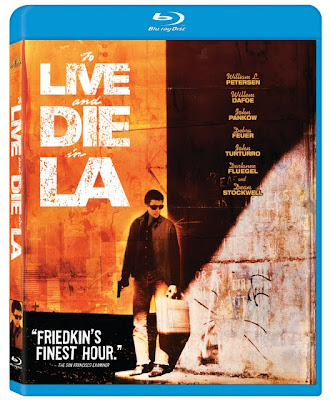
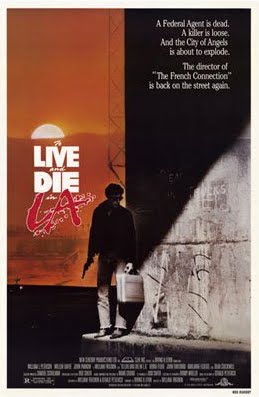
Blu-ray Review: To Live and Die in L.A. (1985)

Now Available to Own


Related Review
The French Connection I & II [Blu-ray]


In the black and white world of childhood, kids play cops and robbers where the line between the good guys and the bad guys is thicker than a box of sidewalk chalk.

Reaffirmed by everything from games to movies, before children discover the vast gray area and overlap between the fields, they learn that crooks never collected two hundred dollars on their way to jail, that heroes wear white hats or blue uniforms and the villains dark clothes, and in the end, justice always wins out.

Yet even after ascertaining that life doesn't always play by those "According to Hoyle" or John Wayne rules, filmmakers and writers still take a tremendous risk anytime they dare to blur the traditional archetypes to the point where you can't exactly tell the cops from the criminals.

And perhaps more than any other director post-Film Noir, William Friedkin knows this better than his contemporaries, having challenged the status quo to Oscar winning effect with his early '70s stunner The French Connection that presented us with the racist, antihero Officer Popeye Doyle.

Over a decade later and against the emergence of the underdog ventures or box office blockbusters releasing from the decade's titans Don Simpson and Jerry Bruckheimer, Friedkin once again tested studio and audience expectations alike with his sprawling, gritty, Neo-Noir masterwork To Live and Die in L.A..

So dangerously close to the truth that it involved more than one federal investigation from its inception as a novel by former Secret Service officer Gerald Petievich up through the on camera creation of counterfeit funds with only three flaws, To Live and Die in L.A. met with mixed critical response upon its 1985 theatrical run.


Despite earning a perfect four star review from a dazzled Roger Ebert, some dubbed it simply a high gloss version of Miami Vice and others accused it of being so gratuitously violent and extreme that the police were even worse than the criminals.

Admittedly, I do grant that it does go overboard both in its rapid cuts (to the awesomely influential Wang Chung soundtrack a la Vice) and in some of the beatings and shootouts which are done to excess. However, watching it today for the first time on Fox Blu-ray high definition, I was overwhelmed by not only the scope of Friedkin's film as well as another chase sequence that managed to easily top French Connection within its first of three to four different parts (depending on how you divide it up cinematically) but especially by the development of a handful of characters.

Likewise, I was also impacted by what I perceived was the film's major impact on the landscape of Neo-Noirs ever since, including Vice creator Michael Mann's epic Heat and French Connection 2 director John Frankenheimer's Ronin, along with Soderbergh's Traffic among others.

After his partner Jimmy Hart is killed only a few days before retirement, Los Angeles based U.S. Secret Service Agent Richard Chance (a terrific William Petersen) informs his replacement partner John Vukovich that he's determined to bring down Rick Masters (Willem Dafoe), the ruthless counterfeiter responsible for his death irregardless of whether or not he needs to break the law he's sworn to uphold to do it.

And from the way he base jumps off of bridges or blackmails a blonde parolee for information (and sex when he feels like it), we know that a man so cavalier that he lives by his last name of Chance will do just that, knocking down anything by car or by bullet that stands in his way from nailing Masters to the wall.


Obviously, the type of pre-Shield and NYPD Blue style gray area thinking that didn't warrant much of an audience during the Tom Cruise decade made and still makes this ruthless work so challenging today. Yet for those who are apt to put down the black and white sidewalk chalk and spend two hours in the gray, I guarantee you'll find the experience unparalleled for the cops and robbers genre in the '80s in one of Friedkin's best and likewise most underrated works.

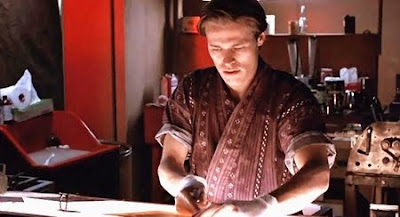
Still quite timely considering the opening action sequence that finds a martyr ready to explode for Islam and in its emphasis on the funny money that talented but unscrupulous artist Masters makes in rented warehouses in a painstaking process from paint to poker chips to sell to those who don't have enough real green or real credit cards. movie is also fascinating on another layer of duality considering just how much in common our leads on opposite sides of the law have with one another.

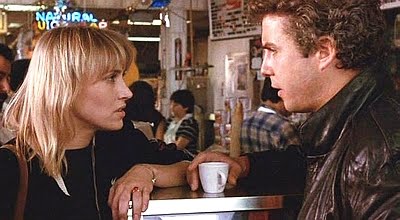
From the similar first names of Richard and Rick to working in tightly knit groups where they would rather take a bullet than rat on a colleague to the passion to take what they sense is theirs and stop anyone who gets in their way, To Live and Die in L.A. disguises its existential and philosophical levels in the high octane action sequences of cars chasing one another the wrong way down a highway, getting hoodwinked by a feisty crook (John Turturro) and its race towards what we predict will be a blood soaked conclusion on both sides.


Complete with an eerie cyclical ending that repeats an idea subtly planted in the film earlier as we sense that the "get killed or get busted" mentality will go on for as long as there are cops and robbers, following up Fox's thrilling 2009 Friedkin approved Blu-ray transfer of The French Connection, once again the studio delivers another contemporary classic from its vaults in early 2010.

While the color may have been blown out a little as some of the images appear soft around the edges, in the right theatre setting, L.A. which has since been named one of Top 25 modern films set in Los Angeles, will still make your jaw drop in its intense depiction of men living on the edge, losing sight of everything but the final moment of revenge in this excellent 2-disc DVD/Blu-ray set.

Text ©2010, Film Intuition, LLC; All Rights Reserved. http://www.filmintuition.com
Unauthorized Reproduction or Publication Elsewhere is Strictly Prohibited and in violation of the Digital Millennium Copyright Act.

FTC Disclosure:
Per standard professional practice, I received a review copy of this title in order to evaluate it for my readers, which had no impact whatsoever on whether or not it received a favorable or unfavorable critique.

10/17/2008

What Just Happened (2008)


Digg!


Check out the Trailer & Photo Gallery

Admittedly, the shooting of a dog in No Country for Old Men may have added to the brutal ambiance needed for the Coen Brother's allegorical depiction of a country that's "hard on people," in earning it the Academy Award for Best Picture. However, when it comes to mainstream cinema, putting two in the chest of a beloved family pet is hardly the way to win people over at a test screening. Hollywood producer Ben (Robert De Niro) learns this lesson the hard way in fake Technicolor blood as he watches his latest edgy film Fiercely-- directed by a British nail-polish wearing ticking temper-tantrum time bomb Jeremy (Michael Wincott) -- send audience members either fleeing for the exits or leaving scathing notes on his comment cards ranging from "my wife is still crying" to the one-worded question, "why?"

While Jeremy is just one of several characters in director Barry Levinson's hilarious adaptation of screewnwriter Art Linson's fictionalized and far more satirical version of his bestselling 2002 insider memoir who pleads "artistic integrity" the way most mobsters take the fifth in court, the bottom line is changes need to be made or the film will not only lose millions, further jeopardize Ben's dwindling "power credentials" but possibly end careers as well. Putting it bluntly, Catherine Keener's two-faced cutthroat studio executive Lou (another one of her fascinating creations reminiscent of her ball-breaking turn in Being John Malkovich), demands that either both Jeremy and Ben makes the changes or she'll take away the film and cut it herself. Although Jeremy is sent into hysterics and Ben's wise, young assistant is kicked out of the room when she suggests that the film's edge could've been the reason its star Sean Penn (appearing in the film as himself) signed on, Ben knows it is all part of the game. And it's the same game he plays twenty times a day at a breathlessly breakneck pace over fourteen hellish days that take him from La La Land to Cannes.


And throughout Levinson's film, Ben juggles his responsibilities as a devoted dad driving his children (from two marriages) to school, endlessly chatting away on his cell phone earpiece, trying to come to terms with his feelings for his soon to be ex-wife Kelly (Robin Wright Penn), massaging egos and holding the hands of his temperamental colleagues, hearing pitches at school drop-offs, listening to Morricone while stuck in traffic, or trying to figure out how to persuade Bruce Willis (also playing himself) to shave a beard for his role to maximize leading man sex appeal.

While it’s nowhere near the same league as Altman’s masterful film The Player-- as the latest in a long line of insider comedy/dramas, refreshingly What Just Happened is much more successful than this year's other Hollywood insider-comedy Tropic Thunder. And this is precisely because in making it a human story first and foremost, it also makes the situations both accessible and believable, without solely playing to only those well-versed in film industry knowledge.

Additionally, De Niro's quiet, contemplative and fascinatingly restrained character that always seems to be spreading himself far too thin marks one of the actor's best performances in years. Getting the chance to be both funny and endearing and never slipping into the caricature that helped propel the success of the Meet the Parents films, it's a wonderful change of pace for De Niro devotees such as myself (for proof click here) to see Bobby D playing the most level-headed one in the room when Bruce Willis pleads "artistic integrity" and trashes a room filled with costumes before stomping off to his trailer. As Linson noted in the press release, De Niro "instinctively knew that a man hanging over a ledge in Hollywood is desperately funny and true. He ferociously inhaled that idea and the rest of us followed," as his character tries to "hold his family together while navigating through," as Levin called it--- the Hollywood "battlefield."


Shot in just thirty-three days, the artistry of the film's look is quite impressive with fast-cuts, intriguing sound and visual cues, and the stunning photography of lensman Stephane Fontaine. Likewise it’s one of those films that seems as though it must've been as enjoyable to make as it is to watch as it's filled with what feel like spontaneous little touches by scene-stealing players like Wincott (truly one of the most hilarious people in the film), John Turturro, Stanley Tucci, and Bruce Willis (courageously playing the worst version of himself). Although initially, I feared it would feel like most indulgent Hollywood industry comedies where we're all showing up as extra guests at a party to which we really shouldn't have been invited (and film buffs instinctively get the impression of "who called who" when realizing the overlapping credits of those involved), upon the first viewing, it's an overwhelming whirlwind as we try to keep up with Ben's chaotic lifestyle.

However, during the second time around, I realized that despite its ridiculously jaded setting where a man's facial hair can put hundreds of people out of work, it's a great, artistic glimpse of a life lived at full-speed, under too much pressure like a bulb ready to burn out from overuse which is something to which most Americans multitasking during their waking hours can definitely relate --that is before our inevitable crash of however long we sleep before doing the exact same thing again. And while the great thing is that, unlike Ben's life, ours isn't spent under the microscope, it's nice to be able to laugh at the problems of the little things times ten magnified Hollywood style, whether it's in the over-the-top bravura performance of Jeremy or in some truly great, organic humor between Robin Wright Penn and Robert De Niro as they attend a couple's therapy where the ultimate goal is to keep them apart as opposed to bringing them together.

While What Just Happened is used as both a question by Wright Penn in the film in a throwaway line near the end (and honestly makes for a lackluster title destined to be forgotten once the film ends), it also seems to be the name of Ben's game in explaining to everyone what just happened regarding any given situation, no matter how unbelievable it is. And as the film careens into an overly long yet terrifically unpredictable windup, it will most likely have you going over what exactly happened during your drive home. Just don’t forget to pack the Morricone but maybe—unless you want to end up in soon to be ex-couple’s therapy-- leave your Bluetooth earpiece at home.


Read the Book that Started it All & More from Art Linson


Explore the Soundtrack (CD or MP3)