Showing posts with label Edward Norton. Show all posts

2/09/2021

A David Morse Reappraisal: Down in the Valley (2005)


Introduction: 

For my latest DVD Netflix actor's spotlight article, I chose five outstanding performances by character actor David Morse. One of the films I analyzed for the piece was this 2005 sleeper but unfortunately, the independent film studio went bust and the DVD is no longer in production or available to rent from Netflix. However, as of this post, "Down in the Valley" is available to stream from a variety of services (check the site/app Just Watch for current details) so I wanted to share this reevaluation of the film here for you today. 


"Down in the Valley"

Writer-director David Jacobson's “Down in the Valley” is as eerily dark yet disarmingly gentle as the potentially dangerous modern-day drifter cowboy Harlan Fairfax Curruthers that Edward Norton plays in the flawed yet fascinating film. A psychologically compelling character-driven contemporary western that plays on the genre archetypes of good and evil, the film focuses on the aimless wanderings of two kids coming-of-age in the San Fernando Valley. 

As a restless teenager on the cusp of womanhood, Tobe (Evan Rachel Wood) spends most of her days with friends or being followed around by her equally bored brother Lonnie (Rory Culkin). A maternal figure standing in for their mother who's out of the picture, in the way that Lonnie gravitates to Tobe, we begin to realize that – although Jacobson barely fills in the details for most of these characters – Wood's Tobe is a girl who has grown up much too quickly. 

 And just like we see in Norton both darkness and light, casting the precocious Wood (who'd first made a splash playing characters thrust into adulthood early), ensures that Jacobson brilliantly uses people as iconography in “Down in the Valley.” 

Ogled by Norton's handsome, much older Harlan as he fills her friend's car with gas, Tobe boldly eyes the stranger back and impulsively invites him to accompany them to the beach. Quitting his job on the spot, he jumps feet first into the ocean and headfirst into a relationship with Tobe. 

Guileless and relatively innocent (at least initially), although it's Harlan who has several years on his new girlfriend, after their first afternoon together quickly escalates into sex, it's surprisingly Harlan who wants to pump the brakes a bit and court her '50s style. Asking her younger brother if it's okay that he dates Tobe, in that moment we sense the “aw, shucks” Jimmy Stewart style nervousness that attracted Tobe to Harlan in the first place. Unfortunately for the kids, however, it takes a man closer to Harlan's age to see right through it. 


An overprotective stepfather to the two children who once again (with his natural “cop's face”) is cast as a man of the law, when Morse's Wade comes home and sees his stepdaughter wearing a dress that the man she's about to leave home with bought her, alarm bells start to go off in his head. Sizing him up but soon backing down, he lets the two go out, which indicates to us that Tobe must be of age (or else he's just that trusting). Things quickly change, however, first when she begins staying out all hours and again when she gets arrested for stealing a horse after former ranch hand Harlan lets himself onto another man's property to “borrow” a white horse and bring Tobe for a joy ride. 

In medieval romantic literature and movie westerns, the chivalrous heroes of the genres are the ones on white horses donning white hats. But even before Jacobson lets us see how white-hatted Harlan spends his days playacting gunfights (with real guns) when Tobe's not around, we start understanding why Wade instinctively knew that when it comes to this cowboy, something is definitely off. Pulled into the melee after the horse's owner (Bruce Dern) calls the cops and tells them that despite Harlan's insistence to the contrary, he's never seen him before in his life, Wade lays down the law that she needs to stop seeing this strange man. 

Soon a standoff develops between the two in the meandering third act when Morse – donning a black hat, clothes, and riding a dark horse as well – forms a posse with others to locate and arrest Harlan for a shocking crime. And the film's genre symbolism truly comes full circle when they wander onto a western movie set. 


Refusing to give us any answers about the drifter's background or mental state as the character of Harlan takes on some De Niro in “Taxi Driver” like properties when he aspires to “rescue” the kids from their domineering stepfather, the film finds its one true moral center in the complex heart of Wade. A cautionary tale about the dangers of fantasy, which – despite offering a sense of escape – can be taken much too far, Morse's Wade is the prickly voice of reason when the kids are charmed and seduced by Harlan. 

Knowing he's too strict with Tobe and frighteningly pushes her away, there's a sense of heartbreak and unease in Wade's behavior throughout the movie. We sense this both when he tells Lonnie not to sleep in his sister's room so much because he wants to toughen the sheltered boy up and also when he struggles to discipline a young woman at her most emotionally and hormonally confusing time. He's ill-equipped for his role as their guardian or single father and he knows it. 

Raising questions about masculinity, which admittedly need additional fleshing out to give Morse more to work with and the audience a better sense of their home life, Jacobson's script weaves in a few key lines of dialogue about Wade that are uttered by the other characters. Wanting to impress and bond with his new friend and sudden role model Harlan, Lonnie describes Wade's background in the service as a war veteran. Showing Harlan Wade's collection of vintage guns that he won't let Lonnie touch until he's at least sixteen, Wade's concern over their deadly intent – even when he draws down on Harlan midway into the movie to scare him off – admirably contradicts the casual, frightening way that Norton's character plays with weapons like they're mere extensions of his hand. 


Like his work in “Dancer in the Dark,” Morse's role in “Down in the Valley” is a relatively small one compared to co-stars Edward Norton and Evan Rachel Wood (whose portrayal of a young woman under the spell of a dangerous older man at a time that she actually was makes it quite harrowing). Still, via Morse, Wade's new stateside war between wanting to protect his stepchildren from potential harm but not drive them away in the process becomes one of the film's most underdeveloped yet subtly moving plotlines. So caught up in Tobe's relationship was I the first two times I saw the film, this reading of Wade only came to me recently in a rewatch. Intriguingly, although he has a fraction of the screen time, Morse's Wade is the one you'll find yourself contemplating much more after it ends, even though he's far less mysterious than Harlan. 

And while the film's insistence to put a bow on the ending as two characters reflect on Norton's troubled cowboy takes something away from “Down in the Valley”'s overall ambiguity, it's a curious film that's elevated by its talented quartet of stars. Likewise, it's one where the innate goodness of Norton and Morse's screen personas in other movies make their work here even richer and more subversive than it is on the page.

Read About 4 More David Morse Films & Performances on DVD Netflix here.


Text ©2021, Film Intuition, LLC; All Rights Reservedhttps://www.filmintuition.com  Unauthorized Reproduction or Publication Elsewhere is Strictly Prohibited and in violation of the Digital Millennium Copyright Act.  Also, as an Amazon Associate, I earn from qualifying purchases made off my site through ad links. FTC Disclosure: Per standard professional practice, I may have received a review copy or screener link of this title to voluntarily decide to evaluate it for my readers, which had no impact whatsoever on whether or not it received a favorable or unfavorable critique. Cookies Notice: This site incorporates tools (including advertiser partners and widgets) that use cookies and may collect some personal information to display ads tailored to you etc. Please be advised that neither Film Intuition nor its site owner has any access to this data beyond general site statistics (geographical region etc.) as your privacy is our main concern.

11/29/2009

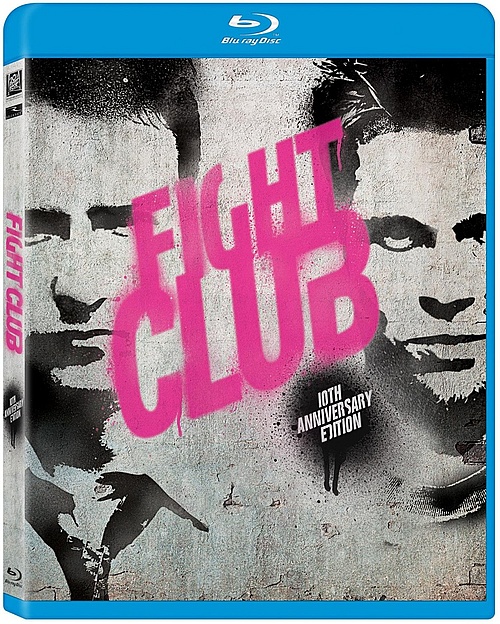
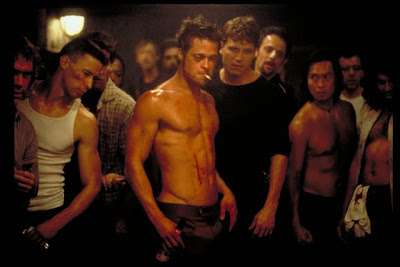
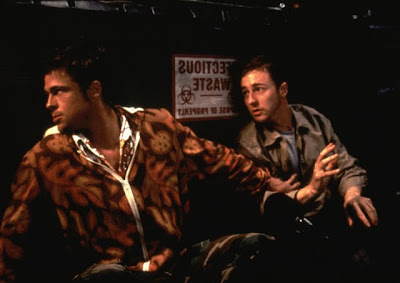
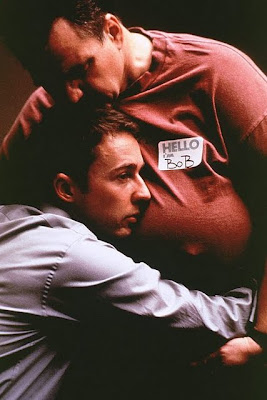
Blu-ray Review: Fight Club -- 10th Anniversary Edition (1999; 2009)

Now Available to Own


The idea of an unreliable narrator is a fascinating literary device that seems to play best in the realm of cinema as film manages to trick viewers like no other medium. Upon researching unreliable narrators, I discovered that they originated in Chaucer’s Canterbury Tales and since the publication of that work, writers have been using false tricksters to guide readers and viewers with tales of increasing complexity.

Probably the most famous work of unreliable narration of the ‘90s was employed in Bryan Singer’s masterful film, The Usual Suspects, which starred Kevin Spacey. The actor followed up Usual Suspects with another neo-noir for director David Fincher in the form of Seven.

After my friend and fellow film critic Colin Boyd urged me to see Zodiac, I realized that I’ve been consistently impressed by the films of David Fincher including Curious Case of Benjamin Button and Panic Room. However, at the time it was released, I loathed Seven and have yet to see it again. Although I grant that it was indeed intelligent and that Fincher's frequent star (in their initial coupling), Brad Pitt finally had the chance to show his enormous range for the first time, overall I felt that it was a downright disgusting thriller. Saw before the horror franchise and torture porn genre was born, Seven is a work I felt sickened trying to view as one that left nothing to the imagination and had no purpose other than to simply horrify.

Yet ironically, most individuals called Fincher’s follow-up Fight Club even more disturbing with some of my favorite critics going as far as to damn the film as one of the most dangerous pieces of cinema ever made… and not in a great Roman Polanski way. However, while it definitely was a chore to sit through, as a film, Fight Club was also brilliant, darkly comic and impossible to forget.

At its essence, the movie was more of an assault on our commercial society than simply a film about a bunch of guys just wailing on each other, which unfortunately was the way it was dismissed by a large amount of reviewers. Still enough viewers identified its underlying theme and overall message on a visceral as well as intellectual level which Variety’s David Rooney likewise acknowledged by writing that, “rarely has a film been so keyed into its time.” And the audience for Fight Club has only grown more passionate about the 1999 work ever since, thereby making it a bona fide cult classic ten years after Fincher’s previous star, Spacey and his film American Beauty earned Oscar gold.


Allegory to the max, Fight Club's final cut was extreme in every way imaginable to ramp up the Fincher’s subtext in Jim Uhls’ brilliant adaptation of Chuck Palahniuk’s novel. Every frame reaffirmed the film’s “message statement” against a generation abiding by “mission statements,” via its expressionistic usages of sound bridges and impressionistic marriage of production design, editing trickery, juxtaposition, and Edward Norton’s deadpan narration. In copious behind-the-scenes extra features, you can witness the painstaking effort of various departments working in tandem like the real external Project Mayhem crew of the movie’s internal guerilla group Project Mayhem to ensure that Fincher’s movie was as much of a psychological extension of the antithesis of late ‘90s consumer driven culture as was its main character Tyler Durden.

While on the surface, guys thrashed each other with full force, once you peeled past that outer layer, astute viewers understood that it’s a counterculture work using graphic imagery in place of a dull professorial lecture. As such, Fight Club is best experienced in the same allegorical spirit Peter Greenaway employed in his intensely sexual, over-the-top NC-17 rated The Cook, The Thief, His Wife, and Her Lover which was a disturbingly in-your-face response film to the British monarchy system of the ‘80s.


For those who have yet to see the movie, Fight Club follows our existentially adrift Narrator, played by Edward Norton, as an insurance calculator/cubicle drone who spends a large amount of time living a “single serving” life of travel by providing an impersonal mathematical formula gauging death vs. cost in deciding whether or not the major automobile company he works for should financially initiate a recall.

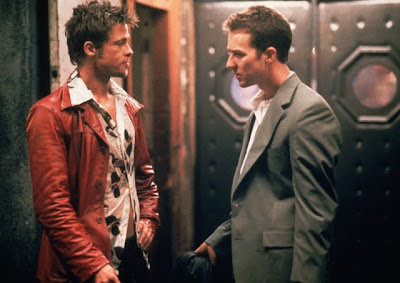
Furthermore, throughout the movie, Norton is credited with no set name other than “Jack” which is an in-film ironic joke after he finds a retro stack of informational health literature about Jack’s Medulla Oblongata, etc. Insomniac and dispassionate in his job, he takes to attending support groups for diseases he doesn’t have—anxious to simply feel and connect with strangers even for a brief period. However, our Narrator’s new and disturbing homeostasis proves to be a temporary solution, which is irrevocably altered when his condo full of Ikea purchased possessions blows up, forcing him to face his life and realize that he’s missing something vital. What he's missing, he realizes once he meets Tyler Durden (Pitt)—a loose cannon with whom he co-creates a “fight club” wherein men can work out their aggression on one another until this leads to acts of homegrown terrorism under the name of Project Mayhem.


Obviously this plot-point was a frightening development that critics and journalists feared would lead to off-screen destruction. And unfortunately, some young men—completely missing the film’s point—did indeed create their own fight clubs but again, this reaction made me recall the reaction to another movie made a decade earlier. Like Spike Lee’s Do The Right Thing, which many people felt would incite riots (and was blamed for the misfortune of being released before Rodney King)—Fight Club is a brilliant work that should incite thought instead of violence. Moreover, I couldn’t help realizing how sad it was at the time that those critiquing it didn’t give American audiences more respect and let the few who may have let media do their thinking for them give the millions of other intelligent viewers a bad name.

Additionally, as I learned in "How to Start a Fight," the original twenty page DVD booklet (which admirably cited reactions which ran the gamut), there is “more violence in the first 10 minutes of Saving Private Ryan than if you watched Fight Club for an entire year.” Moreover honestly, underneath all of the “macho posing,” right from its opening phallic imagery of a gun barrel placed in Norton’s mouth, overall it’s quite homoerotic as both women and gay men noticed instantly. This makes the idea that it’s a total “Guy Film Hall of Fame” movie (as SpikeTV inducted it a few months back, which is included on the Blu-ray) seem far more subversive and fun on another level as several years ago author Chuck Palahniuk finally outed himself as a gay man.


While I’ve never read the book by Palahniuk, I learned from research that the ending varies greatly from his original plot but the author has been widely quoted as stating that he prefers the film’s ending to his own published version. Overall, Jim Uhls' script echoed the tone of the book, which Uhls described as, “a seminal statement of the times, a statement about this particular generation, much in the same way the ‘60s were captured in the better films of that decade,” in Fight Club’s original production notes. And to his immense credit, Uhls succeeded as the film perfectly captured Palahniuk’s beliefs on the power of culture, which were listed in the booklet as follows:
“The first way in which a new generation takes control of society is through the culture; the arts, films, books, music. Through all entertainment. People who feel safe and secure in the existing society are frightened by ideas that threaten their power. People who hold the power in society want nice complacent forms of entertainment, films that comfort people and support the status quo.”
Fight Club was a risky film to be sure and one quite excessive in its violence but the visuals and juxtaposition of shots are quite novel. Producer Laura Ziskin (yes, only a female producer would touch it) really helped keep this labor of love on track by giving unprecedented power to Fincher. In doing so, former music video director Fincher shot more than three times the normal amount of film reels (IMDb) to get his vision right.

The film’s huge narrative shock and switch revealing our unreliable narrator was quite surprising in the first viewing but after one goes through the film again, one notices what a clever craftsman Fincher and his editor were as there are so many clues littered throughout the movie on several sensory levels designed to hit each part of the brain, whether visually, in a literary fashion etc. for a stunned intellectual punch.


Although it’s filmed in L.A., the setting of the work was always Wilmington, Delaware but predictably and with justification, the city officials were worried about duplicate attacks witnessed onscreen so the setting is anonymous, giving viewers a more terrifying experience as we see that it could occur anywhere. And indeed, the film itself took on a whole new resonance after the events of 9/11.

Suddenly a film about a generation without direction, without “great wars” or purpose whose characters resort to terrorism from consumer slavery became a bit too hard to handle as in a scene where Norton’s character prays for a plane crash as well as in the final moments as skyscrapers explode. It only had two years there (released in ’99) when the film fit in with its time but following 9/11, everything changed and suddenly the film felt like a period piece… or it did until its tenth anniversary rolled around.


While watching it again a few years back for an undergraduate project on neo-noir films, I did find it especially eerie considering the aforementioned sequences and sentiment. However, now in 2009, it feels not like it was simply a clever allegory nor a period piece of a more consumerist time but a wake up call in retrospect. Just like viewing the miniseries of Traffik in its twentieth anniversary hit me on a global level in terms of alarm bells regarding Afghanistan and Pakistan that will make you want to shout “why didn’t we do anything?” Fight Club is deeply affecting on the level of not just terror but consumerism as well.

In ’99, Tyler’s “you’re not the car you drive,” monologue was indeed meaningful but not nearly as much as it is now when viewed again in an era where debt has enslaved us to the point wherein most of us can’t even “go to jobs we hate” to “buy shit we don’t need,” since the basics are what’s adding up and this time around, we're also indebted by fighting two “great wars” that we didn’t have then. So suddenly Fight Club becomes just as urgent, tragic, and retroactively potent as ever. This is particularly evident given Project Mayhem’s insane movement to set the debt record back to zero so that everyone becomes free, which is not only just as terrifyingly allegorical as it always was but now makes us want to shout, “why didn’t we do anything?” from a peaceful standpoint, of course since as Palahniuk noted entertainment is the way to introduce ideas for real change.

Yet that quote from the Fight Club scribe is one of the problems with the film’s 10th Anniversary Blu-ray Edition... since it doesn’t exist. When purchased originally in 2000, the two disc DVD set featured not just superlative features packaged in a gorgeous format of concept art but it also contained a twenty page fact and photo filled guide that was Fox 2000 Pictures’ equivalent of releasing their own pre-Criterion version essay.

Missing even a basic one-page Blu-ray insert of what was then titled “Jack’s Chapters,” as well as the aforementioned guide, while Fox’s enviable Blu-ray clarity is top-notch, this single disc dully packaged edition contains just three new extras, with one consisting of a simple search index. Still, a search index is needed since the menu is presented in tinier font and laid out in a more confusing manner. But being that the other two new extras are purely the SpikeTV induction (memorable only for Norton’s dare to Pitt involving Mel Gibson) and a very interesting yet way too short demonstration of the sound design with 2-time Fincher Oscar nominee Ren Klyce, it leaves me hesitant to recommend the full price-tag of the Blu-ray upgrade since no doubt you’d want to hang onto your original DVDs and would therefore double your shelf-space.


While high definition is a great way to appreciate the movie, such a passionately thorough job was done by Fincher in the original film itself that—although it does improve the depth perception—I’m assuming that there will be a far more worthwhile Blu-ray release down the road, either from Fox or perhaps Criterion who were involved in Fincher’s Benjamin Button from its home entertainment debut.

The absence of new features with the cast in fact does make me wonder if they were all far too busy in their respective endeavors like the Button release and Inglourious Basterds to get more involved, yet Fincher does provide a small but tiny gag by inserting the menu of the 1999 film that drew in more box office than Club in the form of Drew Barrymore’s Never Been Kissed for a few seconds before Club kicks in.


Since press were sent notes and e-mails (I received one with the disc and one in the inbox) regarding the importance of not revealing the “Fincher gag,” I was extremely eager to uncover just what we were to expect when it finally arrived and while it’s cute for a moment, sadly just like the subtext of Kissed as having earned more money, this release without the superior packaging, DVD booklet or more than only a handful of bonuses just feels like a format upgrade for the dough and sans the spirit of Durden.

Needless to say, I am Jack’s Supreme Sense of Disappointment. Yet for those whose only interest is purely for the film and its format and not for the features, this particular release echoes one of my favorite lines by Norton's memorably unreliable narrator of, “it’s called a changeover, the movie goes on and nobody in the audience has any idea.”


Text ©2009, Film Intuition, LLC; All Rights Reserved. http://www.filmintuition.com
Unauthorized Reproduction or Publication Elsewhere is Strictly Prohibited.

4/07/2009

New on DVD & Blu-ray for the Week of 4/5/09

Jen's Pick of the Week:

Doubt


Delicious
Bookmark this on Delicious
submit to reddit
Print Page

Digg!


2010: The Year We Make Contact (Blu-ray)


Above the Law (Blu-ray)


American History X (Blu-ray)


Bedtime Stories


Britney: For the Record


Cleopatra: Universal Backlot Edition-- 75th Anniversary Edition


Collateral Damage (Blu-ray)


The Day the Earth Stood Still (2008)


Disney Animation Collection 1: Mickey & Beanstalk


Disney Animation Collection 2: Three Little Pigs


Disney Animation Collection 3: Prince and the Pauper


Donkey Punch


Doubt


House


I.O.U.S.A.


No Country for Old Men (Blu-ray Collector's Edition)


Not Easily Broken


One Missed Call: Final


Point of No Return (Blu-ray)


Pre Code Hollywood: The Collection


Scooby Doo & the Samurai Sword


Swamp Devil


The Tale of Despereaux


Tango & Cash (Blu-ray)


TCM Spotlight: Doris Day Collection


The Wedding Singer (Blu-ray)


Yes Man


Yo Gabba Gabba! New Friends


3/24/2009

Blu-ray Review: Primal Fear -- Hard Evidence Edition (1996)


Initially character acting was my gateway drug into the world of film and my appreciation for a performer's gift that seduced me into scholarly study of the craft. When I was a girl-- while other kids dreamed of becoming teachers and firemen-- there was an earnest period (following my brief determination to become the first female president of the United States) when I desperately wanted to become an actor.

Although a short-lived stint in Community Theater and taking part in school musicals helped cure me of any All About Eve pretensions, to me there was no greater thrill than watching a performer hold the audience captive with each subtle word, nuance, look, and movement captured in a motion picture.

In fact and despite my love of excellent writing, deft editing, classy choreography, and a pitch perfect score—to this day, I still feel that it's the performers that make or break material. For in the wrong hands, even O’Neill, Mamet, Miller, and Shakespeare can sound like a television movie of the week and in the same turn, a cheesy B-movie can move into the realm of art because the actor cast in the part refuses to give in and instead takes us with them on their journey.

As a kid, I had this experience of being figuratively swept away by the grandeur found in Nicholas Cage’s operatic performance in Moonstruck, Robert Downey Jr.’s transformation into Chaplin, Marisa Tomei’s comedic mastery in My Cousin Vinny, Kevin Spacey’s dazzling magic trick of conversational gymnastics in The Usual Suspects and of course, Edward Norton's riveting debut in Primal Fear.

To me, watching Edward Norton in Primal Fear is an experience I can only liken to seeing James Dean in Rebel Without a Cause for the first time. Although Norton reveals on Paramount Home Entertainment's brand-new Blu-ray Hard Evidence Edition of the movie, his belief that what “people seem to enjoy the most [about the movie and his character] is the sucker punch,” packed by Norton in the film's ending (when he uses his lawyer's ego against him in a way that still kills us just like seeing the face of Keyser Soze appearing out of the fax machine at the end of The Usual Suspects) but yet to just call his work gimmick-based will not do.


Unlike the countless “gotcha” endings that populated Hollywood movies post-M. Night Shyamalan and before the millennium hit, Primal Fear isn't just effective as one of those popular twist- based works. In fact, while watching the movie again more than a decade after it first screened in theaters-- my intellect got the better of me and logically I realized there’s an entire host of plot holes that are never resolve. And although perhaps all the pieces of the puzzle came together back in the original cut which was well over three hours long, in the end-- and much like a couple of the problems involved in Christopher Nolan's Memento-- we realize we could care less.

Featuring one of Richard Gere's most underrated and naturalistic performances (that now seems like it was the perfect segue for his foray into the musical Chicago), he plays off of the celebrity persona we've built up for him since we first fell head over heels with the man whose looks only improved with age right along with that Debra Winger’s Paula in An Officer and a Gentleman.


Much like Tom Cruise in Valkyrie and Collateral, Russell Crowe in American Gangster or Leonardo DiCaprio in Body of Lies today-- in the 90s it seemed nearly impossible to watch Gere and forget his movie star status, especially in the years that followed his mega blockbuster as the unlikely Prince Charming to Julia Roberts’ hooker with the heart of gold in Pretty Woman.

However, Primal Fear works this angle to masterful effect as we buy right into the idea that Richard Gere is the handsome, incredibly vain, morally questionable, fame and fortune seeking high powered criminal defense attorney Martin Vail. Letting endless quips about his lack of concern regarding his client’s guilt or innocence and his profession overall roll off of his tongue easily when lubricated by a cool drink to a reporter writing a piece on him (that he insists must be a “cover story”), shortly into the film he drops everything to go after her the most salacious case in town following the brutal stabbing of a revered Catholic archbishop.


Although the meek but blood-soaked altar boy Aaron Stampler is caught fleeing the scene of the crime and should be a slam-dunk for the D.A.'s office, determined for headlines and -- all the sweeter -- a chance to get back at his old employer when he worked for the prosecution, Vail throws his hat in the ring. The fact that the woman who used to sit “second chair” to him-- Janet Venable (Laura Linney in one of her earliest performances)-- has now landed his old gig as the lead prosecuting attorney makes Vail far more interested as well as we ascertain that he's hoping to reignite some sparks of what he considered a relationship and the much younger Janet instead called “a one night stand that lasted six months.”

Despite their brief scenes together away from the courtroom, the two generate some tangible sparks as Gere’s oft-repeated pickup line of “Wanna dance? All you have to do is turn around,” becomes a double entendre but it’s the courtroom where Linney (cast by director Gregory Hoblit due to her ability to command a theatrical stage) shows us what she is capable of and would continue to do in her future Oscar nominated career for films like You Can Count on Me and The Savages.


However, aside from Janet’s noble attempts to prosecute swiftly with a left hook, it’s advantage Martin Vail right from the start as he manages to land a few of the earliest punches when he informs his stuttering client to plead the fifth even when it comes down to responding to his understanding of the charges and bringing in a noted psychologist Frances McDormand for analysis.

Initially going with Aaron’s insistence that there was someone else in the archbishop’s room on the day of the murder, soon Vail has staff working overtime when seedy details concerning the archbishop are revealed along with suspicion that possibly Aaron’s mental state is questionable at best.

And although it's hard to believe that there are still people who haven’t witnessed Norton's extraordinary Golden Globe winning and Oscar nominated work in a star making role which was so impressive that-- based on his screen tests alone before even a frame of Primal Fear was shot he secured roles in Woody Allen’s Everyone Says I Love You and Milos Forman’s The People Vs. Larry Flynt-- l'm stopping my summary of the movie right there so as to avoid plot spoilers.

This is especially important since there could be no greater impact or recommendation of the movie than just strongly urging you to experience it for yourself in the hopes that in doing so, you’ll offer film buffs in Generation Y the chance to become inspired into the study of film as in the extraordinary Primal Fear, you're able to witness the idea of how words on a page are just that until they come to life by the ideal person for the job.

In his consistently classy and humble, gratitude filled interview featured in a Blu-ray segment devoted to the actor entitled “Primal Fear: Star Witness -- Casting Edward Norton,” he credits everyone involved in the projects and other various featurettes he shares his believe that he still feels extremely fortunate that he was “in the right place, at the right time” and with the right “idea of how to approach” the role of Aaron Stampler in the film based on the book by William Diehl.

In this crisply transferred Blu-ray, the filmmakers recount the entire process of the exhaustive search for just the right Aaron which consisted of nationwide cattle calls of more than 2,000 actors along with interest from major stars including Leonardo DiCaprio who ultimately turned it down since he was worn out from his breakneck schedule following his own Oscar nominated breakthrough performance in Lasse Hallstrom’s What’s Eating Gilbert Grape.

The Blu-ray boasts candid behind-the-scenes memories about not just Norton but the entire film that struggled with plotting issues and also with Hoblit’s insistence on the hiring of Laura Linney (with whom he’d worked before and his determination that along with including Norton, it was okay not to have A-list talent in every major role), as well as new insights from Hoblit (who also directed Fracture), Gere, Linney co-screenwriter Ann Biderman, and producers Howard W. Koch Jr., Gary Lucchesi, casting director Deborah Aquila and others.


In fact, the featurettes included on the Blu-ray of Primal Fear are incredibly fascinating and even more refreshingly, they don’t feel like mandatory electronic press kit "plug the movie" snippets, since once you see the film, your inquiring mind won’t rest until you go further into “the case.”

Although the picture quality is a vast improvement over the DVD format, the sound mixing on the Blu-ray is a downright mess for viewers without a great, state-of-the-art surround sound set-up. Using just an HDMI cord for both audio and video—while for most Blu-rays I’ve discovered that I’m still able to get an excellent and natural soundtrack just on the traditional plug and play option-- sadly, Fear had me reaching for the remote constantly as the volume on my HDTV had to climb well into the level of 50 and 60 to make out the dialogue before the overly loud soundtrack nearly blasted me out of my chair.

Quite an irritating distraction that takes away from this exceptional film’s impact when viewed at home to say the least and while I can’t judge whether or not this is also a problem on the DVD format of this brand new Hard Evidence Edition—be warned for Blu-rays, you may need to seriously adjust your sound settings on both the player and television to make it through the 130 minute running time without wearing out your remote.


However, I’m hopeful that—especially since the film refuses to age and still grabs your interest today no matter how many times you’ve seen it (much like Usual Suspects which was released just one year earlier)—eventually Paramount will release another edition of it perhaps for its fifteenth or twentieth anniversary and remedy the sound problem. Likewise, I’m also keeping my fingers crossed that if Hoblit’s extra 50 minutes of footage is lying around somewhere, it will also be served up as well so we can finally get a better explanation about some of the characters who are mentioned and/or appear only briefly and the question of just why a thorough background check on Aaron Stampler was never conducted.

However, sound issues aside—Primal Fear: Hard Evidence Edition is of the utmost interest for not just Norton, Gere, Linney, and Hoblit fans but movie lovers as well who get a certain rush whenever confronted by genius personified as Norton asserts himself with the ease of a pro in his first filmed role before he’d continue to stun in movies like American History X, Fight Club, The Illusionist, and Down in the Valley.

3/09/2009

New on DVD & Blu-ray for the Week of 3/8/09

Jen's Pick of the Week


Milk


Delicious
Bookmark this on Delicious
submit to reddit
Print Page

Digg!

Batman Anthology


Battle in Seattle


Ben X


The Best Years: The Complete First Season


The Boy in the Striped Pajamas


Brokeback Mountain [Blu-ray]


Cadillac Records


Caroline in the City: The Second Season


Cracker: The Complete Collection


Escape to Witch Mountain


Family Ties: The Complete Fifth Season


Get Smart: Season 3


Happy-Go-Lucky


Howard the Duck


Let the Right One In


Marie and Bruce


Milk


The Miracle Worker


Pinocchio


Primal Fear [Blu-ray]


Rachel Getting Married


Return from Witch Mountain


Role Models


Seven [Blu-ray]


The Shiralee


South Park: The Complete Twelfth Season


The Starter Wife: Season 1


Synecdoche, New York


The Transporter 3


1/30/2009

Blu-ray Review: Pride and Glory (2008)


Own It on DVD & Blu-ray


Delicious
Bookmark this on Delicious
submit to reddit
Print Page

Digg!

An Introduction

Much like other Warner Brothers films, Appaloosa, RocknRolla, and Towelhead which were also over-looked in a crowded year, the studio's excellent Pride and Glory-- acquired when WB absorbed the works in its sister company New Line Cinema-- is likewise searching for a well-deserved audience on DVD and Blu-ray.


While Towelhead suffered limited advertising and a rather disturbing subject matter and after years of mediocre Guy Ritchie efforts, audiences weren't prepared for what would be his best film in a decade with RocknRolla-- part of the lack of Pride's attendance could've been that-- just like the western Appaloosa, ticket buyers may have felt a sense of deja vu.

Due to the influx of cop corruption films over the last few years including the studio's own superlative Best Picture winner The Departed, last year's overlooked We Own the Night and 2008's gritty yet above-average Keanu Reeves turn in the James Ellroy penned Street Kings, by the time the long-delayed Glory hit theatres in October, viewers probably felt that much like the over-abundance of westerns in 2007 from The Assassination of Jesse James by the Coward Robert Ford to 3:10 to Yuma made them pass on Appaloosa, they weren't sure whether or not these lawmen were worth a chance.

And the answer-- just like Appaloosa, RocknRolla, and Towelhead-- was a resounding yes as Pride and Glory (as well as WB's other three) made my list of not just the most underrated and overlooked films of the year but ones well worth exploring for their commanding performances and none more so than to see Colin Farrell in Glory finish his '08 hat-trick (following Cassandra's Dreamand In Bruges) and quietly become the year's most valuable cinematic player.

While Entertainment Weekly crowned a terrific Robert Downey Jr. the entertainer of the year for his Comeback King like turn in Iron Man followed up by his Oscar nominated jab at Hollywood in Tropic Thunder (as well as an underrated Charlie Bartlett) and you won't find a bigger supporter of Downey than yours truly whose work in Chaplin is what first made me study film on a scholarly level-- honestly, I want to shout from the rooftops that this past year, Colin Farrell was the one who most deserved the praise.

And although I was thrilled to see him take home the Golden Globe for In Bruges-- now that all three of his phenomenal portrayals are available on either DVD or Blu-ray, it's time to pick 'em up and have yourself a mini-Farrell fest to realize that, subtly underneath all the well-deserved headlines about Ledger, Downey Jr., Cruise's comeback, and more-- the story nobody is reporting but should is that Colin Farrell is one of the most versatile actors we have working today, coming into his own in a trio of markedly different films all worthy of a permanent place in your home library (Pride, Cassandra's Dream, and In Bruges).

In honor of the Pride and Glory's release this week, Warner Brothers graciously sent me the Blu-ray for review but before I get into the disc's technical aspects, performance, and special features, here's another look at my analysis of the film from October 24, 2008.


I. The Film


Last year, some dubbed it the year of Philip Seymour Hoffman given his hat-trick of amazingly versatile performances in Charlie Wilson's War, The Savages and Before the Devil Knows You're Dead. So, using the same type of criteria, I'd say that 2008 belongs to Colin Farrell.


With a career changing role in the sleeper gem In Bruges-- still my favorite film of the year so far-- as the suicidal hitman growing a conscience while hiding out in Bruges, he managed to make me sit up and take notice for the first time since we'd seen him in Phone Booth. Of course, Bruges followed up his sensitive turn as an unlucky indebted gambler willing to murder to set things right in Woody Allen's equally underrated Cassandra's Dream and now he's back with a fierce portrayal in Pride and Glory. Farrell continually reveals layers with each new role he takes on and with Pride, he seemingly blends together the swaggering bravado of the cocky man from Bruges who is an emotional landmine ready to explode with the devastating portrayal of a man who's dug himself into an overwhelming hole in Dream. In fact, his performance in Pride is so good and so perfectly in tune with the rest of the story that I found myself taking it for granted as I watched.


And instead, I realized I was caught up with the film's moral compass played by Edward Norton as well as the sensitive family man who's torn between the black and white of what's right and wrong when you're a man in blue as portrayed by character actor Noah Emmerich (Beautiful Girls, Miracle). Emmerich reunites with director and friend Gavin O'Connor for the third time (following both Miracle as well as an explosive turn as an abusive tyrant at the beginning of Tumbleweeds which launched both O'Connor and its Oscar nominated star Janet McTeer) in this excellent, atmospheric and moody cop family drama about the NYPD.


Although IMDb research revealed the origins of the story dated back to 2001, after the tragic events of 9/11, the filmmakers and committed stars Mark Wahlberg and Hugh Jackman moved onto other things, wisely realizing that it wasn't the right time for a drama about the moral ambiguities and corruption that occurs sometimes within law enforcement. Following the success of The Departed (which finally found Wahlberg playing an Oscar nominated man with a badge in the Best Picture winning epic), we were flooded with cop dramas but when audiences shied away from last Fall's flawed but impressive We Own the Night (again with Wahlberg) and the even grittier Spring film Street Kings starring Keanu Reeves, Pride and Glory's release date was pushed from last March until today.


Usually when release dates are changed, the subtext is that the studio doesn't have much faith in their product and wants to do more tweaking either in the editing or marketing departments (unless the film is Harry Potter which was delayed purely to make Dark Knight level money next summer) but having just seen O'Connor's Pride this week, I can honestly say that I think placing it in the minds of viewers in the midst of Oscar season was an excellent move and great posturing on behalf of Warner Brothers (who have absorbed Pride's former studio New Line Cinema).


As I've already said, Farrell is simply a marvel but equally so are Norton and Emmerich and I'd say that all three would be worthy of a nomination yet because they all work as a bigger part of an ensemble drama, it'd be hard to make a Best Actor case for any (although they may try for Norton since he's the marquee name and most heroic character). Yet with three fighting for supporting contention, I worry they'll all get lost in the shuffle of what I've always considered to be the best two categories of the Academy Awards-- namely Best Supporting Actor and Best Supporting Actress.


The film centers on a family of New York cops headed up by the patriarch and police Chief Francis Tierney Sr. (Jon Voight) whose two sons, Francis Jr. (Emmerich) and Ray (Norton) have followed in his footsteps along with the husband of his daughter Megan (Lake Bell), Colin Farrell's wilder character Jimmy Egan. After a brutal killing has found four of NYPD's finest dead in a bloody massacre, the chief asks Ray-- who has banished himself from active policing by hiding out in the Missing Person's Department after a horrible tragedy-- to lead the investigation task force. Especially, the chief implores as both a father and Ray's superior that Ray should be there since the deceased were members of the same precinct headed up by his brother Francis where incidentally Jimmy also works.

"I Want You on the Task Force."


When some of the evidence begins to point in the direction of not just the men in blue but also to the members of his own family, Ray struggles to try and negotiate how to handle the situation in a world where officers take care of their own and "bleed blue" first and foremost.


Yet as director and co-writer Gavin O'Connor and his twin brother and fellow producer Greg note in the press release that as sons of a New York City police officer who grew up in the world of "the deep sense of loyalty" and "family ties--both personal and professional--that bind police officers," they wanted to try and conquer the "blue wall of silence." In doing so, Gavin argued that he desired to "explore the idea of that impenetrable code of honor between cops, and how words like pride and glory can be used to co-opt a good cop into participating in things he knows aren't right. They say 'cops bleed blue'...but outside of that blue wall, within their own families, they bleed red. If those two entities clashed, what would happen? Where would your loyalties lie?" And in using the as "the genesis of the story," Gavin also shared that the "police have no monopoly on closing ranks against those on the outside, especially in the face of corruption" and set out to use his own setting as "a metaphor" to investigate the idea of other institutions including big business corporations and the government who operate under similar self-made codes of conduct.


While admittedly, I feared that it would be another film which stereotyped police officers in a way that just perpetuates the hatred and distrust of the men and women whom we call in our most dire situations, as someone who also grew up around blue and deeply cares about accurate depictions, I felt like the O'Connors did a tremendous job. Namely, they walk the line between telling a good story and representing what really goes on in the world of law enforcement and the tough questions officers must ask themselves at the end of the day, working long hours for thankless wages in a system where criminals continue to walk the street one arrest after another.


Additionally, while normally in police movies-- especially in regards to The Departed-- the family and especially women are typically left out of the mix but above all, Pride is a family story and this isn't the case. British actress Jennifer Ehle (most famous for portraying Elizabeth Bennett in the BBC miniseries of Pride & Prejudice opposite Colin Firth) is extraordinarily good in her supporting role as Francis Jr.'s cancer-stricken wife whose quiet dignity and strength inspire her husband to try and set things right before it's too late.


And while admittedly the film ends on a Do The Right Thing vibe and is much grittier than one would assume, especially in a few scenes involving Farrell (one of which drew immature laughter from some audience members who were riddled with shock), it has a distinctly authentic look and feel accentuated by cinematographer Declan Quinn (truly one of the greats) and a memorable score by Mark Isham.


While as a film, The Departed is still a far superior work, I was surprised by how moving this film was and how much it still lingered in my mind throughout the rest of the week as I began appreciating it on different levels. Initially, first I began relishing in Norton's sublime return to making movies after an absence as this is right up there with Norton 2.0 works like The Painted Veil, The Illusionist, and Down in the Valley, plus a moving turn by Emmerich (a great character actor) as well as good ol' Farrell who keeps wowing us film-by-film-by-film here in 2008. When it comes to Farrell, it's not the luck of the Irish; he really is that good.

II. The Blu-ray


The purposely dark and grainy photography of Declan Quinn-- one of the best cinematographers working today alongside Robert Elswit (There Will Be Blood, Good Night and Good Luck) and Roger Deakins (The Assassination of Jesse James..., No Country for Old Men)-- is heightened considerably in its Blu-ray release.

Fitting in perfectly with the quintessentially dark and noir inspired Warner Brothers cinematographic landscape first established in the studio's Humphrey Bogart pictures in the '40s and solidified up through Tim Burton's studio work in the Batman franchise, the color of night is tinged with midnight blue and indigo peeking out of the sky and elegantly interrupting the film's grit when we cut to scenes of Norton's character living on a boat, away from the lights of New York City.

Providing a wonderful transfer level of the film's sound that doesn't have you constantly lunging for the remote to adjust the speaking voice, score, and sound effect levels simply via an HDMI cable hook-up from the player to the TV, you can hear every piece of glass shattered by Farrell in anger quickly into the film and the subtle inflection and differing dialogue styles of the softer spoken, sensitive Norton, the machismo of Farrell shouting at his colleagues, and Emmerich's switching from devoted husband to man on-the-job etc.


While it's a tad grainy in the seedy night closeups to heighten the danger of the streets in which the story is set and some of the dark colors blur towards the edges into one another in certain shots with the absence of ample lighting-- stylistically, it was probably to capture the docudrama approach but for added clarity, you can switch the visual setting on equipped televisions and players to heighten the sharpness.

In the sole roughly hour long special feature-- a making-of comprehensive documentary aptly titled Source of Pride to serve both as a reference to the film's title and director O'Connor's wish to ensure the utmost in authenticity in his film that it could be a source of pride for real NYPD officers, we're given unprecedented access to alternatively the pre-production and casting of background actors etc. as well as (its standout), going along with the cast as they work closely with real officers to do their characters justice.


Opening the documentary (which was shot entirely on location in Washington Heights, New York City), with a string of profanity to "drop the f***in' weapon," we're led directly into NYPD Tactical Training, ride-alongs, weapon discussions, and an essential actor boot-camp. From the O'Connor's sharing personal anecdotes of their own experiences with guns and having a father in law enforcement with one having actually had a loaded weapon aimed directly at his head once growing up to both round-table discussions with the officers involving Norton and ride-alongs where some of the actors (including a few who look visibly terrified) realize that the role of an officer isn't that much different than their own initially as they must be willing to improvise and adapt to any given situation before assessing what needs to be done-- it's a wonderfully intense and gripping behind-the-scenes piece that thankfully doesn't seem like added obligatory fluff.

Advising the actors that the family aspect of the film is just as important as the law enforcement side, the group spent a large amount of time in each other's company, eating dinner together to try and form some sort of relationship that would be instantly apparent onscreen, often not reading the script and instead just bonding as they discussed everything.

While Norton felt an urgent need to get the film made as quickly as possible as he said, feeling the script reflected what was going on in our country as we were facing-- in his words-- a "crucible" of whether or not to be honest and tell the truth on a number of many levels, the film can indeed be viewed as allegorical of as Gavin O'Connor notes "institutional corruption" or a cancer that spreads within an organization.


Firmly arguing that he did not set out to "bash cops," instead O'Connor states that it was his intention to form a story that would accurately address the change from the old-generation to the new-generation and said that ultimately it was his goal in his unceasing quest for authenticity that police officers would be able to walk out of the theatre, thinking the filmmakers had gotten "it right."

Also providing a second disc to receive an iTunes or Windows Media Digital Copy of Pride and Glory that's good for an entire year with the use of a special authorization code and enhanced to fill widescreen televisions completely, Pride and Glory hit shelves this week courtesy of New Line Cinema and Warner Brothers.