Showing posts with label Gavin O'Connor. Show all posts

6/26/2009

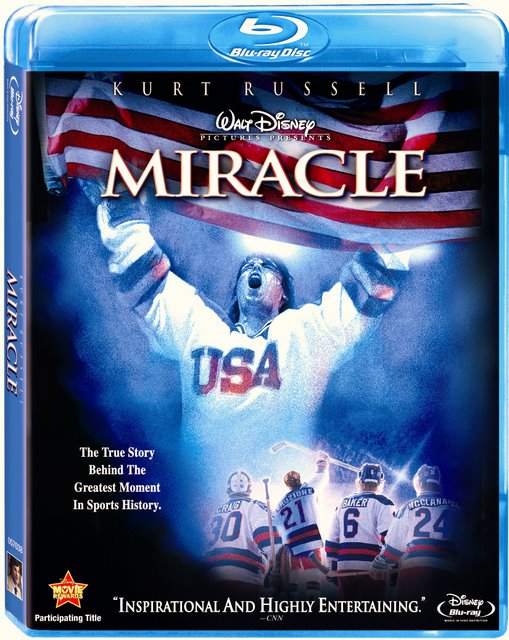
Blu-ray Review: Miracle (2004)


New on Blu-ray
(DVD Already Available)


Delicious
Bookmark this on Delicious
submit to reddit
Print Page

Digg!

MovieBlips: vote it up!

"Again," Herb Brooks repeats, forcing his assistant coach Craig Patrick to blow one terse whistle as the shrill sound signals the players of 1980's Team USA to skate back and forth all night after their 3-3 tie with Norway.

And once the skates of the college aged boy return back to Brooks and Patrick's side of the rink, it's "Again," he curtly calls out consistently to remind the boys to pay less attention to the blonde beauties and more attention to what they're doing in Lake Placid, New York. This continues on as he repeats his battle cry of "Again," way past the point of exhaustion until both Coach Patrick and the boys seem like they're ready to give in.

Yet they don't give in and that's what made the "do you believe in miracles?" defeat of the dominant Russian competitors by the scrappy and determined American players all the more inspiring since it gave our country a stronger sense of unity in a time marked by post-Vietnam, post-Nixon uncertainty coupled with the other tumultuous international events occurring simultaneously.


Of course, Disney-- or more specifically screenwriter Eric Guggenheim and director Gavin O'Connor took a creative license with what was called "Herbie's Day" by ending the scene with the resounding moral lesson that instead of calling out their names and the schools for which they played with Mike Eruzione's triumphant declaration that he played for the United States of America as opposed to staying with the facts that Mark Johnson smashed his stick against the glass out of intense frustration ending "Herbie's Day." Yet cinematically the switch is warranted as it's the defining moment for the film in its celebration of always returning to battle "again" until the ultimate goal was achieved both literally and figuratively.


And moreover, the inclusion of fabricated moments to heighten the retelling doesn't negatively impact what is otherwise an essentially by-the-numbers authentic retelling of what was arguably the most memorable Olympic Victory for this country since we first took part in the games.

Over the past twenty years, Disney has shown an unparalleled interest and success in bringing true sports stories of underdogs facing down giants to life in works such as the acclaimed Remember the Titans, Invincible, Glory Road, and The Greatest Game Ever Played just to name a few and they've managed to make the works successful to both fans and critics alike. And honestly Miracle skates by more on nostalgia than the aforementioned works because it isn't quite as engrossing on a character driven level as the structurally more impressive Invincible nor nearly as gripping and sociologically relevant as Remember the Titans and Glory Road or as technically daring as The Greatest Game Ever Played.

No, instead of spending a whole lot of time really looking for a way in to bring this to audiences on a more historically unique level-- overall, Miracle plays as a stellar reenactment of our amazing victory. Indeed, it's elevated considerably by the always underrated Kurt Russell who disappears into his role as Herb Brooks (making it a loving tribute to the man who would tragically perish in a car crash shortly after production was completed) as well as filmmaker Gavin O'Connor's risky decision to recreate that penultimate match before we took the gold after defeating Finland.

While of course due to the intense research, the involvement of Herb Brooks, key players, and the fact that it was incredibly well-documented by ABC in its original 1980 broadcast assisted the filmmakers greatly, as they note in a Blu-ray making-of-extra, when it comes right down to it, "you can't fake hockey."


Collaborating alongside a technically impressive and trained group of experts, they worked out 133 plays which they choreographed, digitized and recreated with computer animation as if-- they joke-- constructing "a military battle plan" that they captured with numerous cameras to bring us closer inside the game than we'd originally seen on television nearly 30 years ago. And in fact by inserting many more cameras on the ice and therefore having to also work out in painstaking detail where the cameras would be to avoid injury, they ensure continuity and accuracy, yet at the same time manage to get the best image possible which is an exceptional achievement.

It's also aided considerably by its cast of mostly unknown athletes-- including Billy Schneider who portrayed his father Buzz Schneider--all of whom they hired first for their hockey and skating ability before they worried about acting from the pool of more than 4,000 men who showed up to fight for a chance to take on one of the 20 famous slots on the team which makes their movements on the ice incredibly believable. Yet aside from a few obvious standouts, overall the point-of-view of the players or much about their individual personalities is abandoned to take a Herb Brooks approach of making it all about the team and the training on the path to Olympic glory.


Bravely going against the easy approach of just playing Brooks as a complete Dudley Do-Right style hero, Russell-- who nails my native Minnesota accent so perfectly that it's downright uncanny-- presents us with a complex portrait of Brooks who would prefer to be loathed and have his assistant Coach Patrick (the terrific character actor Noah Emmerich) along on the team to be the friendly buffer to push the kids to the limit.

From the near-instantaneous decision which athletes he will recruit onto his team by ignoring the board and money men as well as some of the very best or most obviously gifted players to find the 20 he can mold together to giving them a psychological test to figure out their personalities and how best to manipulate that data for the overall goal-- Brooks is a fascinating figure.


Extremely determined to beat the unstoppable force of the (then) USSR players by training harder, out-skating them, and using their "team play" idea against them by changing the style of the game even to the point of alienating those around him and making questionable decisions-- it's Russell's most fully realized character and strongest performance in years as it becomes just like Hoosiers more of a coach-centric journey rather than one about the players on the team.


Although it's a bit overly long and Patricia Clarkson is wasted in numerous scenes as the stereotypical sports movie wife who jockeys for position and tries to remind Herb not to overwork himself and also spend time with his family and again, we're never that drawn in by the players themselves-- mostly the movie feels like an exceptionally well-choreographed Olympic skating routine.

And as such it delivers all of its competition required technical moves with crisp precision and manages to get the audience in on the routine because there's just no way to describe that feeling of the '80 miracle on ice rather than to just show it to you again in the hopes of inspiration and encouragement when we needed it most as a nation. For fittingly, I discovered it was not only released three years after 9/11 but was also the first movie that filmmakers had to digitally recreate the Twin Towers in production since the terrorist attacks had occurred.

Similarly it reminds us once again of the ingenious methods of Herb Brooks with some terrific extra footage including a videotaped meeting of Herb with Russell and the filmmakers and a plethora of making-of extras and analysis of the game by ESPN in a roundtable in this stellar Blu-ray.

With full HD quality in its 2.40:1 aspect ratio and English 5.1 DTS-Master Audio, the sound and picture is so rich and textured that you can hear the blades crunch on the ice and the puck hit the goal in those aforementioned player point-of-view on-the-ice game shots, ensuring that it's another good time to bring out Miracle once again to rally us just before the thirtieth anniversary of that remarkable game. So to honor Brooks and the players-- go ahead and sound the whistle and get ready to skate "Again!"

1/30/2009

Blu-ray Review: Pride and Glory (2008)


Own It on DVD & Blu-ray


Delicious
Bookmark this on Delicious
submit to reddit
Print Page

Digg!

An Introduction

Much like other Warner Brothers films, Appaloosa, RocknRolla, and Towelhead which were also over-looked in a crowded year, the studio's excellent Pride and Glory-- acquired when WB absorbed the works in its sister company New Line Cinema-- is likewise searching for a well-deserved audience on DVD and Blu-ray.


While Towelhead suffered limited advertising and a rather disturbing subject matter and after years of mediocre Guy Ritchie efforts, audiences weren't prepared for what would be his best film in a decade with RocknRolla-- part of the lack of Pride's attendance could've been that-- just like the western Appaloosa, ticket buyers may have felt a sense of deja vu.

Due to the influx of cop corruption films over the last few years including the studio's own superlative Best Picture winner The Departed, last year's overlooked We Own the Night and 2008's gritty yet above-average Keanu Reeves turn in the James Ellroy penned Street Kings, by the time the long-delayed Glory hit theatres in October, viewers probably felt that much like the over-abundance of westerns in 2007 from The Assassination of Jesse James by the Coward Robert Ford to 3:10 to Yuma made them pass on Appaloosa, they weren't sure whether or not these lawmen were worth a chance.

And the answer-- just like Appaloosa, RocknRolla, and Towelhead-- was a resounding yes as Pride and Glory (as well as WB's other three) made my list of not just the most underrated and overlooked films of the year but ones well worth exploring for their commanding performances and none more so than to see Colin Farrell in Glory finish his '08 hat-trick (following Cassandra's Dreamand In Bruges) and quietly become the year's most valuable cinematic player.

While Entertainment Weekly crowned a terrific Robert Downey Jr. the entertainer of the year for his Comeback King like turn in Iron Man followed up by his Oscar nominated jab at Hollywood in Tropic Thunder (as well as an underrated Charlie Bartlett) and you won't find a bigger supporter of Downey than yours truly whose work in Chaplin is what first made me study film on a scholarly level-- honestly, I want to shout from the rooftops that this past year, Colin Farrell was the one who most deserved the praise.

And although I was thrilled to see him take home the Golden Globe for In Bruges-- now that all three of his phenomenal portrayals are available on either DVD or Blu-ray, it's time to pick 'em up and have yourself a mini-Farrell fest to realize that, subtly underneath all the well-deserved headlines about Ledger, Downey Jr., Cruise's comeback, and more-- the story nobody is reporting but should is that Colin Farrell is one of the most versatile actors we have working today, coming into his own in a trio of markedly different films all worthy of a permanent place in your home library (Pride, Cassandra's Dream, and In Bruges).

In honor of the Pride and Glory's release this week, Warner Brothers graciously sent me the Blu-ray for review but before I get into the disc's technical aspects, performance, and special features, here's another look at my analysis of the film from October 24, 2008.


I. The Film


Last year, some dubbed it the year of Philip Seymour Hoffman given his hat-trick of amazingly versatile performances in Charlie Wilson's War, The Savages and Before the Devil Knows You're Dead. So, using the same type of criteria, I'd say that 2008 belongs to Colin Farrell.


With a career changing role in the sleeper gem In Bruges-- still my favorite film of the year so far-- as the suicidal hitman growing a conscience while hiding out in Bruges, he managed to make me sit up and take notice for the first time since we'd seen him in Phone Booth. Of course, Bruges followed up his sensitive turn as an unlucky indebted gambler willing to murder to set things right in Woody Allen's equally underrated Cassandra's Dream and now he's back with a fierce portrayal in Pride and Glory. Farrell continually reveals layers with each new role he takes on and with Pride, he seemingly blends together the swaggering bravado of the cocky man from Bruges who is an emotional landmine ready to explode with the devastating portrayal of a man who's dug himself into an overwhelming hole in Dream. In fact, his performance in Pride is so good and so perfectly in tune with the rest of the story that I found myself taking it for granted as I watched.


And instead, I realized I was caught up with the film's moral compass played by Edward Norton as well as the sensitive family man who's torn between the black and white of what's right and wrong when you're a man in blue as portrayed by character actor Noah Emmerich (Beautiful Girls, Miracle). Emmerich reunites with director and friend Gavin O'Connor for the third time (following both Miracle as well as an explosive turn as an abusive tyrant at the beginning of Tumbleweeds which launched both O'Connor and its Oscar nominated star Janet McTeer) in this excellent, atmospheric and moody cop family drama about the NYPD.


Although IMDb research revealed the origins of the story dated back to 2001, after the tragic events of 9/11, the filmmakers and committed stars Mark Wahlberg and Hugh Jackman moved onto other things, wisely realizing that it wasn't the right time for a drama about the moral ambiguities and corruption that occurs sometimes within law enforcement. Following the success of The Departed (which finally found Wahlberg playing an Oscar nominated man with a badge in the Best Picture winning epic), we were flooded with cop dramas but when audiences shied away from last Fall's flawed but impressive We Own the Night (again with Wahlberg) and the even grittier Spring film Street Kings starring Keanu Reeves, Pride and Glory's release date was pushed from last March until today.


Usually when release dates are changed, the subtext is that the studio doesn't have much faith in their product and wants to do more tweaking either in the editing or marketing departments (unless the film is Harry Potter which was delayed purely to make Dark Knight level money next summer) but having just seen O'Connor's Pride this week, I can honestly say that I think placing it in the minds of viewers in the midst of Oscar season was an excellent move and great posturing on behalf of Warner Brothers (who have absorbed Pride's former studio New Line Cinema).


As I've already said, Farrell is simply a marvel but equally so are Norton and Emmerich and I'd say that all three would be worthy of a nomination yet because they all work as a bigger part of an ensemble drama, it'd be hard to make a Best Actor case for any (although they may try for Norton since he's the marquee name and most heroic character). Yet with three fighting for supporting contention, I worry they'll all get lost in the shuffle of what I've always considered to be the best two categories of the Academy Awards-- namely Best Supporting Actor and Best Supporting Actress.


The film centers on a family of New York cops headed up by the patriarch and police Chief Francis Tierney Sr. (Jon Voight) whose two sons, Francis Jr. (Emmerich) and Ray (Norton) have followed in his footsteps along with the husband of his daughter Megan (Lake Bell), Colin Farrell's wilder character Jimmy Egan. After a brutal killing has found four of NYPD's finest dead in a bloody massacre, the chief asks Ray-- who has banished himself from active policing by hiding out in the Missing Person's Department after a horrible tragedy-- to lead the investigation task force. Especially, the chief implores as both a father and Ray's superior that Ray should be there since the deceased were members of the same precinct headed up by his brother Francis where incidentally Jimmy also works.

"I Want You on the Task Force."


When some of the evidence begins to point in the direction of not just the men in blue but also to the members of his own family, Ray struggles to try and negotiate how to handle the situation in a world where officers take care of their own and "bleed blue" first and foremost.


Yet as director and co-writer Gavin O'Connor and his twin brother and fellow producer Greg note in the press release that as sons of a New York City police officer who grew up in the world of "the deep sense of loyalty" and "family ties--both personal and professional--that bind police officers," they wanted to try and conquer the "blue wall of silence." In doing so, Gavin argued that he desired to "explore the idea of that impenetrable code of honor between cops, and how words like pride and glory can be used to co-opt a good cop into participating in things he knows aren't right. They say 'cops bleed blue'...but outside of that blue wall, within their own families, they bleed red. If those two entities clashed, what would happen? Where would your loyalties lie?" And in using the as "the genesis of the story," Gavin also shared that the "police have no monopoly on closing ranks against those on the outside, especially in the face of corruption" and set out to use his own setting as "a metaphor" to investigate the idea of other institutions including big business corporations and the government who operate under similar self-made codes of conduct.


While admittedly, I feared that it would be another film which stereotyped police officers in a way that just perpetuates the hatred and distrust of the men and women whom we call in our most dire situations, as someone who also grew up around blue and deeply cares about accurate depictions, I felt like the O'Connors did a tremendous job. Namely, they walk the line between telling a good story and representing what really goes on in the world of law enforcement and the tough questions officers must ask themselves at the end of the day, working long hours for thankless wages in a system where criminals continue to walk the street one arrest after another.


Additionally, while normally in police movies-- especially in regards to The Departed-- the family and especially women are typically left out of the mix but above all, Pride is a family story and this isn't the case. British actress Jennifer Ehle (most famous for portraying Elizabeth Bennett in the BBC miniseries of Pride & Prejudice opposite Colin Firth) is extraordinarily good in her supporting role as Francis Jr.'s cancer-stricken wife whose quiet dignity and strength inspire her husband to try and set things right before it's too late.


And while admittedly the film ends on a Do The Right Thing vibe and is much grittier than one would assume, especially in a few scenes involving Farrell (one of which drew immature laughter from some audience members who were riddled with shock), it has a distinctly authentic look and feel accentuated by cinematographer Declan Quinn (truly one of the greats) and a memorable score by Mark Isham.


While as a film, The Departed is still a far superior work, I was surprised by how moving this film was and how much it still lingered in my mind throughout the rest of the week as I began appreciating it on different levels. Initially, first I began relishing in Norton's sublime return to making movies after an absence as this is right up there with Norton 2.0 works like The Painted Veil, The Illusionist, and Down in the Valley, plus a moving turn by Emmerich (a great character actor) as well as good ol' Farrell who keeps wowing us film-by-film-by-film here in 2008. When it comes to Farrell, it's not the luck of the Irish; he really is that good.

II. The Blu-ray


The purposely dark and grainy photography of Declan Quinn-- one of the best cinematographers working today alongside Robert Elswit (There Will Be Blood, Good Night and Good Luck) and Roger Deakins (The Assassination of Jesse James..., No Country for Old Men)-- is heightened considerably in its Blu-ray release.

Fitting in perfectly with the quintessentially dark and noir inspired Warner Brothers cinematographic landscape first established in the studio's Humphrey Bogart pictures in the '40s and solidified up through Tim Burton's studio work in the Batman franchise, the color of night is tinged with midnight blue and indigo peeking out of the sky and elegantly interrupting the film's grit when we cut to scenes of Norton's character living on a boat, away from the lights of New York City.

Providing a wonderful transfer level of the film's sound that doesn't have you constantly lunging for the remote to adjust the speaking voice, score, and sound effect levels simply via an HDMI cable hook-up from the player to the TV, you can hear every piece of glass shattered by Farrell in anger quickly into the film and the subtle inflection and differing dialogue styles of the softer spoken, sensitive Norton, the machismo of Farrell shouting at his colleagues, and Emmerich's switching from devoted husband to man on-the-job etc.


While it's a tad grainy in the seedy night closeups to heighten the danger of the streets in which the story is set and some of the dark colors blur towards the edges into one another in certain shots with the absence of ample lighting-- stylistically, it was probably to capture the docudrama approach but for added clarity, you can switch the visual setting on equipped televisions and players to heighten the sharpness.

In the sole roughly hour long special feature-- a making-of comprehensive documentary aptly titled Source of Pride to serve both as a reference to the film's title and director O'Connor's wish to ensure the utmost in authenticity in his film that it could be a source of pride for real NYPD officers, we're given unprecedented access to alternatively the pre-production and casting of background actors etc. as well as (its standout), going along with the cast as they work closely with real officers to do their characters justice.


Opening the documentary (which was shot entirely on location in Washington Heights, New York City), with a string of profanity to "drop the f***in' weapon," we're led directly into NYPD Tactical Training, ride-alongs, weapon discussions, and an essential actor boot-camp. From the O'Connor's sharing personal anecdotes of their own experiences with guns and having a father in law enforcement with one having actually had a loaded weapon aimed directly at his head once growing up to both round-table discussions with the officers involving Norton and ride-alongs where some of the actors (including a few who look visibly terrified) realize that the role of an officer isn't that much different than their own initially as they must be willing to improvise and adapt to any given situation before assessing what needs to be done-- it's a wonderfully intense and gripping behind-the-scenes piece that thankfully doesn't seem like added obligatory fluff.

Advising the actors that the family aspect of the film is just as important as the law enforcement side, the group spent a large amount of time in each other's company, eating dinner together to try and form some sort of relationship that would be instantly apparent onscreen, often not reading the script and instead just bonding as they discussed everything.

While Norton felt an urgent need to get the film made as quickly as possible as he said, feeling the script reflected what was going on in our country as we were facing-- in his words-- a "crucible" of whether or not to be honest and tell the truth on a number of many levels, the film can indeed be viewed as allegorical of as Gavin O'Connor notes "institutional corruption" or a cancer that spreads within an organization.


Firmly arguing that he did not set out to "bash cops," instead O'Connor states that it was his intention to form a story that would accurately address the change from the old-generation to the new-generation and said that ultimately it was his goal in his unceasing quest for authenticity that police officers would be able to walk out of the theatre, thinking the filmmakers had gotten "it right."

Also providing a second disc to receive an iTunes or Windows Media Digital Copy of Pride and Glory that's good for an entire year with the use of a special authorization code and enhanced to fill widescreen televisions completely, Pride and Glory hit shelves this week courtesy of New Line Cinema and Warner Brothers.

10/24/2008

Pride and Glory (2008)


Digg!

Last year, some dubbed it the year of Philip Seymour Hoffman given his hat-trick of amazingly versatile performances in Charlie Wilson's War, The Savages and Before the Devil Knows You're Dead. So, using the same type of criteria, I'd say that 2008 belongs to Colin Farrell.

With a career changing role in the sleeper gem In Bruges-- still my favorite film of the year so far-- as the suicidal hitman growing a conscience while hiding out in Bruges, he managed to make me sit up and take notice for the first time since we'd seen him in Phone Booth. Of course, Bruges followed up his sensitive turn as an unlucky indebted gambler willing to murder to set things right in Woody Allen's equally underrated Cassandra's Dream and now he's back with a fierce portrayal in Pride and Glory. Farrell continually reveals layers with each new role he takes on and with Pride, he seemingly blends together the swaggering bravado of the cocky man from Bruges who is an emotional landmine ready to explode with the devastating portrayal of a man who's dug himself into an overwhelming hole in Dream. In fact, his performance in Pride is so good and so perfectly in tune with the rest of the story that I found myself taking it for granted as I watched.


And instead, I realized I was caught up with the film's moral compass played by Edward Norton as well as the sensitive family man who's torn between the black and white of what's right and wrong when you're a man in blue as portrayed by character actor Noah Emmerich (Beautiful Girls, Miracle). Emmerich reunites with director and friend Gavin O'Connor for the third time (following both Miracle as well as an explosive turn as an abusive tyrant at the beginning of Tumbleweeds which launched both O'Connor and its Oscar nominated star Janet McTeer) in this excellent, atmospheric and moody cop family drama about the NYPD.


Although IMDb research revealed the origins of the story dated back to 2001, after the tragic events of 9/11, the filmmakers and committed stars Mark Wahlberg and Hugh Jackman moved onto other things, wisely realizing that it wasn't the right time for a drama about the moral ambiguities and corruption that occurs sometimes within law enforcement. Following the success of The Departed (which finally found Wahlberg playing an Oscar nominated man with a badge in the Best Picture winning epic), we were flooded with cop dramas but when audiences shied away from last Fall's flawed but impressive We Own the Night (again with Wahlberg) and the even grittier Spring film Street Kings starring Keanu Reeves, Pride and Glory's release date was pushed from last March until today.

Usually when release dates are changed, the subtext is that the studio doesn't have much faith in their product and wants to do more tweaking either in the editing or marketing departments (unless the film is Harry Potter which was delayed purely to make Dark Knight level money next summer) but having just seen O'Connor's Pride this week, I can honestly say that I think placing it in the minds of viewers in the midst of Oscar season was an excellent move and great posturing on behalf of Warner Brothers (who have absorbed Pride's former studio New Line Cinema).


As I've already said, Farrell is simply a marvel but equally so are Norton and Emmerich and I'd say that all three would be worthy of a nomination yet because they all work as a bigger part of an ensemble drama, it'd be hard to make a Best Actor case for any (although they may try for Norton since he's the marquee name and most heroic character). Yet with three fighting for supporting contention, I worry they'll all get lost in the shuffle of what I've always considered to be the best two categories of the Academy Awards-- namely Best Supporting Actor and Best Supporting Actress.

The film centers on a family of New York cops headed up by the patriarch and police Chief Francis Tierney Sr. (Jon Voight) whose two sons, Francis Jr. (Emmerich) and Ray (Norton) have followed in his footsteps along with the husband of his daughter Megan (Lake Bell), Colin Farrell's wilder character Jimmy Egan. After a brutal killing has found four of NYPD's finest dead in a bloody massacre, the chief asks Ray-- who has banished himself from active policing by hiding out in the Missing Person's Department after a horrible tragedy-- to lead the investigation task force. Especially, the chief implores as both a father and Ray's superior that Ray should be there since the deceased were members of the same precinct headed up by his brother Francis where incidentally Jimmy also works. When some of the evidence begins to point in the direction of not just the men in blue but also to the members of his own family, Ray struggles to try and negotiate how to handle the situation in a world where officers take care of their own and "bleed blue" first and foremost.


Yet as director and co-writer Gavin O'Connor and his twin brother and fellow producer Greg note in the press release that as sons of a New York City police officer who grew up in the world of "the deep sense of loyalty" and "family ties--both personal and professional--that bind police officers," they wanted to try and conquer the "blue wall of silence." In doing so, Gavin argued that he desired to "explore the idea of that impenetrable code of honor between cops, and how words like pride and glory can be used to co-opt a good cop into participating in things he knows aren't right. They say 'cops bleed blue'...but outside of that blue wall, within their own families, they bleed red. If those two entities clashed, what would happen? Where would your loyalties lie?" And in using the as "the genesis of the story," Gavin also shared that the "police have no monopoly on closing ranks against those on the outside, especially in the face of corruption" and set out to use his own setting as "a metaphor" to investigate the idea of other institutions including big business corporations and the government who operate under similar self-made codes of conduct.


While admittedly, I feared that it would be another film which stereotyped police officers in a way that just perpetuates the hatred and distrust of the men and women whom we call in our most dire situations, as someone who also grew up around blue and deeply cares about accurate depictions, I felt like the O'Connors did a tremendous job. Namely, they walk the line between telling a good story and representing what really goes on in the world of law enforcement and the tough questions officers must ask themselves at the end of the day, working long hours for thankless wages in a system where criminals continue to walk the street one arrest after another.

Additionally, while normally in police movies-- especially in regards to The Departed-- the family and especially women are typically left out of the mix but above all, Pride is a family story and this isn't the case. British actress Jennifer Ehle (most famous for portraying Elizabeth Bennett in the BBC miniseries of Pride and Prejudice opposite Colin Firth) is extraordinarily good in her supporting role as Francis Jr.'s cancer-stricken wife whose quiet dignity and strength inspire her husband to try and set things right before it's too late. And while admittedly the film ends on a Do the Right Thing vibe and is much grittier than one would assume, especially in a few scenes involving Farrell (one of which drew immature laughter from some audience members who were riddled with shock), it has a distinctly authentic look and feel accentuated by cinematographer Declan Quinn (truly one of the greats) and a memorable score by Mark Isham.


While as a film, The Departed is still a far superior work, I was surprised by how moving this film was and how much it still lingered in my mind throughout the rest of the week as I began appreciating it on different levels. Initially, first I began relishing in Norton's sublime return to making movies after an absence as this is right up there with Norton 2.0 works like The Painted Veil, The Illusionist, and Down in the Valley, plus a moving turn by Emmerich (a great character actor) as well as good ol' Farrell who keeps wowing us film-by-film-by-film here in 2008. When it comes to Farrell, it's not the luck of the Irish; he really is that good.


Explore the Incredible Work from the
Cast and Crew of
Pride and Glory