Showing posts with label Music. Show all posts

10/13/2021

Movie Review: The Velvet Underground (2021)


Now Available


Dig the scene. In the middle of the 1960s, a former New York Polish wedding and social hall nicknamed The Dom could for weeks at a time be the musical residency of The Velvet Underground as they played night after night with the experimental films of Andy Warhol and company projected larger-than-life on the wall behind them. Colorful, spinning psychedelic lights that bounced off surfaces in all directions were usually operated by the first person who volunteered when Warhol asked if anyone knew how to work the equipment. Occasionally this led to mishaps where bulbs broke and spotlights fell from the balcony when they were operated by someone with more confidence and amphetamines than any real technical know-how. 

Ignoring this, on the ballroom floor below, patrons danced – not just people, but a wide cross-section of East Coasters. Filling The Dom, you could find bikers, drag queens, juvenile delinquents, Harvard professors, art collectors, poets, leftover Beats who hadn't gone west to San Francisco, the kind of arty junkies who flooded in and out of The Factory throughout the decade, future “Chelsea Girls,” as well as Warhol's influential friends like Jackie Kennedy and Walter Cronkite. On a given evening, they'd be there side-by-side, milling and dancing next to some broken lights, next to someone with broken dreams, listening to some intentionally broken chords as they struggled not to break amid the overwhelm of polka dots, spirals, mazes, and avant-garde imagery going on around them.

It was a scene of too much too-muchness. But strip away the visual spectacle and "anti-elite elite" hobnobbing, just focus on the sound, and the same can be said for the music of the Underground. A sort of dissonant bubble-gum rockabilly filled with viola strings that sounded like saws, drums straight out of Bo Diddley,  the droning, deliberate delivery of guest vocalist Nico, a searing guitar, and stream-of-consciousness lyrics about drugs, sex, and the New York streets outside, the sound alone was brutal, beautiful, bold, brilliant, and played on all the senses at once. 

With so much to take in, is it any wonder it didn't last? Is it any wonder it was chaos? And is it any wonder that it still sounds so fresh – so much like the act of creativity in process – that it still inspires us fifty-five years later?


Seeking to not only encapsulate and explore the roots and history of both the band and the scene from the people who lived to tell the tale but also do so in a way that brings a night at The Dom or The Factory to viewers watching it today, with “The Velvet Underground,” director Todd Haynes has released his first full-length musical documentary. And fittingly, especially from a man who once told the Karen Carpenter story with Barbie dolls and made the nonlinear, arty film “I'm Not There” about Bob Dylan, it's much more avant-garde than it is VH1 Behind the Music.

It opens with dueling yet complementary narratives of The Velvet Underground's own version of Wilson and Love, Lennon and McCartney, Jagger and Richards, and Page and Plant. In Haynes' film, portraits of the band's eventual founders Lou Reed and John Cale as emotionally and creatively frustrated young artists emerge, which foreshadow both their future promise as well as the way that their two titanic personalities will only temporarily harmonize in mutual dissonance before they can hold that note no longer.

Paying the most attention to those two figures, with the scales tipping more in favor of the man who was with the band the longest in Reed, the documentary chronicles the way they came with ample baggage from vastly different backgrounds before impossibly finding one another in New York. Reed, then working as a fast songwriter and musician for hire, first collaborated with the Welsh-born multi-instrumentalist on an insanely catchy forgotten dance single called “The Ostrich,” but rather than a one-off thing, their passion for improvisational composition bonded the two right from the start.


While Reed, who sought inspiration in poets like Ginsberg and Rimbaud, longed to translate his raw, gritty, profane poetry into rock hits in a way similar to The Rolling Stones, Cale loved experimenting with new modes of expression using tones, drones, and dissonance, and spent his time studying with the avant-garde musicians of the day. Bonded by their otherness, their loathing of the mainstream, and determination to go against the status quo, once they got together with guitarist Sterling Morrison, and drummer Maureen “Mo” Tucker (replacing Angus MacLise), they sought to bring high art to the gutter, and still make it something people wanted to hear, whether they could dance to it or not.

From the in-name-only Warhol produced “Banana Album” with Nico to Reed eventually firing Warhol (without the band's input) so they could go on to push the limits even further with “White Light/White Heat” and more, this lineup was as revelatory as it was combustible.

Ego, attitudes, communication breakdown, and infighting – all accelerated by drugs, insecurity, posturing, jealousy, uncertainty, and the era – in the film, we're given an engrossing “he said," "she heard," "I think," "you recall,” overview of the band. And along the way, Haynes worries less about fact-checking, follow-ups, or sourcing certain claims than he does in making his “Velvet Underground” vibrate on a darkly intoxicating, dissonant frequency that we might've expected to come from Cale's viola or Morrison's guitar.


Like something straight out of The Dom, it's filled with art, imagery, and colorful flashing lights to the point that it should come with a warning for those with epilepsy or migraine light sensitivity. While admittedly, there are times I longed for more details about certain songs (“Heroin” gets the lion's share of the screen-time) as well as the post-Nico and Cale albums or more analysis of the personnel changes, it's all told with so much affection, color, and vigor that it immediately draws you in with its too much too-muchness. An exhaustively covered period in music and pop culture journalism, Haynes' version of the events adds more humanity, humor, and warmth to the proceedings than one might expect when contrasted by the coolly detached handling of the Velvets in past docs.

Feeling like we're with the band rather than just dryly reverential of Warhol, Cale, or Reed, there are no villains in “The Velvet Underground.” To this end, I applaud the decision here to invite Reed's sister to weigh in about the often biased chronicling of the shock treatment era in her brother's adolescence. Similarly, the film gives Nico more respect as a poet and professional than she normally receives, and treats Warhol as more of a friend, facilitator, and minor figure rather than the driving force behind the band, in a way that feels right and overdue. Also welcome is the way Haynes refuses to gloss over the drugs or the misogyny of The Factory that treated women as currency where their value came only in their physical appearance. Even if the latter gets a brief mention, it's reassuring that he's unwilling to simply romanticize all things Warhol as other filmmakers have done in the past and instead allow some of the degradation and darkness – incidentally the two things Reed liked in sex – to rightfully permeate this chronicling of events.


A labor of love by a filmmaker who's so enamored of the band and era that one of his earliest big studio movies for Miramax was the unfairly maligned glam rock opus “Velvet Goldmine,” “The Velvet Underground” is a documentary that, in tribute to its subject, is as artful as a film as it is experimental. Neither as dryly objective as a more academically minded PBS doc nor as full of insider-only information that those unfamiliar with the band won't still be able to appreciate, it's a seductive mix of both approaches plus something wholly its own. And to Haynes' great credit, “The Velvet Underground” plays halfway between a night of excess and broken glass at The Dom and the after-party where you leave the lights and the dance floor behind you to just hang – somewhere in NY, somewhere underground, somewhere dangerous – with the band.

 
Buy Me a Coffee at ko-fi.com
Text ©2021, Film Intuition, LLC; All Rights Reserved. https://www.filmintuition.com  Unauthorized Reproduction or Publication Elsewhere is Strictly Prohibited and in violation of the Digital Millennium Copyright Act.  Also, as an Amazon Associate, I earn from qualifying purchases made off my site through ad links. FTC Disclosure: Per standard professional practice, I may have received a review copy or screener link of this title to voluntarily decide to evaluate it for my readers, which had no impact whatsoever on whether or not it received a favorable or unfavorable critique. Cookies Notice: This site incorporates tools (including advertiser partners and widgets) that use cookies and may collect some personal information to display ads tailored to you etc. Please be advised that neither Film Intuition nor its site owner has any access to this data beyond general site statistics (geographical region etc.) as your privacy is our main concern.

9/18/2019

Blu-ray Review: Echo in the Canyon (2018)


Now Available


The second film released so far this year that was at least partially inspired by Jacques Demy's 1969 English language debut Model Shop, just like Quentin Tarantino's Once Upon a Time in Hollywood, Echo in the Canyon is a love letter to L.A. in the 1960s.

And while Hollywood turned fact into fiction, as a documentary, Echo deals strictly with the facts. Or if not facts then the stories people have told themselves often enough to become facts, as Wallflowers front man Jakob Dylan discovers when he interviews landmark figures in the music scene who created the iconic California sound responsible for luring so many people from all over to the hills of Hollywood like a siren song.

Talking to the living members of The Byrds, The Mamas and The Papas, The Beach Boys, Buffalo Springfield, and more as well as next generation artists Tom Petty and Jackson Browne, Echo in the Canyon is at its most compelling best when it allows the voices of the era — including British imports Eric Clapton and Ringo Star — to speak for themselves and control the narrative.


Filling Echo with the gorgeous sounds of some of the Laurel Canyon scene's most definitive musical poems, we learn the story behind a few of the era's ubiquitous hits, including one confession by Michelle Phillips about her affair with bandmate Denny Doherty, which inspired her other bandmate — her husband John Phillips — to write "Go Where You Wanna Go."

Wanting to pay tribute to these songs and artists (and undoubtedly save a bundle on music rights fees) in a modern day narrative that is unfortunately far less engrossing than Dylan's interviews, the film follows the passionate Jakob Dylan as he gathers other musicians and records new covers of the songs he then performs in a live show.

A veritable jumble that has us jump from an engrossing interview with somebody like the great Brian Wilson to Dylan performing "In My Room" with Fiona Apple onstage and/or in the studio, the entertaining, if admittedly strained work, tries to cover too much ground and — like wind chimes blowing in the breeze — sounds lovely in the moment but fails to leave a lasting impression.


Nonetheless well-intentioned, Echo in the Canyon feels like it should've been made into two separate films — the first, a historical look at the music scene and the second, an affectionate concert filled with talented artists like Beck and Norah Jones celebrating the music they love in song.

Underplaying some of the big conflicts of the era including the Vietnam War and the protest anthems that came out of the late 1960s and ignoring some of the major voices of the era including the glaringly overlooked Joni Mitchell and The Doors, Echo, it seems, protects egos by picking and choosing the stories it wants to tell.

Directed by the former President of Columbia Records, Andrew Slater, who dreamed up the idea with Dylan after the two viewed Model Shop, which they felt was the visual equivalent of what The Mamas and The Papas or The Beach Boys sounded like, the film works very well as a promotional video for its catchy, star-studded soundtrack. As such, I defy anyone to watch Echo and not instantly become a new fan of Jade Castrinos, who, in accompanying Dylan, sings her absolute heart out.


However, brief scenes where Dylan sits around with artists and talks about their influences feel forced, as though they're eating up screen time that would've been better utilized by the original artists as they reveal their own influences and experiences writing, recording, and sharing songs with their neighbors in the artistically welcoming environment.

Though it feels like a California hangout movie, in the end, Echo in the Canyon is a missed opportunity to either delve more deeply into the subject at its core or focus purely on the impact that the music had on generations of other artists.

Anchored by the admirably knowledgeable Dylan and Slater, Echo shines brightest in its interviews and in some truly rousing performances. Yet instead of dividing the chorus from the melody to separate the music of the past from the sounds of the future, Slater's film plays like a passionate cover band album. A pleasant but empty experience, Echo in the Canyon brings back the memory of a concert you've never been to before but it could've — and indeed should've — been so much more.


Text ©2019, Film Intuition, LLC; All Rights Reserved. https://www.filmintuition.com Unauthorized Reproduction or Publication Elsewhere is Strictly Prohibited and in violation of the Digital Millennium Copyright Act.  FTC Disclosure: Per standard professional practice, I may have received a review copy or screener link of this title in order to voluntarily decide to evaluate it for my readers, which had no impact whatsoever on whether or not it received a favorable or unfavorable critique. Cookies Notice: This site incorporates tools (including advertiser partners and widgets) that use cookies and may collect some personal information in order to display ads tailored to you etc. Please be advised that neither Film Intuition nor its site owner has any access to this data beyond general site statistics (geographical region etc.) as your privacy is our main concern.

6/15/2018

Movie Review: Hearts Beat Loud (2018)


Now Available


Bookmark and Share

Having flirted with original songs and musical moments in his two previous pictures – perhaps most notably in the moving ensemble dramady more deserving of a bigger audience, I'll See You in My Dreams – writer/director Brett Haley decided to fully embrace the genre that made him fall in love with theatrical storytelling back in high school with this summer's feel great indie, Hearts Beat Loud.

Sure to be a word-of-mouth hit, although it's not a traditional musical in the song and dance sense of the word, much like John Carney's recent works Once, Begin Again, and Sing Street, Hearts Beat Loud is centered on the art of making music.


However, much like taking a song we've heard before and putting it in an entirely new key, the fact the characters in the film are father and daughter as opposed to simply two members of a band sets this effort from Haley and co-writer Marc Basch apart from the pack.

Giving it added urgency, Hearts is set during the last summer that Nick Offerman's widowed father Frank Fisher has to spend with his brainy seventeen year old only daughter, Sam (played by Dope's Kiersey Clemons in a star making role) before she's set to trade Red Hook, New York for med school at UCLA.

More than just a mere hobby, as explained by Haley in the press notes, music is Frank and Sam's preferred “mode of communication.” In impromptu jam sessions, Frank's guitar, Sam's keyboard and the lyrics she scribbles in her journal (the same way her rocker turned record store owner father did before her) allow the two speak “the language they know best.”


An obsessive High Fidelity level music encyclopedia, since Frank is clearly the more enthusiastic of the two, initially we get the sense that Sam might just be indulging her father in his favorite ritual. But once we hear her record and mix the song they'd pieced together like a puzzle, we understand not only how tremendously talented the seemingly introverted overachiever is but also just how much she thrives on a musical outlet because it gives her the opportunity to process thoughts to her father she otherwise might not.

Having met a beautiful aspiring artist (played by American Honey star Sasha Lane), it isn't until Frank helps Sam decipher the lyrics she's written which she sings with such earnest soulfulness that she realizes she's fallen in love.

Enjoying her new summer romance even though she's set to leave in the fall, Sam's future is complicated even more after Frank submits the film's infectious title track to Spotify and it begins to catch on.


While, like Once, Hearts is ultimately light on plot, there's much more going on in the film than meets the eye. Perhaps best epitomized near the beginning of the movie – given that we're first introduced to Sam in a class discussion on medical symptoms of the heart right before she meets her love interest – in addition to showcasing the creative process, in Hearts, Haley pays tribute to the way that life inspires art.

Filled with symbolism, the film makes the most of its character driven plot in big ways as Frank faces a future without Sam and/or his failing record store (both of which Haley and Basch inform us are approximately the same age) or small ones as witnessed in a lovely sequence where Sam learns to ride a bike, move forward, and let go.


Complete with a standout soundtrack, the movie boasts four terrific original songs by its composer Keegan DeWitt, who much like Basch has collaborated with Haley on his last two films which premiered at Sundance, much like Hearts.

One of my favorite films of 2018 so far, Hearts Beat Loud achieves the darn near impossible feat of telling the story of a relationship between parents and teens that's not only positive in its tone but also feels real.


And while a great deal of the credit for that goes to the believable chemistry between its two stars, it's buoyed by great character performances from its supporting players throughout, including Toni Collette as Frank's landlord with romantic potential, Ted Danson as his local bar owning friend, plus Haley's I'll See You in My Dreams leading lady Blythe Danner as Frank's dementia laden mother.

Reminiscent of his Cheers days, as the purveyor of bartender wisdom, Danson steals scenes with ease. And although admittedly some of Danson (as well as Sasha Lane's) quotable lines of advice could qualify as signposting – which in most movies could threaten a viewer's suspension-of-disbelief – the reason Hearts gets away with it is owed as much to its genre as its plot.

At a pivotal crossroads in both of their lives, it's safe to assume that both father and daughter could use some guidance. Plus there's something absolutely musical about the brevity of lines such as "you have to be brave before you can be good." And who knows? Their lines just might end up in a song so good that, as with Hearts you'll find yourself wanting to sing along.


Text ©2018, Film Intuition, LLC; All Rights Reserved. http://www.filmintuition.com Unauthorized Reproduction or Publication Elsewhere is Strictly Prohibited and in violation of the Digital Millennium Copyright Act.  FTC Disclosure: Per standard professional practice, I may have received a review copy or screener link of this title in order to voluntarily decide to evaluate it for my readers, which had no impact whatsoever on whether or not it received a favorable or unfavorable critique. Cookies Notice: This site incorporates tools (including advertiser partners and widgets) that use cookies and may collect some personal information in order to display ads tailored to you etc. Please be advised that neither Film Intuition nor its site owner has any access to this data beyond general site statistics (geographical region etc.) as your privacy is our main concern.

7/13/2016

Olive Films Blu-ray Review: Roller Boogie (1979)


Now Available to Own   


Though overshadowed by the release of the far more opulent Down to Earth remake Xanadu a year later in 1980, this largely overlooked roller disco time capsule starring a fresh-faced (and refreshingly exorcism free) Linda Blair has been building up momentum as a cult favorite over the past thirty years.

An upbeat time-waster that perhaps plays best in the background of '80s night at the roller rink, in 2006 Roller Boogie was given an unconventional re-release playing in New York based American Apparel stores.

As colorful and instantly forgettable as a piece of bubblegum, Roller Boogie makes very little sense from one illogical scene to the next.


Ostensibly a wrong side of the tracks summer romance in which its two skating obsessed teens fall in love while preparing for the titular contest, the film merges multiple plot strands together in the hopes that something will stick with us for longer than the length of a skate down the boardwalk.

While a sequel tentatively planned to be set in Acapulco disintegrated at the end of the disco era, the late 1979 release of Roller Boogie proved popular with teen audiences, netting Compass International Pictures a modest success following their breakthrough smash Halloween from director John Carpenter a year earlier.

Bolstered by the four-wheeled acrobatics by legendary skater Jim Bray who turned pro after accumulating more than two hundred and fifty trophies at the age of eighteen to star in this – his only – film, while Bray's chemistry with Blair is never quite convincing as anything more than just pals, the two give it everything they've got in several jaw-dropping numbers.


Though doubled for some of the picture's toughest tricks, in a far cry from the drama that followed Jennifer Beals a few years later in her stand-in heavy Flashdance performance, Boogie's Blair did most of her own skating here.

Gamely braving hip bursitis in addition to bumps and bruises, Linda Blair makes a genuinely likeable leading lady – Boogieing her way into our hearts from start to finish, in spite of the film's terribly inconsistent screenplay.

Showing a flair for lighter material and physical humor, while Blair would eventually return to the horror genre that launched her in the following decade, looking back at Roller Boogie today, you can't help but wonder how great she would've been in a female buddy picture opposite other talented young stars of the era, had the right material been available to her at the right time.


Listed as one of the one hundred most enjoyable bad movies in The Official Razzie Movie Guide by Golden Raspberry Award founder John Wilson, although Roller Boogie's largely bravura roller choreography manages to distract us from the threadbare script and one-dimensional characters, ultimately it's not enough to keep our attentions from wandering throughout.

And while I normally frown at remakes, seeing this a mere week after I was sent a retro Disney Channel Original Movie set in the world of '60s surf musicals made me think that a complete rehaul and rewrite could be exactly what Roller Boogie needs to fully capitalize on the promising hybrid of a skate/dance film.

Operating on a lower budget than the over-the-top Xanadu, Roller Boogie was filmed over the course of a breakneck eight week shooting schedule, which is all the more impressive considering the complexity of a penultimate chase scene on skates.


Lensed in a dizzying dance style filled with the quick cuts that would soon become the norm with the birth of MTV, Roller Boogie is filled with largely original pop music written by Bob Esty and Michelle Aller from start to finish including Cher's catchy "Hell on Wheels" track that kicks off the movie while simultaneously setting its breezy tone.

Needlessly raising the stakes by way of an ill-advised Scooby-Dooish crime plot which tasks the kids with stopping evil mobsters from seizing control of their beloved roller rink before the big roller boogie contest, Roller Boogie takes a few too many detours on its way to the final skate.

Better served as a stylish, straightforward summer romance, the film winds up giving off the impression that we're watching four totally different movies play out at the exact same time (with each one missing a few crucial scenes). Changing tempo quickly and picking up momentum with speed, Boogie works best the faster it goes, balancing plots strands, new characters, and disco balls on the skates of its capable cast.


Most successful as a collection of scenes and when it lets the music and visuals take center stage in place of the often cringe-worthy dialogue, Boogie's editors keep things moving before it all falls apart completely.

Even if today it's the one in greater need of a remake, ultimately Roller Boogie gives us a more authentic view of the roller disco era than the grandiose '40s musical inspired Xanadu which skyrocketed it even faster to cult success.

And while it does show its age both in close up and in wide shots, thanks to the largely grain and debris free transfer to Blu-ray high-definition from Olive Films, we're reintroduced to 1979 all over again with a new Roller Boogie release that makes it shine brighter than the California sunlight.


Bookmark and Share

Text ©2016, Film Intuition, LLC; All Rights Reserved. http://www.filmintuition.com Unauthorized Reproduction or Publication Elsewhere is Strictly Prohibited and in violation of the Digital Millennium Copyright Act.  FTC Disclosure: Per standard professional practice, I may have received a review copy of this title in order to voluntarily decide to evaluate it for my readers, which had no impact whatsoever on whether or not it received a favorable or unfavorable critique.

6/03/2016

Movie Review: High Strung (2016)


Having arrived in New York to pursue their passions, a brooding British violinist and beautiful ballet student learn to face the music and dance over the course of this pleasant if admittedly predictable Fame meets Once style musical romance.

Named Ruby after a Balanchine ballet and seemingly destined for a life on the stage, in High Strung, Keenan Kampa’s first year Manhattan Conservatory of the Arts student struggles to dance with her heart instead of her head – similar to the way that Nicholas Galitzine’s busking violinist Johnnie does while composing by ear with the world as his muse.


Nonetheless believing that "dancers dancer no matter what," once the two cross paths in the midst of a robbery that finds Johnnie’s beloved grandfather’s violin stolen, Ruby is more determined than ever before to follow her heart and make things right.

After some early push-and-pull which is vividly brought to life in a terrific tango sequence that gives the film a much-needed shot of adrenaline, Ruby joins forces with the initially reluctant musician to compete for a prize that could pave the way to both of their dreams.


While fans of the well-tread genre know precisely where the film and its characters are headed, fortunately for director Michael Damien (who penned High Strung alongside wife Janeen Damian), few audiences are as loyal or forgiving of flaws as song and dance movie devotee, as this fan can personally attest.

Hindered by blandly written characters and (everything but the dance numbers) by-the-numbers dance picture predictability, although the film’s otherwise talented leads don’t exactly set the screen ablaze with their less than fiery chemistry, the affable cast never fails to give it their all.


Shining its brightest when High Strung’s musical performances take Center Stage, the high in energy yet low in originality movie manages to distract us from the inevitably triumphant conclusion with Viorel Sergovici’s lush cinematography, Nathan Lanier’s stellar score, and Dave Scott’s innovative choreography.

Having graduated to features after helming a series of memorable TV movies and direct-to-disc hits (including a few terrific Flicka sequels), High Strung marks an admirably ambitious undertaking by director Michael Damian.

A refreshingly clean spin on Dirty Dancing-like material safe for the High School Musical or Teen Beach Movie set, while perhaps it’s only mildly successful in its own right, High Strung will undoubtedly to appeal to genre lovers eager to Step Up for another opportunity to Save the Last Dance.

Related Review - High Strung: Free Dance (2019)


Bookmark and Share

Text ©2016, Film Intuition, LLC; All Rights Reserved. http://www.filmintuition.com Unauthorized Reproduction or Publication Elsewhere is Strictly Prohibited and in violation of the Digital Millennium Copyright Act.  FTC Disclosure: Per standard professional practice, I may have received a review copy of this title in order to voluntarily decide to evaluate it for my readers, which had no impact whatsoever on whether or not it received a favorable or unfavorable critique.

9/25/2015

Blu-ray Review: Love & Mercy (2014)


Now Available to Own


AKA: Love and Mercy

Like the waves of the ocean that inspired so many of The Beach Boys' earliest hits, Love & Mercy moves back and forth in time between two of the most pivotal decades in the life of its subject Brian Wilson (played by Paul Dano in the 1960s and John Cusack in the 1980s).

As multilayered as one of Wilson's symphonic Pet Sounds compositions that likewise move between multiple time signatures and keys, Tree of Life producer Bill Pohlad's phenomenal true life tale is a wonderful labor of love.


Experimental but still both palatable and accessible to viewers more accustomed to the traditional extended flashback formula often employed in contemporary biopics, while Love & Mercy may indeed "get around" in its chronology, it never wanders out too far off the deep end, learning a valuable lesson from the overly fragmented Bob Dylan opus I'm Not There which was partially penned by Love co-writer Oren Moverman.

Helping to ease the transitions in time by shooting a majority of the earlier sequences on Super 16 millimeter film, frequent Wes Anderson cinematographer Robert Yeoman infuses his '60s set footage with vibrant, nostalgic golden light to shower Wilson with (as he famously sang) "the warmth of the sun."


And since we're missing a good decade of drama, Yeoman's innovative and impressionistic lensing not only emphasizes the changes in Wilson's life but it also serves as a painterly shortcut for the audience. Inviting us to read between the lines of drama left on the cutting room floor, we're struck by the weight of Wilson's offscreen loss and heartbreak through the stark and sudden shift in both color and camera.

Replacing the brilliant glow of loved ones who'd filled his younger years with harmony, music, laughter, love, and sunlight with the harshness of cool blues and white prescription pill hued overcast light makes us acutely aware of the isolation felt by Wilson under the care of a domineering psychiatrist (played by Paul Giamatti) in the 1980s during one of the bluest periods of his life.


However, even though Love & Mercy is centered on Brian Wilson, the surprising heroine of Pohlad's picture is Wilson's then-girlfriend Melinda Ledbetter (beautifully portrayed by Elizabeth Banks) who helped liberate her future husband from his overly controlling doctor/legal guardian.


From one of Love's earliest scenes where the two meet in a Cadillac showroom to their tentative escape from one of the doctor's spies by diving into the same waves he'd sung about decades before, given the role that love played in liberating Wilson, Mercy is thematically on par with the impressive if more traditionally structured Johnny Cash endeavor Walk the Line.

Featuring one of John Cusack's strongest turns in years, although Love & Mercy plays even better to Brian Wilson devotees (myself included) who have a greater frame of reference for details about the composer's past that are only briefly referenced in the film's dialogue, Pohlad's sensitively drawn portrait nonetheless remains one of the best musical biopics that I have seen in quite some time.


Unlike some genre efforts that get so caught up in the drama that the music nearly becomes an afterthought, the filmmakers behind Love & Mercy allow Wilson's creative process to guide some of the film's most inspiring and memorable sequences.

Rather than focus on music video style montages of screaming fans and tour dates or settle for the "a-ha" light bulb moments of brilliance that gave birth to a hit song, Pohlad and Moverman celebrate all aspects of Wilson's musical genius while presenting the soundtrack of The Beach Boys as a vital part of his biography.


Racing to keep up with the music and voices in his mind (that would later lead to a misdiagnosis of schizophrenia), we travel with the gifted Paul Dano's '60s era Wilson from one studio to the next several times per song and watch in awe as he layers impromptu inventions and multiple "pet sounds" on top of one another to result in an endless harmony.

Trying to turn mistakes into instrumental beauty and dissonant noises into sweet melodies, as masterful as the movie is, in the end perhaps Love & Mercy's greatest feat is the way that it enhances our understanding of Brian Wilson's lush pop music symphonies.


Bookmark and Share

Text ©2015, Film Intuition, LLC; All Rights Reserved. http://www.filmintuition.com Unauthorized Reproduction or Publication Elsewhere is Strictly Prohibited and in violation of the Digital Millennium Copyright Act.  FTC Disclosure: Per standard professional practice, I may have received a review copy of this title in order to voluntarily decide to evaluate it for my readers, which had no impact whatsoever on whether or not it received a favorable or unfavorable critique.

7/17/2009

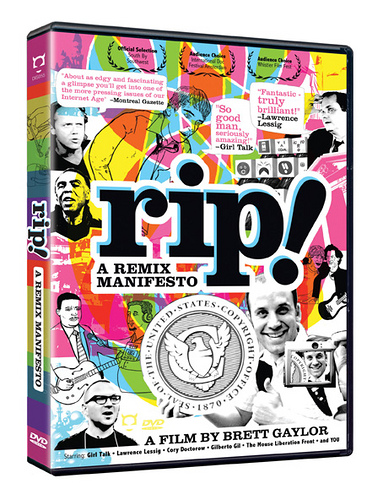
DVD Review: RiP! A Remix Manifesto (2009)


Own It On DVD


Download On iTunes

Rip! A Remix Manifesto

Remix it at OpenSourceCinema

Experience the Music of Girl Talk on MySpace

Get the Music Here


Watch the Trailer


Delicious
Bookmark this on Delicious
submit to reddit
Print Page

Digg!

MovieBlips: vote it up!

This is one of those movies I'm not even sure I should've been allowed to see let alone review...but it's available on Amazon and iTunes so I'll have good company in jail.

For, as I type this, I keep waiting for the door to bust open and the A-Team to file in complete with Mr. T and all his gold chains and--c'mon, let's face it-- as a polite, native midwesterner who trips and apologizes to the sidewalk, I will fold under questioning and confess to crimes I never committed like perhaps marooning all those islanders on Lost which I've never even seen.


Yet, I'm glad I was somehow deemed hip enough (and Erik, thank you, my man) to review this fascinating documentary from The Disinformation Company which has released some other high quality works that the Hollywood mainstream simply doesn't want you to see such as Michael Moore's Slacker Uprising (aka the first movie I saw on my Netflix Roku device), as well as Robert Greenwald's brilliant duo Wal-Mart: The High Cost of Low Price and Outfoxed: Rupert Murdoch's War on Journalism which I discovered as an undergraduate film student.


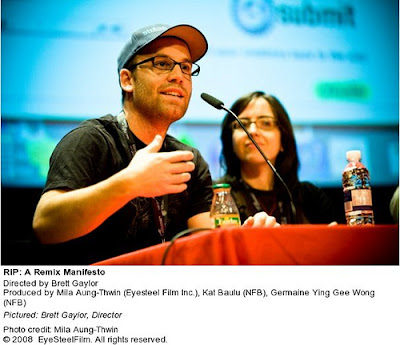
Crafted by a likable and highly energetic yet cautious filmmaker who ensures he never steps on the toes of those he interviews or goes for cheap shots-- Brett Gaylor walks his talk by releasing the film in its entirety completely in open source and DRM free both on the DVD and online via his website.

Born and raised during the dawn and evolution of the internet on a tiny island off the enormous mainland of Canada-- originally he found the world wide web to be a tremendous outlet which allowed him the immediate and unlimited ability to connect with the planet at large.


Yet right around 1998, Gaylor began noticing amidst the era of Shawn Fanning's Napster debacle which kick-started peer-to-peer file sharing and the endless copyright lawsuits that followed-- that suddenly ideas and online creativity were becoming less free and more likely to get you fined, find you without a home, or forced into a squad car.

Further problems ensued, however as the entertainment industry realized that consumers then had the power over the content they'd created to do with what they wished. Of course, that was until they created new red tape in the form of greater rights and fine print for the ownership of content possessed by essentially six major corporations along with of course creating a new lock with "DRM" a.k.a. digital rights management or corporate software which prevented you from adding or ripping the files of a film or album onto your computer.  Yet, when there's a will, there's a way so cyber pirates provided their own key with "vault cracking DRM software" which can land someone five years in the slammer and/or $250,000 for every song they've downloaded.

Now in an era where there have been lawsuits levied against 24,000 Americans who've been forced to settle without guilty pleas even though not a penny of their fine goes to the artists, musicians or filmmakers whose work they've downloaded-- Gaylor has taken a keen interest.  And with this film, he's decided to look at all of it but in an upbeat, fast-paced, humorous way by taking a particular interest in those who have been fighting against the hypocrisy with creativity as their weapon of choice.

In doing so, he cites that remixing has always been practiced since Led Zeppelin took Muddy Waters' "You Need Love" (which actually had come from somewhere else) for "Whole Lotta Love" in the same manner that The Rolling Stones and others have done again and again although of course The Stones sewed Verve for full rights to "Bittersweet Symphony" and sold 'em to a Nike Commercial. Yep, that's just what The Verve meant in the lyrics when they wrote, "you're a slave to money then you die."

Yet, while musicians have always enjoyed "sampling" or remixing each other's notes, as we learn just moments into the movie-- taking even a single note and using it in your work is a copyright infringement issue, which is a major problem for Greg Gillis a.k.a. Girl Talk who works as a biomedical engineer from nine to five. Yet whether or not there's a full moon-- at night he's out on the prowl-- like Clark Kent changing into a booth, the nerdy scientist becomes music's hottest underground mash-up Superman mixing together old Motown classics with Elvis Costello with "Bittersweet Symphony" or whatever music is exploding on the Rolling Stone magazine charts that week.


By sampling 21 songs in 3 minutes, Gaylor argues that if Girl Talk were to make an album, he would owe roughly 4 million dollars in copyright fees for the music he samples and it's fun to watch Marybeth Peters-- an employee at the Office of Copyright who's held the position for 40 years (yet doesn't own a computer in her home) watch footage of Girl Talk sampling one note of a Costello song before her eyes to see the mathematical complexity involved.


Of course she's indeed correct when she notes that you can't argue that the copyright law is hindering someone's creativity if it's based on other people's stuff (and I do think Girl Talk is so gifted that he could probably create his own) but then when you realize the amount of greed involved as Warner Chappell Records makes millions every year on "Happy Birthday" and not a cent in royalties goes to the family of the deceased sisters who wrote it, you wonder if some stuff really should belong "to the people."


And this is especially the case considering that Warner Brothers-- incidentally, one of my very favorite studios!-- has made a mash-up of their own classic work Casablanca and turned it into an anti-piracy ad, thereby ruining one of the best American films of all time for future generations by presenting the next generation with the image of Ingrid Bergman as a DVD copier along with cheesy music instead of "As Time Goes By."


Essentially, the thesis for Girl Talk as an artist and indeed Gaylor's film is simple and it is that basically remixed content turns the consumers into creators; so Gaylor divides his film into those on both sides of his argument of the "copyRIGHT and the copyLEFT."


In tackling mash-ups which also involve video to often hilarious effect as you've seen on YouTube (typically before they're pulled down for copyright violation) or via the ninety extra minutes of footage on this DVD and within the disc that include such state-of-the-art techniques as rotoscoping), Gaylor's journey takes him from Girl Talk who will become legitimately appreciated by the film's end earning a fan in Paris Hilton and performing at Coachella to meeting up with Stanford professor, lawyer and expert Lawrence Lessig.


The man who tried to set all the Napster users free who now travels around the globe (for more than a decade to speak about our "extremist" policy concerning file sharing and copyright)-- Gaylor describes him as a lawyer with a guilty conscience but one who's done a lot about it by writing the Remixer's Manifesto that inspired the film. Namely*: 1) Culture Always Builds on the Past. 2) The Past Always Tries to Control the Future. 3) Out Future is Becoming Less Free. 4) To Build Free Societies, You Must Limit the Control of the Past. (*Source: Lawrence Lessig as quoted in the film)

In addressing the way that the past still has control, Gaylor becomes a member of a group called the Mouse Liberation Front who were sued by Walt Disney Corporation for their "Air Pirates" line of funnies or comics by turning Mickey into a counterculture, darker figure and during this interview wherein the man he speaks with jokes that the house of mouse will sue everybody just for looking at 'em.  Moreover, he discusses the origins of the Disney animation studios and Walt Disney's first efforts in particular by noting the way that Mickey Mouse was often drawn in shorts to tie in with pop-culture like Buster Keaton's Steamboat Bill Jr. or Charlie Chaplin's Modern Times all the way up through their renditions of the classic fairy tales remade again and again, noting that Disney himself was a mash-up artist.


Briefly addressing some of the new strategies to counter the copyright sledgehammer and the big house such as "fair use for free speech" or "creative commons" or "citing sources," there are two portions of Gaylor's documentary that are almost deserving of their own spin-off works in their own right, including the first when he discusses the amount of potential medical cures that could be found if drug companies worked together and why or how it is lawful for some to own plants or land with potential healing powers.

Secondly, in a great segment,
we meet the former Brazilian Minister of Culture Gilberto Gil when Gaylor travels to Brazil by investigating the way that medicine, music, art, culture, and more are all used without fear of "idea ownership" to better their society in a chain reaction of positivity where the country bravely "re-mixed" their own knock-off HIV drug when Brazil wasn't allowed to "break the patent" to help their citizens.

These last few portions of the film have an amazing impact on a larger social issue scale concerning health, safety and foreign policy and while they definitely go in tandem with the arts and culture angle-- I was so riveted by Gaylor's findings that I almost felt like he may have had enough for two films or even a few very hard-hitting short subjects works.

But nonetheless-- RiP! A Remix Manifestio is a film festival favorite, crowd-pleasing, and conversation provoking documentary that was so immediately gripping I had to share it with others of all generations since even at roughly thirty, although the term "remix" was definitely familiar; "mash-up" just made me think of "Monster Mash" or the mash games played by kids in the '80s on school buses. And in the end, Gaylor has made a stunning work that's not only the most entertaining presentation about the copyright issue that's come down the line so far but also one that's so filled with extras, pulsating with the music of Girl Talk that it's energy is infectious. Likewise, its impact is startlingly immediate like a jolt of caffeine or the instant gratification of downloading something awesome like Radiohead's "pay what you want" release of In Rainbows.


Text ©2009, Film Intuition, LLC; All Rights Reserved. http://www.filmintuition.com

Unauthorized Reproduction or Publication Elsewhere is Strictly Prohibited.