Showing posts with label Canada. Show all posts

6/04/2020

Movie Review: Hammer (2019)


Now Available


In this efficiently made, swiftly paced new thriller from award-winning Canadian filmmaker Christian Sparkes, one impulsively bad decision begets another when Chris Davis (Mark O'Brien) tries and fails to execute a double-cross in a drug deal gone terribly wrong.

Grabbing a dirt bike from the scene when he's caught in the crosshairs of a gun, Chris barely escapes with his life before he's caught once again. Luckily, it's not by the dealer (Ben Cotton) this time but rather his estranged father Stephen (Will Patton) who happens to see Chris fleeing from the scene of the crime when he's stopped in traffic in the crossroads of his small Canadian border town and hits his own gas pedal in response. 


He soon catches up to Chris, whom we discover in a key line of dialogue had been forced out of his family's lives when he'd gotten in trouble for this sort of thing before. But when Stephen sees the panic in his son's eyes and the blood on his sleeve, he puts all of his preconceived notions of right and wrong out of his mind and offers his help.

Introducing us to the first of the three other members of the Davis family who will be ensnared in this debacle to varying degrees by the time the film is over, Hammer uses the universal theme of the blood ties that bind to transcend what might otherwise have been a narrative derived solely from first-person films noir. 

Fusing the drama together with a light dose of symbolism as well as raising questions of moral responsibility toward not only parents to their children but children to their parents as well, Hammer serves as a clever reminder that crime rarely impacts one person alone but instead affects every individual that person loves. The impetus for the film overall, in his sophomore effort and follow-up to his multi-award-winning feature debut Cast No Shadow, Sparkes intentionally set out to challenge "perceptions of who criminals are and where they come from." 


Wisely setting Hammer in the suburbs and focusing on an entire family (as opposed to only the criminal upon whom most genre films tend to fixate), together with its economical storytelling, this approach places us right inside the car alongside Stephen and Chris as they barrel down the road towards danger and the unknown for the rest of the movie's lean eighty-two minute running time. 

Although in need of a bit more closure and perhaps, one more hurdle to bring the rest of the family – especially the mother (played by Vickie Papavs) – more effectively into the proceedings than the last act offers, Hammer is still an impressively tense nerve-jangler overall. Benefiting from its dynamic cast, the film is bolstered in particular by its two leads, namely Mark O'Brien who first caught my attention in AMC's acclaimed word-of-mouth hit series Halt and Catch Fire, and veteran character actor Will Patton who's been stealing scenes since the 1980s. 

Released in Canada in 2019 and newly unveiled for rent on VOD in the states this week, in Hammer, Christian Sparkes proves once again that you don't need a big budget or special effects to catch viewers in the crosshairs of inventive character-driven suspense.


Text ©2020, Film Intuition, LLC; All Rights Reserved. https://www.filmintuition.com  Unauthorized Reproduction or Publication Elsewhere is Strictly Prohibited and in violation of the Digital Millennium Copyright Act.  Also, as an Amazon Associate, I earn from qualifying purchases made off my site through ad links. FTC Disclosure: Per standard professional practice, I may have received a review copy or screener link of this title in order to voluntarily decide to evaluate it for my readers, which had no impact whatsoever on whether or not it received a favorable or unfavorable critique. Cookies Notice: This site incorporates tools (including advertiser partners and widgets) that use cookies and may collect some personal information in order to display ads tailored to you etc. Please be advised that neither Film Intuition nor its site owner has any access to this data beyond general site statistics (geographical region etc.) as your privacy is our main concern.

9/06/2019

Movie Review: Genèse (2018)


Now Playing


AKA: Genesis

I know he likes me but does he like me? How do I ask her to be my girlfriend? What does he mean we should stay together but see other people?

Three Québécois teenagers navigate their first twinges of love, the devastation of heartbreak, the mysteries of desire, and other affairs of the heart in Philippe Lesage's new film Genèse, which follows in the footsteps of his previous pictures Copenhagen: A Love Story and The Demons in blending together memoir and fiction.

Often letting the camera linger on the behavior and body language of its main characters and the way that it changes when they're in front of a classroom, crowd, or alone, Genèse uses sumptuous, languorous visuals and its moodily atmospheric soundtrack to deposit us into the heart of the film in a way that recalls the work of Sofia Coppola and Wong Kar-wai.


Drawing on his background as a documentary filmmaker to establish the film's setting in and around private schools, colleges, and camps in Quebec, Lesage paints a picture of three teens, different both on the surface and in personality, who are looking for love.

In the film's strongest and most emotionally arresting storyline, we meet Guillaume (Théodore Pellerin) who, though always up for a laugh or impression as the class clown at his private boys school, is rather introspective and insecure deep down. Reading J. D. Salinger and listening to The Smiths, Guillaume is the type of dreamy eyed boy we would've had a crush on in high school, only to discover later on that he has a complicated crush of his own that might redefine his entire life.

Startled when her first serious boyfriend tells her that he thinks they should be free to sleep with other people, Guillaume's older half-sister Charlotte (Noée Abita) is sent reeling, moving from one relationship to the next (and always with the wrong guy), which has devastating consequences as the film continues and editor Mathieu Bouchard-Malo weaves the two plots together.


Venturing away from the city into a nature based coda, we're introduced to the stand-in for the filmmaker in the form of adolescent Félix (Édouard Tremblay-Grenier), who faces the first stirrings of love for a girl he becomes enamored of at summer camp. Though still filmed in a lush, contemporary style by cinematographer Nicolas Canniccioni, there's something delightfully old fashioned about the pacing and mood of the final section of Genèse, which feels as though it could be played side by side with François Truffaut's frothy 400 Blows follow-up and tale of first love, Antoine and Colette.

A welcome shot of instantly relatable nostalgia, Genèse's last act is played in a higher, lighter key than the rest of the picture. Yet, coming as it does after a shocking act of violence takes place, which is immediately glossed over by ignoring the aftermath, it takes a minute for the film (as well as the viewer) to convincingly ease back into the innocent reverie of summer flirtation and romance.

Inspired by real stories of assault that had been shared with Lesage by friends, while the stark, matter-of-fact portrayal alarms us enough, the film’s real misstep was in leaving these characters much too quickly before we truly know how they are, which gives the scene a cavalier aura that I can't imagine the filmmaker had intended. Yet tonal and structural misstep aside, Genèse manages to fall back into place when its last young protagonist falls in love.


Using music — especially "Outside" by Tops as a motif throughout — much like Xavier Dolan's Heartbeats, Genèse boasts a superb soundtrack that you'll find yourself wanting to Shazam multiple times throughout the film. Translating the characters' inner lives in a way we can easily understand through not only its musical counterpoint but also the way in which the camera holds on the faces of the trio as they try to reconcile reality with their hearts, Lesage invites us to take the journey as well — walking beside the teens in good times and bad. Like a secret diary come to life with all of its highs and lows, and the little things we know that will stay with us forever, Philippe Lesage's Genèse feels like the cinematic equivalent of a memory.


Text ©2019, Film Intuition, LLC; All Rights Reserved. https://www.filmintuition.com Unauthorized Reproduction or Publication Elsewhere is Strictly Prohibited and in violation of the Digital Millennium Copyright Act.  FTC Disclosure: Per standard professional practice, I may have received a review copy or screener link of this title in order to voluntarily decide to evaluate it for my readers, which had no impact whatsoever on whether or not it received a favorable or unfavorable critique. Cookies Notice: This site incorporates tools (including advertiser partners and widgets) that use cookies and may collect some personal information in order to display ads tailored to you etc. Please be advised that neither Film Intuition nor its site owner has any access to this data beyond general site statistics (geographical region etc.) as your privacy is our main concern.

3/29/2019

Movie Review: Level 16 (2018)


Now Available


Bookmark and Share

The dorms are named after flowers and the girls who live in them share their names with Golden Age movie stars.

Spending their days doing everything they can to stay sweet, clean, and submissive while reciting rules about feminine vice and virtues back to the adults in charge, the girls in writer-director Danishka Esterhazy's dystopian work of suspense graduate from one floor to the next and look forward to the day they get assigned to a family after they complete the eponymous Level 16.

A message movie with no shortage of ideas — most of which grow increasingly muddled as Esterhazy's film segues uneasily between feminist science fiction fare and dark thriller — while its origins reside firmly in The Handmaid's Tale, Level 16's wide-ranging plot elements recall everything from Never Let Me Go to 1984.


Running out of gas midway through the overly stoic feature, Level 16 fails to create a valid emotional connection between the film's audience and its characters.

Thus sadly, despite a strong turn by actress Katie Douglas who makes the most of what little she's been given in Esterhazy's meandering script, 16 changes course once again, ultimately morphing into a Shawshank Redemption styles ecape thriller after letting us in on a major foundational secret.

An ambitious if mostly uneven effort, although it's apparent early on that Esterhazy has an awful lot to say, with its chilly core and staccato plotting, the claustrophobic Level 16 feels more like a short lost in the running time of a feature film — or an old episode of The Twilight Zone starring an actress from Hollywood's Golden Age — than it does one cohesive and compelling 102 minute endeavor.


Text ©2019, Film Intuition, LLC; All Rights Reserved. http://www.filmintuition.com Unauthorized Reproduction or Publication Elsewhere is Strictly Prohibited and in violation of the Digital Millennium Copyright Act.  FTC Disclosure: Per standard professional practice, I may have received a review copy or screener link of this title in order to voluntarily decide to evaluate it for my readers, which had no impact whatsoever on whether or not it received a favorable or unfavorable critique. Cookies Notice: This site incorporates tools (including advertiser partners and widgets) that use cookies and may collect some personal information in order to display ads tailored to you etc. Please be advised that neither Film Intuition nor its site owner has any access to this data beyond general site statistics (geographical region etc.) as your privacy is our main concern.

Movie Review: Giant Little Ones (2018)


Now Playing 

Bookmark and Share

Jocks in the locker room, beautiful girls in the halls, a party while mom's away, and fights between friends.

Centered on popular high school swimmers Franky Winter (Josh Wiggins) and Ballas Kohl (Darren Mann) — two lifelong friends growing up in Ontario who have a falling out after a confusing drunken encounter on one's seventeenth birthday — at first glance, writer-director Kyle Behrman's Giant Little Ones is everything we've come to expect in a coming-of-age teen movie.


But, unafraid of silence and ambiguity and filled with hypnotic, unhurried takes which invite us to take a moment and figuratively breathe the same air that the characters do, it doesn't take us long to realize that there's so much more going on beneath the surface of this heartfelt and at times harrowing portrait of teenage sexuality than we might have imagined going in.

Refusing to pin a label on any of its main characters — besides the film's concerned parents who, played by Kyle McLachlan and Maria Bello are going through existential crises of their own — Kyle Behrman's intelligent, understated sleeper will resonate with those who've had enough of Hollywood's stereotypical whip smart, worldly teens with all the answers and are instead searching for something real.


With the artistry of a Sofia Coppola picture and potent performances by its ensemble cast, the character driven Giant is anchored by the staggering turns of leads Josh Wiggins and Darren Mann as two conflicted friends who go from brothers to enemies practically overnight, along with a moving performance by Taylor Hickson as a girl who finds herself unexpectedly caught in the middle.

Likewise, it's the type of film that's so thoughtfully conceived that even its peripheral characters feel just as fascinating and fully realized as the two at the heart of the endeavor. Intended as a film version of a pop song, Giant Little Ones is a small, tenderly crafted drama that's not only sure to stick with you but bound to take up a great space in your heart.


Text ©2019, Film Intuition, LLC; All Rights Reserved. http://www.filmintuition.com Unauthorized Reproduction or Publication Elsewhere is Strictly Prohibited and in violation of the Digital Millennium Copyright Act.  FTC Disclosure: Per standard professional practice, I may have received a review copy or screener link of this title in order to voluntarily decide to evaluate it for my readers, which had no impact whatsoever on whether or not it received a favorable or unfavorable critique. Cookies Notice: This site incorporates tools (including advertiser partners and widgets) that use cookies and may collect some personal information in order to display ads tailored to you etc. Please be advised that neither Film Intuition nor its site owner has any access to this data beyond general site statistics (geographical region etc.) as your privacy is our main concern.

9/21/2018

Movie Review: Little Italy (2018)


Now Available


Bookmark and Share

Grumpy Old Men, Miss Congeniality, and How to Lose a Guy in 10 Days director Donald Petrie returns to the setting that helped launch his successful career in 1988's Mystic Pizza with the Toronto based Little Italy.

Yet whereas Mystic was more of a coming-of-age dramedy with a pizzeria backdrop, given his new film's sunshine bright high key lighting and the nostalgic sounds of Perry Como's "Papa Loves Mambo" adding bounce to an upbeat opening voice-over by stars Emma Roberts and Hayden Christensen, there's no denying what genre Little Italy is right from the start.

A romantic comedy spin on Romeo and Juliet, the film takes place in and around rival pizza restaurants in Toronto's Little Italy. If Italy sounds familiar to you, it might be because not only has Shakespeare's tragedy been updated as a comedy many times before but the exact same premise has also made its way to the screen multiple times, including director Andy Wolk's 2005 New Jersey set cable romcom Pizza My Heart, from scripters Juliet and Keith Giglio, to name just one example.


A veritable big screen sitcom, Little Italy borrows heavily from the romantic comedy heyday of the 1990s and early 2000s, and especially the box office juggernaut My Big Fat Greek Wedding.

Similarly constructed with a lightweight fast-paced multi-character driven storyline – only this time where the B-plot romance darn near upstages the A-story – while Italy is ultimately average, it's sure to amuse those looking for a mindless Saturday night diversion.

Returning to Toronto after five years spent abroad at culinary school and working under Jane Seymour's "Gordon Ramsay but prettier and scarier" Chef Corrine, Nikki Angioli (Emma Roberts) discovers things don't change much in Little Italy, where her father Sal (Adam Ferrara) runs a pizzeria restaurant right next door to his former friend and business partner, Vince (Gary Basaraba).


Only there to change her visa from student to worker when a dream professional opportunity opens up in London, after Nikki runs into her childhood best friend, Leo Campo (Hayden Christensen), things start to get complicated and not just because he's Vince's son.

Sharing her passion for cooking organically and eager to update the menu at his headstrong father's place (which he knows will never happen), Leo and Nikki find themselves falling back into the familiar rhythm of friends with potential where it seems they're always just one moment away from amore.

Meanwhile while the two younger characters flirt with the idea of flirting, their respective grandparents – including Leo's grandpa Carlo (Danny Aiello) and Nikki's “Nonna” Franca (My Big Fat Greek Wedding MVP, Andrea Martin) – have already crossed that bridge.


Hiding away in the confessional at the local church before they're found out and subsequently driven to a nearby Starbucks in shame, Aiello and Martin steal focus from the rest of the talented cast including Alyssa Milano as Nikki's mom and Andrew Phung as Luigi, the gay, Asian owner of a local bar who feels far more at home living life as an Italian.

Having a ball as the conflicted lovers, while Roberts and Christensen do their best to elevate what is essentially a spicier version of a by-the-numbers, made for Hallmark Channel romantic comedy, one can't help think that the film might've been far more original if they'd been the B-plot to Aiello and Martin's A-storyline.

Unsure of its audience, the film takes things a bit too far with some of its more risqué humor including one just plain uncomfortable sequence where in a series of escalating pranks, Sal swaps out Vince's oregano for pot and its characters turn ridiculously horny and later in a poorly conceived weekly insult battle, the two fathers begin commenting on their children's looks and sexual prowess.


Never quite paying off on the ongoing feud between their parents and essentially relegating them to the background until the inevitable moment where the film's two love stories take center stage, Mambo Italiano screenwriter Steve Galluccio and Vinay Virmani's script is full of so many ideas and characters that you get the feeling they were trying to please every possible audience member.

Needless to say, it's no Mystic Pizza or Greek Wedding. Still while the recipe doesn't come together nearly as well as one of the film's many delicious looking pizzas that are sure to make your mouth water, under the buoyant direction of Petrie who knows comedy well enough to reassemble the ingredients alongside his energetic cast, Little Italy bounces back from its many missteps just enough to entertain you for its 102 minute running time.


Text ©2018, Film Intuition, LLC; All Rights Reserved. http://www.filmintuition.com Unauthorized Reproduction or Publication Elsewhere is Strictly Prohibited and in violation of the Digital Millennium Copyright Act.  FTC Disclosure: Per standard professional practice, I may have received a review copy or screener link of this title in order to voluntarily decide to evaluate it for my readers, which had no impact whatsoever on whether or not it received a favorable or unfavorable critique. Cookies Notice: This site incorporates tools (including advertiser partners and widgets) that use cookies and may collect some personal information in order to display ads tailored to you etc. Please be advised that neither Film Intuition nor its site owner has any access to this data beyond general site statistics (geographical region etc.) as your privacy is our main concern.

5/04/2018

Movie Review: Ava (2017)


Now Playing in Select Theaters  

Bookmark and Share

As bold as it is angry, in writer/director Sadaf Foroughi’s semi-autobiographical feature filmmaking debut Ava, an eponymous seventeen-year-old girl on the cusp of graduation (played by Mahour Jabbari) struggles to come-of-age amid the repressive surroundings of a hypercritical home and school life in present day Tehran.

Used like a pawn by her Type A doctor mother as well as her more easygoing father who’s frequently out-of-town on business, in an early sequence wherein the two (played by Bahar Noohian and Vahid Aghapoor) argue about Ava as though she were not in the next room but the next town, it becomes obvious that Ava's guardians want radically different futures for their daughter.

While her dad wants to give Ava the freedom to choose her own career, after her seemingly impossible to please mother cruelly cuts Ava off from her best friend and violin in an effort that her daughter not repeat any of her own mistakes, Ava's ability to just keep her head down, obey, and follow orders soon reaches a breaking point.

An award-winning Canadian-Iranian feature fresh off the 2017 film festival circuit, while Foroughi’s work derives a great deal of conflict from its setting in the Middle-East, at its core, Ava is a universally relatable film about female adolescence, peer pressure, and teenage struggle with authority both in and out of the classroom.


And even though it isn’t nearly as successful from a structural standpoint, as many viewers have pointed out, Ava would make a surprisingly excellent double feature to last year’s thematically very similar (and likewise female helmed) Lady Bird.

However, unlike Greta Gerwig's multiple Oscar nominee, Ava bears much more in common with French New Wave titles such as Cleo From 5 to 7 and especially The 400 Blows (to which it pays homage in its final moments) than it does with most English language high school features, which makes sense given Foroughi's educational background pursuing post-graduate film study in France.


Nonetheless there are still some lyrical filmic touches throughout Ava including claustrophobic framing with mirrors and bars (which illustrate the way she’s being increasingly watched and isolated) that wouldn't have been out of place in The Virgin Suicides or Fish Tank.

Yet while it could raise some intriguing post-film discussion about the freedom the movie’s men feel in contrast to the women, Ava’s emotionally exhausting depiction of tyrannical female authority figures grows increasingly repetitive as it continues, particularly because the less three-dimensional some of its characters appear, the less Foroughi seems clear about exactly what it is that she wants to say and why.


Helping to keep it from spinning too far out of control, Ava is augmented by both the poetic edits of fellow award-winning Iranian-Canadian filmmaker Kiarash Anvari as well as Sina Kermanizadeh’s lush cinematography.

And while Ava would’ve undoubtedly been better served with either a shorter running time or sharper script (especially one that better represented Ava's mother's point-of-view for greater empathetic impact), overall it's still an ambitious and auspicious debut from Sadaf Foroughi that promises great things from the filmmaker to come.


Text ©2018, Film Intuition, LLC; All Rights Reserved. http://www.filmintuition.com Unauthorized Reproduction or Publication Elsewhere is Strictly Prohibited and in violation of the Digital Millennium Copyright Act.  FTC Disclosure: Per standard professional practice, I may have received a review copy or screener link of this title in order to voluntarily decide to evaluate it for my readers, which had no impact whatsoever on whether or not it received a favorable or unfavorable critique.

3/06/2015

Movie Review: October Gale (2014)


Now Available   


An actress of great emotional depth and tremendous skill – over the past twenty years, Patricia Clarkson has honed her skills as a humanistic mathematician.

As such, she's made a career out of transforming even the most blandly underwritten one-dimensional characters on the page into fully realized three-dimensional individuals on the screen.

And given her propensity for navigating the rough terrain of heartbreak and misfortune as well as her innate understanding of the inner workings of the women she brings to life, we often see Clarkson in the role of head matriarch as the figurative captain of a ship she's trying to get back on course following a tragedy.


She does this once again in IFC's October Gale, which marks her second collaboration with her Cairo Time writer-director Ruba Nadda.

Therefore it's only fitting that the role of Helen, a recently widowed physician still mourning the death of her beloved husband, seems tailor-made for the star.

Yet by giving Clarkson her long awaited opportunity to play an ordinary woman turned action hero –due to extraordinary circumstances – Nadda raised the stakes for the actress and Gale to levels reminiscent of The River Wild and Dead Calm.


And once the plot starts to build after a clumsily edited, slow-moving, flashback soaked first act, the result is a mostly successful character driven thriller.

Set on a Canadian island, Gale finds the mild-mannered Helen fighting for her life after giving emergency first aid to a gunshot victim embodied by Scott Speedman's handsome stranger.

Soon stranded at the cabin by someone she thought she knew, when the man who shot Speedman's Will comes back to finish the job, Helen is forced to confront not only the harsh elements of the Canadian wild but also question just who exactly she can trust.


Although the pace quickens along with the peril, the overwhelming amount of bittersweet flashbacks (showcasing Helen and her husband in happier times) threatens to ground Gale to a halt before it even gets going.

Making the first half feel nearly twice as long– along with a sharper edit and tighter script, October Gale would've benefitted from a dual plotline – building greater momentum by introducing Will's storyline earlier on given both its complexity as well as the undeniably riveting nature of his character's own flashbacks.

Admittedly skirting the edges of romantic storytelling stereotypes and pushing the limits of logic a few times as Speedman's sensitive, classic literature loving "bad boy" Will goes from at-risk to Action Jackson a bit too quickly, the shortcomings in Nadda's ambitious Gothic tinged thriller are easily forgiven due to its overall genre novelty.


Buoyed by its core ensemble cast including a brief but effective cameo late in the film from Tim Roth, Gale is a flawed yet worthwhile work of moody Saturday night movie suspense that celebrates brains over brawn in its penultimate sequence.

A real world thriller anchored by a real woman instead of a Lara Croft or Wonder Woman type, the vital message of self-reliance, independence, and empowerment at any age provides this action movie with a role worthy of Clarkson, who visibly relishes showing us the kickass side of her usual melodrama-prone matriarch.
   

Bookmark and Share

Text ©2014, Film Intuition, LLC; All Rights Reserved. http://www.filmintuition.com Unauthorized Reproduction or Publication Elsewhere is Strictly Prohibited and in violation of the Digital Millennium Copyright Act.  FTC Disclosure: Per standard professional practice, I may have received a review copy of this title in order to voluntarily decide to evaluate it for my readers, which had no impact whatsoever on whether or not it received a favorable or unfavorable critique.

9/25/2009

DVD Review: Ghost Cat (2003)


Now Available on DVD


Delicious
Bookmark this on Delicious
submit to reddit
Print Page

Digg!

MovieBlips: vote it up!

AKA Mrs. Ashboro's Cat

Having seen the risk-taking Ellen Page prior to Juno in various Canadian productions including the Film Movement selections Marion Bridge, Wilby Wonderful and the USA release of the cult revenge shocker Hard Candy, when it came time to screen this title originally produced in 2003, I wasn't sure what to expect. Obviously post-Juno, everyone ascertained that she could definitely act but her choices in material have been peculiar to say the least to the point that when I read that a genuine family feature starring Page was heading to DVD, I immediately accepted without reading another word.

And although she's far from happy-go-lucky, in this picture I was struck by Page's natural ability to adapt to material as a refreshingly unaffected teen playing a refreshingly unaffected teen. A far cry from the subject matter of Bridge, Wilby, Candy, The Tracey Fragments and even Juno-- in this wholesome family-friendly Canadian production originally broadcast on Cable TV's Animal Planet channel-- Page plays a fourteen year old New York City girl still reeling from the death of her mother one year earlier.


Releasing in time for not only the future release of Page's latest turn in Drew Barrymore's directorial debut Whip It but also Halloween, the work that's been repackaged complete with a catchier title than the K-6 reading material sounding Mrs. Ashboro's Cat hits DVD shelves this week courtesy of Barnholtz Entertainment and North American Motion Pictures. Yet despite the memorable moniker of Ghost Cat, the film is a bit tricky to sum up so it may have been much easier to just say Mrs. Ashboro's Cat since it centers on the dead cat of the dead Ashboro whom Page sees throughout the film.

Solid production values and a fine ensemble cast try to enliven the sluggishly paced supernatural mystery that finds Page's Natalie and her author father relocating to the Canadian small community where her mother was born and raised. While her
skeptical ghost debunking dad spends his time researching material for his book on scientific and logical reasoning for unexplainable phenomena, Natalie finds herself in the middle of a thematically similar situation when she's haunted by visions of a deceased cat. Yet far from being like Pet Sematary, Natalie realizes that the ghost cat Margaret is trying to communicate with her to carry on the wishes of her former owner who'd passed away one day before her devoted cat did the same (sort of like an elderly couple you read about in the paper who perish out of a broken, lonely heart).


Although nobody believes Natalie's vision of the cat save for two new male friends (including one romantic interest), she's a serious young girl who trusts her convictions and connection with the animal she'd initially encountered around the same time as she'd met the now deceased Mrs. Ashboro upon their arrival. And since her first impressions of both coincided with meeting the woman's greedy nephew who planned to sell her home out from underneath Ashboro without her knowledge and send her to a retirement home, Natalie is determined to find out exactly what's going on.


The handling of the material tries to go for a light ghost story aura but remains serious and largely hapless throughout where Harriet the Spy, Nancy Drew and/or Kit Kittredge humor and whimsy would've no doubt made it all the more enjoyable as well as help engage us with the admittedly dubious set-up. Still, despite it's shortcomings, it's a benign time waster. Moreover, just as her maturity seemed apparently instinctual in Juno, Page-- almost like a young Jodie Foster (minus the humor of Freaky Friday)-- manages to fully inhabit the role. And in this regard, we never doubt her vision, even if we wish the script would've done a bit more to lighten up the tone since the backdrop of death and unfinished business needed it sorely to make it a bit more appealing to the pre-Twilight demographic.

Overall, the film is much better than I expected it would be as the type of early piece of work that “haunts” celebrities after they strike Oscar nominated gold or ample entertainment headline buzz. Nonetheless it's a still a lukewarm hybrid of a family animal ghost story that would probably only interest devotees of the likable Ellen Page who, much like Freaky Friday's Foster or Twilight's Kristen Stewart had done some truly impressive work (even in unimpressive projects) before flying onto our radar in Juno.


Text ©2009, Film Intuition, LLC; All Rights Reserved. http://www.filmintuition.com

Unauthorized Reproduction or Publication Elsewhere is Strictly Prohibited.

7/17/2009

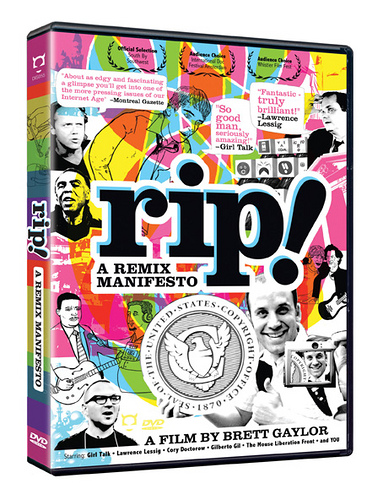
DVD Review: RiP! A Remix Manifesto (2009)


Own It On DVD


Download On iTunes

Rip! A Remix Manifesto

Remix it at OpenSourceCinema

Experience the Music of Girl Talk on MySpace

Get the Music Here


Watch the Trailer


Delicious
Bookmark this on Delicious
submit to reddit
Print Page

Digg!

MovieBlips: vote it up!

This is one of those movies I'm not even sure I should've been allowed to see let alone review...but it's available on Amazon and iTunes so I'll have good company in jail.

For, as I type this, I keep waiting for the door to bust open and the A-Team to file in complete with Mr. T and all his gold chains and--c'mon, let's face it-- as a polite, native midwesterner who trips and apologizes to the sidewalk, I will fold under questioning and confess to crimes I never committed like perhaps marooning all those islanders on Lost which I've never even seen.


Yet, I'm glad I was somehow deemed hip enough (and Erik, thank you, my man) to review this fascinating documentary from The Disinformation Company which has released some other high quality works that the Hollywood mainstream simply doesn't want you to see such as Michael Moore's Slacker Uprising (aka the first movie I saw on my Netflix Roku device), as well as Robert Greenwald's brilliant duo Wal-Mart: The High Cost of Low Price and Outfoxed: Rupert Murdoch's War on Journalism which I discovered as an undergraduate film student.


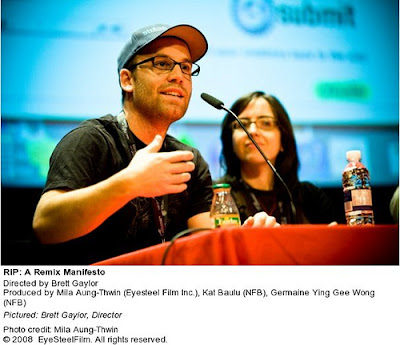
Crafted by a likable and highly energetic yet cautious filmmaker who ensures he never steps on the toes of those he interviews or goes for cheap shots-- Brett Gaylor walks his talk by releasing the film in its entirety completely in open source and DRM free both on the DVD and online via his website.

Born and raised during the dawn and evolution of the internet on a tiny island off the enormous mainland of Canada-- originally he found the world wide web to be a tremendous outlet which allowed him the immediate and unlimited ability to connect with the planet at large.


Yet right around 1998, Gaylor began noticing amidst the era of Shawn Fanning's Napster debacle which kick-started peer-to-peer file sharing and the endless copyright lawsuits that followed-- that suddenly ideas and online creativity were becoming less free and more likely to get you fined, find you without a home, or forced into a squad car.

Further problems ensued, however as the entertainment industry realized that consumers then had the power over the content they'd created to do with what they wished. Of course, that was until they created new red tape in the form of greater rights and fine print for the ownership of content possessed by essentially six major corporations along with of course creating a new lock with "DRM" a.k.a. digital rights management or corporate software which prevented you from adding or ripping the files of a film or album onto your computer.  Yet, when there's a will, there's a way so cyber pirates provided their own key with "vault cracking DRM software" which can land someone five years in the slammer and/or $250,000 for every song they've downloaded.

Now in an era where there have been lawsuits levied against 24,000 Americans who've been forced to settle without guilty pleas even though not a penny of their fine goes to the artists, musicians or filmmakers whose work they've downloaded-- Gaylor has taken a keen interest.  And with this film, he's decided to look at all of it but in an upbeat, fast-paced, humorous way by taking a particular interest in those who have been fighting against the hypocrisy with creativity as their weapon of choice.

In doing so, he cites that remixing has always been practiced since Led Zeppelin took Muddy Waters' "You Need Love" (which actually had come from somewhere else) for "Whole Lotta Love" in the same manner that The Rolling Stones and others have done again and again although of course The Stones sewed Verve for full rights to "Bittersweet Symphony" and sold 'em to a Nike Commercial. Yep, that's just what The Verve meant in the lyrics when they wrote, "you're a slave to money then you die."

Yet, while musicians have always enjoyed "sampling" or remixing each other's notes, as we learn just moments into the movie-- taking even a single note and using it in your work is a copyright infringement issue, which is a major problem for Greg Gillis a.k.a. Girl Talk who works as a biomedical engineer from nine to five. Yet whether or not there's a full moon-- at night he's out on the prowl-- like Clark Kent changing into a booth, the nerdy scientist becomes music's hottest underground mash-up Superman mixing together old Motown classics with Elvis Costello with "Bittersweet Symphony" or whatever music is exploding on the Rolling Stone magazine charts that week.


By sampling 21 songs in 3 minutes, Gaylor argues that if Girl Talk were to make an album, he would owe roughly 4 million dollars in copyright fees for the music he samples and it's fun to watch Marybeth Peters-- an employee at the Office of Copyright who's held the position for 40 years (yet doesn't own a computer in her home) watch footage of Girl Talk sampling one note of a Costello song before her eyes to see the mathematical complexity involved.


Of course she's indeed correct when she notes that you can't argue that the copyright law is hindering someone's creativity if it's based on other people's stuff (and I do think Girl Talk is so gifted that he could probably create his own) but then when you realize the amount of greed involved as Warner Chappell Records makes millions every year on "Happy Birthday" and not a cent in royalties goes to the family of the deceased sisters who wrote it, you wonder if some stuff really should belong "to the people."


And this is especially the case considering that Warner Brothers-- incidentally, one of my very favorite studios!-- has made a mash-up of their own classic work Casablanca and turned it into an anti-piracy ad, thereby ruining one of the best American films of all time for future generations by presenting the next generation with the image of Ingrid Bergman as a DVD copier along with cheesy music instead of "As Time Goes By."


Essentially, the thesis for Girl Talk as an artist and indeed Gaylor's film is simple and it is that basically remixed content turns the consumers into creators; so Gaylor divides his film into those on both sides of his argument of the "copyRIGHT and the copyLEFT."


In tackling mash-ups which also involve video to often hilarious effect as you've seen on YouTube (typically before they're pulled down for copyright violation) or via the ninety extra minutes of footage on this DVD and within the disc that include such state-of-the-art techniques as rotoscoping), Gaylor's journey takes him from Girl Talk who will become legitimately appreciated by the film's end earning a fan in Paris Hilton and performing at Coachella to meeting up with Stanford professor, lawyer and expert Lawrence Lessig.


The man who tried to set all the Napster users free who now travels around the globe (for more than a decade to speak about our "extremist" policy concerning file sharing and copyright)-- Gaylor describes him as a lawyer with a guilty conscience but one who's done a lot about it by writing the Remixer's Manifesto that inspired the film. Namely*: 1) Culture Always Builds on the Past. 2) The Past Always Tries to Control the Future. 3) Out Future is Becoming Less Free. 4) To Build Free Societies, You Must Limit the Control of the Past. (*Source: Lawrence Lessig as quoted in the film)

In addressing the way that the past still has control, Gaylor becomes a member of a group called the Mouse Liberation Front who were sued by Walt Disney Corporation for their "Air Pirates" line of funnies or comics by turning Mickey into a counterculture, darker figure and during this interview wherein the man he speaks with jokes that the house of mouse will sue everybody just for looking at 'em.  Moreover, he discusses the origins of the Disney animation studios and Walt Disney's first efforts in particular by noting the way that Mickey Mouse was often drawn in shorts to tie in with pop-culture like Buster Keaton's Steamboat Bill Jr. or Charlie Chaplin's Modern Times all the way up through their renditions of the classic fairy tales remade again and again, noting that Disney himself was a mash-up artist.


Briefly addressing some of the new strategies to counter the copyright sledgehammer and the big house such as "fair use for free speech" or "creative commons" or "citing sources," there are two portions of Gaylor's documentary that are almost deserving of their own spin-off works in their own right, including the first when he discusses the amount of potential medical cures that could be found if drug companies worked together and why or how it is lawful for some to own plants or land with potential healing powers.

Secondly, in a great segment,
we meet the former Brazilian Minister of Culture Gilberto Gil when Gaylor travels to Brazil by investigating the way that medicine, music, art, culture, and more are all used without fear of "idea ownership" to better their society in a chain reaction of positivity where the country bravely "re-mixed" their own knock-off HIV drug when Brazil wasn't allowed to "break the patent" to help their citizens.

These last few portions of the film have an amazing impact on a larger social issue scale concerning health, safety and foreign policy and while they definitely go in tandem with the arts and culture angle-- I was so riveted by Gaylor's findings that I almost felt like he may have had enough for two films or even a few very hard-hitting short subjects works.

But nonetheless-- RiP! A Remix Manifestio is a film festival favorite, crowd-pleasing, and conversation provoking documentary that was so immediately gripping I had to share it with others of all generations since even at roughly thirty, although the term "remix" was definitely familiar; "mash-up" just made me think of "Monster Mash" or the mash games played by kids in the '80s on school buses. And in the end, Gaylor has made a stunning work that's not only the most entertaining presentation about the copyright issue that's come down the line so far but also one that's so filled with extras, pulsating with the music of Girl Talk that it's energy is infectious. Likewise, its impact is startlingly immediate like a jolt of caffeine or the instant gratification of downloading something awesome like Radiohead's "pay what you want" release of In Rainbows.


Text ©2009, Film Intuition, LLC; All Rights Reserved. http://www.filmintuition.com

Unauthorized Reproduction or Publication Elsewhere is Strictly Prohibited.