Showing posts with label Mary Steenburgen. Show all posts

11/24/2020

Movie Reviews: Happiest Season (2020) & Uncle Frank (2020)


Now Available


'Tis the season of giving... and the season of needing a rest. The weeks between Thanksgiving all the way up through Hanukkah and/or Christmas and New Year's are often dubbed the happiest time of the year. But it's also undeniably the most stressful period of the calendar year as well. And this is particularly true for those of us returning to our childhood homes for the holidays as we come face-to-face with family, old friends, and all of the judgments and pressures that go along with sudden reunions with the people we were once closest to in life, the ones who know us the best, that is if they even know us at all.

Although there's a tendency to revert back to old patterns and behavior when surrounded by nostalgia, not too many of us are the same people today that we were in high school, and sometimes it's hard to make loved ones see you not for the child you were in the past but the adult you are today. And while this might be anything from annoying to awkward for a majority of heterosexuals, it can be absolutely terrifying and life-changing to LGBTQ adults who haven't come out to their family and/or friends as just the act of returning home to old wounds (and a place where you must push that part of you deep down), can be traumatic.

Fittingly, two brand new films releasing onto streaming platforms the day before Thanksgiving tackle the hopes and fears of coming out head-on, first in co-writer and director Clea DuVall's comedy "Happiest Season," which takes place during Christmas week, and the second, which is primarily set at a funeral nearly fifty years ago in writer-director Alan Ball's drama "Uncle Frank." 


An earnest and affable lightweight comedy that – thanks to its dynamic cast of Kristen Stewart, Mackenzie Davis, Dan Levy, Mary Steenburgen, Aubrey Plaza, and Alison Brie – has quickly become one of the most anticipated holiday releases of 2020, "Happiest Season," plays like an overlong, sweet yet slightly stale sitcom.

Impulsively inviting her beloved partner Abby (Stewart) home for the holidays during a romantic evening out, it's only once they're in the car heading towards Harper's (Davis) family home that she confesses that she's actually never told her parents and two sisters that she's gay. Although initially shocked, Abby agrees to play the orphan roommate with no place to go since the charade will only last five days. Predictably, however, things get out of hand almost as soon as they arrive when Harper's parents (Steenburgen and Victor Garber) try reuniting her with her high school boyfriend (Jake McDorman), only for the women to bump into Harper's first-ever girlfriend (Plaza) less than five minutes later as well.

Cliched and largely laughless, as novel and (incredibly) welcome as it is to watch a gay-themed movie jump through the same formulaic hoops that we so often see in made-for-cable-television holiday romances this time of year, sadly, "Happiest Season" is a work to admire and politely smile through more than it is one to wholeheartedly enjoy. From a scene that finds Stewart literally stuck in a closet to another one that features her best friend, "Schitt's Creek" co-creator and star Dan Levy calling to ask where he could buy a lookalike fish to replace the one that we gather the inexperienced pet sitter has accidentally killed, a majority of the movie's jokes feel as tired as they do uninspired. 


Daring to make Harper a flawed and selfish protagonist whom we discover will lie to anyone to conceal her true sexual identity, "Happiest Season" gets points for working in a startlingly sad backstory surrounding her relationship with Plaza's Riley, although their characters are shortchanged a vital conversation where they can truly clear the air.

Wrapping things up in a neat bow, even if there are a few other scenes and discussions between our main ensemble cast of characters that might've strengthened the film as something more human and true than it is a largely cookie-cutter, small screen style comedy, the actors are all terrific. Unfortunately, DuVall and co-writer/co-star Mary Holland's script, which leaves much to be desired, doesn't know how to use them properly. Nonetheless, a mildly pleasant holiday diversion that you can digest right along with your pumpkin pie, even if it isn't a new repeat-worthy holiday classic, hopefully, Hulu's "Happiest Season" will earn enough viewers that we'll see some stronger, funnier LGBTQ comedies in the years to come.

Less of a holiday-centric offering than it is an offering served up for viewers during the holidays on Amazon Prime, "Uncle Frank" is a heartfelt period drama from writer-director Alan Ball that, in addition to sharing the same theme of coming out to one's family that we saw in "Happiest Season," rivals DuVall's film in terms of its enviable, first-rate cast. 


Led by the versatile, acclaimed "Master and Commander: The Far Side of the World," "The Da Vinci Code," and "Margin Call" actor Paul Bettany as the titular Uncle Frank, Ball's film is a who's who of scene-stealing character actors, including audience favorites Steve Zahn, Margo Martindale, and Judy Greer.

The apple of the eye of his niece Beth ("It" franchise and "Sharp Objects" star Sophia Lillis), Frank Bledsoe (Bettany) has traded his conservative, small-town South Carolina roots for New York where he works as an English professor at NYU in the late 1960s/early '70s. Following in his footsteps by attending NYU, Beth soon learns that although her uncle puts on a great show with a lesbian friend posing as his live-in girlfriend, he's actually been in a relationship with his sweet, funny Middle Eastern boyfriend Walid aka Wally (played by Peter Macdissi) for the past ten years.

Forced to return home for the funeral of his own disapproving father (Stephen Root), whom we deduce most likely knew the truth about his son's sexual orientation before anyone else, Frank drives Beth down to South Carolina. Determined to be there to support the love of his life because he knows just how much trauma will be waiting for him in the south, Wally trails behind the pair and soon joins them on the road trip, which becomes a journey into Frank's past. 


A film that's as much about Frank's need to finally let the people he loves into that part of himself that he keeps hidden as it is about his need to forgive himself and make peace with a devastating turn of events in his past for which he still feels responsible, while "Happiest Season" addressed past transgressions too, this film is vastly more sincere overall. Though still bursting at the seams with cliches and contrivances that should be far beyond the otherwise amazingly talented Ball (whose explorations into human behavior made "Six Feet Under" one of HBO's best twenty-first-century shows), thanks to the conviction and pathos of its top-notch leads, "Uncle Frank" works much better than it should.

Hindered by a rushed final act that races through an emotional payoff that it doesn't fully earn, as wonderful as it always is to see Bettany in something new that pushes him beyond his work in the Marvel franchise, the real heart of "Uncle Frank" is in Peter Macdissi's performance as Wally. Elevating an otherwise stereotypical role as the tormented Frank's saintly boyfriend, Macdissi's magnetic, cheeky delivery of certain lines – such as when he lectures Beth that niceness is used by her family to hide things – immediately wins us over. Likewise, in just one scene where he calls his mother back in Saudi Arabia from a motel phone booth, which is contrasted by Frank's return back to the motel with Beth after a wake, we realize how much more interesting the film might've been if we'd been following not Frank but Wally all along.

Disappointingly, you can nearly set your watch to certain revelations that seem to hit at precisely the same intervals that most screenwriters well-versed in the Syd Field three-act structure will recognize. However, the film's tenderness and its message about the importance of acceptance and the way that we never fully get over the traumas that inadvertently shape us for better and/or worse still feels timely nearly fifty years after the film is set, as we watch this today in Trump's America. 

Comparing the two films, which I watched back to back, "Uncle Frank" is a much more solid and substantive work than "Happiest Season," even if it isn't nearly as light, airy, and easily digestible as Clea DuVall's comedy. While both films fail to push much past the bar of average overall, they still feel well-timed to their pre-holiday release, especially this year when we especially need entertainment during the pandemic. Perhaps more willing than ever to look past their shortcomings amid 2020's wrath, hopefully, these films will find an audience in viewers who either relate to their characters' struggles to let others see them as they really are or are eager to celebrate their willingness to do as the Christmas carol says and make the yuletide (a bit more) gay. 'Tis the season, after all.


Text ©2020, Film Intuition, LLC; All Rights Reservedhttps://www.filmintuition.com  Unauthorized Reproduction or Publication Elsewhere is Strictly Prohibited and in violation of the Digital Millennium Copyright Act.  Also, as an Amazon Associate, I earn from qualifying purchases made off my site through ad links. FTC Disclosure: Per standard professional practice, I may have received a review copy or screener link of this title to voluntarily decide to evaluate it for my readers, which had no impact whatsoever on whether or not it received a favorable or unfavorable critique. Cookies Notice: This site incorporates tools (including advertiser partners and widgets) that use cookies and may collect some personal information to display ads tailored to you etc. Please be advised that neither Film Intuition nor its site owner has any access to this data beyond general site statistics (geographical region etc.) as your privacy is our main concern.

11/23/2010

Blu-ray Review: Elf -- Ultimate Collector's Edition [Holiday Gift Tin] (2003)


Now Available to Own 


If you took the same syllogistic “if a then b” logic and applied it to actors in a Six Philosophical Degrees of Kevin Bacon style manner, it stands to reason that Meryl Streep must be quite a fan of Will Ferrell.

Instead of dishing up a generous helping of glittering generalities while praising Ferrell's onscreen Taladega Nights love interest Amy Adams, her Doubt costar Streep went a step further to describe Adams' level of talent by acknowledging her gift for believably portraying innocence, which Streep reveals is one of the hardest characteristics to successfully carry out.


And sure enough, there's some degree of innocence that floods through the often outrageous fictitious creations that Ferrell has brought to life in movies like Anchorman, Stranger than Fiction and Step Brothers whether it's in his man-child Adam Sandler-esque personae or through the mask of ignorant arrogance his alter-egos adorn like a shield to cover up their emotional immaturity.


Yet, it's hard to argue that – more than any of his other characters and right on par with Adams' turn as an out-of-her-element princess who goes from Disney animation to live action Manhattan in Enchanted – Ferrell's role as an orphan raised among Santa's elves in the North Pole before winding up in the Big Apple in search of his biological father is his most heartfelt, innocent and guilelessly masterful portrayal yet.


The fact that Ferrell makes it look so effortless and natural is a testament to his skill since admittedly at times the role of Buddy the Elf does walk a fine line between innocence and immature idiocy and a lesser actor may have turned Buddy's naiveté into an opportunity to play it far too broadly. However, even when Ferrell does burst with energetic non sequiturs and sugar-induced jolts of hyperactivity like a kid in a candy store, we're never in doubt that his motives are sweeter than a candy cane, his heart is in the right place and it's completely within the context of the character.

Likewise, Ferrell resists the temptation to break character as well as the fourth wall even for an instant to wink knowingly at the audience in reference to the sheer ridiculousness of some of the situations that comprise director Jon Favreau's now contemporary Christmas classic. In doing so, he remains utterly genuine from start to finish, taking in the city he lived and worked in as a cast member on SNL as though he'd never been there in his entire life.


After roughly thirty years of ignoring the obvious signs that he wasn't an elf, the former orphan who as a baby crawled into the bag belonging to Santa (Ed Asner) is sent on a journey to track down his real dad (James Caan) by his loving adoptive father (Bob Newhart). Determined that a little Christmas cheer is all that his workaholic book publishing papa, Walter Hobbs needs to get off Santa's naughty list, Buddy doesn't let a little thing like Empire State Building security guards spoil his first meeting with the man who never even knew he'd fathered a son.


Needless to say, the arrival of an always cheerful thirty year old grown man wearing a green elf's uniform complete with matching tights takes Walter by complete surprise as he reluctantly gives into the wishes of his loving, thoughtful wife (Mary Steenburgen) and brings Buddy home to stay at his place with his tween son (Daniel Tay) until he adjusts to life away from the North Pole.

In a creative holiday movie lover homage to the classic Christmas feature, Miracle on 34th Street that, like Elf urges viewers to renew their childlike belief in Santa Claus and share in the true meaning of the holiday, Buddy gets work in a department store's North Pole display where his commitment to authenticity gets in the way of the store's commercial celebration.


And just like a department store aims to fit the needs of a diverse clientèle, Elf successfully manages to appeal to a wide range of viewers. An unlikely coming-of-age picture that's also effective as a fish out of water culture clash comedy, Elf is especially meaningful for children who were adopted as well as those who “feel different” than the rest whether it's anything from ethnicity to disability etc.

Additionally, it's a great crossover effort for both independent filmmaker Jon Favreau into the type of big budget blockbusters he'd eventually embrace by taking the helm of the two recent Iron Man movies along with its star who was in dire need of breaking out of the “frat pack.” Just in time for the holidays, Elf is made all shiny and new again in Warner Brother's adorable collectible tin box set.


Given a terrific high-definition transfer to Blu-ray that accentuates its slick production values and feisty musical choices that incorporate Louis Prima and actress Zooey Deschanel who would later enter the music business, the set includes a soundtrack sampler along with gift tags, a holiday stocking and picture frame along with an extra digital copy of the film to download to your portable devices.

More than just another terrific Christmas comedy, Elf reaffirms a child's need to explore their imagination and belief in Santa Claus as well as being part of a loving family unit. At the same time, it inspires genuine laughter in adults who can identify with Buddy's sincerity and his off-the-wall plight in addition to the nostalgia of the season that the film utilizes from start to finish.

When epitomized by a sugar crazed Will Ferrell who just wants to be loved, innocence never felt more hilarious or heartwarming. Now if only we could get Ferrell and Streep to star in a movie together before next season!

Text ©2010, Film Intuition, LLC; All Rights Reserved. http://www.filmintuition.com Unauthorized Reproduction or Publication Elsewhere is Strictly Prohibited and in violation of the Digital Millennium Copyright Act.  

FTC Disclosure: Per standard professional practice, I received a review copy of this title in order to evaluate it for my readers, which had no impact whatsoever on whether or not it received a favorable or unfavorable critique.

6/19/2009

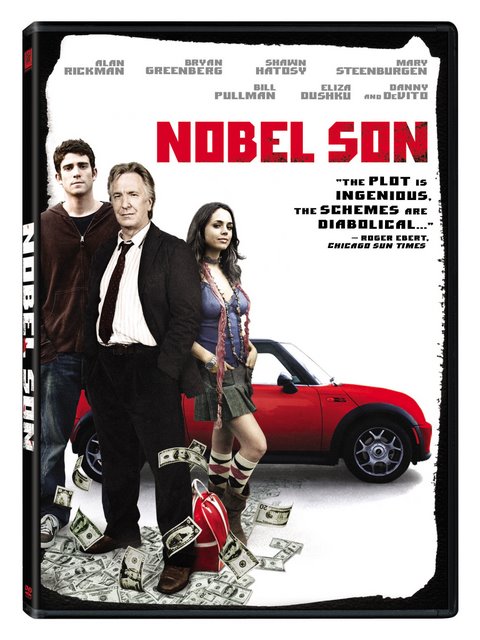
DVD Review: Nobel Son (2008)


Delicious
Bookmark this on Delicious
submit to reddit
Print Page

Digg!

MovieBlips: vote it up!

In The Perfect Sleep--another recently released dark opus of betrayal, family secrets, blood, and sadistic characters that felt like they were the product of an unholy union between classic film noir and modern day horror-- the plot, much like that of Nobel Son was so tremendously complicated that even the most casual viewer would feel as though they needed a pad of paper, knowledge of shorthand and a pen to keep 'em all straight.


Yet the main difference between the two in retrospect is simple-- since I finally gave up trying to makes sense of anything in the case of The Perfect Sleep which was so confoundedly pretentious and ludicrous that the ability of its cast to deliver bloated Shakespearean lines with a straight face was the only thing that kept me watching. Okay, well to be fair-- in addition obviously to professional obligation-- it was a train wreck of such ghastly proportions that part of the bizarre fascination came from sheer bewildered amusement.

However, when faced with the admittedly equally full of itself Nobel Son-- the tone perfectly suits that of its egomaniacal Nobel prize winning chemist lead Dr. Eli Michaelson (a deliciously wicked Alan Rickman) in the mesmerizingly sharp script penned by Marilyn Hotchkiss' Ballroom Dancing and Charm School and Bottle Shock husband and wife team Jody Slavin and Randall Miller.


For in Nobel Son, they trade in their previous instinct for nostalgia and audience pleasing sentimentality with the darkest of explorations in a film wrought with an emphasis on the definition of insanity, cannibalism, suicide, infidelity, kidnapping, and revenge.

And while the gruesome opening minutes may find some viewers reaching for the eject button and indeed, it's only the first of several scenes that will make you cringe-- if you stick with the devious work, you may realize as I did in sheer surprise that as twisted and sinister as it was in all of its forever changing glory, I was engrossed throughout its entire running time.

While the plot of The Perfect Sleep can't be summed up with any amount of words in the English language since I'm not sure even those involved knew just what the hell was going on-- everything about Nobel Son makes perfectly logical (yet unsettling and disturbing) sense, even when it threatens to journey several twists past our suspension of disbelief.

Yet, still I hesitate to reveal much about the storyline and was dismayed by the amount of spoilers readily available in reviews around the web so surf with caution even in publications like Variety.


In a nutshell, it centers on the insufferably smug academic-gone-wild Eli Michaelson (Rickman, of course!) who constantly reminds everyone he comes into contact with of their intellectual inferiority. Endlessly unfaithful to the tune to his early introduction via shagging a grad student he has no qualms about giving a D-- Eli is the last person the world should reward for his rude behavior with a Nobel Prize.


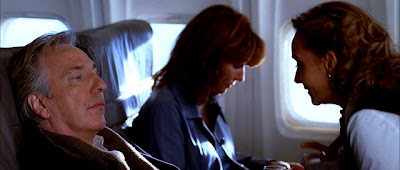
Fond of publicly humiliating his colleagues and family-- Eli loves to reduce those around him to nothing including the PhD candidate son (Byran Greenberg) he gives a thirty-five dollar a week allowance to since he disapproves of his thesis topic of cannibalism and reverence for Game Boy as well as making jokes out of his brainy MD wife (Mary Steenburgen) whose expertise regarding insanity vs. sanity finds her consulting with local and national law enforcement on a regular basis.

Yet, as the film ironically concedes-- the world of academics doesn't actually care about a person's private life-- just the professional accomplishments and contributions to his field so Eli and his wife Sarah venture to Sweden for him to bask in the honor and two million dollar prize.


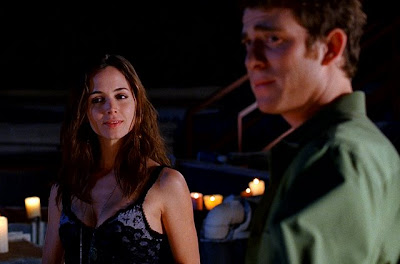
However, when their son fails to return home from a date with his unstable coffeehouse poet crush City Hall (Dollhouse and Bottle Shock's Eliza Dushku, again using her dry wit and sexuality as currency), they find themselves in for one hell of a twist. As-- instead of a telegram or congratulatory letter from a well-wisher-- they receive a delivery of a human thumb that may indeed be that of their son Barkley.


Returning home from a passionate night with City Hall, Barkley is clubbed in the head and held for the Nobel prize money by the calculating "autodidact" Thaddeus James (Shawn Hatsoy). Yet in lieu of taking us down the familiar terrain of a hostage film, Slavin and Miller's calculating screenplay continues to leave us thoroughly baffled-- complete with the sharp editing that only hints at future twists to come by presenting us with various pieces of the puzzle that only finally make sense once the end credits roll.

While we understand that two million dollars is reason enough for a kidnap and ransom with an eerie opportunist like Thaddeus-- soon it's revealed that Eli's unscrupulous behavior in the past has finally caught up to him as Hatsoy's Thaddeus drops a bombshell on Barkley regarding his more revenge fueled motive.

Moving from the idea of two young men working together to put one over on the wicked academic Scrooge-- the film's subsequent acts switch up the motive repeatedly as other characters come out of the woodwork (some in new ways than we'd previously been shown) along with the main cast's ability to easily get in touch with their darkest sides when prompted with the film's exceptionally heightened circumstances.

Although Barkley is far from an ideal "hero" since his obsession with cannibalism is enough to make one's stomach turn right off the bat-- and Dushku and Rickman are used more as "types" (as is Danny De Vito who plays their obsessive compulsive neighbor) than full three-dimensional characters-- Steenburgen is given her best material in years.


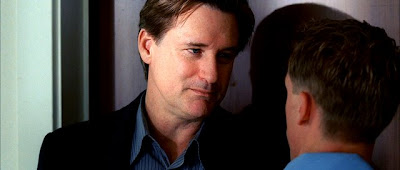
As a woman who-- despite our early poor judgment of her for tolerating life with Eli-- proceeds to become a tough heroine in her own right by cursing out a reporter with a gun blazing to stay off her lawn and setting off sparks with the detective who's terribly sweet on her, Bill Pullman's Max Mariner, Steenburgen's instantly feminine and genteel demeanor make her especially fascinating to watch throughout.


Despite this, Nobel Son isn't for everyone and I found myself incredibly glad I'd missed the press screening that night back in its December theatrical release and had the ability to view it at home in the a.m. where I could pause and think about things without being held captive at night in a dark theatre. Moreover, as I write this, I realize that I have no idea when I'd watch it again other than to perhaps fully appreciate the plot that unfolds after enough time has passed and I've blocked certain images from mind.


Still, aside from some situations that are designed specifically to repulse-- as in the gruesome opener, one extremely tasteless payoff involving Barkley's thesis topic near the ending, and sleazy satires on psychotically indulgent coffeehouse poetry that grows old fast-- director Randall Miller's movie will remind you of a much darker version of Christopher Nolan's The Prestige blended together with Joel Coen's Fargo with its ultimate evolution into a macabre, morose, and morally bankrupt magic trick.


And centering on a family so bizarre they'd make Bud Cort's Harold from the Hal Ashby classic Harold and Maude look normal by comparison-- while you may not know who to root for or why you find yourself continuing to watch-- at least the complexity of this screenplay (unlike the ultimately faux intelligence of Perfect Sleep) makes it downright impossible to guess what's coming from one scene to the next.


Therefore, Nobel Son is all the more successful as a feature film because it remains logical despite its celebration of chaotic craziness. Likewise, it's especially rewarding for offering Steenburgen a wonderful follow-up role to her surprisingly deft comedic turn in Stepbrothers with yet another creatively written gem that goes against the grain of most parts envisioned for women over the age of forty.


3/01/2009

Blu-ray Review: In the Electric Mist (2008)


Venturing Out of the Bayou
And Onto DVD & Blu-ray
3/3/09


Delicious
Bookmark this on Delicious
submit to reddit
Print Page

Digg!

Maybe it just works better in Europe.

Acclaimed, award-winning French director Bertrand Tavernier's adaptation of the sixth Dave Robicheaux mystery-- In the Electric Mist-- penned by screenwriting team Jerzy Kromolowski and Mary Olson-Kromolowski from the novel by James Lee Burke somehow managed to lure the director back to making an all English language feature and also dubiously scored a Berlin International Film Festival Golden Berlin Bear nomination for his effort. And if somehow you're able to make it all the way through the film, something tells me you'll be scratching your head as well...

Initially slated for a theatrical run due to its incredibly talented cast headed up by Oscar winner Tommy Lee Jones, Oscar winner Mary Steenburgen, Oscar nominee Ned Beaty, and critically lauded stars Peter Sarsgaard, John Goodman, and Kelly Macdonald that even boasts a cameo from American indie auteur John Sayles somehow fizzles rather than sizzles in its hum-drum mystery which takes place in the Louisiana bayou.

It is set in a society still ravaged by Hurricaine Katrina and indeed the event is referenced numerous times subtextually and involves a heartrending visit by our no-nonsense, recovering alcoholic detective Dave Robicheaux (Jones) while trying to string together clues in solving the gruesome cases of two dead young women. And in doing so, the film tries to move beyond the limits of its police procedural crime and punishment genre by venturing unsuccessfully into the realm of psychological thriller as Robicheaux and other characters commune with the ghosts of dead in a few downright odd hallucinatory scenes that don't quite gel with the film's uneven tone.

Throughout Mist, I was never sure if it was aspiring to be the type of modern day neo-noir given a Cajun makeover that worked so well in Robert Altman's underrated The Gingerbread Man and even some of the superior round-about mysteries of John Sayles (Lone Star, Silver City) or if the film is a trippier gothic piece. Sadly, it never manages to engage us on either level or on a simply casual one in spite of its the talented ensemble that's bogged down by uninspired dialogue (example: "Elrod's a shitbird, but I love him."). The script excels when it appears as though it's taken directly in voice over narration form from the novel as Robicheaux describes an A.A. friend who always called at night until one night someone had to call for him.

Further muddled by lackluster, poorly lit cinematography that manages to suck the ethereal beauty right out of the southland (making it a crisp yet waste in a Blu-ray transfer) and even filming the characters appearing as movie stars on a location shoot (Saarsgard and Macdonald) in an unflattering light-- everything about the film feels forced and inauthentic right down to its straightforward conclusion.

Granted, it has its moments thanks to 3:10 to Yuma's composer Marco Beltrami as well as a spirited turn by John Goodman bringing some of his Coen Brothers flavor to a role as New Orleans gangster "Baby Feet" Balboni that makes him sorely missed whenever he's offscreen. Yet, more often than not, other actors such as Steenburgen (as Jones' wife) are given little to do but simply go through the motions in underwritten roles and unfortunately as a whole, it's weaker than your average made-for-television mystery of the week. Again, this is especially unbearable given the extraordinary talent involved, excellent location, atmospheric jazz by five-time Grammy Award winning musician Buddy Guy that's all wasted in the finished product.

Again, while it may be better in translation overseas or for those who aren't acquainted with what a real Cajun set film should look and sound like nor the exceptional work offered by the cast and other high quality offerings from the distributors Image Entertainment-- ultimately it's not enough to recommend this one and instead I'd suggest going with the book by bestselling author James Lee Burke in its place.

7/25/2008

Step Brothers


Director:
Adam McKay

In the gospel according to Robin Williams, Eddie Murphy, Bill Murray, Steve Martin, Jim Carrey, Ben Stiller, Adam Sandler and even Will Ferrell, to become a successful comedic actor in Hollywood, it’s traditional practice that you go for giggles first and awards later. Along the way, these stars and others have literally done anything for a laugh from sticking bananas in tailpipes in Beverly Hills Cop to beating themselves up in a bathroom in Liar, Liar before suddenly these multimillion dollar men decide they’d like the opportunity go from pratfall to highbrow in order to earn some indie film cred, show off their acting chops, and maybe earn a golden statue or two in the process.

Unfortunately, regardless of numerous accolades and positive critical acclaim, the public usually isn’t as supportive of seeing someone like Adam Sandler cry in Spanglish or Reign Over Me. And by staying away from theatres in droves, it sends a loud and clear message to Hollywood that when it comes time for spending our hard earned dollar, we’d rather be the ones who cry… in fits of laughter, that is. More importantly, despite mixed views, when these stars stretch their range from comedy to drama, it reminds viewers just how skilled one must be as a performer to have made humor look so effortless, which becomes especially apparent when “serious” actors decide to tackle comedy to sometimes disastrous results. It’s become an oft-repeated phrase that the worst thing one can do as an actor in a comedy is to try to be funny and typically, that’s precisely the crime most serious actors are guilty of when they make the leap from Shakespeare territory to Judd Apatow country.

With this in mind, it’s been a refreshing and delightfully unexpected surprise to discover the ridiculous hilarity of former independent film favorite John C. Reilly as he’s gone from his earlier work in films like Casualties of War, Boogie Nights, The Thin Red Line, Magnolia, The Hours, The Good Girl and Gangs of New York to dazzling all of us with his Oscar nominated turn in Chicago. While his role in that film was filled with emotion most notably on display in the show-stopping number “Mr. Cellophane,” it recalled some of the comedic spark he’d begun to ignite even briefly in his previous roles. And after showing up for an un-credited daring turn as a bullying monk in Anger Management, the comedy world took note, and Reilly has just gotten funnier with each passing year, making the sad-sack character he cornered the market on in the past seem like a distant memory, especially when he was paired alongside Will Ferrell for the 2006 Nascar comedy, Talladega Nights: The Legend of Ricky Bobby.

The freewheeling, improvisational style of Ferrell clicked so well with Reilly’s unlimited range that even when the film threatened to take a few wrong turns and go off course, seeing the two of them together is what elevated that film above some of Ferrell’s lackluster comedies over the past few years as he’s spread himself far too thin. While Ferrell made the bold decision to forgo another easy paycheck to appear in a few serious works, including a tremendous turn in the woefully underrated Stranger than Fiction before returning to his humorous roots, Reilly continued to dabble with comedy, becoming an Apatow favorite after his work in director Jake Kasdan’s Walk Hard: The Dewey Cox Story.

However, as good as the men were solo, audiences who’d begun wearing out their Frat Pack comedy DVDs including Talladega, Anchorman, Wedding Crashers, Old School, Dodgeball, Semi-Pro and others longed for the two to reunite. And working with their Talladega team of director/co-writer Adam McKay and producer Judd Apatow, they’ve finally done so. With this in mind, they go from Talladega’s “Shake and Bake” to “Dragon” and “Nighthawk” a.k.a. Dale and Brennan in the far trashier but downright hilarious new release, Step Brothers.

Middle-aged, lazy and filled with a narcissistic sense of entitlement, the two star as overgrown children with one of the most twisted versions of Peter Pan Syndrome you’re likely to see in a mainstream comedy. Still living at home, without the benefit of college education and little in the way of job prospects which would undoubtedly interfere with their overreliance on video games, fanboy culture, junk food and round the clock television, Dale (Reilly) and Brennan (Ferrell) leech off their respective parents, played by Mary Steenburgen and Richard Jenkins (The Visitor).

Predictably however, just minutes into the film, at an out-of-town work conference, the parents meet and decide to marry after an impulsive coupling. Even odder, their horny hookup becomes filled with greater glee when the strangers bond in a hotel suite amidst the realization that they’re both stricken with the same ailment of not being able to kick their roughly forty year old children out of their houses. Although the bliss of the newlyweds is cut short when Nancy (Steenburgen) and Brennan move into the home occupied by Jenkins’ Robert Doback and Brennan’s equally immature new stepbrother Dale.

After sizing each other up on the front lawn whereby they state their wish to go by tougher monikers (the aforementioned Dragon and Nighthawk), the new family make a strained attempt at bonding over dinner. As expected when the “boys” are forced to share a room with one another and proceed to menace each other with vicious, foul-mouthed threats, in the following days it escalates into physical brutality culminating in an over-the-top fight which nearly tears apart the entire house.

However, soon the foes become fast friends when they unexpectedly bond upon the discovery that Brennan’s smug, yuppie, pompous, name-dropping, slang-happy, SUV driving younger brother Derek (Adam Scott) is an even bigger jerk than both of them put together. But after Derek-- who’s not above insulting his wife (Kathryn Hahn) and forcing his children into a sing along-- makes it his new mission to sell Robert’s home for a monster profit so the elders can retire, thereby forcing Dale and Brennan out of the house, the two newly aligned step brothers must concoct a grand scheme first to sabotage Derek’s real estate ambitions while avoiding taking on anything resembling a job.

Quickly, as expected and par for the Frat Pack comedy course, they realize that their antics are starting to drive an irreparable wedge in their parents’ relationship and understand that—better late than never and definitely on their own terms—it’s time to attempt to grow up. And while the third act falters and feels a bit forced in rushing to wrap up all the loose ends, it’s saved by a truly memorable musical number at a Catalina Wine Mixer that is sure to get fans recommending it to others, telling them that it’s something they’ll just have to see to believe.

Earning its “R” rating only moments into the movie, the overwhelmingly foul-mouthed and mean-spirited first forty-five minutes of the film threatens to kill the successful and genuinely earnest humor that follows. While it may leave a bad taste in your mouth—especially considering some of the unnecessarily vulgar sight gags, not to mention the guilty feeling of finding humor in something so juvenile-- it’s the charm of Reilly and Ferrell that saves the film.

Although you’ll definitely want to keep your children away, despite the appeal of the leads since the comedy isn’t as family friendly as the laughs served up in Talladega, the presence of the two and the sheer exuberance on display in their performances reminds us that no matter how cruel the actions of the characters are, you just know that it’s done with the best of intentions. And ultimately you can’t help but buy into the silliness as they damn near break their necks in order to just make us laugh, making Step Brothers a wickedly funny, if uneven blend of a little surprisingly sweet and some horrifically sour comedy.

Note: Be sure to stay in your seats after the credits begin to roll as Reilly and Ferrell exact revenge on a group of playground bullies in an admittedly tasteless yet unforgettably hilarious finale.

5/22/2008

Numb


Director:
Harris Goldberg

Have you ever had one of those days where you remember getting in your car and driving home from work but have absolutely no memory of what happened on the drive? You know you’ve obeyed the traffic lights and gone the same route you always do yet you’re so used to going through the motions that it’s impossible to distinguish one trip from the next… that is until something major changes. We take comfort in knowing that our detachment is only temporary but for Hudson (Matthew Perry), living in a “horrific perpetual dreamstate” becomes permanent after the anxiety ridden, high-strung screenwriter triggers his preexisting tendency for disassociation in a bong binge after smoking too much dope too fast while trying to pause his penchant for panic.

Soon diagnosed with “depersonalization” disorder or feeling entirely outside his body as he goes about his day, Hudson fights his condition in the quest for the perfect psychiatrist, experimenting with both talk and drug therapies while attempting his own remedies from an unsuccessful venture to reconnect with reality by visiting his parents to spending far too much time in front of his television zoning out to The Golf Channel. Nearly resigned to a life spent indoors watching the longest films ever made on DVD, Hudson is faced with an optimistic jolt when he becomes attracted to the beguiling, lovely, carefree, and refreshingly weird studio development girl Sara (Lynn Collins) after meeting her in a pitch meeting with his long suffering writing partner Tom (Kevin Pollak).

Surprisingly accepting of his predilection for evenings in front of the television, one night when faced with viewing the entire Star Wars trilogy complete with the filmmaker’s commentary, Sara urges Hudson out of the house and serious sparks begin to fly during some completely unexpected adventures. Now given a true reason to cure his depersonalization due to the fear that revealing his condition will alienate his new love, Hudson fights even harder to try and find the right course of treatment but when playing “musical drugs” begins failing, his tendency towards self-sabotage kicks in as writer/director Harris Goldberg’s impressive, autobiographical, and wholly original romantic comedy continues.

Featuring a pitch perfect performance by Matthew Perry in a role that seems completely tailor-made for the star given his incredible talent for dialogue and self-deprecation, Goldberg admirably fills in the rest of the script with equally involving characters, even when they begin bordering on caricature such as in a fine if slightly artificial subplot featuring Mary Steenburgen as an unstable cognitive behavior specialist who breaks the boundaries of a traditional doctor/patient relationship when she gives into temptation with Hudson.

Far better than one would assume given Goldberg’s other credits as a screenwriter contributing to the awful Dana Carvey vehicle The Master of Disguise and the downright despicable Deuce Bigalow series, we realize that the talented filmmaker has much more to offer than lowbrow credits. Given the maturity and well-earned laughs from this completely human script, it's safe to say that we can look forward to other movies from Goldberg that-- if he manages to stay as close to his heart as he did with this deeply personal tale-- are sure to garner him more fans in the world of independent film. Co-produced by its star Matthew Perry, Numb, which earned the Audience Award from the Gen Art Film Festival, has been recently released on DVD.