Showing posts with label Eliza Dushku. Show all posts

8/07/2009

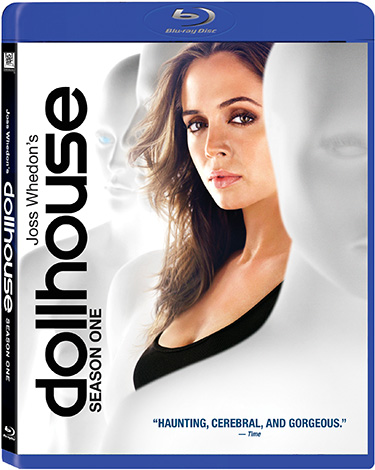
TV on Blu-ray: Dollhouse: Season 1 (2008-2009)


Now Available to Own


Delicious
Bookmark this on Delicious
submit to reddit
Print Page

Digg!

MovieBlips: vote it up!

Although I must continually applaud Fox for having the guts to recognize the brilliance in the mind of creative storytelling visionary Joss Whedon, his fourth original television series was granted zero favors from the network during its inaugural broadcast.

Given the indisputable beauty of Dollhouse lead actress and producer Eliza Dushku, whose knack for combining sex appeal with soulfulness made her supporting slayer Faith one of the most exciting castmates on Whedon's Buffy and Angel-- Fox took the most predictable approach for their marketing campaign. And to this end, they opted to fixate on lustful titillation rather than intellectual stimulation which was further solidified by an awful time-slot that almost guaranteed the show would either tank or be the type of thing watched by the dateless and/or friendless.

Thus, the channel essentially gave the series the subtextual kiss-of-death of “guilty pleasure trash TV” but much like another unexpected work that drew a steady and loyal following-- Gossip Girl-- the astounding number of viewers programming episodes on their DVR showed networks that audiences were ready for something different.

However instead of adjusting the schedule or doing more to market it to a wider spectrum, Dollhouse was ignored and treated as though it was the type of programming you may not want to admit to others you actually watch. Of course, one outcome of this approach was that it helped fuel media word-of-mouth that all seemed to focus purely on the series as though it was all about sex or the objectification of women... as if we'd forgotten just who the hell Joss Whedon was and how much he'd done for female characters since he was first employed as a staff writer on Roseanne.

Although of course that was just the beginning and well before he introduced the world to female vampire slayers who confronted attackers rather than becoming traditional horror genre victims and created not one but two series from this initial idea without which Alias and several other female-centric action shows may never have gotten off the ground.

Yet Fox's Dollhouse marketing ploy was sadly successfully to those outside of the Whedon Universe who are therefore also unaware that this feminist streak is an inherited trait from not just his mother but the men in his family as well including his father who was a contributing writer for the witty Golden Girls and his grandfather who penned The Donna Reed Show.

And proof of Fox's success to hide the brains of the show in favor of beauty shows up on Blu-ray release for one of the best new shows of last season as it actually contains a quote from New York Post who dubs it “good, dirty fun,” despite the more important and honest praise from Time Magazine on the front cover which applauds the show for its three integral qualities of being “haunting, cerebral, and gorgeous.”
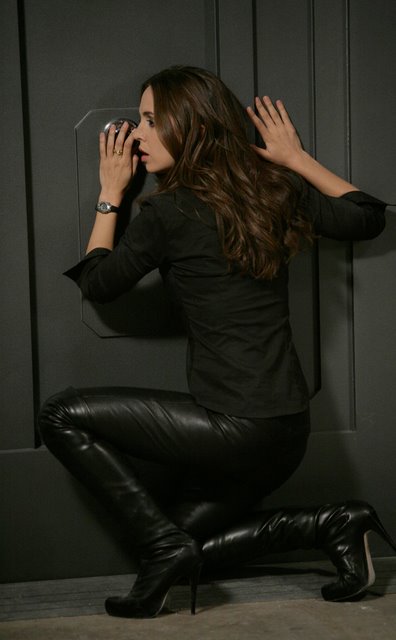


Moreover, by choosing to market the endlessly fascinating and morally complicated Dollhouse as something merely akin to Barberella, the all-important female demographic was ignored since I can't tell you how many intelligent women I spoke with who didn't even want to view it, believing simply from the advertising that the show seemed like it consisted of simply Eliza Dushku portraying a twenty-first century version of a Stepford Wife crossed with one of those sexy bots from the Austin Powers movies.

While admittedly the provocative concept for Dollhouse could've easily been treated in that manner in another's hands, Whedon-- per usual, illustrates that he's a man who enjoys leading us down one path for a brief period of time before suddenly pulling us into an entirely different direction as the series evolves during its twelve aired episodes.

The action centers on an underground, top-secret, elite and amoral lair that programs its stable of male and female “dolls” or to use the series phrase-- “actives”-- to become whatever the high paying clients want them to be whether that may be a midwife for a couple who live on a snowbound mountain, the ideal lover, an art thief, or a negotiator in a complicated kidnap for random case etc.
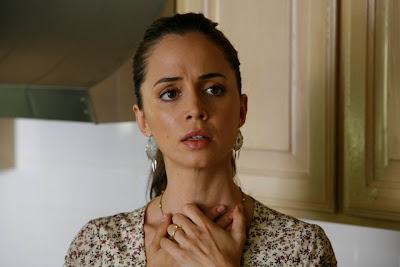


Underrated, addictive and increasingly complicated-- while on the surface it feels as though we're watching something set in the near future, we're startled to learn that Whedon opted to place the events in present day Los Angeles and he keeps everything eerily relatable by operating under two universal truths or theses. They consist of the following: 1) if you have everything, you will inevitably want something else or something even more extreme and; 2) if technology is discovered that will allow you the ability to program people like computers, we will use it since as we've shown in the past, as soon as the capability for the bomb was there, we took it.

Par for the course for Whedon, you can cite the pop culture influences right off the bat as the Los Angeles branch of the Dollhouse which is run by Adelle DeWitt (Olivia Williams) recruits its "actives" La Femme Nikita style as they surrender their personality for five years by signing a contract. When life has found them either in trouble with the law or facing a situation that's unbelievably dire as we briefly see in the opening of the series was the case of Dushku's character's former self "Caroline," they leave that life behind to become an active.
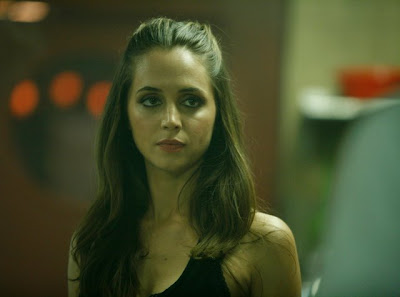


And essentially it's an organization that DeWitt tries to fool herself and others into believing is one that helps people rather than coolly traffics in human beings who are imprinted with fake personalities to become other people for the right price on selective missions (and garnering extra money when there's extra risk or a file is "flagged"). Of course, this is before the actives return and their memories are wiped clean a la Paycheck with no questions asked about what happened to them while they were away despite the fact that they have handlers.

Obviously it's also inspired by the work of not only Philip K. Dick's science fiction but also such classics as Brave New World and 1984. To this end, it tries to present us with life inside the Dollhouse as a safe-haven of fake, protective bliss as Dushku's Echo sleeps in a pod. However she is as helpless as a young grade school aged child when not on assignment as she fills her time trying to be her best while going from routine medical physicals to swimming laps and painting pictures before she starts becoming more self-aware as the series continues.

This begins to take shape after five introductory standalone episodes in which we become acquainted with the series and those involved. One of the most important people in her life is Echo's new handler, the former ex-cop Boyd Langton (Harry Lennix) who develops a paternal Buffy "watcher-like" attachment to the his vacuous active.

Of course, while her name alone is a nod to Greek mythology yet we quickly realize that Echo is used by an entire technological ucorporation instead of just one male Narcissus-- Whedon cuts loose with mythology of his own in season one's strongest episode "Man on the Street." In doing so, he starts to introduce us to what will become the Dollhouse mythology as well as the backstories of several lead characters. Moreover, the sixth episode challenges viewers throughout with more surprises in forty-two minutes than a typical show unveils during sweeps month.

Knowing that we can only stand to watch Echo and the other actives go from in-charge to submissive slaves for a certain amount of time-- suddenly, the idea of sleeper actives, double agents, corrupt handlers and more revelations hit the show as the underground corporation is nearly brought down. For just as Echo has begun to be struck with some flashbacks of a traumatic shooting inside the Dollhouse, we uncover that someone has been supplying coded messages in dolls and leaking them out as Echo is very, very slowly jolted into the idea that things aren't exactly what they seem.

When this occurs, she finally encounters the star of our simultaneous narrative in the form of the relentless FBI Agent, Paul Ballard (Tahmoh Penikett). An outsider in his department, Ballard becomes the bureau's Mulder and Scully while he attempts to seek information about the Dollhouse which his colleagues all tell him is only a fairy tale.

Yet when he becomes captivated by Caroline and stories about the "pretty lady," again the series references another literary source in the form of Sleeping Beauty as he refuses to quit trying to wake up Dushku's Echo only to discover that the Dollhouse may be a lot closer to him than he ever imagined since instead of big brother--the dolls are watching in Whedon's clever series.
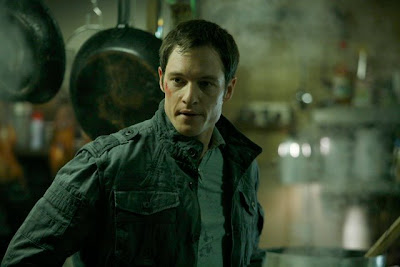


Bringing on board a lot of the same behind-the-scenes writing, directing and producing staff with whom Whedon has collaborated before including Jane Espenson and Tim Minear-- in a few cases, Whedon fans feel as though they're watching a Buffy paradigm episode. Yet by the time "Man on the Street" rolls around, you realize you're completely hooked and wish that Whedon would've had the freedom to have worked with a full season run to develop the mythology in greater detail. However, it's a terrific set that lets viewers get caught up on one of the most overlooked and underrated new series of last year before it kicks off one more time.

Also containing the unaired pilot "Echo" and the thirteenth episode shot for half the budget on video and set in the future to sort of wrap some things up in a post-apocalyptic way in case the show was canceled-- "Echelon One" which screened at this year's Comic-Con-- the Fox Blu-ray three disc set boasts gorgeous picture and sound quality throughout.
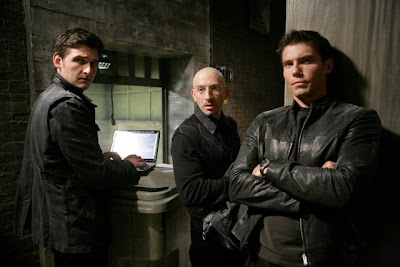


However, one major complaint that's been noted by some readers and fans is that once again, the Blu-ray no longer contains a sleeve or any list of episodes informing you which episodes are on which disc. Using the same complicated and difficult to navigate "dice menu" structure employed for the episode selection on the Burn Notice Season 2 Blu-ray set-- while in Dollhouse's case, the quality is on par with their cinematic releases and is simply perfection, it's still tough to view unless you're doing it in marathon form.

To explain, the first disc is bogged down with so many trailers that it's hard to skip over them which makes the fact that you're unable to bookmark your place in the Blu-ray even more frustrating as finally I realized I just had to keep leaving it on pause and relying on the screen-saver to avoid the endless previews.

Yet, making the hassle worth your while aside from obviously the content of the series alone-- the set contains some cast and crew commentary tracks along with of course, the un-aired episodes, and featurettes that lead you deeper into the Dollhouse to a level that's so secure, normally you'd have to be an active with an imprint to gain access.

In my eyes, much more compelling than Whedon's Firefly or the film that followed, Serenity, Dollhouse is a return to the female-centric work he does best that will provoke, seduce, surprise, yet most importantly get you talking about the humanistic implications of what you've just seen all wrapped up in one damn entertaining show. Overall, this is one series that is highly recommended, highly addictive not to mention well worth your time and shelf-space... even if you'll never look at a child's dollhouse the same way again.


Text ©2009, Film Intuition, LLC; All Rights Reserved. http://www.filmintuition.com

Unauthorized Reproduction or Publication Elsewhere is Strictly Prohibited.

6/19/2009

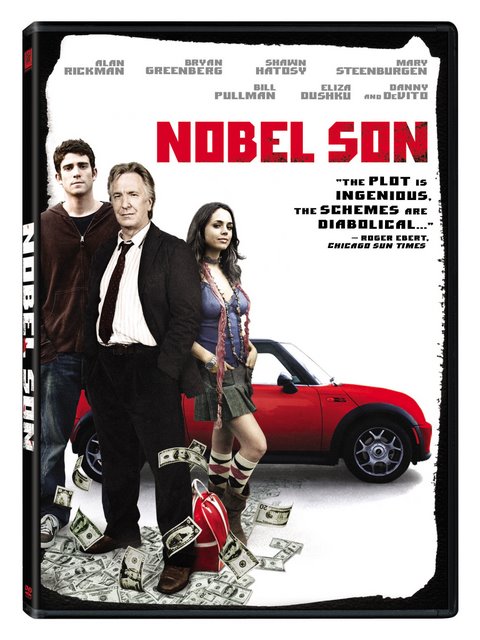
DVD Review: Nobel Son (2008)


Delicious
Bookmark this on Delicious
submit to reddit
Print Page

Digg!

MovieBlips: vote it up!

In The Perfect Sleep--another recently released dark opus of betrayal, family secrets, blood, and sadistic characters that felt like they were the product of an unholy union between classic film noir and modern day horror-- the plot, much like that of Nobel Son was so tremendously complicated that even the most casual viewer would feel as though they needed a pad of paper, knowledge of shorthand and a pen to keep 'em all straight.


Yet the main difference between the two in retrospect is simple-- since I finally gave up trying to makes sense of anything in the case of The Perfect Sleep which was so confoundedly pretentious and ludicrous that the ability of its cast to deliver bloated Shakespearean lines with a straight face was the only thing that kept me watching. Okay, well to be fair-- in addition obviously to professional obligation-- it was a train wreck of such ghastly proportions that part of the bizarre fascination came from sheer bewildered amusement.

However, when faced with the admittedly equally full of itself Nobel Son-- the tone perfectly suits that of its egomaniacal Nobel prize winning chemist lead Dr. Eli Michaelson (a deliciously wicked Alan Rickman) in the mesmerizingly sharp script penned by Marilyn Hotchkiss' Ballroom Dancing and Charm School and Bottle Shock husband and wife team Jody Slavin and Randall Miller.


For in Nobel Son, they trade in their previous instinct for nostalgia and audience pleasing sentimentality with the darkest of explorations in a film wrought with an emphasis on the definition of insanity, cannibalism, suicide, infidelity, kidnapping, and revenge.

And while the gruesome opening minutes may find some viewers reaching for the eject button and indeed, it's only the first of several scenes that will make you cringe-- if you stick with the devious work, you may realize as I did in sheer surprise that as twisted and sinister as it was in all of its forever changing glory, I was engrossed throughout its entire running time.

While the plot of The Perfect Sleep can't be summed up with any amount of words in the English language since I'm not sure even those involved knew just what the hell was going on-- everything about Nobel Son makes perfectly logical (yet unsettling and disturbing) sense, even when it threatens to journey several twists past our suspension of disbelief.

Yet, still I hesitate to reveal much about the storyline and was dismayed by the amount of spoilers readily available in reviews around the web so surf with caution even in publications like Variety.


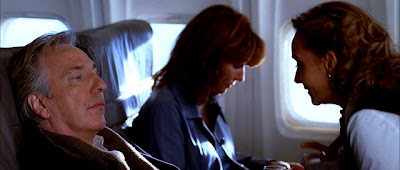
In a nutshell, it centers on the insufferably smug academic-gone-wild Eli Michaelson (Rickman, of course!) who constantly reminds everyone he comes into contact with of their intellectual inferiority. Endlessly unfaithful to the tune to his early introduction via shagging a grad student he has no qualms about giving a D-- Eli is the last person the world should reward for his rude behavior with a Nobel Prize.


Fond of publicly humiliating his colleagues and family-- Eli loves to reduce those around him to nothing including the PhD candidate son (Byran Greenberg) he gives a thirty-five dollar a week allowance to since he disapproves of his thesis topic of cannibalism and reverence for Game Boy as well as making jokes out of his brainy MD wife (Mary Steenburgen) whose expertise regarding insanity vs. sanity finds her consulting with local and national law enforcement on a regular basis.

Yet, as the film ironically concedes-- the world of academics doesn't actually care about a person's private life-- just the professional accomplishments and contributions to his field so Eli and his wife Sarah venture to Sweden for him to bask in the honor and two million dollar prize.


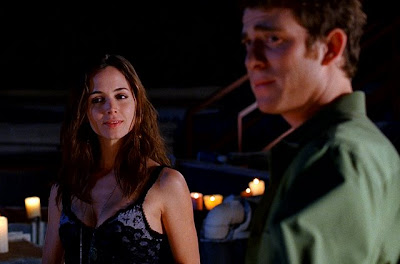
However, when their son fails to return home from a date with his unstable coffeehouse poet crush City Hall (Dollhouse and Bottle Shock's Eliza Dushku, again using her dry wit and sexuality as currency), they find themselves in for one hell of a twist. As-- instead of a telegram or congratulatory letter from a well-wisher-- they receive a delivery of a human thumb that may indeed be that of their son Barkley.


Returning home from a passionate night with City Hall, Barkley is clubbed in the head and held for the Nobel prize money by the calculating "autodidact" Thaddeus James (Shawn Hatsoy). Yet in lieu of taking us down the familiar terrain of a hostage film, Slavin and Miller's calculating screenplay continues to leave us thoroughly baffled-- complete with the sharp editing that only hints at future twists to come by presenting us with various pieces of the puzzle that only finally make sense once the end credits roll.

While we understand that two million dollars is reason enough for a kidnap and ransom with an eerie opportunist like Thaddeus-- soon it's revealed that Eli's unscrupulous behavior in the past has finally caught up to him as Hatsoy's Thaddeus drops a bombshell on Barkley regarding his more revenge fueled motive.

Moving from the idea of two young men working together to put one over on the wicked academic Scrooge-- the film's subsequent acts switch up the motive repeatedly as other characters come out of the woodwork (some in new ways than we'd previously been shown) along with the main cast's ability to easily get in touch with their darkest sides when prompted with the film's exceptionally heightened circumstances.

Although Barkley is far from an ideal "hero" since his obsession with cannibalism is enough to make one's stomach turn right off the bat-- and Dushku and Rickman are used more as "types" (as is Danny De Vito who plays their obsessive compulsive neighbor) than full three-dimensional characters-- Steenburgen is given her best material in years.


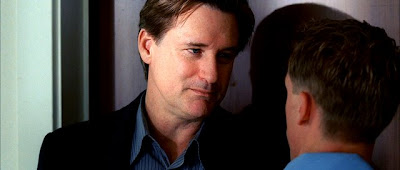
As a woman who-- despite our early poor judgment of her for tolerating life with Eli-- proceeds to become a tough heroine in her own right by cursing out a reporter with a gun blazing to stay off her lawn and setting off sparks with the detective who's terribly sweet on her, Bill Pullman's Max Mariner, Steenburgen's instantly feminine and genteel demeanor make her especially fascinating to watch throughout.


Despite this, Nobel Son isn't for everyone and I found myself incredibly glad I'd missed the press screening that night back in its December theatrical release and had the ability to view it at home in the a.m. where I could pause and think about things without being held captive at night in a dark theatre. Moreover, as I write this, I realize that I have no idea when I'd watch it again other than to perhaps fully appreciate the plot that unfolds after enough time has passed and I've blocked certain images from mind.


Still, aside from some situations that are designed specifically to repulse-- as in the gruesome opener, one extremely tasteless payoff involving Barkley's thesis topic near the ending, and sleazy satires on psychotically indulgent coffeehouse poetry that grows old fast-- director Randall Miller's movie will remind you of a much darker version of Christopher Nolan's The Prestige blended together with Joel Coen's Fargo with its ultimate evolution into a macabre, morose, and morally bankrupt magic trick.


And centering on a family so bizarre they'd make Bud Cort's Harold from the Hal Ashby classic Harold and Maude look normal by comparison-- while you may not know who to root for or why you find yourself continuing to watch-- at least the complexity of this screenplay (unlike the ultimately faux intelligence of Perfect Sleep) makes it downright impossible to guess what's coming from one scene to the next.


Therefore, Nobel Son is all the more successful as a feature film because it remains logical despite its celebration of chaotic craziness. Likewise, it's especially rewarding for offering Steenburgen a wonderful follow-up role to her surprisingly deft comedic turn in Stepbrothers with yet another creatively written gem that goes against the grain of most parts envisioned for women over the age of forty.


2/24/2009

DVD Review: Bottle Shock (2008)


This Rare Cinematic Vintage
Of Sophistication & Charm Is
Now Available to Own From Fox DVD


Related Titles for the Wine Enthusiast
(Note: They Go Equally Well With Red or White)


Delicious
Bookmark this on Delicious
submit to reddit
Print Page

Digg!

There's a moment in Bottle Shock when Six Feet Under and Ugly Betty star Freddy Rodriguez manages to steal the entire film while giving a fiercely passionate speech arguing that in order to make truly great wine, you must have it in your blood.


Granted, he is eventually proven wrong by the film's underdog hero in the form of his boss Jim Barrett (Bill Pullman)-- a gifted new vintner in this retelling of one of the most astounding feats of wine-making in American history as Napa vineyards were put on the map when they managed to outperform in competition with the celebrated French varietals during a blind taste-test. However, ultimately what Rodriguez's Gustavo is arguing for is above all having the utmost respect for the grape which begins with the rich soil that one must live and breathe in order to master their craft.


A picturesque tribute to California's wine version of paradise-- husband and wife team Randall Miller and Jody Savin's sublimely beautiful retelling of Barrett's 1976 landmark Time Magazine reported and Smithsonian Museum historical success which opened the doors to varietals from all around the globe seems to have been made with the same level of integrity, teamwork, craftsmanship, and devotion to the ultimate offering that makes one think that if they were to ever seek a second career, Miller and Savin may become quite successful as vintners in their own right.


The soil in this case was not only the original source material but Ross Schwartz's original screenplay which centered on the now forgotten Paris tastings that set the stage for the modern day California wineries celebrated in 20th Century Fox's 2004 Oscar winning release Sideways (which has incidentally been released on Blu-ray and made available in DVD form as a "Perfect Pairing" two film pack along with Shock back on 2/3/09).


Reworking the script to fashion it to their own tastes by staying as close to the facts as possible (as far as the real life characters were concerned), they added in two great female roles including Buffy the Vampire Slayer's Eliza Dushku as a strong-willed bartender and Transformers' Rachael Taylor as a beautiful intern who comes between Gustavo and Jim's son Bo (Chris Pine). Additionally, Savin and Miller tended to their "grape" by ensuring they had the best collaborators involved by surrounding themselves with a large number of cast and crew they'd worked alongside in their two previous independent films, Marilyn Hotchkiss Ballroom Dancing & Charm School and Nobel Son.


Soon after quickly penning "twenty pages over a few days" of the Bottle Shock script to present to their Nobel Son star Alan Rickman-- the actor signed on as well as two other Nobel players Pullman and Dushku. Thus, the film found its two ultimate "outsider" anchors in both America and France respectively as the British Rickman plays struggling Parisian wine shop owner Steven Spurrier who (given the table closest to the kitchen at events and with a nearly empty shop) concocts the idea to stage the blind taste-test as a publicity stunt to raise revenue and Pullman portrays an attorney who'd left his job after his wife left him and married his boss to run a vineyard.

While on the surface, the two men couldn't be more different as Rickman excels as playing the ultimate snob and Pullman infuses his part with the same good-natured blue-collared heart he's used in numerous performances-- after awhile, it becomes very apparent that they're much more alike than they realize as both are stubborn individuals who feel insecure in their professions, don't exactly fit in in their surroundings and are staking their livelihood on their passionate dream.

While the characterization of Jim's son Bo Barrett (Chris Pine)-- a hippie slacker surfer dude who squanders all he has-- initially grates on the nerves especially upon the arrival of Taylor's gorgeous Sam who catches the eye of both Bo and Gustavo and we find ourselves rooting against Bo for a majority of the film because of this fictionalized plot, it's highly rewarding to see the way he gets himself together to help his father in the end.

Gorgeously shot by Michael J. Ozier who made an effort to "maximize the magic hour" just before sunset as "the whole crew would go into shooting overdrive" to get the "golden hue" tinge that's most apparent during Northern California's harvest time as director Randall Miller notes in the press release-- the film's exceptional beauty makes your breath catch, especially on a DVD up-convert or Blu-ray player and although the transfer to DVD is gorgeous, I for one would love to see this film (as well as the new version of Sideways) on Blu-ray.


Although Bottle Shock was filmed over the period of a month and a half after securing the permission of Sonoma's town counsel and relocating to the film's location two months prior "with the production financing still only partially in place," (again echoing the economic struggle and endless bank loans Barrett needed to turn his winery into a success back in 1976, the film's breakneck pace isn't apparent at all in its roving picturesque final cut.

Amazingly completed just two days before it debuted at the 2008 Sundance Film Festival to a standing ovation (after obtaining a special exception to submit their film for acceptance even though photography began following the cut-off date), their gorgeous indie sleeper which earned some critical raves and a few far too predictable comparisons to not only Sideways but Fox's other indie that could Little Miss Sunshine and the '70s era underdog epic Rocky-- sadly flew under the radar upon its limited national release.


Although you do wish that a few of the plot-points involving Pine's less-than-identifiable Bo would have been reworked and find yourself especially taken in by the film's subplot featuring Rodriguez's Gustavo-- it's a highly satisfying feel-great film that's sophisticated, stylish, smart and well-worth tracking down whether or not you can tell a Cabernet from a Merlot or a Chardonnay from a Pinot Grigio (although if this is the case, you may want to keep that to yourself).


Shock features the DVD standards of deleted scenes and audio commentary with the cast and crew. However, two of the best gems included are An Underdog's Journey: The Making of Bottle Shock which offers some engaging comments from supporting players like scene stealer Dennis Farina as Rickman's sole customer in Paris and a mini-documentary on Chateau Montelena: One Winery's Search for Excellence. For, just like the making-of-featurette, it introduces us to the real Bo and Jim Barrett and seems to indicate-- much like Savin and Miller's passion for cinematic storytelling, the Barretts also seem to have their craft in their blood.