Showing posts with label Steven Soderbergh. Show all posts

2/01/2019

Netflix Movie Review: High Flying Bird (2019)


Arriving on Netflix: 
Feb. 8

Bookmark and Share

The way Bill Duke's community basketball coach sees it, "you either care all the way or you don't care at all, man," and it only takes a few minutes of screen time for us to realize that, when it comes to looking out for his clients during an NBA lockout, André Holland's basketball agent Ray is a man who cares all the way.


Trying to save his lottery pick player Erick (Melvin Gregg) from bankruptcy and himself from unemployment, Ray spends a majority of Steven Soderbergh's ninety minute movie in motion. Talking at the speed of a playoffs game, over the course of a few fateful days, Ray maneuvers between the labor dispute's offense and defense.

A subversive look at "the game on top of the game" of basketball but without any court action in sight, the film, written by playwright Tarell Alvin McCraney (Moonlight) and modeled on Sweet Smell of Success, raises valid, urgent questions about the commoditization of predominantly black athletes by white owners.


Making moves to redistribute the balance of power, money, and control back into the hands of the players alongside his brainy, ambitious assistant Sam (a terrific Zazie Beetz), in High Flying Bird, we get the chance to go behind the curtain of what Ray dubs "the sexiest sport."

Using an outsider's perspective to explore new terrain in an unexpected way, Soderbergh's bold decision to take basketball itself out of the equation gives us a closer look at what we're really seeing when we watch a game on TV.


One of our most curious filmmakers, especially given the scope and objectivity of his character driven films, it's safe to say that had he not entered the film industry, Steven Soderbergh would have made one hell of an investigative reporter.

A unique mix of vintage and modern Soderbergh filmmaking techniques, although Bird was shot on an iPhone (like his recent underrated thriller Unsane), Bird's frames are sharper and more polished, perhaps owing as much to advances in technology as the film's smoother, less frantic tone and approach.


Comprised of the same set-up of two people in a room talking that he says made his name thirty years ago in Sex, Lies, and Videotape, the end result is a fascinating blend of theater, journalism, and cinéma vérité brought to life with verve and skill by its top-notch cast in just three weeks.

Best appreciated the second time around when we're better able to digest McCraney's gorgeously penned, theatrical monologues which are so full of meaning that they occasionally feel too big for the screen, Bird also makes for an ideal double feature with the 1957 classic Sweet Smell of Success.


Used by Soderbergh as a template for the film when he was first developing it on the set of The Knick alongside Holland, even without Success, Bird is sure to inspire its fair share of think pieces and make for engaging post-film discussion regardless.

Although those looking for a traditional sports movie will be disappointed by its lack of well, sports, those willing to keep an open mind might be surprised to discover that, whether it’s about sports or film, much like Ray (or McCraney or Soderbergh for that matter), they too "care all the way."


Text ©2019, Film Intuition, LLC; All Rights Reserved. http://www.filmintuition.com Unauthorized Reproduction or Publication Elsewhere is Strictly Prohibited and in violation of the Digital Millennium Copyright Act.  FTC Disclosure: Per standard professional practice, I may have received a review copy or screener link of this title in order to voluntarily decide to evaluate it for my readers, which had no impact whatsoever on whether or not it received a favorable or unfavorable critique. Cookies Notice: This site incorporates tools (including advertiser partners and widgets) that use cookies and may collect some personal information in order to display ads tailored to you etc. Please be advised that neither Film Intuition nor its site owner has any access to this data beyond general site statistics (geographical region etc.) as your privacy is our main concern.

3/11/2014

Criterion Collection Blu-ray Review: King of the Hill (1993) and The Underneath (1995)


Now Available


Bookmark and Share

Having recently announced his retirement from conventional film directing, it’s become almost irresistible to look at the varied oeuvre of filmmaker Steven Soderbergh’s past twenty-five plus years in the business and discover (there among the seemingly wide range of material) certain overlapping themes, unifying ideas that link one film to the next and offer even the tiniest window into the heart and soul of their enigmatic creator.

Soderbergh has called this tendency to seek out a universal thread a “parlor game” for journalists or critics as documented in a reprinted interview included in the Criterion Collection booklet for the long overdue induction of his often-out-of-print, overlooked third masterpiece King of the Hill on three-disc Blu-ray/DVD dual combo pack (that also features his fourth picture The Underneath).


Nonetheless, for film scholars interested in the subject, the beginning of an emerging area of interest for Soderbergh began to recur onscreen by the time of this ’93 work in the form of its young protagonist.

King centers on a natural born storyteller or youthful fabulist who lies to hide the pain and protect himself as opposed to seduce and deceive the way another charismatic Sodebergh liar did onscreen via James Spader’s breakthrough performance in the director’s semi-autobiographical Palme d’Or winner Sex, Lies and Videotape.

Like the subject of his second film Kafka or his last film Side Effects, manipulators hold cinematic sway over the population on and offscreen but their motives run the gamut and they’re always out-of-step with the rest of the characters.


Confessing that what drew him to A.E. Hotchner’s autobiographical depression era memoir was that he felt himself drawn to a hero “who feels at odds with everyone around him. And again is very interior,” Soderbegh acknowledges that “that’s my feeling in general. And I go toward that kind of material,” which he did for this film and would do countless times in the future from The Limey to Erin Brockovich and The Informant.

Yet there’s something about this film that, like the complex tapestry he wove in Traffic manages to take this basic idea, along with Hotchner’s coming-of-age template that chronicles that time of your life when you learn that your parents aren’t mythical beings but real life flesh and blood people that makes King of the Hill something different altogether.

Impossible to pin down into any specific genre despite its obvious episodic qualities and purported tale about a boy learning how to become a man when one by one due to illness, money and job opportunities he finds he’s left fending for himself during a pivotal summer in 1933 in a St. Louis hotel room, Hill defies expectations from start to finish.


Filling the picture with memorable characters that were brought to life by actors who would go onto become household names from Adrien Brody and Lauryn Hill to Katherine Heigl, Amber Benson and Jesse Bradford in a remarkable turn, Soderbergh walks that fine line between laughter and tears, melancholy and small victories by injecting the film with a surprising amount of warmth, humor and mischief.

While it is tonally similar to My Life as a Dog as well as Hope and Glory, it’s far more successful in my eyes because of the way it always remembers it’s being told through the eyes of a precocious child as opposed to a thirty year old filmmaker at the peak of his powers.


In King the genuine affection that Soderbergh has for all of his characters and the experiences that test his main character from reading a story he wrote in class to a story he tells the teacher to explain why he’s in the hotel shines through every frame.

Gorgeously lensed with strong art direction, Hill employs a rich Edward Hopper infused Americana color palette to convey the warm burgundy and mustard tinged loneliness of those paintings and the time period in which it takes place.

And by avoiding a glossier magazine style sheen straight out of Saturday Evening Post Norman Rockwell works or even a stark black and white meld of The Grapes of Wrath through the eyes of Shirley Temple, it has a rich sense of nostalgic reminiscence without the same clichéd gold filter that typically paints the cinematic past -- ensuring that we’re not so lost in the look of the film that it’s a barrier to the story he’s trying to tell.


From the charismatic presence of Adrien Brody to the devastating heartbreak felt when we were put into the shoes of Amber Benson's epileptic girl down the hall to the exuberance experienced when our hero pulls one over on a shady cop and landlord, it’s a testament to the strength of the movie that I could still vividly recall certain moments from my initial screening of it back in ‘93.

In fact, viewing King today for the first time since I was twelve years old (or roughly the same age as Bradford’s protagonist), I was amazed by how well the work held up. My first Soderbergh film that I’d rented due to a rave review from Siskel and Ebert, King of the Hill affected me so much as a budding film lover that I recommended it to my history teacher who tried (and failed) to get authorization to screen it for our middle school class.

While some scenes and characters (mostly the adults, I realized, as when you’re a child you mostly relate to your own) had completely vanished from my mind, I was amazed by how powerfully some sequences came flooding back to my mind. And this became most apparent during the film's most haunting scene as our creative yet starving young lead meticulously cuts out magazine photos of his dream meal and then devours them at a table before succumbing to stomach pains.


So deeply personal and powerful – rightfully filmed as though we were tiptoeing on something we were never meant to see – I realized upon watching it again as an adult how much of an impression the film had made on my life.

And honestly, moments like this one and others in deeply moving films viewed during my transformative years – nearly feel as though they were part of my own childhood. As such it was an absolute honor not only to revisit the same work again with the clearer understanding of an adult mind but also to take this opportunity to go back and screen it again through my own younger eyes.


And given the fact that the man who made one of so many profound films that impacted my moviegoing life has retired from filmmaking (at least for now), it offers us an even greater excuse to look back at all of these masterpieces that will hopefully continue to live on as they’re inducted in the Criterion Collection.

While I have yet to experience their edition of Traffic, this restoration of King of the Hill is absolutely stellar, arriving with bonus interviews, deleted scenes and more.

And although the clunkily crafted Noir throwback The Underneath which reunites Soderbergh with his Sex leading man Peter Gallagher is notable as his last big studio effort before he cut loose with his palette cleansing, Jackson Pollock painting version of a film in the form of Schizopolis it’s an interesting if only half-successful film.


For serious Soderbergh scholars only (as the man himself didn’t write the oddly plotted, logically challenged heist picture), The Underneath tries to build something new out of far too many superior somethings old from Out of the Past to The Asphalt Jungle but ends up settling for something we’ve seen too many times before.

And while it’s notable in the way that it kicked off the renaissance that inspired Soderbergh to take control of his career and came back in a big way with an unprecedented string of hits including Out of Sight, The Limey and others, it pales in comparison to King.

An underrated gem that’s at last given its Criterion due, unlike The Underneath, King of the Hill shows us that Soderbergh is best when he brings something new to something old in a tale of a fabulist instead of hoping to take a fabulist’s approach and convince us it’s the other way around by dressing up something old like something new.


Text ©2014, Film Intuition, LLC; All Rights Reserved. http://www.filmintuition.com Unauthorized Reproduction or Publication Elsewhere is Strictly Prohibited and in violation of the Digital Millennium Copyright Act.  FTC Disclosure: Per standard professional practice, I may have received a review copy of this title in order to evaluate it for my readers, which had no impact whatsoever on whether or not it received a favorable or unfavorable critique.

12/21/2009

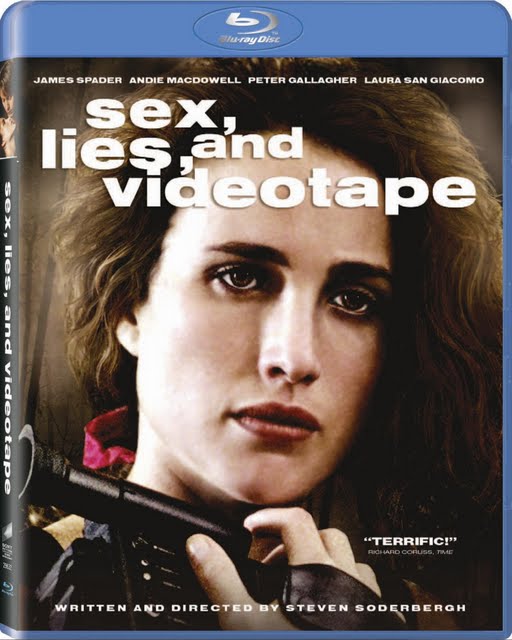
Blu-ray Review: sex, lies and videotape (1989) -- 20th Anniversary Edition


Now Available to Own


In a 1989 work that actor Edward Norton referred to “as his generation’s The Graduate,” and author Peter Biskind labeled in Down and Dirty Pictures, “the first Gen-X picture,” (Biskind 40-41), a twenty-six year old from Georgia appeared out of nowhere and took the film community by storm with his earnest film about the intimate lives of four twenty-somethings entitled sex, lies and videotape.

Now twenty years later, the film that began with and was centered on videotape has moved through the various formats until Sony Pictures Home Entertainment unveiled the work in high definition for its anniversary release. Enabling viewers to type SONY (or 7669) on the film's menu to activate the company's Blu-ray image calibration Easter Egg, this re-introduction to sex, lies and videotape offers more than just Sony's standard dynamic visual presentation to additionally look past the print's initial age and experience it the way you would've back in 1989 with warmer flesh tones and a less clinical feel.

Arguably the most important Generation X film, Soderbergh's videotape marked the change from the '80s Me Generation to the "Why Me?" Generation of the '90s. Additionally, the fact that the film’s four main characters primarily bear their secrets through the medium of video is naturally indicative of the emerging generation as filmgoers and filmmakers everywhere took note while Generation X came into its own.

A spoiled generation raised by baby-boomers determined to give us everything they didn’t have growing up, we came-of-age in an era where Yuppie consumerism and commercialism ruled. The impact could be witnessed both in our need to "amass stuff" like video cameras to keep up with the neighbors and to go see the latest Hollywood blockbusters about Wall Street men who Die Hard despite the fact that they "ain't got time to bleed" who became our superheroes before Batman finally came back on the scene.

Yet as naturally is the case, soon we decided to rebel against what we knew and grabbed those videos camera ourselves to illustrate that our attitudes were much different than those of the baby-boomers. Some of our parents were Yuppies and some were not but we had one thing in common and that was film. And nowhere is this fact of a medium shared more recognizable than in the feature length narrative fiction debut of Steven Soderbergh.


Having evolved from a full year of notebook scribblings, even though the screenplay was written by the now Oscar winning filmmaker in just eight days and none of the events depicted actually happened in his life directly, the resulting production is often considered an autobiographical work.

sex, lies followed what author Peter Biskind dubbed the director’s epiphany at the age of twenty-four in Down and Dirty Pictures, after the conclusion of a relationship in which Soderbergh confessed that he'd been “deceptive and mentally manipulative,” sleeping with other women simultaneously to seek short-lived approval and acceptance before his near year long behavior wore him out. Soon he realized that he was becoming somebody that he felt if he actually knew he would not have liked and likewise recalls that “had he been able, he would, he said, have joined a twelve-step program for recovering liars” (40).

Out of this darkness, he tried therapy, which didn’t provide any solace, and decided to write a script about the experience of taking advantage of what he calls during director’s commentary, the “Me Me Me Generation." And although most who view the film first feel that the main character would be most autobiographically indicative of Soderbergh, he assures viewers on the commentary track that he identifies and has been all four of the leads at different points in his life.

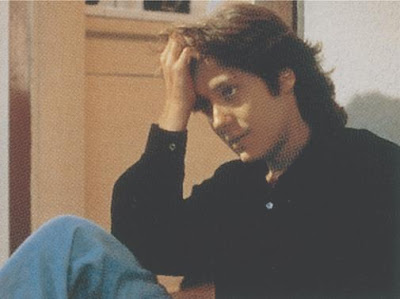
sex, lies, and videotape featured the previously John Hughes era Yuppie typecast actor James Spader as a former emotionally manipulative, lying ladies man who-- now impotent-- videotapes women discussing their attitudes, desires, experiences and fears about sex.

As Donald Lyons stated in his book Independent Visions, “videotaping… is an act of alienation” in the film (34) and Soderbergh notes on the commentary that the video camera was the best device of the materialistic '80s era to see how someone can try to keep another at arm's length.

In fact, the first two words of the title seem to trick viewers. Despite its provocative name, the film is really about the issues of honesty and trust in interpersonal relationships and the importance and power of conversation, however it’s the word “lies which lends the real piquancy; with just sex and videotape, we’d expect either tabloid TV or a high-minded mediation on the interrelationship of technology and erotic fulfillment” (Lyons 137).


In visiting sleazy lawyer John, an old college friend and “predatory, suspender-wearing, Reagan-era Yuppie” (Biskind 41) played by Peter Gallagher, Spader’s character Graham marks the start of the drifting, arty, philosophizing, sensitive leading men that would populate Gen X and serve as the counterpoint for all things Yuppie, cold, and materialistic.

“A premature slacker, aimless, and lacking money, career, or ambition,” (Biskind 41), Graham develops an attraction to John’s wife, Ann, played by Andie MacDowell (like Spader, also a veteran of the Brat Pack in St. Elmo’s Fire) in a great, understated and naturalistic take on what could've been a very one-dimensional character. Laura San Giacomo rounds out the cast, turning in her first cinematic performance as Ann’s lively sister, Cynthia, who is carrying on a seedy affair with Ann’s husband, John.

The film’s admittedly simplistic style, along with a cast of relative unknowns and the surprising location of Baton Rouge rather than the predictable New York for its neurotic characters helped inspire a new breed of filmmakers, paving the way for Gen Xers to branch out on their own filmmaking journey. Although, at the time, those working on sex, lies and videotape basked in the freedom of the truly vanguard process and had no idea that it would later be referred to by Biskind as “the big bang of the modern indie film movement,” (26).

Soderbergh's experimental opus, shot in just thirty days used no sets as the art department’s budget was only five thousand dollars, so the film is completely comprised of real Baton Rouge locations including some reshoots in Soderbergh’s own apartment, helping add to the homemade, intimate feel of the work as the director informs viewers on his exclusive commentary track.

The production as he continued, ran the perfect balance of an independent, “hey, let’s put on a show,” mentality that was also obsessed by his decision to not get into the way of the brilliant actors he cast. Moreover, the film enabled him to hone his directorial craft with his one-of-a-kind choices, some of which I still see reflected in his oeuvre twenty years later. And Soderbergh's decision to avoid calling much attention to the filmmaking process makes appreciation of the film as a work of art challenging to those on the first time around.

Essentially, sex, lies and videotape is so engrossing that you'll need to view it a few times until you finally grasp just how much went into the film from the mostly unsung editing and cinematographic departments, which are traditionally overlooked in favor of the deservedly yet most routinely praised areas of acting and writing.

Deceptively simplistic yet truly unique when you compare it to the blockbuster works of the era of Simspon and Bruckheimer that are filled with camera trickery and music video cuts, Soderbergh's sex, lies is the best example of his firm belief in starting a film as quickly as possible to get to the substance of the story and using the fastest and cheapest font he could find in order to savor the idea of just watching lives being lived.


Although in retrospect, there is some earnest writing he tells viewers on the commentary track that he feels is a bit “too on the nose," aside from his genuine appreciation for his cast and crew, Soderbergh is paired with fellow filmmaker Neil LaBute in a fascinating commentary track added onto this Blu-ray release so that he can't simply rip every aspect of his movie to shreds.

Having become the youngest filmmaker in the history of the Cannes Film Festival to receive the French event's highest honor of the Palme d'Or for a fictional feature, it's especially fascinating to look back on the film today to see the way that Soderbergh's career has evolved. Moreover, it's intriguing to realize that not only did he achieve more personal, critical, and box office success when he finally returned to a faster do-it-yourself independent filmmaking spirit as witnessed in movies like Out of Sight and The Limey but 2009 also finds him releasing two films in the same year because of his breakneck sex, lies pacing and cinematic boot-camp with The Girlfriend Experience (which also deals with sexuality verses intimacy) and the sharply executed Informant!

While there are a few flaws in sex, lies which become far more glaring in high definition considering the dully, unnatural, even-toned voice-overs that stand out on the audio track, the film still remains a testament of the era and really illustrates the way the new generation was emerging as a rebellion to the baby-boomer mentality, similar to the hippie movement of the late '60s rebelling against the society of that decade.

Having studied the work in greater detail as Soderbergh's title was the topic of my scholarship winning baccalaureate thesis on independent filmmaking, I wasn't sure how it would be to go back and revisit the movie again after analyzing it to a painstaking level years earlier. Yet sure enough, as soon as James Spader and Andie MacDowell share their first scene together, I became mesmerized by their naturalistic approach via the way Spader would let a sentence roll into a Non sequitur question about her marriage, and Soderbergh's mastery of choosing what to reveal when that still dazzles to this day. Soderbergh's camera still doesn't lie and twenty years later, his old videotape remains just as potent as ever.


Text ©2009, Film Intuition, LLC; All Rights Reserved. http://www.filmintuition.com
Unauthorized Reproduction or Publication Elsewhere is Strictly Prohibited.

FTC Disclosure: As is standard practice, I received a Blu-ray screener of this film in the Blu-ray format in order to evaluate it for review, which had no basis on my reaction since it's well-documented how I feel about the work and wanted to make sure the quality was still top-notch for viewers new to this videotape without any lies.

9/18/2009

Movie Review: The Informant! (2009)


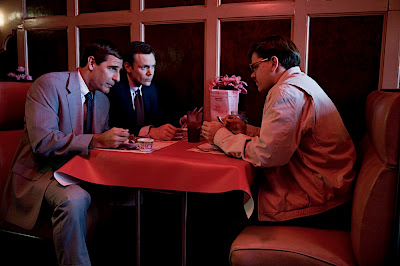
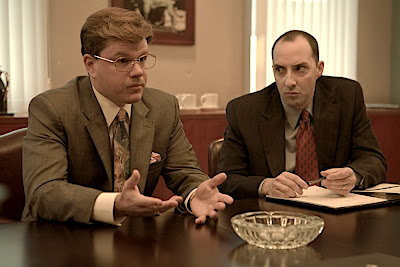
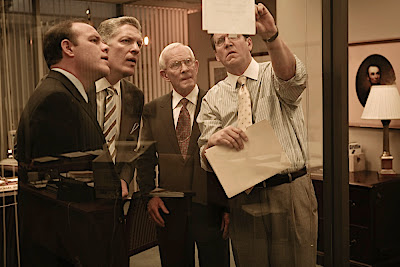
While his Ocean's Eleven co-stars Brad Pitt and George Clooney worked on the Coen's uneven "insider" comedy Burn After Reading, Matt Damon teamed up once again with director Steven Soderbergh and producer Clooney to create the movie that Burn After Reading should have been.


Derived from Kurt Eichenwald's fascinating book, The Informant! which was penned by Bourne Ultimatum, PU-239 screenwriter Scott Z. Burns chronicles the true story of Archer Daniels Midland (ADM) whistleblower Mark Whitacre.

With his unbelievable actions, Whitacre became not just "the highest-ranking corporate whistleblower in U.S. history," but ironically one for whom we quickly realize that that's the least interesting fact about about his incredible journey.


However, as evidenced in the past, Soderbergh is no stranger to biopics about unlikely heroes or films about larger than life individuals from Erin Brockovich to Che. Therefore, he had no interest in going down the same Brockovich path one more time nor did he desire employing the approach utilized by Michael Mann in his brilliant film, The Insider.


To keep things fresh and uniquely offbeat as is his trademark (via an amazingly diverse resume and penchant for imbuing his films with a large number of tonal changes and emotions), he gave Burns the creative challenge of his career with the decision to shape it as a comedy.


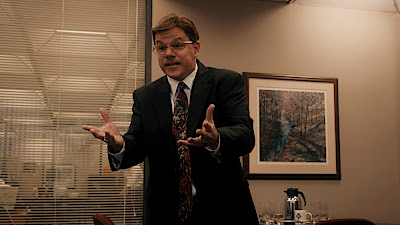
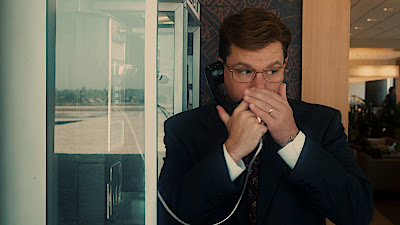
The facts remain the same but luckily they're so outlandish that one can't help but chuckle as the film moves along — especially when we realize that there may be much more to the accounts and tape recordings made by Damon's Whitacre than he admits to the F.B.I. every single time he repeats, "that's it, I've told you everything."


And sure enough the humor fires on all cylinders right from the start due to Burns' brilliant approach to employ a rambling, stream-of-consciousness narration for our protagonist.

Going about his day in Decatur, Illinois, Whitacre may be stuck in a meeting or in traffic onscreen but on the soundtrack, we're presented with a postmodern take via Burns' freewheeling narration that often has little to do with the events they're synced up with in the final edit... until that is, some of the information starts to pay off later on as the truth begins to unfold.


It's discerning the outpouring of information and filtering it with typical wanderings of a human mind that makes The Informant! both far more dazzling and far more intellectually stimulating than a straightforward comedy or ironic puzzle.

And ultimately it's a movie that one must simply sit back and marvel at in appreciation since, like a great magic show, we're so distracted by the odd outbursts and our own laughter that we neglect to realize the figurative trap door or sleight of speech playing before our eyes.
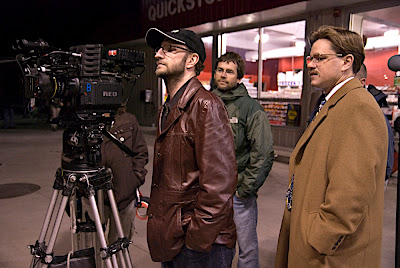

As Matt Damon recently remarked on The Daily Show with Jon Stewart, once you start revealing the plot, you spoil the movie and it's both an astute observation and a critical conundrum since you'll want to do more than just say to a friend, "trust me, go see it." Yet at the same time, he's absolutely right, since I felt it worked much better personally walking in with only a vague idea of what I was going to see.

Upon exiting the theatre, I realized that not only had I laughed so hard that I feared I was going to be forcibly removed but that I'd also just seen one of the best films of the year so far.


Moreover it's one that I'm ready to wager will not only garner Burns an Oscar nomination for Best Adapted Screenplay, Damon a nomination for Best Actor in yet another multifaceted performance of charm, humor, pathos, and integrity we've come to take for granted, but also a Best Original Score nod to Marvin Hamlisch.


While there's so much more to note about the film (and all involved must be commended), it's these three individuals who really make the movie sing.

Obviously the effectiveness of the film all started with the ingenious screenplay. Yet on the drive home I realized that Damon had an amazingly difficult task of having to give two performances (in the frame and later in the recording studio for the audio) without making it seem overly hammy and trying to keep the internal and external both separate but in his frame of reference throughout.


Likewise, Hamlisch's '60s cold war era spy movie meets swinging Blake Edwards comedy score is the ultimate accompaniment for a film about a whistleblower who compares himself to James Bond ("only twice as smart"), Tom Cruise in The Firm, and the Michael Crichton novel Rising Sun.


A breath of fresh air at the multiplex, The Informant! is a triumphant reminder for Soderbergh enthusiasts regarding the level of talent possessed by the filmmaker, cinematographer, camera operator, and driving force of his rapidly made intriguing features.

At the same time, the film celebrates his innovation in flipping genre conventions around and the fact that — with the exception of the Ocean's Trilogy — Soderbergh never makes the same movie twice nor stays in a nice cushy "type."


Going from studio pictures to movies made on the cheap and employing indie do-it-yourself enthusiasm throughout from sex, lies and videotape to Out of Sight to King of the Hill to Traffic to The Limey to The Informant!, even when a Soderbergh film divides the critics and/or audiences, his tenacity and unwillingness to take an obvious approach is inspiring.

And it pays off exceedingly well with this film, which not only aces Burn After Reading but does so with facts and at the same time, reminds us post-Jason Bourne and when I fear he's in danger of typecasting just why we were so enamored with Damon's talent as a character actor over a decade ago.


Text ©2009, Film Intuition, LLC; All Rights Reserved. http://www.filmintuition.com
Unauthorized Reproduction or Publication Elsewhere is Strictly Prohibited.

4/11/2008

PU-239

Alternate Title: The Half Life of Timofey Berezin
Director: Scott Z. Burns

“I need to know my rems!” Russian nuclear plant worker Timofey (Paddy Considine) pleads after he accidentally becomes the victim of radiation poisoning when he intervenes in a near catastrophe. Told he was only exposed to one hundred rems of radiation which isn’t fatal, he discovers on his own that his dosage was lethal before realizing that the company of the top secret town of Skotoprigonyevsk where he resides, is busily covering their tracks as they try to force him to sign documentation taking responsibility for the event before he is placed on indefinite leave.

Angry, scared and heartsick for his young son and wife Marina (Radha Mitchell), a former nuclear facility worker herself who had also had a close scare, Timofey decides to make a bold and aggressive decision to provide for his family and get revenge by smuggling out one hundred grams of plutonium to sell on Moscow’s black market in this made for HBO film that was optioned by Section Eight producers George Clooney and Steven Soderbergh to help launch its DVD premiere.

Journeying from his community to Moscow, Timofey finds that securing a buyer is far more difficult than he realized and with time running out as he’s getting increasingly sicker, he reluctantly pairs up with scheming crook Shiv (Oscar Isaac) who, trying to provide for his own son and Ukranian prostitute wife tries to fast talk Timofey into handling the sale in order to pay back far more dangerous mobsters to whom he owes money. Shiv’s incompetence and associations with various double-crossing villains make up a large percentage of the film which unsuccessfully evolves from Timofey’s touching drama and impulsive, dangerous scheme to a bizarre mix of pathos, dark comedy and outrageous plot setups as it careens to its inevitable fatal conclusion.

Considine’s Tomofey and Isaac’s Shiv benefit from the impressive turns by the character actors who disappear in their roles as well as a pulse pounding script by writer/director Scott Z. Burns who penned The Bourne Ultimatum, although ultimately, while we understand that the character of Shiv would never have been as compelling as Timofey, PU-239 would have benefited from a sharper rewrite and a worthier subplot and character than the version of Shiv that is presented in the completed production.