Showing posts with label Andie MacDowell. Show all posts

7/26/2018

DVD Review: Love After Love (2017)


Now Available 


Bookmark and Share

A flawed system of facial translation, on the wall of every hospital hangs a rudimentary pain scale chart of 1-10 or smile to frown.

Not taking into consideration a person's culture, gender, or background, while on the surface it might appear to do the job, what the emoji system fails to understand is not only are people being seen in hospitals experiencing some of the worst days of their lives but there's no universal guidebook to follow on how to act that's going to apply to all of us.

Whether smiling out of politeness or laughing to keep from crying, we're all just there waiting until the storm passes when we can all go back to our lives.

Only there's no pause button during a tragedy and when we come back, we return to our lives already in progress. Hoping to board that roller coaster once again even though it hasn't actually stopped, we soon realize that we have no clue – not even a 1-10 facial translation chart – how we're supposed to act when we don't make it up that first hill fast enough.

The driving force behind Russell Harbaugh's potent and intensely personal family drama Love After Love, it's precisely this idea of behavior over story and more importantly, how to cope when it all goes wrong that makes this achingly real ensemble piece so compelling to watch.


Setting its biggest scenes (including those that bookend the film) at key family gatherings in a way that recalls both Woody Allen's Hannah and Her Sisters and Eric Rhomer's Autumn Tale, Love After Love lets us into the home and lives of a tight-knit New York family before, during, and after the loss of their beloved patriarch.

Penned by Harbaugh and his mentor, Judy Berlin director Eric Mendelsohn, as well written as it is, Love is less concerned with what its characters, including widowed mother Suzanne (Andie MacDowell) and her two grown sons, the emotionally needy Nick (Chris O’Dowd) and existentially lost Chris (James Adomian) actually say versus what they do and the way they say it.

Performed with gusto by its tremendous ensemble cast (especially a never better MacDowell and bracingly against type O’Dowd), Harbaugh and Mendelsohn respect both the actors and audience enough to skip over scene progressions from breakups to makeups.

Jumping right into the aftermath, they trust that we’ll be able to look past the external scale of 1-10 to see what's really going on. And this approach pays off extremely well in a pivotal second act sequence as Nick – having chased and transferred his affections once again to a new fiancé – brings Suzanne and Chris to the home of his soon to be in-laws for a Christmas party.

Not nearly ready to celebrate such a major holiday with strangers, let alone listen to speeches about marriage by a man of the house who’s not their own, we watch as Suzanne and Chris initially go through the motions of politeness, smiling at the right time and saying all the things you’re supposed to say.

While for Chris the facade soon goes downhill thanks to alcohol, even before we brace for impact, we witness not only the discomfort in Suzanne's eyes but the way she tries to chime in a second too late for it to be genuine (similar to the way we could read between Nick's reactions in act one).


Comparing and contrasting their behavior even more through the inverted mirror images of Nick and his fiancé later followed by Suzanne and her own new love (which inevitably causes a grenade to go off in the relationship between mother and sons), the inventive editing by Matthew C. Hart and John Magary adds a rich layer of subtext to Love After Love.

Not knowing how to act, let alone address the titular double standard that exists for each familial role, rather than face it head on, they instead try making their way up, down, and beyond the facial translation scale as they move through the five stages of grief.

Serving as a terrific showcase for O'Dowd and Adomian as well as a welcome return to substantive parts for the luminous MacDowell, while it's fundamentally Harbaugh's picture, I hope it might also encourage viewers to seek out his co-writer's masterful marvel Judy Berlin.

A veritable feature length extension, evolution, and adaptation of Harbaugh's acclaimed roughly twenty minute short, Rolling On the Floor Laughing, which is included on the DVD, Love was overlooked in its post-festival, limited theatrical run.


Owing to the filmmaker's age as well as his subsequent collaboration with former/fellow wonder boy Mendelsohn, while Love After Love is much more poetic and mature than its predecessor, Harbaugh's interest in the minutiae of visual storytelling and the way that behavior dictates plot is made abundantly clear in Rolling early on.

A chronicle of love after love indeed, although a few of Love's climactic scenes push the dial past authenticity and venture briefly into the realm of the Chekovian stage, Harbaugh's dramatic opus remains just as mesmerizing for those who love theater and literature as much as they do film.

Drawing inspiration from his own life as well as Maurice Pialat’s The Mouth Agape for the film overall, while the true test for Harbaugh will be in whatever he delivers next, on a scale of 1-10, I’m not worried at all.

Text ©2018, Film Intuition, LLC; All Rights Reserved. http://www.filmintuition.com Unauthorized Reproduction or Publication Elsewhere is Strictly Prohibited and in violation of the Digital Millennium Copyright Act.  FTC Disclosure: Per standard professional practice, I may have received a review copy or screener link of this title in order to voluntarily decide to evaluate it for my readers, which had no impact whatsoever on whether or not it received a favorable or unfavorable critique. Cookies Notice: This site incorporates tools (including advertiser partners and widgets) that use cookies and may collect some personal information in order to display ads tailored to you etc. Please be advised that neither Film Intuition nor its site owner has any access to this data beyond general site statistics (geographical region etc.) as your privacy is our main concern.

12/21/2009

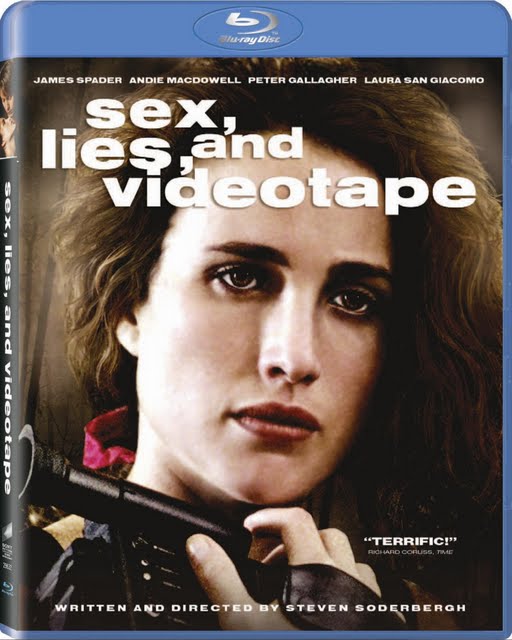
Blu-ray Review: sex, lies and videotape (1989) -- 20th Anniversary Edition


Now Available to Own


In a 1989 work that actor Edward Norton referred to “as his generation’s The Graduate,” and author Peter Biskind labeled in Down and Dirty Pictures, “the first Gen-X picture,” (Biskind 40-41), a twenty-six year old from Georgia appeared out of nowhere and took the film community by storm with his earnest film about the intimate lives of four twenty-somethings entitled sex, lies and videotape.

Now twenty years later, the film that began with and was centered on videotape has moved through the various formats until Sony Pictures Home Entertainment unveiled the work in high definition for its anniversary release. Enabling viewers to type SONY (or 7669) on the film's menu to activate the company's Blu-ray image calibration Easter Egg, this re-introduction to sex, lies and videotape offers more than just Sony's standard dynamic visual presentation to additionally look past the print's initial age and experience it the way you would've back in 1989 with warmer flesh tones and a less clinical feel.

Arguably the most important Generation X film, Soderbergh's videotape marked the change from the '80s Me Generation to the "Why Me?" Generation of the '90s. Additionally, the fact that the film’s four main characters primarily bear their secrets through the medium of video is naturally indicative of the emerging generation as filmgoers and filmmakers everywhere took note while Generation X came into its own.

A spoiled generation raised by baby-boomers determined to give us everything they didn’t have growing up, we came-of-age in an era where Yuppie consumerism and commercialism ruled. The impact could be witnessed both in our need to "amass stuff" like video cameras to keep up with the neighbors and to go see the latest Hollywood blockbusters about Wall Street men who Die Hard despite the fact that they "ain't got time to bleed" who became our superheroes before Batman finally came back on the scene.

Yet as naturally is the case, soon we decided to rebel against what we knew and grabbed those videos camera ourselves to illustrate that our attitudes were much different than those of the baby-boomers. Some of our parents were Yuppies and some were not but we had one thing in common and that was film. And nowhere is this fact of a medium shared more recognizable than in the feature length narrative fiction debut of Steven Soderbergh.


Having evolved from a full year of notebook scribblings, even though the screenplay was written by the now Oscar winning filmmaker in just eight days and none of the events depicted actually happened in his life directly, the resulting production is often considered an autobiographical work.

sex, lies followed what author Peter Biskind dubbed the director’s epiphany at the age of twenty-four in Down and Dirty Pictures, after the conclusion of a relationship in which Soderbergh confessed that he'd been “deceptive and mentally manipulative,” sleeping with other women simultaneously to seek short-lived approval and acceptance before his near year long behavior wore him out. Soon he realized that he was becoming somebody that he felt if he actually knew he would not have liked and likewise recalls that “had he been able, he would, he said, have joined a twelve-step program for recovering liars” (40).

Out of this darkness, he tried therapy, which didn’t provide any solace, and decided to write a script about the experience of taking advantage of what he calls during director’s commentary, the “Me Me Me Generation." And although most who view the film first feel that the main character would be most autobiographically indicative of Soderbergh, he assures viewers on the commentary track that he identifies and has been all four of the leads at different points in his life.

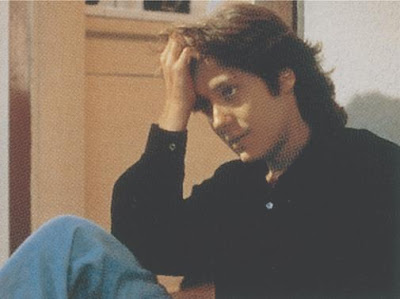
sex, lies, and videotape featured the previously John Hughes era Yuppie typecast actor James Spader as a former emotionally manipulative, lying ladies man who-- now impotent-- videotapes women discussing their attitudes, desires, experiences and fears about sex.

As Donald Lyons stated in his book Independent Visions, “videotaping… is an act of alienation” in the film (34) and Soderbergh notes on the commentary that the video camera was the best device of the materialistic '80s era to see how someone can try to keep another at arm's length.

In fact, the first two words of the title seem to trick viewers. Despite its provocative name, the film is really about the issues of honesty and trust in interpersonal relationships and the importance and power of conversation, however it’s the word “lies which lends the real piquancy; with just sex and videotape, we’d expect either tabloid TV or a high-minded mediation on the interrelationship of technology and erotic fulfillment” (Lyons 137).


In visiting sleazy lawyer John, an old college friend and “predatory, suspender-wearing, Reagan-era Yuppie” (Biskind 41) played by Peter Gallagher, Spader’s character Graham marks the start of the drifting, arty, philosophizing, sensitive leading men that would populate Gen X and serve as the counterpoint for all things Yuppie, cold, and materialistic.

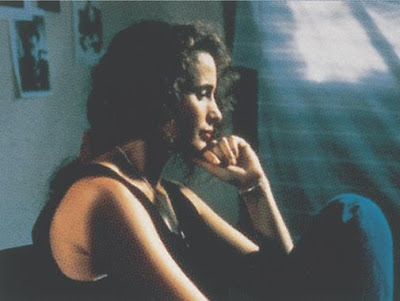
“A premature slacker, aimless, and lacking money, career, or ambition,” (Biskind 41), Graham develops an attraction to John’s wife, Ann, played by Andie MacDowell (like Spader, also a veteran of the Brat Pack in St. Elmo’s Fire) in a great, understated and naturalistic take on what could've been a very one-dimensional character. Laura San Giacomo rounds out the cast, turning in her first cinematic performance as Ann’s lively sister, Cynthia, who is carrying on a seedy affair with Ann’s husband, John.

The film’s admittedly simplistic style, along with a cast of relative unknowns and the surprising location of Baton Rouge rather than the predictable New York for its neurotic characters helped inspire a new breed of filmmakers, paving the way for Gen Xers to branch out on their own filmmaking journey. Although, at the time, those working on sex, lies and videotape basked in the freedom of the truly vanguard process and had no idea that it would later be referred to by Biskind as “the big bang of the modern indie film movement,” (26).

Soderbergh's experimental opus, shot in just thirty days used no sets as the art department’s budget was only five thousand dollars, so the film is completely comprised of real Baton Rouge locations including some reshoots in Soderbergh’s own apartment, helping add to the homemade, intimate feel of the work as the director informs viewers on his exclusive commentary track.

The production as he continued, ran the perfect balance of an independent, “hey, let’s put on a show,” mentality that was also obsessed by his decision to not get into the way of the brilliant actors he cast. Moreover, the film enabled him to hone his directorial craft with his one-of-a-kind choices, some of which I still see reflected in his oeuvre twenty years later. And Soderbergh's decision to avoid calling much attention to the filmmaking process makes appreciation of the film as a work of art challenging to those on the first time around.

Essentially, sex, lies and videotape is so engrossing that you'll need to view it a few times until you finally grasp just how much went into the film from the mostly unsung editing and cinematographic departments, which are traditionally overlooked in favor of the deservedly yet most routinely praised areas of acting and writing.

Deceptively simplistic yet truly unique when you compare it to the blockbuster works of the era of Simspon and Bruckheimer that are filled with camera trickery and music video cuts, Soderbergh's sex, lies is the best example of his firm belief in starting a film as quickly as possible to get to the substance of the story and using the fastest and cheapest font he could find in order to savor the idea of just watching lives being lived.


Although in retrospect, there is some earnest writing he tells viewers on the commentary track that he feels is a bit “too on the nose," aside from his genuine appreciation for his cast and crew, Soderbergh is paired with fellow filmmaker Neil LaBute in a fascinating commentary track added onto this Blu-ray release so that he can't simply rip every aspect of his movie to shreds.

Having become the youngest filmmaker in the history of the Cannes Film Festival to receive the French event's highest honor of the Palme d'Or for a fictional feature, it's especially fascinating to look back on the film today to see the way that Soderbergh's career has evolved. Moreover, it's intriguing to realize that not only did he achieve more personal, critical, and box office success when he finally returned to a faster do-it-yourself independent filmmaking spirit as witnessed in movies like Out of Sight and The Limey but 2009 also finds him releasing two films in the same year because of his breakneck sex, lies pacing and cinematic boot-camp with The Girlfriend Experience (which also deals with sexuality verses intimacy) and the sharply executed Informant!

While there are a few flaws in sex, lies which become far more glaring in high definition considering the dully, unnatural, even-toned voice-overs that stand out on the audio track, the film still remains a testament of the era and really illustrates the way the new generation was emerging as a rebellion to the baby-boomer mentality, similar to the hippie movement of the late '60s rebelling against the society of that decade.

Having studied the work in greater detail as Soderbergh's title was the topic of my scholarship winning baccalaureate thesis on independent filmmaking, I wasn't sure how it would be to go back and revisit the movie again after analyzing it to a painstaking level years earlier. Yet sure enough, as soon as James Spader and Andie MacDowell share their first scene together, I became mesmerized by their naturalistic approach via the way Spader would let a sentence roll into a Non sequitur question about her marriage, and Soderbergh's mastery of choosing what to reveal when that still dazzles to this day. Soderbergh's camera still doesn't lie and twenty years later, his old videotape remains just as potent as ever.


Text ©2009, Film Intuition, LLC; All Rights Reserved. http://www.filmintuition.com
Unauthorized Reproduction or Publication Elsewhere is Strictly Prohibited.

FTC Disclosure: As is standard practice, I received a Blu-ray screener of this film in the Blu-ray format in order to evaluate it for review, which had no basis on my reaction since it's well-documented how I feel about the work and wanted to make sure the quality was still top-notch for viewers new to this videotape without any lies.

11/07/2007

Tara Road

Director: Gillies MacKinnon

Let’s hope that author Maeve Binchy feels that imitation is the sincerest form of flattery; otherwise, Nancy Meyers could have some serious explaining to do for The Holiday which is frightfully similar to the premise of Binchy’s bestselling Oprah pick Tara Road. Screenwriters Cynthia Cidre and Shane Connaughton adapt the book for director Gillies MacKinnon’s low-key but beautifully shot film about two women who are going through personal crises and agree to swap their homes on both sides of the Atlantic. (I told you it sounded familiar!) Four months after her beloved only fifteen-year-old son dies in a tragic motorcycle accident on his birthday, grieving Connecticut mother Marilyn (Andie MacDowell) finds herself at odds with her husband when she refuses to go with him on a Hawaiian vacation to escape their troubles. Marilyn's life takes a new turn when she receives a chance phone call. Ria (Olivia Williams) is a loyal Irish wife and mother still madly in love with her husband Danny and she finds herself living out one of life’s cruelest clichés when Danny (Iain Glen) announces that he’s leaving his family because his much younger girlfriend is pregnant with his baby. Finding it hard to keep her emotions in check and stop herself from begging the man she still maddeningly loves to change his mind, Ria puts a phone call into Marilyn’s real estate husband only to find herself pleasantly surprised when Marilyn answers the phone and agrees to let Ria exchange homes for the summer. Predictably, lessons are learned and new friends are made when the two strangers begin to draw strength from within that they didn’t even know they had in foreign lands and while it never really persuades us that it’s anything more than a stereotypical “chick flick,” the talented actresses emote well and make it easy for viewers to share in their plight.