Showing posts with label Ireland. Show all posts

12/10/2020

Movie Review: Wild Mountain Thyme (2020)


Now Available


While intellectually, I know that I saw several films in the theater before this one, for whatever reason, the movie-going memory that's seared into my brain as the first live-action feature that I ever saw is from 1987.

Following a busy morning running errands, as three generations of Italian-American women – a fact that would only become significant with time and understanding – I accompanied my mother and grandmother to a matinee screening of “Moonstruck” when I was six-years-old. Although it didn't mean that much to me as a first grader and my love for the film would grow exponentially over the years, I have a vivid memory of not only the uproarious laughter that filled the theater but also the overwhelming interest and focus that seemed to reach a fever pitch whenever the instantly magnetic Nicolas Cage hit the screen.

Years later, I jokingly began to blame the film, which has since become one of my favorites, for my obsession with character actors like Cage, and of course, my unrivaled love of epic monologues, like the ones which were penned in the film by the Oscar, Tony, and Pulitzer Prize-winning writer John Patrick Shanley. Shanley, who had already written the terrifically underrated film “Five Corners” would follow up the smash hit “Moonstruck” with decades of unpredictable work for both the stage and screen, including two directorial efforts with the cult comedy “Joe Versus the Volcano” in 1990 and 2008's controversial conversation starter “Doubt,” which he adapted from his play.

Shanley's third time at bat as a filmmaker arrives this week with “Wild Mountain Thyme,” which, like “Doubt,” first got its start on the New York stage. Described by Shanley as the most pleasurable experience that he'd ever had as a writer, “Outside Mullingar,” was inspired by his own family's Irish roots following a life-changing trip to his ancestral home in Ireland as an adult. 


A love story about two lonely, eccentric thirty-somethings living next door to one another in the Irish countryside, “Thyme” introduces us to the headstrong Rosemary Muldoon (a divine Emily Blunt) who has spent more than twenty years pining for her sweet yet shy neighbor Anthony Reilly (Jamie Dornan). Hoping that when his father Tony (Christopher Walken) leaves the family farm to him that he'll finally get the courage to propose so that they can start their life together, after Tony announces his intent to sell the farm to his wealthy American nephew Adam (Jon Hamm), decades worth of family drama and pent up romantic frustration come to a head.

On the surface, of course, “Wild Mountain Thyme” finds Shanley back in his “Moonstruck” sweet spot spinning multigenerational, slightly mythic yarns about love, family, and the way that both can throw a wrench into your best-made plans. Unfortunately, however, that's where the similarities between the two romances end, at least in terms of their overall quality. As awkwardly cumbersome as “Moonstruck” was smooth and free-flowing, although “Thyme” is filled with his trademark memorable speeches and pithy lines, there is something utterly laborious and exhausting about the way that it is all presented.

Opening with a fast-paced flashback meant to establish Rosemary's love for Anthony that doesn't get the gravitas or the screentime it needs to truly invest us in her plight, “Thyme” further steamrolls viewers by launching us into the middle of a debate with huge stakes for the characters before we clearly understand just who exactly everyone is and what's really going on. A film that seems to begin in the middle and then back up and change course altogether when suddenly Jon Hamm arrives like a cool breeze from what feels like an entirely different movie, although “The Prince of Tides” and “Closer” cinematographer Stephen Goldblatt's lush photography of west Ireland's County Mayo is warm and inviting, there isn't a lot about “Thyme” that's worth recommending. 


Featuring another epic “Moonstruck” level moment of musical theater derived intertextuality as not the glorious opera “La Boheme” this time but the classical ballet “Swan Lake” becomes the touchstone for our feisty heroine, Emily Blunt is clearly up to the task of bringing one of Shanley's great, complicated, middle-aged women looking for love to life. And indeed, Blunt is “Thyme”'s great shining light to the point that scenes not featuring the actress tend to drag. Shockingly, we feel this most when the usually reliable Christopher Walken and Jamie Dornan try to generate our interest in a contentious but loving father-son dynamic that plays as though the film's most important scenes necessary to understanding their relationship have been left on the cutting room floor.

It's a major disappointment given the level of the talent involved and how much I was rooting for the film, especially since we have a noted deficit in modern filmmaking when it comes to sophisticated romcoms for adults. And while it works as a passably average travelogue of Ireland, complete with a few musical moments featuring Emily Blunt, as a film in its own right (and even without my cherished memory of “Moonstruck”) when compared to the rest of Shanley's oeuvre, “Wild Mountain Thyme” is wild to a fault but nowhere near as bright.


Text ©2020, Film Intuition, LLC; All Rights Reservedhttps://www.filmintuition.com  Unauthorized Reproduction or Publication Elsewhere is Strictly Prohibited and in violation of the Digital Millennium Copyright Act.  Also, as an Amazon Associate, I earn from qualifying purchases made off my site through ad links. FTC Disclosure: Per standard professional practice, I may have received a review copy or screener link of this title to voluntarily decide to evaluate it for my readers, which had no impact whatsoever on whether or not it received a favorable or unfavorable critique. Cookies Notice: This site incorporates tools (including advertiser partners and widgets) that use cookies and may collect some personal information to display ads tailored to you etc. Please be advised that neither Film Intuition nor its site owner has any access to this data beyond general site statistics (geographical region etc.) as your privacy is our main concern.

5/06/2020

Movie Review: A Good Woman is Hard to Find (2019)


Now Playing


As Sarah (Sarah Bolger) discovers in Abner Pastoll's razor edged new thriller A Good Woman is Hard to Find, sometimes when you grab a vibrator, you really need a knife and other times you find that an axe works so much better than a saw.

A recently widowed mother of two young children whose husband was murdered on the sidewalk outside of their North Ireland housing estate in a shocking crime that has rendered the only living witness — her six-year-old son — mute with fear and anxiety, Sarah tries to keep her head down and focus on what's directly in front of her at all times.


Faced with a series of dead-ends from grocery bills she can barely afford to authorities who try to convince her that her husband was a drug dealer instead of an innocent victim, her problems collide head-on when Tito (Andrew Simpson), a low level dealer, rips off a notorious local gangster and forces himself inside her apartment.

Using her bathroom to stash the dope he'd just stolen, he threatens the frightened young mother into compliance, saying he'll give her a cut of whatever he sells as long as he can keep the gear there. Not the type of woman to go to the police, especially when they're already suspicious about her husband and that could lead directly to social services, Sarah stays quiet, and enjoys one carefree day of grocery shopping before reality sets in at night when Tito returns and a shocking confrontation results in the foul play alluded to in the film's opening scene.


Using the building blocks of a "caught between a rock and a hard place" neo-noir, where screenwriter Ronan Blaney's economical storytelling reveals only what we must know to move from one scene to the next, A Good Woman is Hard to Find plays a lot like Nicolas Winding Refn's Pusher trilogy . . . if the women in the series were given more to do than play strippers or whores.

Vibrating on a frequency that pitches out from the speakers and straight into your chest, Matthew Pusti's driving techno throb of a score takes the Refn homage even further as certain sequences — including the one where Tito stages his big snatch and grab by car — feel like they could've been scored by frequent Refn composer Cliff Martinez.


More than just a tribute, however, the soundtrack enhances the film's clever visual motif. Balancing its docudrama style lensing by day with the more lurid, glossily red and dark tone filled hues of cinematographer Richard C. Bell's camera at night, which gives the film its own brutal yet vulnerable glow, we watch Sarah try to navigate the increasingly hazardous situation she's in with her wits or whatever weapon she can get her hands on before it's too late. And though it is not for the faint of heart, Pastoll's searing thriller transcends the easy exploitative side of the genre, thanks to a courageously controlled turn by Bolger.

Believably underplaying her reactions like a mom trying not to alarm her children into thinking they need to try to solve a problem she's still trying to figure out, as she moves from vibrator to knife to axe to saw, it's easy to predict that when Andrew Simpson or Edward Hogg's pushers come to shove, this is one Good Woman who won't go gently into that good night.


Text ©2020, Film Intuition, LLC; All Rights Reservedhttps://www.filmintuition.com  Unauthorized Reproduction or Publication Elsewhere is Strictly Prohibited and in violation of the Digital Millennium Copyright Act.  Also, as an Amazon Associate, I earn from qualifying purchases made off my site through ad links. FTC Disclosure: Per standard professional practice, I may have received a review copy or screener link of this title in order to voluntarily decide to evaluate it for my readers, which had no impact whatsoever on whether or not it received a favorable or unfavorable critique. Cookies Notice: This site incorporates tools (including advertiser partners and widgets) that use cookies and may collect some personal information in order to display ads tailored to you etc. Please be advised that neither Film Intuition nor its site owner has any access to this data beyond general site statistics (geographical region etc.) as your privacy is our main concern.

10/06/2018

Film Movement DVD Review: Between Land and Sea (2016)


Now Available


Bookmark and Share

For Ollie O'Flaherty, who is just one of a handful of Irish surfers at the heart of Ross Whitaker's fascinating documentary Between Land and Sea, the patience you need to find, charge at, and ride just the right wave, "is what makes it so addicting."

In the Atlantic surf town of Lahinch on Liscannor Bay on the northwest corner of County Clare, Ireland, which is like as O'Flaherty muses "having a playground on [his]...doorstep, only my playground is the ocean," Whitaker and his crew took his advice on patience literally while chronicling a year in the life of a core group of surfers and their loved ones.

Similar to the way O'Flaherty says the ocean "can offer the wave of a lifetime in the best amphitheater in the world but everywhere you look there's danger," each year the community virtually closes down for winter until Easter when the locals hope to make enough money from tourists to get by until the following year.


Although it might not have the same impact as a couple hundred feet of water hitting a fifteen foot shelf, given not only the ever-dwindling amount of travelers as well as the number of different pop-up shops selling beautifully handcrafted boards and gear as well as surf schools, it can hit residents supporting themselves as well as their loved ones on that income just as hard.

Introducing us to a couple of men who run surf related businesses such as Lahinch Surf Experience and Lahinch Surf School where a few current and former pro surfers (including O'Flaherty) moonlight as instructors, Whitaker gives us a good reason why some places close down in winter as one year earlier in a bad storm, the waves did twenty-three million pounds of damage to local businesses.

Having either aged out of the sport or embarked on a different endeavor, we're first introduced to Tom Doidge-Harrison, who, despite acknowledging that "some things in life have slipped by" him, has settled into a cozy life with his beautiful pregnant wife and daughter.

Trained as a mining engineer which he does for money and to enable him to make surfboards for enjoyment, Tom's wife Raquel has also had to think outside the box since leaving her home in Bristol by using her scientific background to make handmade soaps as she was unable to find something in her field in Lahinch.

While we don't exactly know if Raquel's soap-making is for money and/or enjoyment, by including her story alongside her husband's, it's a subtle study of contrasts and similarities and part of what makes the observational documentary so compelling on a human level.


One of many people looking for new purpose, having walked away from the life of a professional surfer where he spent too much time chasing sponsors, Australian Fergal Smith has returned to his roots growing up on an organic farm.

And over the course of the year captured in Whitaker's observational documentary, Fergal embarks on perhaps the biggest risk captured either on or off the ocean as he and his wife and child put everything into the soil and live in a yurt while waiting for both their venture and crops to grow.

Of course, you don't check out a surfing documentary if you aren't interested in surfing. Yet while Whitaker is far more focused on a fly-on-the-wall approach in making the viewer feel like an honorary Lahinch resident for its ninety-four minute running time, the film's surf's scenes (directed by Kev I Smith and featuring a cameo by Hawaiian big wave legend Shane Dorian and crew) are quite thrilling to watch.

With the breathtaking backdrop of Ireland's cliffs by the sea, whenever the lens zeroes in on a color deeper than the shades we mostly see of mossy green, brown soil, and saltwater blue, we're immediately taken in and Land and Sea delivers on this front repeatedly – alternating from orange red skies to later on, a rainbow streaking across the sky.


Released by Film Movement, admittedly, this highly recommended slice-of-life documentary might bore viewers reared on traditional stunt filled sports documentaries geared toward those with the shortest of attention spans.

Less like a feature length music video, Land is more reminiscent in spirit of director Michael Apted's Up series, which was an obvious influence on Hoop Dreams director Steve James, whose work seems to have in turn inspired Whitaker.

The end result makes this one wave you'll definitely want to take, as long as that you have the patience to learn not only what makes it so stimulating for the surfers but also what's at stake.


Text ©2018, Film Intuition, LLC; All Rights Reserved. http://www.filmintuition.com Unauthorized Reproduction or Publication Elsewhere is Strictly Prohibited and in violation of the Digital Millennium Copyright Act.  FTC Disclosure: Per standard professional practice, I may have received a review copy or screener link of this title in order to voluntarily decide to evaluate it for my readers, which had no impact whatsoever on whether or not it received a favorable or unfavorable critique. Cookies Notice: This site incorporates tools (including advertiser partners and widgets) that use cookies and may collect some personal information in order to display ads tailored to you etc. Please be advised that neither Film Intuition nor its site owner has any access to this data beyond general site statistics (geographical region etc.) as your privacy is our main concern.

7/03/2016

Film Movement DVD Review: Glassland (2014)


Now Available to Own 


  Photo Slideshow


When thinking of a title for what would eventually become his second feature film, Irish writer/director Gerard Barrett recalled an old saying warning that if you ever crossed the line and committed a crime, you’d spend the rest of your life walking on glass.

But when juxtaposed with “land” as in the Glassland that sums up the film as well as the fictional environment in which Barrett’s work is set, suddenly the title takes on an even greater meaning which not only strengthens his already stellar character driven drama but also makes Glassland that much harder to forget.

Set in the south Dublin town of Tallaght, Ireland and centered on the fractured relationship between a dutiful hardworking adult son struggling to care of an alcoholic mother who spends most of her days and nights drinking herself to death, Glassland paints an initially bleak picture of a country known around the world for its famed pub scene.

Anchored by Jack Reynor’s breakout performance as John in his Sundance Film Festival award winning role, Glassland gradually evolves into a humanistic chamber piece that transcends borders and boundaries while celebrating the complex bond between a mother and her child.


Contrasting John’s desperate plight to sober up his stubborn mom in order to save her life with the way his more apathetic mate’s mother lavishes him with love and affection, Barrett’s cinematic portrait is most poignant when he lets us see all of shades of gray in between extremes of black and white.

And while Glassland drives its message home in a powerful scene where John’s mother (played by the always compelling Toni Collette) breaks apart every glass plate in the house (and breaks her son’s heart in the process), it’s in the quieter, less-showy moments that Barrett pieces together its most effective visual, yet no less visceral poetry.

Knowing this story is more about people than plot, in three scenes that most filmmakers would’ve left on the cutting room floor like shards of glass in Collette’s kitchen, Barrett takes the opportunity to give us an even closer look at his characters’ lives.

From the way that John uses music to bridge the gap between language and emotion when communication fails to the unparalleled joy on the face of his special needs brother as John drives him around and around in circles in a parking lot, we sense how important the illusion of escape is to those whose lives feel out of control.

Refusing to play his character as mere victim or savior, in a staggeringly powerful performance, Reynor not only holds his own with Collette but says more with a look than words, which comes in particularly handy since Glassland is as fast paced as it is frequently quiet.


Working in a variety of subplots that all feel organic, Glassland steers clear of the TV-movie-of-the-week style melodramatic trappings that often go hand-in-hand with titles dealing with alcoholism by making the issue just one fact of John’s complicated life.

At times reminiscent of Cassavetes and Loach, through our lead’s strikingly powerful Neorealist inspired journey, Barrett touches on other contemporary socioeconomic concerns that feel as universal as the central storyline.

Nonetheless, in spite of a rushed final act which leaves us with a few lingering questions and makes us wonder whether the script had followed a more traditional thriller paradigm earlier on, by holding up a mirror to all those that populate Glassland, Barrett’s love for his characters (like John’s love for his mother) shines through – flaws and all.


Bookmark and Share

Text ©2016, Film Intuition, LLC; All Rights Reserved. http://www.filmintuition.com Unauthorized Reproduction or Publication Elsewhere is Strictly Prohibited and in violation of the Digital Millennium Copyright Act.  FTC Disclosure: Per standard professional practice, I may have received a review copy of this title in order to voluntarily decide to evaluate it for my readers, which had no impact whatsoever on whether or not it received a favorable or unfavorable critique.

12/20/2014

Blu-ray Review: Calvary (2014)


Now Available to Own 
On Blu-ray and Digital HD 

  Photo Slideshow   


Named after the hill by Jerusalem where Jesus was crucified, Calvary, from playwright turned filmmaker John Michael McDonagh begins as a psychologically driven whodunnit thriller before quickly and rather disappointingly devolving into an allegorical, avant-garde version of High Noon.


And while that might sound interesting, ultimately you get the feeling that – at least conceptually – the unorthodox approach utilized by McDonagh would’ve translated much better on the stage of an experimental theatre company than it does on the movie screen.

Surprisingly emotionally frigid given its subject matter, Calvary holds viewers at an arm's length and a long arm at that as we feel even further away from its characters than those who fill the frames of fellow provocateurs Lars von Trier and Michael Haneke.


Yet this time around the sacrificial lamb isn't Jesus as suggested by the title, nor a woman as is so often the case in von Trier's work, but instead a by-all-accounts good priest named Father James (Brendan Gleeson), who had joined the church later in life following the death of his wife.

Nonetheless, in Calvary's startling opener, the life of Father James is threatened in the confessional by an unseen parishioner who informs him that he'll be killed as symbolic payback for the sins of an evil man of the cloth who'd raped the victim as a child every other day for five years.


Told he has one week to get his house in order, the unflinchingly calm and determined voice of the parishioner never wavers for a moment before he leaves the confessional with the promise that they’ll meet again—for the final time – on the beach near the hill the following Sunday (in a setting that subtly acknowledges the symbolic title).

Conflicted by the sanctity of the seal of confession and the horrors endured by the victim, James is further troubled by the realization that – given the man's voice and his closeness to the community – he knows precisely who threatened him from word one.

As Calvary alludes from the start, there are far more than a mere Four Horsemen of the Apocalypse that roam this otherwise sleepy little (albeit spiritually bankrupt) seaside Irish village.


Every character it seems is a victim, a villain, and/or a witness, and as McDonough takes us on what is purported to be a tour through the father’s seven stages of grief, we ascertain that every single one of its inhabitants (including the Father himself) is suffering from one or another form of PTSD obtained from a cruel twist of life – if not fate.

And this conclusion is only reaffirmed upon the arrival of another walking ghostlike figure in the form of the man's own, grown battle-scarred daughter, Fiona (played by Kelly Reilly), who appears on scene after traveling by train like a character out of a classic western.

Visiting her father to convalesce following a failed suicide attempt brought on by the never explained actions of an unknown man (which serves as a thematic metaphor around which the entire film revolves), Fiona is as troubled as the rest.


Asking us to question issues surrounding the film's major obsessions of culpability, guilt innocence beyond their legal limits and definitions, McDonagh takes his thought-provoking setup and then proceeds to suck the life out of it as we encounter one over-the-top character after another in a production that is as existential it is nonsensical.

Boasting shock-filled monologues about everything from cannibalism to the desire to kill women as revenge for being a virgin as well as urinary vandalism and the offscreen slaughter of a pet, the abysmal characters we encounter along with Father James all battle to suck the life out of him as well like the allegorical vampires that they are.

Having completely overdosed on symbolism; by the time the screen fills with the orange hue of arson and our protagonist shouts up to the heavens "why didn't anybody see?" before another deliberately closes their eyes, we've begun to wonder if there's any viewer left watching Calvary that doesn't desperately want to do the same.


Although he starts out strong in a dark, barely lit corner from where he proceeds to shine a spotlight on religious, moral and existential hypocrisy, McDonagh begins losing his religion as the film continues.

Thus, despite a potent turn by Gleeson and the rest of Calvary's impressive though poorly utilized ensemble cast, Calvary suffers from a crisis of narrative faith that prevents it from following in the footsteps of other filmmakers who found their work at a similar crossroads but dared to venture on full speed ahead.

What could’ve had the potency of superior subgenre efforts such as Doubt, Priest, In the Name Of, The Jewish Cardinal, and/or Philomena as well as the power a two-man Sam Shepard play begins to crucify itself with excess as soon as the Father ventures beyond the parish’s walls.


Intriguingly, Calvary filmmaker John Michael McDonagh is the brother of In Bruges writer/director Martin McDonagh. And while it's evident that together and separately the two have an awful lot to say about priests as similar scenarios of churchly violence also occur in Bruges, if right now we were asked to follow just one filmic gospel involving Catholic anarchy and hypocrisy – I’d still have to go with Bruges – six years after its release in 2008.

An artistic free for all, Calvary may be gorgeously shot but it plays like an Irish Catholic avant-garde interpretation of High Noon as seen through the eyes of an unlikely trinity comprised of Haneke, von Trier, and David Lynch.

Instead of a dramatic mystery about forgiveness and revenge, Calvary is undone by its devotion to symbolic allegory as well as its old time religion-like love of fire and brimstone level speechifying. Thus, despite its predictable yet admittedly poignant conclusion, try as it might it, McDonagh just can't convert us into cinematic believers.


Bookmark and Share

Text ©2014, Film Intuition, LLC; All Rights Reserved. http://www.filmintuition.com Unauthorized Reproduction or Publication Elsewhere is Strictly Prohibited and in violation of the Digital Millennium Copyright Act.  FTC Disclosure: Per standard professional practice, I may have received a review copy of this title in order to voluntarily decide to evaluate it for my readers, which had no impact whatsoever on whether or not it received a favorable or unfavorable critique.

5/05/2014

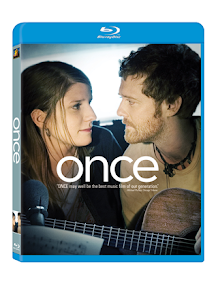
Blu-ray Review: Once (2006)


Now Available to Own  


Blu-ray Introduction

To celebrate the twentieth anniversary of Twentieth Century Fox’s indie/foreign/art-house and specialty company Fox Searchlight, the studio has kicked off what will be an entire year of new to Blu-ray titles and anniversary rereleases of some of their biggest critically acclaimed and/or box office hits.

Beginning with fan favorites including Napoleon Dynamite and Garden State (with future titles including Kissing Jessica Stein and The Full Monty), perhaps the most anticipated new high definition release in the celebration was in the long overdue Blu-ray debut of the internationally beloved Oscar winning Once from director John Carney.

For Carney, of course, the timing couldn’t be better as his upcoming music-centric release Begin Again starring Keira Knightley, Mark Ruffalo and Hailee Steinfeld is scheduled to open in a month following a successful film festival run.

And reminding us of where he began is this gorgeous new presentation of Once. More than just Carney's work, the film not only launched its musical star duo (and former real life flames Marketa Irglova and Glen Hansard whose post-film relationship was chronicled in the excellent documentary The Swell Season) but also inspired a new generation of filmmakers with its earnest, humanistic approach.

Reminiscent of the early work of Jim Jarmusch, which likewise encouraged Gen Xers to grab a camera, the smash success of Once reminded filmmakers and viewers alike that human relationships are still far more compelling and universally relatable than any number of big budget special effects.


While the Blu-ray upgrade of the title disappointingly boasts no new special features from the ones that were included on the previously released DVD, in a side-by-side quality comparison of my old standard definition disc and the Fox BD on my 240 hz, 1080p LED television with surround sound revealed a major improvement in video and audio alike.

Testing it out in a daylight scene where the limitations of the DVD are on full display given Once’s minimal budget, handheld style and understandably lackluster technical specs, the Blu-ray presentation has more than made up for any cinematic shortcomings.

In addition to driving home the sound in its low, confessional dialogue as well as Hansard's guitar busking wails, visually the Blu-ray adds depth as well as a clear vibrant border that had been missing before in the DVD’s soft video-like image.

Although it’s easily recommended on the improvement in quality overall, obviously a digital copy, deluxe soundtrack (although most of us own the Oscar winning music already) or some kind of “DVD proof of purchase” discount on the upgrade would’ve added to the high definition release's allure. 

Nonetheless, I think it’s safe to say that I’m not alone in hoping for new bonus features in time for the inevitable next anniversary re-release of either the title in 2016 or Fox Searchlight’s twenty-fifth anniversary, in which the studio could perhaps feature Once along with several of their other stellar offerings in one big Searchlight box set.


Original Movie Review
(Published 6/9/07)

Once is the perfect title for this critically acclaimed sleeper by writer/director John Carney that was not only nominated for the Grand Jury Prize but earned the World Cinema Dramatic Audience Award at the Sundance Film Festival.

A movie this rare and beautiful can only be named Once and as I sit down to collect my thoughts, I realize that it seems nearly impossible to describe the film in a way that would do it justice.

Sure, it’s charming and magical, yet real and simplistic—nearly perfect musical filmmaking, although to call it a musical is an inappropriate shortchange as it contains no dance numbers, doesn’t follow the genre mold and relies solely on people expressing earnest emotion through song for personal and artistic reasons instead of simply the big razzle dazzle showstoppers we’re used to viewing.

However, this being noted, you will catch yourself nodding and toe-tapping along from the heartfelt compositions in this partially autobiographical work from Carney, formerly a member of the band The Frames who was a struggling Dublin musician while his love lived in London.


Carney cast his old band-mate Glen Hansard as a character simply named “Guy," who lives with his father and works as a “Hoover” repairman by day but comes alive at night singing his lungs out on street corners.

And it's there where he meets “Girl,” (Marketa Irglova) a Czech immigrant with whom he embarks on a musical friendship with the stirrings of a romantic attraction, although they are still stuck on past loves and sublimate their budding feelings through gorgeous collaborations.

Not only have most critics expressed in their reviews that they found themselves wanting to see the film more than once, I found myself instantly curious about the film’s singer who struck me as a cross between Connor Oberst and Damien Rice.

Simply put, I was ready to not only immediately view the eighty-eight minute whirlwind one more time but purchase the soundtrack as well. It’s a hopeful movie that will make audience members long to have kept up practicing their pianos and guitars all those years ago and music lovers shouldn’t miss it.

Bookmark and Share

Text ©2014, Film Intuition, LLC; All Rights Reserved. http://www.filmintuition.com Unauthorized Reproduction or Publication Elsewhere is Strictly Prohibited and in violation of the Digital Millennium Copyright Act.  FTC Disclosure: Per standard professional practice, I may have received a review copy of this title in order to evaluate it for my readers, which had no impact whatsoever on whether or not it received a favorable or unfavorable critique.

9/08/2009

TV on DVD: Ramsay's Kitchen Nightmares: Complete Series 2 (UK Version; 2005)


Shop AcornOnline.com


Now on DVD


Delicious
Bookmark this on Delicious
submit to reddit
Print Page

Digg!

MovieBlips: vote it up!

In the second series of his original UK BAFTA and International Emmy honored Kitchen Nightmares, the 16-time Michelin star awarded culinary whirlwind Gordon Ramsay states that, "a chef without confidence is like a car without wheels."

Confidence isn't exactly something that the profanity spouting, a little too happily shirtless (and in one case pantless) Ramsay needs to worry about whether it's in this series, his internationally revered restaurants, or numerous other television shows, cookbooks and tie-ins. Basically, Gordon Ramsay is the foodie version of Marlon Brando. Famously infamous, rebellious and in-your-face-- while the first series of Nightmares prompted me to keep a "shirtless" tally this time around as the spiky blonde haired chef enjoys pulling a Jason Statham for the camera at least one time per episode (to the point where it's part of the intro to his series The F Word), shortly into this thoroughly compelling ten episode follow-up I realized I should've tallied his newest indulgence.


While Ramsay's profanity is legendary as a one man version of a Martin Scorsese movie-- dropping f-bombs left and right regardless of whether there's a child or an old lady within three feet-- when the vastly entertaining second series picks up, we realize that Ramsay has gotten far more elaborate and creative with his curses. Although it's most likely to keep things interesting and try to avoid copy-cats or comedic impressions, Ramsay reaches an all-time low or high (depending on your linguistic taste and tolerance) with the sheer number of references he makes to ahem-- male "equipment"-- as opposed to culinary equipment that it seems to be his latest obsession.

Whether encouraging men and women alike to find their own, strap on a pair, or reach down deep to make the best use of their "equipment" which he never fails to discuss complete with size and way too much detail, Ramsay's tendency to pose unnecessarily shirtless is quickly forgotten as he gets into a thorough "equipment" discussion in the very first episode.

Despite being more than $180,000 in debt and having been unable to sleep for four months (which probably isn't helped by his five Red Bull a day habit), Ramsay is quick to put the chef of Lanterna in his place when he discovers that the man has purchased a super expensive sports car with the license plate of "A1Chef." And very appropriately, Ramsay dubs the purchase "a penis extension" and as such, he's unable to sell the vanity plate to any other top cook. Yet, this particular plate isn't as worrisome as the plates inside Lanterna. Going into full-on boss mode, he simultaneously tries to get the chef/proprietor who moves quickly but does little true cooking--aside from reheating prepared packaged food-- to serve Italian cuisine that won't offend a real Italian before the health inspector closes the place down.

And it's precisely given the strength of episodes like this one that sets Ramsay's Kitchen Nightmares head and shoulders above most reality television, since despite the fact we're always aware that Ramsay is the star and relishes every minute of it, he truly wants to use his food wizardry and chef superpowers for good. With the constant but vital reminder that individuals shouldn't assume they can become great chefs or restaurant managers just because they've eaten dinner in a restaurant, we realize just how extremely difficult it is to make these risky business ventures successful.

While of course, the bottom line is that the food needs to be top-notch and cleanliness is a must since a case of food poisoning can shut down the establishment instantly, throughout Kitchen Nightmares, Ramsay and his new rotation of weekly proteges have to deal with all aspects of the industry. By reminding restaurateurs not to run before they can walk, he frequently cuts down overcomplicated menus that are far too expensive, hard for the chef to prepare during a busy time by juggling so many options, and preaches the merits of fresh local produce to offer flavorful yet simple dishes.


Yet in a few episodes of this season, the nightmare isn't in the kitchen since shockingly the food is wonderful, aside from staff who arrive whenever they feel like it or whenever they can get a babysitter. So to get the word out, Ramsay and the individuals we encounter do everything from using their own shoe leather to chat up locals by enticing them with samples to redecorating one place that's way too stuffy and changing the name of another so that it doesn't look or sound like-- as Ramsay notes-- a strip club.

While often the problem of a kitchen seems to be in its inability to change with the trends as Ramsay is caught in a '70s time-warp or visits one place he likens to Fawlty Towers since there's so many managers that literally nobody has a clue who's running the place, I was especially drawn in by episodes that dealt with the psychological nature of working in a kitchen. Due to the intense pressure, unique personality style and demands it places on those running a kitchen, you understand why Ramsay has to be as confrontational and confident as he is throughout. For, as I watched this series in particular I realized that along with the staggering numbers of restaurants that go out of business, the one issue we seldom analyze is the high burn-out factor of such a life-consuming job that one can liken to doctors, teachers, cops, etc.


Facing the industry's biggest problems of drug and alcohol abuse, Ramsay meets staffers who drink on the job and spend a whopping $2,000 in the bar every month (essentially creating a codependent and unhealthy atmosphere where the employers rely on their alcoholic intake to stay afloat), one cook who collapses and ends up in the E.R. as well as chefs who flat-out are unable to cook items as simply as a casserole and/or have lost their motivation completely.

Whether he's getting into a shouting match with an unqualified chef, trying to make owners face reality that a good reputation thirty years ago doesn't mean the restaurant still has one today, trying to out moonwalk a cook or conquer his irrational fear of dancing in public, Ramsay's Kitchen Nightmares is heartrending, pulse-pounding, nerve-wracking, yet surprisingly seasoned with human comedy and touching moments on par with the most by-the-numbers big studio underdog sports movies.


Additionally it's sprinkled with breathtaking scenic views of the English, Scottish, and Irish landscapes that make it a feast for one's eyes more than one's mouth since so much of the food in the Nightmares portion overpowers its enticement...and Americans generally don't line up for oxtail. Overall, Ramsay's Kitchen Nightmares: Series 2 is richer and more compelling than the extraordinarily impressive Series 1 thanks to its wonderful concept, and true drama in situations that you wouldn't have believed if they'd been cooked up by TV executives.

And by following his own advice referenced at the start of the review, due to the supreme confidence of the chef who may encounter speed bumps but always utilizes his
charisma, and downright cockiness (a word that couldn't be more fitting due to his oral fixation this season), Ramsay ensures that this highly recommended show never loses its four tires and always stays on the road. So get your "equipment" checked and settle in for a heaping helping of Kitchen Nightmares sure to make you think twice about just what's going on behind the swinging doors next time you visit a restaurant.


Text ©2009, Film Intuition, LLC; All Rights Reserved. http://www.filmintuition.com
Unauthorized Reproduction or Publication Elsewhere is Strictly Prohibited.

5/12/2008

P.S. I Love You

Director:
Richard LaGravenese

In the late 1990’s and most likely to compete with Gap’s aggressively cool “jump, jive, an’ wail” and “Kerouac wore khakis,” advertising campaign, Dockers launched their own line of commercials which featured handsome men on subways and street corners catching the eyes of flirtatious female passersby who replaced the tired wolf whistle with the sexy, succinct line, “Nice pants.” As my favorite creative writing professor jokingly told us, “If a woman told me I had nice pants, I would MARRY her.” Now admittedly, unlike my professor who was on—I believe-- wife number four at the time, I’m not one for marriage. However—and no pun intended-- if pressed, my “nice pants” weakness would be men who write letters. Sketches are flattering and songs entertain but creative men who pour their hearts out on paper with wit, passion, and ease are few and far between. Indeed, unfortunately, it seems as though they only exist in syrupy tearjerker novels, movies about death, or in foreign countries. In the latest outing from director Richard LaGravenese, he confirms this suspicion by mixing up a cocktail of all three as we have a film adaptation of Cecilia Ahern’s novel about death in which our male letter writer hails from Ireland.

Inaccurately billed, advertised and even critiqued as a traditional romantic comedy which raised enough eyebrows when one realized that Hilary Swank-- Oscar’s queen of doom and gloom-- was starring in something funny, P.S. I Love You crashed and burned at the box office, with audiences preferring to see Jack Nicholson and Morgan Freeman’s awkwardly characterized “feel-good” movie about death, The Bucket List. Think of this film as The Bucket List in reverse as it opens with Holly (Hilary Swank in as my dad described “Jennifer Garner mode”) and Gerry Kennedy (dishy Gerard Butler) returning home from a disastrous evening as they wait until they get to their apartment to argue to avoid making a scene.

Unfortunately, while the Kennedy’s neighbors are spared the scene, we watch the loud, chaotic confrontation escalate as the two begin with one issue, and predictably although authentically, proceed to use that as a springboard to attack each and every problem existing in their marriage. Faster than you can say, “show us, don’t tell us,” in a scene perhaps best suited for the stage as exposition literally comes spewing from the mouths of our talented leads making them grate on our nerves fairly quickly, we learn moments later that Gerry has died from a tragic illness, leaving his young, devoted wife reeling.

Cutting herself off from the world, Holly proceeds to grieve in her own way, avoiding hygiene and cleanliness, ignoring work, and instead sublimating her loss in fantasy as she imagines still speaking, holding and sleeping with Gerry as well as watching every woman’s weepie classic one can imagine starring Bette Davis and Judy Garland on her bedroom television. Things change on her thirtieth birthday, when Holly's mother Patricia (Kathy Bates) and two best friends (Lisa Kudrow and Gina Gershon) stage an intervention that nearly fails until a surprise letter arrives from the deceased Gerry who reveals that he has left Holly ten messages which will appear in mysterious ways over the course of one year.

Signing each letter with—you guessed it-- “P.S. I Love You,” Holly begins to come out of both her apartment and shell as Gerry's assignments challenge her to take part in everything from karaoke to a trip to Ireland where she meets Jeffrey Dean Morgan’s Billy Gallagher, another sensitive and gorgeous lad who-- wouldn’t you know?-- was one of Gerry’s old mates.

Meanwhile, in New York, Harry Connick Jr.’s bartending Daniel hopes to become more to Holly than just a friendly shoulder to cry on, as Holly realizes that as much as she wants to move on, it’s hard to let go, especially when Gerry keeps reminding her of their love with each successive letter.

While Swank’s character never feels entirely authentic and too much back-story is crammed in awkwardly throughout the narrative, despite its contrivances and predictable plot points, P.S. I Love You isn’t quite the disaster that one would have expected going in. However with obvious parallels to The Notebook and Ghost, it’s important to note to prospective renters hoping for a romantic comedy that the film is much sadder and far more devastating than the lighthearted trailers would have one believe, which tests the patience of viewers considering its overly long running time of 126 minutes.

In addition and quite surprisingly for a chick flick that was originally penned in novel form by a woman, I was amazed by the fact that the most fascinating and rewarding characters in Love weren't predictably Holly or her friends but rather the men in their lives including Gerry, Billy and Daniel. But then again, it's easy to forgive the author's understandable indulgence; as I said before, men like these only exist in the movies… or maybe just in Ireland.

5/01/2008

Mad About Mambo

Director:
John Forte

Perhaps they should’ve called it Bend it like Baryshnikov. In writer/director John Forte’s formulaic yet delightful Irish sleeper, inspired by a new Brazilian addition to the Belfast United, a teenage aspiring “footballer” (a.k.a. soccer player to us Yanks) from West Belfast decides that the answer to improving his game lies in getting rhythm while turning the beat around via ballroom lessons.

Of course, it helps matters when he realizes that it’s a great way to meet girls, especially the most talented girl in the class, the wealthy Protestant Lucy McLoughlin (Keri Russell), who spoiled and snobbish, not to mention steadily dating the handsome Oliver (Theo Fraser Steele) tries to ignore the lower class, Catholic newcomer.

However, after a friendly soccer game played by the boys leaves Oliver with an injured foot just before the local professional competition, Lucy changes her tune enough to let the new lad Danny Mitchell (William Ash) serve as her partner.

Although she tells him that this arrangement is strictly platonic and professional, head-over-soccer-shoes Danny tries his best to charm the lass but mostly succeeds in winning over her successful businessman father Sidney (an amusing Brian Cox) before his daughter predictably succumbs.

Despite a few overly predictable plot points and the fact that this copycat film will never feel as fresh as those that came before it such as the brilliant Breaking Away by Peter Yates, writer/director John Forte’s film has enough charm to go around thanks not only to the likable leads but also a great supporting turn by Maclean Stewart as Danny’s best mate Mickey who aspires to be a fashion designer.

Produced by Gabriel Byrne and inaccurately called Mad About Mambo when the dance performed throughout is the samba, Forte’s film is sure to delight teen audiences and admirers of the beautiful Russell.

6/09/2007

Movie Review: Once (2006)

Read the Blu-ray Review

Director: John Carney

Once is the perfect title for this critically acclaimed sleeper by writer/director John Carney that was not only nominated for the Grand Jury Prize but earned the World Cinema Dramatic Audience Award at the Sundance Film Festival.

A movie this rare and beautiful can only be named Once and as I sit down to collect my thoughts, I realize that it seems nearly impossible to describe the film in a way that would do it justice.

Sure, it’s charming and magical, yet real and simplistic—nearly perfect musical filmmaking, although to call it a musical is an inappropriate shortchange as it contains no dance numbers, doesn’t follow the genre mold and relies solely on people expressing earnest emotion through song for personal and artistic reasons instead of simply the big razzle dazzle showstoppers we’re used to viewing.

However, this being noted, you will catch yourself nodding and toe-tapping along from the heartfelt compositions in this partially autobiographical work from Carney, formerly a member of the band The Frames who was a struggling Dublin musician while his love lived in London.

Carney cast his old band-mate Glen Hansard as a character simply named “Guy," who lives with his father and works as a “Hoover” repairman by day but comes alive at night singing his lungs out on street corners.

And it's there where he meets “Girl,” (Marketa Irglova) a Czech immigrant with whom he embarks on a musical friendship with the stirrings of a romantic attraction, although they are still stuck on past loves and sublimate their budding feelings through gorgeous collaborations.

Not only have most critics expressed in their reviews that they found themselves wanting to see the film more than once, I found myself instantly curious about the film’s singer who struck me as a cross between Connor Oberst and Damien Rice.

Simply put, I was ready to not only immediately view the eighty-eight minute whirlwind one more time but purchase the soundtrack as well. It’s a hopeful movie that will make audience members long to have kept up practicing their pianos and guitars all those years ago and music lovers shouldn’t miss it.

Buy the Soundtrack & the Film