Showing posts with label Brendan Gleeson. Show all posts

6/14/2019

Movie Review: Hampstead (2017)


Now Playing 


Bookmark and Share

Staking out her Hampstead Heath neighborhood with a pair of newly found binoculars, American widow Emily Waters (Diane Keaton) springs into action when she sees a neighbor being attacked. Calling the police to intervene, Emily watches from the window of her posh flat and waits for them to help the stranger who lives across the street in a shack.

Having never previously met the man (played by Brendan Gleeson) in all the time she's resided there, fate lends a hand a second time shortly thereafter when she crosses his path in a cemetery after yelling at the gravestone of her unfaithful departed spouse.


When their meet awkward morphs into a meet cute, he asks her to dinner by way of a sign left for her binoculars to find. Soon a tentative relationship begins as the two outsiders come together, united as much by any attraction as an overall cause to try and stop land developers from tearing down his seventeen year residence in favor of luxury apartments.

Written by In the Bedroom's Robert Festinger and inspired by the life of the late Harry Hallowes, Hampstead is far more interested in the plight of its characters than in endearing them to the audience as individuals let alone a couple. And of course, this approach means that a great deal of the film's success is dependent upon the strength of its stars.


Completely up to the task, while the two are missing any real chemistry and the relationship's romantic evolution occurs mostly offscreen, the sheer likability of Diane Keaton and Brendan Gleeson helps Hampstead coast along.

Wisely adding scene-stealers Lesley Manville and Hugh Skinner to the mix in order to liven things up, although it's entirely by the numbers, the humanism and sensitivity on display from both the cast and in the direction from Last Chance Harvey's Joel Hopkins make this a pleasant if forgettable diversion.

In other words? Never underestimate a woman with binoculars.


Text ©2019, Film Intuition, LLC; All Rights Reserved. http://www.filmintuition.com Unauthorized Reproduction or Publication Elsewhere is Strictly Prohibited and in violation of the Digital Millennium Copyright Act.  FTC Disclosure: Per standard professional practice, I may have received a review copy or screener link of this title in order to voluntarily decide to evaluate it for my readers, which had no impact whatsoever on whether or not it received a favorable or unfavorable critique. Cookies Notice: This site incorporates tools (including advertiser partners and widgets) that use cookies and may collect some personal information in order to display ads tailored to you etc. Please be advised that neither Film Intuition nor its site owner has any access to this data beyond general site statistics (geographical region etc.) as your privacy is our main concern.

12/20/2014

Blu-ray Review: Calvary (2014)


Now Available to Own 
On Blu-ray and Digital HD 

  Photo Slideshow   


Named after the hill by Jerusalem where Jesus was crucified, Calvary, from playwright turned filmmaker John Michael McDonagh begins as a psychologically driven whodunnit thriller before quickly and rather disappointingly devolving into an allegorical, avant-garde version of High Noon.


And while that might sound interesting, ultimately you get the feeling that – at least conceptually – the unorthodox approach utilized by McDonagh would’ve translated much better on the stage of an experimental theatre company than it does on the movie screen.

Surprisingly emotionally frigid given its subject matter, Calvary holds viewers at an arm's length and a long arm at that as we feel even further away from its characters than those who fill the frames of fellow provocateurs Lars von Trier and Michael Haneke.


Yet this time around the sacrificial lamb isn't Jesus as suggested by the title, nor a woman as is so often the case in von Trier's work, but instead a by-all-accounts good priest named Father James (Brendan Gleeson), who had joined the church later in life following the death of his wife.

Nonetheless, in Calvary's startling opener, the life of Father James is threatened in the confessional by an unseen parishioner who informs him that he'll be killed as symbolic payback for the sins of an evil man of the cloth who'd raped the victim as a child every other day for five years.


Told he has one week to get his house in order, the unflinchingly calm and determined voice of the parishioner never wavers for a moment before he leaves the confessional with the promise that they’ll meet again—for the final time – on the beach near the hill the following Sunday (in a setting that subtly acknowledges the symbolic title).

Conflicted by the sanctity of the seal of confession and the horrors endured by the victim, James is further troubled by the realization that – given the man's voice and his closeness to the community – he knows precisely who threatened him from word one.

As Calvary alludes from the start, there are far more than a mere Four Horsemen of the Apocalypse that roam this otherwise sleepy little (albeit spiritually bankrupt) seaside Irish village.


Every character it seems is a victim, a villain, and/or a witness, and as McDonough takes us on what is purported to be a tour through the father’s seven stages of grief, we ascertain that every single one of its inhabitants (including the Father himself) is suffering from one or another form of PTSD obtained from a cruel twist of life – if not fate.

And this conclusion is only reaffirmed upon the arrival of another walking ghostlike figure in the form of the man's own, grown battle-scarred daughter, Fiona (played by Kelly Reilly), who appears on scene after traveling by train like a character out of a classic western.

Visiting her father to convalesce following a failed suicide attempt brought on by the never explained actions of an unknown man (which serves as a thematic metaphor around which the entire film revolves), Fiona is as troubled as the rest.


Asking us to question issues surrounding the film's major obsessions of culpability, guilt innocence beyond their legal limits and definitions, McDonagh takes his thought-provoking setup and then proceeds to suck the life out of it as we encounter one over-the-top character after another in a production that is as existential it is nonsensical.

Boasting shock-filled monologues about everything from cannibalism to the desire to kill women as revenge for being a virgin as well as urinary vandalism and the offscreen slaughter of a pet, the abysmal characters we encounter along with Father James all battle to suck the life out of him as well like the allegorical vampires that they are.

Having completely overdosed on symbolism; by the time the screen fills with the orange hue of arson and our protagonist shouts up to the heavens "why didn't anybody see?" before another deliberately closes their eyes, we've begun to wonder if there's any viewer left watching Calvary that doesn't desperately want to do the same.


Although he starts out strong in a dark, barely lit corner from where he proceeds to shine a spotlight on religious, moral and existential hypocrisy, McDonagh begins losing his religion as the film continues.

Thus, despite a potent turn by Gleeson and the rest of Calvary's impressive though poorly utilized ensemble cast, Calvary suffers from a crisis of narrative faith that prevents it from following in the footsteps of other filmmakers who found their work at a similar crossroads but dared to venture on full speed ahead.

What could’ve had the potency of superior subgenre efforts such as Doubt, Priest, In the Name Of, The Jewish Cardinal, and/or Philomena as well as the power a two-man Sam Shepard play begins to crucify itself with excess as soon as the Father ventures beyond the parish’s walls.


Intriguingly, Calvary filmmaker John Michael McDonagh is the brother of In Bruges writer/director Martin McDonagh. And while it's evident that together and separately the two have an awful lot to say about priests as similar scenarios of churchly violence also occur in Bruges, if right now we were asked to follow just one filmic gospel involving Catholic anarchy and hypocrisy – I’d still have to go with Bruges – six years after its release in 2008.

An artistic free for all, Calvary may be gorgeously shot but it plays like an Irish Catholic avant-garde interpretation of High Noon as seen through the eyes of an unlikely trinity comprised of Haneke, von Trier, and David Lynch.

Instead of a dramatic mystery about forgiveness and revenge, Calvary is undone by its devotion to symbolic allegory as well as its old time religion-like love of fire and brimstone level speechifying. Thus, despite its predictable yet admittedly poignant conclusion, try as it might it, McDonagh just can't convert us into cinematic believers.


Bookmark and Share

Text ©2014, Film Intuition, LLC; All Rights Reserved. http://www.filmintuition.com Unauthorized Reproduction or Publication Elsewhere is Strictly Prohibited and in violation of the Digital Millennium Copyright Act.  FTC Disclosure: Per standard professional practice, I may have received a review copy of this title in order to voluntarily decide to evaluate it for my readers, which had no impact whatsoever on whether or not it received a favorable or unfavorable critique.

8/21/2009

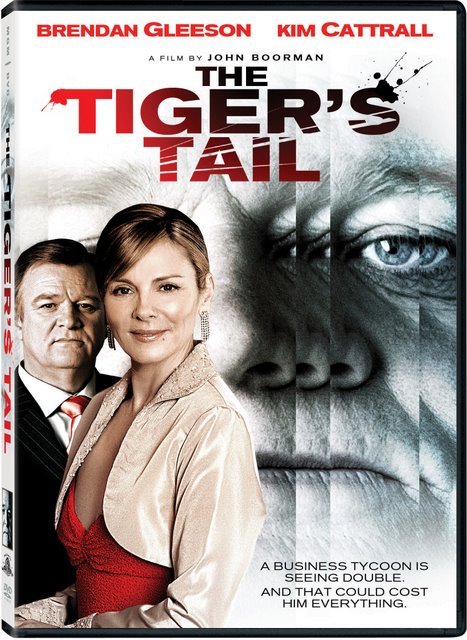
DVD Review: The Tiger's Tail (2006)


Now Available on DVD


Photo Slideshow


Visit the Official Website


Delicious
Bookmark this on Delicious
submit to reddit
Print Page

Digg!

MovieBlips: vote it up!

"When I was a child in the London blitz, a blockbuster was a massive bomb that could knock out a neighbourhood. The blockbuster movie, now utterly dominant and crushing better films, is set to destroy the Hollywood studios; the monster is turning on its makers. The [studio-built] blockbuster now costs so much to make and market that no one can afford them any more.

“Those of us excluded from this elite, or lacking the stomach for film-making of this order, are increasingly relegated to the mean streets of the independent film, the arthouse ghetto of low budgets and deferred fees. The independent film has to squeeze into margins and corners not occupied by the bullying blockbusters.

“Somehow we stay alive, we limp along as we wait for the blockbuster to reach critical mass and implode. In the rubble and ruins of Hollywood, we will emerge to baffle and bemuse that pre-programmed audience.”

-- Five Time Oscar-Nominated Writer/Director
John Boorman

in The Guardian’s “That's all, folks.”


Yet throughout his impressive career, filmmaker John Boorman has proven time and time again that he isn’t going to be content to wait until the demise of blockbusters to baffle and bemuse audiences. In fact, it’s been his unique and singular cinematic modus operandi that he’s employed from the start which is on display in such acclaimed works as the influential Point Blank, the unforgettable Deliverance and the autobiographical Hope and Glory along with so many others.


Bold and uncompromising, additionally Boorman is no stranger to tackling literary source material nor managing to find an intellectual approach to incorporate political, ethical, and humanistic themes in his varied works either in an overt context with a movie like Beyond Rangoon or subtly via his most recent release to DVD in MGM’s The Tiger’s Tail.


While obviously Boorman draws the most inspiration from the Mark Twain classic The Prince and the Pauper as a starting point for a film about doubles and doppelgangers in Dublin, he layers his contemporary morality tale with sociological issues. Furthermore and impressively managing to somehow wrap all of it up in a less than two hour running time, he captivates audiences by giving The Tiger’s Tail an intriguing Hitchockian spin a la Vertigo by lacing the work with elements of a thriller in a first rate screenplay.


In Bruges Golden Globe nominee Brendan Gleeson takes on two complicated roles in the film which first introduces us to the man as the successful capitalist Liam O’Leary who, stuck in horrific Dublin traffic on the eve he is to receive an award for his business endeavors is shocked to his core when a man who could be his identical twin starts cleaning his windshield.

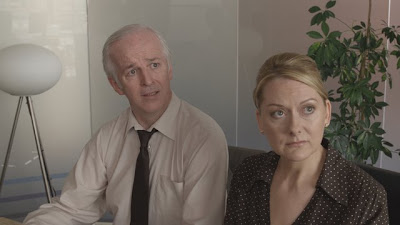
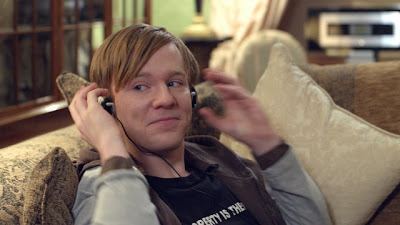
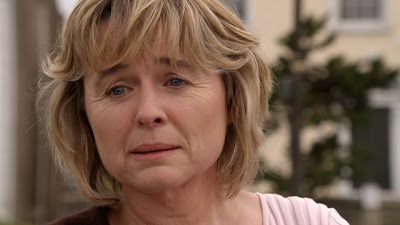
Playing off the experience by simply citing stress, he jokes to a friend that when you see your double, “it means you’re gonna die,” but when Liam finds himself face-to-face with the double several more times, his wife Jane (Kim Cattrall) and son Connor worry that Liam has begun losing his grip on reality. And sure enough when the double begins interfering in his life to the point of assuming the real Liam’s identity and managing to fool Jane and Connor, Liam embarks on a search for answers.


Throughout the work, the ideas of a stolen identity, the problems of health care, church scandals, parents disinterested in their children, and the widening gap between the classes are present from the start and become very apparent when the real Liam is forced to undergo a psychiatric evaluation at an institution. Still Boorman keeps us focused on the plot first and foremost by wisely keeps things moving at a tiger-like fast and emotionally heightened pace that avoids Tiger’s Tail from becoming too much of a draining political message movie.

However, from a narrative standpoint, there are a few missteps along the way that threaten to derail us from Liam's plight. The detractors include an abrupt ending that felt like it wasn’t earned from a sympathetic standpoint involving Liam’s relationship with his son as well as a brief but disturbing assault sequence on Jane by Liam’s double. For, similar to old films where too many dames would plead “no” until melting into yes, this incident involving Jane turns what began as outright rape into a dubious plot line for Jane to genuinely fall in love with the double instead. However, it’s possible that perhaps both of these problems that affect the work may have been solved in scenes that had been left on the cutting room floor or were removed from the screenplay to necessitate a faster and more budget friendly shoot.


And while Gleeson is given quite a showcase as he easily overpowers some of the ensemble including the talented Cattrall who falls in and out of accent every so often, nonetheless the underrated Tiger’s Tail is a thought provoking film that’s well worth chasing down. While the surprisingly philosophical conclusion would have no doubt been rejected within the blockbuster system that would've instead insisted the story had cashed in on the concept of revenge, you have to applaud Boorman’s decision to stay true to his beliefs as he baffles and bemuses with an existential new work.

Text ©2009, Film Intuition, LLC; All Rights Reserved. http://www.filmintuition.com

Unauthorized Reproduction or Publication Elsewhere is Strictly Prohibited.

3/01/2008

In Bruges

Director: Martin McDonagh


We’re only a few months into 2008 but as of this review, Colin Farrell has starred in my two favorite films so far—first with his against type role as a sensitive, morally plagued gambler who is asked to commit murder in Cassandra’s Dream and second for his role as an assassin who is also plagued by morality with his turn in Martin McDonagh’s In Bruges. Mc Donagh, an Irish playwright who earned an Academy Award for his live action short Six Shooter makes his feature debut with this startlingly original, shocking, funny, tragic and surprisingly touching comedic crime drama about two hitmen who are asked to leave their native Dublin when a hit goes unspeakably wrong and hide out in the fairytale like Flemish city of Bruges.

In stark contrast to the gorgeous gothic architecture and haunting canals that make Bruges “the most well-preserved medieval city” in Belgium, Ray (Farrell) tries his hardest not to blend in with the tourist traffic by either folding his arms or sticking his hands in his pockets, grimacing at the ground, and shuffling his feet in exasperation when prodded to take in the legendary scenery by his elder father-like mentor hitman Ken (a terrific Brendan Gleeson) who is determined to enjoy himself. Sent to await instructions from their terrifying boss Harry (Ralph Fiennes) who is mostly overheard on the phone before his first appearance that’s augmented by the fact that, (similar to Ben Kingsley in Sexy Beast), he is discussed so much that we’re riveted and frightened when he finally gets in on the action. Soon secrets of Ray’s last job are revealed and they try to cope with the aftermath with Ken hoping to distract his associate with more sightseeing and Ray becoming fascinated by both an American dwarf (Jordan Prentice) and a gorgeous Belgian named Chloe (Clemence Posey) who are working on a film set in Bruges.

While it’s Ray who immediately commands viewer’s attention with his narration at the start of the film (that earns In Bruges an R rating only moments in) that typifies the tremendous and highly quotable layered writing of McDonagh which becomes the film’s signature, look for an outstanding performance from Gleeson (who I later realized like Fiennes and Posey had a role in the Harry Potter series as Mad-Eye Moody) that evokes our sympathy and interest early on as he, like Ray evolves throughout the film. Memorable, furiously original and intelligent filmmaking that sets In Bruges apart from most crime comedies in the genre by invoking pathos and heart, it’s in limited release throughout the country but well-worth tracking down if Bruges is playing in your area, not to mention one you’ll instantly want to call your friends about as soon as it’s over to recommend.