Showing posts with label Irish. Show all posts

10/06/2018

Film Movement DVD Review: Between Land and Sea (2016)


Now Available


Bookmark and Share

For Ollie O'Flaherty, who is just one of a handful of Irish surfers at the heart of Ross Whitaker's fascinating documentary Between Land and Sea, the patience you need to find, charge at, and ride just the right wave, "is what makes it so addicting."

In the Atlantic surf town of Lahinch on Liscannor Bay on the northwest corner of County Clare, Ireland, which is like as O'Flaherty muses "having a playground on [his]...doorstep, only my playground is the ocean," Whitaker and his crew took his advice on patience literally while chronicling a year in the life of a core group of surfers and their loved ones.

Similar to the way O'Flaherty says the ocean "can offer the wave of a lifetime in the best amphitheater in the world but everywhere you look there's danger," each year the community virtually closes down for winter until Easter when the locals hope to make enough money from tourists to get by until the following year.


Although it might not have the same impact as a couple hundred feet of water hitting a fifteen foot shelf, given not only the ever-dwindling amount of travelers as well as the number of different pop-up shops selling beautifully handcrafted boards and gear as well as surf schools, it can hit residents supporting themselves as well as their loved ones on that income just as hard.

Introducing us to a couple of men who run surf related businesses such as Lahinch Surf Experience and Lahinch Surf School where a few current and former pro surfers (including O'Flaherty) moonlight as instructors, Whitaker gives us a good reason why some places close down in winter as one year earlier in a bad storm, the waves did twenty-three million pounds of damage to local businesses.

Having either aged out of the sport or embarked on a different endeavor, we're first introduced to Tom Doidge-Harrison, who, despite acknowledging that "some things in life have slipped by" him, has settled into a cozy life with his beautiful pregnant wife and daughter.

Trained as a mining engineer which he does for money and to enable him to make surfboards for enjoyment, Tom's wife Raquel has also had to think outside the box since leaving her home in Bristol by using her scientific background to make handmade soaps as she was unable to find something in her field in Lahinch.

While we don't exactly know if Raquel's soap-making is for money and/or enjoyment, by including her story alongside her husband's, it's a subtle study of contrasts and similarities and part of what makes the observational documentary so compelling on a human level.


One of many people looking for new purpose, having walked away from the life of a professional surfer where he spent too much time chasing sponsors, Australian Fergal Smith has returned to his roots growing up on an organic farm.

And over the course of the year captured in Whitaker's observational documentary, Fergal embarks on perhaps the biggest risk captured either on or off the ocean as he and his wife and child put everything into the soil and live in a yurt while waiting for both their venture and crops to grow.

Of course, you don't check out a surfing documentary if you aren't interested in surfing. Yet while Whitaker is far more focused on a fly-on-the-wall approach in making the viewer feel like an honorary Lahinch resident for its ninety-four minute running time, the film's surf's scenes (directed by Kev I Smith and featuring a cameo by Hawaiian big wave legend Shane Dorian and crew) are quite thrilling to watch.

With the breathtaking backdrop of Ireland's cliffs by the sea, whenever the lens zeroes in on a color deeper than the shades we mostly see of mossy green, brown soil, and saltwater blue, we're immediately taken in and Land and Sea delivers on this front repeatedly – alternating from orange red skies to later on, a rainbow streaking across the sky.


Released by Film Movement, admittedly, this highly recommended slice-of-life documentary might bore viewers reared on traditional stunt filled sports documentaries geared toward those with the shortest of attention spans.

Less like a feature length music video, Land is more reminiscent in spirit of director Michael Apted's Up series, which was an obvious influence on Hoop Dreams director Steve James, whose work seems to have in turn inspired Whitaker.

The end result makes this one wave you'll definitely want to take, as long as that you have the patience to learn not only what makes it so stimulating for the surfers but also what's at stake.


Text ©2018, Film Intuition, LLC; All Rights Reserved. http://www.filmintuition.com Unauthorized Reproduction or Publication Elsewhere is Strictly Prohibited and in violation of the Digital Millennium Copyright Act.  FTC Disclosure: Per standard professional practice, I may have received a review copy or screener link of this title in order to voluntarily decide to evaluate it for my readers, which had no impact whatsoever on whether or not it received a favorable or unfavorable critique. Cookies Notice: This site incorporates tools (including advertiser partners and widgets) that use cookies and may collect some personal information in order to display ads tailored to you etc. Please be advised that neither Film Intuition nor its site owner has any access to this data beyond general site statistics (geographical region etc.) as your privacy is our main concern.

7/03/2016

Film Movement DVD Review: Glassland (2014)


Now Available to Own 


  Photo Slideshow


When thinking of a title for what would eventually become his second feature film, Irish writer/director Gerard Barrett recalled an old saying warning that if you ever crossed the line and committed a crime, you’d spend the rest of your life walking on glass.

But when juxtaposed with “land” as in the Glassland that sums up the film as well as the fictional environment in which Barrett’s work is set, suddenly the title takes on an even greater meaning which not only strengthens his already stellar character driven drama but also makes Glassland that much harder to forget.

Set in the south Dublin town of Tallaght, Ireland and centered on the fractured relationship between a dutiful hardworking adult son struggling to care of an alcoholic mother who spends most of her days and nights drinking herself to death, Glassland paints an initially bleak picture of a country known around the world for its famed pub scene.

Anchored by Jack Reynor’s breakout performance as John in his Sundance Film Festival award winning role, Glassland gradually evolves into a humanistic chamber piece that transcends borders and boundaries while celebrating the complex bond between a mother and her child.


Contrasting John’s desperate plight to sober up his stubborn mom in order to save her life with the way his more apathetic mate’s mother lavishes him with love and affection, Barrett’s cinematic portrait is most poignant when he lets us see all of shades of gray in between extremes of black and white.

And while Glassland drives its message home in a powerful scene where John’s mother (played by the always compelling Toni Collette) breaks apart every glass plate in the house (and breaks her son’s heart in the process), it’s in the quieter, less-showy moments that Barrett pieces together its most effective visual, yet no less visceral poetry.

Knowing this story is more about people than plot, in three scenes that most filmmakers would’ve left on the cutting room floor like shards of glass in Collette’s kitchen, Barrett takes the opportunity to give us an even closer look at his characters’ lives.

From the way that John uses music to bridge the gap between language and emotion when communication fails to the unparalleled joy on the face of his special needs brother as John drives him around and around in circles in a parking lot, we sense how important the illusion of escape is to those whose lives feel out of control.

Refusing to play his character as mere victim or savior, in a staggeringly powerful performance, Reynor not only holds his own with Collette but says more with a look than words, which comes in particularly handy since Glassland is as fast paced as it is frequently quiet.


Working in a variety of subplots that all feel organic, Glassland steers clear of the TV-movie-of-the-week style melodramatic trappings that often go hand-in-hand with titles dealing with alcoholism by making the issue just one fact of John’s complicated life.

At times reminiscent of Cassavetes and Loach, through our lead’s strikingly powerful Neorealist inspired journey, Barrett touches on other contemporary socioeconomic concerns that feel as universal as the central storyline.

Nonetheless, in spite of a rushed final act which leaves us with a few lingering questions and makes us wonder whether the script had followed a more traditional thriller paradigm earlier on, by holding up a mirror to all those that populate Glassland, Barrett’s love for his characters (like John’s love for his mother) shines through – flaws and all.


Bookmark and Share

Text ©2016, Film Intuition, LLC; All Rights Reserved. http://www.filmintuition.com Unauthorized Reproduction or Publication Elsewhere is Strictly Prohibited and in violation of the Digital Millennium Copyright Act.  FTC Disclosure: Per standard professional practice, I may have received a review copy of this title in order to voluntarily decide to evaluate it for my readers, which had no impact whatsoever on whether or not it received a favorable or unfavorable critique.

12/20/2014

Blu-ray Review: Calvary (2014)


Now Available to Own 
On Blu-ray and Digital HD 

  Photo Slideshow   


Named after the hill by Jerusalem where Jesus was crucified, Calvary, from playwright turned filmmaker John Michael McDonagh begins as a psychologically driven whodunnit thriller before quickly and rather disappointingly devolving into an allegorical, avant-garde version of High Noon.


And while that might sound interesting, ultimately you get the feeling that – at least conceptually – the unorthodox approach utilized by McDonagh would’ve translated much better on the stage of an experimental theatre company than it does on the movie screen.

Surprisingly emotionally frigid given its subject matter, Calvary holds viewers at an arm's length and a long arm at that as we feel even further away from its characters than those who fill the frames of fellow provocateurs Lars von Trier and Michael Haneke.


Yet this time around the sacrificial lamb isn't Jesus as suggested by the title, nor a woman as is so often the case in von Trier's work, but instead a by-all-accounts good priest named Father James (Brendan Gleeson), who had joined the church later in life following the death of his wife.

Nonetheless, in Calvary's startling opener, the life of Father James is threatened in the confessional by an unseen parishioner who informs him that he'll be killed as symbolic payback for the sins of an evil man of the cloth who'd raped the victim as a child every other day for five years.


Told he has one week to get his house in order, the unflinchingly calm and determined voice of the parishioner never wavers for a moment before he leaves the confessional with the promise that they’ll meet again—for the final time – on the beach near the hill the following Sunday (in a setting that subtly acknowledges the symbolic title).

Conflicted by the sanctity of the seal of confession and the horrors endured by the victim, James is further troubled by the realization that – given the man's voice and his closeness to the community – he knows precisely who threatened him from word one.

As Calvary alludes from the start, there are far more than a mere Four Horsemen of the Apocalypse that roam this otherwise sleepy little (albeit spiritually bankrupt) seaside Irish village.


Every character it seems is a victim, a villain, and/or a witness, and as McDonough takes us on what is purported to be a tour through the father’s seven stages of grief, we ascertain that every single one of its inhabitants (including the Father himself) is suffering from one or another form of PTSD obtained from a cruel twist of life – if not fate.

And this conclusion is only reaffirmed upon the arrival of another walking ghostlike figure in the form of the man's own, grown battle-scarred daughter, Fiona (played by Kelly Reilly), who appears on scene after traveling by train like a character out of a classic western.

Visiting her father to convalesce following a failed suicide attempt brought on by the never explained actions of an unknown man (which serves as a thematic metaphor around which the entire film revolves), Fiona is as troubled as the rest.


Asking us to question issues surrounding the film's major obsessions of culpability, guilt innocence beyond their legal limits and definitions, McDonagh takes his thought-provoking setup and then proceeds to suck the life out of it as we encounter one over-the-top character after another in a production that is as existential it is nonsensical.

Boasting shock-filled monologues about everything from cannibalism to the desire to kill women as revenge for being a virgin as well as urinary vandalism and the offscreen slaughter of a pet, the abysmal characters we encounter along with Father James all battle to suck the life out of him as well like the allegorical vampires that they are.

Having completely overdosed on symbolism; by the time the screen fills with the orange hue of arson and our protagonist shouts up to the heavens "why didn't anybody see?" before another deliberately closes their eyes, we've begun to wonder if there's any viewer left watching Calvary that doesn't desperately want to do the same.


Although he starts out strong in a dark, barely lit corner from where he proceeds to shine a spotlight on religious, moral and existential hypocrisy, McDonagh begins losing his religion as the film continues.

Thus, despite a potent turn by Gleeson and the rest of Calvary's impressive though poorly utilized ensemble cast, Calvary suffers from a crisis of narrative faith that prevents it from following in the footsteps of other filmmakers who found their work at a similar crossroads but dared to venture on full speed ahead.

What could’ve had the potency of superior subgenre efforts such as Doubt, Priest, In the Name Of, The Jewish Cardinal, and/or Philomena as well as the power a two-man Sam Shepard play begins to crucify itself with excess as soon as the Father ventures beyond the parish’s walls.


Intriguingly, Calvary filmmaker John Michael McDonagh is the brother of In Bruges writer/director Martin McDonagh. And while it's evident that together and separately the two have an awful lot to say about priests as similar scenarios of churchly violence also occur in Bruges, if right now we were asked to follow just one filmic gospel involving Catholic anarchy and hypocrisy – I’d still have to go with Bruges – six years after its release in 2008.

An artistic free for all, Calvary may be gorgeously shot but it plays like an Irish Catholic avant-garde interpretation of High Noon as seen through the eyes of an unlikely trinity comprised of Haneke, von Trier, and David Lynch.

Instead of a dramatic mystery about forgiveness and revenge, Calvary is undone by its devotion to symbolic allegory as well as its old time religion-like love of fire and brimstone level speechifying. Thus, despite its predictable yet admittedly poignant conclusion, try as it might it, McDonagh just can't convert us into cinematic believers.


Bookmark and Share

Text ©2014, Film Intuition, LLC; All Rights Reserved. http://www.filmintuition.com Unauthorized Reproduction or Publication Elsewhere is Strictly Prohibited and in violation of the Digital Millennium Copyright Act.  FTC Disclosure: Per standard professional practice, I may have received a review copy of this title in order to voluntarily decide to evaluate it for my readers, which had no impact whatsoever on whether or not it received a favorable or unfavorable critique.

8/21/2009

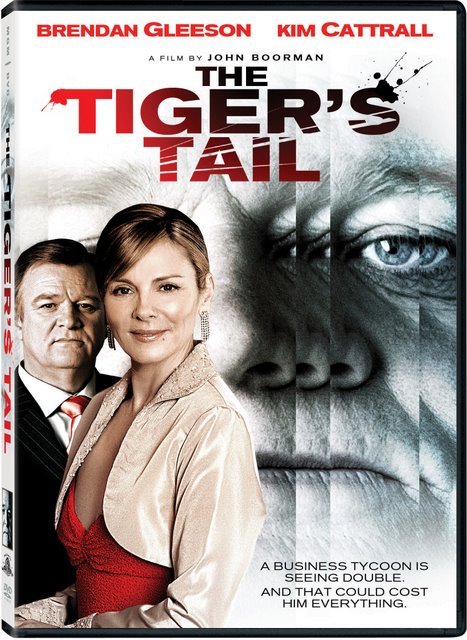
DVD Review: The Tiger's Tail (2006)


Now Available on DVD


Photo Slideshow


Visit the Official Website


Delicious
Bookmark this on Delicious
submit to reddit
Print Page

Digg!

MovieBlips: vote it up!

"When I was a child in the London blitz, a blockbuster was a massive bomb that could knock out a neighbourhood. The blockbuster movie, now utterly dominant and crushing better films, is set to destroy the Hollywood studios; the monster is turning on its makers. The [studio-built] blockbuster now costs so much to make and market that no one can afford them any more.

“Those of us excluded from this elite, or lacking the stomach for film-making of this order, are increasingly relegated to the mean streets of the independent film, the arthouse ghetto of low budgets and deferred fees. The independent film has to squeeze into margins and corners not occupied by the bullying blockbusters.

“Somehow we stay alive, we limp along as we wait for the blockbuster to reach critical mass and implode. In the rubble and ruins of Hollywood, we will emerge to baffle and bemuse that pre-programmed audience.”

-- Five Time Oscar-Nominated Writer/Director
John Boorman

in The Guardian’s “That's all, folks.”


Yet throughout his impressive career, filmmaker John Boorman has proven time and time again that he isn’t going to be content to wait until the demise of blockbusters to baffle and bemuse audiences. In fact, it’s been his unique and singular cinematic modus operandi that he’s employed from the start which is on display in such acclaimed works as the influential Point Blank, the unforgettable Deliverance and the autobiographical Hope and Glory along with so many others.


Bold and uncompromising, additionally Boorman is no stranger to tackling literary source material nor managing to find an intellectual approach to incorporate political, ethical, and humanistic themes in his varied works either in an overt context with a movie like Beyond Rangoon or subtly via his most recent release to DVD in MGM’s The Tiger’s Tail.


While obviously Boorman draws the most inspiration from the Mark Twain classic The Prince and the Pauper as a starting point for a film about doubles and doppelgangers in Dublin, he layers his contemporary morality tale with sociological issues. Furthermore and impressively managing to somehow wrap all of it up in a less than two hour running time, he captivates audiences by giving The Tiger’s Tail an intriguing Hitchockian spin a la Vertigo by lacing the work with elements of a thriller in a first rate screenplay.


In Bruges Golden Globe nominee Brendan Gleeson takes on two complicated roles in the film which first introduces us to the man as the successful capitalist Liam O’Leary who, stuck in horrific Dublin traffic on the eve he is to receive an award for his business endeavors is shocked to his core when a man who could be his identical twin starts cleaning his windshield.

Playing off the experience by simply citing stress, he jokes to a friend that when you see your double, “it means you’re gonna die,” but when Liam finds himself face-to-face with the double several more times, his wife Jane (Kim Cattrall) and son Connor worry that Liam has begun losing his grip on reality. And sure enough when the double begins interfering in his life to the point of assuming the real Liam’s identity and managing to fool Jane and Connor, Liam embarks on a search for answers.


Throughout the work, the ideas of a stolen identity, the problems of health care, church scandals, parents disinterested in their children, and the widening gap between the classes are present from the start and become very apparent when the real Liam is forced to undergo a psychiatric evaluation at an institution. Still Boorman keeps us focused on the plot first and foremost by wisely keeps things moving at a tiger-like fast and emotionally heightened pace that avoids Tiger’s Tail from becoming too much of a draining political message movie.

However, from a narrative standpoint, there are a few missteps along the way that threaten to derail us from Liam's plight. The detractors include an abrupt ending that felt like it wasn’t earned from a sympathetic standpoint involving Liam’s relationship with his son as well as a brief but disturbing assault sequence on Jane by Liam’s double. For, similar to old films where too many dames would plead “no” until melting into yes, this incident involving Jane turns what began as outright rape into a dubious plot line for Jane to genuinely fall in love with the double instead. However, it’s possible that perhaps both of these problems that affect the work may have been solved in scenes that had been left on the cutting room floor or were removed from the screenplay to necessitate a faster and more budget friendly shoot.


And while Gleeson is given quite a showcase as he easily overpowers some of the ensemble including the talented Cattrall who falls in and out of accent every so often, nonetheless the underrated Tiger’s Tail is a thought provoking film that’s well worth chasing down. While the surprisingly philosophical conclusion would have no doubt been rejected within the blockbuster system that would've instead insisted the story had cashed in on the concept of revenge, you have to applaud Boorman’s decision to stay true to his beliefs as he baffles and bemuses with an existential new work.

Text ©2009, Film Intuition, LLC; All Rights Reserved. http://www.filmintuition.com

Unauthorized Reproduction or Publication Elsewhere is Strictly Prohibited.