Showing posts with label Billy Bob Thornton. Show all posts

12/30/2013

Blu-ray Review: Jayne Mansfield's Car (2012)


Now Available to Own   


 Photo Slideshow


When the grown children of the British man their mother left their American father for come face-to-face with the now-adult children she left behind for the purpose of returning her body for burial in her Alabama home, there’s a culture clash of epic proportions as sparks fly between the two families.

Very aware that despite meeting one another in the event of a death that nothing is black and white, screenwriter/director/star Billy Bob Thornton and his longtime co-writer Tom Epperson soak up the several shades of fascination that initially color the first encounter of such a large group of characters.


Moving from the green envy shown by two patriarchs that never wanted to look one another in the eye to the surprisingly humorous red-hot lust that crops up between unrelated foreign counterparts as bored adults find themselves intrigued by something altogether new, as a writer as well as a director Thornton paints a vibrant portrait of the madness that ensues.

From backhanded compliments to awkward jokes, stereotypical references and generalizations galore about the way each live their life on opposite sides of the pond, their detailed script captures all the complexities of an extended group of people all trying to come to terms with what this newfound sense of family means to them.

In doing so, he revisits some of the same themes, character traits and narrative obsessions he’s visited earlier in his career in this complex – if overly ambitious – awkwardly told tale of two families who never imagined they’d cross paths that are brought together by a character the audience never even gets a chance to meet.


And in his return to the director’s chair for this very southern saga, Billy Bob Thornton makes the most of not just its place but also its time period of 1969.

For even though it’s the deceased shared matriarch that serves as the link between all of the characters onscreen, the film is far more concerned with the links the individuals share as fathers and sons, as Jayne at times feels as though it were a Tennessee Williams meets Faulkner masculine-centric sequel to D.H. Lawrence’s mama’s boy saga, Sons and Lovers.


It’s just a shame that he didn’t ditch all the extraneous stuff and drive the tale of fathers and sons he was clearly more interested in exploring into a completely different project altogether.

Filled with a wandering sensibility, Jayne Mansfield’s Car has a preoccupation with movement – never staying on one character or idea too long – making the film play more like a collection of scenes rather than a work with a clear narrative through-line as if this Car had no idea where it wanted to go.

While capable of some sudden bursts of brilliance in the form of mesmerizing monologues delivered by its amazing male cast members, these moments are far too fleeting when compared to the overall running time of the 122 minute movie.

Likewise, the superlative near-soliloquies Thornton and Epperson have written feel more like tourist destinations along the way of a much larger journey the film is taking, with each one inviting our awe yet never quite managing to move easily back into a far too distracted screenplay. And given the high quality of the speeches, it isn’t overly long into Jayne that you realized how much better the script would’ve been reconfigured for the stage after all.


Playing yet another variation of a mentally challenged, somewhat broken man who – despite having been a war hero – speaks uninhibitedly with a childlike sense of understanding and penchant for non sequiturs, Thornton is told by the bewildered, beautiful Brit embodied by Frances O’Connor that his “thoughts are so random.”

Attracted to her accent, which in itself echoes Sling Blade’s famous “I like the way you talk” bonding moment, Thornton agrees, proudly telling her, “yeah, I’m a thinker,” before moving on to numerous other topics he initiates and abandons one after the other. And that in a nutshell is Mansfield’s greatest weakness as well as its greatest strength.

Simply put, it has way too many ideas and it wants to tell you all of them and while as observed in the aforementioned speeches, it’s a pleasure to listen then, unfortunately, that only makes up a fraction of an altogether haphazard film.


Although he fills the screen with an Altman worthy cast of characters, quite tragically the men shine and the women are essentially turned into audience surrogates – turning up here or there so that the men have someone to talk to (or more specifically at) while encouraging them to share.

While O’Connor steals one of her biggest scenes away from Thornton in a nice play on the male gaze – giving in to his wish to recite something naked for his pleasure and taking far more joy in it than one would expect, unfortunately, the stellar actresses have little to do than lend a sympathetic ear.

Switching gears from his Guess Who’s Coming to Dinner meets A Family Thing paradigm by focusing not on the matriarch and her families but rather on the relationships the two patriarchs have with their sons, Jayne becomes a tale of history repeating itself.


Cleverly using a period film to address the endless cycle of war by way of World War I vet patriarchs, their World War II vet sons as well as the threat of the draft effecting the grandsons, Thornton focuses on the way that war (and its after effects) not only linger but are passed down through the generations like blood type and eye color.

Admirably resisting the urge to make it 100% pro or anti-war, Thornton lets each veteran tell their own tale, reflecting not only on their experience but their reasons for fighting along with regrets and triumphs, while comparing their scars both internal and external.


In fact, Jayne Mansfield’s Car is so war-focused that at times it felt like all of the other sequences may have been plugged in later from other drafts of other screenplays Thornton and Epperson had laying around.

And honestly, even though it opens one way, Mansfield is at its most compelling when dealing with this subject and at its least when trying to weave in the threads of all the other subplots and topics it introduces into the work including the too-on-the-nose symbolism-heavy one that generated the film’s title.


Likewise by wrapping all of these plots up in a strange accidental LSD trip that not only rings false but also somehow turns Southern patriarch Robert Duvall into a superior father, it becomes painfully obvious how much better the film would’ve been if a handful of characters would’ve been axed along with several subplots in order to make the rest of it more authentic and appealing.


Although Jayne is augmented by the power of its cast whose fiery performances manage to fuel our interest regardless of the film’s at times overwhelmingly disappointing flaws, against all odds Thornton’s modern day theater company and approach keeps us watching despite the number of times it loses direction along the way.

When it stays true to its course of mapping out the way that war – much like the basic familial relationships of parent and child – transcends culture, countries, times and languages, Jayne Mansfield’s Car proves that the destination will never be as important as the trip itself.


Given a beautiful transfer to 1080 pixel blu-ray high definition complete with Dolby True HD sound and subtitles for the hearing impaired and viewers who simply want to soak up the scripters’ rich ear for language, Jayne Mansfield’s Car makes its way to disc with a behind-the-scenes featurette in its home entertainment debut.

Though Thornton ultimately navigates similar terrain he’s traveled down in films of the past – even after you’ve forgotten the name of the film, you’re certain to recall some of this picture’s most memorable scenes which will stay with you long after it ends.     

Text ©2013, Film Intuition, LLC; All Rights Reservedhttp://www.filmintuition.com Unauthorized Reproduction or Publication Elsewhere is Strictly Prohibited and in violation of the Digital Millennium Copyright Act.  FTC Disclosure: Per standard professional practice, I may have received a review copy of this title in order to evaluate it for my readers, which had no impact whatsoever on whether or not it received a favorable or unfavorable critique.

11/27/2013

Blu-ray Review: Parkland (2013)


Now Available to Own


Photo Slideshow


When Parkland Hospital received word that President John F. Kennedy was being transported to their ER on November 22, 1963 – less than an hour after he’d arrived in Dallas, Texas – their first assumption was that the commander-in-chief had become the victim of flu season.

It was only after they were greeted by the sight of the First Lady’s blood-spattered pink suit, frenzied Secret Service agents and the near lifeless body of the nation’s leader that the young residents and nurses covering the ER’s lunch shift realized that the president was the victim of an assassin’s bullet rather than a virus.


Reliving that traumatic day from the points-of-view of the men and women who were there, we’re given a thorough docudrama styled account of one of the most covered events in United States history.

Pushing aside conspiracy theories of Oliver Stone proportion along with the melodramatic approaches often utilized in small screen miniseries biopic treatments of the Kennedy family in favor of a heavily researched, fact-based account, writer/director Peter Landesman adapted the ambitious Parkland from Four Days in November, the shorter publication of Vincent Bugliosi’s Edgar Award winning nonfiction work, Reclaiming History.


And in doing so, Landesman manages to put us right in the midst of the chaos, taking advantage of the ensemble drama’s natural tendency to draw us into the action like flies-on-the-wall while we listen in, weighing the moral, ethical and humanistic dilemmas faced by the characters onscreen.

In addition to the bravura, emotionally exhausting opener that transports us to the titular trauma room as the young doctors on staff struggle to revive the president, we’re placed in the shoes of Dallas businessman Abraham Zapruder (Paul Giamatti), who unwittingly captures the shocking murder on his 8mm film camera and is then placed in the unenviable position of deciding what to do with the footage.


While adding up the facts to identify who pulled the trigger, we’re brought to FBI’s local office where Special Agent James Hosty (Ron Livingston) is horrified by the realization that the man he’d been personally tracking for eighteen months on a hunch – Lee Harvey Oswald (Jeremy Strong) – may indeed have been the one who fired the fatal shot.

Never judging its characters' actions directly, Landesman leaves the viewer to decide right from wrong, painting an admirably objective portrait of four shocking days in November, bringing us into the confidences and conversations of citizens that hadn’t yet been captured onscreen in other accounts.

And perhaps this is most effective in the characterization of the hardworking family man Robert Lee Oswald (James Badge Dale), who is utterly appalled and taken aback to learn that his very own brother is responsible for the death of the beloved figure.


Thoroughly engrossing despite its surprisingly short running time of just eighty-seven minutes, while admittedly a few of the G-men and Secret Service agents blur together without the benefit of adequate screen-time to separate the sea of suits and set them apart in order for their words and actions to have the maximum dramatic impact, it’s a minor flaw in an otherwise mostly faultless film.

Though it’s light on bonus features save for deleted scenes and filmmaker commentary, the work, which is reminiscent of an HBO original movie and fittingly produced by Playtone’s "Band of Brothers" in the form of Tom Hanks, Gary Goetzman and Bill Paxton, is transferred with razor-sharp clarity for its Blu-ray debut to coincide with the fiftieth anniversary of the Kennedy assassination.

Emotionally charged and endlessly eye-opening with the benefit of excellent casting to make some of the underwritten individuals instantly more three-dimensional, Parkland depicts unexpected profiles of courage of otherwise ordinary men and women over the course of four extraordinary days.   


Text ©2013, Film Intuition, LLC; All Rights Reserved. http://www.filmintuition.com Unauthorized Reproduction or Publication Elsewhere is Strictly Prohibited and in violation of the Digital Millennium Copyright Act.  FTC Disclosure: Per standard professional practice, I may have received a review copy of this title in order to evaluate it for my readers, which had no impact whatsoever on whether or not it received a favorable or unfavorable critique.

8/16/2009

Blu-ray Review: Sling Blade -- Miramax Films' Award-Winning Collection (1996)


Now Available to Own


Photo Slideshow


Delicious
Bookmark this on Delicious
submit to reddit
Print Page

Digg!

MovieBlips: vote it up!

In the beginning of his review for Billy Bob Thornton’s amazingly heartfelt southern gothic work Sling Blade which earned an Academy Award for Best Adapted Screenplay in 1996, Roger Ebert typed, “If Forrest Gump had been written by William Faulkner, the result might have been something like Sling Blade.”


For, in addition to writing some of the great classic American works, Faulkner was according to More Than Night author James Naremore, a “noir novelist," and Naremore is quick to point out that “some of the classic film noirs are set in the rural south,” (270). To this end, obviously director Charles Laughton's 1955 shocker The Night of the Hunter starring Robert Mitchum immediately springs to mind and one could argue that the same idea of a man who preys on children is repeated in Thornton's work given the villainous character of Doyle Hargraves.


Yet it had never actually occurred to me to view Sling Blade within the parameters of film noir until I designed an entire intensive semester on the subject in my undergraduate curriculum and became acquainted with scholars like Naremore and others who had very intriguing interpretations of Thornton's significant Blade.

When viewing it under the noir microscope, James Naremore reveals that although he acknowledges in More Than Night that the film “was not marketed or reviewed as a noir… it easily could have been,” however he contends that instead it seemed as though it was “originally intended as a sort of regional art movie for the video stores,” (270). Yet, as Naremore continues, Blade "creates an unusual moral fable, rendered in an austere, sometimes amusingly digressive style,” (272).


In further labeling it as noir-inspired, Naremore shares:
"[Sling Blade] tells an Oedipal story involving murder; it deals with a character who cannot escape his past; and it uses low-key lighting to generate a gothic mood. If nothing else, it shows that familiar motifs of noir can be given new and mildly unorthodox applications. Perhaps for that reason, and perhaps because it was something of a populist movie, it became a surprise hit."
Yet when you consider just how many amazing works that Miramax Studios offered to audiences beginning quietly in the '80s until it reached its ultimate impact in the '90s, the studio and the films that poured out into theatres in any given year began to get taken for granted by movie lovers. Simply put, for those who were serious about movies, any new release from Miramax was immediately placed on the top of our must-see lists, even if every once in awhile they distributed a few vanity projects that celebrated some of their greatest Oscar nominated and award-winning stars and filmmakers.


The success of the studio as far as its respect from both the critical and Academy reception as well as viewers is something that has yet to be repeated by another major studio working within the system today. However, many other companies have tried to fill the massive shoes left behind when brilliant taste-makers yet rumored controversial heads Harvey and Bob Weinstein parted ways with their parent corporation of Walt Disney and walked away from the studio that they named after their own parents. Yet as of this review, no company has come close to achieving both the automatic respect and success of Miramax. And sadly this includes Bob and Harvey's own new label of The Weinstein Company that has quietly released great films but has so far been unable to get them to theatres with the full advertising force of Disney and Buena Vista Home Entertainment behind them.

Aside from bringing amazing foreign works like the Three Colors Trilogy, Il Postino, Life is Beautiful, and so many other titles to our shores including an important alliance with the UK in releasing Shakespare in Love, My Left Foot and other Oscar favorites, part of their recipe for reaching fans around the globe was the result of the Weinstein's belief in the power of story and unique visions of those telling them.


Whether they gave Quentin Tarantino the chance he needed to break out with Pulp Fiction or offered Kevin Smith a shot to introduce the world to his own Clerks, and helped Gus Van Sant, Matt Damon, and Ben Affleck create a sensation with Good Will Hunting, they bravely marched towards fare that was decidedly not of the mainstream such as Thornton's masterwork Sling Blade.


The film that put him on the map had been the actor's passion project for years. Moreover, Sling Blade is one of those movies that sneaks up on audiences with its deceptive simplicity, its willingness to embrace quiet moments and allow us to contemplate the events along with the characters in a way that makes it both timeless and especially important for viewers to revisit every so often to discover things they may have missed the first time around.

Having initially seen the film in its theatrical run in '96 and once again when I studied it for a thesis I was preparing a few years back on videotape-- it was quite a riveting experience to find myself reminded of the theatre once more via this newly released Miramax Award-Winning Collection Blu-ray edition of the title.


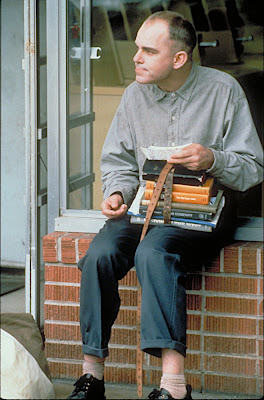
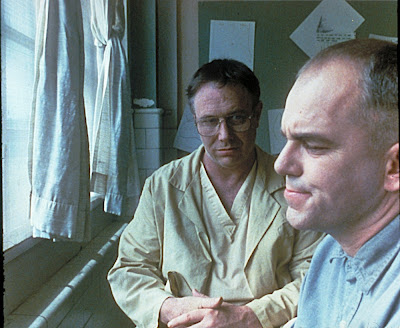
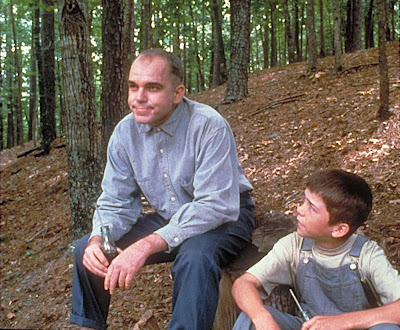
In this moody film, Thornton plays Karl, a mentally challenged man who killed his mother and her lover when he was only twelve years old. After twenty-five years in a state asylum, he is released from government custody and finds the outside world more challenging than the one he’d encountered locked up with rules and order to the point that he actually returns to the familiarity of the asylum hoping they'll take him back.

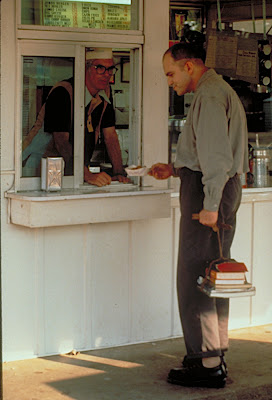
However, and much to Thornton's credit, although the premise alone makes it sound unspeakably grim, the film is surprisingly filled with laughter as Karl tries to rejoin society. To this end, he incorporates several moments that seem to cherish the naturally comedic nature of humanity and interpersonal relationships whether they're permanent or merely casual. And in one example, you can look for fellow indie director Jim Jarmusch as the fast food worker who sells Karl his first “French fried potaters."


As Gary Johnson from Images Journal Online wrote back when I stumbled on it on '06:
"One of the wonders of Sling Blade is how Thornton manages to take scenes that otherwise might be pathetic and make us laugh. It's a gentle brand of laughter that he evokes because we're not really laughing at Karl; instead, we're laughing at the crazy circumstances that put Karl out in the world again without really preparing him for what he'll find. Thornton also shows the absurdities at work in a world where practically everyone Karl meets talks about wanting to kill someone, where Karl easily outsmarts his "normal" coworker at an engine repair shop, and where Karl easily reads more books than most other people in the movie."
Yet despite the fact that it's seasoned with unexpected smiles and chuckles, an undercurrent of danger persists throughout which Thornton establishes brilliantly from the start in a sort of circular bookend motif that finds Karl going on a journey yet never asking the audience to believe it'll be more than simply temporary despite the fact that our protagonist changes throughout.


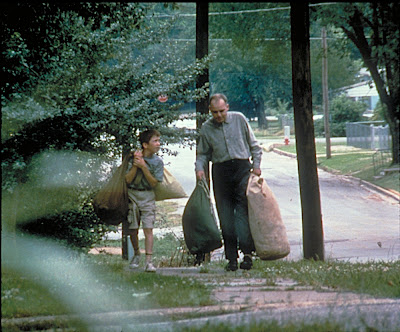
In a To Kill a Mockingbird Boo Radley like-portrayal (which is ironic considering that "Radley" himself, Mr. Robert Duvall has a cameo), Thornton's endearing Karl befriends a young boy named Frank, acted with startling maturity by Lucas Black.


Quickly we ascertain that Frank’s well-meaning but weak mother is in an abusive relationship with a monster named Doyle, played with menace by Thornton’s friend and country singer Dwight Yoakam. As such, it's the type of plot device that seems to hearken to a cathartic "sins of the past" reenactment of the similar events that had led to Karl's time in the institution when he was a boy.

Given that, aside from Lucas Black (whom Thornton has used every single time he's directed since Blade), the cast and crew were all people he knew or were a part of his circle of friends and professional colleagues, it's only fitting that the performances seem quite natural. And special mention must be paid to a great understated, compassionate turn by John Ritter as a gay man who along with Karl is an outsider in the community.


Thornton wrote the part specifically for his good friend Ritter and his scenes with Karl are equally important to his with young Lucas Black’s in illustrating the humanity of the character to the audience to endear him to viewers. Obviously this is quite a hurdle since we initially see him in an institution, yet Thornton doesn't want us to believe Karl to be the same type of cliched disabled "gentle giant" who can go too far as was the case in Steinbeck's Of Mice and Men.


To this end, Thornton takes great pains with the portrayal of Karl in a way that definitely shows and applauds his evolution and ability to interact yet also reminds us now that he knows the effects of violence and idea of choice, that sometimes it is necessary in order to protect others even to the extent of premeditation, whether or not viewers agree with the decision made onscreen.

Likewise in order to “attain the shuffling gait of his character,” (Riley, 81), Thornton put crushed glass in his shoes and his sensitive portrayal of a man with a mental disability earned kudos from the disabled community.


With this in mind, Charles A. Riley II wrote the following in his book Disability and the Media: Prescriptions for Change:
"When it comes to accuracy and understanding the feelings of people with disabilities, the achievement of this film is in part its attention to the feelings of people with disabilities about how they are perceived." (83)


The film, shot in just 24 days with a budget of 1.3 million was inspired by Thornton’s 1994 short Some Folks Call it a Sling Blade which had originated when legendary director Billy Wilder (The Apartment, Some Like It Hot) encouraged Thornton to write himself a showcase for his odd appearance and personality.


And sure enough Wilder's wise advice paid off as based on the strength of Thornton's impressive short that was later developed into a stage play before the film was later made, Miramax purchased the rights for 10 million after only seeing thirty minutes of footage. Despite Weinstein's demand for Thornton to cut twenty minutes off of the hefty running time, Blade became a sensation that caused the One False Move co-writer and actor Thornton to “suddenly [become] transformed into a celebrity,” (Naremore, 73).

An extremely personal film that is now given the ultimate release on Blu-ray with not only a perfected presentation of the low-budget work that clarifies the picture and heightens the sound, at long last Thornton's passion for the material can be appreciated in a plethora of extras that rival the recent release of the Miramax Blu-ray No Country for Old Men.


It features an in-depth career discussion in Bravo Profiles: Billy Bob Thornton, a documentary chronicling his path to moviemaking in Mr. Thornton Goes to Hollywood, several conversations with those involved, on-the-set footage, along with a commentary track and other behind-the-scenes extras. However, perhaps most revealing is the roundtable discussion with Thornton, Yoakam, Mickey Jones, and producer David Bushell since we're treated to the truest insight on the production from those involved.

While the guys kid each other in the roundtable and send praise back and forth for the believable colloquialisms, one of the strongest moments is in dissecting the difficulties of Yoakam's nuanced portrayal which this time around I could finally view minus some of the terror since I knew the story well and appreciate his ridiculousness. And during the conversation the guys have, it's immediately evident that a majority of the contents of the film came from some anecdote or autobiographical event in the life of Thornton or those around him.


Sharing entertaining tales about the politics of life as a teen in garage bands and how the same fights still occur when you're older (as witnessed in the film), Thornton's disdain for pretentious faux art (which again is used in a really bad poetry riff in the movie) and more, it's refreshing to see a group of guys who seem genuinely humble, down-to-Earth, and relatable as opposed to filling a disc with studio supplied electronic press kit fluff.

Although in my mind, the absence of the short that started it all with Some Folks Call it a Sling Blade is a glaring omission, yet I wonder if perhaps it was a rights issue and couldn't have been part of this disc. Still overall, it's the definitive study of the work from those involved. Likewise it's one that also benefits from some completely candid confessions as the usually quiet Yoakam suddenly becomes a chatterbox in the roundtable, expressing his passion for the film's screenplay and willingness to tackle the many levels of Doyle in a way that went beyond a traditional one-note bad guy approach.


Perpetually repeating his belief-- as indicated in an anecdote that he knew after just twenty seconds of video footage of Lucas Black was the right kid for the role or staying in terrain he knew well-- Thornton informs viewers and the roundtable that when it comes to storytelling and filmmaking, you have to do whatever the hell you feel like doing personally. Following only your instincts, intuition, gut reaction, or the type of visceral effect you have when presented with something, he says that the one thing thing you can never do is worry about the audience or any of the post-production reaction to what you are creating.


It's a worthwhile piece of advice delivered humbly in memorable Thornton fashion. Moreover, whether you look at the film as a gothic piece or noir inspired, it's this type of thinking that would no doubt assist other filmmakers and studios who waste time and energy fixating on trends. Since Sling Blade stands as one of those quintessential Miramax treasures of plot over pyrotechnics, it's proof that no matter what your story is about or who you are, if you're true to yourself and deliver something authentic and unique, it will reach an audience of those who appreciate the principles of integrity as applied to great art.

Miramax Films


Note: Some of the material used in the review originated in an article published previously on Film Intuition (written by the author in 2006) which can be found here.

Text ©2009, Film Intuition, LLC; All Rights Reserved. http://www.filmintuition.com

Unauthorized Reproduction or Publication Elsewhere is Strictly Prohibited.

6/19/2009

Blu-ray Review: Indecent Proposal (1993)


New on Blu-ray
(DVD Already Available)


Delicious
Bookmark this on Delicious
submit to reddit
Print Page

Digg!

MovieBlips: vote it up!

Much like Adrian Lyne's previous films Fatal Attraction, Jacob's Ladder, 9 1/2 Weeks and Flashdance-- Indecent Proposal was one of those movies that provided endless conversational fodder for viewers.


And without a strong visual shocker like Michael Douglas and Glenn Close's nearly violent sex scene over the kitchen sink or the boiling of the bunny rabbit in Fatal Attraction to bring it all back into my mind--when I began the Blu-ray for Proposal, I realized that although I'd seen it before roughly fifteen or sixteen years earlier, the only thing I remembered about it was just how much audiences couldn't stop talking about the "indecent proposal" posed by billionaire John Gage (Robert Redford) in the film.


In a conversation that one initially assumes is hypothetical-- like one of those casual "what would you take on a desert island" or "if you had to sleep with person a or b who would it be," games people play, Gage turns serious. In doing so, he shifts his attention from shooting pool to his real joy of playing with people instead by offering the financially desperate yet desperately in love couple Demi Moore and Woody Harrelson's Diana and David Murphy a million dollar opportunity.

Of course, instead of betting them a corner pocket shot on the billiard table-- Gage decides to use money as the pool cue to fire a ball straight at the heart of their very relationship.

You see, after Diana caught Gage's eye in Las Vegas while stuffing chocolates in her knapsack in a couture boutique in the hotel lobby, Gage became instantly smitten. And although it's hard to blame his interest in Moore's natural loveliness when she slips the hanger of a gorgeous dress over her head to explore the difference from her blue collar attire in the mirror, Gage seems especially hooked because of the events that follow. For unlike the dress-- he wasn't able to manage to discover Diana's invisible price-tag with a tired form of gold card seduction.

Making a predictably cocky and grand gesture to try and buy her the dress (a la Pretty Woman or Shopgirl), Diana sees through the gesture immediately, confidently noting that yes-- although the dress is for sale-- the woman in the dress would never be.


Of course, Gage refuses to accept defeat and won't let a small thing like a wedding ring, vows, or basic human decency get in his way by adhering to his strict belief that-- since the world has never proven this cynical belief wrong before-- every single thing on this planet and especially its inhabitants are for sale.

Therefore, he lays his plans out casually over pool before getting into specifics, offering to give the Murphy couple-- who'd foolishly journeyed to Sin City in the hopes of turning David's five thousand dollar loan into the fifty thousand dollars they need to save their home and credit rating-- one million dollars if they agree to prostitute Mrs. Murphy out for one night of "just sex." Of course, Redford being smoldering Redford-- he never says sex or even prostitute but it's all implied when he aims his checkbook at the Murphys via the line, "a million dollars for one night with your wife."

The most revealing thing about the film so far and Redford's utter conviction in his performance is in the way the three participants in the conversation react. Obviously Diana is the one who quickly raises to anger, Harrelson's David is curiously stunned but intriguingly silent, and Redford continues to ask them to seriously consider it, despite his sexist posing of the question to David's use of "his wife" and Diana's assertion that David would tell him to go to hell.

Still, having been hit hard by the recession-- the two young lovers who've been together since high school spend a sleepless night tossing and turning as they try to psychologically guess what the other one is thinking-- neither one wanting to come right out and make the proposition as coolly as Gage had. At long last, ultimately Diana--perhaps in response to her husband's quiet reply to the offer-- tells him that she would go through with it to solve their financial mess.


Although some critics once again charged this film like some of Lyne's others with anti-feminism or ill treatment of female characters (and given the fetishistic Flashdance-- to just name one-- they have a point)-- with Demi Moore's brilliant bravery and restraint against playing Diana as a victim or a temptress, unexpectedly she becomes the only logical individual in the film.

I found it utterly fascinating that she had to be the one to put the men's true thoughts and wishes into action since they were too gutless to do it themselves. For we sense right from the start that Diana is much stronger than her husband and moreover far more intelligent and clear-headed than both men put together despite some early over-the-top scenes of temper tantrums in her marriage to David the slob.

Additionally and aside from sadly putting his needs ahead of hers by taking a real estate position to support him while he finished architectural school, taking out an enormous loan so that he can build his dream place, and in fact going along with him on the mindless scheme to win back the money in Vegas-- she knows right away instinctively and intuitively that David is afraid to ask her to agree to Gage's offer but it's what he is precisely hoping she'd do.

And Moore plays these levels beautifully-- balancing the disappointment in her spineless husband with her love for him-- in one of her earliest and strongest roles. Furthermore, her performance-- along with a surprisingly poignant portrayal by Woody Harrelson who must go through the entire spectrum of emotions opposite a woman who (as we saw in Ghost) can seemingly cry in two seconds flat, keeps us engrossed even when we disagree with the characters or the contrived plot-line.


Likewise although we may have a hard time accepting the melodramatic and only-in-the-movies proposal seriously-- nonetheless, the screenplay from Mystic Pizza's Amy Holden Jones (based on Jack Engelhard's novel) ensures you're able to empathize with every main character throughout even when inevitably we realize that despite the fact the Diana and David vow never to discuss in-depth the "solution" to their financial crisis, their money problems have been replaced with far more serious ones concerning their relationship with each other.


While Lyne imbues it with a classic Douglas Sirk-like '50s style romanticism-- there's no mistaking Indecent Proposal for anything but a contemporary tale and one that makes its Blu-ray release stir conversation once again given our current economic recession, despite a few clunks in logic and an over-reliance on cutesy "Did I Ever Tell You I Love You?" dialogue repetitions among the husband and wife who keep calling each other "D."


For, in its way, Indecent Proposal is a much more honest yet deeply unsettling and cynical re-imagining of Pretty Woman blended of course with its most obvious comparison via the Nicolas Cage and Sarah Jessica Parker comedy Honeymoon in Vegas.


Obviously, Pretty Woman is definitely the more entertaining and enjoyable romantic comedy since Proposal's flaws can't be hidden and it's not exactly the ideal set-up for a romance despite a few breathtakingly gorgeous shots like the cliched auction in the rain near-finale.

However, unlike Woman which I've always found far more anti-feminist than Lyne's films despite my appreciation for its humor, Proposal actually gets bonus points for a much needed reality check in the development of a budding romantic relationship between Diana and John.

For, since it never lets you forget that although Diana and John Gage may spark just like Richard Gere's "Prince Charming" and Julia Roberts' "Cinderella," it's smart and noble enough to know that in the real world any relationship that began with the exchange of money for sex is doomed from the start and you can't hide prostitution for what it is, no matter how much you try and distract the senses with shots of Rodeo Drive and a pop music soundtrack.


The Blu-ray transfer of the film is above average with only a few slightly grainy close-ups most notably in scenes with low lighting as in the aforementioned auction in the rain and final reunion of the lovers in the fog it appears to look as beautiful as it did back in its '93 theatrical release.

Yet in the same turn, my sole technical complaint for the presentation is the sound which seems to be a continual challenge for Paramount in finding a good balance between dialogue, music, and background noise as my remote climbed anywhere from forty to seventy in numerous sequences.

With the bonus of Adrian Lyne's quiet and contemplative commentary serving as the sole extra doesn't make the expense of the Blu-ray an enticing enough proposal for buyers-- for those who haven't seen it in years or at least back since it was a hot water cooler topic of discussion, it's well worth the rental as I was surprised to discover that it was much better than I remembered.

12/27/2008

Blu-ray Review: Eagle Eye (2008)


Your Cell Phone Will Never
Look the Same Again


Digg!


One of those edge-of-your seat roller-coaster rides that lost some of its signal strength following the overwhelm of Christopher Nolan's The Dark Knight and Jon Favreau's Iron Man which eclipsed every other action film at the box office-- D.J. Caruso's Eagle Eye has been given the deluxe treatment in a dazzling digital transfer to Blu-ray by DreamWorks and Paramount.

Offering viewers a second chance to get caught up in the ideal format that matches the high-tech paranoia and breakneck pace of the film, I'll tackle this review in two parts-- first addressing the film itself (with movie clips, etc.) by presenting my original theatrical review and then taking on the Blu-ray aspects directly.

I. The Film

Eagle Eye


Director:
D.J. Caruso

Next time your phone rings and it’s just a telemarketer or a public opinion poll, consider yourself lucky. Director D.J. Caruso reteams with his Disturbia leading man Shia LeBeouf for yet another high tech Hitchcockian styled paranoid thriller sure to make one initially suspicious of all incoming calls or texts for at least twenty-four hours after his film Eagle Eye ends.


While that can only come as a pleasant surprise for those frequently over their cell phone minute plans and the parents struggling to intervene in their teenager’s text message addiction, in the world of Eagle Eye (view the trailer), the phone becomes even scarier than it was in Wes Craven’s “the call is coming from inside the house” styled horror trilogy, Scream.

Thanks to our current era of the online banking, the Patriot Act, MySpace, YouTube, Facebook, wiretaps, online tax and vehicle registration, scanned medical charts, traffic cameras, elevator cameras, hidden microphones and GPS navigational systems, now more than ever Orwellian’s Big Brother is watching.

Blending together Tony Scott’s Enemy of the State, Wes Craven’s Scream, Steven Spielberg’s Minority Report, Stanley Kubrick’s 2001: A Space Odyssey, Alfred Hitchcock’s North by Northwest, Jan de Bont’s Speed, and even a conveyor belt homage to Charlie Chaplin’s Modern Times, D.J. Caruso’s fast-paced stunner is by far the most gripping thrill ride of 2008.

Much like David Fincher’s Panic Room, Eagle Eye has a deliciously simplistic set-up that the team of writers milk for all it's worth as regular citizens find themselves in extraordinary circumstances after a mysterious woman with a chillingly calm yet controlling voice (Oscar nominee Julianne Moore) phones two strangers and informs them that they’ve “been activated.”

Activated for what, neither character is entirely sure, however they quickly realize that their lives as well as their loved ones are in overwhelming danger unless they comply with each and every demand she aims their direction whether it’s holding security guards hostage to obtain a top-secret briefcase or fleeing from authorities.

Set in the near future—January of 2009 to be exact and beginning with an introduction right out of the world of Tom Clancy and Jason Bourne—it doesn’t take a rocket scientist to realize they’re being set up as terrorists as part of a vast governmental conspiracy but who authorized the game and how do you request a time-out when you’re not the one calling the shots?

The first victim is the delightful wisecracking slacker Jerry Shaw (LeBeouf, whose ability to charm, flirt, scheme and improvise reminds me of a young Paul Newman). When he isn’t busy being rude to the customers at the Copy Cabana or manipulating his coworkers in a masterful poker bluff, he’s using his charisma like a weapon on a fellow transit passenger or trying to make ends meet with his incessantly late rent.

After he gets word that his patriotic and heroic twin brother, the Air Force officer Ethan Shaw (complete with a genius I.Q.) has perished in a truck accident in Washington D.C., Jerry is stunned to discover upon returning from the funeral that his bank account is well into the six figures and he’s received an alarming number of dangerous packages containing firearms, bomb-making equipment and poison delivered to his apartment. Within seconds, his cell phone rings and Moore’s voice coolly instructs him that he should run as the F.B.I. will be there directly.

Sure that this is all some sort of easy misunderstanding, Jerry ignores the bullying voice and is interrogated for suspected terrorist activity and about his deceased brother by the no-nonsense Joint Terrorism Task Force Agent Thomas Morgan (Billy Bob Thornton). Advised that it’s not the best time to become a terrorist by Morgan (just one of many zingers nailed by Thornton), Jerry continues to plead his case as a quintessentially Hitchcockian innocent man to no avail.

And after Ethan’s old colleague, Zoe Perez (Rosario Dawson) a fellow Air Force officer arrives to find out exactly what’s going on with the situation on behalf of Defense Secretary Callister (The Shield’s Michael Chiklis), Jerry is stunned when the Attorney General faxes in an authorization for him to make a phone call, yet far more concerned when he discovers the voice cutting into his call is none other than Julianne Moore’s. Yet this time, instead of ignoring the stranger’s demands, like Keanu Reeves’ Neo in The Matrix, he accepts her advice to flee from the F.B.I.

“Escape.”


Meanwhile, as Jerry is well into his own plight, we encounter the second victim of the mysterious Moore in the form of the lovely Michelle Monaghan (Made of Honor). A devoted single mother and minimum wage earning paralegal who grudgingly packs off her beloved trumpet playing son for band camp in Washington D.C., on her first night out with the girls, Monaghan’s Rachel Holloman receives a similarly frightening call.

“Rachel Holloman, you’ve been activated.”


While Rachel has the benefit of being out in public and not trapped in a tiny apartment filled with mercenary equipment fitting for a Unabomber, she takes a decidedly different and logical approach by dialing 911 before Moore cuts back into her call and tells her that if she continues to disobey, her son will be killed. And it’s only a matter of time before Jerry and Rachel collide by the demands of the dangerous stranger, being led on a deadly scavenger hunt as they make their way towards a fateful State of the Union address, with Thornton and Dawson’s characters following the entire way.

Car Chase


While it’s filled with intense, nonstop action sequences that continuously top the one before it in a way for which neither actor is unprepared (as LeBeouf had starred in Transformers and Indiana Jones and Monaghan had been cast in Mission Impossible 3), one of the benefits of Eagle Eye’s approach is that it seemingly demands intellectual audience participation as we strive to stay ahead of Moore’s demands along with our heroes. Whether it’s imagining what we would do in a similar situation from just hanging up the phone or merely refusing or trying to change a plan—despite a finale that does involve a major 2001: A Space Odyssey styled suspension of disbelief—every action initiated by Jerry and Rachel seems entirely plausible.

However, one major drawback involves the presentation as similar to Cloverfield, the filming style of a constantly moving camera is hard on the eyes especially when rapid-fire quick cuts that flow far less smoothly than the comparable ones in last year’s Bourne Ultimatum are added into the mix. And additionally, the volume, much like Dark Knight and Iron Man seems as though it could cause hearing loss yet if you pack along ear plugs and make sure you don’t sit too close to the screen, the comfort level for viewing should benefit considerably.

Still, despite this, I must admit that it’s by far my most recommendable blockbuster of the year so far and one sure to appeal to not just Orwellian and Philip K. Dick devotee cyber techies but especially action junkies eager to re-experience the same type of edge-of-your-seat rollercoaster we did more than a decade ago with Jan de Bont’s Speed. And this is ever more the case since, despite the continuous calls to go green, a relatively small number of us ride the bus but nearly everyone and their brother has at least one cell phone. Who will be calling you next? Can you hear me now?


II. Blu-ray


While the theatrical presentation of Caruso's action-packed thriller left viewers with a bit of eyestrain as we struggled to keep up, the transfer to Blu-ray actually improves the film in my opinion as DreamWorks and Paramount continually strive for the highest level of picture and sound, presenting Eagle Eye in 16x9 widescreen 1080p High Definition with 5.1 Dolby TrueHD sound.

Whereas some older films manage to show their age when they make the format change, Eye is hitting Blu at precisely the right time, by including every single extra (aside from the photo gallery) in HD quality and giving viewers-- depending on their set-up-- the chance to tweak the picture to brighten up the predominantly dark color scheme, duplicate the intensity, and-- even without a five speaker and subwoofer wired room-- adjust the crystal clear sound to the right level for their particular comfort.

Including the nearly required favorites of a gag reel, the original theatrical trailer, and deleted scenes, I was particularly drawn in by the various making-of featurettes that take you on location in Washington D.C., on the road, or in the best one, given a full-access pass to "Asymmetrical Warfare: The Making of Eagle Eye."

Offering a nice balance between cast and crew interviews and rockin' stunt set-ups, we discover that essentially Disturbia director D.J. Caruso eyed his film as though it were a studio budget "independent movie," or the type of road film he loved back in the '70s like The French Connection (which he cited as a major inspiration).

With a constantly moving production as the entire cast and crew seldom stayed in the same location for more than two days, he freely admits that the first hour of Eye represented a near live-action video game as the characters (similar to the viewer) never knew exactly where the film was going as neither Jerry and Rachel nor the audience had any choice as their telephone narrator led them from Point A to Point B.

With the original idea for the film being hatched in the mind of American master Steven Spielberg a decade ago-- Eye's director and star LeBeouf marvel at the fact that back in the late '90s, the film would've fallen into the category of science fiction whereas now they realized that Spielberg's vision was not only possible but entirely probable.

As we're increasingly aware that our "digital existence" can be "more prevalent" than our "real one," the filmmakers strived for authenticity in making sure that everything that happens in the film is viable as you can witness in the especially creepy scientific, Orwellian extra "Is My Cell Phone Spying On Me?"

Essentially reuniting with the same community of professionals both behind-the-camera and in-front of the lens that has helped present such modern day action films as Disturbia and Mission Impossible 3, LeBeouf was in ideal hands, being approached with the project from his "father figure" Spielberg even before he'd been handed Indiana Jones.

Relishing at the opportunity to work with Caruso again and joking that by now following Disturbia they have such a fast gesture based shorthand that the men can read each other with the minimum of words, Caruso was equally thrilled to present the former nineteen year old boy as a leading man.

Filmed when he was twenty-one but portraying a twenty-five year old, LeBeouf was teamed with a co-star six years his senior, but after you catch the off-screen chemistry and camaraderie between the adventurous and brainy Michelle Monaghan and LeBeouf, you realize that as unlikely it may seem on paper, it's actually a perfect fit.

Additionally, LeBeouf humbly noted that when he'd heard Monaghan was hired, he realized that most of the work was already done since she's so talented and they're comfortable with each other-- having worked together on Constantine a number of years earlier. Eager to launch headfirst into the increasingly complicated array of stunt-work (using a minimum of CGI as we're both terrified and impressed to discover in the featurettes), LeBeouf joked that given the fact that they did a large majority of their own stunts, it was constantly Monaghan who was pushing him on, running in four inch heels and hurling her body down a DHL conveyor belt, egging him on when he was tired with the teasing, "Why don't you just man up?"

While techies and special effects junkies will love the "how did they do that?" demonstrations including the big rig flip and the dedication to authentic live-action effects and sure enough, aside from the twenty-five minute HD "Asymmetrical Warfare" extra, there's a number of other making-of bonus features to explore, those who were more intrigued by the Enemy of the State styled ethical questions won't want to skip "Is My Cell Phone Spying on Me?" which interviews experts in the field of cyber security and privacy.

In the same turn, it also offers a creepy challenge to viewers that they should devote one entire day to be aware at how many times their photo is snapped and they are caught on a security camera as they go about their routine. Of course, I'd recommend trying this at your own risk and possibly, so that you don't send yourself into a frenzy, you may want to just go ahead and switch off your cell phone (if you can)... if not for the day than at least for the 117 minute running time of Eagle Eye.