Showing posts with label Adrian Lyne. Show all posts

6/19/2009

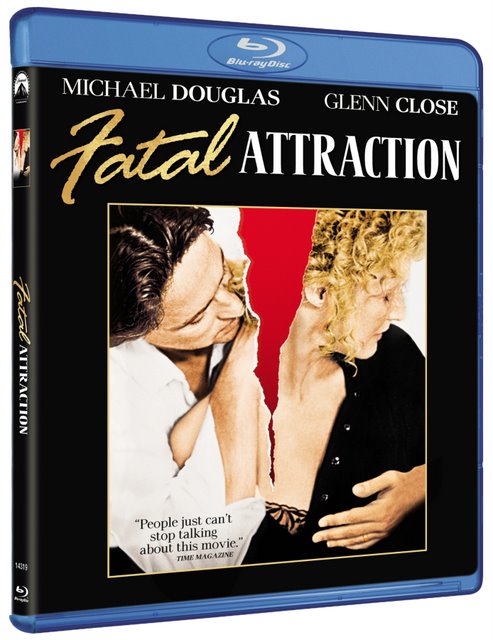
Blu-ray Review & Analysis: Fatal Attraction (1987)


Now Available


Note: In-depth analysis - Spoilers Ahead 

Although the back of the box and indeed one of the film's taglines states that "one-night stands can be murder," the underlying theme of Fatal Attraction seems to be that sex is dangerous.

And with its release in 1987 where it became one of the highest grossing films of the year -- accumulating six Oscar, one Grammy, and four Golden Globe nominations -- the filmmakers note on the Blu-ray release just served up by Paramount Home Entertainment that this film touched a nerve they didn't expect.

Despite being based upon British filmmaker James Dearborn's acclaimed 1979 short work, the timeliness of its release in '87 cannot be understated in its success since --without a doubt -- the film frightened viewers even more in the wake of HIV and awareness of STDs which was quickly making the more free-loving, swinging decades of the '60s and '70s obsolete as new attitudes towards the behavior likened carefree sex to playing Russian Roulette.
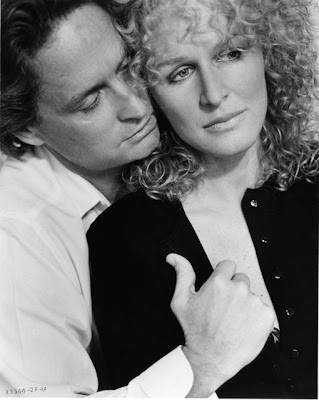

While Michael Douglas's unfaithful husband Dan Gallagher fails to get caught in his infidelity and doesn't receive any literally transmitted diseases -- he does learn that casual sex is not as casual as he'd imagined when the sexually confident, icy blonde book editor Alex Forrest (Glenn Close) he cheats with when his wife's away turns into an unrelenting psychopathic stalker.

Still, it's argued in Fatal Attraction and even in most households at the start of the film -- before Alex turns into a wicked witch relatively on par with '80s horror franchise villains -- that since Dan made his own bed, he'll have to lie in it.

Yet this quickly changes when Alex escalates from a jilted and ignored woman scorned into a full-blown knife wielding female Norman Bates in a manner that sent shock waves through the feminist community as the Blu-ray reveals that some women viewed the work as yet another in a long line wherein single career women are punished and homemakers are deemed saintly.

While as a feminist, I know those female punishment movies as soon as I see them even when they're subtly dressed as comedies or light dramas -- to me, the character of Alex was so beyond anything remotely relatable (and in fact in some ways so desperately tragic) that I never viewed her as anything other than a woman who happens to be psychotic just like I believe both Glenn Close and one of Hollywood's most consistently successful producers, Sherry Lansing did as well.


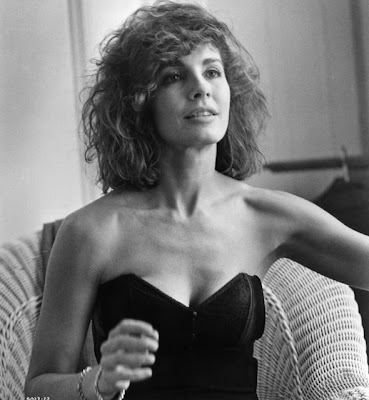
Similarities to Clint Eastwood's (in my view) more misogynistic Play Misty for Me and a notable lack of heroes -- since it's pretty hard to root for a guy who deceives his beautiful wife (Anne Archer) and six year old daughter within the opening act -- made it the property that most studios were afraid to touch as the list of directors, stars, and companies who passed on the movie seems as though it could be a mile long.

However, despite its flaws, the movie succeeds more than Misty did by casting Michael Douglas as an "everyman" as opposed to Eastwood's smooth, seductive disc jockey even though Fatal's Dan is an everyman whose morals we learn are rather one-sided.
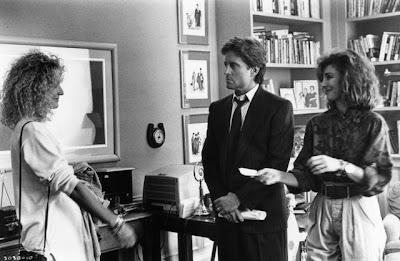


Understanding that the only way the movie would draw viewers in is if anyone in the audience felt as though what was happening to Dan could happen to each and every one of the viewers -- aside from Lyne's trademark over-emphasis on carnality at its most extreme -- for a majority of the film, it feels all too terrifyingly realistic.

Likewise, Lyne as well as screenwriters James Dearden and Nicholas Meyer earn points for showing things from Alex's demented side of the situation as well, which was immensely helped by Glenn Close's complete immersion in the character to the point that she'd created a psychologically fascinating back-story to Alex that may have made the film far more satisfying as it continued had this been revealed.

However, as critics including Roger Ebert who likened the last act and the evolution of Alex Forest's character to an adult version Paramount's wildly successful teenage hit Friday the 13th franchise argued -- once Alex begins going increasingly off the deep end -- the movie goes for cheap shocks instead of earned thrills whereas before we could at least understand both sides of the situation. And this was especially vital since it's a bit overly convenient for Dan not to feel more than just a little guilt or own up to the fact that what he did was a tremendous breach of marital trust and harmful to both himself and Alex.

Yet, instead of exploring the way that infidelity affects many more people than just the two who hop into the sack, Fatal Attraction literally pulls us along with Alex for a strange roller-coaster ride. But we still have to overlook some serious gaps in logic, wondering for example why Dan wouldn't have taken more precautions to move his family to a safer location, asked a friend (if the cops weren't willing) to help stand guard, hire a private investigator to study Alex in greater detail, etc.

Moreover, we have to wonder just what kind of odd cracked mirror we were looking into in the '80s when we realize that not only have we completely lost all sympathy (or at least a sense of sadness) for her side of the situation especially regarding the fact that she reveals a pregnancy that we're never given any reason to doubt but it's even more startling to learn that test audiences actually demanded an ending that would allow her to be killed in a gruesome way by the hands of the Gallagher family.
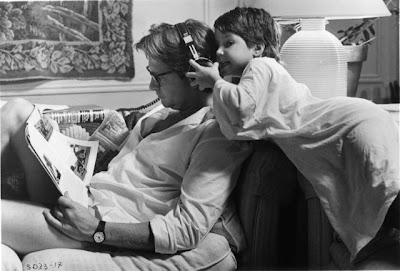


While of course, having just boiled the family bunny -- Alex is all kinds of evil -- but one still needs to question whether or not she's sane or even capable of knowing right from wrong along with wanting to take into consideration that there's an innocent life (created by Dan) involved.

So Douglas' Dan does become a hero in the end along with Anne Archer in the film's reshot gruesome ending that Douglas recently told AFI Lyne drew inspiration for from the classic French shocker Diabolique but it still leaves us unsettled.

However, in making Alex simply Hannibal Lecter of the screw-loose mistress set, the movie leaves you cold to discover that Dan shows zero remorse about the possibility he's helped end the life of a woman who may very well have been having his child and also a woman who -- from her first suicidal gesture after their weekend affair ends -- he didn't immediately call 911 on to intervene and get her the help she desperately needed.
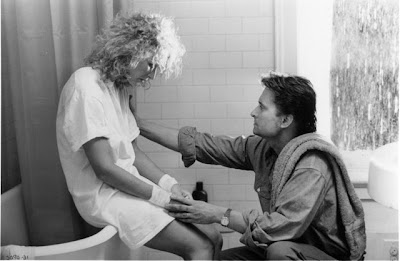


Thankfully helping to restore the strength of the piece as a whole that vanishes during the final act of Lyne's film where the creative control seems to have lost out to people-pleasing politics the previous DVD release and this most recent Blu-ray edition include the psychologically disturbing and eerie original ending that left things on a much more melancholic note. In it, Alex pulls a Madame Butterfly in homage to the opera she and Dan bonded over in their lustful weekend.

And with its inclusion, it's introduced with a straightforward and simple announcement by Adrian Lyne that it's up to audiences to figure out which one they prefer. After viewing each one twice, I think the original one (not screened in theatres) gives the character a bit more closure and while indeed it's unfortunate that we never really got a better handle on just why Alex became the way she was and why Dan of all people managed to flip her reality button to insanity, I felt that the subtext of the conclusion including what it said about Dan made it far more interesting to watch.

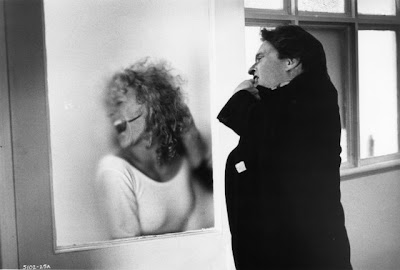
Of course, ultimately in making it the modern urban horror classic that it is today, Paramount wound up making the right decision for its closing showdown as everyone remembers that final bathroom confrontation where the women and the bathroom are in all white to punch up the the redness of the blood. And the bathroom itself is the ideal place for the fight as water, glass, and sharp edges had been used throughout from the very first coupling of Dan and Alex.
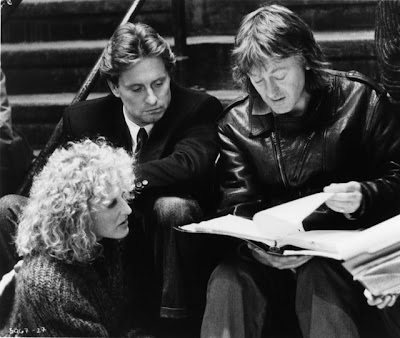


Delivering a high quality Blu-ray transfer yet one where only the theatrical trailer has been elevated to HD (meaning that owners of the title shouldn't rush to upgrade), for those who've only seen it in its theatrical form, it's well-worth hunting down for not just the alternate ending but a plethora of extras. This edition also boasts behind-the-scenes production information, filmmaker commentary, an analysis on the impact of the film from those involved in it including a discussion of the social repercussions, as well as some gripping rehearsal and videotaped test footage that showed you the true command that Close and Douglas had on their characters in their earliest auditions.

Blu-ray Review: Indecent Proposal (1993)


New on Blu-ray
(DVD Already Available)


Delicious
Bookmark this on Delicious
submit to reddit
Print Page

Digg!

MovieBlips: vote it up!

Much like Adrian Lyne's previous films Fatal Attraction, Jacob's Ladder, 9 1/2 Weeks and Flashdance-- Indecent Proposal was one of those movies that provided endless conversational fodder for viewers.


And without a strong visual shocker like Michael Douglas and Glenn Close's nearly violent sex scene over the kitchen sink or the boiling of the bunny rabbit in Fatal Attraction to bring it all back into my mind--when I began the Blu-ray for Proposal, I realized that although I'd seen it before roughly fifteen or sixteen years earlier, the only thing I remembered about it was just how much audiences couldn't stop talking about the "indecent proposal" posed by billionaire John Gage (Robert Redford) in the film.


In a conversation that one initially assumes is hypothetical-- like one of those casual "what would you take on a desert island" or "if you had to sleep with person a or b who would it be," games people play, Gage turns serious. In doing so, he shifts his attention from shooting pool to his real joy of playing with people instead by offering the financially desperate yet desperately in love couple Demi Moore and Woody Harrelson's Diana and David Murphy a million dollar opportunity.

Of course, instead of betting them a corner pocket shot on the billiard table-- Gage decides to use money as the pool cue to fire a ball straight at the heart of their very relationship.

You see, after Diana caught Gage's eye in Las Vegas while stuffing chocolates in her knapsack in a couture boutique in the hotel lobby, Gage became instantly smitten. And although it's hard to blame his interest in Moore's natural loveliness when she slips the hanger of a gorgeous dress over her head to explore the difference from her blue collar attire in the mirror, Gage seems especially hooked because of the events that follow. For unlike the dress-- he wasn't able to manage to discover Diana's invisible price-tag with a tired form of gold card seduction.

Making a predictably cocky and grand gesture to try and buy her the dress (a la Pretty Woman or Shopgirl), Diana sees through the gesture immediately, confidently noting that yes-- although the dress is for sale-- the woman in the dress would never be.


Of course, Gage refuses to accept defeat and won't let a small thing like a wedding ring, vows, or basic human decency get in his way by adhering to his strict belief that-- since the world has never proven this cynical belief wrong before-- every single thing on this planet and especially its inhabitants are for sale.

Therefore, he lays his plans out casually over pool before getting into specifics, offering to give the Murphy couple-- who'd foolishly journeyed to Sin City in the hopes of turning David's five thousand dollar loan into the fifty thousand dollars they need to save their home and credit rating-- one million dollars if they agree to prostitute Mrs. Murphy out for one night of "just sex." Of course, Redford being smoldering Redford-- he never says sex or even prostitute but it's all implied when he aims his checkbook at the Murphys via the line, "a million dollars for one night with your wife."

The most revealing thing about the film so far and Redford's utter conviction in his performance is in the way the three participants in the conversation react. Obviously Diana is the one who quickly raises to anger, Harrelson's David is curiously stunned but intriguingly silent, and Redford continues to ask them to seriously consider it, despite his sexist posing of the question to David's use of "his wife" and Diana's assertion that David would tell him to go to hell.

Still, having been hit hard by the recession-- the two young lovers who've been together since high school spend a sleepless night tossing and turning as they try to psychologically guess what the other one is thinking-- neither one wanting to come right out and make the proposition as coolly as Gage had. At long last, ultimately Diana--perhaps in response to her husband's quiet reply to the offer-- tells him that she would go through with it to solve their financial mess.


Although some critics once again charged this film like some of Lyne's others with anti-feminism or ill treatment of female characters (and given the fetishistic Flashdance-- to just name one-- they have a point)-- with Demi Moore's brilliant bravery and restraint against playing Diana as a victim or a temptress, unexpectedly she becomes the only logical individual in the film.

I found it utterly fascinating that she had to be the one to put the men's true thoughts and wishes into action since they were too gutless to do it themselves. For we sense right from the start that Diana is much stronger than her husband and moreover far more intelligent and clear-headed than both men put together despite some early over-the-top scenes of temper tantrums in her marriage to David the slob.

Additionally and aside from sadly putting his needs ahead of hers by taking a real estate position to support him while he finished architectural school, taking out an enormous loan so that he can build his dream place, and in fact going along with him on the mindless scheme to win back the money in Vegas-- she knows right away instinctively and intuitively that David is afraid to ask her to agree to Gage's offer but it's what he is precisely hoping she'd do.

And Moore plays these levels beautifully-- balancing the disappointment in her spineless husband with her love for him-- in one of her earliest and strongest roles. Furthermore, her performance-- along with a surprisingly poignant portrayal by Woody Harrelson who must go through the entire spectrum of emotions opposite a woman who (as we saw in Ghost) can seemingly cry in two seconds flat, keeps us engrossed even when we disagree with the characters or the contrived plot-line.


Likewise although we may have a hard time accepting the melodramatic and only-in-the-movies proposal seriously-- nonetheless, the screenplay from Mystic Pizza's Amy Holden Jones (based on Jack Engelhard's novel) ensures you're able to empathize with every main character throughout even when inevitably we realize that despite the fact the Diana and David vow never to discuss in-depth the "solution" to their financial crisis, their money problems have been replaced with far more serious ones concerning their relationship with each other.


While Lyne imbues it with a classic Douglas Sirk-like '50s style romanticism-- there's no mistaking Indecent Proposal for anything but a contemporary tale and one that makes its Blu-ray release stir conversation once again given our current economic recession, despite a few clunks in logic and an over-reliance on cutesy "Did I Ever Tell You I Love You?" dialogue repetitions among the husband and wife who keep calling each other "D."


For, in its way, Indecent Proposal is a much more honest yet deeply unsettling and cynical re-imagining of Pretty Woman blended of course with its most obvious comparison via the Nicolas Cage and Sarah Jessica Parker comedy Honeymoon in Vegas.


Obviously, Pretty Woman is definitely the more entertaining and enjoyable romantic comedy since Proposal's flaws can't be hidden and it's not exactly the ideal set-up for a romance despite a few breathtakingly gorgeous shots like the cliched auction in the rain near-finale.

However, unlike Woman which I've always found far more anti-feminist than Lyne's films despite my appreciation for its humor, Proposal actually gets bonus points for a much needed reality check in the development of a budding romantic relationship between Diana and John.

For, since it never lets you forget that although Diana and John Gage may spark just like Richard Gere's "Prince Charming" and Julia Roberts' "Cinderella," it's smart and noble enough to know that in the real world any relationship that began with the exchange of money for sex is doomed from the start and you can't hide prostitution for what it is, no matter how much you try and distract the senses with shots of Rodeo Drive and a pop music soundtrack.


The Blu-ray transfer of the film is above average with only a few slightly grainy close-ups most notably in scenes with low lighting as in the aforementioned auction in the rain and final reunion of the lovers in the fog it appears to look as beautiful as it did back in its '93 theatrical release.

Yet in the same turn, my sole technical complaint for the presentation is the sound which seems to be a continual challenge for Paramount in finding a good balance between dialogue, music, and background noise as my remote climbed anywhere from forty to seventy in numerous sequences.

With the bonus of Adrian Lyne's quiet and contemplative commentary serving as the sole extra doesn't make the expense of the Blu-ray an enticing enough proposal for buyers-- for those who haven't seen it in years or at least back since it was a hot water cooler topic of discussion, it's well worth the rental as I was surprised to discover that it was much better than I remembered.

2/14/2009

DVD Review: Flashdance (1983) -- I Love the 80's Widescreen Edition

Own It On DVD


Other Versions
(Previously Available)


Check Out the Latest Additions to
Paramount's
I Love the 80's Collection


Delicious
Bookmark this on Delicious
submit to reddit
Print Page

Digg!

Essentially, Flashdance is a movie that's most memorable for the categories for which the film received Academy Award nominations in 1984 (following its release one year earlier)-- namely the music especially the wonderful Irene Cara tune "Flashdance... What a Feeling" which garnered the film's only statue as well as its competing nominee "Maniac," along with Donald Peterman's cinematography and the editing by Bud S. Smith and Walt Mulconery.


Simply put-- with the music, the photography and the quick edits that hide the fact that the beautiful and young talented actress Jennifer Beals did barely one step of dancing throughout its 94 minute running time-- Flashdance, much like the other '80s works by Don Simpson and Jerry Bruckheimer was basically a surface level music video without much in the way of plot or substance. Moreover, it's the type of salacious film for which director Adrian Lyne would become famous.

Releasing as part of VH1's I Love the 80's Collection with a 4 track mini-CD of '80s hits including Echo & the Bunnymen's "Lips Like Sugar," Erasure's "Chains of Love," INXS' "Need You Tonight," and a-ha's "Take On Me," the film is presented in a high quality widescreen transfer offering English 5.1 and 2.0 surround sound, French 2.0 surround as well as English and Spanish subtitles.

As pretty as the roses offered to Beals by the film's equally dreamy star Michael Nouri (who beat out Kevin Costner for the role) yet as equally filled with unlikable thorns-- Flashdance basically plays-- as many have argued and I mentioned before-- like a series of pre-Madonna era music videos in a way that make the John Travolta dance films (including Grease and Saturday Night Fever) look downright Shakespearean.


Inspired by a visit to a Toronto strip club (never a good sign!) and more precisely, the life of Maureen Marder who worked as a welder by day and shook her moneymaker by night while dreaming of making it as a professional dancer, Showgirls screenwriter Joe Eszterhas and co-writer Tom Hedley relocated the plot-line to the steel town of Pittsburgh.


And in doing so-- the two who received a Razzie nomination for the worst screenplay of the year for a film that's thin on plot but heavy on stereotypes-- seasoned their script with more blue-collar Cinderella fare by giving Marder's sexually aggressive eighteen year old alter ego Alex Owens (Beals) a "fairy godmother" in the form of a dancer mentor, a hobby of trying to play Miss Fix-It in offering advice to her fellow showgirls, adding a four-legged sidekick named Grunt (just in case we didn't get the base instincts of the script or Beals' Alex who asks her dog if he got laid today upon returning home from work) and a bicycle that she's able to ride and lean against buildings and fences without locking up.

Although she welds and reads Vogue by day (perhaps an inside nod to Beals who'd been a cover model of the prestigious fashion magazine), her true passion is dancing as she works in a phony nightclub in the evenings, coming up with elaborate routines and costumes along with fellow dancers like Tina Tech (Dirty Dancing's Cynthia Rhodes) that incorporate expensive looking sets, props, and lighting schemes right out of a Hollywood film as opposed to the film's setting and despite never taking off their clothes-- as Roger Ebert declares-- they're unbelievably "never... shouted at by the customers for not doing so."


And although she has a close-call one night in the parking lot with a creep, the club is fairly chaste. However, she does enchant the boss of her construction company played by Michael Nouri as a Porsche driving yuppie who says all the right things and never gets fresh, incredulously becoming the one nearly assaulted by Beals who famously removed her bra from underneath that collar-less sweatshirt (an accidental fashion trend started when the actress mistakenly shrunk her wardrobe) and became the quintessential Simpson and Bruckheimer gender reversal aggressor.


As Peter Biskind argued in Easy Riders, Raging Bulls, the duo have a penchant for repackaging gay movies for straight audiences. And more than any perhaps, Alex is the one who started the trend in their first project as a woman given a man's name, acting as the forward seducer (in one scene dressed in a male suit as she describes their sex life in a tawdry phrase when faced with his ex) and ultimately hands him back a rose he gives to her as though she were the film's knight in a shiny leotard as well as it's token princess. Are you confused enough yet?


Beals is lovely in her role although it's a shame that Marder (who was only paid a paltry $2,300 for the rights to her life in a film that's grossed over a hundred million despite Paramount's less than optimistic expectations) wasn't included more in the work. When you couple this with the fact that Beals' main dance double Marine Jahan (with supporting work completed by Crazy Legs and Sharon Shapiro) was "kept hidden from the press"-- disturbingly, thus instead of celebrating the talents of the real women whose work helped make it a smash success, they're ultimately shoved aside as stepping stones in creating this MTV-like male fantasy film.


Worth a look simply for the marvelous showstopping dance routines that honestly should have been released as their own That's Entertainment! styled film without the hokey plot-- despite the fact that that would mean women would have to give up Michael Nouri-- while it's still a hit and Cara's "What a Feeling" track will remain in your head for days after you hit eject, unfortunately it's still one of the least impressive '80s dance movies.

And additionally, aside from trying to market it strictly for women-- with its emphasis on workout scenes and super-tight body close-ups, it's essentially the type of music videos for teenage boys that continues to reign supreme on MTV... when, that is-- they actually play music.