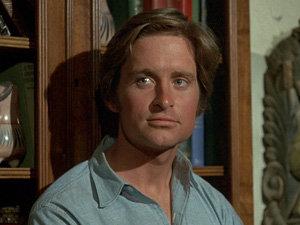
Showing posts with label Martini Movies. Show all posts

9/22/2009

DVD Review: The Pursuit of Happiness (1971) -- Martini Movies: Wave 3


Part of Sony's Martini Movies* Collection


Photo Slideshow


Delicious
Bookmark this on Delicious
submit to reddit
Print Page

Digg!

MovieBlips: vote it up!

The films selected for the third wave of Sony Pictures Home Entertainment's Martini Movies series (see official description in footnote below) didn't really seem to have a single unifying theme until I began writing about them. Honestly, come to think of it, they still don't but at least now I think I've discovered a common thread that you can weave throughout the five titles.

While most people relish in the cup of coffee or piece of pie that goes along with discussing a movie once you've seen it, often critics don't have that luxury as the keyboard seems to be our version of the coffee shop with readers filling in as the other conversationalist.

For just as-- whenever possible-- I prefer to wait at least twenty-four hours to review any film since reactions tend to run to the extreme right after you hit eject or walk outside the theatre, I'm often amazed by the discoveries I make when I write and trying to wrap my head around why these five movies were released together under the Martini Movies banner was indeed a challenge.


Although all titles were released in the late '60s and early '70s for the first time on DVD by Sony, culling from their old classic Columbia Pictures archive and adding retro packaging plus a martini recipe on every disc, they didn't really seem to be the type of sophisticated fare associated with the beverage nor wild enough for the decade's quintessential Holly Golightly styled cocktail party from Breakfast at Tiffany's.


However, finally today, when working on the fifth review for To Kill a Mockingbird director Robert Mulligan's uneven and cynically toned film The Pursuit of Happiness, it hit me that instead of being movies you'd watch with friends over cocktails, the lead male characters in each and every one seemed to be suffering from a few too many martinis throughout their running time.

Yet instead of being obnoxious, getting booed off the karaoke stage and hitting on anything that moves (although I'm fairly certain The Buttercup Chain might be the exception to the latter), they're overly quiet, apathetic, submissive, and disconnected as events just seem to happen to them instead of having a straightforward goal.

Whether it's Michael Douglas in "ho-hum" mode wondering if he should dodge the draft or disenchanted Gary Lockwood falling for a French woman in an arty strip club while contemplating the draft a la Summertree and Model Shop or stumbling into romantic entanglements with unlikely prospects a la Buttercup and Love and Pain and the Whole Damn Thing, the Martini men never seem to be in active pursuit of anything.


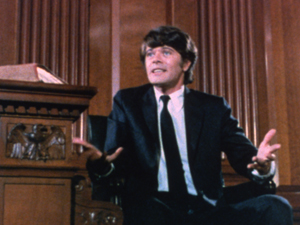
And this is definitely a problem when your film is called The Pursuit of Happiness and we're presented with another one of these slacker heroes. In the movie, former politically active and anti-establishment spouting college student William Popper (Michael Sarazin) has more or less turned his back on political activism in favor of just wrapping up his baccalaureate degree and getting on with life.


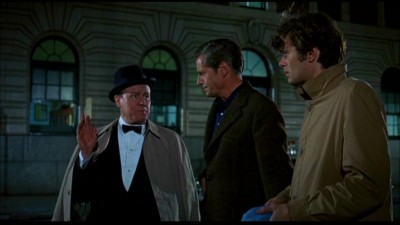
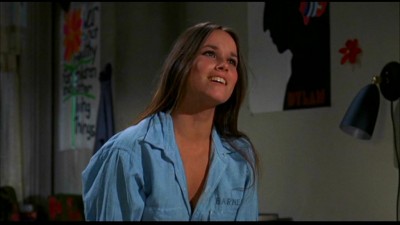
Without any goal or motivation, Popper is an odd fit in his relationship with the beautiful hippie Barbara Hershey who began college as the type of square Popper is when the film starts but has now turned into a one woman Abbie Hoffman. And while we're fairly certain the movie will focus purely on the futility and/or power implications of political activism, the movie simply uses that as a backdrop when plot pursues Popper (instead of the other way around) in the form of an elderly grocery bag carrying jaywalker whom he plows down accidentally in an unforgiving rain.


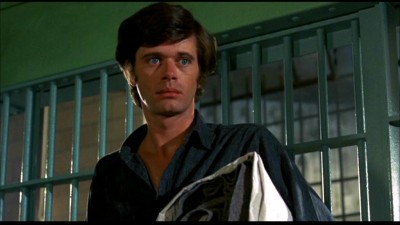
Assuming that the justice system will just deal with her death for the accident that it was, when Popper's attitude, past activism, and unwillingness to avoid visiting the woman's family to apologize are put on trial, the judge throws the book at him. Pretty naive for an activist, I'd say! Yet instead of a prison film, once inside, Popper realizes by this point that he actually does want to pursue happiness and get out of there. This leads to a series of events where he's proactive yet not in ways in which we can truly root since there's some unanswered questions about guilt, his future plans, and the sacrifices others have made for Popper that make the all-too-familiar Randy Newman music and protracted, illogical ending dissatisfying.

Masquerading as a message movie about prejudice towards the counter culture movement, The Pursuit of Happiness earns points for not making everything clear cut but even sans a concrete message, it's still shallow and doesn't seem to offer us a reason or idea as to what it means or why it was made other than to simply preach to the era's choir that in the '60s and '70s "a nervous breakdown" was going on in America (and the rest of the world).

And likewise, although I wasn't fully in Popper's corner by any means and understand it's not mandatory, I feel that Mulligan's Pursuit would have been far more memorable had the film not have been quite as apathetic as our main character since it's one you'll no doubt forget as soon as the final credits roll.

*Note: Just what is a Martini Movie? Sony's statement: "No matter the decade, there's a place where icons, idols and the infamous flock for bottomless martinis and over-the-top trysts. One part top-shelf martini, two parts celluloid history and garnished with a hint of camp. Sit back and take in the scene with Sony Pictures Home Entertainment's Martini Movies." All titles released so far in the collection have never been available previously in the DVD format.

Text ©2009, Film Intuition, LLC; All Rights Reserved. http://www.filmintuition.com
Unauthorized Reproduction or Publication Elsewhere is Strictly Prohibited.

9/21/2009

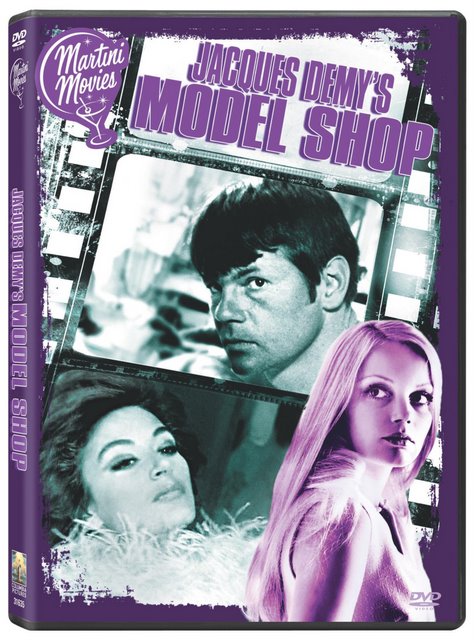
DVD Review: Model Shop (1969) -- Martini Movies: Wave 3


Part of Sony's 
Martini Movies* Collection


Since Jacques Demy's Umbrellas of Cherbourg is one of my favorite films of all-time, more than any other Martini Movies release from Sony Pictures, Model Shop was the one I was looking forward to the most.

Yet, in the same token, I realized that sometimes when French New Wave directors journeyed to America the results were mixed as in the beautifully crafted but icy Francois Truffaut version of Fahrenheit 451. Thus, I fought the urge to tear open the Shop box and watched the other four works first to save Demy's for last.

With the refrain of Cherbourg's "I Will Wait for You" playing on repeat in my mind, I decided to follow the music's advice, even when it was overtaken by the soundtracks most immediately identifiable with Shop's leads such as the main theme of Claude Lelouch's A Man and a Woman with Anouk Aimee and the opening music of Kubrick's 2001: A Space Odyssey which starred Gary Lockwood.


Needless to say, given the talent involved including Five Easy Pieces screenwriter Carole Eastman who penned the film's English dialogue for main writer Demy, the expectations for Model Shop were at an all time high that went beyond pure French New Wave obsession. This is especially true when you realize that it is acknowledged as an English language follow-up to Anouk Aimee and Jacques Demy's breakthrough film Lola.

Although it doesn't compare to Demy's other movie, fortunately Model Shop isn't quite as coolly detached as Truffaut's Fahrenheit. Intriguingly Demy wanted to cast Harrison Ford as his leading man but Columbia assured him the film would be a box office failure since Ford didn't have the financial draw that he has today.


And despite Lockwood's All-American looks, he's a little too apathetic as our apathetic hero and doesn't really have the natural charm of Ford which makes me wonder if there's a screen test somewhere in existence since Ford would've been a unique choice that may have enhanced the film, aside from its clunky structure. Still it's curious that this detail has been revealed by IMDb, particularly considering the way the film meanders like an existential Vietnam era version of the movie Ford would later make with George Lucas and Francis Ford Coppola-- American Graffiti (another one of this reviewer's top ten favorites along with Cherbourg).

Like Cherbourg and a large majority of Demy's oeuvre, the movie's emphasis is on affairs of the heart and it's apparent right from the introduction to Lockwood's character George Matthews when he awakens from a dream about love that this will be the same focus in Model Shop. However, aside from the fact that he is matched with a blonde who shares his bed in the opening moments, we soon gather that true romance is not something he experiences with the dim-witted aspiring actress lover he's shacked up with played by Alexandra Hay.

Essentially a soulful yet aimless wanderer who'd studied architecture at Berkley, the twenty-six year old George Matthews is an impossible man to figure out for a good bulk of the film as he sets off to scrape together one hundred bucks from his friends to avoid the repossession of his car.

While those he interacts with as he drives around the streets of Los Angeles seem to have a more concrete handle on their life with work, music, and family, Lockwood is someone we realize never really knew what exactly it was he was after until he lights a cigarette for a beautiful stranger (Aimee) and impulsively follows her for the course of the film. However, unlike Richard Dreyfuss longing to track down the flirtatious Suzanne Somers in American Graffiti, Lockwood had no encouragement whatsoever from the woman he downright stalks before the term was in use.

Going as far as to follow her to her home, after failing to make a connection George catches sight of her one more time. Determined to be near the stranger, he visits her twice in her seedy work at the titular model shop where Aimee reprises her role as the former cabaret star Lola, now degraded to accepting the only position she can without a work permit by posing for nude photos as men pay twelve dollars to play photographer for fifteen minutes at a time.

Unable to chat with her the first time as he's thunderstruck by both her beauty and finding himself in such a place, Matthews returns later for another fifteen minutes sans photography and ready to speak as the clock ticks down not only at the Model Shop but also for the little time he has left before he's scheduled to respond to his draft notice and leave for Vietnam twenty-four hours later.

Despite the fact that you won't necessarily need to have seen Lola to find it somewhat unique, for those who have, it's well worth hunting down. New Wave references are sprinkled throughout (watch for a Breathless era Jean-Paul Belmondo photo) and the film continues the Lola storyline by incorporating photos as Aimee shares stories that recall the previous film and what has happened to her character Lola aka Cecile within the span of celluloid.


As a movie on its own, there's not much to this Model as it largely substitutes traditional storytelling conventions of plot and character motivation with California ambiance. And clearly Demy relishes in his tourist/outsider's perspective of Los Angeles, Beverly Hills, Malibu beach, seedy dives along Santa Monica Boulevard to capture it to breathtaking effect as both Lockwood and Aimee's characters genuinely find their surroundings beautiful which flies in the face of most attitudes regarding La La Land.

Filling it with wall to wall music from classical to period era tunes to the film's score that coincides with so many scenes of individuals in convertibles, Model Shop is meditative and stunning to look at to the point that like American Graffiti, when the characters leave their cars for buildings, we feel claustrophobic and ready to break free.

However, its slow tempo (a la Lost in Translation or the films of Antonioni) and unnatural, dense dialogue makes it hard for us to keep intrigued until the film's highly anticipated yet unsatisfying conclusion as the two people come together via a final romantic act that's alluring yet oddly devoid of chemistry. While it's a slight misfire, luckily it's one that's not nearly as plodding as some of the other movies made by directors who venture to the states and suffer in the translation to the English language like Wong Kar Wai's recent gorgeous oddity My Blueberry Nights.

Thus, Model Shop which has been finally released on DVD from Sony for the first time in its history will no doubt be of great interest to New Wave enthusiasts who (cue the Cherbourg theme) have been waiting to see it for many, many years.


*Note: Just what is a Martini Movie? Sony's statement: "No matter the decade, there's a place where icons, idols and the infamous flock for bottomless martinis and over-the-top trysts. One part top-shelf martini, two parts celluloid history and garnished with a hint of camp. Sit back and take in the scene with Sony Pictures Home Entertainment's Martini Movies." All titles released so far in the collection have never been available previously in the DVD format.

Text ©2009, Film Intuition, LLC; All Rights Reserved. http://www.filmintuition.com
Unauthorized Reproduction or Publication Elsewhere is Strictly Prohibited.

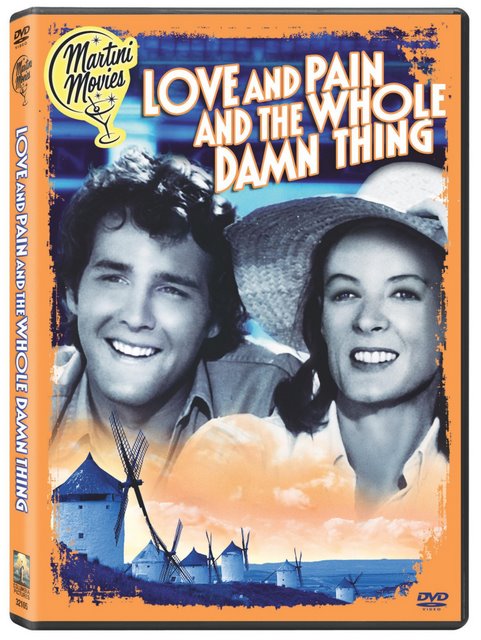
DVD Review: Love and Pain and the Whole Damn Thing (1973) -- Martini Movies: Wave 3


Part of Sony's Martini Movies* Collection


Photo Slideshow


Delicious
Bookmark this on Delicious
submit to reddit
Print Page

Digg!

MovieBlips: vote it up!

Easily overshadowed by director Alan J. Pakula's masterworks Klute, All The President's Men, and Sophie's Choice, the filmmaker's unexpectedly moving 1973 hidden treasure sums up its tone in its title of Love and Pain and the Whole Damn Thing.


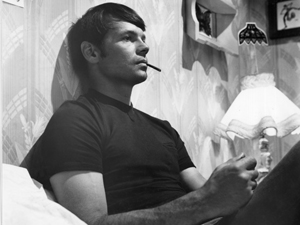
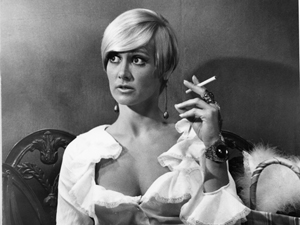
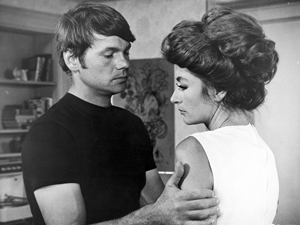
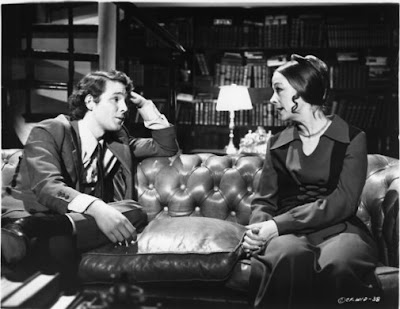
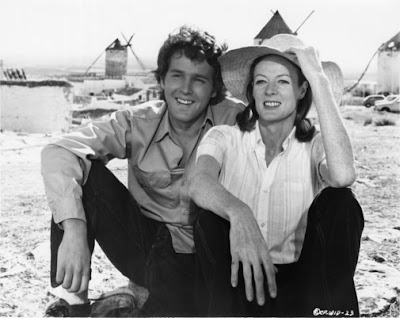
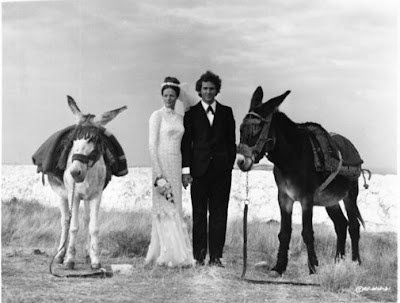
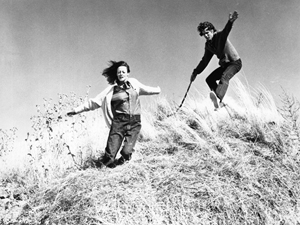
While no doubt it was a marquee nightmare to abbreviate and I'm sure very few ticket buyers would've forked over cash to something dubbed Love and Pain, thankfully Sony has unearthed this long forgotten oddball romantic comedy drama as part of their peculiarly titled Martini Movies series (explained in the footnote below). With the studio's recent release, Pakula's movie has been given a gorgeous transfer to DVD that revels in its colorful Spanish setting that is sadly not evidenced in these black and white publicity stills.


As the film begins, we encounter the painfully introverted asthmatic Walter Elbertson (Timothy Bottoms) whose wealthy historian author father signs him up for a bicycling tour of Spain upon learning that Walter had fallen asleep during his college exams. Seemingly the only member of his family that doesn't have the same workaholic, overachieving drive shared by the rest, Walter struggles with his asthma in Spain and swaps two wheels for four, ditching the bike for a bus.


In doing so, he finds an unlikely soul-mate in the shy spinster Lila Fisher (Maggie Smith) who, aside from missing the same vital people skills absent in Walter, is thankfully given the benefit of maturity and tact. Needless to say, they easily compliment one another and the two begin an awkward courtship that strengthens when she's locked in a restroom and they realize they are better off sticking together.

Both escaping the claustrophobia of an overbearing family as instead of a Pulitzer Prize winning father, Lila is worn out from taking care of her elderly aunts and forgetful lodgers-- although it's Walter who is the more ardent pursuer since she resists due to their age difference and a secret-- we soon realize they're an ideal match of misfits.


Considering the gender reversal May/December romance between the two and the era of its release, the comparison that immediately springs to mind is with Harold and Maude along with a slight Last Picture Show overlap, especially because they share the same star in the talented Timothy Bottoms. And although Love and Pain isn't as masterful as Hal Ashby's cult classic Maude, it's a terrific find not only for those who enjoy Pakula, Bottoms, and Smith but especially considering the way that it foreshadows the style and evolution of Alvin Sargent's work as a screenwriter.


A diverse and fiercely talented scribe with enviable adaptability considering his contributions to the most recent Spiderman films, Alvin Sargent who had previously collaborated with Pakula in 1969's Sterile Cuckoo found the precise blend of sweet and sour with his original screenplay for Love and Pain and the Whole Damn Thing.


With a strong interest in outsiders and the importance of human connection often between two of the unlikeliest candidates, he's been celebrating the flaws in humanity and the need to find common ground for more than four decades following his transition from television to film. This is especially evident whether he's moving us from laughter to tears in the tale of the estranged father and daughter in Bogdanovich's charmer Paper Moon, cutting deep into the heart of a damaged family unit in Redford's masterful Ordinary People (garnering his second Oscar after Julia), or revisiting the idea of Damn Thing in Mandoki's little-appreciated White Palace. Moreover, looking at one of his earliest cinematic pieces and evaluating the way some of these themes keep inspiring him is a rare treat for screenwriters.


However, as Vincent Canby noted in his original New York Times review, Love and Pain does ultimately (yet possibly only subconsciously) succumb to "the attack of Anglo-Saxon ethic" wherein "American and English fiction writers persist in spreading the gloomy word that the conjoining of an older woman and a young man is a near-mortal sin, usually punishable by death."


However, despite the fact that there's a tearjerker undercurrent that persists throughout which was in vogue during the era, fortunately Sargent avoids making it gloomy on the whole nor ending it with sappy Love Story devastation. Yet refreshingly it avoids the death it predicts shortly into the picture by instead celebrating the fact that-- since life is fleeting and no one has a crystal ball-- we must relish in every Damn Thing we can. And of course, this belief is made even lovelier when we have someone with whom to share our experiences whether we're stuck in a Spanish restroom or trading an over-the-top Don Juan for an asthmatic in a trailer.


*Note: Just what is a Martini Movie? Sony's statement: "No matter the decade, there's a place where icons, idols and the infamous flock for bottomless martinis and over-the-top trysts. One part top-shelf martini, two parts celluloid history and garnished with a hint of camp. Sit back and take in the scene with Sony Pictures Home Entertainment's Martini Movies." All titles released so far in the collection have never been available previously in the DVD format.

Text ©2009, Film Intuition, LLC; All Rights Reserved. http://www.filmintuition.com
Unauthorized Reproduction or Publication Elsewhere is Strictly Prohibited.

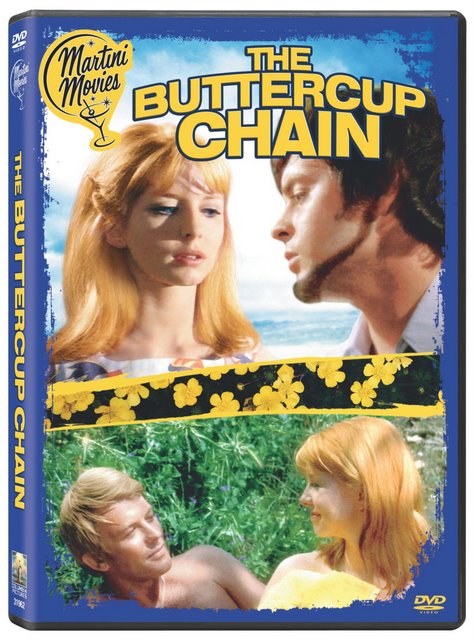
DVD Review: The Buttercup Chain (1970) -- Martini Movies: Wave 3


Part of Sony's Martini Movies* Collection


Photo Slideshow


Delicious
Bookmark this on Delicious
submit to reddit
Print Page

Digg!

MovieBlips: vote it up!

My first Martini was a Cosmopolitan-- the making of which unfortunately happened to coincide with the infamous Justin Timberlake/Janet Jackson Super Bowl Half-Time "wardrobe debacle." Needless to say, the bartender was preoccupied, the drink was way too strong, and that's about all I remember about that particular Sunday.

However, my memory of my first "Martini Movie" will no doubt be far more lucid. This is thanks to the butterscotch tinged cinematography of three time Oscar nominated lensman Douglas Slocumbe (Julia, Travels With My Aunt, Raiders of the Lost Ark) that made The Buttercup Chain as vibrant as its title. Unfortunately, despite its gorgeously bright and sensuous style, the film is largely forgettable.


Entered into the 1970 Cannes Film Festival's competition where it received a nomination for the Golden Palm Award, British helmer Robert Ellis Miller's work isn't as strong as it was two years earlier in his effective take on Carson McCullers' novel The Heart is a Lonely Hunter. Yet much like Hunter's arresting photography from DP James Wong Howe, Buttercup illustrates his unique vision as a filmmaker to ensure that his movies (including Any Wednesday and the original Sweet November) were lushly photographed to both enhance the beauty yet accurately reflect the era in which they were filmed. Of course, Miller's work was augmented as well with his knack for putting together the right group of people in front of and behind the camera.


Of all five titles released in this third wave from Sony's Martini Movies collection (described in detail below in the footnote), The Buttercup Chain is the one that instantly feels like it's matching the studio's proposed theme of "over-the-top-trysts... garnished with a hint of camp" but even though its quartet of characters struggling in the free love era seem like swingers on the surface, the film is surprisingly tame much like Bob, Carol, Ted and Alice. Yet unlike Bob, this one is distinctly European and seemingly literary inspired a la D.H. Lawrence meets Thomas Hardy's Jude: The Obscure with its emphasis on two cousins-- Franz (Hywel Bennett) and Margaret (Jane Asher)-- who are a little too drawn to one another.


Separated when they were children and may have learned to work beyond those feelings of confused crushes and early hormones, when they reunite several years later, they decide to vacation together. Never fully admitting their attraction, Franz aims to remedy the situation by finding an appropriate lover for Margaret in the form of the Scandinavian Fred (Sven-Bertil Taube). And while Fred is instantly smitten, Margaret doesn't succumb quite as quickly as their newest travel companion, Manny (Leigh Taylor Young) who becomes involved with both Fred and Franz.


Although we're quick to realize that if the film had been made today, Manny would've easily been considered a pure slut yet in The Buttercup Chain, thanks largely to Leigh Taylor Young's talent and the screenwriting team of Peter Draper and Janice Elliott, she becomes the most fascinating character in the movie since she is oddly its questioning moral compass who looks past the facades and right into the true longings of every character.

Whether she hits Franz with the astutely observed line, "I don't know if you do things if you want to or because you want to see what will happen if you do them," or chiding Fred's inability to understand Margaret's hesitation to marry him with, "I do love you even though you're not very bright in the head," it's Manny that becomes the voice of the audience. Likewise, Manny is also the film's biggest enigma at the same time most notably when a hopelessly devoted older, wealthy lover George (Clive Revill) always sweeps in Breakfast at Tiffany's style to look after her and her friends.

While on the surface, it's fraught with taboos such as the two cousins who are unable to come-of-age and develop real relationships, the movie masquerades as scandalous but ultimately avoids it at all costs with an inevitably harsh wake-up call in the form of a cruel death as the four begin to conform to society in their own ways. Hence, they evolve from their travels as a foursome and meander halfheartedly towards more acceptable and conventional lifestyles in terms of marriage, education, and career.

With the luminous Asher not quite up to the task of moving from supermodel to actress especially in her underwritten and difficult role and Bennett's Franz suffering from a cool, calculated, unlikable characterization that baffles us as to what has driven him to such hedonism, ultimately The Buttercup Chain's remaining part of the group--Taube and Young-- are the ones who keep us watching.


Obviously since Franz and Margaret are our main characters, it should be the other way around but despite the flaw of an under-developed script and/or possibly the need to cut for ratings reasons since the original theatrical trailer on the disc includes snippets of scenes missing from the movie, above all The Buttercup Chain is noteworthy for its gorgeous photography and inventive cuts from editor Thelma Connell.

This is best appreciated in a party sequence as the group shares a slideshow of the photos that were taken throughout as an Earth-shattering revelation is revealed just as the camera flashes each and every time. After a few photos fill the screen in the darkened room of attendees, the main quartet soon populate the pictures as they move and speak, using a fantastic bit of post-production trickery to make the dull storyline fresh as we segue into the new photographed location. It's techniques like this that definitely make the film worth watching in its beautifully transferred print just from a technical standpoint alone since Miller's Buttercup has been absent from DVD until this Sony release.

*Note: Just what is a Martini Movie? Sony's statement: "No matter the decade, there's a place where icons, idols and the infamous flock for bottomless martinis and over-the-top trysts. One part top-shelf martini, two parts celluloid history and garnished with a hint of camp. Sit back and take in the scene with Sony Pictures Home Entertainment's Martini Movies." All titles released so far in the collection have never been available previously in the DVD format.


Text ©2009, Film Intuition, LLC; All Rights Reserved. http://www.filmintuition.com
Unauthorized Reproduction or Publication Elsewhere is Strictly Prohibited.
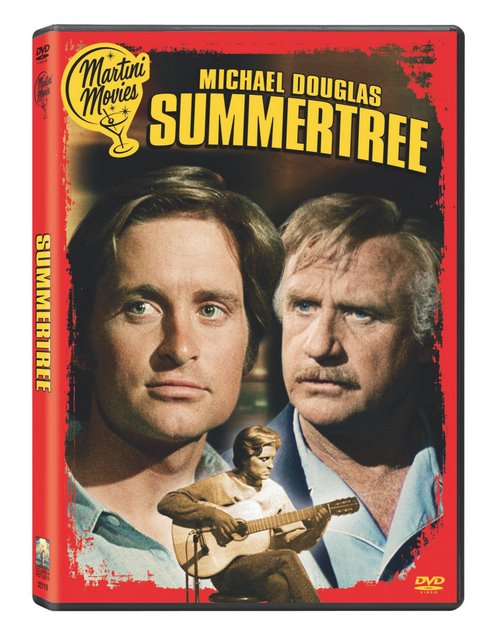
DVD Review: Summertree (1971) -- Martini Movies: Wave 3


Part of Sony's Martini Movies* Collection


Fired from a play and hired for the movie? On the downside, as IMDb notes, Michael Douglas was fired from the theatrical production of Ron Cowen's play but on the upside, in the form of a gift, Michael's father Spartacus (aka Kirk Douglas) purchased the film rights for Summertree.

Not only reprising the role from which he had been let go, Michael Douglas pulled double duty for the Columbia Pictures '71 effort by producing the film alongside his father (as Sony's press release notes), most likely laying the groundwork for Michael Douglas to learn, evolve and become an Academy Award winning producer in his own right with One Flew Over the Cuckoo's Nest and The China Syndrome.


While it's clearly a message movie and the ending is about as subtle as a car being dropped from a skyscraper, admirably Summertree avoids the hippie protester trappings of other anti-Vietnam films of the era as a sort of square version of Milos Forman's Hair. To explain, this one finds Douglas gently strumming his guitar as an aspiring musician instead of the showstopping numbers found in Hair by the man who would work for Douglas as director on Cuckoo's Nest.


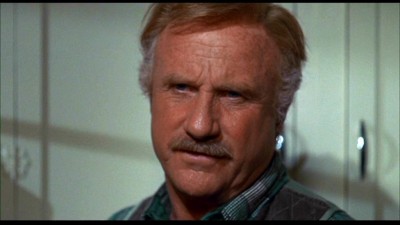
Well acted by a terrific ensemble including Barbara Bel Geddes (Vertigo) and Shampoo's Jack Warden as the parents of Jerry (Douglas), this low-key 89 minute movie directed by the actor and Oscar nominated Willy Wonka composer Anthony Newley takes a contrived yet more universally relatable and nonthreatening approach to the conflict.

Instead of presenting us with the counterculture of the era head on as in another Sony Martini Movie-- The Pursuit of Happiness-- our protagonist Jerry is simply a handsome, average twenty year old American boy who is peculiarly struck with a sense of apathy, confusion, and unsure what he wants out of life or how he feels about anything.


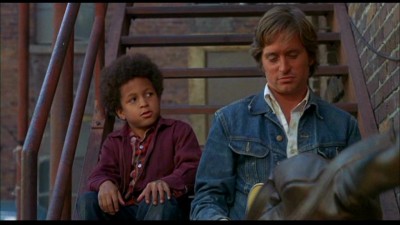
Disenchanted by his sociology major, Jerry decides to be proactive and try new things like joining the Big Brothers program where he looks after a tough, angry, distrusting kid named Marvis (Kirk Calloway) which leads to his encounter with Brenda Vaccaro's local beautiful nurse, Vanetta.


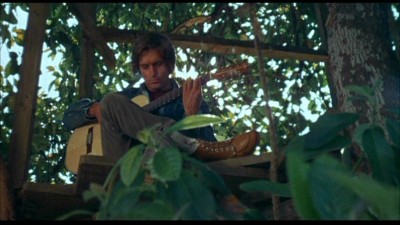
Slowly he begins to feel more at peace again with life as he falls harder for Vanetta and realizes that his true passion in life is music. Connecting with the guitar and his two new friends, Jerry begins to seemingly resemble the boy we saw in the home movie sequence in the film's opening, smiling and content in the tree in his parent's backyard. Yet when he decides to try his luck at being accepted in the conservatory and fails to register for more courses in the hopes of transferring over, Uncle Sam hits him with a draft notice.


While the film pulls out a few more surprises as things begin crashing down on Jerry left and right when he tries to speed up conservatory acceptance or figure out a way to flee to Canada, the movie quietly devastates us as well as Jerry when a few characters he trusts implicitly shock us with new revelations and actions.


As it careens into an emotionally draining manipulation of an ending that-- to their credit-- the actors play to great effect even though a few emotional payoffs don't feel earned, we begin wishing that Cowen's play would've been reworked to make the final turn of events involving Vanetta and Jerry's parents more realistic.

Perhaps by building up Jerry's character a bit more and giving us a better sense of why he was so disillusioned at the start of the movie which would've made his emotional rollercoaster jolt you to a greater effect as well as offering more insight into the rest of the ensemble, it wouldn't have felt like a rushed, less claustrophobic but still stationary filmed version of a play.


However, it's still a great find for devotees of Douglas to see the way he moved from earnest naive charm to the "Greed is Good" self-dubbed "Prince of Darkness roles" for which he's most famous. Yet, when you realize the quantity of films made about Vietnam from all angles in that era, you're left with the fact that the quality of this title doesn't come close to the ones that truly became a part of our culture like Coming Home, The Deer Hunter, and Apocalypse Now.

*Note: Just what is a Martini Movie? Sony's statement: "No matter the decade, there's a place where icons, idols and the infamous flock for bottomless martinis and over-the-top trysts. One part top-shelf martini, two parts celluloid history and garnished with a hint of camp. Sit back and take in the scene with Sony Pictures Home Entertainment's Martini Movies." All titles released so far in the collection have never been available previously in the DVD format.


Text ©2009, Film Intuition, LLC; All Rights Reserved. http://www.filmintuition.com
Unauthorized Reproduction or Publication Elsewhere is Strictly Prohibited.