Showing posts with label Kirk Douglas. Show all posts

7/05/2021

Blu-ray Review: Last Train From Gun Hill (1959)


Now Available
 
 (Affiliate Link)


Originally purchased in 1954 by producer Hal Wallis as a potential western vehicle for either Burt Lancaster or Charlton Heston, although those efforts stalled, five years later, Wallis was able to see his dream of a big-screen adaptation of TV writer Les Crutchfield's thrilling story "Showdown" come true.

Sharing production duties with star Kirk Douglas's own company Bryna Productions, Hal Wallis reunited with the cast and crew of his 1957 Paramount hit "Gunfight at the OK Corral" two years later for the briskly paced, startlingly gritty, taut, high profile VistaVision release "Last Train From Gun Hill."

Directed by John Sturges and shot by gifted versatile cinematographer Charles Lang the exact same year he lensed "Some Like It Hot," he fills "Gun Hill" with a mixture of dark noir shadows and an at times luridly bright, flammable color scheme of reds, oranges, and yellows to almost expressionistic effect. This visual motif serves as an ingeniously bold yet still subtle depiction of the fiery aggression of its core cast of characters and helps the emotional core of the film remain ever-present from start to finish.


After U.S. Marshall Matt Morgan's Native American wife is raped and murdered by two young sadistic cowboys in front of their young son, the lawman (played by Kirk Douglas) vows to do whatever it takes to bring the killers to justice. Discovering their connection to his old friend Craig Belden (Anthony Quinn), thanks to a distinctive saddle on one's horse that his son was able to use to escape the villains, Matt journeys to Craig's Gun Hill with his gun and badge, even though he's advised that those things won't be welcome there.

"You work for Craig Belden?" Matt asks when he gets off the train, before, in a half of a line that fans of 1993's "Tombstone" know very well, he lowers the boom. "You tell him I'm coming."

However, it seems that Quinn's Craig Belden is in for a rude wake-up call as well. Having been told by his son Rick (Earl Holliman) that his horse and saddle had been stolen by thieves and that the garish scratch Rick's suddenly sporting on his face came from a lusty encounter, once Matt arrives and asks his old friend for help, Craig realizes that his son and friend are the ones responsible for the heinous crime.

And when Matt comes to the same conclusion as Craig, the shocked but proud man implores Matt not to arrest Rick, warning him that he not only runs the entire town but also the police. Informing Craig that he aims to bring Rick and Lee back to face charges on that night's last train leaving from Gun Hill, Matt embarks upon a lonely search throughout the corrupt town to track them down. And soon enough, he deduces that the only thing the people of  Gun Hill value less than the life of a Native American is that of a Native American woman.


Although it's reminiscent of "High Noon" in Matt's one against the world quest, which, like "High Noon" manages to work in a female ally as well in the form of Carolyn James, the tale that "Last Train From Gun Hill" seems to have the most in common with is ultimately "3:10 to Yuma," based on the 1953 Elmore Leonard story.

Made into a film at Columbia Pictures in 1957 from director Delmer Daves (after which it was remade by James Mangold in 2007), fans of "Yuma" will see a lot of similarities between the plight of Matt and Van Heflin's in "Yuma" as well. And this is especially evident when a fair amount of action in "Hill" plays out at a hotel after Matt manages to capture and subdue Rick, despite knowing he's surrounded by gunmen ready to free Craig's son (which we saw in "Yuma" with Heflin and Glenn Ford) before they can board that train.

While "Gun Hill" admittedly places a good deal of its emphasis on action whereas "Yuma" involves far more scenes of mental chess played between the two men, "Hill" is still a psychologically thrilling work as it presents Matt and Craig as two flip-sides of the same coin who've grown further and further apart in their attitudes of right and wrong over the years.


Using the same type of approach he used to balance the moral, internal struggle of his characters with terse, tense, temper driven bursts of prideful masculine violence that he employed so perfectly in 1955's masterful "Bad Day at Black Rock," Sturges, along with his crew, lends a real sense of artistry to the film. Elevating it above its otherwise predictable "B" revenge western feel, the 94-minute movie not only flies right by but also helps foreshadow the career that the director would have in the early '60s, helming "The Magnificent Seven" (with some of this film's collaborators) and “The Great Escape” as well.

Given an impressively vibrant 6K transfer to Blu-ray (plus an HD digital copy) as part of the Paramount Presents series of titles, "Last Train From Gun Hill" might feel like something of a forgotten western from the era. But like Matt stalking through the alternating reds, oranges, yellows, and dark shadows in order to get his men before things ignite, this is one film that's well worth tracking down.


Text ©2020, Film Intuition, LLC; All Rights Reservedhttps://www.filmintuition.com  Unauthorized Reproduction or Publication Elsewhere is Strictly Prohibited and in violation of the Digital Millennium Copyright Act.  Also, as an Amazon Associate, I earn from qualifying purchases made off my site through ad links. FTC Disclosure: Per standard professional practice, I may have received a review copy or screener link of this title to voluntarily decide to evaluate it for my readers, which had no impact whatsoever on whether or not it received a favorable or unfavorable critique. Cookies Notice: This site incorporates tools (including advertiser partners and widgets) that use cookies and may collect some personal information to display ads tailored to you etc. Please be advised that neither Film Intuition nor its site owner has any access to this data beyond general site statistics (geographical region etc.) as your privacy is our main concern.

12/27/2019

In the Key of Noir - Movie Review Essay: I Walk Alone (1947)


In the Key of Noir
by Jen Johans


To hear Lizabeth Scott's jaded torch singer Kay Lawrence tell it in I Walk Alone, "all the songs sound alike these days." And with their good and evil tales of antiheroes, bad decisions, and femme fatales that together create an instantly recognizable cinematic melody, Kay might just as well have been talking about the film noir genre where the tropes had been established a decade earlier in their nearest relative — '30s crime pictures.

Most evident in standard cops and robbers fare or gangster epics like Scarface, the moral quandaries of right and wrong permeated through the era's socially conscious films as well, including the union centered Warner Bros. crime melodrama Black Fury, which Walk director Byron Haskin had lensed for Michael Curtiz back in 1935.

An existential B movie noir, I Walk Alone knows the rules of the genre well and embraces them with as much matter-of-fact resignation as recent parolee Frankie Madison (Burt Lancaster) does when he sees vertical shadows on the ground and informs his friend, "bars, Dave, I guess I'll never get away from 'em." Yet while Frankie observes this with a hint of despair onscreen, Haskin appears to have taken the bars of noir as a challenge to stage a great escape offscreen.


Understanding the standard notes of noir that must be played, in the 1947 production, he opts for a different arrangement and fills his chorus with character actors like Scott, Lancaster, and a knockout Kirk Douglas, all of whom did some of their best work in the genre. And once they start singing the wry, lyrical dialogue penned by Red River scribe Charles Schnee, I Walk Alone sounds like a dream.

It looks like one too, thanks to the contribution of the great cinematographer Leo Tover who painted the lush Hold Back the Dawn and The Heiress with light during the exact same decade that he let the shadows and fog take hold here. Most importantly, as not only a former cinematographer but an award winning Warner Bros. special effects wizard who'd developed a rear-projection photography system that helped advance the medium and also worked on such landmark films as They Drive By Night, and Arsenic and Old Lace, Toller had a vital ally in Haskin.

Together, the two men knew how to make Walk's symbolic and sumptuous visuals count. The end result is a sexy, grown-up noir that shocked critics like Bosley Crowther of The New York Times who thought it violated the Hays Code and The Nation's James Agee who dubbed it "unclean, unclean" upon its post-World War II release.

In I Walk Alone, Lizabeth Scott's Kay Lawrence isn't the only one who's jaded. Long before we encounter the torch singer who feels she's "sung too many torch songs," the picture finds Lancaster's Frankie out after a fourteen year stretch that's changed the man so much that he believes that he can now smell fear. Desperate and angry, with Frankie hoping to get what's coming to him from his old partner Noll "Dink" Turner (Douglas) even though we know right away that it's hopeless, Haskin's movie feels like it would play perfectly as one half of a double bill with Straight Time, Dog Day Afternoon, or any number of other dead-end neo-noirs of the 1970s.


However, featuring an over-the-top final moment with Douglas (for which the actor has taken full credit), unlike those two films, I Walk Alone is saddled with an ending that feels out of step with the rest of the picture. And while it dulls some of its hard edges with the type of misguided musical moments that were common in the genre — as well as an all in one night, largely one set approach that makes you question Lancaster's character swings and the film's logistics — overall, this noir works far too well for it to be so forgotten.

A mature effort, Walk was based upon the play Beggars are Coming to Town by Theodore Reeves. As stylistic as it is natural, even in a few instantly quotable, lusty double entendres from scene stealer Kristine Miller, Schnee's script is filled with surprisingly wistful, half optimistic, half pessimistic sentiments ideally suited to characters in their thirties who've been around the block a few times. Unafraid of complex conversations that, just like in unrehearsed real life, spiral off in any number of directions over a period of minutes, in I Walk Alone, two long, talky sequences stand out.

Dropping lines that still feel fresh today, in a drawn-out dinner date between Scott and Lancaster, she suddenly confesses, "I've never been out with a man who didn't keep talking about himself and end up thinking he knew all about me," before marveling that tonight — opposite the chiseled, silent as a vault ex-con who can smell fear — the opposite is true.


And this recurring theme of expecting the unexpected when it comes to the man who just can't escape the bars of his past continues on in a heartbreaking hold-up sequence where Frankie learns the hard way just how much the world has changed in fourteen years. Discovering that he can't use a gun to rob a bureaucracy or board of directors in a scene with Kirk Douglas that Douglas plays with so much amused venom that you half expect poison to drip from your TV, I Walk Alone proves it's far more sophisticated than one might expect.

Though still not as fun or frisky as the director's Lizabeth Scott led follow up, Too Late for Tears, this film, which I hadn't seen in decades, hits much harder as an adult when you're closer in age to the characters onscreen. A towering figure if there ever was one, with his masculine, musically clipped cadence and unflappable charisma, Lancaster easily draws you into the film's conflict so that you're on his side before he even crosses those shadowy bars in the very first sequence.

However, intriguingly going against those expectations, in the first of seven films Lancaster would make opposite Douglas and the first and only one where he received second billing, it's Douglas as the handsome shark — leaning back in his chair like the chairman of the board — who really gets under our skin.


Lounging like a playboy in his robe or running his hand through his hair as though he could shake Lancaster right out of it, the ease with which Douglas tells his worried henchmen that he can handle his old friend foreshadows his '50s climb to the A-list with star turns in films like The Bad and the Beautiful, and 2 Weeks in Another Town (also written by Schnee).

Likewise when, as Scott sings, Walk makes "a fool out of someone who cares" as Lancaster temporarily allows himself to be handled, the coolly calculating Douglas helps propel the film forward until our leading man changes his mind. Of course, then, having stared Douglas down every time he unleashes that deadly smile, we're eager as ever to walk along with Lancaster's fool so that he won't have to go it alone, regardless of the rushed ending and a few minor bumps along the way.

An existential melodrama sung in the key of noir, the harmonious I Walk Alone teaches us that, even if the song sounds the same, with this cast and crew fiddling with the arrangement, it'd be foolish not to care.

Now Available


Text ©2019, Film Intuition, LLC; All Rights Reservedhttps://www.filmintuition.com Unauthorized Reproduction or Publication Elsewhere is Strictly Prohibited and in violation of the Digital Millennium Copyright Act.  Also, as an Amazon Associate, I earn from qualifying purchases made off my site through ad links. FTC Disclosure: Per standard professional practice, I may have received a review copy or screener link of this title in order to voluntarily decide to evaluate it for my readers, which had no impact whatsoever on whether or not it received a favorable or unfavorable critique. Cookies Notice: This site incorporates tools (including advertiser partners and widgets) that use cookies and may collect some personal information in order to display ads tailored to you etc. Please be advised that neither Film Intuition nor its site owner has any access to this data beyond general site statistics (geographical region etc.) as your privacy is our main concern.

9/21/2009

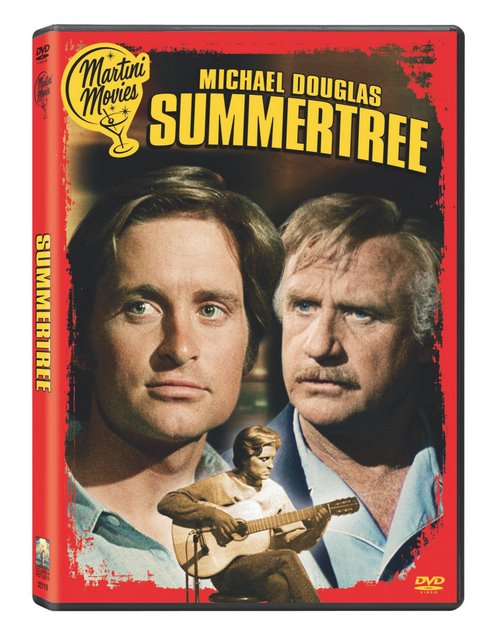
DVD Review: Summertree (1971) -- Martini Movies: Wave 3


Part of Sony's Martini Movies* Collection


Fired from a play and hired for the movie? On the downside, as IMDb notes, Michael Douglas was fired from the theatrical production of Ron Cowen's play but on the upside, in the form of a gift, Michael's father Spartacus (aka Kirk Douglas) purchased the film rights for Summertree.

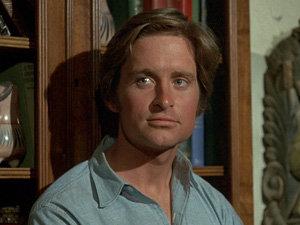
Not only reprising the role from which he had been let go, Michael Douglas pulled double duty for the Columbia Pictures '71 effort by producing the film alongside his father (as Sony's press release notes), most likely laying the groundwork for Michael Douglas to learn, evolve and become an Academy Award winning producer in his own right with One Flew Over the Cuckoo's Nest and The China Syndrome.


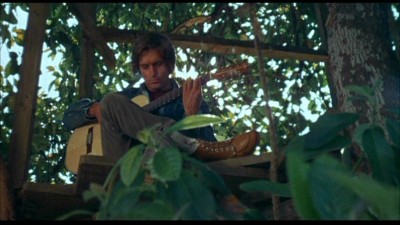
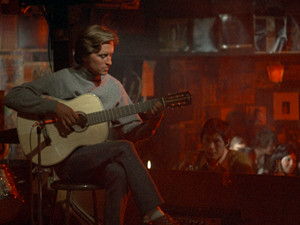
While it's clearly a message movie and the ending is about as subtle as a car being dropped from a skyscraper, admirably Summertree avoids the hippie protester trappings of other anti-Vietnam films of the era as a sort of square version of Milos Forman's Hair. To explain, this one finds Douglas gently strumming his guitar as an aspiring musician instead of the showstopping numbers found in Hair by the man who would work for Douglas as director on Cuckoo's Nest.


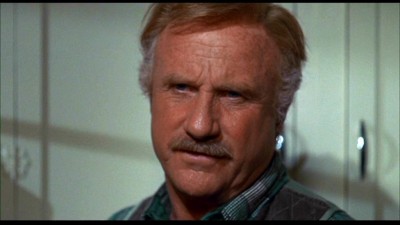
Well acted by a terrific ensemble including Barbara Bel Geddes (Vertigo) and Shampoo's Jack Warden as the parents of Jerry (Douglas), this low-key 89 minute movie directed by the actor and Oscar nominated Willy Wonka composer Anthony Newley takes a contrived yet more universally relatable and nonthreatening approach to the conflict.

Instead of presenting us with the counterculture of the era head on as in another Sony Martini Movie-- The Pursuit of Happiness-- our protagonist Jerry is simply a handsome, average twenty year old American boy who is peculiarly struck with a sense of apathy, confusion, and unsure what he wants out of life or how he feels about anything.


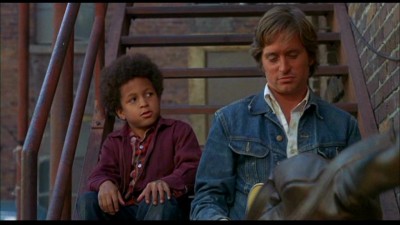
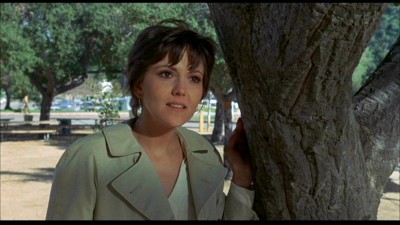
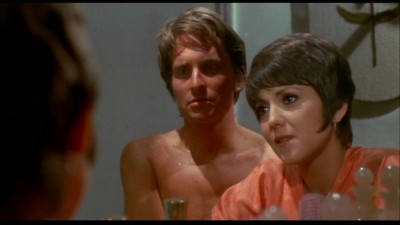
Disenchanted by his sociology major, Jerry decides to be proactive and try new things like joining the Big Brothers program where he looks after a tough, angry, distrusting kid named Marvis (Kirk Calloway) which leads to his encounter with Brenda Vaccaro's local beautiful nurse, Vanetta.


Slowly he begins to feel more at peace again with life as he falls harder for Vanetta and realizes that his true passion in life is music. Connecting with the guitar and his two new friends, Jerry begins to seemingly resemble the boy we saw in the home movie sequence in the film's opening, smiling and content in the tree in his parent's backyard. Yet when he decides to try his luck at being accepted in the conservatory and fails to register for more courses in the hopes of transferring over, Uncle Sam hits him with a draft notice.


While the film pulls out a few more surprises as things begin crashing down on Jerry left and right when he tries to speed up conservatory acceptance or figure out a way to flee to Canada, the movie quietly devastates us as well as Jerry when a few characters he trusts implicitly shock us with new revelations and actions.


As it careens into an emotionally draining manipulation of an ending that-- to their credit-- the actors play to great effect even though a few emotional payoffs don't feel earned, we begin wishing that Cowen's play would've been reworked to make the final turn of events involving Vanetta and Jerry's parents more realistic.

Perhaps by building up Jerry's character a bit more and giving us a better sense of why he was so disillusioned at the start of the movie which would've made his emotional rollercoaster jolt you to a greater effect as well as offering more insight into the rest of the ensemble, it wouldn't have felt like a rushed, less claustrophobic but still stationary filmed version of a play.


However, it's still a great find for devotees of Douglas to see the way he moved from earnest naive charm to the "Greed is Good" self-dubbed "Prince of Darkness roles" for which he's most famous. Yet, when you realize the quantity of films made about Vietnam from all angles in that era, you're left with the fact that the quality of this title doesn't come close to the ones that truly became a part of our culture like Coming Home, The Deer Hunter, and Apocalypse Now.

*Note: Just what is a Martini Movie? Sony's statement: "No matter the decade, there's a place where icons, idols and the infamous flock for bottomless martinis and over-the-top trysts. One part top-shelf martini, two parts celluloid history and garnished with a hint of camp. Sit back and take in the scene with Sony Pictures Home Entertainment's Martini Movies." All titles released so far in the collection have never been available previously in the DVD format.


Text ©2009, Film Intuition, LLC; All Rights Reserved. http://www.filmintuition.com
Unauthorized Reproduction or Publication Elsewhere is Strictly Prohibited.