Showing posts with label Woody Allen. Show all posts

8/22/2014

Blu-ray Review: Fading Gigolo (2013)


Now Available to Own   


Photo Slideshow


Blu-ray Introduction

Shot in just thirty days on glorious 35mm film, writer/director and star John Turturro teams up with his longtime assistant Cameron Bossert to record a delightfully friendly and informative feature-length commentary track on the beautiful new Blu-ray transfer of his spring art-house charmer, Fading Gigolo.

Freely acknowledging the way that his obsessions, recurring motifs (including nuns), and themes wind up weaving their way throughout his directorial career, Gigolo’s chatty commentary is filled with insider details, anecdotes, and bite-sized nuggets of personal inspiration he called upon to create the film.

Whether it’s in Turturro’s fascinating admission that his own friend – a former rare bookseller – served as the muse for Woody Allen’s scene-stealing character or the “lice lady” he’d met that likewise inspired the role of his unlikely onscreen love interest (nicely played by Vanessa Paradis), again and again, Turturro’s revelations remind writers that reality truly is the best jumping off-point for creativity.


In fact, celebrating the authenticity of life is one way that the otherwise fantastical Gigolo stays so believably rooted in the real world and Turturro proudly credits all collaborators and colleagues including some friends and family turned co-stars (like his cousin Aida Turturro who makes her scene count to memorably comedic effect).

Referencing the at-times coincidental overlap of cast and crew in New York’s filmmaking community, he shares a remarkable tale of an unintentional reunion between Woody Allen and his former prop man of ten years who happened to be in one scene early on in the movie.

Unfortunately aside from the terrific commentary track, the Blu-ray is ultimately lacking in worthwhile bonus features as we quickly discover that the included deleted scenes were all left on the cutting room floor for a reason.


And although the decision to not offer a DVD or Ultraviolet high definition code might’ve hindered sales from budget-conscious consumers eager to have the opportunity to screen Gigolo in multiple formats, personally given the way that music plays such a key role in the film, I was hoping for a behind-the-scenes featurette that explored that department in further depth.

Luckily however, the surprisingly sweet and unexpectedly moving work along with Turturro’s intelligent, respectful handling of both its daring subject matter and the film's affable supporting players makes it worthwhile nonetheless (as I discovered in my earlier theatrical review republished below).

Additionally, it’s sure to appeal to Allen fans who’ve grown disappointed by the way that his films seem more and more stuck in the past with each passing year. For in Fading Gigolo, Turturro proves he’s more than willing to help Woody Allen move into more modern territory, even if it’s writer/director/star Turturro instead of Allen who’s calling the shots behind the camera.


Original Movie Review
(Published 4/24/14)

There’s an old saying that when it comes to filmmaking success, everything depends on who you know. And obviously John Turturro has met, worked with and befriended his fair share of very powerful people throughout his impressive career on both sides of the lens as not only one of our greatest character actors but a filmmaker in his own right as the director of four acclaimed independent films.

Yet when it came to developing what would become his fifth film Fading Gigolo, the road from idea for finished screenplay did wind up having a lot to do with who Turturro knew – although instead of a studio head or a power player, the man most responsible for getting Gigolo off the ground was none other than his own barber.


Amused by the clever concept that had first been brainstormed as a hypothetical, improvisational joke shared over lunch with a friend, Turturro’s barber later shared the story he’d been told with another filmmaker client of his in the form of Woody Allen who was so intrigued by the promising potential that he contacted Turturro out of the blue to learn more.

Helping Turturro refine the witty pitch into a viable plotline that would eventually find Allen costarring as well, Fading Gigolo began to take shape, evolving from something wholly comedic to a warmhearted, highly personal, moving dramedy that handles the provocative subject matter with the utmost sincerity and maturity.

Caught off guard when his beautiful dermatologist (Sharon Stone) asks her client Murray (Allen) if he knew anyone who would be interested in having a threesome with her and her fiercely independent friend (played by Sofia Vergara), the fast-talking retired rare bookseller decides to pimp out his best friend Fioravante (John Turturro) on the spot.


A part time florist who’s always done well with the ladies – although he’s initially hesitant to become Murray’s ho, curiosity and flattery not to mention the prospect of an impressive payday eventually win him over as Fioravante gives in, making a first “date” appointment to show up for a one-on-one trial with Stone’s even more nervous doctor.

Attempting to play the part, Fioravante shows up with a floral arrangement as if he were there for a real live date before taking the plunge.

Dancing with the lonely women in the daytime, Fioravante’s attentiveness pays off as before long, the sensitive man’s man finds himself in demand as the opportunistic Murray begins cruising yoga classes in Central Park looking for new clients.


Although at first uneasy about taking money from vulnerable women, Murray is quick to tell him isn’t nearly as bad as preying on the misery of others like a bartender since he’s building up the women’s confidence after all.

And using the same sales pitch that describes his friend’s gifts as akin to healing, Murray finds a potential customer in Avigail (Vanessa Paradis), the lonely young widow of a deceased Hasidic Rabbi whose own primal need for intimacy has been ignored for way too long.

Unfortunately the suspicious behavior of Murray arouses the suspicion of Liev Schreiber’s jealous Hasidic community officer who’s spent his entire life pining after his lovely neighbor Avigail and puts their impromptu operation in jeopardy.


Understanding that it would have been both disrespectful and entirely too farfetched to turn the devout Avigail into just another client in need of sexual release, Turturro uses compassion and class onscreen and off by handling their complicated dynamic with sophistication as the lonely mother of six weeps openly as he massages her back, admitting that she hadn’t been touched in years.

Awakening a sensual side of Avigail that we suspect had been dormant long before her husband passed away, Gigolo infuses the second, more emotionally involving half of the film with a tender exploration of how their relationship unexpectedly affects both parties. And at the film continues, it results in a humorously bittersweet yet fitting payoff that invites you to read into the charmingly ambiguous final sequence for yourself.

While it makes the most of its New York setting in some breathtakingly beautiful scenic shots of fall leaves, carousels and bookshelves – by spending so much time in the Hasidic community in addition to giving us the point-of-view of an unexpected middle aged gigolo – there’s also a unique sense of detachment to the work that makes it seem like a foreign film shot on American soil.


And although admittedly you do have to suspend your disbelief regarding the drop-dead beauties to whom Fioravante is pimped out to throughout – all in all it’s rooted in enough reality that the sweet yet sexy infusion of a bedtime fantasy story best begun with the words “Once Upon a Time” still results in a lovely cinematic surprise.

Refreshingly devoid of cynicism, while some filmmakers would’ve approached the topic with a much bleaker worldview of humanity and/or women in general to make a statement on sex and commerce, it’s evident that Turturro’s heart is in the right place from the start.

Feel-good filmmaking that springboards off its inventive premise to truly invest us in the plight of its multiple lonely outsiders, Gigolo evolves into a stylish, well-acted ensemble dramedy the likes of which Turturro would have easily gravitated to as an actor even if it had been helmed by someone else.

And much like the word-of-mouth that helped get the film made offscreen and earned Fioravante clients onscreen, Fading Gigolo is sure to attract an even bigger audience in its spring theatrical release as this delightful Gigolo offers something for everyone.


Buy the Memorable Soundtrack


Text ©2014, Film Intuition, LLC; All Rights Reserved. http://www.filmintuition.com Unauthorized Reproduction or Publication Elsewhere is Strictly Prohibited and in violation of the Digital Millennium Copyright Act.  FTC Disclosure: Per standard professional practice, I may have received a review copy of this title in order to evaluate it for my readers, which had no impact whatsoever on whether or not it received a favorable or unfavorable critique.

4/24/2014

Movie Review: Fading Gigolo (2013)


Read Our In-Depth Blu-ray Review


  Photo Slideshow


Bookmark and Share

There’s an old saying that when it comes to filmmaking success, everything depends on who you know. And obviously John Turturro has met, worked with and befriended his fair share of very powerful people throughout his impressive career on both sides of the lens as not only one of our greatest character actors but a filmmaker in his own right as the director of four acclaimed independent films.

Yet when it came to developing what would become his fifth film Fading Gigolo, the road from idea for finished screenplay did wind up having a lot to do with who Turturro knew – although instead of a studio head or a power player, the man most responsible for getting Gigolo off the ground was none other than his own barber.


Amused by the clever concept that had first been brainstormed as a hypothetical, improvisational joke shared over lunch with a friend, Turturro’s barber later shared the story he’d been told with another filmmaker client of his in the form of Woody Allen who was so intrigued by the promising potential that he contacted Turturro out of the blue to learn more.

Helping Turturro refine the witty pitch into a viable plotline that would eventually find Allen costarring as well, Fading Gigolo began to take shape, evolving from something wholly comedic to a warmhearted, highly personal, moving dramedy that handles the provocative subject matter with the utmost sincerity and maturity.

Caught off guard when his beautiful dermatologist (Sharon Stone) asks her client Murray (Allen) if he knew anyone who would be interested in having a threesome with her and her fiercely independent friend (played by Sofia Vergara), the fast-talking retired rare bookseller decides to pimp out his best friend Fioravante (John Turturro) on the spot.


A part time florist who’s always done well with the ladies – although he’s initially hesitant to become Murray’s ho, curiosity and flattery not to mention the prospect of an impressive payday eventually win him over as Fioravante gives in, making a first “date” appointment to show up for a one-on-one trial with Stone’s even more nervous doctor.

Attempting to play the part, Fioravante shows up with a floral arrangement as if he were there for a real live date before taking the plunge.

Dancing with the lonely women in the daytime, Fioravante’s attentiveness pays off as before long, the sensitive man’s man finds himself in demand as the opportunistic Murray begins cruising yoga classes in Central Park looking for new clients.


Although at first uneasy about taking money from vulnerable women, Murray is quick to tell him isn’t nearly as bad as preying on the misery of others like a bartender since he’s building up the women’s confidence after all.

And using the same sales pitch that describes his friend’s gifts as akin to healing, Murray finds a potential customer in Avigail (Vanessa Paradis), the lonely young widow of a deceased Hasidic Rabbi whose own primal need for intimacy has been ignored for way too long.

Unfortunately the suspicious behavior of Murray arouses the suspicion of Liev Schreiber’s jealous Hasidic community officer who’s spent his entire life pining after his lovely neighbor Avigail and puts their impromptu operation in jeopardy.


Understanding that it would have been both disrespectful and entirely too farfetched to turn the devout Avigail into just another client in need of sexual release, Turturro uses compassion and class onscreen and off by handling their complicated dynamic with sophistication as the lonely mother of six weeps openly as he massages her back, admitting that she hadn’t been touched in years.

Awakening a sensual side of Avigail that we suspect had been dormant long before her husband passed away, Gigolo infuses the second, more emotionally involving half of the film with a tender exploration of how their relationship unexpectedly affects both parties. And at the film continues, it results in a humorously bittersweet yet fitting payoff that invites you to read into the charmingly ambiguous final sequence for yourself.

While it makes the most of its New York setting in some breathtakingly beautiful scenic shots of fall leaves, carousels and bookshelves – by spending so much time in the Hasidic community in addition to giving us the point-of-view of an unexpected middle aged gigolo – there’s also a unique sense of detachment to the work that makes it seem like a foreign film shot on American soil.


And although admittedly you do have to suspend your disbelief regarding the drop-dead beauties to whom Fioravante is pimped out to throughout – all in all it’s rooted in enough reality that the sweet yet sexy infusion of a bedtime fantasy story best begun with the words “Once Upon a Time” still results in a lovely cinematic surprise.

Refreshingly devoid of cynicism, while some filmmakers would’ve approached the topic with a much bleaker worldview of humanity and/or women in general to make a statement on sex and commerce, it’s evident that Turturro’s heart is in the right place from the start.

Feel-good filmmaking that springboards off its inventive premise to truly invest us in the plight of its multiple lonely outsiders, Gigolo evolves into a stylish, well-acted ensemble dramedy the likes of which Turturro would have easily gravitated to as an actor even if it had been helmed by someone else.

And much like the word-of-mouth that helped get the film made offscreen and earned Fioravante clients onscreen, Fading Gigolo is sure to attract an even bigger audience in its spring theatrical release as this delightful Gigolo offers something for everyone.


Buy the Memorable Soundtrack


Text ©2014, Film Intuition, LLC; All Rights Reserved. http://www.filmintuition.com Unauthorized Reproduction or Publication Elsewhere is Strictly Prohibited and in violation of the Digital Millennium Copyright Act.  FTC Disclosure: Per standard professional practice, I may have received a review copy of this title in order to evaluate it for my readers, which had no impact whatsoever on whether or not it received a favorable or unfavorable critique.

1/28/2014

DVD Review: Blue Jasmine (2013)


Now Available to Own   


Photo Slideshow   


Bookmark and Share

While most people have a tendency to try and present the best version of themselves – spinning small yarns of white lies to protect feelings or reassure someone you really do like their homemade gift of scratchy wool polka dotted socks – there are those who lie so often and easily that it’s their main conversational approach from one situation to the next.

And in Woody Allen’s twenty-first Writer’s Guild nominated original screenplay Blue Jasmine, he’s created one of his most fascinating (anti)heroines in at least two decades of filmmaking via the eponymous Jasmine brought so unnervingly to life with unparalleled tenacity by Oscar winner Cate Blanchett in yet another remarkable performance that’s poised to garner her a second Academy Award.


Named Jeanette at birth but later changing that handle to the seductive Jasmine to suit the romantic life she dreams for herself as a hopeless fantasist, Blanchett’s Jasmine is the type of individual who’s taken the theory that we’re all the star of our own “movie” quite literally. Living a life of theatricality, Jasmine speaks in soliloquies to nobody in particular and hopes for a new plot twist whenever things don’t go her way.

One of those aforementioned individuals who’s told so many lies, half-truths and slightly altered accounts and likewise been lied to (and played like a record by her dreamy, manipulative older husband Hal) – when we first meet Jasmine it only takes us a moment to realize that she can no longer tell the difference between fact, fiction, reality or fantasy.


And while admittedly for a woman who’s been heartbroken and suffered a nervous breakdown in the past, the title Blue Jasmine fits accordingly, it doubles as a recurring theme in its own right as the start of the tale Jasmine tells to anyone who will listen how Hal met her standing alone at a party while the song “Blue Moon” was playing and swept her off her feet.

Moreover, that pitch-perfect “Blue Moon” lyric of Jasmine standing alone serves a dual purpose in Allen’s film as it also foreshadows Jasmine as a woman who will always be somehow left off center, off to the side, outside looking in at the real world she rejects when it’s judged side-by-side with her own fantasy.

In a telling flashback, Alec Baldwin's Hal confesses that he fell in love with her name which – because it is in itself a lie – reaffirms the fact that he fell in love not with the woman but with the idea or fantasy of her. Therefore, we realize that Hal not only never really knew this woman he called his wife at all but also – considering the way he created his Madoff like Ponzi schemes – preferred a life of magical reality than actual reality and therefore inspired Jasmine’s tendency to do the same before their lies all came crashing down like a house of cards.


A delicate romantic who is having a tough time getting back on her feet after she lost everything and was ostracized from her Park Avenue social circle following the FBI's arrest of her shady, philandering husband for Madoff-like crimes, Jasmine travels to San Francisco to stay with her adopted younger sister Ginger (Sally Hawkins).

Upon first glance, Jasmine seems like she’s wandered in from Tennessee Williams’s Glass Menagerie or Streetcar Named Desire as a Blanche DuBois type dependent upon the kindness of strangers. And it's a reference that fits indeed as further research reveals that Blanchett had recently played that role on Broadway and Allen had actually nixed a scene in Jasmine that took place on a streetcar for fear it would be deemed too much of a dead-on homage.

And while the hint of DuBois is a given, in my eyes however, I see Jasmine as a distinct Woody Allen character with roots in the auteur’s onscreen Annie Hall alter-ego Alvy Singer. In Allen's breakthrough mainstream success, he described himself in a youthful flashback featuring a Marilyn Monroe look alike as a person who always had a hard time telling the difference between imagined and actual reality.

Thus, a Williams/Allen hybrid by way of Blanchett – as the film opens Jasmine arrives in San Francisco and settles in with the hardworking, blue collar, divorced mother of two, Ginger. Revisiting the same complex sisterly sibling dynamic evident in Interiors and Hannah and Her Sisters, as the two women – a complete study in contrasts – try to make the best of the situation, it becomes obvious that Jasmine’s arrival is the equivalent of a powder keg ready to explode in Ginger’s relationship with her loving but hotheaded, fittingly-named boyfriend Chili (Bobby Cannavale).


Nosy and loud, intriguingly Chili is the only one able to see through all of Jasmine’s pretentions and phony heirs to call out the way she’s alternately neglected and taken advantage of Ginger in the past. Adding to this, the film relies on repeated flashback sequences to jump forward and backward in the narrative to offer us a glimpse at the unromantic reality behind the breakup of both sisters’ marriages.

Focusing on the way their relationships started to go downhill when Ginger and her then-husband (Andrew Dice Clay) visited Jasmine in New York and began to see the truth behind Hal’s façade as he two-timed Jasmine – the beginning of the end for all was set in motion when Jasmine foolishly talked her relatives into trusting their hard-earned life savings to Hal to invest.


A multilayered film that’s richly acted and interpersonally complex by way of the number of subplots and characters it’s able to successfully juggle without shortchanging any of them, Blue Jasmine further shows respect for its audience’s intelligence by unveiling the events of two different timelines simultaneously.

And due to its dense structure, a second viewing makes you appreciate the way it cleverly pays off on ideas and lines in one narrative a few acts later on in the second timeline. Yet perhaps Blue Jasmine’s greatest feat is in the way that it never foreshadows its most surprising character driven plot twist that leaves viewers stunned and likewise eager to go back and rewatch certain moments for a second or third time since it makes us rethink everything we thought we knew about a given character.

A daring film in which the whole success of Allen’s emotional rollercoaster hinges on an unreliable narrator that’s forever changing her story, getting lost in the past and altering the facts of any given situation to best deal with the crisis at hand – Blue Jasmine serves as a stunning showcase for Cate Blanchett’s unparalleled talent.


As much an exploration of what happens when the American dream falls apart as it is a portrait of a woman under the influence of fantasy, Blue Jasmine is as topical as it is timeless.

Not just Woody Allen’s strongest film since Vicky Cristina Barcelona, Jasmine is certain to have a much greater impact than Vicky in the future as one of his most rewarding contemporary classics that recalls the existential exploration of life on display in his ‘70s and ‘80s masterpieces. In other words – and much like its main character and leading lady – Blue Jasmine stands alone indeed.


Text ©2014, Film Intuition, LLC; All Rights Reserved. http://www.filmintuition.com Unauthorized Reproduction or Publication Elsewhere is Strictly Prohibited and in violation of the Digital Millennium Copyright Act.  FTC Disclosure: Per standard professional practice, I may have received a review copy of this title in order to evaluate it for my readers, which had no impact whatsoever on whether or not it received a favorable or unfavorable critique.

11/09/2009

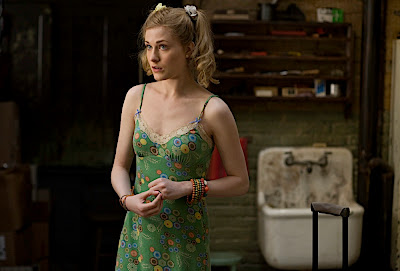
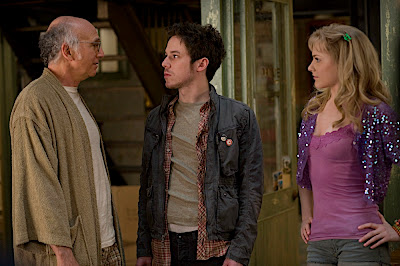
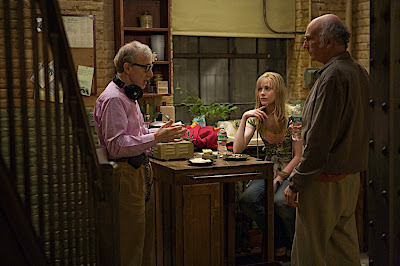
DVD Review: Whatever Works (2009)


Now Available on DVD & Blu-ray


Photo Slideshow


Although I would argue that in addition to luck, the real reason that filmmaker Woody Allen has consistently crafted masterpieces is because he’s just that good, as the auteur wrote in Match Point and shared again regarding Whatever Works, “it’s better to be lucky than good.”

And fittingly for a film that celebrates the randomness that guides our life to cherish "whatever works" with whomever we happen to encounter through chance, the fortune cookie cliché that the third time's a charm also proved true for Larry David’s collaboration with Woody Allen.


Despite trying to talk Allen out of giving him the role that had originally been crafted for Zero Mostel, Larry David rebounded
from the debut of his "bald head," in Radio Days and another "tiny part" in Allen's segment of the Scorsese and Coppola compilation film New York Stories into portraying the monologue spouting misanthropic string theorist Boris Yellnikoff in Whatever Works.

We open on David's grumpy older man to discover that a failed suicide attempt has left Boris minus a wife and plus a limp before confessing that not only is he "not a likable guy" but that we've also begun watching what is "not the feel good movie of the year."


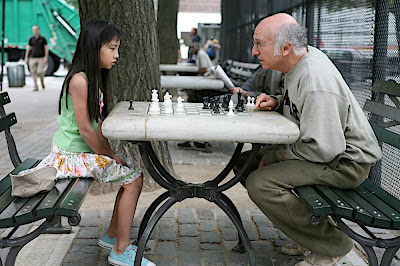
Yet as theorists would no doubt have calculated during the opening credits, the combination of Allen and David is mathematically sound in the humor department. Soon we learn that the former contender for the Nobel Prize in Quantum Mechanics now divides his time bullying children unlucky enough to have been placed under the former Columbia professor's tutelage as a chess professor in the park and discussing the meaninglessness of life with his best friends.


However, since even his friends find Boris far too much to bear from time to time, it's the great gift of chance when Evan Rachel Wood's beautiful but dim-witted escapee from the southern beauty pageant circuit winds up a cold, huddled mass outside his New York door. A runaway from the religious right just barely out of her teens, Wood's Melody St. Ann Celestine is the opposite of the uptight Boris in every single way. But Melody's guileless demeanor and unwillingness to judge Boris' obsessive compulsive need to sing "Happy Birthday to You" twice while washing his hands slowly charms and disarms him. While it starts out slowly, soon the irrational relationship of the two from strangers to platonic roommates evolves when her admission she's developed a crush on him prompts him to encourage her to date others.


Of course, once she does date a man other than Boris, Boris realizes how much he's grown accustomed to the sunny, supportive, and eager to please Melody who's taken to spouting his misanthropic monologues of molecular mayhem back at him. A beautiful girl who gazes in wonderment at an IQ is clearly a seductive thing to a loner like Boris so visibly baffled by the scientific improbability of it,
he decides that the random chaos that led them to the same apartment may as well transfer to marriage, despite the fact that he has more interest in companionship than anything remotely carnal.


However, regardless of the fact that attraction is impossible to define and a person's physical appearance can increase or decrease as we uncover more about their personality, Allen wisely adheres to the old-fashioned feel of the film knowing full well that the potential of the "ick" factor of such a May/December coupling could derail the movie for certain factions of the audience. To this end, he leaves everything behind closed doors in a film that is tonally the opposite of the sexually charged Vicky Cristina Barcelona and by his own admission, Allen creates a "much more sentimental picture than the story would have you think."


On the surface, of course, it's easy for viewers to mistake the far more depressive curmudgeon portrayed by Larry David for a sort of distant cousin to the fictitious version of Larry David the comedian portrays on his fully improvised HBO series, Curb Your Enthusiasm. Likewise, in the same token, enthusiasts of the filmmaker's work will certainly acknowledge that Allen's humanistic obsessions, character devices, plot-lines and situations echo earlier films ranging from Annie Hall to Crimes and Misdemeanors and others since Allen's oeuvre has spanned over forty years.


However, in my mind Whatever Works has much more in common with
Vicky Cristina Barcelona than one would immediately think. For unlike characters who broke apart even though they needed the eggs of relationships in Annie Hall or were separated by a continent in Manhattan, even when Melody's relatives (Patricia Clarkson and Ed Begley Jr.) show up out of the woodwork to discover their true selves in New York City and their arrival tests Melody and Boris' marriage, we're provided with an extremely different result by the time the film ends.


Perhaps it's due to age or perhaps it's because he finally gave up psychoanalysis or theorized that just because everything is fleeting it doesn't necessarily have to coincide with doom but whatever the case may be and--regardless of the quality of the films themselves-- Allen's post '80s comedies are becoming lighter and more life-affirming with each passing year. Additionally, although it was written in the past, Whatever Works may as well echo Woody Allen's own statement of "the heart wants what it wants," regarding his relationship with Soon-Yi Previn or the idea that knowing yourself fully before you can successfully be with someone else is key.

So along with Melody we find that by looking past the insults and defense mechanisms to see the real person or just giving into luck, happy accidents, or whatever makes sense for us that doesn't harm another individual is the answer in this life. Thus we realize that the misanthrope was a romantic softie all along and despite some of the familiarity of Whatever Works, it nonetheless provides comfort, solace and joyous cinematic escape from mindless summer movies, economic hardship, and increasingly bleak newscasts.


In one of the simplest yet most beautiful scenes, Melody opens Boris' eyes to the medicinal pleasure of classic Fred Astaire movies to ease his panic attacks, thereby affecting the way that the two relate to one another via cinema. And although on a purely film buff level, the entire time I felt that it was simply a more romantic version of the way a Marx Brothers movie literally saved Allen's life in Hannah in Her Sisters, u
pon my second viewing I realized that there's another layer to it as well.


Essentially and for several decades, Woody Allen's films have served and will continue to serve that very purpose for generations of viewers in reminding us of the impact that his unique brand of cinema has had on our lives. And as such, Whatever Works works marvelously for me as that rare movie that makes you want to reach out to strangers, call an old friend and overall, give yourself a break when you realize that all planning aside, be as good as you can be but enjoy yourself because it's all luck and lucky am I to have found Woody Allen's movies.


Text ©2009, Film Intuition, LLC; All Rights Reserved. http://www.filmintuition.com

Unauthorized Reproduction or Publication Elsewhere is Strictly Prohibited.

2/02/2009

TV On DVD: Make 'Em Laugh (2009) -- 3-DVD Set

The Popular PBS 6-Episode
Study of America's "Funny Business"
(With Plenty of Funny and Not as Much Business)
Is Now Available

Order the DVD


Check out the Companion Book

(In Print & On Kindle)


Delicious
Bookmark this on Delicious
submit to reddit
Print Page

Digg!

"Funny is funny. No matter what language. No matter who says it."
-- Rose Marie

Ms. Marie may indeed be right-- much like that memorable scene in Reality Bites when aspiring filmmaker Winona Ryder is asked to define "irony," then struggles and replies, "I know it when I see it," the same is essentially true of comedy.


Hard to pinpoint and even harder for it to be successful as we all learned from witnessing the crash and burn of our favorite comics as they mug too much in the pursuit of a laugh (Mike Meyers in The Love Guru, Steve Martin in The Pink Panther) but we definitely know it when we see it.

A documentary about comedy in the United States-- whether it's silent comedy, slapstick, stand-up, situation comedy, variety show format, reality television, or satire-- is all explored in this terrific six episode documentary from Michael Kantor who managed to put together the equally brilliant six-part piece on Broadway: The American Musical back in 2004.


While he won't be giving Ken Burns a run for his money anytime soon focusing on entertainment and relying mostly on interviews and rare archived footage rather than government documents-- it's a damn sight more entertaining than some of the undeniably brilliant, yet intellectually exhausting Burns documentaries.


As Kantor quotes E.B. White in the introduction to Rhino Entertainment's beautifully boxed three disc set, "Analyzing humor is like dissecting a frog. Few people are interested, and the frog dies of it." While I definitely disagree that few people are interested-- there is fear when one breaks down the funny that the spell will be broken, the illusion never the same, as though we were let behind the curtain at Oz and then told we must return to Kansas and forget everything we saw when we were there.

Yet, Make 'Em Laugh is more a celebration of humor in this country or more precisely, one that's nearly exclusively focused on the twentieth century--save for a brief twenty-first century comedy health check-- so to speak as the interviewees discuss modern marvels like The Daily Show, The Colbert Report, Real Time with Bill Maher, and the films of Judd Apatow before ultimately admitting that in a sense humor as we knew it is evolving, as reality television and YouTube overtake the situation comedy (already growing scarce) and the business goes through another incarnation.


Although all six parts recently aired on PBS during the past month, Rhino loads the discs with bonus content that goes further in-depth with some of the interviewees as many viewers-- including this one-- found themselves even more entranced by the astute observations of the professionals working in the trade than by the "experts" or narration by Amy Sedaris (whose involvement I applaud as-- essentially-- save for a few big standouts, comedy has overwhelmingly been a male dominated industry).


The series is broken up into the following episode titles: 1) "Would Ya Hit A Guy With Glasses? Nerds, Jerks & Oddballs;" 2) "Honey I'm Home! Breadwinners and Homemakers;" 3) "Slip On a Banana Peel-- "The Knockabouts;" 4) "When I'm Bad, I'm Better-- The Groundbreakers;" 5) "Never Give A Sucker An Even Break-- The Wiseguys;" 6) "Sock It To Me?-- Satire and Parody."

Featuring astute observations by comics and historians alike, Make 'Em Laugh is a comedy lover's dream, unearthing some rare and classic footage of old routines by early silent pioneers like Harold Lloyd, Buster Keaton and Charlie Chaplin before moving into the realm of The Marx Brothers, Bob Hope, George Burns and Gracie Allen, Jonathan Winters, Mae West, Jerry Lewis, Bob Newhart, Mort Sahl, Lenny Bruce, W.C. Fields, Carol Burnett, Phyllis Diller, Joan Rivers, and many more.


And it isn't long before we begin uncovering patterns throughout the comedic work of the decades investigated and above all the way that past comics have influenced the subsequent generations as seeing early Winters improvisational material and his joke about being from outer space (but not being able to talk about it) seemed to have a startling impact on Robin Williams and George Carlin's love of language (including those famous words you're not aloud to say on television) seems to find its way into the semantic driven jokes of Jerry Seinfeld whose made a career of playing with phrasing and reveling in linguistic gymnastics.


Particularly significant, not just for its inclusion of such legends as Cheech and Chong, Laurel and Hardy, Woody Allen, Andy Kaufman, Steven Martin, The Smothers Brothers, Eddie Murphy, and many, many others-- where Make 'Em Laugh truly succeeds is in championing some forgotten or overlooked performers those of us in my generation may not be familiar with including Moms Mabley, Paul Lynde, Tom Lehrer, and others-- just like other recent PBS specials like the Mitzi Gaynor documentary-- Make 'Em Laugh finds you longing for a comprehensive set or release of some of the work of these comedy masters.


Whether or not they come from outer space, as so many comics joke throughout in describing one another seems unfathomable although their skill cannot be denied even though what one person finds funny differs from person to person (as I felt myself wanting to fast forward through The Three Stooges yet relishing in every detail about The Marx Brothers). And although the special never quite manages to figure out just what it is that makes some people so incredibly funny-- the answer it seems could very well lie in the topic itself as humor in America seems to have an overwhelmingly blue-collar, pull-yourself-up, "respect me, damn it" quality about itself as host Billy Crystal notes that so many comedians suffer from intense anxiety or emotional issues.

And sure enough, a recurring theme is focusing on the revenge of the nerds or those who were picked on as they chide that Woody Allen himself wasn't going to get women but because he's funny, he would succeed and Phyllis Diller began performing at thirty-seven to escape a horrific marriage, dragging five kids along from show to show and indeed the situation comedy or as Jeff Foxworthy jokes-- the idea that everyone's family is crazy-- helps us all make it through the rough times.

It's distinctly American to never give up, to keep fighting and to aspire for perfection even if you're aiming inward for self-deprecation or outward as we're lucky enough to live in a society where people like Jon Stewart and Stephen Colbert can keep our leaders in check due to the first amendment. And sure enough, subtly laced underneath all the hilarious remarks and footage, the story of our country is being told, personified by those throughout who used their comedy or turned to the genre to escape ridicule as Chris Rock cleverly reveals that there's something about being picked on as a kid that makes one work harder as he's never satisfied, noticing everything, and wanting to strive for perfection so as never to get picked on again.


As Rowan & Martin's Laugh-In producer George Schlatter argues, "we should treasure our comedians more than we do, because they contribute more to our society than we're aware of,"and inevitably all one needs to do to understand his view is to watch ten or twenty minutes of this roughly six hour set to realize that is precisely the case. And moreover, it's through the wide range of voices whether it's a mischievous redhead named Lucille Ball, wacky stoners like Cheech Marin and Tommy Chong, a blue-collar mother like Roseanne, the audacity of Lenny Bruce, a wild and crazy Steve Martin, a curmudgeon like Larry David, a wisecracking Bart Simpson, and countless others that help define our societal landscape just as much as who we vote for president, as evidenced when Richard M. Nixon decided to request a "sock it to me," by appearing on Rowan which he once stated helped win him the presidency. Thus, in the end, comedy-- just like baseball, apple pie, and jazz-- is America.


1/19/2009

DVD Review: Vicky Cristina Barcelona (2008)


Spanish Seduction & Sophisticated Wit
Arrive on DVD & Blu-ray
1/27/09


Woody's Muse: Scarlett Johansson


Digg!


An Introduction to the Film and DVD

Recent winner of the Golden Globe for Best Picture Musical or Comedy, Vicky Cristina Barcelona-- one of two superior films from Woody Allen released in 2008 following Ewan McGreggor and Colin Farrell's turn in the dark Cassandra's Dream-- is set for release on DVD on January 27, 2009.


Debuting on both DVD and Blu-ray in time for both Oscar consideration along with giving the chance for my fellow Independent Spirit Award voters (remember to cast your ballot soon!) a reminder of its lovely brilliance and understated charm, recently The Weinstein Company and Genius Products were kind enough to send me an advance copy of the DVD for review.

In taking in the feature for the third time-- being so charmed by it during my first viewing in a small press screening early in the morning that I feared I'd taken so many notes, I needed to go again to watch it with an audience, this time around I found myself even more captivated by its sophistication. And granted, as a huge Allen devotee, I must admit to being disappointed by the lack of extra features, having experienced countless other films of the writer/director's on DVD with similar sparse presentations, lessened the blow considerably.


While it's no doubt the type of film that will make one want to travel not only to Barcelona but especially Oviedo which our seductive lead Juan Carlos (Javier Bardem) whisks both Vicky and Cristina (Rebecca Hall and Scarlett Johansson, respectively) early on in the ninety-seven minute delightful romp, I'm thrilled to announce that as someone who's recently been spoiled by Blu-ray riches in evaluating the quality of picture and sound, the DVD transfer for this film is one of the best for a standard disc that I've seen since Focus Features' release of Burn After Reading.


Like Burn-- incidentally, a fellow Globe nominee for Best Picture Comedy-- after a few moments, I nearly mistook the DVD for Blu-ray quality although granted I was viewing the film in my player with the up-conversion making it seem as though the Spanish countryside had invaded my living room.


While the film should definitely garner some Oscar attention and the terrifically funny Penelope Cruz gives her best performance since Volver and has won an amazing number of accolades for her turn (including recognition from the National Board of Review), this time around, I was especially captivated by Rebecca Hall.


In a layered and subtly nuanced portrayal, she manages to convey several conflicting thoughts despite her deft Allen dialogue in two key scenes including the first when Juan Carlos (wearing a bullfighter like red shirt) makes his "indecent proposal" and the second when he toys with her when the two dine alone later before an evening of Spanish guitar and impulsive lovemaking.


While the ensemble is perfectly in tune with their roles as obviously some parts (including Johansson's, of course) were written expressly for the actors, this time around it was Hall that I felt was most deserving of a second look and hopefully Oscar will take note, this year possibly breaking free from their tradition of avoiding comedies like the plague to see the human comedy and wit evidenced in every frame of this-- one of my very favorite films of last year.

Review:
Vicky Cristina Barcelona

Theatrical Review Publication Date:
8/15/08


Woody Allen signs up Scarlett Johansson for Spanish lessons in love with Professor Javier Bardem.

One of the most annoying things about being a writer is that I’m best able to process things with my pen or at my keyboard when I’ve had a moment to let things sink in. I’m a big believer in note-taking, especially in film criticism because automatic writing allows some pools of unrealized creativity to eke out. Sometimes I discover things of which I’d been previously unaware until I read back the barely legible sentence fragments I’d scribbled out on a tiny notebook in a darkened theatre. Yet, as a writer first and foremost, I have a harder time with extemporaneous speaking.


The wonderful PR agencies and studio representatives who are kind and courageous enough to screen their films for us wait expectantly with notebooks in their own hands in well-lit lobbies, hoping to get our immediate reactions. Often I struggle to come up with something that’s not only intelligent but balanced. If I hate a film, as a polite Midwesterner (or it could be just feminine instinct), I always find that I want to find something — anything — to say about it that’s positive before I apologetically express my dislike.


Yet, intriguingly, when I’m blown away by a film, often I’m nearly equally at a loss for words. Case in point: Vicky Cristina Barcelona. On the surface, it begins as a typical Woody Allen film with a European feel including a voice-over narration which in this case works well since the setting is Barcelona as we follow two American female tourists on summer holiday. Predictably, issues of love, sex, infidelity, and artistic temperament come into play, per Allen’s most frequently visited themes.


Yet, as a huge Allen fan who’s seen every one of his films (including some I can practically recite from memory), I couldn’t get over the feeling that had I walked into the theatre after his traditional black and white credits had rolled. Just five minutes late and with no prior knowledge of the piece, I wouldn’t have guessed in a million years that it was a film made by Woody Allen.

And admittedly some of his works — even the light, entertaining trifles of the past few years — have felt self-conscious and claustrophobic, which make his epic tragedies like Match Point and Cassandra’s Dream far greater by comparison. However, I'm thrilled to write that Vicky Cristina Barcelona is breezy, earthy, intoxicating, and frankly, sexy as hell.

And yes, I’m aware that as a professional, “sexy as hell” isn’t the most astute observation yet as the only female critic in attendance with a small crowd of men no doubt hoping to ogle Scarlett Johansson and Penelope Cruz’s much-discussed “threesome” (which ultimately consists of a passionate kiss and discussion), I felt a need to represent how the film played to a female audience and one of the first phrases out of my mouth to the eager representative was in fact “sexy as hell.”


Sex has always been Allen’s topic de jour, but whereas it’s been so cerebral in his other films, discussed to death so that it’s nearly clinical (for example, Annie Hall), this film celebrates love, sexuality, and humanity in a life-affirming and dare I say optimistic approach, atypical of the notoriously pessimistic, introspective Allen.


Why so sexy, you may ask? Well, surely the country’s setting helps, photographed to breathtaking effect by award-winning Spanish cinematographer Javier Aguirresarobe (Talk to Her, The Sea Inside, The Others) as does the beauty of the film’s leads including Johansson and Cruz, but mostly, the sex appeal is best personified in the unexpected, pitch-perfect, dreamy performance by Javier Bardem.


Bardem, best known to audiences for his Oscar winning turn playing the “bubonic plague”-likened killer in the most recent Best Picture winner, No Country for Old Men, continues to amaze, showing colors to his personality we never knew existed such as warm humor and irresistible mischief, and Barcelona makes terrific use of his range from the start.

Although one could nearly anticipate the internal groans in audience members as the film began using a lengthy narrative voice-over by introducing us to our leads, ultimately the old-fashioned technique sort of fades into the background as the film goes on — still commenting, yet in a way that never overpowers the main storyline. Quickly we become acquainted with best friends, the grounded and responsible Vicky (Starter for 10 actress Rebecca Hall) and the often dissatisfied, feisty, and passionate Cristina (Allen’s latest muse, Scoop and Match Point star Scarlett Johansson). Whereas Vicky has her life all planned out, pursuing a Master’s Degree in Catalan Identity and planning an upcoming wedding to the decent, stable, and successful Doug (Chris Messina), Cristina is endlessly searching for any new adventure to whisk her away.


They both get much more than they bargained for when, staying with family friends (Patricia Clarkson and Kevin Dunn), Cristina catches sight of the smolderingly mysterious presence of Bardem’s Juan Antonio, an artist still reeling from a bad breakup with his ex Maria Elena (Cruz) who tried to murder him before they parted. Whereas most women would run screaming in the other direction upon hearing tales of domestic violence, Cristina becomes all the more intrigued, later using her feminine wiles to attract his attention at a nearby bar. A few hair tricks and eyelash bats later, Juan Antonio is soon at their table, first asking if the two women are American before fixating on Cristina with the painterly come-on, “What color are your eyes?”


Predictably, loosened up by the wine, thrown off her game by his gaze, and generally disoriented by her foreign surroundings, Cristina falls for it hook, line, and sinker. Vicky is far more skeptical, especially when, just seconds after he begins chatting them up, he proposes the two travel with him by plane for the weekend to Oviedo, in order to look at a favorite statue of his, drink wine, and make love in an only-in-the-movies speech which recalls Sirk’s Written on the Wind. And while we can sense Cristina mentally packing her bag, Vicky finds his bravado obnoxious, telling him off before ultimately, and predictably, she ends up going along to chaperone her friend.


Of course, once they arrive in Oviedo, Vicky is quick to realize that she may have misjudged the painter and soon, both women are taken with Juan Antonio, which sends Vicky into a guilt-stricken panic as she’s promised to the dull but secure Doug and Juan is endlessly prone to obsessing about his ex. Things get far more complicated when, late into the picture, Maria Elena reenters his life in a firestorm of neurosis and passion.


Cruz attacks the role with a fearlessness we’ve never seen before and she’s sure to generate Oscar buzz for a performance that for once doesn’t treat her as an exotic, angelic beauty, but celebrates the complexity of her larger-than-life artistic ability. Allen, who had only seen the actress in her Oscar nominated Volver according to the press notes, was thrilled when Cruz’s reps contacted him directly upon learning that his latest feature was to be set in her homeland. And while, she picks up the pace considerably, it’s relatively easy to get swept up in the spark-filled scenes between her and Bardem without realizing just how good some of the supporting players are in the less showy roles. This is most notably easy to do with the talented Rebecca Hall’s understated, subtle and contemplative Vicky as well as Johansson, who, in her third collaboration with the auteur, is game for anything he throws her way.


With what could have been a rather obvious send up of Jules and Jim, Woody Allen finally hits his stride with this frothy, sexy work. Undeniably hip, refreshing, and wonderfully indicative of the twenty-first century, Vicky Cristina Barcelona showcases a side of Allen that wasn’t evidenced in the classically executed (enjoyable yet mild works) The Curse of the Jade Scorpion, Small Time Crooks, and Hollywood Ending.


Although given the gorgeous leads and locales, all audiences are sure to find themselves taken in by the film’s sex appeal, Vicky Cristina Barcelona is an entirely welcome summer inclusion for sophisticated, thinking women after several months of fun yet admittedly testosterone-fueled juvenile buddy comedies and CGI-driven superhero pictures.


And much like fellow New York filmmakers Martin Scorsese before him did with The Departed and Spike Lee offered with Inside Man, Allen has released one of his best works in years, by widening his lens, opening his mind, and traveling to Spain. Oh and by the way, did I mention that it’s sexy as hell?