Showing posts with label Colin Firth. Show all posts

9/28/2009

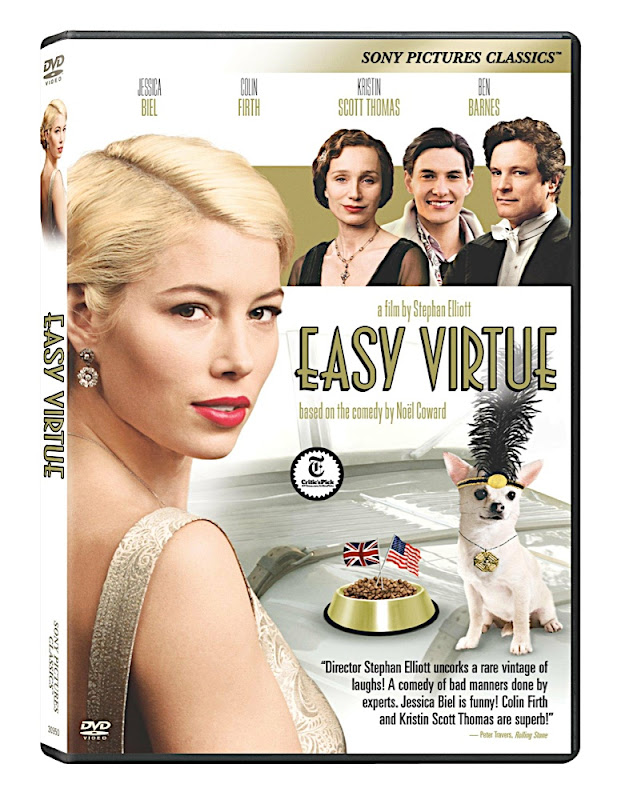
DVD Review: Easy Virtue (2009)


Now Available


All film buff allegiance to Alfred Hitchcock aside but on an enjoyment scale, the idea of watching a silent version of a Noel Coward play is roughly on par with being presented a single crayon to use for an extraordinarily detailed coloring book. Of course, if the stimuli is interesting enough, you’ll make due with what you have and thus, since in the ‘20s sound wasn’t readily available when Hitch filmed Coward’s 1924 play Easy Virtue four years later in ’28 during his London years, he did so silently.
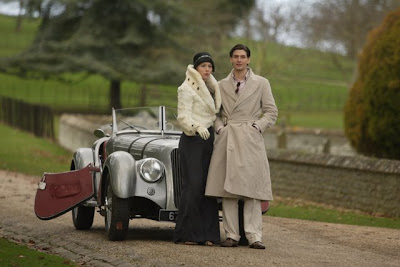

However, I'm sure that those who've read the playwright's work or seen it before will no doubt agree that Coward was a man worth waiting for the new technology to fully appreciate his daring plays which were filled rich witticisms and his penchant for ridiculing social conventions like marriage and child rearing which were filtered-- as in the case of Virtue-- via the culture clash of an American feminist who finds herself in the stuffy England countryside.

And indeed this exceptionally well-made adaptation co-written and directed by Adventures of Priscilla, Queen of the Desert and Eye of the Beholder Australian filmmaker Stephan Elliott is just the right proof one will need to come to that same conclusion. Likely to entertain not just Coward devotees and also those who’ve enjoyed studying all things relating to the Master of Suspense, Elliott's Easy Virtue is doubly fascinating in the latter respect when you consider Hitch's affinity for Coward's work. To explain, by viewing Virtue, it helps retroactively foreshadow the type of unconventional humor that Hitchcock would seek out throughout his eventual career post his own '28 Virtue in films such as The Lady Vanishes, Mr. and Mrs. Smith, The Trouble With Harry and others.
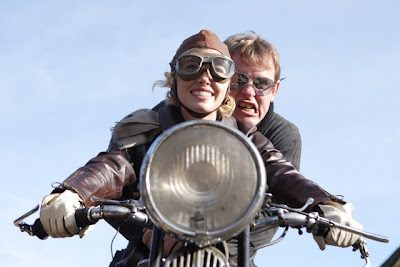

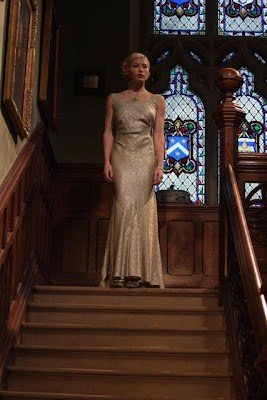
In Jessica Biel's best role and performance since the one that first bewitched many film lovers in The Illusionist, she plays a character we are quick to ascertain is slightly older than Ms. Biel in reality and one whom additionally is much wiser than her years. A widowed feminist race car driver from Detroit who's fresh off the high of winning the Grand Prix, Biel's Larita finds herself caught up in the excitement in Monaco when she waves to a thunderously applauding crowd and her eyes stop on the attentive eyes of the young handsome John (Ben Barnes) whom we gather is more than a little smitten with Larita by the time she appeared before her fans.
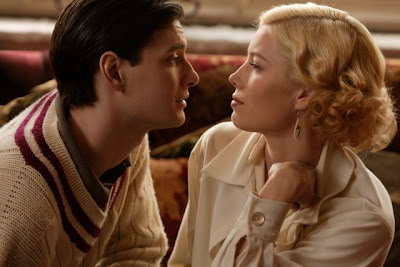

Using the old love-at-first-sight romantic comedy staple of marrying first and discovering each other's backgrounds later, Larita and John visit his dysfunctional family in the English countryside where even before they arrive and as opposed to John's initial adoration, his mother Mrs. Whitaker (Kristin Scott Thomas) is predisposed to loathe the feisty, uncouth American on sight.
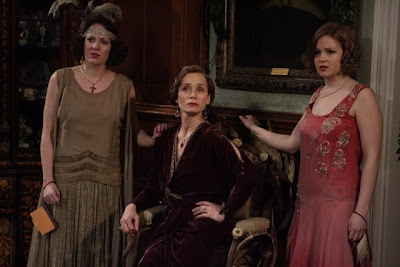

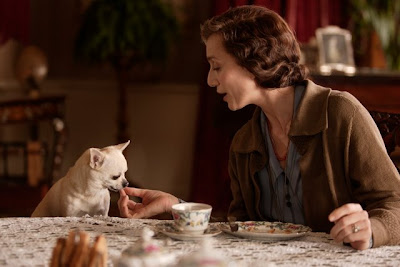
Scott Thomas perfectly embodies an icy wicked witch complete with a "yippy" dog too in the form of a Chihuahua named Poppy whose picture takes up more space in Mrs. Whitaker's home than the portraits of her equally offbeat daughters, Marion (Katherine Parkinson) and Hilda (Kimberley Nixon). Larita-- the new Mrs. Whitaker-- and Scott Thomas' firm main Mrs. Whitaker clash almost right from the start as despite her kind attempts to fit in with her new in-laws, Larita fails at every turn whether mildly due to an uncontrollable allergy to the woman's flowers or majorly by an unfortunate and macabre accident with the dog.


Although John initially tries to stay on his new wife's side, we quickly realize he's still unable to clip the apron strings that bind him to his mother especially when she uses guilt, familial obligation, an old neighbor sweetheart he'd been expected to marry, and financial woes to keep him in line, deftly playing these cards at precisely the right times. As John is too weak, his long-suffering, unhappily married father Jim is too strong for Mrs. Whitaker and Kristen Scott Thomas and Colin Firth fall into an easy banter like the parents in Jane Austen's Pride and Prejudice, no doubt also aided by the fact they'd worked together previously playing a married couple in The English Patient which helped launch both of their careers internationally.
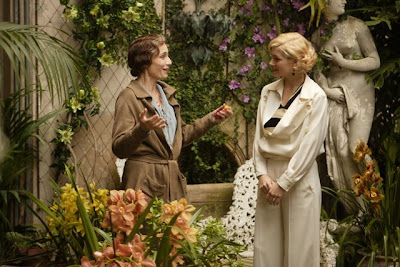

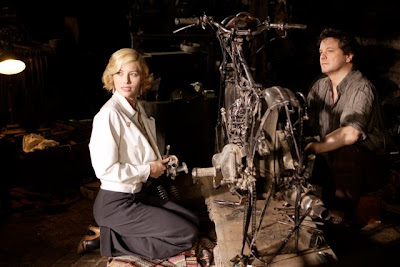
And throughout the obvious culture clash that intriguingly presents the English countryside as even more gossip hungry and cliquish than London since in contrast to the acres of land, the people make it seem as claustrophobic as a rowdy boarding house, Larita finds an important ally via the elder Jim Whitaker. Therefore, soon the two bond over Firth's passion for an old motorcycle he's restoring which reminds Larita of life back in Motor City as well as their pasts that are filled with battle scars when we learn more about Larita's former husband and Jim's survivor guilt as the only man his age still alive in the community after the first World War.

Intelligent and inventive yet still identifiable with modern audiences since Elliott and Sheridan Jobbins ensured their script went beyond Meet the Parents like gags to play up issues to which we can relate today concerning the pasts of Larita and Jim while still not venturing so far from Coward's original source material in the period film that it calls too much attention to itself a la the awkward reinterpretation of Oliver Parker's 2002 Oscar Wilde adaptation of The Importance of Being Earnest.

Nonetheless the decision to incorporate modern songs like "Car Wash" and "Sex Bomb" and orchestrate them in the style of Cole Porter and George and Ira Gershwin struck me as peculiar initially. And although I do feel it's still something of a flaw overall, the saving grace of Elliott's decision was to make sure the music never overpowered the scene by making the film's action our focal point and handling the selections carefully to make sure the period music was far more prominent and echoed in dialogue along with song and dance moments throughout that just felt right.

Moreover, as opposed to staging Moulin Rouge-esque production numbers (aside from the funniest and most unfortunate display of American sarcasm and joke delivery just not translating overseas in a Can-Can crisis), I was stunned to learn after the film ended that Barnes and Biel had actually performed some of the songs on the soundtrack.

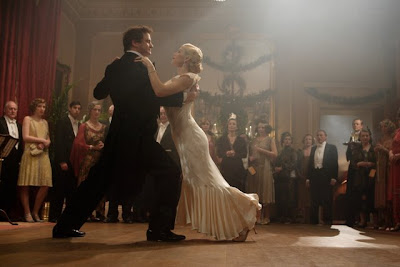
Traditionally, this would've been a major marketing push in a Hollywood production to sell the soundtracks or by placing showstopping sequences in the film yet Elliott underplays the musical accompaniment and the most breathtaking scene of the film isn't even sung as Firth and Biel dance a tango at the end of the picture that replaces Coward's banter with action in telling the story yet still in a way that couldn't have had the same impact in the silent production.

While I'm unsure how the film played overseas, sadly Easy Virtue was a blink-and-you-missed-it release here in the states as it was overpowered by testosterone popcorn movies. However, thankfully given Sony Pictures Classics' beautiful transfer to DVD and Blu-ray, I'm hopeful the work will move beyond appealing to the Coward and Hitchcock crowd and garner more interest on disc. Additionally in the same turn, it's sure to remind admirers of Biel who suffered through Powder Blue along with those who've been unimpressed with her choices since The Illusionist just how much she's capable of as an actress who can walk the dramedy fine line and go toe-to-toe with Firth and quip-to-quip with Scott Thomas.

Text ©2009, Film Intuition, LLC; All Rights Reserved. http://www.filmintuition.com
Unauthorized Reproduction or Publication Elsewhere is Strictly Prohibited.

4/13/2009

New on DVD & Blu-ray for the Week of 4/12/09

Overstock.com, Inc. 234 X 60

Netflix, Inc.

Jen's Picks of the Week:

Classic:
Pillow Talk: 50th Anniversary Edition


Foreign Flick:
The Pope's Toilet


DVD of the Month Club for Award Winning Film

Miniseries:

Pride and Prejudice [Blu-ray]


ShopPBS.org - All purchases support PBS programming

New Blu-ray:
Mean Girls


Obscure '80s Release:
Irreconcilable Differences


TV on DVD:

Ruth Rendell: Set 4


Visit Acorn Online for Unique Gifts and Videos


Delicious
Bookmark this on Delicious
submit to reddit
Print Page

Digg!

8 Mile [Blu-ray]


Cranford [Blu-ray]


Dark Matter


House of Saddam


Knot's Landing:
The Complete Second Season


The Last Kiss [Blu-ray]


Lost in Austen


Mary Higgins Clark Collection


Mask of the Ninja


Mean Girls [Blu-ray]


November Son


Paris


Pillow Talk:
50th Anniversary Edition


The Pope's Toilet


Pride and Prejudice [Blu-ray]


The Reader


Ruth Rendell: Set 4


She Fell Among Thieves


The Spirit


Strange Wilderness [Blu-ray]


Wings: Final Season


Additional New Releases


SecondSpin.com
Apple iTunes
15% off $50 –4/12 thru 4/18 only fye.com
Free Shipping at Buy.com!

9/02/2008

New On DVD for the Week of 8/31/08


Digg!

One of my favorite films from the 2008 Phoenix Film Festival-- Helen Hunt's feature filmmaking debut Then She Found Me gets ready for its digital close-up today on DVD. Vastly superior to another new rental, Steve Conrad's atrocious dramedy The Promotion, starring John C. Reilly and Seann William Scott, when all is said and done, Found may be one of the best films released this year. As Oscar season officially begins this month (some say with the release of the next offering from The Coen Brothers who dominated the Oscars), only time will tell but until then, do yourself a favor and discover Then She Found Me starring not only Hunt but Colin Firth, Matthew Broderick, and Bette Midler.

P.S. A Note to the Feedblitz subscribers-- to answer a recent e-mail question-- lately I've been inserting video clips and trailers into my reviews. Unfortunately they don't transfer the "html code" to your inbox so if you'd like to experience the videos for yourselves, feel free to click on the post title in your e-mail or visit us right here at The Film Intuition Review Database.

7/30/2008

Mamma Mia! (2008)


Apple iTunes

Director: Phyllida Lloyd


I was raised in the era of “please and thank you,” “sir and ma’am,” The Golden Rule, and the firm belief that if one doesn’t have anything nice to say, one shouldn’t say anything at all. It’s a thought that goes back centuries to Jane Austen’s time when the women were advised to stick to the topics of either inquiring as to another’s health and/or restricting their comments to the weather.

Unfortunately, as a film critic, I seldom have that luxury and while I feel I’m far gentler than some critics who curse, berate, exaggerate and figuratively crucify films they loathe—although this being said my favorite critic Roger Ebert summed it up best in the title of a new book, I Hated, Hated, Hated This Movie—instead, I turn from those manners implanted in me from my youth and go to an old Hollywood standby.

It’s become a movie premiere joke that if an attendee dislikes a film but doesn’t want to say this to another’s face, they usually begin by complimenting its cinematography in the fierce hope the topic will soon change. It’s a strange custom—“I really loved the cinematography” in Hollywood can be code for “I’d rather have a root canal than sit through that thing again,” yet cinematography is one of my favorite aspects of filmmaking.

However, in the case of the dreadful Mamma Mia! which is only slightly better than another ghastly film I’ve just seen but can’t even bring myself to review (Ellen Page in The Tracey Fragments which is so dreadful that it makes you start to rethink Page’s performance in Juno) but yet still worse than the mirthless comedy The Promotion, the only thing I can think to praise is the cinematography.

And the sad fact is, I’m not even being ironic or coy—director of photography, the amazing Sleuth and Venus lensman Haris Zambarloukos actually topped his underrated work on last year’s Sleuth. His picturesque, exuberant, and breathtaking Mamma Mia! shots that were so jaw-droppingly gorgeous, they helped detract from the much-crucified sadly giggle-inducing awfulness of Pierce Brosnan’s singing. Additionally, like a morally questionable yet talented plastic surgeon, they helped make a film I can only call shockingly “ugly” just by its direction, odd choreography, and off-putting humor, seem like any given frame could be clipped out of the reel and hung in a museum. Indeed, the travel board of Greece’s island Kalokairi, may want to think about hiring Zambarloukos to film any future travel commercials, yet I feel it’s probably superfluous as the monstrous hit, Mamma Mia! has probably garnered enough fans who’ve decided to visit just on their appreciation for the Broadway musical alone.

Before I even begin to address the film itself, let me preface this by saying—at great risk to my already nerdy reputation-- that in the late 90’s, there was no bigger ABBA fan than yours truly. Their greatest hits album Gold and its sequel had a permanent place in both my home and car CD player and I was often busted at stoplights by drivers in other cars who saw me singing my heart out along to the lyrics penned by Sweden’s greatest export, which was especially embarrassing when this very incident happened not only one block from my college but I was caught by my crush of the week who luckily found it charming, yet proceeded to tease me the rest of the semester by belting out the chorus of “Take a Chance on Me” whenever he saw me walk down a hallway. (Naturally, I took this as an invitation!)

In fact, super-fan that I was, I annoyed my DJ cousin for ABBA requests at receptions he worked until he clued me in that in the DJ world, there’s nothing less hip than a woman requesting “Dancing Queen.” While I told him that any other track would suffice, all I got was an eye-roll and a pat on the back but fortunately, after viewing ABBA: The Movie far too many times on VH1, I began to outgrow my love of the band… until-- that is--word came ‘round that their music had been used throughout a new Broadway hit, Mamma Mia!

It took a few years until I saw the show in a touring company in my hometown and while indeed it was fun to see others enjoy ABBA’s music (despite the overabundance of misguided middle aged men and women dancing and singing along in the aisles which instantly cured me of any major worship of the band), I couldn’t get over the feeling that the show itself was a bit forgettable and overrated.

Yet, to misquote the old Elvis slogan, I assumed that millions of fans around the globe can’t be wrong so when I learned it was going to be adapted to film, as a huge Hollywood musical lover (I know, I just get geekier by the minute), I hoped for the best. Initially, I was skeptical when I heard that Meryl Streep had been selected for the lead role of Donna, the film’s heroine whose soon-to-be wed twenty-year-old daughter Sophie (the adorable Amanda Seyfried) has unbeknownst to Donna-- after discovering her mother’s vintage diary--invited her three possible biological fathers to the wedding with the hope of identifying which one is her dear old dad.

While Streep is hands-down one of the finest actresses in the world, I just didn’t see her as the singing, dancing, earthily sexy, free-spirited Donna, imagining someone like the musically gifted Michelle Pfeiffer for her role. Thankfully, Streep's actually quite good in the film, managing to nail not only every required emotion but hit the notes in a nice way that never overpowers, and manages to win over any doubters with the showstopper “The Winner Takes It All,” for which IMDb reports the vocals were recorded in Sweden in just one take.

No, the problem isn’t with Streep—although she’s given some of the most unflattering, unfeminine, and downright ugly direction ever captured in a musical, with pratfalls aplenty and cannonballs into the sea. However, far more irritating is the continuous choreography that finds her landing with her legs in the air numerous times as though she’s overdue for a pelvic exam. This seems all the more grotesque when this is precisely the way that Mamma’s original stage director Phyllida Lloyd (who also helmed the film) decided to have her first encounter her three former lovers, as though she’s figuratively readying herself for a fertility exercise or about to give birth just as they arrive... complete with—and I kid you not—a Lamaze type breath out the side of her mouth to blow her hair off her face.

Yikes, baby, we’ve come a long, sad way from Cyd Charisse wooing with her sexy legs, or a flirtatious laugh by Ginger Rogers, or a come hither look by Catherine Zeta Jones in Chicago. And while the actors all try their best—even poor, pitiful Brosnan who always seems like he’s staring off in the distance, longing to leave the set and go home to his family, not to mention his James Bond residual checks— they’re given very little with which to work in an uneven translation from stage to screen-- making the fault lie squarely with Lloyd.

In the end and despite casting such excellent talents such as up-and-coming hunky British Generation Y star Dominic Cooper, the underrated Stellan Skarsgard and my favorite version of Mr. Darcy, Colin Firth-- overall Mamma Mia! is one over-the-top, bawdy, Fellini like carnvialesque freak-show. I'm not sure about Greece but in the tacky land of Mamma, often the women shriek for no apparent reason (including a wasted Christine Baranski who nonetheless kills in her one showstopper “Does Your Mother Know”) while playing dress-up complete with quirky props that probably would never have even made it into the far campier yet more successful John Waters musical turned film Hairspray from 2007.

In addition, don’t even get me started on a downright embarrassing and desperate sequence featuring Julie Walters crooning “Take a Chance on Me” to a nearly terrified looking Skarsgard, who-- par for the course of male stars in the film-- spends a majority of his time like Firth and Brosnan, trying his damndest not to look at his watch in the hopes that the madness will end sooner rather than later (probably much like a majority of heterosexual males dragged to the film).

And as someone who still knows every single word of every one of ABBA’s classic songs (yes, even the forgettable ones like “Money, Money, Money”), not to mention a film buff who truly makes an effort to champion musical filmmaking in the hopes that we’re given more quality musicals to rival the golden age of those unforgettable MGM classics, it breaks my heart to say that the film is one of the biggest disappointments of the summer.

However, it’s one that I can also say in complete honesty and without just trying to politely evade critique, that man, did I love that spectacular cinematography.

4/11/2008

Then She Found Me

Director: Helen Hunt

“I mean it’s not gonna get any worse than this,” April Epner (Helen Hunt) explains after her husband Ben (Matthew Broderick) tells his wife that he’s made a mistake and doesn’t want this married life any longer when she learns that he’s resigned from his post teaching across the hall. Surely audiences, used to beginnings of films where spouses or lovers leave, laugh knowingly in recognition that yes, this must be the worst of it. However this first heartbreak comprises just the beginning of Helen Hunt’s directorial debut co-written by the actress from a novel by Elinor Lipman, which finds April thrown for yet another loop when her mother dies shortly after Ben’s announcement in the achingly real, bittersweet yet surprisingly humorous Then She Found Me.

I say humorous because while those two overwhelmingly depressing events would have led to the end of most stories or in real life would no doubt have caused an individual to withdraw from the world for awhile to cope with their grief, instead for April, they provide the impetus for another surprising revelation that comes in the form of a legal representative who informs April that her adopted mother wants to arrange a meeting. When the devoutly Jewish April meets spunky talk show host Bernice Graves (a pitch perfect Bette Midler), the two women couldn’t be more different yet it's precisely the meeting of these opposites that provides just the right opportunity for growth for each as they learn more about themselves and what they really want out of life as April, longing to be a mother, must contend with her own feelings of maternal abandonment in her quest to conceive a child.

While normally it would have been easy for the men to be lost in the process of this admittedly female-centric work, again we’re treated to a delightful surprise by way of the thinking woman’s sexiest man alive, Colin Firth, who stars as the bitterly divorced father of two who writes book jackets in his car in the school parking lot so that he can be nearer to his kids. Firth’s Frank who takes a liking to April nearly form the start as she accuses him of coming on to her just nine hours after Ben leaves, (which he may very well have been doing), offers April both affection and the family she’s always longed for as she tries to deal with both Bernice and her separation from Ben.

Never allowing itself to be pigeonholed by genre conventions and refreshingly shot with a naturalistic close-up heavy style to heighten its intimacy, Then She Found Me, which played at the Toronto International Film Festival before getting picked up by Think Film and Blue Rider Pictures is building up momentum around the festival circuit where it earned the 2008 Audience Award at the Palm Springs International Film Festival as well as a richly deserved Breakthrough Director of the Year honor for Hunt at ShoWest.

One of my favorite features from the eighth annual Phoenix Film Festival that should strike a chord with audiences who sought out last year’s Waitress, Then She Found Me is further proof that it takes a woman to produce intelligent, emotionally satisfying, and mature fare for women who have been long ignored by our recent overreliance on testosterone fueled tragedies.