Showing posts with label Alfred Molina. Show all posts

7/03/2009

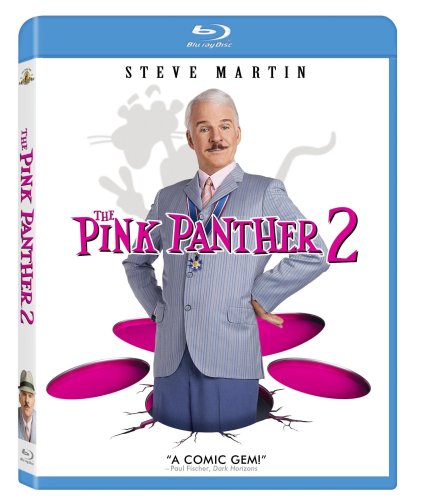
Blu-ray Review: The Pink Panther 2 (2009)


Crazy About Clouseau & The Pink Panther?


Apple iTunes


Delicious
Bookmark this on Delicious
submit to reddit
Print Page

Digg!

MovieBlips: vote it up!

As I sit down to write this I'm reminded of Jack Black's Stevie Wonder related query in High Fidelity when he ponders: "
Sub-question: is it in fact unfair to criticize a formerly great artist for his latter day sins; is it better to burn out or fade away?"


With Steve Martin... I'm not really sure what to think other than beginning to fear he's become so out of touch with reality that he's the only one who thinks these recent films he's made are funny. Furthermore, I'm struck by an even more horrifying question-- namely, for the guy who once upon a time just wanted to make us laugh--has integrity finally just vanished completely and box office greed taken over in its place?


Like the infamous "Black Sox" scandal following the 1919 World Series which found the heartbroken little boy famously asking Shoeless Joe Jackson to "say it ain't so," I'd like to give Martin the benefit of the doubt. But then again when he confesses with a straight face on the Blu-ray of Pink Panther 2 that "it turned out even better than I'd hoped for," I'm at a total loss.


Why would one of my favorite comedic idols with: a Mensa level IQ, a degree in philosophy who is also an accomplished banjo player, a quintessential "wild and crazy guy," author of the brilliantly witty Pure Drivel, and a highbrow art collector who has created and starred in some of the funniest films of our generation not only needlessly crib from the incomparable Peter Sellers? Yet he does so in taking on the genius creation of Inspector Clouseau in the Blake Edwards' Pink Panther movies for an awful 2006 remake and returning once again in 2009 for a sequel to a film that critics and audiences alike mostly couldn't stand?


While of course I've watched enough crime shows to learn that your first instinct is always the one you go with so I'm simply going to cite the money but even with that excuse I'm wondering just where exactly the films make money? It definitely isn't in the United States where Pink Panther 2 opened and closed within the span of what felt like a week following abysmal reviews so I can only guess that the press release may indeed be accurate when the first film is referred to as a "worldwide hit."

Therefore, maybe Panther is funnier in subtitles or when dubbed making Steve Martin's recent comedic phase sort of like Jerry Lewis who's worshiped in France as though he were Chanel... or maybe just like with The Da Vinci Code and Angels and Demons' popularity overseas, Europeans welcome some of the films that just don't strike a chord over here.


And international public relations is not only the key to the film as a "product" but also the bulk of its screenplay (which was given a polish by City Slickers and Fever Pitch writers Lowell Ganz and Babaloo Mandel) which was augmented by the decision to widen its net to cast the most globally diverse and popular stars as the filmmakers could find.


Not only a great marketing ploy to then drum up support in the actors' home countries but also to add to its ridiculously impressive roster of performers that gives a second meaning to the film's new group of detectives dubbed "The Dream Team." The team are hired to find the world's most treasured artifacts (including the Pink Panther diamond, the Shroud of Turin and the Magna Carta etc.) after they were all snagged by the elusive thief, The Tornado.


Although Kevin Kline-- possibly taking a cue from Bill Murray who was smart enough to jump ship and bow out of the second Charlie's Angels movie-- has left the cast, his Fish Called Wanda co-star John Cleese takes his place as Clouseau's superior. However when you take into consideration that one of his earliest big on-screen moments is literally banging his head against a wall, you wonder if deep down even John Cleese wondered just what the hell he was doing there.


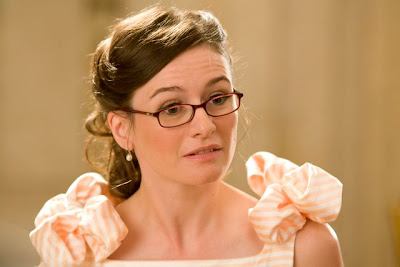
With the adorable, bookish colleague Nicole (Emily Mortimer) setting off sparks with Closeau that neither one can put into words-- their faux romantic relationship is tested as other colleagues fly in such as the drop-dead gorgeous Aishwarya Rai (Bride and Prejudice) who has an only-in-the-movies schoolgirl crush on Clouseau. Likewise, the Cuban-American Andy Garcia throws a wrench into the relationship playing a seductive Italian who decides that Nicole is just the type of woman he'd like to "make-a the babies with... lots and lots of babies... all day long with the babies."


In a great moment of in-joke humor as Martin's Clouseau refers to Garcia as Don Corleone-- I couldn't help remembering that yes, although Garcia did star in Godfather Part III, even that film was more welcome than this one because it closed the trilogy's story and had a purpose. Yet, Garcia who also starred in the Ocean's Eleven movies seems to have no problem disappearing into lackluster ensemble projects even though he deserves much better.


Rounding out the cast we find a Japanese computer expert played by Yuki Matsuzaki (thus, of course prompting Clouseau to go thirty years in the past to the previous films to call him his "little yellow friend") and the always reliable Jean Reno as Clouseau's best friend. Also signing on, Jeremy Irons arrives as a suspect (naturally) and Lily Tomlin appears as an enforcer of political correctness who we view as all too eager to reunite with her All of Me star twenty years later even in something as misguided as this film.

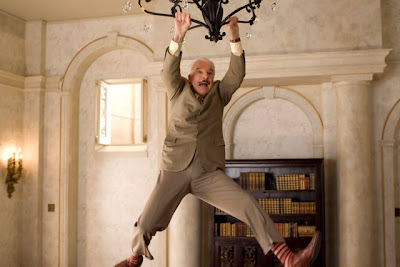
Perhaps the best addition to the group is in the form of Alfred Molina who gets the best scene as he and Martin's Clouseau try to out deduce one another by sizing each other up using their skills as inspectors in an increasingly funny intellectual showdown. However, the script pushes barbs to the background and physical humor to the foreground as mostly the wondrous cast is left with little to do other than to try to cover for the clumsy Clouseau as he falls down a chimney or off the Pope's balcony while dressed as the Pope or just react to his escalating physical gags over the course of the movie.
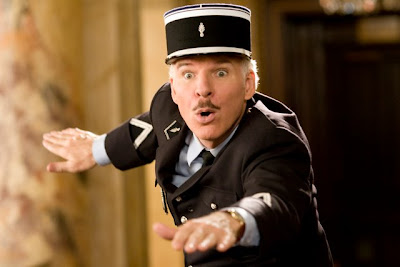


Slapstick and physical comedy are all ramped up to the extreme in Pink Panther 2 as we note in one of the Blu-ray's extra features when it's revealed that Martin did about eighty percent of his own stunts but there were always two doubles around for the most dangerous ones.


However, aside from the aforementioned back-and-forth one-upmanship exchange with Molina-- it's Martin's willingness to go back into his classic comedy skill arsenal and ability to juggle that helped win me over in the film's second worthwhile scene (aka the only other time I genuinely laughed aloud-- making that two chuckles in 92 minutes which was two more than in the original film).

As he and Nicole push the boundaries of their professional relationship over a romantic dinner in Rome, Clouseau decides to select the perfect bottle of wine as inevitably they come tumbling out and bottles are tossed and juggled to perfection until the restaurant goes up in flames. And it's in this scene especially where I felt that genuine credit was owed to Martin to get in there and go for the laughs with close-ups rather than sit on the side-lines and just count the money (which no doubt he did later) but two successful jokes in a film's running time is hardly a success overall.


In fact, the more enjoyable experience was definitely to be found reading the reviews of the work-- which ranged from scathing to hilarious. Peter Hartlaub of the San Francisco Chronicle had the best opener yet when he wrote, "One can only hope that something good is coming from all the bad movies that Steve Martin has been appearing in. I keep waiting for Martin, Robin Williams and Ice Cube to announce that they've used all the proceeds from their unfunny comedies to cure cancer."

While I would also add Martin's Bowfinger star Eddie Murphy and The Love Guru's Mike Myers to that list of comedy offenders, Hartlaub has a point regarding all the wasted money, wasted resources, and wasted talent. And replacing the second walk-out in the form of the 2006 director Shawn Levy (who's since moved onto helming the financially lucrative Night at the Museum franchise with Ben Stiller), Netherlands native Harald Zwart's decision to make the jokes bigger and faster in the second one helped ensure that it was more cartoonish and kid friendly than the first. It's most likely a skill he acquired directing Agent Cody Banks before moving onto (sigh) the needless remake of Karate Kid called Kung Fu Kid slated for 2010.



While per usual for the exceptional quality of Fox Blu-ray discs-- once again the wizards working in their technical department manage to make this one sound theatre-level and sparkle in clarity as much as the famous diamond and the breathtaking Aishwarya Rai. And given the extra features, we're able to see at least how much work went into the film and appreciate it on that level. Although in certain behind-the-scenes inclusions including the gag reel which-- despite being mostly unfunny-- did result in three laughs from me as opposed to the film's two, making me sadly note that like Garcia's Ocean's movies, the Panther works are only fun if you're on the set and not if you're at home viewing them.


Luckily, Fox knew that this time-- given the poor product-- they'd have to do more than just deliver another breathtaking transfer so in addition to a digital copy file, there's a third disc in the set that boasts 27 classic Pink Panther MGM cartoons including the Oscar winning Animated short "The Pink Phink" which-- clocking in at nearly three hours-- are infinitely more enjoyable than Pink Panther 2, the feature.


Text ©2009, Film Intuition, LLC; All Rights Reserved. http://www.filmintuition.com

Unauthorized Reproduction or Publication Elsewhere is Strictly Prohibited.

5/03/2009

DVD Review: Enchanted April (1992)


Arriving on DVD
For the First Time
5/5/09


Delicious
Bookmark this on Delicious
submit to reddit
Print Page

Digg!

As frustrating as it is upon discovering that some of our favorite hidden cinematic gems have gone out of print-- either when studios, subdivisions, and/or manufacturers collapse or the titles simply no longer earn any money to justify the cost-- it's doubly disappointing when ardent fans ascertain that a beloved, thrice Oscar nominated and double Golden Globe winning work work has never found its way onto DVD.

Of course, we all have our wish lists of items we long to add to our home library. For me, topping that chart is Rich Man Poor Man (which others have raved about for years in a way that's given me intense miniseries-envy) along with the television series Ed and every individual season of The Larry Sanders Show. And while those all may just simply fall under the radar as far as studio or DVD manufacturers go-- it's time for Anglophiles to rejoice as enthusiasts of Four Weddings and a Funeral director Mike Newell's languid 1992 British European crossover hit, Enchanted April will be thrilled to learn that Miramax Studios is releasing the title at long last on DVD May 5.


Just in time for a more Masterpiece Theater styled Mother's Day tie-in gift-- this originally made for British television work which instead was turned directly into feature film material was adapted by screenwriter Peter Barnes from Elizabeth von Arnim's novel.


Enchanted April
, which had been brought to the screen once before nearly sixty years earlier than Newell's big-screen foray centers on an unlikely quartet of British women who pool their money together in the 1920s to venture to a grand medieval villa in the picturesque riviera setting of San Salvatore, Italy.

Hoping to unwind for a leisurely month away from their hectic lives and-- (in the case of two women)-- their husbands back home, soon the group of diverse female heroines begin to forge unexpected friendships in a foreign land despite their obvious differences in age, class, income, and situation.

The cinematic retreat via a meditative sabbatical among the flowers, crystal blue ocean, and amazing artwork of Italy was first hatched as a hypothetical “what if?” daydream following a well-written advertisement for an escape to an Italian castle in the brain of the daffy and conveniently mostly reality-free Lottie Wilkins (East Enders star Josie Lawrence).

Although she barely knows Miranda Richardson's Rose Arbuthnot-- Lottie's desire to ditch London's endless, gray days filled with the rains of “April Showers”-- not to mention the thrill of being able to earn a much needed break from her business-obsessed husband (Alfred Molina) strike a chord with Rose who's likewise saddled with an inattentive, flirtatious husband who masquerades as a salacious scribe (played by Moulin Rouge's Jim Broadbent).


Thus, deciding she's in as well-- especially after meeting with the property owner, Mr. Briggs (an effectively likable, understated Foyle's War star Michael Kitchen) who feels the pangs of a crush upon meeting Richardson's luminous Italian museum-like beauty-- Rose and Lottie realize they must seek out two additional strangers with whom they can foot the bill.


To this end, they meet the blunt, proud, fussy but worldly and secretly lonely Mrs. Fisher (Joan Plowright) along with the wealthy flapper with a reputation in the form of the film's powerful scene-stealer Polly Walker's Caroline Dester who breaks hearts daily but must hide her own under the armor of money, makeup, and men.

Unbeknown to Rose, Caroline Dester has been trying to divert the attentions of the Rose's aggressive, cad-like husband Frederick (Broadbent) away from herself which becomes far more difficult when Frederick drops by the Italian castle to visit the woman he's hoping to recruit as a mistress, only to discover his wife is in the exact same location.

It's at about this time-- roughly clocking in right around the one hour mark of this overwhelmingly slow-moving and at times unspeakably yawn-inducing picture-- that we're finally presented with anything resembling a plot that contains dramatic conflict and the potential for a great Oscar Wilde meets Midsummer Night's Dream inspired comedy of romantic misadventure in a sensuous locale.


However, the potential is squandered quickly as the film which begins as a spirited, free-thinking, pre-feminist work about a group of women who go against the male-dominated society in the post World War I devastation that made everyone reconsider their lot in life soon becomes a forgettable and ultimately plot-less work wherein the women escape their gray "prisons" of unhappy matrimony only to invite their "wardens" to visit them at the first opportunity.

Of course, while some may say it's fitting for the time period-- Edith Wharton, Henry James, F. Scott Fitzgerald and other writers were doing far more daring things with their female characters and overall, despite the polished performances and high quality art direction and costuming (by Oscar nominated designer Sheena Napier)-- mostly it's a beautiful but vapid time-waster.

Additionally, it's one so devoid of a compelling plot that I was stunned to discover that Peter Barnes earned an Academy Award nomination for his screenplay which wastes precious time in its shockingly brief running time with useless repetition of information as the women discuss something, act on it, and then the action is confirmed again by the predicted and discussed result, padding out the already succinct ninety-three minutes.

Further letting audiences down in 2009 since we realize that we've not only seen the same type of "women discovering themselves in foreign lands" works completed to a much richer result as in the Miramax morsel Chocolat and another Disney owned Buena Vista Home Entertainment work Under the Tuscan Sun, unfortunately while the packaging for Newell's work is first rate in a regal black and gold box as part of Miramax's "Award Winning Collection" and a painterly cover featuring the lovely Polly Walker (State of Play), the film itself doesn't appear to have been touched up in the slightest.


Essentially matching the same VHS quality I'd first encountered with it-- even when I played the DVD in an upconvert Blu-ray player-- while the Italian Riviera still sparkles with warm loveliness, I was surprised by how grainy the color scheme was and tried to adjust the settings the best I could to improve the flesh tones of the actors and augment the low sound transfer (which is usually never a problem with the sterling quality of Miramax releases).

Of course, to fans, it's just a great joy that the work has finally debuted on DVD seventeen years following its first theatrical run but for those who haven't yet seen the picture, you may want to rent it before you make the decision to add it to your home library, since despite my reverence of my favorite studio growing up in Miramax, it seems to be one of the lesser works and a nice preview of the better work to come from Newell in the future. And to Newell's admirers, it's definitely one to pick up if only to listen to the brand new bonus feature as he participates in a feature commentary track along with his producer Ann Scott. However, to the rest of us-- we'll be far better satisfied with a piece of Binoche, Depp and Hallstrom's Chocolat.

3/03/2009

DVD Review: Wonder Woman -- 2 Disc Special Edition (2009)


The First Female Comic Book Superhero
Shows 'Em How It's Done
In This Impressive Warner Premiere

On Blu-ray, DVD & On-Demand
3/3/09

"Don't Laugh at the Comics," was the title of the Family Circle magazine interview article with noted Harvard psychologist and inventor of the lie detector, William Moulton Marston that really started it all.

Published in October of 1940 and penned by his former student Olive Byrne-- the article which championed the potential educational impact that comic books could have on children in a capacity more than just providing a vicarious escape from the Great Depression-- found a kindred spirit among the man who would go onto create DC Comics, Max Gaines.

Soon after, Gaines employed Marston to become the printer's "educational consultant," and shortly following his arrival, Marston-- inspired by both Byrne and his wife Elizabeth, decided that the world needed a brand new superhero. And in coming up with one, his mission was to counteract the hyper masculine counterparts of DC typified by Superman, Batman, and the Green Lantern (soon to star in the next Warner Premiere DVD) so the polygraph creator said that he wanted to invent a character "who would triumph not with fists or firepower, but with love."

His wife's reply-- according to Boston University's Fall 2001 alumni magazine was a simple "fine," added with a society altering request when she said, "but make her a woman."


And the rest, as they say is Amazon history. For as soon as she made her debut in DC's All Star Comics #8 in December of 1941 (and ironically in sync with the beginning of our involvement in World War II when women found themselves in the workforce), the beautiful, headstrong heroinebecame not only the first female superhero in the history of American comics but one that's still beloved to this day.

Perhaps part of its success is in creator Marston's staunch and unwavering attitude to stick to his original purpose in using it as he wrote "psychological propaganda for the new type of woman who should, I believe rule the world." In an era frought with gender double standards, Martson made his mission for Wonder Woman clear, writing in 1943's American Scholar:

"Not even girls want to be girls so long as our feminine archetype lacks force, strength, and power. Not wanting to be girls, they don't want to be tender, submissive, peace-loving as good women are. Women's strong qualities have become despised because of their weakness. The obvious remedy is to create a feminine character with all the strength of Superman plus all the allure of a good and beautiful woman."

However, and while proportionally in ratio of men to women while DC Comics was always more prone to be "more progressive for women," as is revealed in the first disc's extra Wonder Woman: The Amazon Princess, as Disc 2's in-depth documentary Wonder Woman: A Subversive Dream reveals, censors and conservatives tried to crush what they felt was her overt sexuality and sensuality creating a Comics Code Authority that had to approve everything which the interviewees felt may have exacerbated Marston's polio.

And indeed, he was so much a part of Wonder Woman that following his death, DC Comics was uncertain whether or not the character could continue but its popularity flourished as Wonder Woman survived its many incarnations as a sexier Avengers styled contemporary woman in the '60s to becoming the cover of Gloria Steinem's debut issue of Ms. with the tag-line of "Wonder Woman for President" up through its television series with Linda Carter and animated appearances in Warner Brothers and DC Comics' The Justice League. And so it's only fitting that she's now the star of her very own feature length film.

Additionally, since Hollywood just can't seem to get it together in the creation of a live action version of Wonder Woman after the duds of Catwoman and Elektra and recent rumors of Joss Whedon's version (allegedly to have starred his Buffy and Dollhouse heroine Eliza Dushku) now fallen through the cracks-- I'm delighted to report that this stellar quality animated version featuring Oscar nominated vocal talents and stunning artistic quality not only surpasses WB's pre-Dark Knight anime work Batman: Gotham Knight and Lionsgate's Marvel offering Hulk Vs. but is a work that honestly could've played theatrically on its own.

Reuniting Waitress cast members Keri Russell and Nathan Fillion, the film takes a beneficial "origins" approach to its character with a mesmerizing (and surprisingly violent) near-prologue which sets the stage of the battle against the war god Ares (Alfred Molina) by Queen Hippolyta (voiced by Sideways star Virgina Madsen) and her fellow powerful "sisters" including Artemis (Rosario Dawson), Persephone (Vicki Lewis), and Alexa (Tara Strong) for their emancipation following years of slavery.

When Zeus and Hera prevent Hippolyta from killing their son Ares, they opt instead to make him their prisoner and give the women the utopian peaceful island of Themyscira-- a mystical civilization where the Amazon sisterhood can live in beauty and harmony away from the evil of the outside male-dominated, violent world.

Once there and unable to bear children, Hippolyta is able to create a daughter out of love and clay with the help from the Gods and she grows into the over-sheltered Princess Diana (Keri Russell) who-- tired of never getting more heroic opportunities and dangerous assignments like Artemis-- decides once and for all to prove her mother wrong.

When American Air Force fighter pilot Steve Trevor (Fillion) crash lands in Themyscira, Hippolyta decides that a competition will be held to determine which of the Amazon sisters should serve as the most capable emissary to return him back to the outside world of America, Diana dons a helmet as a disguise and accepts the gladiator challenge which, naturally she wins.

Bestowed with the indestructible bracelets and American flag modeled uniform to show respect for the United States, she and Steve journey to New York City where within minutes-- Diana instills girl power in a young child left out of playing with boys and chides a flirtatious office worker for going into the damsel in distress routine to try and attract men.

Feminist and proud, the gamely Diana quickly proves that she isn't susceptible to Steve's attempt to get her drunk on tequila (which he refers to as his version of the Lasso of Truth) or willing to back down from muggers as she routinely saves the lad in distress instead of the other way around. And while the animators and screenwriter Michael Jelenic thankfully and rather humorously give her a purple dress to conceal her skimpy Betty Grable style pin-up attire so that he won't be picked "up for solicitation" by acknowledging the rather revealing outfit-- luckily that's as far as they go in modernizing the comic or the woman.

No, throughout the seventy-four minute animated work directed by Lauren Montgomery, who is also working on the upcoming Green Lantern:First Flight, following her direction of 2007's Superman: Doomsday and work as a storyboard artist on Justice League and the recent Hulk Vs., Wonder Woman remains incredibly faithful to the original comic-- so much so that it's an equal treasure for ardent enthusiasts of the superhero as well as those just casually checking it out.

Additionally, with its superlative quality as again the best straight-to-disc animated superhero work I've seen over the past year with crisp animation that came alive when the DVD was up-converted in my Blu-ray player filling the widescreen television-- it ends on a note that helps establish the Wonder Woman Diana was to become in a way that makes it possible for more films to follow.

While of course, one worries about a studio cashing in too much on a successful and creatively sensational product but if the same team is employed and the same care is taken that's evident in both the finished work as well as all of the heavily researched documentaries that make the two-disc version far superior (complete with a Digital Download for Windows Media PC compatible devices), then I'd say long live Wonder Woman and moreover, why why not involve them in a live-action version if it ever gets off the ground.

2/13/2009

DVD Review: The Lodger (2009)


The Lodger Has Arrived:
Alert the Neighbors
On DVD 2/10/09


Delicious
Bookmark this on Delicious
submit to reddit
Print Page

Digg!

Instead of Ralph Fiennes ripping the dress off of Kristin Scott Thomas and then sewing it back together in amorous passion in Anthony Minghella's adaptation of his uncle Michael Ondaatje's novel The English Patient, Ondaatje's nephew--the debut writer/director David Ondaatje-- opts instead for a Jack the Ripper styled serial killer ripping apart West Hollywood prostitutes and then sewing them back together in a grisly mystery.


Obviously, the apple fell very far from the tree but Ondaatje's aim is true-- using the same source material that the master of suspense, Mr. Alfred Hitchcock employed for his 1927 classic silent film of the same name-- more specifically the 1913 novel by Marie Belloc Lowndes-- he decided to go for a more contemporary slice of Hollywood noir, paying homage to some of Hitch's most famous pieces of cinematographic trickery in an ultimately weak potboiler that wastes its A-list talent.


Seemingly working in the same vein as L.A. Confidential, Hollywoodland, and The Black Dahlia (with as many have noted a nearly identical poster to director Brian DePalma's awful mess of Dahlia) and blending together some elements of '40s style noir ambiance and mood, thankfully Ondaatje doesn't relish in the rather grisly C.S.I. or Dexter like elements of the string of murders on the Sunset Strip which finds organs neatly removed and matches Jack the Ripper's Modus Operandi perfectly.


Instead he tries to pay homage to the great Agatha Christie in a Murder on the Orient Express sort of presentation where every single character we meet seems shady and--much like the real Ripper case-- there's a handful of strong suspects we want to pin the murders on throughout but unfortunately with so many Christie like "guests" to his cinematic dinner party, there isn't enough substantive nourishment to go around so the actors get shortchanged and audiences are left starving for a much better resolution than the obligatory Psycho meets Shyamalan blend of "surprise" that he whips up.


Borrowing the same body-cam style utilized in Darren Aronofsky's Requiem for a Dream in a few key scenes and trying to dazzle with fast-motion cuts that indicate the passage of time-- while the intricately story-boarded film and strict attention to a specific color scheme and emotional tone told through the inanimate elements from wardrobe and production design (all crafted by Franco-Giacomo Carbone) are first rate as evidenced in the behind-the-scenes featurette, unfortunately, so much dedication was spent ensuring that our main heroine Ellen (Hope Davis) blends into her muted surroundings in a 1908 home that in the end, it all felt far too claustrophobic and lifeless.


While Alfred Molina's West Hollywood cop Chandler Manning investigates the series of murders with his up-and-coming handpicked partner Street (What We Do Is Secret's Shane West) and find their case falling under professional and public scrutiny when FBI profiler Rebecca Pidgeon and Philip Baker Hall oversee every move since the crimes seem to all fit the exact same style as ones for which a decidedly now innocent man was executed-- Ondaatje unevenly balances that action with the stuff of '40s melodrama involving the film's title.


As Ellen, the mentally unstable housewife who speaks to her imaginary child, Hope Davis is given a mostly thankless role but it's at least a step above the one embodied by both her security guard husband played by Donal Logue and new secretive yet seductive lodger, Simon Baker. When more evidence about the deaths is revealed and they begin to tie together neatly with the Ripper case as an intricate copycat maniacal puzzle, Molina's Channing becomes dangerously obsessed and Ellen realizes that the killer could very well be occupying her residence.


Pretty ho-hum for a thriller, overall The Lodger is one that may have played infinitely better debuting on Dexter's home channel of Showtime. And despite the fact that the cast is magnificent elsewhere yet under-valued here and Ondaatje's clever ideas and intricate puzzle is admirable if muddled in the execution and man, will viewers feel angered by the easy "cheat" of the ending which makes zero sense at all other than to try and startle, it still manages to surpass DePalma's trashy Black Dahlia. It does this by slowly (and I mean very slowly) building up enough tension that makes the last thirty minutes genuinely riveting... until that is, Ondaatje's script takes an easy way out in deciding whom to pinpoint for the murders.


However, granted for a Ripper styled film, it's still much easier to absorb than the superior yet grisly Hughes brothers work From Hell but unfortunately, nowhere near the same league as its Hollywood noirs L.A. Confidential and Hollywoodland since it's uneasy repetitive night shots of faceless hookers being dragged off to their death makes a strange bedfellow to Ellen's Leave It to Beaver styled life during the day.


Although it's never a good idea to tackle superior Hitchcockian material, Ondaatje gets bonus points for trying to do something new with it and the Saw lensman David A. Armstrong (who amusingly confesses on the DVD that he doesn't even like gore) deserves a special mention for making the dull work filmed during a breakneck twenty-five day shooting schedule look as A-level as its cast and Ondaatje's extensive storyboards.


Yet, unfortunately it's doomed from the start given its sleepy pace and tired plotting as the uninspired, overly stiff performances ultimately feel as though they were drawn in in conversational clouds on those very same storyboards. So in the end, for my preferred version of slicing and stitching, you'd be better off sticking with Mr. Fiennes at least until we get the second chance to view another film by David Ondaatje.

12/12/2008

Nothing Like the Holidays (2008)


Now Available on DVD & Blu-ray


Digg!

Let's face it-- to quote Luis Guzman in Nothing Like the Holidays, classically speaking, holiday movies (most notably Christmas ones) are usually considered "white people s***."

Despite the flood of individuals from around the globe who ventured to the new world either when the Pilgrims crossed via the Mayflower or those whose ancestors braved the crowds of Ellis Island, our diversity as a country is seldom celebrated on film. Although Gurinder Chadha proved that dysfunction can be translated into any language with her underrated Thanksgiving film What's Cooking?, more often than not our holiday movies concern the plights of yuppie WASPS or granola hippies clashing over years of resentment or unrequited love such as evidenced in The Family Stone.

While on the surface, the obvious affection that director Alfredo De Villa (Washington Heights, Adrift in Manhattan) has for his Chicago based tale of a largely Puerto Rican family seems incredibly unique and fresh-- after a good fifteen minutes, it moves directly into Family Stone territory. And the similarity between the films is reaffirmed complete with echoing plot points. Yet Holidays is far more watchable as it provides much more warmth and humor to chill the icier edges of the former mean-spirited comedy.


However, along with the humor and obligatory "let's drink and talk" siblings hang out moments, dance parties, pillow fights, punches, cooking, and major revelations, it adds enough tension and subplots that I'm sure the screenwriters ran out of index cards within minutes... although hopefully they went green and used Final Draft in this process to avoid killing enough trees to fill Wrigley Field.

True to the paradigm, the grown offspring of Anna (Elizabeth Pena) and Edy (Alfred Molina) Rodriguez return home from the holidays one by one. The major and most compelling plot-line that ultimately separates Holidays from other films of its genres concerns the timely addition of a battle scarred Iraqi war veteran Jesse (the terrific Freddy Rodriguez) as he bids farewell to his friends and returns to his boisterous uncle Louis Guzman and best friend Ozzy (Jay Hernandez) to play baseball in the snow before venturing home. It's a unique moment that makes the film feel much more immediate however the crowded plot follows the two other adult siblings as well.

Although she feigns a life of glamor as a Hollywood movie star, with just one look at the beautiful, Tinsletown battle-scarred Roxanna (Vanessa Ferlito) getting out of an airport shuttle van we realize that she's going to be doing her fair share of pretending everything is all right as well. In the obligatory sitcom-like (and extremely Family Stone inspired) drama of the third adult returning to the nest, John Leguizamo dons a posh Wall Street styled wardrobe. As the much-needed yuppie, he journeys to Chicago with his uptight, humorless, white Jewish wife Sarah (Debra Messing) where they barely set three feet inside the door before his mother is demanding to know why they haven't given her any grandchildren.


As soon as we see Sarah struggling to adapt to forced hugs with her tight hair pulled back clothing all buttoned and zipped up to her chin and her Bluetooth earpiece and microphone attached to her ear, we realize that she's going to be the odd one out. But instead of giving Messing the misfortune of putting her through the motions of a really bad Meet the Parents gauntlet of stress, Anna takes the pressure of by announcing around the dinner table in the form of a blunt toast that she wants to divorce her husband of more than thirty years.

Convinced that her husband Edy-- the local bodega owning Don Juan-- and his legendary eye have done more than simply wandered recently, the siblings all adapt to the news in various ways, choosing sides, until they realize that their reaction to the news echoes some of the own attitudes they have about their current situations.


Bolstered by a terrific ensemble cast-- especially as far as Rodriguez and Hernandez are concerned, although the latter actor's storyline was never fully fleshed out enough to really justify the drama involved-- Nothing Like the Holidays begins to feel a bit like an old Christmas fruit cake as it wears on. However, despite its recycled plotlines and easy to predict confrontations, the film's heart is true and it's a refreshingly sincere and earnest addition to the genre.


This is especially obvious when the movie is contrasted with the cynical yet entertaining comedy Four Christmases, which had fun going for laughs by adding the actors to Santa's naughty list via UFC smackdowns with Oscar winner Reese Witherspoon hurling children around as though she were auditioning for Mickey Rourke's part in The Wrestler. Instead of broad humor, De Villa's Holidays aims for the heart. And while it may not provide as many genuine chuckles, Holidays promises that the nourishment value is up by ensuring you'll be served a balanced diet of holiday movies to help make your own family dysfunction much easier to bear by comparison.


3/10/2008

Silk

Director: Francois Girard

Canadian director Francois Girard reteams with his Red Violin cinematographer Alain Dostie for this exquisitely photographed adaptation of the 1997 novel by Italian author Alessandro Baricco. Frequent Gus Van Sant star Michael Pitt returns to the thematically similar sensuous period material he worked on in the Bertolucci’s underrated The Dreamers in this film that, like Dreamers takes place largely in France and concerns a love triangle, yet unlike the NC-17 1960’s set Dreamers, we journey farther back in time to 19th century provincial France for Silk.

Quickly into the piece, we meet Herve Joncour (Pitt) who, returning from army service falls in love with Helene (Keira Knightley), a beautiful local schoolteacher he soon marries before settling down in the countryside to give his wife the opportunity to grow her dream flower garden. To fund the garden and support their lifestyle, he accepts a dangerous proposition from Baldabieu (Alfred Molina), an idealistic businessman who likes to apply the same risk taking spirit he employs in his ritualistic pool games to his silk trade by sending Herve off to exotic locales in search of delicate and rare silkworms.

Herve’s travels take the newlywed away from home so often that most scenes between him and Helene consist of farewells and arrivals and their relationship is not only tested by the distance and his frequent absence but also in the form of the gorgeous concubine (Sei Ashina) of a baron Hara Jubei (Koji Yakusho) when he journeys to the increasingly volatile pre-war Japan. Known only as “the girl,” Ashina’s character haunts the rest of the film as Herve returns back to France with a love note she’d pressed in his hand that makes him return back to the war-torn land before settling back home in France.

A visual postcard, the film’s breathtaking cinematography makes up for the feeling of vagueness that permeates the film’s characters and actions including a frustrating conclusion that will have most viewers either scratching their heads or turning to the novel or other sources hoping for a more concrete explanation. Yet, despite feeling sometimes detached by the coolness of the action, the majestic beauty and painterly execution of the piece is sure to delight those who enjoyed Girard’s previous and superior Violin as well as Knightley enthusiasts eager to see her in a subtle supporting role where even her staggering beauty is outmatched by the lush visuals and attention to detail that no doubt skyrocketed the film’s production budget.