Showing posts with label Keira Knightley. Show all posts

8/30/2019

Movie Review: Official Secrets (2019)


Now Playing


As young British intelligence specialist Katharine Gun in Official Secrets, Keira Knightley tries to stop an illegal war when she receives a mind-blowing NSA e-mail in the 2003 lead-up to the invasion of Iraq that might as well have been titled "Blackmail Help Wanted."

Alarmed to find the United States requesting Britain's assistance in gathering dirt on members of the UN Security Council that they could then use to force those representatives to vote in favor of the war in the Middle East, the previously unassuming, twenty-something translator knows she can't just sit back and watch her country begin the march toward an unjust war.

Bound by the Official Secrets Act, which makes it illegal to disclose the intelligence she comes across at her job, Gun risks everything when she leaks the memo through an intermediary to the prominent British newspaper The Observer, and becomes a whistleblower in the process.


A fascinating true story that — perhaps for obvious reasons — received little to no mention in the United States, Rendition and Eye in the Sky director Gavin Hood's Official Secrets had all the makings of a successful political drama, which makes this drearily shot and dully paced end result all the more disappointing.

An ordinary woman thrust into an extraordinary situation who let her conscience be her guide and stood firm even when the government threatened her family, Gun is an admirable figure both in real life and on paper. And that is precisely why it's such a shame that she's turned into a one dimensional placeholder for political speak onscreen. Revealing very little about Gun as either a woman or a spy, although the usually stellar Knightley excels during a few brief moments of speechifying, far too often she sleepwalks throughout Secrets in a woefully underwritten role.


In fact, not knowing exactly what to do with the everywoman hero at the heart of the film, Official Secrets only springs to life when it changes points-of-view away from Gun. Illustrating the ways in which it might’ve worked better as a thriller, we find ourselves completely caught up when the film focuses on both the trio of newspapermen at The Observer who published the shocking front page story just seventeen days before the U.S. invaded Iraq and the human rights lawyer who eventually took Gun’s case.

Trying to hit all the high points as a faithful chronicle of events without building any real connection to the actual architects behind the action (except in one nerve-wracking scene where Gun tries to track down her husband when retaliation by the government hits close to home), this workmanlike effort plays best as a cinematic equivalent to Cliffs Notes.


Leaving the cast floundering with an emotionally staccato script by Hood alongside husband and wife team Sara and Gregory Bernstein, which was based upon based upon Thomas and Marcia Mitchell's 2008 book The Spy Who Tried to Stop a War, Official Secrets lacks both the humanism that drew us into Hood's politically driven Rendition as well as a strong narrative arc.

A nonetheless eye-opening and still timely saga that — from a historical perspective alone — is sure to spark the curiosity of American viewers who are largely unfamiliar with Gun's actions, regrettably there's nothing about Hood's interpretation that elevates Official Secrets beyond the level of an average, interchangeable made for premium cable movie you're likely to see at home on Saturday nights.


Text ©2019, Film Intuition, LLC; All Rights Reserved. https://www.filmintuition.com Unauthorized Reproduction or Publication Elsewhere is Strictly Prohibited and in violation of the Digital Millennium Copyright Act.  FTC Disclosure: Per standard professional practice, I may have received a review copy or screener link of this title in order to voluntarily decide to evaluate it for my readers, which had no impact whatsoever on whether or not it received a favorable or unfavorable critique. Cookies Notice: This site incorporates tools (including advertiser partners and widgets) that use cookies and may collect some personal information in order to display ads tailored to you etc. Please be advised that neither Film Intuition nor its site owner has any access to this data beyond general site statistics (geographical region etc.) as your privacy is our main concern.

2/03/2016

Blu-ray Reviews: The Martian (2015) & Everest (2015)


Now Available to Own   


Photo Slideshow 


Teamwork is at the heart of these two tonally different yet thematically similar tales of survival against all odds.

Featuring a bevy of Oscar winners and nominees on both sides of the screen, while both pictures are ensemble driven overall, Ridley Scott’s humorous and heartfelt Martian shines particularly bright as a veritable one man show for actor Matt Damon.


From its tongue-in-cheek soundtrack of ‘70s disco era hits (which provide endless opportunities for comedic counterpoint) to its high key lighting and bright color palette, the undeniable appeal of The Martian as an all-around crowd-pleaser is so strong that the film inexplicably garnered multiple Golden Globe nominations and wins in the category of Best Motion Picture – Musical or Comedy.

Infusing what in someone else’s hands might’ve been an overwhelmingly bleak and cerebral storyline with unexpected optimism and charm, The Martian benefits from Damon’s most affable and charismatic turn since his breakthrough role in Good Will Hunting.


Hoping to prove that there can indeed be (plant) life on Mars, Damon’s astronaut/botanist Mark Watney is forced to rely on outside-of-the-box thinking after he’s erroneously mistaken for dead by his crew and left behind on the red planet during the horrific sand storm which opens Scott’s strongest character driven feature since his 2003 sleeper, Matchstick Men.

Storms of an altogether different kind factor into director Baltasar Kormákur’s Everest, which (in stark contrast to Scott’s science fiction adaptation of Andy Weir’s eponymous novel penned by longtime genre specialist and former Joss Whedon co-scripter Drew Goddard) is rooted in fact.


Set during the catastrophic climbing season back in the spring of 1996 where over the course of a single day countless souls lost their lives in their quest to the top of the world’s highest and deadliest mountain, Everest aims to make viewers feel as though we’re right there on the mountain alongside its many larger than life personalities.

A globe-spanning epic that, much like the intergalactic Martian has been captured in 3D, while unfortunately I’m unable to judge Martian’s usage of the format since Everest was the only Blu-ray I received for review in 3D, to its immense credit Everest does much more than just dazzle the senses with out-of-this-world three-dimensional cinematography.

Lensed with the stunning clarity of an IMAX documentary, Everest makes the most of the medium’s ability to enhance our understanding of the experience in an experiential approach.


Whether they're dangling us on the edge of the icy ladders alongside the mountaineers or making sure we can practically feel each gust of wind during a blinding snowstorm, the filmmakers do a tremendous job recreating the harrowing events of May 10 as that long, hellish day journeys into an unforgiving night.

Working from an ambitious and emotionally potent screenplay by 127 Hours scripter Simon Beaufoy and former Ridley Scott collaborator and Gladiator scribe William Nicholson, Kormákur and his talented cast including Josh Brolin, Jake Gyllenhaal, and Keira Knightley are able to elevate the film beyond the level of a mere visual effects spectacle.


Thematically similar to The Martian in its celebration of mind against matter and creative problem solving, both Everest and The Martian soar in part thanks to the empathy, compassion, and integrity inherent in the performances of the stars that embody the films’ many characters.

Yet, much like their differences in tone, their reliance on the alignment of these stars varies from one film to the next.

Cool, quotable, and compelling right from the start, even though Goddard’s screenplay sets the stage for a much more memorable cinematic experience, intriguingly whenever it cuts away from Damon and chronicles the roles that others (including Jessica Chastain, Donald Glover, and Chiwetel Ejiofor, among others) are playing in trying to bring our Martian home, the film loses a little of its hold on the audience.


Alternatively, in Beaufoy and Nicholson’s thoroughly researched Everest, the actors manage to disappear so seamlessly into their well-written roles to such an extent that we know (at the very least) one or two important character-defining details that sets each one apart from the rest.

Yet surprisingly more often than not when it comes to The Martian, the only discerning characteristic a supporting player has to set them apart from another person in the scene is the name of the celebrity playing them.


Fortunately for Scott's film, this hardly amounts to a major flaw since The Martian is much more focused on Damon’s lead as well as the thrilling scientific innovation that he (and others) will have to rely on to try and reunite Watney with his crew.

Still while both pictures suffer slightly in their rushed final acts as The Martian, in particular stretches our suspension of disbelief near its breaking point, in the end it’s The Martian that leaves a far more lasting impression by knowing precisely the right note it wants to end the film on.

Two thrillingly crafted stories of science and survival that play even better together as a double feature, while both possess minor flaws, the greatest successes for each lies in their commitment to championing those who inspire us to reach new heights by daring to dream.


Bookmark and Share

Text ©2016, Film Intuition, LLC; All Rights Reserved. http://www.filmintuition.com Unauthorized Reproduction or Publication Elsewhere is Strictly Prohibited and in violation of the Digital Millennium Copyright Act.  FTC Disclosure: Per standard professional practice, I may have received a review copy of this title in order to voluntarily decide to evaluate it for my readers, which had no impact whatsoever on whether or not it received a favorable or unfavorable critique.

4/07/2011

Blu-ray Review: Never Let Me Go (2010)


Now Available to Own 


Whether it’s personally or professionally, in the words of Bob Dylan, we’ve all “Gotta Serve Somebody.”

And nowhere is this sentiment more prevalent than in the often deliriously poetic yet simultaneously devastating prose of Japanese born British novelist Kazuo Ishiguro who chronicled lives spent dedicated to the service of others at the literal and/or figurative expense of his dutiful characters in the ethically complicated and emotionally intricate works The Remains of the Day and Never Let Me Go.


The cinematic adaptation of Ishiguro’s Remains resulted in a masterful presentation of his romantic period drama about the cyclical nature of the sheltered lives endured by interchangeable butlers, maids and other members of a household staff that either stifled their emotions and sacrificed their own free will to please their “betters” or escaped service to embrace the unknown on their own.


Yet while Remains benefited considerably by airing out the mothballs often found in literary period costume dramas, unfortunately the same cannot be said for One Hour Photo director Mark Romanek’s undeniably breathtaking but surprisingly unmoving, chilly interpretation of Ishiguro’s acclaimed dystopian science fiction novel Romanek co-wrote with 28 Days Later screenwriter Alex Garland.


Set in a reconfigured not-too-distant past where breakthroughs in DNA, cloning, and organ transplants ignored stem cells altogether to create an entire race of live donors from birth on up, Never Let Me Go nearly removes the idea of free will from the equation completely so that the onscreen trio of Carey Mulligan, Andrew Garfield and Keira Knightley seem to be playing human robots rather than flesh-and-blood humans.

And even though the actors spend so much energy proving that their characters have a soul through their nuanced portrayals, because they’re continually forced not to acknowledge their feelings, everything about the work feels frustratingly shallow and protracted.

Likewise while the concept itself is shocking indeed, the most shocking thing about the film is just how unshocking it is as Romanek and Garland’s dull edged, vacuously clinical, claustrophobic translation that treats everything with a matter-of-fact candor without the good sense to respond to the facts presented.


Namely, aside from one sole dissenter in the form of a straight-shooting teacher played by Sally Hawkins who gets fired for revealing just what exactly the short future holds for the children in her class as well as one feeble attempt at bargaining by a main character, we’re left dissatisfied by the narrow scope of the film.

While the filmmakers attempt to involve us in the film’s central love triangle between our doomed leads in an adaptation that likewise seems to have been the result of a literary love triangle that’s equal parts Dickens, Kafka and Huxley, it always feels secondary to the topical elephant in the room that’s never being addressed.


Needless to say, a happy ending or even a contrived political subplot would’ve been out of place. Yet instead of an allegorical, existential call-to-action to reevaluate our lives or perhaps remind us that we’re all potential “donors” (and even the stance on this is shady!), the work is vague to the point that even the cast members have incredibly different ideas on what the film is about. Furthermore, ultimately you wonder if those in charge knew precisely why they were making the film in the first place.


While it’s all well and good to leave the final interpretation up to the viewers since cookie cutter conclusions are the death of cinematic creativity, the fact that it’s sadly way too easy to “let go” of Never Let Me Go is precisely the problem when you consider the overall plotline.

And despite the immense beauty of the sweeping production values from Adam Kimmel’s cinematography to Rachel Portman’s music which are both served well in this exquisite Blu-ray transfer, Romanek’s film about three twenty-somethings who know they’ve “Gotta Serve Somebody” ultimately neglects to serve the audience in the process.


Text ©2011, Film Intuition, LLC; All Rights Reserved. http://www.filmintuition.com Unauthorized Reproduction or Publication Elsewhere is Strictly Prohibited and in violation of the Digital Millennium Copyright Act.  

FTC Disclosure: Per standard professional practice, I received a review copy of this title in order to evaluate it for my readers, which had no impact whatsoever on whether or not it received a favorable or unfavorable critique.

7/17/2009

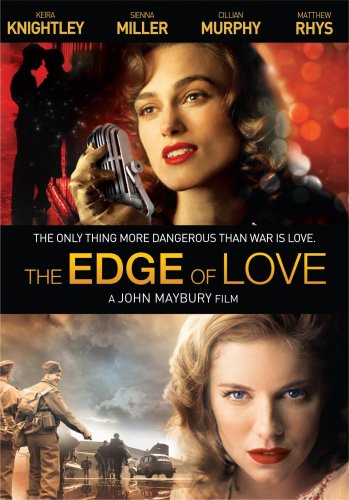
DVD Review: The Edge of Love (2009)


Now Available on DVD & Blu-ray
(A Jen's Pick of the Week Selection)


View the Photo Slideshow


Delicious
Bookmark this on Delicious
submit to reddit
Print Page

Digg!

MovieBlips: vote it up!

Possibly the only thing tougher than persuading a resistant audience to pass up the comfort of mindless summertime CGI for an Iraq war film (even if The Hurt Locker is the best film of 2009 so far) is to talk viewers into taking a chance on yet another Keira Knightley costume drama.


Yet, the way that Kenneth Branagh just can’t seem to get enough of the Bard-- Keira Knightley can’t seem to pass up the opportunity to delve into the past to bring a decidedly welcome and long overdue her-story view of history, even if audiences didn’t flock to her most impressive work as a mature performer to date in last year’s underrated The Duchess.


Although when you take into consideration the fact that modern Knightley has delivered us the Tony Scott exploitation picture Domino, I think you’ll stand with me in applauding her decision to carefully consider her material and she’s in great hands here especially when you realize that not only is she re-teaming John Maybury who directed her in The Jacketbut also that the fact-based screenplay was penned by her mother Sharmon Macdonald.


While it’s easy for some critics to cry “nepotism,” Knightley only worked to facilitate getting Maybury on board as director for four years of pleading to implore the filmmaker to read the script, initially unsure she even wanted to take part in the movie’s ensemble as well. However, when she made the decision to do so, her choice of roles surprised her mother immensely as she’d imagined her daughter in the role initially that was signed onto by actress Lindsay Lohan before her departure left room for Sienna Miller to swoop in and deliver yet another emotionally heartrending turn in a role that garnered Miller a Best Supporting Actress nomination at 2008’s British Independent Film Awards.


Despite the powerhouse cast that also includes Irish actor Cillian Murphy (Batman Begins, Red Eye)and TV’s Brothers and SistersWelsh born star Matthew Rhys as one of the twentieth century’s greatest poets Dylan Thomas-- the production titled The Edge of Love never received a wide theatrical nationwide run most likely because of chilly audience reception to costume dramas and period pieces, not to mention that Dylan Thomas probably wouldn’t be a big selling point to consumers in the twenty-first century even if he’s frankly a supporting character in a work which uses him as a focal point to study the friendship of two key women in his life during World War II.


When you couple this with a breakdown of the central plot in its most basic terms as a literary tale about two women, a soldier, World War II, England, an affair, involving Keira Knightley, a typewriter, the complexities of love, and a gorgeous score—the response you’re most likely to receive from passersby is, “oh I saw that-- that’s the one with the little girl.” And even when you assure them that, no, this is not Atonement-- which I did more than once this week in trying to recommend the film to others-- a common retort was, “I really like Keira Knightley, but why does she always make the same movie?”


However, this is definitely not the same movie and it is also not a Dylan Thomas movie which you’ll be able to perceive from the startling, near wordless trailer (save for the very end) that just lets long-time David Lynch composer Angelo Badalementi’s music play amidst some breathtaking imagery that Maybury garners through his cinematographer Jonathan Freeman in a unique blend of old fashioned techniques like iris cuts with new overlapping edits such as when we see the eyes of Rhys’ Dylan Thomas peering over the honeymoon bed of his first, childhood love Vera (Knightley) that she shares with the earnest, good-hearted soldier William (Cillian Murphy) before he heads off to war.


As the movie opens, we’re thrust directly into the heart of a war-torn London in 1941 where the sky is raining down bombs so steadily that the masses have sought shelter underground in a nearby tube station where Welsh born Vera Phillips (Knightley, bravely doing her own singing live) tries to keep their spirits up by performing in brightly colored gowns, amidst glowing lights, and glamorous décor for the soldiers and citizens including the ardent admirer Captain William Killick (Murphy) who repeatedly returns to make her acquaintance.


While Vera is hesitant to melt at the sight of a man in uniform since they might die, her face beams when she’s reacquainted with her childhood love Dylan Thomas (Matthew Rhys) who—unable to fight in the war due to grade three lung sicknesses—has been hired to write soothing propaganda scripts for the BBC. Not letting him get away with his altered, self-conscious posh accent—that famous Thomas speech rhythm English majors and poet fans have come to recognize in an instant with his powerful affected cadence—they fall back into easy conversation but it’s challenged quickly when Caitlin, the beautiful, passionate, and reckless wife he neglected to tell her about arrives. And what an entrance it is given Sienna Miller's wondrous introduction as she gamely flirts with every soldier boy in sight.


However, instead of the two getting into a dull jealous rivalry routine—they know their man well enough to know what he’s like and to know that most likely they’d have something in common as well and the two women become fast friends, with Caitlin doing cartwheels in a bar to get the attention of William Killick when Vera refuses to give him the time of day. After getting kicked out of Caitlin’s sister’s place for Dylan’s appalling, drunken behavior—the Thomas couple shack up with Vera and Dylan seems to relish the excitement of being able to ask both women he loves to “give us a cuddle” at any moment.


Yet Caitlin lays down the law that although the husband and wife are unfaithful-- as a friend of both-- Vera is strictly off limits which proves to be a greater challenge to Dylan as Vera spends more time with William and eventually marries the man, to Dylan’s increasing jealousy that he can’t possess both women he wants.


But when William’s off to war and Vera discovers she’s pregnant, the three move back to Vera and Dylan’s native Wales where Vera uses her money (and William’s) to support them in two neighboring cottages. And despite the picturesque beauty of the idyllic countryside, emotionally this new setting is as dangerous as any landmine filled battlefield when Dylan sees nothing from stopping him and Vera herself becomes lonely and emotional given the new child.


And indeed it's a passionate, well-acted film that overall centers on as Maybury states “an emotional love affair between two women” or more correctly “the way that women, particularly in this period, but I think it’s still true today, sacrifice their intimate friendships with each other for the men in their lives." Moreover, The Edge of Love comes from a personal place for the filmmakers as the producer of the film is the granddaughter of Vera and William Killick who based the work on the book Dylan Thomas: A Farm, Two Mansions and a Bungalow which some of producer Rebekah Gillbertson’s aunts had been involved in that focused on the relationship regarding her grandparents and Dylan and Caitlin Thomas which ended in controversy.


Wanting of course to get the most prominent and vital autobiographical details right, when Sharman Macdonald came on board to pen the screenplay, she fleshed out some of the stories with details that made the piece unique and also worked in some of her own family's history but again felt a strong interest in examining the “universal phenomenon…” of “friendships that are incredibly precious to us and then suddenly they’re gone,” noting that, “the fact that it involved Dylan and Caitlin Thomas was a gift, but it was incidental.”


Although those picking up for the film simply because they believe it’s a Dylan Thomas biopic will be heartily disappointed since again, he’s a vital part of the film but it is an ensemble or quartet work and the men take a decidedly backseat to the great turns by the female leads. And overall, it’s a rather simple story-line— essentially an anecdote in the life of Thomas— but one that's supremely well told and The Edge of Love is well-worth your time. While it goes without saying that once again you'll be startled by the naturalism of Knightley in yes, another costume piece as she proves she can sing-- this time around you'll be mesmerized by Sienna Miller who continues to dazzle.


Launching into the most difficult and multi-layered role in the film—having to at times convey six different emotions within seconds of jealousy, sadness, bravery, whimsy, humor, and at last just peace—just like Factory Girl, Casanova and Interview, she’s an absolute marvel and makes me all the more eager to see another film that flew under the radar via the adaptation of Michael Chabon’s first novel, The Mysteries of Pittsburgh coming soon. The DVD picture quality of Love is very impressive although I did have to crank the audio track to hear the mumbling dialogue.


Also featuring a filmmaker and actor commentary with Maybury and Rhys as well as a brief featurette—one where Knightley’s enthusiasm is so apparent that poor Miller only gets to utter a single sentence as Knightley accidentally steps over all of her co-star’s chances to speak—the disc also includes the aforementioned impressive trailer and oddly enough outtakes which mostly consist of mess-ups involving the cast and the endless amounts of cigarettes and lighters they had to use throughout the period film.


Text ©2009, Film Intuition, LLC; All Rights Reserved. http://www.filmintuition.com

Unauthorized Reproduction or Publication Elsewhere is Strictly Prohibited.