Showing posts with label Andy Garcia. Show all posts

5/06/2021

Movie Review: Wrath of Man (2021)


Now Available
(affiliate ad)


With his mischievous wit, jaw-dropping athleticism, and old-fashioned charm seducing us right from the start of his very first movie – writer-director Guy Ritchie's auspicious 1998 feature filmmaking debut "Lock, Stock and Two Smoking Barrels'' – enigmatic British actor Jason Statham taught viewers to expect the unexpected whenever he hit the screen. But, unable to be pigeonholed as one specific thing in an industry that thrives on packaging people like products to be marketed, sold, and moved with the same felicity as a bottle of salad dressing, Hollywood has never quite figured out what to do with the unique skill-set of Jason Statham.

Equally at home in comedic, dramatic, and action-focused fare, Statham's ease and dexterity in conveying emotion and information both verbally and nonverbally have, in the years following his last film with Ritchie in 2005's "Revolver" made him something of a half Cary Grant, half Jackie Chan, twenty-first-century unicorn film star. Serving up different sides of himself in everything from "The Bank Job" to the "Fast and Furious" franchise to "Spy," while he's consistently done good work, the 2010s found Statham playing a few too many interchangeable smartass badasses as he coasted from one hit-or-miss action movie to the next.

Having left the clever ensemble oriented crime dramedies that first put him on the map behind, as it turns out, Statham's situation is remarkably similar to the one faced by Guy Ritchie who's struggled to put his own stamp on summer studio tentpoles like "King Arthur" and "Aladdin" in recent years. Now, with the two old friends who first hit fame alongside one another a generation ago agreeing to re-team for a smaller and more intimate, but nonetheless compelling character-driven action film, they've both made the bold decision to address their creative habits and strip their work back to its essence in the stealthily efficient '70s style heist revenge movie "Wrath of Man."


Based upon the 2004 French film “Le convoyeur” aka “Cash Truck” from director Nicolas Boukhrief, which Ritchie adapted alongside his frequent screenwriting collaborators Marn Davies and Ivan Atkinson, “Wrath of Man” is a sharp left-hand turn for the British helmer away from the hyper-kinetic brand of filmmaking most synonymous with his name.

Gone here is Ritchie's obsessive kid in a candy store aesthetic of near eye-twitching levels of fast-motion stimuli, which at its best, dazzled viewers and worst, drove us to distraction right along with his penchant for camera trickery. In in its place, he's placed greater emphasis on his man-on-a-mission character-centric storytelling, which makes sense for this tale about a mysterious man (Statham) who walks in off the street and gets a job working for a frequently hijacked L.A. armored car company, only for us to discover that his reasons are far more personal than they are professional.

Taking an unexpectedly understated approach, for the film's first act, I could barely distinguish the U.K. based director of this film from men like Steven Knight or Simon West who'd helmed other vengeance fueled works of this type like “Redemption” and “The Mechanic” for Statham in the late aughts to early '10s. And while initially, it feels more like Ritchie is a director for hire than say, the man that made the newest versions of “Sherlock Holmes” and “The Man From Uncle,” I like how secure he is as a more mature filmmaker to know that the last thing this film needs is a bunch of sudden jump-cuts or shots from the point-of-view of bullets being fired from a machine gun. Ritchie’s strength here is in knowing who, what, and why we’re watching and getting us so lost in the story that when he finally decides to let us behind the curtain, we’re hooked.

Unwilling to mug for the camera or flash that megawatt smile that sometimes makes it impossible to separate a Statham character from the man himself, Ritchie's more restrained technique compliments the quiet power of his leading man very well. Uncovering the real reason why Statham's protagonist joined the armored car company, when the film finally abandons its early over-reliance on male bravado as its employees (played by Holt McCallany and Josh Hartnett) try sizing up the new guy, we begin to see “Wrath of Man” for the bare-bones revenge film that it is.


A terrific director of actors who's known for his ability to attract stellar talent from all corners of the globe, one of the best things about Ritchie's latest work is the trust and patience he places in his cast to reel us in. Developing slowly like a Polaroid that Ritchie's unwilling to shake, once “Wrath” introduces its second group of characters led by Jeffrey Donovan (who's been tacitly doing some of the best work of his career recently elevating even B-movies like “Let Him Go” and “Honest Thief”), we see precisely why everyone said yes to this remake. 

Becoming as involved in Donovan's morally complicated plight as we are in Statham's as though they're two flip-sides of the same coin, it's the actors who invest us in watching what (on paper, at least) would otherwise be an admittedly standard heist drama unfold. Featuring a chilling turn by Scott Eastwood (visibly relishing the opportunity to star in the kind of film his father would've certainly gravitated to in the '70s), “Wrath of Man” is a crackerjack B-movie that works so much better than it should because of the A-talent involved on both sides of the screen. And as one of the film's screenwriters, Ritchie understands this well.

Reuniting with his old friend Statham who, in shifting from one genre to the next over the years, lives to astonish, “Wrath” finds the two in the mood to reevaluate just what it is they can and should bring to a film when they're planning a stripped-down heist as opposed to an over-inflated tentpole.

Relatively straightforward both stylistically and narratively, save for a few flourishes because Guy is Guy after all and he loves to turn a straight line into a maze, “Wrath of Man” might not be what most people would think of when they hear the name Guy Ritchie, but this only works to the film’s advantage. Playing against audience expectations Statham-style, while this is one stellar vehicle for the movie star he put on the map, the biggest surprise of all in “Wrath of Man,” is that twenty-three years after “Lock, Stock,” Guy Ritchie is introducing himself to the world once again, saying, “Okay, you've seen that. Now, look what else I can do.”
 

Text ©2021, Film Intuition, LLC; All Rights Reservedhttps://www.filmintuition.com  Unauthorized Reproduction or Publication Elsewhere is Strictly Prohibited and in violation of the Digital Millennium Copyright Act.  Also, as an Amazon Associate, I earn from qualifying purchases made off my site through ad links. FTC Disclosure: Per standard professional practice, I may have received a review copy or screener link of this title to voluntarily decide to evaluate it for my readers, which had no impact whatsoever on whether or not it received a favorable or unfavorable critique. Cookies Notice: This site incorporates tools (including advertiser partners and widgets) that use cookies and may collect some personal information to display ads tailored to you etc. Please be advised that neither Film Intuition nor its site owner has any access to this data beyond general site statistics (geographical region etc.) as your privacy is our main concern.

7/03/2016

Olive Films Blu-ray Review: The Mean Season (1985)

Given a crisp transfer to high-definition Blu-ray from Olive Films that fills your speakers with the machine gunfire sounds of newspaper presses operating at full power, 1985's all-but-forgotten thriller The Mean Season opens with the first of multiple jolts designed to keep your nerves on edge until it builds its plotline just enough to stop relying on cheap theatrics to hold your attention.

An ambitious albeit weak star-studded thriller, unfortunately The Mean Season never quite maintains the credibility it only temporarily managed to achieve.
Leaving us scratching our heads as we watch Kurt Russell's intrepid yet burned out reporter shout top secret information with the police in the middle of a very crowded hallway or his schoolteacher girlfriend (Mariel Hemingway) decide to use a "shame on you" approach with an serial killer over the phone, The Mean Season often comes across like a newspaper movie spoof.

Best appreciated as an atmospheric thriller, the otherwise sloppy Season derives more than a little of its suspense from the film's sweat-inducing setting of Miami in the eponymous "mean season" of hurricanes and power outages alluded to in In the Heat of the Summer novelist John Katzenbach's original source material.


And while filmmaker Phillip Borsos's effort wasn't nearly as effective as the director's Disney release One Magic Christmas which opened later that same year, sadly it also wasn't as memorable as another ambient Katzenbach adaptation via Just Cause which premiered a decade later.

Featuring a downright eerie, largely old-fashioned Saturday night drive-in style villainous turn by Richard Jordan as the film's mostly unseen murderer (dubbed "the numbers killer") who makes a habit out of phoning Kurt Russell with inside information to help control the narrative – Jordan shocks us even more than the bass-thumping beginning, given that he's as violently soft-spoken as the printing presses were startlingly loud.

Although Hemingway is given little to do other than nag, she still comes off livelier than Russell, who, predictably turns into an action hero in the final act. And while the agreeable Russell still tries his best, he isn't supported by Leon Piedmont's screenplay, which fails to capitalize on the crime reporter's intellect, especially when you realize that that was purported to be the reason that Jordan had zeroed in on him all along.

Sadly, watching Russell turn into a running, diving, fighting hero is arguably less exciting than it might've been watching the two engage in a mental chess game.

And this is a particular waste given the ample support provided by Andy Garcia as a police officer with whom Russell regularly works as well as a handful of other supporting players that could've been better served as potential inside men or women to effectively deliver on the many twists and turns promised by the genre.


A lackluster tale of '80s suspense, Borsos's film is elevated by Richard Jordan in the type of role that filmmakers eventually discovered was best pushed to the forefront of suspense via John Malkovich in In the Line of Fire or Kieffer Sutherland in Phone Booth.

Less of a full scale hurricane than a turbulent showdown of half baked ideas and hot air, The Mean Season may play moderately well as a late night B-movie sure to make you jump at the sound of the phone. But while Olive manages to deliver a technically superb Blu-ray, ultimately there's not much about the feature presentation worthy enough to recommend you to bring it on home.


Bookmark and Share

Text ©2016, Film Intuition, LLC; All Rights Reserved. http://www.filmintuition.com Unauthorized Reproduction or Publication Elsewhere is Strictly Prohibited and in violation of the Digital Millennium Copyright Act.  FTC Disclosure: Per standard professional practice, I may have received a review copy of this title in order to voluntarily decide to evaluate it for my readers, which had no impact whatsoever on whether or not it received a favorable or unfavorable critique.

8/27/2014

Blu-ray Review: Rio 2 (2014)


Now Available to Own 


Related Review:
Rio (2011)

Photo Slideshow


Blue Sky Studios’ globally-minded musically driven 3D CG-animated adventure movie Rio brought its aptly named Blue Macaw Blu and his bookish owner Linda (voiced by Jesse Eisenberg and Leslie Mann respectively) from Minnesota to the titular Rio in the infectious 2011 original that enchanted viewers with its high-spirited energy and fast moving storyline which danced at a steady Samba pace.


Unfortunately while it’s as beautifully vibrant as ever in a visually breathtaking opener that once again feels like it's an animated half-pint version of the Carnival classic Black Orpheus, the second film is an undeniably busy, ambitiously overstuffed and disappointingly episodic return to the delightful high-flying world of Rio.

Strategically released to coincide with the World Cup, Rio 2 incorporates a soccer fueled scene that’s – like everything else in the film – ratcheted up a million degrees so that it’s storyboarded less like a regular match and more like a spectacular Harry Potter styled aerial game of Quidditch.


And despite its pro-nature message about preserving the Amazon Rainforest (as well as the endangered birds in another through-line admirably carried over from the first film), far too much gets lost in the shuffle of individually isolated “scenes” in a movie that ultimately lacks the cohesive focus of a well-conceptualized whole.

As Rio 2 begins, we check back in with the paired off lovebirds (Eisenberg and Anne Hathaway) from the original as the couple and their three young flappers leave Rio behind before flying into acquaintances both new and old in the sequel’s dominated Rainforest setting.


Essentially a feathered version of Meet the Parents for the small set, in Rio 2, Hathaway’s Jewel is stunned to discover that the family she’d long thought to have been deceased is alive and well in her old Amazon home.

While indulging in his opportunity to play the Robert De Niro like Parents heavy, voice actor Andy Garcia is clearly having a ball as Jewell's long lost father who takes an immediate dislike and disapproval to Blu by admonishing him as a mere “pet.” However, the biggest surprise is musician Bruno Mars, who steals several scenes in an often screamingly funny role as a childhood friend who still clearly carries a torch for Jewel.


Burning through subplot and supporting characters (including a return of the first film’s fan favorite Jemaine Clement who’s now partnered with Kristin Chenoweth), from its snappy one-liners to obligatory pop songs and brightly colored, firework-fast diversions, Rio 2’s key takeaway about preserving plant and animal life on Earth gets pushed into the periphery.

Sloppily written, the film shortchanges its talented cast and expectant audience alike with a collection of sitcom level scenes edited together with a few eye-opening epic moments (such as the aforementioned opener) buried in between in order to satisfy the shortest of attention spans.


A pleasant enough diversion for your tiniest tots especially given the multiple format combo pack release which boasts a Blu-ray, DVD and digital copy, director Carlos Saldanha’s effort works better than a majority of run of the mill fare like The Nut Job.

And likewise given the studio's dedicated to discovering new topics, techniques, and terrain (even by way of a preexisting template), it is a stronger than average follow-up as far as animated movies go.

Nonetheless there’s still no beating the South American spirit of Blu’s original opus that showed ticket-buyers that outside of the frozen tundra of the impressive Ice Age franchise, Blue Sky has a bright future ahead of them in the sun.


Bookmark and Share

Text ©2014, Film Intuition, LLC; All Rights Reserved. http://www.filmintuition.com Unauthorized Reproduction or Publication Elsewhere is Strictly Prohibited and in violation of the Digital Millennium Copyright Act.  FTC Disclosure: Per standard professional practice, I may have received a review copy of this title in order to evaluate it for my readers, which had no impact whatsoever on whether or not it received a favorable or unfavorable critique.

6/28/2014

Blu-ray Review: Rob the Mob (2014)


Now Available to Own


  Photo Slideshow   


Original Review:
(Published 4/9/14)

“Did Gotti put you up to this?” It had to be a joke. No one would ever think of walking into an Italian American New York City social club and holding up the mob. Except in the early 1990s someone did the unthinkable and the only one laughing was the guy robbing the mob in the form of a twenty-something ex-con named Tommy Uva (Michael Pitt) who didn’t know John Gotti and most certainly wasn’t kidding around.

A young man who worked a day job as a collection’s agent with other ex-cons hoping for a second chance, Tommy was using his second chance to collect in a whole different way – from the very men that most people crossed the street to avoid.


Not content to spend his time trying to go legit while taking hard-earned money from people who couldn’t afford it, Tommy knew exactly what he was doing when he walked into one of several social clubs in a mind-blowing year-long spree.

In his eyes he was getting revenge – revenge on the type of guys who’d constantly humiliated his florist father growing up that Tommy believed led to his dad's premature death. The way Tommy saw it in an era where endless headlines and evening news coverage all focused on the trial of so-called Teflon Don aka Mr. John Gotti, these guys who’d been getting away for murder for decades were all past due and who better than him to collect?

Learning in the open court testimony of Gotti’s former underboss Sammy the Bull Gravano that none of the Made men holed up in New York City's Italian social clubs to play cards even bothered to carry a weapon (but something tells me that’s changed now), Tommy decides to settle old debts... with interest.

And interest is exactly what he receives from all sides, which Two Family House and City Island filmmaker Raymond De Felitta captures in this briskly paced, high-energy cinematic portrait that takes us with him on the crazy scheme from its unbelievable start to its inevitable conclusion.


Yet far from only focusing on Tommy, De Felitta recreates the incredulous reaction from all involved whether it’s the news media that dubs Tommy and his lady love/getaway driver Rosie (Nina Arianda) Bonnie and Clyde or the the F.B.I. agents staking out the very clubs he’s holding up that can barely believe their ears or eyes.

Spinning traditional robbery picture paradigms off their axis, De Felitta paints the wise guys that would ordinarily be placed in the role of the aggressors in a far more vulnerable light when they realize that in addition to money, jewelry and lost pride, Tommy has nabbed more than he bargained for in his latest heist.

Though he’d only gotten away with five dollars, nothing prepared Tommy for the discovery of what was hidden away in an elder mobster’s wallet that is not only worth its weight in gold but almost guarantees his future demise.

Returning to the apartment he shares with Rosie, the lovebirds are shocked as they unfold a well-worn sheet of paper, only to realize that in their hands they hold the official contact information including rank, address, full name and aliases for the entire mafia “family tree.”

Figuring the best way to stay alive is to play all sides, Rosie and Tommy begin phoning numerous individuals both on the list and off including a long time mob journalist (nicely played against type by Ray Romano).

And by casting the infinitely likable Andy Garcia as the unofficial head of a crime family who works a day job as a shop owner (not unlike Tommy’s deceased father), De Felitta and screenwriter Jonathan Fernandez add a welcome layer of humanism to what could’ve otherwise been a clichéd role.


In addition to making us question our antihero, Fernandez invites us to draw parallels between Garcia’s character’s relationship with his son to our lead as well given his reluctance to take out Tommy since, as he phrases it, “eagles don’t kill flies.”

An effective ensemble piece, Rob the Mob fits in nicely with the filmmaker’s impressive oeuvre thus far, which first caught my attention with the underrated crowd-pleasing Sundance hit Two Family House that I loved so much I chose to screen it in a film discussion series I hosted in Scottsdale.

While he's continued to make solid films, Rob the Mob is easily De Felitta’s strongest effort since House. A frenetic, fiercely funny yet jaw-droppingly bold true crime tale about two crazy in love kids who make one in a series of crazy decisions from which there’s no turning back, at its core, Mob’s driving force is love and family, which makes it a natural progression from the helmer, given his earlier offerings.


Admittedly, you wish you knew more about the duo or more specifically just what exactly they were thinking as the film isn’t sure exactly what to make of them either. Namely we go from questioning their sanity to admiring their intellect before wondering if they were that oblivious to the danger they were putting themselves in or if they had some kind of Romeo and Juliet meets Bonnie and Clyde like death wish. Yet what the film lacks in concrete answers it makes up for in admirable cinematic realism – easily transporting us back in time to the early ‘90s.

Anchored by the mesmerizing turns from its two stars, while Pitt (who managed to steal Boardwalk Empire away from everyone else) is always compulsively watchable, the real story in Rob the Mob is in De Felitta’s casting of the pitch perfect Tony award-winning actress Nina Arianda as his beloved Rosie.

Radiating off-the-charts charisma, Arianda is a real discovery and although she’s worked in film before, this performance is tailor-made to take her to the next level, reminding me again of the way that Two Family House helped launch the lovely Kelly Macdonald.

Whether she’s assembling an Uzi or impressing her new boss (a hilarious Griffin Dunne), Arianda instantly captivates viewers in a star-making role on par with Marisa Tomei in My Cousin Vinny or Rosie Perez in White Man Can’t Jump.


Returning to the same theme that drove House's characters in celebrating a person’s desire to follow their dream (regardless of how risky it might be), in the end, Rob the Mob has a better emotional payoff than it does a concrete narrative one since the beautifully lensed yet nonetheless inevitably devastating final scene cuts into the plotline rather abruptly.

Of course, by echoing the same impulsive, anything-can-happen Cassavetes-esque spirit established early on, Rob the Mob reminds us that it wasn't designed to play by the traditional rules of three-act screenwriting. And as such, you may feel slightly unsettled by the way the rollercoaster ride of the film stops quite suddenly at the top of the hill.

However, by deciding not to put some kind of final statement on the work or abandoning the truth to explore the point-of-view of a supporting player, De Felitta’s ending is that much more reflective of the way that real life can take you by surprise… much like it did for the New York wiseguys who expected a practical joke but got Tommy Uva instead.


Blu-ray Review:

A surprisingly buoyant, lively, and charming character-driven true crime comedy, Raymond De Felitta’s underrated sleeper Rob the Mob has been given a second chance to make a terrific first impression on film lovers that missed out on the indie earlier in the year thanks to its Blu-ray and DVD debut.

Though it scored well with reviewers and in the art-houses of bigger cities that carried the Millennium Entertainment film in its limited theatrical release and on-demand rollout, it’s sure to garner great word-of-mouth from those who give it a spin.

Despite the soundbite heavy critical praise adorning its cover that calls the picture "Bonnie and Clyde meets Goodfellas," Rob the Mob is its own unique work and deserves adoration on its own merits, much like those two true crime classics.


Furthermore, the best thing about De Felitta’s feature is that it doesn’t easily fit into any convenient labels. Wild and freewheeling, Rob is an actor’s movie and one that tries to capture to pulse of New York at a certain time and place.

To achieve this right off the bat, Rob opens with a sharply edited introduction set to “Groove is in the Heart,” which De Felitta admits on the director’s commentary track was the brainchild and handiwork of Steven Soderbergh who spliced together stock footage with the song (of the Traffic director’s own choosing) to immediately transport us to early ‘90s New York.

Shortly thereafter, we’re quickly launched into a seemingly spur-of-the-moment robbery before we know who the characters are and what’s going on. Moving from chaotic handheld cameras to show us the point-of-view of our hopped up bandits, the cinema verite style segues into a smoother cinematographic version of its realism-heavy approach to catch up with the recently reunited lovers before they venture into their second and final crime wave.

While my original review (above) cited a wish for more character background and information to establish their motives and help us get a better understanding of them, sure enough the razor sharp Blu-ray offers some extended and deleted scenes that go a long way to answering some of our questions.


Though intriguingly out-of-chronological order on the menu, the three segments are actually served up in the order of strongest to weakest, with two slightly lengthy new sequences and a shorter third one that gives us a glimpse into Rosie’s home life (featuring actress Aida Turturro as her mother).

While the home scene is way too gritty to have meshed well with the rest of the frenetic and funny film in emphasizing Cassavetes-like in-your-face verite (which may have made the characters harder to empathize with at first), the previous two extras are absolute gold.

Even though it’s safe to say that the first sequence might have strayed too far from the main narrative in offering viewers more of Arianda and Dunne’s hilarious chemistry, it’s yet another stellar reminder of the leading lady’s talent as well as Dunne’s often unexplored comedic range.

Likewise, although the second scene might have grinded the fast and furious pacing to a halt by showing us a more complete interview that the couple had with Romano’s character (and the witty jokes about marriage could have been cut to save time), it provides a stronger motive for Tommy’s actions.


And this is especially true when it’s viewed right after the first deleted scene in which Tommy shows Rosie an offscreen family photo and seems angered at her implication that he looks more like his mother than the man who’d inspired him to act in the form of his deceased father.

A fascinating collection of roughly 18 minutes of footage, the deleted material along with the director’s informative commentary track (which should be of particular interest to indie filmmakers) helps paint a much stronger picture of one of the freshest New York stories of the year so far.

Bookmark and Share

Text ©2014, Film Intuition, LLC; All Rights Reserved. http://www.filmintuition.com Unauthorized Reproduction or Publication Elsewhere is Strictly Prohibited and in violation of the Digital Millennium Copyright Act.  FTC Disclosure: Per standard professional practice, I may have received a review copy of this title in order to evaluate it for my readers, which had no impact whatsoever on whether or not it received a favorable or unfavorable critique.

5/16/2014

Blu-ray Review: At Middleton (2013)


Now Available to Own   

  Photo Slideshow   


Usually blonde-haired, twenty-something and played by Goldie Hawn or her daughter Kate Hudson, the free-spirited All-American waifs of romantic comedies past were famous for their ability to bewitch their straitlaced male counterparts into loosening up the grips on their lives as well as their neckties.

But if you’ve ever wondered what happens to these feisty females twenty-years after their happily-ever-after segues into marriage, middle-age and the prospect of facing empty-nest syndrome while taking their oldest child on a college tour, look no further than the aptly named midlife comedy At Middleton.


Launching headfirst into her against-type role as the aggressively eccentric Edith, actress Vera Farmiga is far more likable than the ticking time bomb she’s playing onscreen.

Seemingly eager to sabotage and steal focus from the lackluster tour of the picturesque tree-lined college that her over-achieving daughter Audrey (played by Vera’s sister Taissa Farmiga) is dying to attend, Edith goes for the jugular from the moment she first exits the car.

Whether she’s pretending to punch a woman in the back of the head or acting out in a variety of ways (from faux phone-throwing to temporary bike theft to lecture crashing), Edith decides to see just what exactly she will be getting for her forty-three grand per year investment in the span of one increasingly wild day.

"Advocating tour hooky" alongside her is the requisite bowtie wearing uptight potential extramarital love interest embodied by Andy Garcia’s cardiac surgeon George Hartman. And yes, a heart man named Hartman is just one in a series of cutesy contrivances and implausible shenanigans that span the film’s one hundred minute running time.


Needless to say, At Middleton requires a pretty large suspension of disbelief to buy into the premise that an uptight surgeon who showed no previous appreciation for humor, improvisation or impulsivity would suddenly embark on a hijinks filled afternoon of pot smoking and flirtation with the unstable Edith.

Exceedingly well-cast, ultimately it’s a credit to the actors that you’re willing to keep watching the tonally all-over-the-place film.

And this is especially true when Middleton meanders into disturbing territory that make you seriously question just how much screenwriters Adam Rodgers and Glenn German actually respect their female characters since both Farmiga sisters partake in some weirdly out-of-place emotional freak-outs as a like mother/like daughter pair of embarrassing basket cases that the males must placate.


Hoping for screwball but settling for an existential midlife crisis dramedy, all in all it’s a manic depressive mixture of pleasant highs and gloomy lows that makes you upset by how much potential the film wasted given not only the affable actors but its otherwise clever premise and setting.

While there are some truly beautiful moments including both clocktower scenes, a nice in-film tribute to Umbrellas of Cherbourg (which undoubtedly served as an influence) as well as an ironic twist for the prospective students in the otherwise fitting finale, ultimately it’s far too extreme in its unrealistic depiction of way too many characters on the verge of a nervous breakdown.

Though it’s nice to see both its headliners embrace comedy, despite how much I really wanted to like the film, I’d still have to recommend Farmiga’s Oscar-nominated turn as a woman who finds herself at a crossroads in Jason Reitman’s much more realistic treatment of midlife coming-of-age Up in the Air before I'd suggest viewers take a tour of Middleton.


Bookmark and Share

Text ©2014, Film Intuition, LLC; All Rights Reserved. http://www.filmintuition.com Unauthorized Reproduction or Publication Elsewhere is Strictly Prohibited and in violation of the Digital Millennium Copyright Act.  FTC Disclosure: Per standard professional practice, I may have received a review copy of this title in order to evaluate it for my readers, which had no impact whatsoever on whether or not it received a favorable or unfavorable critique.

4/09/2014

Movie Review: Rob the Mob (2014)


On Blu-ray and DVD 6/24


“Did Gotti put you up to this?” It had to be a joke. No one would ever think of walking into an Italian American New York City social club and holding up the mob. Except in the early 1990s someone did the unthinkable and the only one laughing was the guy robbing the mob in the form of a twenty-something ex-con named Tommy Uva (Michael Pitt) who didn’t know John Gotti and most certainly wasn’t kidding around.

A young man who worked a day job as a collection’s agent with other ex-cons hoping for a second chance, Tommy was using his second chance to collect in a whole different way – from the very men that most people crossed the street to avoid.


Not content to spend his time trying to go legit while taking hard-earned money from people who couldn’t afford it, Tommy knew exactly what he was doing when he walked into one of several social clubs in a mind-blowing year-long spree.

In his eyes he was getting revenge – revenge on the type of guys who’d constantly humiliated his florist father growing up that Tommy believed led to his dad's premature death. The way Tommy saw it in an era where endless headlines and evening news coverage all focused on the trial of so-called Teflon Don aka Mr. John Gotti, these guys who’d been getting away for murder for decades were all past due and who better than him to collect?

Learning in the open court testimony of Gotti’s former underboss Sammy the Bull Gravano that none of the Made men holed up in New York City's Italian social clubs to play cards even bothered to carry a weapon (but something tells me that’s changed now), Tommy decides to settle old debts... with interest.

And interest is exactly what he receives from all sides, which Two Family House and City Island filmmaker Raymond De Felitta captures in this briskly paced, high-energy cinematic portrait that takes us with him on the crazy scheme from its unbelievable start to its inevitable conclusion.


Yet far from only focusing on Tommy, De Felitta recreates the incredulous reaction from all involved whether it’s the news media that dubs Tommy and his lady love/getaway driver Rosie (Nina Arianda) Bonnie and Clyde or the the F.B.I. agents staking out the very clubs he’s holding up that can barely believe their ears or eyes.

Spinning traditional robbery picture paradigms off their axis, De Felitta paints the wise guys that would ordinarily be placed in the role of the aggressors in a far more vulnerable light when they realize that in addition to money, jewelry and lost pride, Tommy has nabbed more than he bargained for in his latest heist.

Though he’d only gotten away with five dollars, nothing prepared Tommy for the discovery of what was hidden away in an elder mobster’s wallet that is not only worth its weight in gold but almost guarantees his future demise.

Returning to the apartment he shares with Rosie, the lovebirds are shocked as they unfold a well-worn sheet of paper, only to realize that in their hands they hold the official contact information including rank, address, full name and aliases for the entire mafia “family tree.”

Figuring the best way to stay alive is to play all sides, Rosie and Tommy begin phoning numerous individuals both on the list and off including a long time mob journalist (nicely played against type by Ray Romano).

And by casting the infinitely likable Andy Garcia as the unofficial head of a crime family who works a day job as a shop owner (not unlike Tommy’s deceased father), De Felitta and screenwriter Jonathan Fernandez add a welcome layer of humanism to what could’ve otherwise been a clichéd role.


In addition to making us question our antihero, Fernandez invites us to draw parallels between Garcia’s character’s relationship with his son to our lead as well given his reluctance to take out Tommy since, as he phrases it, “eagles don’t kill flies.”

An effective ensemble piece, Rob the Mob fits in nicely with the filmmaker’s impressive oeuvre thus far, which first caught my attention with the underrated crowd-pleasing Sundance hit Two Family House that I loved so much I chose to screen it in a film discussion series I hosted in Scottsdale.

While he's continued to make solid films, Rob the Mob is easily De Felitta’s strongest effort since House. A frenetic, fiercely funny yet jaw-droppingly bold true crime tale about two crazy in love kids who make one in a series of crazy decisions from which there’s no turning back, at its core, Mob’s driving force is love and family, which makes it a natural progression from the helmer, given his earlier offerings.


Admittedly, you wish you knew more about the duo or more specifically just what exactly they were thinking as the film isn’t sure exactly what to make of them either. Namely we go from questioning their sanity to admiring their intellect before wondering if they were that oblivious to the danger they were putting themselves in or if they had some kind of Romeo and Juliet meets Bonnie and Clyde like death wish. Yet what the film lacks in concrete answers it makes up for in admirable cinematic realism – easily transporting us back in time to the early ‘90s.

Anchored by the mesmerizing turns from its two stars, while Pitt (who managed to steal Boardwalk Empire away from everyone else) is always compulsively watchable, the real story in Rob the Mob is in De Felitta’s casting of the pitch perfect Tony award-winning actress Nina Arianda as his beloved Rosie.

Radiating off-the-charts charisma, Arianda is a real discovery and although she’s worked in film before, this performance is tailor-made to take her to the next level, reminding me again of the way that Two Family House helped launch the lovely Kelly Macdonald.

Whether she’s assembling an Uzi or impressing her new boss (a hilarious Griffin Dunne), Arianda instantly captivates viewers in a star-making role on par with Marisa Tomei in My Cousin Vinny or Rosie Perez in White Man Can’t Jump.


Returning to the same theme that drove House's characters in celebrating a person’s desire to follow their dream (regardless of how risky it might be), in the end, Rob the Mob has a better emotional payoff than it does a concrete narrative one since the beautifully lensed yet nonetheless inevitably devastating final scene cuts into the plotline rather abruptly.

Of course, by echoing the same impulsive, anything-can-happen Cassavetes-esque spirit established early on, Rob the Mob reminds us that it wasn't designed to play by the traditional rules of three-act screenwriting. And as such, you may feel slightly unsettled by the way the rollercoaster ride of the film stops quite suddenly at the top of the hill.

However, by deciding not to put some kind of final statement on the work or abandoning the truth to explore the point-of-view of a supporting player, De Felitta’s ending is that much more reflective of the way that real life can take you by surprise… much like it did for the New York wiseguys who expected a practical joke but got Tommy Uva instead.

Bookmark and Share

Text ©2014, Film Intuition, LLC; All Rights Reserved. http://www.filmintuition.com Unauthorized Reproduction or Publication Elsewhere is Strictly Prohibited and in violation of the Digital Millennium Copyright Act.  FTC Disclosure: Per standard professional practice, I may have received a review copy of this title in order to evaluate it for my readers, which had no impact whatsoever on whether or not it received a favorable or unfavorable critique.

7/03/2009

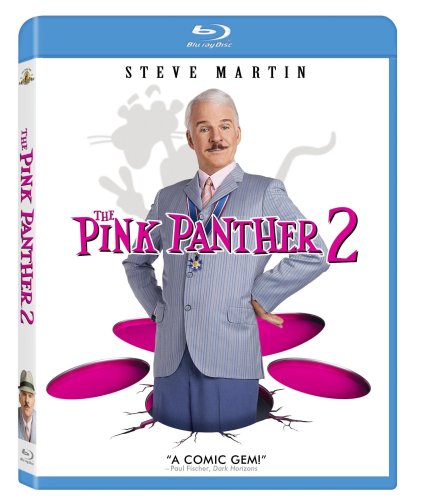
Blu-ray Review: The Pink Panther 2 (2009)


Crazy About Clouseau & The Pink Panther?


Apple iTunes


Delicious
Bookmark this on Delicious
submit to reddit
Print Page

Digg!

MovieBlips: vote it up!

As I sit down to write this I'm reminded of Jack Black's Stevie Wonder related query in High Fidelity when he ponders: "
Sub-question: is it in fact unfair to criticize a formerly great artist for his latter day sins; is it better to burn out or fade away?"


With Steve Martin... I'm not really sure what to think other than beginning to fear he's become so out of touch with reality that he's the only one who thinks these recent films he's made are funny. Furthermore, I'm struck by an even more horrifying question-- namely, for the guy who once upon a time just wanted to make us laugh--has integrity finally just vanished completely and box office greed taken over in its place?


Like the infamous "Black Sox" scandal following the 1919 World Series which found the heartbroken little boy famously asking Shoeless Joe Jackson to "say it ain't so," I'd like to give Martin the benefit of the doubt. But then again when he confesses with a straight face on the Blu-ray of Pink Panther 2 that "it turned out even better than I'd hoped for," I'm at a total loss.


Why would one of my favorite comedic idols with: a Mensa level IQ, a degree in philosophy who is also an accomplished banjo player, a quintessential "wild and crazy guy," author of the brilliantly witty Pure Drivel, and a highbrow art collector who has created and starred in some of the funniest films of our generation not only needlessly crib from the incomparable Peter Sellers? Yet he does so in taking on the genius creation of Inspector Clouseau in the Blake Edwards' Pink Panther movies for an awful 2006 remake and returning once again in 2009 for a sequel to a film that critics and audiences alike mostly couldn't stand?


While of course I've watched enough crime shows to learn that your first instinct is always the one you go with so I'm simply going to cite the money but even with that excuse I'm wondering just where exactly the films make money? It definitely isn't in the United States where Pink Panther 2 opened and closed within the span of what felt like a week following abysmal reviews so I can only guess that the press release may indeed be accurate when the first film is referred to as a "worldwide hit."

Therefore, maybe Panther is funnier in subtitles or when dubbed making Steve Martin's recent comedic phase sort of like Jerry Lewis who's worshiped in France as though he were Chanel... or maybe just like with The Da Vinci Code and Angels and Demons' popularity overseas, Europeans welcome some of the films that just don't strike a chord over here.


And international public relations is not only the key to the film as a "product" but also the bulk of its screenplay (which was given a polish by City Slickers and Fever Pitch writers Lowell Ganz and Babaloo Mandel) which was augmented by the decision to widen its net to cast the most globally diverse and popular stars as the filmmakers could find.


Not only a great marketing ploy to then drum up support in the actors' home countries but also to add to its ridiculously impressive roster of performers that gives a second meaning to the film's new group of detectives dubbed "The Dream Team." The team are hired to find the world's most treasured artifacts (including the Pink Panther diamond, the Shroud of Turin and the Magna Carta etc.) after they were all snagged by the elusive thief, The Tornado.


Although Kevin Kline-- possibly taking a cue from Bill Murray who was smart enough to jump ship and bow out of the second Charlie's Angels movie-- has left the cast, his Fish Called Wanda co-star John Cleese takes his place as Clouseau's superior. However when you take into consideration that one of his earliest big on-screen moments is literally banging his head against a wall, you wonder if deep down even John Cleese wondered just what the hell he was doing there.


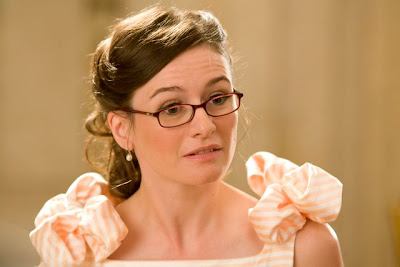
With the adorable, bookish colleague Nicole (Emily Mortimer) setting off sparks with Closeau that neither one can put into words-- their faux romantic relationship is tested as other colleagues fly in such as the drop-dead gorgeous Aishwarya Rai (Bride and Prejudice) who has an only-in-the-movies schoolgirl crush on Clouseau. Likewise, the Cuban-American Andy Garcia throws a wrench into the relationship playing a seductive Italian who decides that Nicole is just the type of woman he'd like to "make-a the babies with... lots and lots of babies... all day long with the babies."


In a great moment of in-joke humor as Martin's Clouseau refers to Garcia as Don Corleone-- I couldn't help remembering that yes, although Garcia did star in Godfather Part III, even that film was more welcome than this one because it closed the trilogy's story and had a purpose. Yet, Garcia who also starred in the Ocean's Eleven movies seems to have no problem disappearing into lackluster ensemble projects even though he deserves much better.


Rounding out the cast we find a Japanese computer expert played by Yuki Matsuzaki (thus, of course prompting Clouseau to go thirty years in the past to the previous films to call him his "little yellow friend") and the always reliable Jean Reno as Clouseau's best friend. Also signing on, Jeremy Irons arrives as a suspect (naturally) and Lily Tomlin appears as an enforcer of political correctness who we view as all too eager to reunite with her All of Me star twenty years later even in something as misguided as this film.

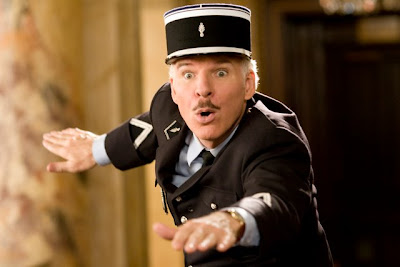
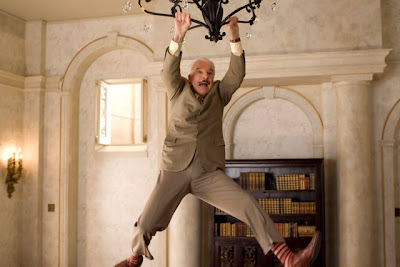
Perhaps the best addition to the group is in the form of Alfred Molina who gets the best scene as he and Martin's Clouseau try to out deduce one another by sizing each other up using their skills as inspectors in an increasingly funny intellectual showdown. However, the script pushes barbs to the background and physical humor to the foreground as mostly the wondrous cast is left with little to do other than to try to cover for the clumsy Clouseau as he falls down a chimney or off the Pope's balcony while dressed as the Pope or just react to his escalating physical gags over the course of the movie.


Slapstick and physical comedy are all ramped up to the extreme in Pink Panther 2 as we note in one of the Blu-ray's extra features when it's revealed that Martin did about eighty percent of his own stunts but there were always two doubles around for the most dangerous ones.


However, aside from the aforementioned back-and-forth one-upmanship exchange with Molina-- it's Martin's willingness to go back into his classic comedy skill arsenal and ability to juggle that helped win me over in the film's second worthwhile scene (aka the only other time I genuinely laughed aloud-- making that two chuckles in 92 minutes which was two more than in the original film).

As he and Nicole push the boundaries of their professional relationship over a romantic dinner in Rome, Clouseau decides to select the perfect bottle of wine as inevitably they come tumbling out and bottles are tossed and juggled to perfection until the restaurant goes up in flames. And it's in this scene especially where I felt that genuine credit was owed to Martin to get in there and go for the laughs with close-ups rather than sit on the side-lines and just count the money (which no doubt he did later) but two successful jokes in a film's running time is hardly a success overall.


In fact, the more enjoyable experience was definitely to be found reading the reviews of the work-- which ranged from scathing to hilarious. Peter Hartlaub of the San Francisco Chronicle had the best opener yet when he wrote, "One can only hope that something good is coming from all the bad movies that Steve Martin has been appearing in. I keep waiting for Martin, Robin Williams and Ice Cube to announce that they've used all the proceeds from their unfunny comedies to cure cancer."

While I would also add Martin's Bowfinger star Eddie Murphy and The Love Guru's Mike Myers to that list of comedy offenders, Hartlaub has a point regarding all the wasted money, wasted resources, and wasted talent. And replacing the second walk-out in the form of the 2006 director Shawn Levy (who's since moved onto helming the financially lucrative Night at the Museum franchise with Ben Stiller), Netherlands native Harald Zwart's decision to make the jokes bigger and faster in the second one helped ensure that it was more cartoonish and kid friendly than the first. It's most likely a skill he acquired directing Agent Cody Banks before moving onto (sigh) the needless remake of Karate Kid called Kung Fu Kid slated for 2010.


While per usual for the exceptional quality of Fox Blu-ray discs-- once again the wizards working in their technical department manage to make this one sound theatre-level and sparkle in clarity as much as the famous diamond and the breathtaking Aishwarya Rai. And given the extra features, we're able to see at least how much work went into the film and appreciate it on that level. Although in certain behind-the-scenes inclusions including the gag reel which-- despite being mostly unfunny-- did result in three laughs from me as opposed to the film's two, making me sadly note that like Garcia's Ocean's movies, the Panther works are only fun if you're on the set and not if you're at home viewing them.


Luckily, Fox knew that this time-- given the poor product-- they'd have to do more than just deliver another breathtaking transfer so in addition to a digital copy file, there's a third disc in the set that boasts 27 classic Pink Panther MGM cartoons including the Oscar winning Animated short "The Pink Phink" which-- clocking in at nearly three hours-- are infinitely more enjoyable than Pink Panther 2, the feature.


Text ©2009, Film Intuition, LLC; All Rights Reserved. http://www.filmintuition.com

Unauthorized Reproduction or Publication Elsewhere is Strictly Prohibited.