Showing posts with label Action. Show all posts

4/09/2018

Blu-ray Review: Braven (2018)

Bookmark and Share

Produced by and starring the charismatic Jason Momoa in a tailor made role that plays directly to his strengths, this solid, above average direct-to-disc and digital B-movie variation of Cliffhanger marks the feature filmmaking debut of veteran stuntman and coordinator turned TV helmer, Lin Oeding.

Opening with some stunning wintry shots of the pacific northwest care of cinematographer and co-producer Brian Andrew Mendoza, it isn't too long before Braven's color palette changes from snow white to blood red when the family cabin of Momoa's titular logger Joe Braven is descended upon by heroin smugglers, led by the loose cannon Kassen (well played by Justified and Raising Hope actor Garret Dillahunt).


Making the most of what he has with which to work, Oeding and his stunt coordinator Robert Alonzo execute some truly inventive and – in at least one instance involving a bear trap – entertainingly convoluted fight sequences as Joe and his mentally declining yet still badass father, Linden (Don't Breathe's Stephen Lang) try to outwit and out man Dillahunt's band of hired guns.

Straining incredulity at times – albeit right in line with the genre – one way that Braven sets itself apart is by giving us an under-utilized yet nonetheless refreshing female heroine in the form of Stephanie (Teen Wolf star Jill Wagner), Joe’s bow-and-arrow wielding wife who is so tough that although she initially heads up to the cabin to retrieve her young daughter and backup Joe, by the time the police reach the shootout, they actually follow her lead through the snowy woods.


Okay, okay, so while the rational side of me gets that it was a tiny logistical error to place the armed authorities behind a woman and child, it’s still a fun little girl power flavored gaffe all the same.

A predictable yet impressively well made actioner ideally suited for a Saturday evening double feature, Braven gets around the shortcomings of its familiar storyline thanks to a talented cast and exceptional crew, led by Momoa and Oeding.

Bolstered by its demo reel worthy professional polish and creative action choreography, although Braven doesn't break the mold of similar late ‘80s/early ‘90s fare, for its roughly ninety minute running time\ it holds our interest with the same ease that Momoa holds an axe.


Text ©2018, Film Intuition, LLC; All Rights Reserved. http://www.filmintuition.com Unauthorized Reproduction or Publication Elsewhere is Strictly Prohibited and in violation of the Digital Millennium Copyright Act.  FTC Disclosure: Per standard professional practice, I may have received a review copy of this title in order to voluntarily decide to evaluate it for my readers, which had no impact whatsoever on whether or not it received a favorable or unfavorable critique.

1/25/2010

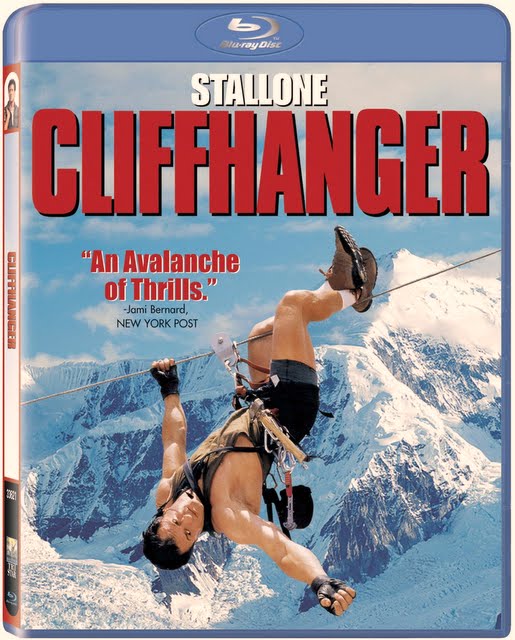
Blu-ray Review: Cliffhanger (1993)


Now Available to Own


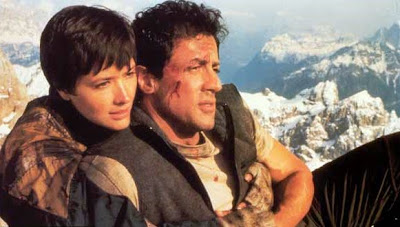
Although Blu-ray clarity enhances some flaws from Cliffhanger's '93 technical wizardry, viewing Renny Harlin's film again in the best possible version since its seventeen year old theatrical run proves that it hasn't lost its ability to thrill.


Having helmed the first sequel to Die Hard, from the moment Harlin's Cliffhanger begins, you're reminded of what a stellar period the late '80s to mid '90s were for action films because they didn't rely too heavily on computers to achieve effects that could be done with stuntmen, invention, and thinking outside boxes that people hadn't even invented yet.


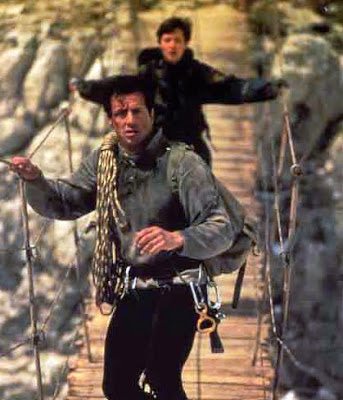
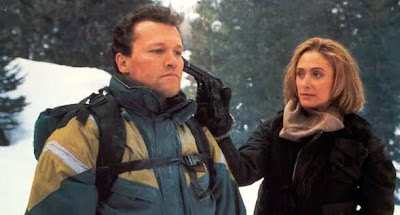
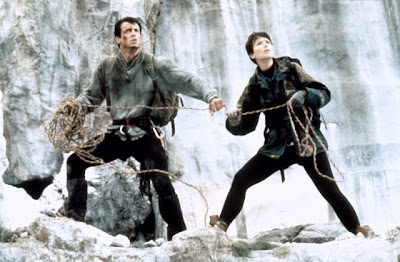
An important cinematic stepping-stone for Sylvester Stallone who had wrapped what we assumed was the last Rocky movie but had yet to find his footing yet post-Rocky or Rambo, in its '93 release Cliffhanger reminded us just what set him apart as an action hero. After walking away from the disastrous '92 comedy without laughs, Stop or My Mom Will Shoot, Stallone climbed the Rockies (or really the Italian Alps) under the guidance of Harlin and alongside co-stars Janine Turner, Michael Rooker, and John Lithgow.


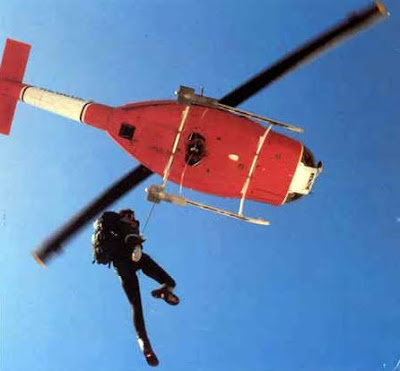
And while it's easy to spot some of the doubles and shots that were filmed separately as the color changes when we see the men on the mountains versus Janine Turner flying the rescue chopper, Harlin's perfectionist mindset and desire to obtain as much reality as he can in the way the stunts were carried out helps set the movie apart from the pack. Aside from some of the extreme violence, the shot choices, edits, and masterful execution is always spot on, which can be evidenced right from its uneasy introduction.

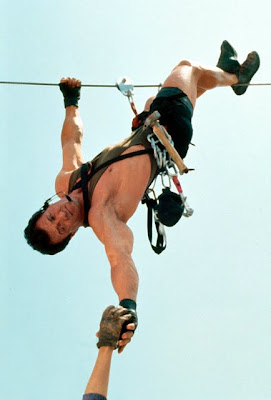
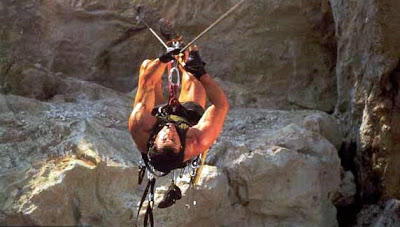
Falsely setting up the movie's tone as a jokey Top Gun styled action comedy complete with Stallone's obligatory line that he's "just hangin' out" on the edge of a mountain, we're in for quite a surprise when the tone shifts into dark, urgent territory that's usually approached in the third act of an action film. What begins as a routine rescue shifts when something goes horribly wrong when Michael Rooker's girlfriend slips from the hanging upside-down one armed grasp of his rescue colleague Stallone's hand and plummets to her death.


With an audience that wasn't quite used to seeing heroes fail to save the damsel in distress, the opening of Cliffhanger — which still made me jump seventeen years later — ensures us that we aren't in the era of '80s superheroes without capes but regular blue collar heroes who doubted themselves like their movie descendants from the '70s.


Guiltily retreating from both his long-time girlfriend Jessie (Janine Turner playing a character who seems like a close relative to the pilot she portrayed on TV's Northern Exposure) and his best friend Rooker, Stallone returns a year back in the hopes he can persuade Jessie to leave the Rocky Mountains and start a new life with him elsewhere.


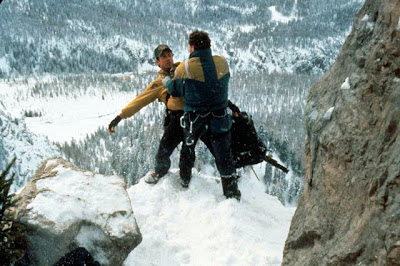
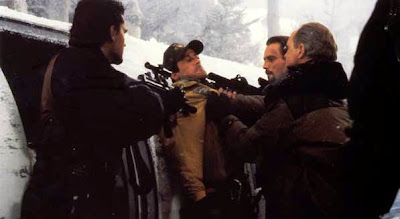
Lecturing him about his cowardice and betrayal in ditching them when they needed him the most, eventually Stallone's climber ends up meeting Rooker in a near deadly reunion on the edge of a cliff as Rooker lays into Stallone for the accidental death. Yet, the two have no choice but to work together, first out of duty as rescue workers and secondly as hostages when they're called into a fake emergency only to discover a group of ruthless criminals headed up by John Lithgow has stolen one hundred million dollars from the United States Treasury Department plane.

Topping the opening intensity of the damsel's free-fall, Harlin presents an action sequence that's so complicated that it may very well be his very best considering how much of it was real and how much was edited together effects wise. Breathlessly paced, the the mid-air two plane hijacking of briefcases of cash involving double-agents, surprise heroes and villains is Harlin's '90s version of the O.K. Corral shootout by setting it at twenty thousand feet by mirroring the pounding of our own hearts in the rapid cuts as the criminals discover that there is no such thing as easy money.


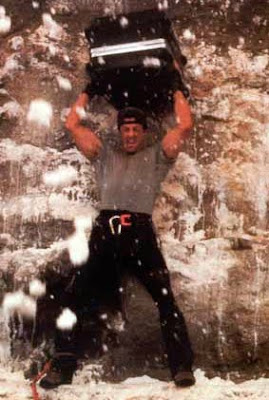
Creating the rest of the film's impossible plot, the plan goes so wrong that they crash land in one place and the three briefcases containing the money hit three completely different locations on the mountains as well. And obviously, since the Treasury Department is involved, the briefcases have three tracking devices contained inside, which necessitates Rooker and Stallone to be kept captive in order to play "fetch."


Sending Stallone up a mountain without his jacket as insurance and threatening to kill both when the money is retrieved, John Lithgow gleefully chews the snow off the scenery as the military trained criminal mastermind complete with an impossible to place over-the-top, only-in-the-movies accent that swings like a pendulum from quasi-British to Lithgow's impression of Peter Sellers' character Clouseau's boss Chief Inspector Dreyfus in The Pink Panther series.


Despite some major gaps in logic and a few, “well, why wouldn't they . . .” hypothetical questions that make you question some of the events, it's an entertaining blast of a movie that shouldn't be in the works to be remade but nonetheless a new version is scheduled to hit screens in 2011.


Yet, even by contemporary standards, Cliffhanger is at times still so outrageously violent that I can easily see why it was originally saddled with an NC-17 since it goes way too far in two fights in particular involving Cool Runnings actor Leon and another one with Rooker verses a UK soccer fan.

Co-written by Stallone, it's immediately apparent that he was truly at his peak in the film (no pun intended) as an aging but still remarkably handsome movie star whose life experience only added to the charisma we fell in love with in his earliest work.


And while Cliffhanger was written off by some critics at the time as just "Die Hard on a Mountain" especially considering the tie with Harlin, the formerly forgotten film has become a guilty pleasure. Thankfully, in celebration of its loyal fans, Sony chose to enough numerous special features on the Blu-ray transfer including commentary tracks and behind-the-scenes bonus extras, some of which were previously available in earlier disc releases.


Text ©2010, Film Intuition, LLC; All Rights Reserved. http://www.filmintuition.com
Unauthorized Reproduction or Publication Elsewhere is Strictly Prohibited and in violation of the Digital Millennium Copyright Act.

FTC Disclosure:
Per standard professional practice, I received a review copy of this title in order to evaluate it for my readers, which had no impact whatsoever on whether or not it received a favorable or unfavorable critique.

9/16/2008

The Jaguar


You'd have more fun in a Gremlin.


Digg!

“Indian magic is no holiday,” Jean Campana (Jean Reno) exclaims nearly midway into writer/director Francis Veber’s mirthless comedy, The Jaguar. And boy, it turns out that he wasn’t kidding. Veber, a master at unlikely buddy comedies and mistaken identities for more than three decades of filmmaking (including La Cage Aux Folles, La Chevre, Le Grand Blond Avec Une Chaussure Noire, and Les Compères) has provided endless fodder for American remakes (respectively The Birdcage, Pure Luck, The Man With One Red Shoe, and Father’s Day). Unfortunately, he misses the mark in his last action/comedy before he again found his footing with a string of popular hits such as The Dinner Game, The Closet, and The Valet (all of which have been subject to remake rumors and contracts).

It’s highly unlikely an American version of The Jaguar will ever see the light of day and frankly, director Veber would probably be the first one to admit that that’s for the best. While sitting down with IndieWire reporter Brandon Judell several years back to discuss The Closet, he admitted that not only did the film-- originally titled Le Jaguar-- fail to earn a stateside release but also he confessed that, “it was not very good.”

Sadly, that’s an understatement as this excruciatingly bizarre mixture of several half-baked plots combusts about thirty minutes into its roughly ninety-minute running time, making the last hour a test of one’s endurance to withstand indisputable trash of the highest order. Veber himself pinpointed the problem directly, arguing that, “when I try to make films that look like American films, they’re not interesting. I tried that. I tried to make an action movie, and we’re not gifted for that. You are better than us in that area.” By noting the cultural differences in filmmaking in France verses America, he does offer an ingenious hypothetical, saying that “if we could mix the systems, having this intellectual approach that the French have and having this entertaining obligation that the Americans have, the result would be the perfect movie.” While no doubt that would’ve helped The Jaguar immensely, Mr. Veber has plenty of perfect films on his resume to bounce back from, as does the film’s leading man Jean Reno. My admiration for these two men provided the two very reasons that I found myself ignoring Veber’s own warning and plunging headfirst into the action/comedy recently released on DVD by Koch Entertainment and SKD.

Obviously inspired by not only the Indiana Jones series but additionally Romancing the Stone and The Jewel of the Nile, Veber introduces us to a mysterious, elderly Indian shaman named Wanu (Harrison Lowe) currently on a PR humanitarian tour to save his beloved Amazon rainforest. Reno’s Campana who serves as Wanu’s assistant/babysitter/interpreter finds he’s in way over his head when Wanu take an inexplicable liking to a stranger they share a Parisian elevator with, Francois Perrin (Patrick Bruel).

One hundred thousand dollars in debt, the freeloading gambler Perrin tries to sweet talk an old flame into loaning him enough money to pay off the mobster loan sharks who have purchased his debt but instead of a check, he forms an unlikely friendship with Wanu who stows away on Perrin’s Jeep and follows him home. After phoning Campana to come pick up the shaman, Perrin sums up his bad luck with a classically penned Veber quip: “What a night. I go out for big bucks and come back with an old Indian.” Wanu, who feels a strange and intense spiritual bond with Perrin, quickly decides that although they don’t speak the same language, in the poker player he has encountered “The Chosen One.” And in the increasingly peculiar events that follow as Veber continually asks us to suspend our disbelief until finally the entire film is incomprehensible and unintentionally hilarious, the fatally ill Wanu depends on his strange new acquaintance to journey deep into the heart of the Amazon forest alongside Campana in order to rescue his “stolen soul.” By now, let's just say I was thinking that it's a damn shame that Mystery Science Theatre 3000 isn't still on the air.

Of course, while Perrin mistakenly leaps at the chance to escape the mobsters, he soon realizes that life in the jungle is far more dangerous than any loan shark, once they venture into the strange land and deadly adventures ensue within the first hour of their arrival. Whether they’re trying to fight off the evil Kumare (Danny Trejo), whom Campana states is a man so evil that he’s a “disaster for the whole planet,” a.k.a. the suspect most likely to have hijacked Wanu’s soul, Veber further muddies up the ludicrous set-up by adding in the beautiful Patricia Velasquez as Perrin’s love interest Maya.

Yet no matter how much mayhem the characters find themselves in, we constantly realize it’s not just the heroes but our director who has completely lost the map as they meander from one ridiculous set-up to another illogical one, and all the while the audience wishes (no doubt as much as Veber, Reno and all involved) that he would’ve played his winning hand and dealt us a comedy of manners instead of a comedy of magic.

Transferred to disc in the original widescreen format with the ability to hear the original French language track (highly preferable) complete with English language subtitles or the redubbed English audio version where the voices sound far too similar, the only other feature available on the newly released DVD is trailers for other projects from the company.

And while, like me, all of the Veber and Reno fans out there will no doubt be tempted to give it a whirl, you’re better off following the talented writer/director’s advice and sticking with the action comedies of Spielberg and company if the mood strikes you or Veber’s own witty odes to wordplay as evidenced in one of his masterpieces such as The Dinner Game or The Closet.

8/06/2008

Pineapple Express (2008)


Director:
David Gordon Green


Let me lay a few images on you: 1) Environmental activist and electric car poster boy Ed Begley Jr. packing heat and dropping f-bombs like pocket change. 2) Petite Rosie Perez putting the smack down on James Franco. 3) Danny McBride baking a cake to commemorate the birthday of his dead cat. 4) Seth Rogen feeling insecure when he meets his high school girlfriend’s hot male classmate who’s wowed her, not with his muscles, but his ability to do a killer Jeff Goldblum impression.

No, my friend, these are not hallucinations. Instead, welcome to director David Gordon Green’s stoner comedy Pineapple Express, which, paying homage to Spike Lee’s term-of-choice, could be called a "Judd Apatow Joint." Emulating 70’s stoner classics from its opening credits, Express gets a much-needed credibility boost, as award-winning writer/director David Gordon Green (All the Real Girls, George Washington) and his talented cinematographer Tim Orr turn what could have been a Harold and Kumar meets Cheech and Chong rip-off into something that’s more beautifully photographed and painstakingly edited than one would assume such a comedy should be.

Yet, that’s not to say it’s George Washington 2. In producer Apatow’s Pineapple Express, "everybody must get stoned" and in the process, laugh themselves silly. That’s right, in the latest trippy offering from the informal Judd Apatow School of Comedic Filmmaking, following Knocked Up, Walk Hard: The Dewey Cox Story, and Superbad, co-screenwriter and star Seth Rogen plays a process server with two passions in life: weed and talk radio.

When he isn’t donning elaborate costumes to surprise his “targets” with subpoenas, Rogen’s Dale Denton can usually be found driving down the highway, joint and steering wheel in one hand, and cell phone in the other, spouting off his own life lessons to whatever unfortunate DJ happens to be on the air. Tackling every issue, from his obvious ardent support of the legalization of marijuana, to trying to justify to the world—and disbelieving audiences—his improbable relationship with Angie (Amber Heard) a pretty, eighteen year old blonde, Dale coasts through his days, seemingly without any greater ambition than receiving the perfect smoke and giving the perfect pearl of wisdom.

While the logic of Dale and Angie: The Couple, makes as much sense as Leah Remini and Kevin James on The King of Queens, Rogen and his co-writer Evan Goldberg manage to cull a great deal of unexpected humor from the situation as Dale proceeds to surprise Angie with a visit in two of the film’s funniest scenes. The first occurs early into Express, when he arrives at her high school and gets busted by faculty within minutes; then, in one of the most uproarious sequences, after he shows up, bleeding and dirty, for dinner with her parents on an evening gone horribly wrong. However, in this instance - as in every time he’s paired alongside James Franco - Rogen is instantly upstaged by Angela’s father, played by Ed Begley Jr. as an uncharacteristic and downright hysterical Clint Eastwood type, eager to unload his rifle into his daughter’s loser beau.

Why is Dale bleeding and dirty, you might ask? Well, it’s a long story, but keeping the dwindling attention spans of the target stoner crowd in mind, it can best be summed up in one name: Saul Silver. Shortly after Dale agrees to Angie's request to finally meet the parents, he predictably retreats to his loyal drug dealer’s house, to take the edge off before continuing on to deliver the rest of his assigned subpoenas.

Like Begley, by playing against type, serious Golden Globe winning actor James Franco (TV’s James Dean) manages to score the greatest laughs by seemingly channeling both Brad Pitt in True Romance and Sean Penn in Fast Times at Ridgemont High in his role as the perpetually stoned drug dealer, Saul Silver. Ridiculously clueless and desperately lonely, save for his adoration for his elderly grandmother, Saul is the type of dealer who claims "lingerers" are bummers yet when it comes to his relationship with his client of two months-- Dale-- he tries to lure him into hanging out by any means necessary.

Like most potheads, Saul’s conversation changes topics from one moment to the next, and Franco shows amazing untapped comedic potential by nailing every joke right from the start, gaining our empathy and winning us over with his portrayal of a morally questionable yet lovable loser. While he’s unable to persuade Dale into staying, either by watching The Jeffersons on one of his two televisions airing different programs simultaneously, or with his satellite radio, Dale can’t resist the chance to light Saul’s unusual “cross joint.” Additionally, while Saul pawns off low-quality fare to his less-deserving clientèle, Dale realizes that he’s been sold the first batch of high quality "Pineapple Express" pot (which Saul claims is the “dopest dope” he’s ever smoked); it’s so good that Saul explains it’s nearly a shame to smoke it since it’s “like killing a unicorn.”

Unfortunately, after Dale leaves his dealer’s apartment to serve one last subpoena, he experiences the ultimate buzz-kill when he witnesses an actual killing by sleazy drug kingpin Ted Jones (Office Space's Gary Cole) and Rosie Perez's crooked cop, Carol. During his chaotic escape, he leaves the rest of his joint at the scene of the crime, and sure enough, after discovering that Ted is Saul’s supplier, Saul and Dale have to flee their homes to outrun not only Ted and Carol, but also a duo of killers sent after the bumbling pair.

Comedic adventure ensues, and it starts out strong, with a genuinely hilarious evening spent in the woods (which goes from The Marx Brothers to The Blair Witch Project in a matter of seconds), then builds to even funnier effect when they encounter Saul’s double crossing, kimono wearing middle-man Red (a terrifically inventive Danny McBride).

But the film takes an ill-conceived turn when it replaces humor for ultra-violent action. The initial fight between Red, Dale and Saul recalls the creative high-jinks and absurdity of Cato Fong and Inspector Clouseau’s fights in the original Pink Panther movies and are excellently staged by Pineapple’s stunt coordinator Gary Hymes (Wanted, The Italian Job). The sight-gags have to be seen to be believed, as Saul jumps up and down on a portable phone in a shower, and Red hits Saul repeatedly with a dust-buster, but unfortunately, the humor and gags soon become increasingly violent.

Despite my belief that when it came to the Apatow trademark of earning its R rating to the "nth" degree, any alternative to the gross-out gags was preferable, the violence in Express crosses the line, especially in an overly long final battle that's shot to resemble a war film. Thus, much like its constantly dazed and confused characters, Pineapple Express throws the viewers off balance by the film’s constant questioning of its tone.

Green, Rogen, and Apatow never seem entirely sure whether they want to make the film a no-holds-barred action movie as homage to Tarantino, or just a buddy comedy turned “bromance,” as the relationship between Saul and Dale begins to blur the lines between comically genre-inspired homoeroticism (think Hot Fuzz and Top Gun) and the typical frat-pack feeling of similarly themed comedies such as Wedding Crashers or Talladega Nights. However, despite a funny, if far too brief performance by Rosie Perez, the film proves to be this week’s male answer to the release of The Sisterhood of The Traveling Pants 2, or as Pineapple’s sexist Red would argue, “bros before hoes.”

Coming, as it does, right off the heels of the release of Step Brothers, and just before next week’s Ben Stiller comedy, Tropic Thunder, only time will tell how reliable the attention spans of audiences will be in remembering Pineapple as an unlikely Apatow joint.

Although the films are very different and I have yet to see Tropic Thunder, the laughter at the Pineapple screening was so raucous that I know I missed half the jokes. So despite fighting an overwhelming urge to look at my watch as its final battle raged on -- based on sheer entertainment value alone -- I think I'd go back to ride the Express once more before revisiting the humorous but unusually cruel, Step Brothers again.

And overwhelmingly, the wish for a repeat viewing would be to appreciate again the awe-inspiring range of Spiderman and Tristan and Isolde’s James Franco, in a role he plays so well that it’s a shame that comedies are frequently overlooked during awards season. However, if you want more reasons, just go back and reread the opening paragraph, where the price of admission is justified right there in black and white, in case your mind (like Saul's) has begun to wander.

7/18/2008

The Dark Knight


Explore Video Clips in Our Screening Room

Read the DVD Review


Director:
Christopher Nolan

“Can somebody tell me what kind of a world we live in where a man dressed up as a bat gets all of my press?” The Joker (Jack Nicholson) memorably complained in Tim Burton’s 1989 masterpiece Batman.

Burton’s film — which took an infinitely darker yet still refreshingly humorous approach in updating the classic comic book character created by Bob Kane and later brought to brightly colored life in the popular '60s TV series and film — seemed to provide the definitive take on "the man, the myth, the bat." That was until Joel Schumacher took over the franchise and turned it into a campy, overcrowded mess in the late '90s, but that all changed when Memento director Christopher Nolan took the Batmobile out for a test drive with his Greek tragedy-tinged epic Batman Begins in 2005.

While nostalgia for Burton’s film grew each year as fans mourned the wrecked franchise, Nolan admirably avoided the temptation to try and rebuild the unstable remnants of Gotham City still left standing by Schumacher. Instead, like a master chef, he started from scratch, taking what he wanted from the comic book and earlier films and, along with his co-writers, inventing a richer, far more devastating interpretation of the Batman mythology. In stark contrast to the socially awkward, slightly bumbling and more lighthearted portrayal by Burton’s star Michael Keaton, Nolan opted to go further in depth into the origins of the tale itself. By putting a completely different spin on the character, he illuminates just how “his” Bruce Wayne came to be the existential, less than gregarious and downright arrogant man he serves up, therefore making Nolan’s Batman a genuine shock to fans, including myself, who remembered seeing Keaton's original characterization in the theatre.

While I still prefer Burton’s version — although I’m possibly biased, as much like one never forgets a first love, they never forget their first Batman -- Nolan’s adaptation of the series is uniquely his own. Upon watching Begins once more in preparation for this review, I became infinitely more impressed by Nolan’s filmmaking craftsmanship and the way he not only set up the character of The Joker in the finale of Begins but also subconsciously prepared audiences for the ultimate darkness that would fill his aptly named sequel, The Dark Knight. And indeed Knight is so entrenched in ominous, forbidding tones that it instantly recalls the nighthawk work of Michael Mann (most notably from Heat, Miami Vice, and Collateral) and makes Tim Burton’s ’89 venture seem downright sunny by comparison.

Admittedly, while Batman films have always been by their very definition distinctly preoccupied with the Bat, the events of Dark Knight’s post-production and the unspeakably heartbreaking loss of its star Heath Ledger earlier in 2008 turned all of the media attention to not only Ledger’s final completed performance — frequently cited as his best — but The Joker himself. Hearkening back to that unforgettable opening quote, somewhere in an alternate universe of movie characters, The Joker - as played by Nicholson in 1989 - must be grinning at the realization that finally it is he, instead of the Bat, who’s been given all of the press. And, this being said, is it any wonder that Nolan’s film is the first one in the series to neglect including the name Batman in its title altogether, thereby making each and every self-proclaimed “freak” in the film a Knight of darkness, if for no more than at least a few minutes?

Picking up where he left off, roughly a year after Begins, Nolan reacquaints us with Gotham City. Not only is Christian Bale’s Batman still deemed a controversial vigilante with police “orders” to arrest him on sight (repeatedly ignored by Gary Oldman’s Lieutenant Gordon) but he’s also unfortunately inspired a group of fame-seeking, action junkie Bat-wannabes who pull out their Halloween styled costumes on any given evening, making do with hockey masks and guns, predictably putting themselves in far greater danger, thereby making Batman’s job harder instead of easier. Of course, this is Batman we’re talking about (or elegantly “The Batman” as he’s called throughout in homage to the comic) so despite needing to iron out a few kinks and take the suit in for additional repairs from Lucius Fox (Morgan Freeman), he takes everything in stride.

However, that all changes when The Joker (Heath Ledger) appears on the scene and forms a terrifying alliance with the heads of the city’s mafia. He also makes it his personal quest to turn Gotham’s crusading — and far more press friendly “white knight" — District Attorney Harvey Dent (Thank You For Smoking’s Aaron Eckhart) “dark” after Dent becomes the city’s saving grace by taking 549 criminals to court in a landmark RICO case. Whereas Batman must lurk in the shadows and speak in a ridiculously disguised voice to avoid being identified as his carefree playboy alter-ego Bruce Wayne, Dent is the man deemed the true hero in Gotham’s eye. This becomes much harder to bear when Wayne learns that his true love, Rachel Dawes (Maggie Gyllenhaal gamely filling in for Katie Holmes) has mixed business with pleasure, falling in love with her dashing colleague, Dent.

Nolan’s version of the exceedingly arrogant Wayne was never one to take things lying down. Thus he proceeds to challenge their courtship at every step, impulsively inviting himself along on a double date, rerouting the leggy stars of the entire Russian ballet aboard his yacht so that Dent is unable to take Rachel to the show, and foolishly trying to inspire envy in his love by making grand juvenile entrances with an endless parade of silicone-enhanced bimbos every chance he gets. While normally — if Wayne was even a fraction more likable — we would feel his pain in not being able to reunite with his true love, most of the time he comes off like an overgrown schoolboy. And intriguingly, the lovely Gyllenhaal has little chemistry with Bale (especially evidenced in a clinically cool kiss) but manages to flirt playfully with Eckhart’s Dent, therefore and possibly without Nolan’s intention, making Batman seem like an annoying third wheel.

But more importantly, this time around, our attention isn’t focused on Batman and it certainly isn’t preoccupied with his nonexistent love life, for as soon as Ledger appears on the screen, teasing us in a fast intro before appearing grandly at a mafia sit-down laughing maniacally, he’s the one keeping us riveted during the film’s overly long 142 minute running-time. While — mostly due to the writing — it isn’t on par with his turn in Brokeback Mountain, Ledger, who drew equal inspiration from Sex Pistols bass guitarist Sid Vicious and A Clockwork Orange’s villainous Alexander DeLarge, does some of his finest work in the film, even if he’s woefully under-used and sadly obscured beneath an unnecessarily sloppy and complicated plot that tries to squeeze in not only every criminal in the city along with all of Gotham’s kitchen sinks. Although I was and still am a true admirer of Ledger’s immeasurable talent, I’d hesitate to go along with the possibly legacy driven sentiment that he’s the worthiest of a Best Actor nomination so far in 2008 since in my opinion that title goes to In Bruges’ Colin Farrell. Still, he heightens every scene he’s in with his musically cadenced voice that punctuates a lackluster score, which never comes close to topping Danny Elfman’s brilliant, instantly recognizable ’89 composition. This time around, and given nowhere near as memorably snappy dialogue as Nicholson was nineteen years earlier to better fit his character, Ledger’s version of The Joker — much like Bale’s Batman — seems far more dangerous, freakish, and twisted than as portrayed in the other films.

In fact it’s ironic that he is called The Joker. Although his face is carved into a frighteningly extra large smile and Ledger delights in spinning a new sinister yarn for every victim he threatens as to how he earned his scars, there are very few jokes or moments for laughter, even nervous chuckles. Instead of teasing us with lines like Nicholson’s proclamation that, “Jack is dead, my friend. You can call me Joker. And as you can see, I’m a lot happier,” merry mayhem and knife-driven chaos proves to be this bipolar Joker’s most effective antidepressant, although the benefits seem short-lived. For quickly after getting his fix, The Joker is out on the street again, cruising for another kill in an unceasing effort to take out The Batman, leaving unpredictable carnage in his wake as major characters are jeopardized and the fate of one in particular I’m still not entirely sure I understand, given the film’s tendency to offer an “ah-ha” magic trick of bringing the dead back to life and vice versa.

Although I’d rather watch Nolan’s original Batman Begins for a richer and more complete storytelling arc, despite its rather rushed conclusion (proving they may be the director’s Achilles heel as it occurs again in Knight) and Burton’s first offering is still my definitive take on the character, when it comes to staging action sequences, The Dark Knight topped every single film that has come before it in the series during four unbelievably tense action sequences specifically photographed in IMAX. Making up for an unrelentingly wandering camera that distracts our eye from cinematographer and longtime Nolan collaborator Wally Pfister’s gorgeous usage of blues and blacks in early dialogue scenes where the camera seems to be tied to a tether ball until it makes a decision to hold steady for one memorable line or moment, Nolan, Pfister and his amazing cinematic partners in crime, ramped up the action for tremendous effect.

While I hesitate to reveal anything in the way of spoilers, be sure to remain in your seats during a sequence involving the transportation of Harvey Dent as Nolan employs the Batpod, motorcycles, semi trucks, helicopters, and S.W.A.T. vehicles in a bravura experience that demands to be appreciated on the big screen (although those with sensitive ears may want to pack along earplugs). In fact, it’s so good, I was still talking about it one day after the screening and it actually out-performed my previous 2008 favorite action sequence included in Spielberg’s awe-inspiring jeep chase from the latest Indiana Jones film two months ago.

So ultimately, despite the film’s flaws as well as our wish that we could go back and rework it at the screenplay stage to make the most of it for the staggering talent involved (especially the late, great Ledger), to quote Nicholson in Tim Burton’s film — in the end, Gotham City, and by association Batman, “always brings a smile to my face.”


7/13/2008

Batman: Gotham Knight


Directors:
Yasuhiro Aoki,
Futoshi Higashide,
Toshiyuki Kubooka,
Hiroshi Morioka, & Shoujirou Nishini

“I never seen him before, but I’m like I so know who this is,” a teenage skateboarder proclaims in Have I Got a Story For You, which serves as the first entry of the impressively animated if uneven six part anthological comic book come to cinematic life in the new DVD release Batman: Gotham Knight. Of course, the caped crusader to whom the teens are referring is none other than Batman and in a series of escalating stories, the group tries to outdo one another as a sort of fanboy version of a “your mama” joke. While it's admittedly a rather weak way to open the episodic work, from a narrative perspective, it makes perfect sense to ensure the audience’s thirst for good old fashioned storytelling by listening to several tall tales in preparation for the film’s far superior yarns to come. And indeed, much like a perfect mix CD made by a friend who knows your musical taste well, the six talented Japanese anime experienced filmmakers responsible for Gotham Knight know how to excite viewers as the film climbs steadily, building upon itself to become worthy of the formidably high bar that Batman enthusiasts have set for any entry in the series.

Broken into a half dozen distinctive chapters, each of the tales in Gotham Knight was created by an entirely different director and screenwriter. Now while in traditional live action form this may be distracting (and some critics referenced the failure of Four Rooms in their Gotham reviews) and it's also been pretentious (such as in the overly long Paris je t’aime), this technique can also provide a unique visual take to differentiate the chapters and better serve the story, such as Kieslowski employing a different cinematographer for each individual segment of his brilliant Three Colors Trilogy. Granted it’s not in the same league as Kieslowski nor should one compare apples to oranges-- or more precisely an anime take on a comic book with some of the best foreign films of the 1990’s-- but the bottom line is, it works in the exact same way in avoiding getting viewers lost in the shuffle of too much stimuli by switching up the visuals, not just for novelty or to pander to the ADD attention spans most filmmakers assume those of us reared on MTV, video games and Choose Your Own Adventure books have, but to better the experience considerably.

And although the mission may have been to segue from Christopher Nolan’s Batman Begins into the hotly anticipated sequel The Dark Knight or-- at its most cynical-- another excuse to get more bat bang for the box office buck, Gotham Knight offers several fascinating looks at the comic book’s mythology including various points-of-view when it comes to the existential hero himself. In addition it references not only Nolan’s works but also the films from the other directors including the horribly campy Schumacher offerings, Burton’s masterworks, the comic book itself as well as the deliciously cheesy television series and original film from 1966.

Upping the action considerably from Story, the film moves into Sin City like territory with the dark and breathtakingly animated Crossfire. In this short, we’re given a cop’s-eye-view of Gotham City and just what moral and ethical quandaries go along with having a vigilante like Bruce Wayne’s Batman basically jeopardizing their job security, with some officers led by Lt. Gordon who are in favor of his unorthodox and not exactly legal crime fighting and others who seem more annoyed by the caped one than the average Joe is of telemarketers. Above all, we’re constantly reminded of Bruce Wayne’s code of honor and the fact that-- while he’s arguably one of the darkest comic book characters ever created-- he doesn’t kill anyone and is always willing to put his own life on the line but will never ask anyone else to do the same for him.

Of course, Batman wouldn’t be able to whip out the “kapow” and “splat” without throwing some villains into the film and we’re given some genuinely exciting confrontations with Scarecrow (whom viewers recall from Nolan's Batman Begins) in the short chapter In Darkness Dwells and a humdinger of an introduction to Deadshot in Deadshot. In fact just these two shorts put together more than make up for some of the ridiculous villains and storylines introduced in the late 90’s Schumacher sequels wherein the franchise hit an all-time low with nipples on the batsuit, a wasted Jim Carrey, and trying to cram in an obligatory pop song every twenty minutes to sell Bat-soundtracks.

However, and thankfully never wearing out its welcome in its seventy-five minute running time, the film’s true standout comes in the form of director Toshiyuki Kubooka’s Working Through Pain which was penned by screenwriter Brian Azzarello. In Pain, we find Bruce Wayne heading east where he enlists the mentorship of a bright Indian woman named Cassandra to help teach him how to control his body’s responses and deal with the excruciating pain in which he often finds himself. Instead of just rehashing the tried and true Mr. Miyagi inspired Karate Kid clichĂ©d plot, the filmmakers dig deeper to make Cassandra the most fascinating supporting player in the film that isn’t a regular part of the mythology as we learn that in order to acquire her knowledge she had to hide the fact that she was a woman, only to be accused of witchcraft when her gender was inevitably discovered.

It’s these little touches in the storytelling along with awe-inspiring artwork that separate the film from simply being labeled a clever marketing tool. And by giving audiences a chance to go from one episode to the next, similar to waiting for the next installment in a comic book series, we’re given a richer look at the man in black than perhaps what would’ve been shared if we’d only been offered one single narrative to sum up the endlessly complicated bat.

7/02/2008

Hancock


Director: Peter Berg

In order to scare kids straight, there were a string of memorable television commercials which played in regular rotation during Saturday morning cartoons in my childhood that all ended with the tagline of “nobody ever said they wanted to be a junkie when they grow up.” Although that’s definitely true and one can add any addiction (including one to the bottle on that list), however in case of Will Smith’s latest movie character, the alcoholic John Hancock who probably hadn’t intended to fall for the drink, he never said he wanted to be a superhero when he grew up either.

While it’s always a fun game among friends and comic book enthusiasts to speculate about which super power it’d be most beneficial to have whether it’s x-ray vision, the ability to see into the future, immortality, or that always seductive ability to fly (especially now to avoid the price of gas), we seldom realize the downside of an extraordinary gift including the loneliness of being the only one of the kind. Not to mention the forced responsibility and guilt trip we’d face when—like Hancock—we’d prefer to just laze about rather than get up and fight (although he can typically be found passed out in a drunken stupor on a park bench or in his dilapidated camper) and the fact that in a world of law and order, breaking the rules even with the best of intentions is liable to earn you a ticket or two.

In the case of Hancock, he’s racked up over six hundred subpoenas and civil court cases in which he’s failed to make an appearance and as a frequent infamous star of countless embarrassing YouTube videos, his media dubbed “so-called heroics” have made the Los Angeles based superhero a man that citizens love to hate where even children curse at him. Yet all the same, when chaos ensues, he’s the first one they turn to in halting a speeding car full of gun crazed villains, managing to leave several millions of dollars of damage behind by flying into freeway signs, destroying skyscrapers, having close calls with airplanes and using cars or any other object within reach to hurl at another in order to stop whatever crime is being committed, seemingly oblivious that his antics have most likely wreaked more havoc than a typical perpetrator ever could.

Much like our current presidential nominees all turned to professionals to micromanage every aspect of their personality and spin everything related to their persona into the very best version of themselves to win over public opinion, Hancock needs a publicity makeover in the worst way and he fortunately saves just the right man shortly into the film when he pulls good-natured, overly friendly, humanitarian PR agent Ray Embrey (Jason Bateman) from a car trapped on train tracks.

Predictably leaving a ridiculous amount of twisted metal and wrecked automobiles in his wake leading those stuck in the same traffic jam eager to launch into a riot, Ray steps in and reminds them of Hancock’s intentions and good deeds. After “hitching a ride” from the flying man in his battered automobile back to Ray’s middle class suburban home, he invites Hancock to share in the family’s traditional "Spaghetti Madness Thursday." Quickly his young bullied son Aaron (Jae Head) not only takes a liking to the unorthodox, scruffy drunk but eventually requests his help in handling those who target him, although despite her child’s intuition, Ray’s highly skeptical, loving wife Mary (Charlize Theron) seems to immediately sense something in their strange new acquaintance she doesn’t quite trust.

Apple iTunes

However, partly because he’s grown weary from becoming so ostracized in his community but even more so because he overhears the disfavor in Mary’s voice when she doesn’t know he’s listening, Hancock decides to put himself in Ray’s capable hands in molding his image and turning him into a more traditional version of a superhero that comic book mythology has fostered. To this end, Ray prompts him to make good on all of those warrants by surrendering to the authorities, joining the prison version of alcoholic and rage-aholic anonymous as an act of good faith with the correct impression that eventually the police will realize just how much they need him both back on the streets and back in the skies. And indeed, after the crime rate climbs a staggering thirty percent in just the five days that Hancock has been placed behind bars, the authorities release him to stop an increasingly violent standoff. Of course, this amusingly gives Hancock the perfect opportunity to try and put Ray’s training towards friendlier people skills and beneficial advice to good use in praising the cops, remembering his newfound manners, and above all, not condescending everyone with whom he comes into contact.

After a wildly entertaining, over-the-top, and hilariously offbeat introduction bolstered by the undeniable star quality of one our most likable leading men--Will Smith-- who by now seems synonymous with the 4th of July weekend, the ingenious premise changes along with its cinematic color scheme from light and bright to unexpectedly dark, with a genuinely surprising twist that throws audiences for a loop and completely switches the film’s tone. I hesitate to offer a greater explanation at the risk of giving away spoilers but needless to say, Hancock’s sudden gear switch from wildly fast to deeply heart-tugging jolts us unexpectedly and probably would’ve made a nicer transition had there been more subtle hints dropped into the first hour.

Yet, as I recently learned, following some questionable test screenings, director Peter Berg (The Kingdom) called back his cast for reshoots although it was possibly too late to change enough to give it the right balance it needed for a resounding success. Despite this, I applaud the courage to bring a greater romantic mythology to the piece which admittedly had been so surprisingly light on plot that I think it only occurred to most audiences after the fact, as we’d been otherwise dazzled by the effects to give that much thought to it while in the theatre. Thereby ultimately it makes us wish in retrospect that the creative love triangle set-up of the final act had been developed much earlier on, promoting that to the primary plot in lieu of one sitcom like “uh oh, there goes Hancock” gag after another.

Still, far better than the trailers would have you believe and infinitely better than I assumed it would be going in and in addition to Smith and of course, the always mesmerizing if under-used Theron, one of the brightest additions to the film is Arrested Development’s Jason Bateman who—like his previous work for director Berg in The Kingdom—gamely recognizes his role of selling terrific one-liners with just the right mix of sweetness and tongue-in-cheek humor, making him one of our most valuable supporting players as of late, coming off the heels of his memorable turn in last year’s Juno.


6/29/2008

Wanted


Director:
Timur Bekmambetov

I jumped on the Angelina Jolie bandwagon early—so mesmerized along with everyone else by her work in Girl Interrupted that I overlooked the questionable decisions and craziness that followed from making out with her brother at the Oscars, starring in Gone in 60 Seconds, wearing a vial of Billy Bob Thornton’s blood around her neck, sleeping with knives, and even setting her sights on Jennifer Aniston’s husband. And frankly it’s because she’s just so cool, so talented, so gorgeous, and incredibly gifted that her remarkable body of work along with her humanitarian efforts and becoming the poster woman for celebrity adoption considerably tip the scales in her favor making her the idealized woman for countless men and the courageous no-holds-barred impulsive risk taker most women wish they could be... if on a much smaller level. Granted, it’s time for someone to at long last admit this and-- after watching Wanted which of course, followed the endlessly entertaining bullet strewn romantic comedy Mr. and Mrs. Smith, the big screen version of Lara Croft: Tomb Raider and others-- I think I’ll take the plunge and confess first that frankly, I’m a bit irrationally terrified of Angelina Jolie. To explain, if I was in a darkened alley or in a parking garage and I got the impression that Angelina Jolie was around, I think I’d either: a) drop into a fetal position and beg for my mother; b) despite hating The Wizard of Oz, click my heels and hope to magically reappear back home; c) have a heart attack right there on the spot; or d) be so worried that-- endlessly spoiling for a fight-- she’d just whip out weaponry that I’d hitch a ride with the nearest person I could find whether they were a five year old on a bike with training wheels or a sixty-five year old in a golf cart. Just like there was something about Cameron Diaz’s Mary that made men turn into stalkers by her romantic allure in the Farrelly Brothers comedy of the 90’s, there’s something about Jolie that makes me immediately concerned she’ll go rogue samurai with little prompting, making her domestic partner Brad Pitt not only climb in my respect for him as one of the very few men who are not only turned on by strong women but respectful enough to be with one, but also a private hero that he hasn’t hired a team of bodyguards whenever they have an argument over who drank the last of the milk. Since, let’s face it, if I was him and I’d accidentally finished Jolie’s crossword puzzle or forgotten to take out the trash, I think I’d be changing my name, dyeing my hair, and moving to Canada.

This being said, when it comes to the big screen adaptation of Mark Millar and J.G. Jones’ comic book Wanted directed by Russian helmer Timur Bekmambetov in his Hollywood debut, Jolie is the ultimate choice to play the aptly named Fox—being that of course, to use a phrase from the 70’s, she is a “stone cold fox” and as we all know, only the coolest characters in action movies are either named after animals or consist of one syllable.


In a film I-- like other critics have dubbed Angelina Jolie’s version of her partner Brad Pitt’s Fight Club, shortly into the work and similar to Fincher’s white collar male angst classic, we meet a dissatisfied office worker in the form of Wesley Gibson (Atonement star James McAvoy). The fact that he has a full name immediately sets him apart from the rest as the film sets him up to be an average square like Norton’s Fight Club character except-- you know-- minus all of the homoeroticism. Recently given one of those bogus corporate America promotions of a title change from “service representative” to “account manager,” Wesley is a man who is so whipped that not only is he still best friends and cubicle buddies with the quintessential twentysomething slime ball who’s sleeping with his nagging live-in girlfriend but adding insult to injury, when the pig is short on cash, he actually pays to keep him in prophylactics and seems unwilling to end a relationship with the cheating, ungrateful woman that’s way past its expiration date.

Furthering his humiliating existence, he lets his overweight, monstrous boss send him into panic attacks which make him as regular at his pharmacy counter as Norm was at the bar in Cheers and it’s precisely in this location one night where he’s approached by Fox who tells him that the father who’d abandoned him shortly after his birth in all reality was one of the finest assassins who ever lived and died yesterday after being taken out by a traitor who, incidentally is standing right behind them. While normally this would send Wesley straight for his bottle of anxiety medication, the audience is fully prepared having seen the highly imaginative and unforgettable assassination just moments beforehand, and what’s more, before Wesley has time to react, Jolie is lugging him around like a box of tissues, rolling and ducking as she shoots her way with Wesley through the pharmacy, culminating in a furiously fast, audacious, and spectacular car chase sequence that will leave you breathless.

It’s about this time when no doubt most of the working press began mentally labeling the film a roller coaster or thrill ride and while I’ve never been one to follow suit or stoop to clichĂ©s, by this point in the film, filmmaker Bekmambetov has demanded either full suspension of disbelief from his audience to just sit back and shut up... or warning them that it’s going to be an awfully long two hours. For the purposes of an audience member and critic, I tried to stay with the stimulus in total submission for as long as I could, even as it grew far more incredibly ridiculous as we’re introduced to the thousand year old order of assassins called The Fraternity, led by Sloan (Morgan Freeman) and inhabited by other interchangeable toughs some of whose names have more than one syllable and are therefore less important than Fox or Sloan. Following orders given down to them by the Gods through—I kid you not—a “loom of fate” as codes are woven into the textiles created in their Chicago mill, The Fraternity make it their goal to restore order in the universe, killing anyone whose name pops up without question.

At first, like Neo in The Matrix (to which countless parallels will be drawn), Wesley resists the temptation to join with the motley crew, but then again, we realize he has a gift and Fox doesn’t make mistakes in recruiting crack shots—it was after all Wesley she chose at the store and not a hunting supply shopping Dick Cheney. Thus, ultimately Wesley takes the proverbial “red pill” and goes through highly excruciating training which largely consists of as Alexander DeLarge might say in A Clockwork Orange, “a little of the old ultraviolence” as his beautiful face is beaten to a bloody pulp prompting him not only never to break rule number one and talk about Angelina’s Fight Club but also to toughen him up. With the end result of enabling Wesley to use his own genetically gifted features and adrenaline charged self-discovered biofeedback to his benefit to see things clearer, slow things down, learn to bend bullets, heal faster, and undergo feats of superhuman strength in order to fully join the fraternity and seek bloody revenge on the traitor who killed his father, enough science is thrown out the window that Wanted may cause anyone with a background in quantum mechanics and string theory to go running for the movie theatre exits.

Still, we’re not in it for logic, we just want to see some action and the director delivers on that promise with some amazing spectacles but unlike the gorgeous action of say Kill Bill or the beauty of martial arts movies or the dazzling Hong Kong shoot 'em up action pictures that actually allow depth to filter in, basically Wanted is one that damn near causes eye strain. Overwhelmingly, it felt like we were watching a large collection of video games that had been left on by eager fanboys in a rush to flee their homes and line up to see Jolie’s violent foreplay-- ultimately making the headache inducing film seem like a dissatisfying gun tease with lots of on-the-surface action but little follow through with an age-appropriate emphasis on quantity over quality (there's a joke in there somewhere but I don't think I need to spell it out).

Although age is something that should definitely be taken into consideration with the film that—should there have been any MPAA justice or proof their ratings aren’t bought off—earns itself an NC-17 within the first half hour alone, yet it was just saddled with the seductive box office friendly R rating, allowing the right for a tragic amount of parents in my audience to legally have the trashy taste to bring young children under the age of ten to go see Hollywood’s latest orgy of blood. Hmm, maybe Jolie will be adopting them soon?

And while I don’t shy away from violence and love a good action film, holding James Cameron’s Terminator 2 up as one of the greatest of all time, in the end, Wanted was so ridiculously violent, so aggressively mindless (a loom, really?), and with a highly unrewarding finale that—without giving anything away—makes a few scenes from The Deer Hunter feel far fresher, that it’s ultimately a major let-down. It’s one you want to love so badly and in fact so many critics and fanboys have been obsessed with this picture for months they’re near candidates for a twelve step program that I think it’s going to be better received than it should have been when viewed through that subjective mirror, yet ultimately it’s not one I can quite recommend.

However, out of mortal fear—no actually sheer respect—I do want to say that nobody handles herself quite like the Oscar winning Ms. Jolie when it comes to outgunning the men and I was grateful that at least they let her feminine beauty shine through (she actually has a shootout in a white, lacy, feminine summer dress!), but she, like the Golden Globe nominated McAvoy and Oscar winning Freeman deserve something much, much better and especially so do the fanboys and girls.


5/08/2008

Iron Man


Director:
Jon Favreau

It’s a good thing he can fly because it’d be hell getting caught behind Tony Stark at the airport security checkpoint. Always a treasure with his recent underrated turns in both Zodiac and Kiss Kiss Bang Bang, charismatic character actor Robert Downey Jr. transitions effortlessly from contemplative art films to summer blockbusters, sliding into both the gold titanium alloy suit of Tony Stark and his best role in years in director Jon Favreau’s smash hit Iron Man.

Establishing its testosterone fueled tone with ACDC’s “Back in Black” blaring in the background, Iron Man trades in the Vietnam era setting of the comic for contemporary Afghanistan as we first find Stan Lee’s Howard Hughes inspired comic book character Tony Stark (Downey Jr.) rattling around the treacherous terrain in a militarily escorted Humvee. More preoccupied with his trusty scotch and fielding carnal inquiries by serving up his Maxim model scorecard, brilliant weapons manufacturer Stark is quickly jolted to attention by enemy fire as explosives rip through the scene.

Held captive in a terrorist occupied cave, Stark awakens to find himself hooked up to a car battery. In a strange twist of surgical fate that would best be filed under “news of the weird,” Stark learns his life has been saved by a quick thinking mysterious scientist named Yinsen (Shaun Toub) who implants a circular electromagnet in his chest. When faced with the demand that he must build the terrorists a missile in exchange for his release, Stark refuses, suddenly realizing that the situation in which he’s found himself is exactly the one his company helped create by arming the world with weapons of mass destruction. Building what would later erroneously be dubbed his “iron” suit, Stark works with Yinsen to craft an ingenious design to secure his escape. Finally back in his mountaintop mansion overlooking the sea in the states, Stark stuns his business partner Obadiah Stone (Jeff Bridges), military “babysitter” Jim Rhodes (Terrence Howard) and tall-drink-of-water assistant Pepper Potts (Gwyneth Paltrow) by announcing that he will no longer make weapons.

After an ingenious and fast paced nearly James Bond styled opening that introduces us to Stark both in Afghanistan under duress and intercuts the action with his careless, American playboy lifestyle, director Favreau slows down the pace, dedicating more than a solid, unsuccessful hour of the film to Stark’s experiments with his always evolving alloy suit. Soon Stark tests the waters as a superhero when he realizes the bald, cigar smoking Stone with a preference for playing the piano compositions of Salieri (film geek note: see Amadeus for the subtext) seems to be even more weapons obsessed than the current Bush white house. Although Bridges’ Stone is hardly in the same league as the masterful Joker or conniving Catwoman and doesn’t officially make his appearance as a genuine villain until extremely late into the film, Favreau steps up the action as Iron Man steadily builds towards, as one might say, a “rock ‘em, sock ‘em robots” inspired conclusion.

While Marvel Studio’s first official, self-financed cinematic release (IMDb) doesn’t follow the tried and true comic book superhero paradigm that made Burton’s Batman or Raimi’s Spiderman such an instant success in its ability to capture the attentions of audience members from all walks of life with an emphasis on storytelling, Iron Man is definitely an above average genre offering filled with wit, brains and excellent chemistry between the leads (especially Downey Jr. and Paltrow).

Despite the box office records, perhaps the truest test of Iron Man will be in its ability to use the foundation established in the first film and carry it into the future sequels, which can only improve as Stark’s suit has been tested, and a true villain needs to be introduced. However, in the end, it’s not the eye-popping visuals and headache inducing, overwhelming sound effects but Robert Downey Jr. who makes the film more than just a traditional superhero picture and reminds us again just why he’s one of the true superheroes in his field.

4/11/2008

Ladder 49

Director:
Jay Russell

When this old-fashioned epic honoring the brave men and women who dedicate their lives to saving others as firefighters was first released in 2004, on the surface it looked like it was a salute to the everyday heroes who stepped up to help search and rescue on September 11, 2001. However, further research revealed that it was written prior to 9/11 and originally set in New York but understandably changed its location after that fateful day to Baltimore, Maryland in this saga that follows Jack Morrison (Joaquin Phoenix) from his earliest days as a probationary trainee to a full fledged veteran with years of service with his fire station group, Ladder 49 that’s led by Captain Mike Kennedy (John Travolta).

Bookending the film with a horrifying blaze that finds Jack trapped in a huge building while Kennedy and the others on his crew try to rescue him, Jack looks back on the events that had led him to that particular moment in time including not only his role as a fireman but also a husband and father. Although some critics felt the work was overly sentimental and pointed out the film’s admittedly episodic structure, I felt that it was respectful and highly compelling filmmaking with the only major flaw being the unconvincing makeup of Phoenix and Jacinda Barrett who played his wife as-- throughout the picture-- they looked exactly how they did when they first met even though supposedly ten years had gone by.

Impressively, IMDb reported that every fire related incident in the film depicted an actual event that occurred within the United States and while, at times one can predict the events that may possibly happen to further the narrative, it’s elevated by the script by Lewis Colick (who worked on the screenplays of the equally old-fashioned October Sky and Beyond the Sea) along with the thoughtful direction of Jay Russell (My Dog Skip, Tuck Everlasting). Of course, it’s the thinking person’s action star Joaquin Phoenix who completed extensive academy and job training that’s the real star of this picture, managing to capture several emotions in a single scene and in the end will undoubtedly make even the toughest viewer find it nearly impossible to fight back tears.

4/03/2008

Chaos (2005)

Director: Tony Giglio

I begin with the facts—made in 2005 yet halfheartedly given a mini-release in 2007, writer/director Tony Giglio’s Chaos starring Jason Statham, Wesley Snipes and Ryan Phillippe ultimately ended up having its largest premiere on the DVD shelves of local video stores in 2008. Everything about the aforementioned facts seemed to scream that it was going to be a disaster yet, and echoing numerous user comments on IMDb, I was actually shocked to discover that snobbery aside, damn it, Chaos is much better than one would assume. Actually, I’d even go as far as to say it’s an above average police thriller, that, despite a huge pull-the-wool-over-your-eyes finale that keeps doubling back to try to top itself, has further convinced me that Jason Statham is an extremely exciting actor to watch.

Set in Seattle, the film opens with a fateful tragedy where two police officers try to save the daughter of a congressman who’s been held hostage after a carjacking by a criminal. When quick reactions lead to the deaths of both the innocent and criminal civilians, we learn in a series of newspaper headlines over the beginning that Detective Jason York (Jason Statham) is suspended from the police department and his partner has lost his job.

Now brought up to speed for present day, we watch as a group of masked men led by Lorenz (Wesley Snipes) hold up a Seattle bank and when the alarm is tripped and it becomes a standoff, the only demand Lorenz makes is to deal directly with York who is reluctantly brought in from suspension and given a babysitter in the form of his new, young partner, Detective Shane Dekker (Ryan Phillippe). By this point, we’re thinking we’re watching a simple heist film but it evolves repeatedly throughout as the captors escape the bank undetected and the real mystery begins.

Giglio, a former production assistant on action films like Heat and The Quick and the Dead, noted on the DVD that his intention with Chaos was to ditch the typical action genre's overreliance on visual effects and in the vein of 70’s films such as The French Connection, make a gritty work that he says is less of a heist action film and ultimately more of a mystery. In this goal he succeeds with this riveting work that will keep you guessing right up to the finale although some viewers may beat the detectives to the punch a few times along the way.

While I will admit that it is another one of those films that seems to delight in building layer upon layer of new twist endings to rival other neo-noir films like The Usual Suspects (although this isn’t in the same league), Chaos is a great rainy afternoon film. Or perhaps it’s the perfect escapist action fare to unwind with when you’ve had a long day, since as Giglio noted on the DVD, he knows he did his job as a filmmaker if he can entertain viewers enough that they forget where they parked their car. Actually, maybe that’s part of the reason this little gem improves on DVD since afterwards you’ll still be putting everything together and it’s better to watch in your own home when you know exactly where your car is parked.

Note: For those who wish to avoid a major plot spoiler, visit the main IMDb page for Chaos AFTER you’ve seen the film.