Showing posts with label Abbie Cornish. Show all posts

4/29/2021

Movie Review: The Virtuoso (2021)


Now Available


As we watch him execute his target at the beginning of the largely lifeless “The Virtuoso,” Anson Mount's unnamed hitman regales us with tongue-twister levels of alliteration. In his clunky voice-over narration, Mount describes the tricks of his trade. This means that for professional killers hoping for pristine, precise hits, it’s of paramount procedure to follow the protocols of planning and position in order to persevere. I'm paraphrasing, of course, but as Mount punches those alliterative words with purpose – undoubtedly trying to make sense of it all – it's hard not to feel like you're getting hit in the face by the “P” key of an old-fashioned typewriter for how often they're used.

Following up one surgically precise assassination with a rushed hit that goes wrong almost as soon as it starts, writer James C. Wolf's “Virtuoso” screenplay loosens up after that. Abandoning the emphasis on “P,” as though one consequence of the botched job was to cause the pages of Wolf's thesaurus to become unstuck, we watch as our virtuoso killer is lured away from his rustic, self-imposed isolation in the woods by his trusted employer (a game yet wasted Anthony Hopkins).

Making a horrifying meal out of a matter-of-fact monologue about the time his character was ordered to slaughter men, women, and children in Vietnam, Hopkins proves why he and he alone is the film's true virtuoso. Dropping in like a veritable hired gun for a few scenes before he presumably goes off to work on grander fare like “The Father,” Hopkins is easily the best thing in this self-important mess of a B-movie.


Sending Mount on a cryptic assignment where the quarry is given a code name like he's The Riddler in a Batman movie, our virtuoso ventures to a country town in the middle of nowhere. After a chance run-in with a few suspicious strangers at a gas station, he suddenly finds himself in a diner full of shady figures he's supposed to covertly assess as potential targets. Forgetting his lofty voice-over protocols of planning and precision, illogically, Mount just starts running the code name past people, quickly becoming the most conspicuous man in town.

One of those films with classic or neo-noir ambitions that at times you think might've been attempting to strive for “Key Largo” or even “Identity” like atmosphere and tension with its ensemble cast of characters in a small setting, the most surprising thing about director Nick Stagliano's muted, muddied “Virtuoso” is just how unsurprising it is from start to finish.

Almost as soon as one particular stranger is introduced, genre conventions tell you precisely where this thing is headed and like its hitman (well, in the first hit anyway) it doesn't deviate from its plan. Saddled with wooden dialogue and zero chemistry between the leads, “The Virtuoso” spends the rest of its 110 minute running time trying to make you believe another twist is coming. Sadly, it doesn't take long to realize that, despite the film's allusions to the contrary, Mount's visibly bored main character is many things but a virtuoso is not one of them.


Hoping to stack the deck, the movie is loaded with terrific character actors like the aforementioned Hopkins as well as Abbie Cornish, Eddie Marsan, and David Morse, some of whom appear for only the briefest of scenes to hopefully follow Hopkins' lead to show up, do the work, collect the paycheck, and get the hell out.

Still, whether it's with its talented cast, the film's few bursts of violence, or its near-bookended, gratuitously clinical depictions of nudity/sex which only call attention to themselves, no matter how hard “The Virtuoso” tries to command our attention, it's impossible to camouflage just how dull it is overall.

Bowing into theaters in some markets (including Phoenix) only five days after Hopkins garnered his second Oscar and four days before it bows onto DVD and Blu-ray, since curiosity over Hopkins' involvement is sure to drive some people to see this on the big screen, the timing of the film couldn't be better. Reinforcing Mount's words about the importance of his many professional “P”'s, what “The Virtuoso” lacks in pristine precision, its marketing team more than makes up for with their plan to persevere with a little help from gold.
 

Text ©2021, Film Intuition, LLC; All Rights Reservedhttps://www.filmintuition.com  Unauthorized Reproduction or Publication Elsewhere is Strictly Prohibited and in violation of the Digital Millennium Copyright Act.  Also, as an Amazon Associate, I earn from qualifying purchases made off my site through ad links. FTC Disclosure: Per standard professional practice, I may have received a review copy or screener link of this title to voluntarily decide to evaluate it for my readers, which had no impact whatsoever on whether or not it received a favorable or unfavorable critique. Cookies Notice: This site incorporates tools (including advertiser partners and widgets) that use cookies and may collect some personal information to display ads tailored to you etc. Please be advised that neither Film Intuition nor its site owner has any access to this data beyond general site statistics (geographical region etc.) as your privacy is our main concern.

7/01/2014

Blu-ray Review: RoboCop (2014)


Now Available to Own


Photo Slideshow


Alternate Title: Robocop; OmniCorp

Before filming even began on the long-awaited reboot of the RoboCop character that director Paul Verhoeven first introduced us to via his own unique blend of nihilistic Kubrickian political satire and ultraviolent dystopian free-for-all in his eponymous 1987 original, the director assigned to the remake called his friend and fellow moviemaking countryman in the form of City of God co-helmer Fernando Meirelles to vent.

Likening the Hollywood studio system of filmmaking by committee to “hell,” the man that had been hired to replace Darren Aronfsky to head up the reboot – acclaimed Elite Squad series and Bus 174 Brazilian filmmaker José Padilha – confessed to Meirelles that he was having “the worst experience of his life” making the movie.


Not ready to throw in the towel altogether – especially given the incredible talent involved, optimistically, he predicted that RoboCop would still be “good” in spite of the challenges.

However, given Padilha’s cinematic background and interest in exploring socioeconomic terrain onscreen, it wasn’t hard to read between the lines of Meirelles’s account of their conversation to understand that the satiric potential of RoboCop to explore timely issues (like corporate defense contracts) that had drawn Padilha to the project were being quickly removed from the final draft.

Yet instead of offering him the chance to navigate the whys and hows that can add shade or dimensionality to the thin line between wrong or right in the film, Padilha was being stifled by suits nervous that screen evidence of a higher IQ might threaten the pleasure (read: box office potential) to be had by viewers just hoping for a Michael Bay-like popcorn picture.

For honestly at times in the CG-heavy explosion sequences, that’s what this new version of RoboCop resembles more than anything else – a lengthy lead-in or teaser (weirdly made by a rival studio) – designed to tie in to Bay’s latest Transformers entry.


Likewise, given his revealing confession that “for every ten ideas he has, nine are cut,” you get the feeling that the prospect of hiring an idea guy (like an Aronofsky or a Padilha) sounded great to the studio in theory. Unfortunately, in reality, they should’ve just gone for a by-the-numbers helmer of the Bay school of film direction to deliver stylish, shiny sequences of spectacle over substance (as men battle machines ad infinitum) without the sophistication of imbuing the movie with so much intellect that we're left thinking about it beyond the final credits.

For unfortunately one of the biggest crimes in taking away Padilha’s creativity was – for all the ideas that they took away – obviously the one that would’ve been the most necessary in making the film work would’ve been in deciding how to best use their charismatic lead (in the form of The Killing and Easy Money’s Joel Kinnaman) effectively.


Of course, this is nothing new and a flaw of the original as well as our one-dimensional police officer turned eponymous hero was pretty thinly drawn – damn near on par with an extra aside from his movie star charm and formulaic sympathy-bait moments that help endear him to the audience early on.

In a gallant attempt to right a Verhoeven wrong, the remake tries to punch up his pre-RoboCop home life a little bit more but an extra moment or two of domestic happiness isn't enough to remedy the problem altogether as we're still left with a bland lead.

Fleshing out his role ever so slightly with some charming scenes that spotlight his relationship with his son and loving wife (played by the gifted but under-utilized Abbie Cornish), unfortunately once Kinnaman’s cop gets his robotic makeover, the overall film fails Kinnaman almost as much as Padilha by giving him very little to do.


Offering some terrific scene-stealing opportunities to its standout supporting cast featuring an impressive array of talents you’d typically find in an Oscar bait fall release, the ensemble cast headed up by Gary Oldman, Michael Keaton, Jackie Earle Haley, Jennifer Ehle, Marianne Jean-Baptiste, and Samuel L. Jackson class up the picture whenever they’re onscreen.

Namely, with Cornish and Kinnaman also included, the film’s saving grace is in its remarkable company of actors – most of whom would never be included on a typical shortlist of A-list names to consider for a big-budgeted blockbuster.


Therefore, just like with the assignment of Padilha and the initial attempt to recruit Aronofsky to take up the helm, I do need to salute whoever is behind-the-scenes calling the shots as a fan of cinema, even if unfortunately due to studio mandates, they’re unable to allow those they hire the chance to truly be free to make the films they desperately want to make.

Nonetheless, like a painter who’s just been given a new collection of hues, Padilha does have the chance to create some breathtaking images with all of the new supplies at his disposal.

As referenced earlier, the film’s action sequences are particularly outstanding including an inventive shootout that’s filmed like a cross between laser tag and Tron— blending mixed media of CG and real visuals with a triumphant score by composer Pedro Bromfan to ratchet up the pulse-pounding tension.


Unfortunately, these moments are few and far between as in the end, the darkness of the dystopian-tinged picture is way too dominant in its dull lighting, requiring you to crank up your television’s most unnaturally bright picture settings in order to compensate and take everything in, even on this otherwise stellar 1080p Blu-ray high definition presentation (screened on a 240hz television).

Removing the overt crucifixion motifs and religious overtones of Verhoeven’s original, for those just content to turn their minds off and enjoy surface level commercial entertainment that never even attempts to plunge into the ultra timely and ever-topical narrative for greater meaning or depth, you’ll enjoy this capably executed yet immediately forgettable remake.

While Michael Keaton’s character as a brilliant yet opportunistically amoral mad scientist goes way too unrealistically far off the deep end way too fast, it’s still great to see the actor onscreen again, even if you get the feeling that like Padilha, Keaton was perhaps more attracted to the film’s satirical potential than he was in its popcorn movie outcome.

Foolishly timed to a Valentine’s Day release, while it essentially underwhelmed audiences in the United States who were far more interested in relatively original efforts like Ride Along and the surprisingly subversive satire disguised as traditional family fodder The Lego Movie, familiarity sold well overseas as RoboCop garnered more than three hundred million dollars in box office earnings.


Rewarding the taste of comfort food over food for thought, RoboCop is the latest exercise in lather, rinse, and repeat filmmaking that makes me hope they’ll get the knots out before the next reboot (as this follows Endless Love and Carrie for unnecessary celluloid recycling).

While it isn’t guilty of any crimes against moviegoers or cinema at large on its own, the one thing it’s innocent of is using the people it brought aboard to their maximum potential vs. international box office appeal.

For even the cop in Robocop would have to agree that just because you have the right to reboot, it doesn’t mean you should as sometimes you should use the right to remain silent until you have something original to say… provided you’re given the opportunity to say it.


Bookmark and Share

Text ©2014, Film Intuition, LLC; All Rights Reserved. http://www.filmintuition.com Unauthorized Reproduction or Publication Elsewhere is Strictly Prohibited and in violation of the Digital Millennium Copyright Act.  FTC Disclosure: Per standard professional practice, I may have received a review copy of this title in order to evaluate it for my readers, which had no impact whatsoever on whether or not it received a favorable or unfavorable critique.

9/25/2009

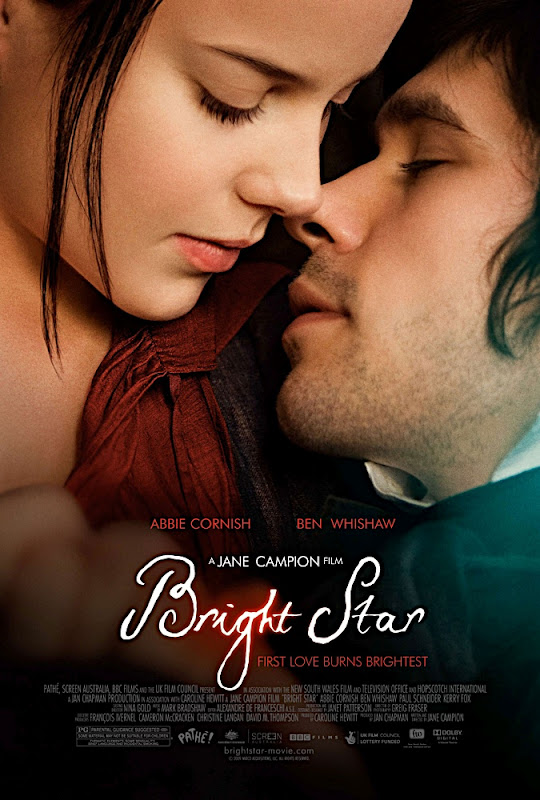
Movie Review: Bright Star (2009)


Photo Slideshow

Check Out Our Trailer & Photo Gallery


Delicious
Bookmark this on Delicious
submit to reddit
Print Page

Digg!

MovieBlips: vote it up!

As the last of the great pre-Victorian era Romantic poets, John Keats wrote in the oft-quoted "Ode to a Grecian Urn," "Beauty is truth, truth beauty-- that is all/Ye know on earth, and all ye need to know."


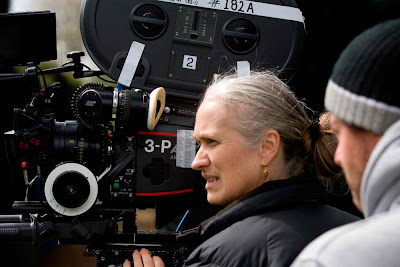
Keats was sensitive, passionate, contradictory and daring both in his life and his work. And even if John Keats hadn't have been officially labeled as a Romantic poet or if you consider his poems "a strain to work out" as his sweetheart Fanny Brawne admitted, his ability to transform words into an impressionistic literary painting of love make it easy to understand why filmmaker Jane Campion would gravitate towards Keats for her long-anticipated return to filmmaking.


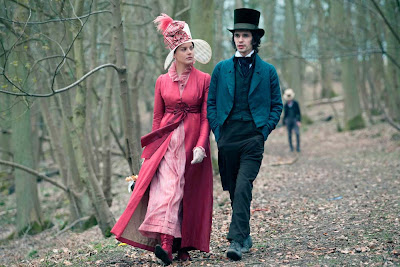
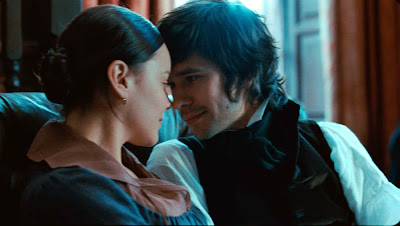
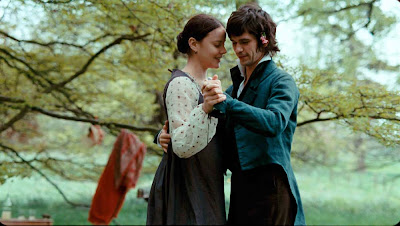
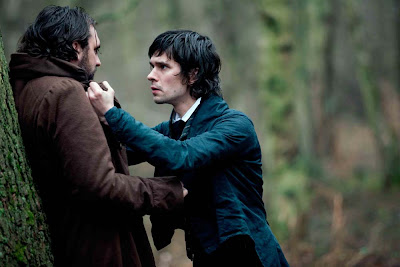
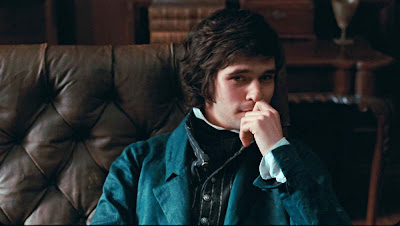
Much like Keats (Brideshead Revisited actor Ben Whishaw) would confess to feeling as though he was "dissolving" in his love for seamstress Fanny Brawne (Abbie Cornish) who lived next door, Campion creates a sensuous feast of a film to dissolve in as well. Although on the surface, Campion's ongoing experimental quest to use nature as subtext to address the feelings her characters cannot share verbally may seem ill-suited for a film about a poet whose phrases have become part of our culture. Yet, it's a surprisingly effective technique for Bright Star.


For, while poetry and discussion of the process is used throughout the work, Campion's film goes against what is expected in a traditional biopic by centering her film purely on the chaste but all-consuming ill-fated three year romance between Brawne and Keats before his untimely death from tuberculosis at the age of twenty-five.


Instead of trying to add to history's ongoing study of Keats, Campion remains in the realm of her expertise by investing the most time and attention in the point-of-view of strong women. To this end, Australian actress Abbie Cornish who'd already impressed me with turns in Candy, Elizabeth: The Golden Age, and Stop-Loss is as intensely passionate as The Piano's Holly Hunter and driven to the same level of extremes in her emotions as Kate Winslet was in Campion's Holy Smoke.


And despite the fact that she smolders alongside a beautiful Ben Whishaw, she easily overpowers him with her skill and intensity in every scene. Although this could've possibly been a direction made by Campion to illustrate Brawne's effect on the poet, the only actor who's routinely able to hold their own opposite Cornish is Paul Schneider. Sure to be in contention for a Best Supporting Actor Oscar nomination, Schneider, who is usually given sidelined but effective supporting roles in movies like The Assassination of Jesse James... and Lars and the Real Girl finally reminded me just why he commanded my attention opposite Zooey Deschanel in All the Real Girls.


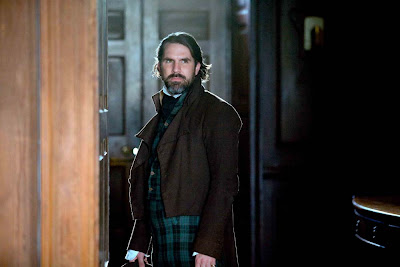
In Bright Star, he creates a riveting, endlessly complicated portrait of Keats' best friend, his Scottish collaborator Charles Brown who openly accuses Brawne of being nothing but a flirt and tries to prevent their infatuation since he views the woman as either unworthy, a drain on his friend's talent, or a rival for Keats' affection.


Drawing from Andrew Motion's 1997 biography Keats, writer/director Campion's Bright Star is at once her strongest yet most subtle film since The Piano by using character driven emotion as the driving force for the entire plot and therefore breaking down the usually stuffy walls of period pieces like Whishaw's Brideshead Revisited to make us feel as though we're in the midst of the all-consuming love affair as well.


Thankfully avoiding the same Avant-garde interpretation which ruined her adaptation of Portrait of a Lady, she's made an inviting yet intoxicating reverie about an unlikely human connection between an early nineteenth century pre-feminist fashionista and the penniless poet who-- thinking himself a failure-- was therefore an unsuitable marital match for the woman he adored which made them both miserable in love.


Employing the gifted cinematographer Greig Fraser and editor Alexandre de Franceschi for some bold and intoxicating sequences that may test the patience of audience members who are still dizzy from the rollercoaster of flashy CGI summer movies with cuts that only last for two seconds at a time, Bright Star contains some of the most unabashedly sincere and genuine sequences of true romance brought to life in years.


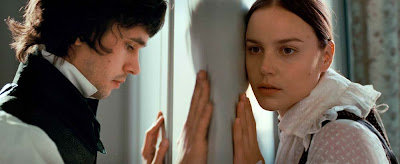
Without removing a single article of clothing and most of the time, never away from the watchful eyes of Fanny's younger brother and sister who accompany her as makeshift chaperones, Campion reminds us that sexuality and sensuality is the most effective when it's withheld. Thus, since she refuses to change the important facts, Campion won't rewrite history and manages to make us swoon along with characters who refuse to go against the social mores of the time and have to find other ways to express their desire such as placing their hands on the opposite side of the same wall at night, Keats requesting that Brawne kiss thoroughly a letter so that he can feel her lips, sleeping with a handwritten "good night" note under his pillow, or the Brawnes' turning Fanny's room into a butterfly museum after a letter he writes inspires their quest.


Although further research reveals that there's an ongoing debate as to how one or two-sided their relationship may have been or what exactly transpired, Campion's Bright Star which is named after the poem that Keats had written for Fanny Brawne (which is referenced in the film) is a gorgeous, naturalistic, and seductive piece of filmmaking wherein "beauty is truth" indeed and that's "all ye need to know."

Jane Campion


John Keats


Text ©2009, Film Intuition, LLC; All Rights Reserved. http://www.filmintuition.com
Unauthorized Reproduction or Publication Elsewhere is Strictly Prohibited.

11/07/2007

Stop-Loss

Director:
Kimberly Peirce

Looking for direction in his life, my young cousin enlisted in the Marine Corps on September 10, 2001; little did he or the rest of the globe know that they would be waking up to a very different world on 9/11/01 with the horrifying events that shook our nation. After that fateful day, there was an unrivaled sense of patriotism that seemed to strengthen America across party lines, which united us in our goal of not only helping out the victims and their families in our country but also in trying to seek justice in other countries as well. Large numbers of young men and women voluntarily joined the military and ended up (like two of my relatives) going to Afghanistan and/or later Iraq when that war broke out a few years ago. Boys Don’t Cry writer/director Kimberly Peirce found herself in a similar situation when her baby brother (fifteen years her junior) volunteered for the army and stayed in constant contact with his sister through instant messages as he patriotically fought for America overseas and later returned wounded. After a Thanksgiving celebration, Peirce found herself struck by the sound of rock music permeating from where her brother sat editing together footage he and his buddies shot during the war to songs of his choosing and an obsession was born that eventually led to Peirce’s creation of Stop-Loss.

In order to promote her film in an advance screening months before the 3/28/08 release date, Kimberly Peirce came to Phoenix on Election Day this week to explain the way that her curiosity and obsession with wanting to tell the stories of veterans led her to more than one hundred hours of documentary footage after she flew throughout America, Canada and Mexico to interview soldiers and their loved ones. When she discovered the governmental policy widely referred to as the “back door draft,” a.k.a. the Stop-Loss Policy which, as publicity materials state uses “a loophole in soldiers’ military contracts to prohibit servicemen and women from retiring once their required term of service is complete,” Peirce realized that she’d found the hook she needed to craft a compelling work of fiction. Texas native Mark Richard collaborated with Peirce on the screenplay which came together in just two and a half months and was shopped around until Paramount and producer Scott Rudin gave them the green light to get their personal story of three friends who return after serving in Iraq made.

Veteran ensemble actor Ryan Phillippe (Flags of our Fathers, Crash, Gosford Park) turns in a compelling performance as Brandon King, a naturally gifted leader who manages to guide his troops through countless successful combat missions until a final one goes horribly wrong just before he returns to his small town in Texas where he receives the purple heart for his service. Rounding out the cast is an impressive performance by newcomer Channing Tatum as Sergeant Steve Shriver who finds it increasingly hard to turn off his war mindset on his first night back and charismatic, passionate yet hard drinking and troubled Tommy Burgess (Mysterious Skin, The Lookout and Brick’s star Joseph Gordon-Levitt) who is kicked out by his new bride Jeanie (Mamie Gummer) upon his return. Perhaps the greatest revelation in the fiery young cast is Candy star Abbie Cornish as Sgt. Shriver’s girl Michelle who, as Peirce notes, serves as the perfect way for the audience to vicariously become a part of the tight-knit community due to her status as an outsider. After Brandon learns that he has been stop-lossed when he returns to base to check in his gear, he angrily seeks out his lieutenant colonel (Timothy Olyphant) and proceeds to get into a heated argument that results in his impulsive decision to flee the base and go on the run with Michelle who, feeling alienated from Steve, helps protect her childhood friend out of love and loyalty in trying to aid him in his quest.

One of the biggest recurring problems with movies labeled war films is their tendency to transfer the ever popular video game mentality into cinema by taking a bunch of competent and attractive actors and thrusting them into battle without giving the audience any insight into their personalities. Intriguingly and to her credit, Kimberly Peirce takes the opposite approach of putting the characters into battle in a brief but tense beginning in order for us to grasp their dynamic and then having us becoming attached to the young men upon their return so that we, like the characters, feel a sense of urgent confusion in the fast change of scenery. The brilliantly rambling opening twenty minutes following the Iraq footage (which was shot in Morocco) recalls The Best Years of Our Lives not just because we're faced with three fast friends but also because we see three very different approaches to dealing with the situation and the bond illustrated from the get-go helps keep us riveted as the film continues and they spend much less time together onscreen. Two-time Academy Award winning cinematographer Chris Menges (Notes on a Scandal, The Pledge) and Platoon’s Oscar winning editor Claire Simpson do an expert job at melding together different shots from varied mediums that give the film a sometimes home movie feel along with the combination of intimate close-ups and unnervingly tense action scenes to help produce Peirce’s vision. All in all, it’s both remarkably executed filmmaking and superbly crafted storytelling that succeeds not only on the level of the film itself but also-- more importantly-- based on the overwhelmingly positive feedback of attendees at the screening, including myself, who felt it was a compassionate, human and astute portrayal of servicemen and women. For more information or to hear others sound off, check out the film’s website here.