Showing posts with label Fashion. Show all posts
10/06/2014
Book Review: Irene by Frank Billecci and Lauranne B. Fisher
Complete Title:
Irene: A Designer from the Golden Age of Hollywood - The MGM Years 1942-1949
Long before the Johnny Stompanato scandal, one of the most popular stories that followed The Postman Always Rings Twice femme fatale Lana Turner around as closely as her own shadow was the old Hollywood legend that the blonde screen star had been first discovered at a drugstore.
Comprised of all the ingredients of an underdog/fish-out-of-water/Cinderella story that's since become synonymous with Hollywood movie-making, the Lana Turner legend has become almost as iconic as the all-white image of her walking into the frame of the dark world of Postman's Film Noir.
Therefore it’s only fitting that the woman responsible for creating the single-hue dominant motif of Turner’s mostly white Postman wardrobe (which led to department stores being unable to keep white garments in stock) was also discovered working in a drugstore two decades earlier herself when future MGM costume department head Irene was spotted by Mack Sennett Studio director F. Richard Jones.
Now that's a coincidence worthy of – if not a Hollywood movie – than at least Hollywood itself!
Having worked since the age of nine in her family’s South Dakota general store before catching a train to Los Angeles eight years later, Irene was a quick study everywhere she went.
Acquiring the skills she would eventually require later on when starting her own successful dress shop, Irene graduated from extra to assistant to lead actress at Sennett Studios before attending Wolfe School of Design which gave her the knowledge and confidence she needed to strike out on her own.
Initially starting out small, Irene’s figure flattering creations soon attracted a long list of private clients including the wife of future boss Louis B. Mayer and A-list actresses who wore Irene’s fashions in some of their onscreen roles without studio permission or credit to the designer.
Inspired by everything from gallery exhibitions to architecture (which she utilized to construct undergarments for Marlene Dietrich) along with the Parisian salons she visited following a personal tragedy, Irene was so successful in her own dressmaking endeavors that she initially turned Mayer down the first time he tried to hire her.
Once World War II depleted the men from the costume department, Mayer’s wife encouraged him to ask her favorite gown designer to reconsider accepting the position which she did. Negotiating a sweetheart deal, Irene was granted everything that had already been put in place by MGM’s previous head designer along with greater freedom to make top-level decisions and approve staff.
With her own loyal employees in tow and the understanding that she would be able to continue to dress her private clientele despite her new job, Irene officially made the move to MGM in 1942. Soon tasked with juggling several projects at once, one of her first big assignments was designing the scandalous costumes for longtime friend Lucille Ball’s newest project DuBarry Was a Lady.
Responsible for overseeing, designing and/or handcrafting thousands of looks throughout her career, Irene’s landmark contributions to the Golden Age of Hollywood costume design easily made her one of the earliest pioneers of the art-form and one on-par with her far more well-known peer and industry rival Edith Head.
Plagued by misfortune, heartbreak and person demons in her private life which began to take their toll on her career near the end of her MGM heyday, authors Frank Billecci and Lauranne B. Fisher (daughter of Irene’s longtime personal friend and artist Virginia Fisher) bring Irene’s legacy to vibrant life in this long-overdue book.
Compiling over one hundred and fifty breathtaking sketches and photos (including many from Virginia Fisher’s own personal collection) to augment this accessible yet well-researched text, Irene gives readers a closer understanding of one of the most unsung artisans of the 1940’s. Furthermore, the work from Schiffer Publishing is filled with insider details from and about those that knew her best.
Articulating the groundbreaking techniques she used in making the color of a costume an opera inspired musical motif for example, we realize that Irene’s efforts enhanced viewer understanding of MGM's masterpieces on a level most are completely unaware. And film fans reading Irene today will undoubtedly be eager to go back and view some of the titles she worked on to see the impact her designs made on the final cut.
Additionally, the authors recount her great friendships with performers loyal to her throughout their careers including Esther Williams and Judy Garland as well as her conflicts with Katharine Hepburn who did everything possible to sabotage the painstaking work done by Irene’s department from covering up the costumes to hide clothes she didn’t like on camera or sitting on the ground.
An engrossing and fast-paced read, Irene addresses the highs and lows of life on and off the MGM lot. Yet despite this, true film lovers do long for more in-depth analysis regarding how and why certain key pieces were crafted and the ways in which Irene worked in tandem with the production designers etc. to convey with art a chosen story, mood or theme (as evidenced in the outstanding Postman section).
Nonetheless with so many films to work into the seven year span of her tenure at MGM in a mere one hundred and forty-four pages, Irene’s scribes do an admirable job. And all in all it’s a terrific starting point for those with an interest in greater study on the medium of costume design on film which is currently at an all time high given the success of the nationally touring Hollywood Costume Exhibit.
A gorgeously illustrated and lovingly crafted work penned by the writers in tandem with Virginia Fisher, hopefully Irene will inspire further research into the still influential work of the designer who’s often overlooked in favor of her likewise extraordinarily talented peer Edith Head.
Highly recommended, while Irene makes a perfectly lovely coffee table book for fashion fans, it’s also an inspired title to pluck out of obscurity (much like Lana Turner or Irene herself in a Hollywood drugstore) and add to the holiday gift list for the cineaste in your circle of family and friends.
Text ©2014, Film Intuition, LLC; All Rights Reserved. http://www.filmintuition.com Unauthorized Reproduction or Publication Elsewhere is Strictly Prohibited and in violation of the Digital Millennium Copyright Act. FTC Disclosure: Per standard professional practice, I may have received a review copy of this title in order to evaluate it for my readers, which had no impact whatsoever on whether or not it received a favorable or unfavorable critique.
3/19/2014
Blu-ray Review: Mademoiselle C (2013)
Because babies are used to sell magazines all the time, the image of a newborn on the cover of a magazine wouldn’t normally be a potential source of controversy except when the woman opting for the photo is none other than ‘90s fashion “Queen of Porn Chic” turned former French “Vogue” editor Carine Roitfeld.
After ten years at the helm of “Vogue,” Roitfeld left her predecessor to give birth metaphorically, using the picture to announce “the rebirth of fashion” on the inaugural issue of her riskiest professional venture yet with the debut of her very own magazine “CR Fashion Book.”
Obviously the photo is the ideal visual accompaniment to tie in the theme of rebirth that lies throughout the premiere periodical. Yet at the same time, it also holds a large amount of personal significance for Roitfeld as well as we learn in Fabien Constant’s fascinating documentary Mademoiselle C, which chronicles not only the endlessly inspiring preparation for the birth of “CR Fashion Book” but also the birth of her very first grandchild via her daughter, who serves as one of Roitfeld’s many muses.
A refreshingly honest, warmhearted and gifted subject in her own right who’s always on the hunt for the next great idea or collaborator, Roitfeld herself has served as the muse and collaborator of many of the most famous names in fashion.
Perhaps best known as Tom Ford’s “ideal woman” and seemingly perfect Virgo twin with whom she created the infamous porno or erotic chic aesthetic so often associated with her name, we also follow Roitfeld on her journey to events around the world celebrating the publication of a gorgeous, Chanel focused oversized art book devoted to The Little Black Jacket that she coauthored with Karl Lagerfeld.
Getting the unique opportunity to know not only Roitfeld personally but also see such fashion icons let their guard down through her eyes, documentarian Constant shares candid footage of creative minds at work, at play and in conversation.
A visually intoxicating film for fashion and art lovers, admittedly Mademoiselle C does suffer a bit from its lack of a concrete focus in trying to take on the entire fashion world she engages in on a daily basis in the limited span of its 93 minute running time.
While it likewise would’ve been immensely helpful to both fashion’s faithful and the uninitiated alike to begin with a more solid introduction to our subject rather than just depositing us right into the room with her after the most cursory of explanations since we’re left to piece together biographical and professional details by random snippets of dialogue here and there, given the end result of the film, it’s easy to forgive.
The daughter of a film producer father and script supervisor mother, although Carine Roitfeld had wanted her son to follow in the family’s cinematic footsteps (he chose the related field of art instead), it doesn’t take very long for viewers to realize that in a way, Roitfeld has carried this torch herself.
Happiest, as she confesses, making images including composing some hauntingly majestic layouts that pull you in two emotionally contradictory directions at the same time, Mademoiselle C is sure to appeal to anyone who’s ever looked at the pages of a “Vogue” photo shoot and wondered how such beauty was achieved.
A distant cousin to film, art and theater – it’s in the visually challenging photo shoots that the documentary really grabs you, far more than any red carpet celebrity event.
A welcome and rare opportunity to not only see the artistry come to life but also be a fly-on-the-wall during that entire process from the inception of ideas to explore through the lens to the challenge of executing the perfection that lives in your mind, Constant’s own cameras capture what is without question living art and one of the most underappreciated mediums as both cinematographers and painters (just to name two related professions) could learn a lot with Roitfeld as a muse.
And although it’s safe to say that she’ll continue to inspire generations of designers who call her “the sexiest woman in fashion,” thanks to Mademoiselle C, viewers realize that what makes Roitfeld so enchanting isn’t simply her looks. No, the most seductive thing about this gorgeous grandmother is the way she uses her beautiful mind to breathe new life into fashion, one (baby) cover at a time.
Text ©2014, Film Intuition, LLC; All Rights Reserved. http://www.filmintuition.com Unauthorized Reproduction or Publication Elsewhere is Strictly Prohibited and in violation of the Digital Millennium Copyright Act. FTC Disclosure: Per standard professional practice, I may have received a review copy of this title in order to evaluate it for my readers, which had no impact whatsoever on whether or not it received a favorable or unfavorable critique.
Labels:
Blu-ray,
Blu-ray Review,
Documentaries,
Fashion
10/05/2009
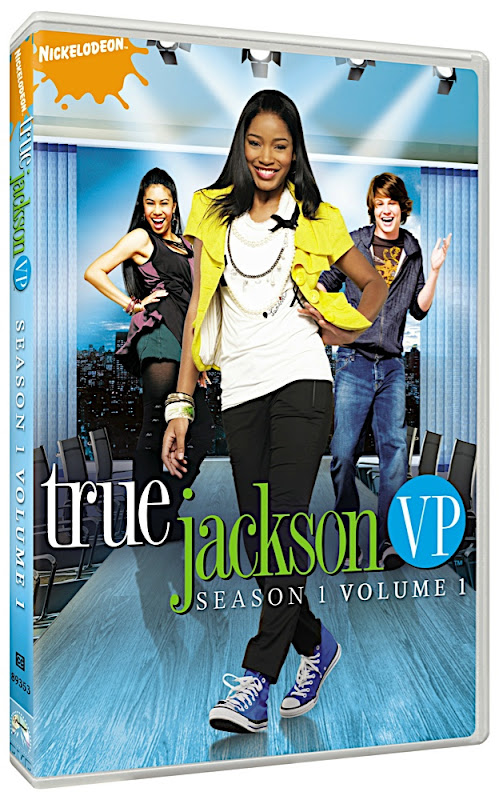
TV on DVD: True Jackson, VP -- Season 1, Volume 1 (2008-2009)
I'm often asked if I get bored screening so many different titles and while, occasionally this happens as there's no worse feeling than getting one episode into a television box set or ten minutes into a movie and realizing it'll be an extremely long experience, overall I subscribe to the adage that I can learn something new everyday.
Consider Nickelodeon: before SpongeBob SquarePants came along, I would never have imagined that an animated sponge who lives in a pineapple under the sea would be that funny. And boy did I kick myself after watching True Jackson, VP.
Had it ever occurred to me that I could "get discovered" that way, I'm thinking I really should've set up lemonade stands in the lobbies of publishing houses, The New York Times, and just outside the gates of my favorite movie studios. Alas, no, silly me-- limited by geography and reality-- by the age of eleven I began sending out my query letters, screenplays and manuscripts and kept the lemonade stand separate.
Yet, I employed the same discipline with the stand as friends and I used strategic locations to maximize the potential of new neighbors moving in and construction workers putting in long hours by offering Crystal Light and Kool-Aid for a dime (or if we were feeling extra ambitious) a whole quarter.
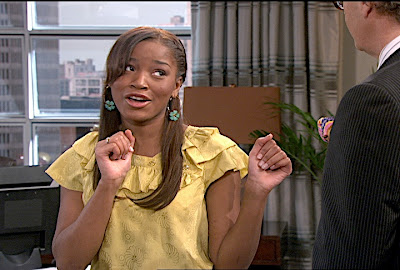
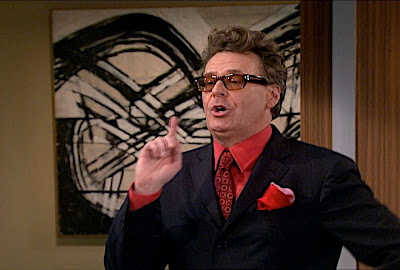
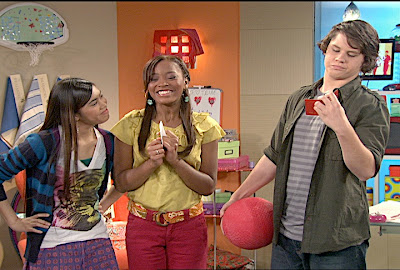
However, fifteen year old True Jackson, played by likable Akeelah and the Bee star Keke Palmer was not only braver than a suburbanite for heading right into the fashion district but she brought along sandwiches as well obviously forgetting the lesson in Devil Wears Prada that you're not supposed to eat... much. Fond of taking designer clothing and tailoring it to fit her own style with different color buttons or a new hem, after a five minute encounter with boss and CEO of the brand of clothing True happens to be wearing, Max Madigan (Greg Proops) sees her potential and hires her as the newest Vice President in charge of Youth Apparel for his company MadStyle.
Luckily hopscotching right past design school, internships, and Project Runway, True Jackson skips directly past go and finds herself pulling an Ugly Betty except Palmer is adorable, down-to-Earth and not based on a telenovela. Yet, diversity and girl power rules the day as originally True aired in its world premiere following iCarly's first TV movie, iCarly Goes to Japan and reached record numbers of viewers with its initial few episodes.
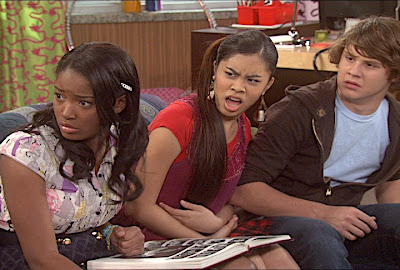
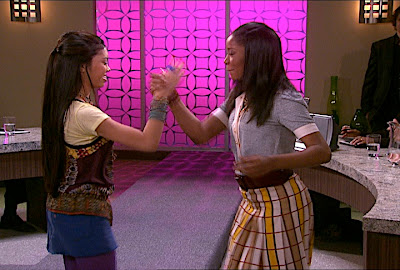
Luckily Nickelodeon has always been thankfully more diverse than most other rival tween and teen networks and essentially it uses the same model as iCarly in presenting us with a friendly, intelligent main character and her female and male best friends, this time all of different races and with a unique flip in personalities. While Miranda Cosgrove's iCarly costar Jeannette McCurdy appears in a cameo performance on True, instead of providing Palmer's True with a sidekick like McCurdy's aggressive bully Sam, True's BFF is the fun-loving but flighty and easily distracted Lulu (Ashley Argota) who has the world's shortest attention span.
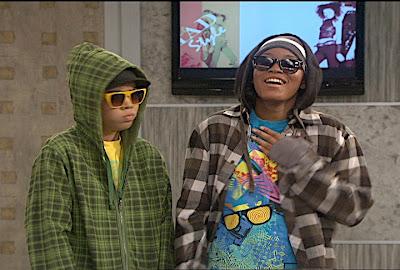
Essentially if Twitter were a person and all of the tweets of numerous users were embodied by an individual, it'd be Lulu who loses focus faster than she text-messages which wouldn't normally be a problem aside from the fact that True hires her to be her secretary and soon realizes she's doing double the work. The third amigo Ryan (Matt Shively) isn't an employee of MadStyle but he might as well be. Ryan basically spends his entire summer vacation in and around True's office as though he were a painting someone has never moved, that is until he enlists Lulu's help to attract a girl he likes and later when his gal pals try to boost his self-esteem by talking him up at a skate park.
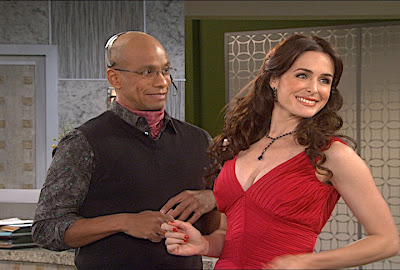
Quickly discovering that life in offices, meetings, and/or cubicles is as cliquish and gossip prone as high school, True clashes with the office's sycophantic Queen Bee, the amusingly named Amanda Cantwell who is determined to bring down the bubbly teenager who skipped all of the hard work, networking, and education to find herself given a beautiful office on the strength of a few stitches and a sandwich.
Despite the dubious set-up and the fact that we never actually get a good sense of True's flair as a designer since most plots involve the central cast's interpersonal issues with barely any mention or scenes involving the work that True constantly alludes to throughout the series, the ensemble volleys well back and forth to keep us distracted enough not to notice all of the gaps in logic or questions about what's going to happen when school comes back around etc.
With very weak humor and the obvious audio "assist" of the live studio audience nurturing it on by laughing uproariously at the most minimal of jokes and a struggle to balance the adult plots with those of the kids in a way that engages either demographic fully or authentically, it'll be an uphill climb for True Jackson, VP to reach the natural flow of iCarly. Although it makes an interesting companion show to Carly, from an audience standpoint and lackluster pilot aside, that program succeeded right off the bat with a cast and writing staff that was all on the same page and by ensuring that the Carly kids still act like kids while in grown-up environments.
While the kids are still kids on True Jackson, it's much tougher to buy into the shenanigans that occur at MadStyle because the two pieces of teen wackiness and important business meetings just don't fit very well together without making the adults look irresponsible or more immature than True (which the writers do most of the time). While of course, this could be remedied if True, Lulu and Ryan tbecame miniature versions of Tim Gunn, this would lose the kid vote immediately.
As someone with a personal interest regarding child prodigies who-- as the daughter and cousin of former models-- also loves fashion, I was very hopeful that True Jackson, VP would be a creative success. And despite a few entertaining episodes, overall I couldn't help wishing I could set up a lemonade (or sandwich stand) outside the Nickelodeon gate and try to rework it in the writer's room along with the talented cast and crew. Moreover, I want it to succeed as its own series and not "iCarly Goes Vogue," "Project Nickelodeon," or "Ugly Betty Gets Slimed" since the potential is there but the setup and payoff just don't "rock the show," to combine fashion talk with TV critique.
Filled with mini behind-the-scenes plugs and cast lead-ins to episodes that no doubt aired to remind Nick viewers about the new series in its first year for these 13 episodes, the best extra by far involves Runway's Heidi Klum herself as we're given a five minute overview of the coveted Barbie Fashion Show during New York's Valentine's Day 2009 Fashion Week.
Text ©2009, Film Intuition, LLC; All Rights Reserved. http://www.filmintuition.com
Unauthorized Reproduction or Publication Elsewhere is Strictly Prohibited.
Labels:
Fashion,
Keke Palmer,
Made for TV,
TV,
TV on DVD
1/11/2009
DVD Review: Funny Face (1957) -- The Paramount Centennial Collection 2-Disc Edition


"Take the Picture, Take the Picture,"
"Think Pink" & Brush Up on
Your Phony Parisian Philosophy
As Stanley Donen's "Bizzazz" Filled
Musical Arrives on DVD
"Think Pink" & Brush Up on
Your Phony Parisian Philosophy
As Stanley Donen's "Bizzazz" Filled
Musical Arrives on DVD
An Introduction* from Audrey Hepburn:
"... I can easily state that no matter how long the passage of time, or how great the physical distance between us, there is one person whose very name makes me smile in total delight whenever I think of him. And that's Stanley Donen.
"Stanley is a master moviemaker. His knowledge of film is boundless, from his clever camera technique and choreographic grace, to his finely tuned musical ear, to his exquisite taste in color design and story sense. Most important, in my estimation, is that he combines these remarkable professional talents with an extraordinary amount of sensitivity and patience, and, above all else, a tremendous sense of humor.
"And only for Stanley would I have shown the nerve to dance with Fred Astaire."
* Excerpted from the Introduction to Dancing on the Ceiling: Stanley Donen and His Movies by Stephen M. Silverman

And sure enough, once it changed studios, Funny Face would not only become a smash success but additionally marked Hepburn's first of three films working with director Donen (followed by Charade and Two for the Road), the first in which she was able to dance and sing using her own voice (a feat she repeated in Breakfast at Tiffany's before she was dubbed in My Fair Lady), and a classic of the VistaVision cinematic format.
Created in tandem with other studio widescreen ventures like Fox's Cinemascope to help lure viewers away from the "clunky round TV image" of their living rooms back to the theatre, the expensive and state of the art process, discussed at length by cinematographers and Paramount camera department employees in a twenty-five minute extra on Funny's second disc, strove for "the ultimate in film presentation" by offering unprecedented "complete focus across the screen" so that everything was clear from left to right.
Although it's hard to imagine Funny Face without the gorgeous color and innovative shots (now fully restored in a a painstaking process in stark contrast to the "washed-out, flat prints" that Paramount noted were only available for years) without thinking of VistaVision, ironically Donen wasn't crazy about the process.
A technically audacious format which was abandoned by 1960 as Stephen M. Silverman wrote (232), VistaVision which was created by using a special camera with 35mm film which ran horizontally instead of vertically resulted in film negative exposure that was twice the normal size. Yet, aspiring to achieve the same "soft, smoky focus," in certain scenes that recalled the fashion layouts of Richard Avedon (the inspiration for Astaire's character Dick Avery), Donen and Avedon experimented with everything from glass to silk stockings to tissue paper to put in front of the lens to try and see the effect it could create visually.
A cinematography nightmare to the studio which threatened to fire both Donen and veteran MGM musical lensman Ray June who was known for his photographic knack of making films look so incredibly gorgeous-- realizing that Avedon was the impetus-- Paramount forbid the fashion photographer from speaking to Donen on the set.
Yet, not taking no for an answer, as Silverman continues (233), Avedon and Donen devised a series of signals involving Avedon's necktie that informed the director of how much light to use in a particular scene since he wanted certain sequences to achieve that iconic fashion shoot feel.

An incredibly stressful experience for all involved, most notably the film's cinematographer, Avedon expressed his fear that the reason Ray June passed away at the end of the shoot was because the studio threats to end his employment had "killed him," (Silverman, 233).

Whatever the case, it's the film's authenticity and its distinct place, subject, and time of the fashion world in '50s periodicals--such as Harper's Bazzar and its editor-in-chief Diana Vreeland which were the real-life counterparts of the film's editor Maggie Prescott and fictitious Quality Magazine-- that make Funny Face a much loved classic to this day.
A fashion photographer and designer's dream and an endless source of creative inspiration as numerous professionals note on the film's plethora of extras in the second disc of this Centennial Collection release, the film itself and notable age difference between its leads Astaire and Hepburn may have dampened it slightly as a whole but what it lacks in some believability it makes up for in charm, style, and of course, "bizzazz."
A phrase crafted to indicate that a shoot required something extra and used mostly in requests that a photo needed more "bizazz," the word coined by Vreeland for as screenwriter Leonard Gershe noted, "lack of a better word," was inserted throughout the film and uttered memorably by Kay Thompson's dynamic editor Maggie Prescott. (On a contemporary note-- one can think of her as an earlier version of Vogue's Anna Wintour or her fictitious counterpart played by Meryl Streep in The Devil Wears Prada.)
Years later, when a journalist "made a mistake and spelled it" with a "p" instead of the film's "b," "pizzazz" was born in a superior form as both Gershe and Vreeland have noted (Silverman, 227), wishing all along that they'd said "pizzazz" instead.
With such show-stopping sequences as Thompson's "Think Pink," as she sets the trend that gray, red, blue and all the other colors have had their day, "Think Pink" is also the name of Disc 2's best featurette that offers a wonderfully inspiring look at Thompson's incredible life. However, not willing to let an early number top the rest, Donen continues to awe with more iconic scenes including Hepburn's memorable black outfit (and white socks she loathed) worn in her Parisian bohemian cafe solo dance that was later made famous in a Gap Ad and the terrific "Clap Yo' Hands" number that Astaire hated (Silverman, 236).
Likewise, it's quite a treat to see the film restored in its visual splendor that's enhanced for 16x9 widescreen televisions and offered up in both the restored two-channel original mono sound along with Dolby Digital 5.1 Surround.

Essentially the same type of Cinderella or Pygmalion-like story that Hepburn specialized in with various May/December romances like Roman Holiday, Sabrina, Love in the Afternoon and others, while the Givenchy fashions that adorned the star and the Parisian landmarks included throughout make it a feast for the senses, Donen and his cast had to work wonders to hide the vast amount of rain that flooded the shoot when they moved to France.

Culminating in a final number "He Loves, She Loves" with Astaire and Hepburn that resulted in numerous pairs of white pumps being ruined in the soggy ground-- Astaire still recalls his "favorite remark of all time" which Hepburn's son Sean Hepburn Ferrer cited in his book Audrey Hepburn, An Elegant Spirit: A Son Remembers (57) which was uttered by an exasperated and good-humored Hepburn who joked, "Here I have waited twenty years to dance with Fred Astaire, and what do I get? Mud!"
Noting that it was solely because of Audrey's request for him to take part in the film that made the actor commit as "otherwise, I never would have made it," (Hepburn Ferrer, 56), while Silverman's interviewees including Thompson and Donen recall some intensely difficult days with Astaire on the set, the film remained a personal favorite of Hepburn's and one that her son especially enjoys himself.
As he writes, "I have often been asked which of my mother's films I love best. Every time I watch Funny Face... it fills me with joy to see her soar and dance away after all those years... She gets to spread her wings and fly away on a dancing whirlwind that had been bottled up for years," (49).
For, as the ballet trained actress so malnourished from the war that her frame was unable to support a future in dance had had to put away her earliest desire in favor of acting, Hepburn's sheer exuberance in the role of the intellectual bookseller turned fashion model Jo is easily noticed the first time we see her break out of her elegant shell and let it all out in that wondrous bohemian cafe scene that still dazzles more than fifty years later.
1/02/2009
Blu-ray Review: The Duchess (2008)
Gracing Us With Her Presence
In Keira Knightley's most impressive performance to date, she portrays The Duchess of Devonshire a.k.a. Georgiana Spencer-- whom-- as both a distant relative of Princess Diana and as a contemporary of Marie Antoinette, has become another incredibly fascinating female historical figure who has captured biographers' attention again and again.
In director Saul Dibb's The Duchess-- one of Film Intuition's favorite films of 2008-- which was based on Amanda Foreman's biography Georgiana: The Duchess of Devonshire, we're given an intimate look at the life of the young young who was later dubbed the "Empress of Fashion" and became argably England's first "It Girl."
For the gorgeous Blu-ray transfer from Paramount Vantage, some intoxicating High Definition bonus features have been added to the film, which I'll rate along with the technical aspects, after first presenting the film's review, which was originally published upon its release on October 10, 2008.
I. The Film
Review:
Overall, while period pictures or costume dramas have always been popular (Ben Hur, Spartacus, etc.), with very few exceptions-- including Cleopatra and Out of Africa-- it's been a largely male dominated genre. History after all begins with the letters H-I-S but over the past decade and most notably since Shekhar Kapur's brilliant original Elizabeth--which launched the career of the then unknown Cate Blanchett-- we've begun to catch a glimpse of the past from a feminine and/or (more often than not) feminist point-of-view.
Whether it was in Sofia Coppola's controversial re-imagining of Marie Antoinette based on the book by Antonia Fraser or in more conventional adaptations such as this year's The Other Boleyn Girl, history has suddenly become "herstory" and British director Saul Dibb's brilliant new film, The Duchess is not only the latest entry but one of the best since Blanchett portrayed the Virgin Queen in 1998.
Of course, by now we've all been presented with the unfavorable circumstances of women being bartered and legally contracted into marriage or traded as though they were cattle for their ability to produce a male heir. Not to mention, we're familiar with the sad truth that one must either marry well or become a spinster governess in both the films and the novels of Austen and the Bronte sisters. Still, The Duchess manages to drive this home even further in its extremely effective structure by presenting this situation nearly completely from our heroine's point-of-view.
While admittedly one could say that Keira Knightley has agreed to star in one too many period pieces (coming off the heels of Pride and Prejudice, Atonement and the Pirates of the Caribbean films among others), she turns in her best work in her most mature performance to date as Georgiana Spencer.
Spirited and beautiful-- the natural people-pleaser who'd always been the center of attention-- Georgiana became, as Paramount Vangage's press release notes, England's first authentic "It Girl." Often dubbed the Empress of Fashion, Georgiana is plunged into the spotlight from relative obscurity after her ambitious mother, the Lady Spencer (Charlotte Rampling) negotiates the socially advantageous marriage with the middle aged Duke of Devonshire (Ralph Fiennes) with the promise that her teenage daughter will bear him a son.
Cold, ill-mannered, and far more at ease seducing maids and playing with his dogs than talking to his new young wife, as Georgiana's closest friend the Lady Elizabeth "Bess" Foster phrases it, it seems as though Fiennes' Duke is the only man in London not in love with his wife. Prone to leaving dinner parties filled with politicians as soon as he's finished eating or roughly handling his wife when fulfilling his procreational duties, the Duke quickly surprises Georgiana with the arrival of Charlotte, a daughter he'd fathered years earlier. While fortunately Georgianna takes to the young girl at once and becomes the mother the orphaned girl had always wanted, unfortunately for the Duke, she conceives and births two additional daughters and the pressure to produce a son drives their already strained marriage further apart.
Seeking solace in apparel she designs and in the company of others, she finds what she assumes will be a friend for life in the far worldlier but troubled Lady Elizabeth a.k.a. "Bess" (played by Hayley Atwell), who has suffered far more devastating crimes in her own marriage. Yet when the Duke makes a move on Bess, suddenly their friendship is jeopardized when initially a love triangle is formed, which grows into a quadrangle after Georgina discovers a passion of her own when she becomes reacquainted with a youthful crush, Charles Grey (Dominic Cooper).
Fresh out of Cambridge and climbing the ranks in Parliament, Grey's devotion to changing England for the better with the Whig Party inspires Georgiana to get involved and as noted by Paramount, "determined to be a player in the wider affairs of the world, she proved that she could out-gamble, out-drink and outwit most of the aristocratic men that surrounded her." However, when she tries to carve out a piece of her own romantic happiness, everything comes tumbling down as the Duchess is forced to choose between duty, family and love much "like her direct descendant Princess Diana."
As Knightley told Josh Patner in the November issue of Glamour Magazine, she was fascinated by the prospect of playing someone so complicated, describing the Duchess as the type of individual who "can be lonely in a huge group of people" which reminded me of her French contemporary, Marie Antoinette ("Keria for Real," pg. 230). And since as the title connotes, it is the Duchess with whom we identify throughout the film--based on Amanda Foreman's award-winning and critically acclaimed biography Georgiana, Duchess of Devonshire-- Knightley gives her character her all as we feel her small joys and pain throughout.
And while on the first viewing, it's Knightley's show all the way and I'd be extremely surprised if this didn't garner her at least an Academy Award nomination, in viewing it a second time, I was struck by the entire cast, most notably Hayley Atwell. Following up a role in Woody Allen's Cassandra's Dream, the icy and unsuccessful period piece Brideshead Revisited and an excellent Irish sleeper How About You-- 2008 is Atwell's year for dynamic supporting work and she's truly a marvel in a role that is easily as complicated as our leading lady's.
And rebounding from the disastrous Mamma Mia! in a role that finally did justice to his phenomenal History Boys buzz, Dominic Cooper makes a dishy young hearthrob but it's the former hearthrob Ralph Fiennes who definitely surprises. While not as easily evil as his work as Lord Voldemort in Harry Potter-- especially since as loathsome as the Duke is, he is also a product of his time-- Fiennes shows a quiet, powerful, and off-putting side in a commanding portrayal of a man who rarely seems comfortable in his own skin and, much like his wife, always gives off the impression he'd rather be somewhere else entirely.
Penned by the director, Casanova screenwriter Jeffrey Hatcher and After the Wedding's Anders Thomas Jensen, this sumptuously ravishing period piece is far more than a deceptively pretty little picture. Additionally, it manages to avoid the surface level trappings of its genre. And as a nice change of pace to the testosterone-fueled historical epics like Braveheart and Gladiator, by offering a look at a time and place from a woman's perspective, it helps to breathe much needed life and offer a more irresistible approach to a classical genre. One of the most impressive new films of the fall, The Duchess is highly recommended, especially for mothers and their teenage daughters to see together to promote a worthwhile dialogue about gender and history.
II. The Blu-ray
The superlative picture quality and emphasis on natural candle based light actually improves upon the digital transfer to televisions which can adjust the brightness of the color in order to either make things more vivid, help with the contrast or make the period world seem a bit crisper in one's living room.
Yet, one major flaw with the Blu-ray is that-- even with an HDMI cord obtaining the highest audio transfer possible-- the sound was overly quiet, much like the DVD of Knightley's Best Picture nominee from the year before, Atonement. With music and sound effects drowning out the dialogue, I found myself constantly playing with the remote, trying to balance the sound settings specifically for the film and grudgingly cranking the sound up to 50 in order to make out a conversation between Knightley and her mother, played by Charlotte Rampling.
Although thankfully, subtitles are offered so that we can read what we are missing on the audio track-- it detracts somewhat from the experience, yet fortunately the film still packs a wallop in Dibb's dedication to bring audiences a 360 degree world of the time, as he notes in the 23 minute "How Far She Went...Making The Duchess" featurette.
Learning there was much more to Georgiana's life than what appeared on the screen, we discover that she secretly battled with numerous difficulties including a gambling addiction and subsequent debt, battle with bulimia, and drug abuse which author and biographer Foreman attributes to the "crippling effect" that overwhelming scrutiny, notoriety, and fame had on the young woman.

With a disregard for traditional manners in favor of addressing people with warmth and in energetic earnest, historians discuss the life of the woman and take us to numerous real locations such as Chatsworth and the Old Vic which were used in the film in the wondrous "making-of" featurette."

Also including insights from the three main stars both on their own characters and each other as Fiennes and Atwell marvel at Knightley's stamina and talent, special consideration is also given to the makeup and wardrobe department as they explain not only how much work went into each selection and in preparing Knightley (sometimes adorning her with wigs that were so heavy she couldn't move her neck) but also, in the "Costume Diary" extra, the way that the young women's wardrobe (as evidenced in the photos) changes over time as Knightley is first seen in pale colors and ends in a dark gown and Atwell is given the opposite approach, to add subtextual layers to their characters.

Like Coppola's Marie Antoinette, the production design and costuming are first rate but history buffs will also want to explore the mini-featurette "Georgianna In Her Own Words" as we listen to the letters written by the Duchess and note the way that her handwriting, personality, and outlook changed from her initial correspondence as "a young girl trying to be a grown up" to the amount of pressure and insecurity she faced in continually being unable to bear the Duke a son.

Although this extra runs a brief seven minutes and you'll find yourself wishing the Blu-ray had come as a gift set complete with Foreman's book to get the fullest picture possible on the beautiful Duchess, it's a remarkable work that I'm hoping will garner the audience it should've received initially now that it's been made available on DVD and Blu-ray, which nicely hits shelves just following Ralph Fiennes' recent Golden Globe nomination for his performance.
Listen to the Soundtrack
11/14/2008
Mitzi Gaynor: Razzle Dazzle! The Special Years (2008)
Watch the Trailer
Dancing Onto DVD on November 18
Order It Today:
Although she began her career on film as a self-described "second banana" at one point filming three movies simultaneously which she loved with stars such as Gene Kelly, Donald O'Connor, Betty Grable, Marilyn Monroe, and Ethel Merman, the legendary Miss Mitzi Gaynor's big break came with one extremely sudsy batch of shampoo, sounding the battle cry of wronged women everywhere with "I'm Gonna Wash That Man Right Outta My Hair."
Of course, the film that later had Mitzi proclaiming "I'm in love, I'm in love, I'm in love, I'm in love with a wonderful guy"-- namely Rodgers and Hammerstein's classic musical South Pacific, catapulted her into the spotlight and earned her a well-deserved Golden Globe nomination for a challenging performance that showcased her ability for dramatic work.
After the Oscars brought the sunny, guileless blonde into everyone's living room, as we learn in Mitzi Gaynor: Razzle Dazzle! The Special Years, "for ten solid years, the world demanded a Mitzi Gaynor special." Launching headfirst into the idea of a variety special that had the look, glamour and class of both a big budget Hollywood movie and Broadway musical, Gaynor relied on the talent and partnership of some extraordinarily creative collaborators including her main director and choreographer Tony Charmoli, dancers Alton Ruff and Randy Doney, and of course, Mr. Bob Mackie who crafted the wonderfully inventive and nearly nude costumes she donned in the eight specials that were broadcast for a decade following her debut with 1968's "Mitzi!"
Not content to simply be a song and dance girl, Gaynor showed off her range as a comedienne playing a "Hipsy Pipsy Gypsy" (see above) which Mackie seemed to find irresistible, noting that "there's just something about a glamorous woman with a rubber chicken." Additionally, she managed to do an incredibly authentic impression of a singing Rita Hayworth or Doris Day changing clothes every two seconds, or in those masculine grand pinstripes and shoulder pads as Rosalind Russell opposite George Hamilton's killer imitation of Cary Grant.
Whether it was creating an entire special as "A Tribute to the American Housewife" or an inspired, groundbreaking take on "Roarin' in the 20's," Gaynor was fearless in trying everything from dancing with animation (a la Gene Kelly in Anchors Aweigh), a mirror number (reminiscent of Fosse's Chicago), participating in a grand sweeping overhead shot number in the vein of Busby Berkley, performing with Olympic athletes, sliding off of a kitchen counter, kicking her leg up to her nose in a freeze-frame, or dancing, singing, and kissing one hundred of the most famous men on television. Yet much like her popular number "Everybody Loves My Baby," Gaynor and her husband and collaborator Jack Bean only had eyes for each other as they stayed together for fifty-three years in a happy and creatively supportive partnership of love and respect.
Transferring the hour long special which debuted originally on PBS with an additional hour of extras for the DVD including full-length clips (one from each special), bonus interviews (including a wonderful in-depth conversation with Mackie and Gaynor regarding the elaborate costumes), it's a must-own for Gaynor fans and those who love retro musical and comedy specials, especially considering all of the wonderful first-hand accounts by the humble, charming, and lovable Gaynor whose eyes still sparkle with wonder in her recollections that yes, she really did do everything being shown.
Fascinating and as colorful as the Mackie costumes themselves, the documentary-- like all great entertainers and indicative of its veteran star-- leaves us wanting more and in this case, a box set of all eight of Gaynor's specials which earned seventeen nominations and six Emmy Awards during their run. Today Gaynor still remains as vital as ever, serving as the President of The Professional Dancers Society which helps dancers both active and retired through the good times and the bad ("providing low income housing, retirement, and nursing facilities") as well as working on an upcoming new one-woman show and autobiography. Yet, the documentary is so incredible that it made me wonder just why in forty years since her variety show debut, television has plummeted so much that we now have reality shows like Wife Swap and game shows with submissive, statuesque, nearly silent women holding briefcases on Deal or No Deal.
While word that Rosie O'Donnell is set to launch a Carol Burnett inspired new era of variety shows within the upcoming weeks cheered me considerably, in the mean time we can take comfort in a woman who still fondly explains that her respect for her audience can be summed up with her signature closing song, "You are the Sunshine of My Life."
And thanks to City Lights Home Entertainment and Green Isle Inc.'s new DVD release, Gaynor's wondrous sunlight will continue to shine a bit brighter and hopefully inspire the company to remaster those old specials soon. Until then, you'll be delighted to know that Miss Mitzi Gaynor has created a YouTube Channel where so far, you can see a few of her classic clips right on your computer.
So go wash whatever you need right out of your hair, "Come on and Dance," reach into your closet for your brightest, most glamorous clothing confections, and prepare for some good old fashioned Razzle Dazzle!
View A Slideshow
Featuring Mackie's Costumes Below
(click to see it full-screen)
Featuring Mackie's Costumes Below
(click to see it full-screen)
Subscribe to:
Posts (Atom)