Showing posts with label Blayne Weaver. Show all posts
4/24/2014
Movie Review: Favor (2013)
The philosophical question that asks if a tree falls in the forest and nobody’s around to hear it, does it still make a sound has long been a popular subject for educated debate. And by swapping out the forest for humanity and the trees for relationships, in some respects, writer/director Paul Osborne has crafted the cinematic equivalent of that very question with his latest production Favor which examines the limits of friendship under the guise of a modern day Film Noir.
Namely, and by way of truly alarming circumstances, Favor asks if a friend from your past that you hardly see in the present is still someone you could (and would voluntarily if meeting for the first time today) call a friend. And if they are and they came to you out of the blue in desperate need of your help, how much of your future are you willing to put on the line for what you had with them in the past vs. what you have with them in the present?
As the film begins, we’re placed in a conspiratorial position alongside our two leads who, despite looking like total opposites reveal through an urgent conversation (that’s heightened even more due to the incessant ticking of an unseen clock) their near lifelong friendship as childhood buddies that “share a lot of history.”
And history, as actor Blayne Weaver’s visibly nervous married ad man Kip tells his out-of-work, down on his luck pal Marvin (Patrick Day) means something.
More than just being able to show up at Marvin’s door unannounced in the middle of the night (after what we gather has been an extended period of time), the history of their friendship inspires Kip to awkwardly and not so subtly lead into the real reason for his impromptu visit.
Recalling an old macabre adage that Marvin used to say growing up, Kip quotes his friend’s childhood philosophy that while a friend would help you move, a good friend would help you move a dead body. And then suddenly the ad man continues on, unloading his pitch with gusto as Kip informs Marvin that he needs his help in moving the body of his mistress who accidentally hit her head on a sharp furniture edge following a motel tryst.
Terrified of not only losing his lovely wife of seven years but his position as his employer’s “boy wonder” due to a likely police investigation that would surely tarnish his GQ meets Forbes ready image, Kip turns to the man he’s always counted on as being “down for anything” his whole life.
Knowing that he has far fewer ties to the unlucky lady than Kip does, after giving him one last opportunity to call the police, Marvin sends his friend home and goes on autopilot cleaning it up until things start to go very wrong.
Haunted by the event, he begins visiting Kip, not quite understanding that this enormously amoral favor Marvin had hoped would bring him closer to his estranged friend may be the very thing that just might drive them apart.
Growing increasingly demanding, unpredictable and unstable, Marvin begins sidling back up to Kip for an escalating array of favors of his own that results into a shocking confrontation between the two as they find themselves embarking on a deadly path from which there’s no return.
As Kip begins trying to meet Marvin’s first few demands for loans and an introduction to a single friend of his wife’s, Osbourne uses the complicated dynamic of push and pull and give and take between the men to raise a lot of valid questions about friendship.
And as extreme as the situation is in which the men find themselves onscreen, their dominant power struggle for Alpha status that’s fueled by both pride and envy is incredibly revealing.
Likewise by combining the thrilling narrative plotline with universally relatable issues about the evolution of a relationship over time and if history does in fact trump other concerns such as whether or not you still have anything in common with a person who meant so much to you in your past, Favor transcends its genre trappings.
An extremely well-acted, dialogue-heavy metaphorical two-handed poker game that plays out between the dueling dual leads as each one bluffs for position in their ever-changing codependent dynamic, Favor is elevated by the tremendous against-type performances by Weaver and Day, who I was amazed to discover had never worked together before.
Filmed over the course of only eighteen days (following a successful Kickstarter campaign), Favor is a true testament to the talent of Osborne.
A remarkable achievement that once again proves that all the money and A-listers in the world can’t save a film that doesn’t have a strong foundation upon which everything else relies, Favor is anchored by the exceedingly clever, multifaceted screenplay that garnered the filmmaker and feature awards and recognition on the film festival circuit.
Released this week for sale and rent as part of a digital video-on-demand campaign through a wide variety of online distributors (including iTunes and Amazon), Favor is bound to make you ask yourself a great number of questions the next time somebody asks you a favor.
Nonetheless, Paul Osborne’s high caliber indie is the type of film you should do yourself a favor and check out, preferably in the company of someone you go way back with that you’re sure has your back should you need help moving furniture or talking movies since this one is sure to inspire great conversation.
Reminiscent in mood and theme to Strangers on a Train, Blood Simple and House of Games as well as boasting conceptual and/or structural nods to Goodfellas and A Simple Plan, Favor is as entertaining as it is inventive. And because he builds a nightmarish situation that is not too far removed from reality, Osborne favors the audience by asking us to relate, attempt to outmaneuver and evaluate the morality play that begins to take shape in this Neo-Noir tale of Darwinism and the Golden Rule run amok.
Text ©2014, Film Intuition, LLC; All Rights Reserved. http://www.filmintuition.com Unauthorized Reproduction or Publication Elsewhere is Strictly Prohibited and in violation of the Digital Millennium Copyright Act. FTC Disclosure: Per standard professional practice, I may have received a review copy of this title in order to evaluate it for my readers, which had no impact whatsoever on whether or not it received a favorable or unfavorable critique.
Labels:
Blayne Weaver,
Patrick Day,
Paul Osborne
12/01/2009
DVD Review: Official Rejection -- Two-Disc Rejection Collection Edition (2008)
Now Available to Own
Back in 2008, a Park City, Utah sized ski mountain of 2,051 film submission packets were sent to Robert Redford's holy grail of film festivals regardless of the fact that there were only 16 competitive slots available at Sundance. Similar to the way that Ivy League schools are flooded with applications and rake in the dough from those who realistically may have zero chance of ever getting to wear Harvard Crimson, Yale Bulldog Blue (or receive the envied Sundance swag), filmmakers will not be dissuaded from playing the lottery by shooting for those hallowed halls or auditoriums.
And the reason they go through the agony is simple: like Cinderellas waiting for their Prince Charmings or filmmakers waiting for their own versions of Bob and Harvey Weinstein, they've all heard the fairy tales of former indie icons turned major directors like Steven Soderbergh, Quentin Tarantino, Robert Rodriguez, Edward Burns, and Kevin Smith who were plucked out of obscurity and given the glass slipper of theatrical distribution, studio contracts, and best of all, the chance to pay off the dozens of credit cards a majority of entrants used to finance their films in the first place.
And even though some modern filmmakers still opt for the expensive but gorgeous look of celluloid film stock, with digital video cameras both readily available and on the cheap along with screenwriting, editing, and musical mixing computer software, we have more filmmakers than ever, opting for a do-it-yourself method and the ability to make a film for next to nothing.
While some of the '80s and '90s independent films were undoubtedly of low quality as well, today in the advent of YouTube and too-much-information, everyone can become a filmmaker. And because it seems like a great democratization of the industry, they shoot for the moon as obviously, Sundance remains the premiere festival in the country to play.
Yet as an astute interviewee remarks in this fascinating documentary, just because you can make a film, it doesn't necessarily mean you should... however, the same can be said for putting on film festivals. Essentially our country is flooded with festivals, which have become a never-ending convention for struggling filmmakers wherein some provide invaluable resources for networking and literal accolades and others which are run out of a van or as we find out in the film, barely run at all.
Yet when you understand how many official rejection letters were sent out in stark contrast to Sundance's 16 titles deemed official selections, which increasingly involve Hollywood stars slumming it in “indiewood” for the chance to appear in a film not made opposite a green screen, it's no wonder that so many filmmakers then decide to take the roughly year long festival circuit express to find if not acceptance than at least an audience.
While one would assume that actually making the movie would be the biggest hurdle, as we're quick to discover in Paul Osborne's wise, heartbreaking, passionate, and darkly funny insider's documentary, once the film is finally cut the way they'd want it to play, the real work begins as marketing the movie and getting it into the hands of others becomes a full-time job.
If they're lucky enough not to have maxed out their cards on production budgets, playing the festival game suddenly begins requiring every single card in their wallets. While a majority of filmmakers still have their day jobs out of necessity unless they're being temporarily supported by a significant other and risk the high incidence of eventual breakups from separation, stress, finances, and the emotional rollercoaster of the lengthy process, they also begin their second job as their own PR mastermind immediately.
Designing and ordering postcards, fliers, stickers, and promotional items along with screeners, postage and more to create their own do-it-yourself press kits they submit along with paperback book length admission forms and of course an admission fee that may run filmmakers anywhere from $50 to $100 for each and every festival, filmmakers stockpile rejection slips until finally an acceptance appears.
Yet, then the question comes becomes, "is it the right venue to hold your premiere" as we discover that filmmakers can debut too early or too late in the film fest equivalent of knowing if it'll be a white wedding or one whereas they may as well just wear the brightest dress they can find, since the film has been screened everywhere.
Chronicling his own journey of bringing the film he wrote and his friend Scott Storm directed Ten 'Til Noon to the various festivals across the country, documentarian Paul Osborne makes what he shares is a not just a cathartic work having lived the experience but one he wished he'd had beforehand, realizing that no films detailed "the festival circuit" in a way "that could help [him] understand the politics [he] was facing." The result is Official Rejection, Osborne's fascinating, no-holds-barred examination of what really happens when the shooting ends and a lavish La La Land wrap party, red carpet premieres, international press, and/or studio run marketing campaigns aren't in a filmmaker's corner.
Featuring candid interviews with festival directors, programmers, volunteers and others who have braved the circuit including Kevin Smith, Bryan Singer, Troy Duffy, The Office's Jenna Fischer, Blayne Weaver, and several others, Official Rejection is an in-depth examination of the state of modern independent film.
Weighing the pluses and minuses of the festival circuit, we witness Osborne and Storm's own journey to find some festivals which are genuinely passionate about fostering a community and delivering excellent programming and others where the overall goal seems to be in creating a less than stellar lineup as long as they can add more “exclusive” works or world premieres to their festival guides.
In fact, we're flabbergasted by the unprofessional tactics of either trying to blackmail a filmmaker into pre-selling their own performances in a completely different state or their movie will be pulled or by stealing movies from other festivals as a very prominent festival tries to talk Osborne and Storm out of their commitment to another festival with mean-spirited gossip and warnings.
Along with author Chris Gore's well-respected Ultimate Film Festival Survival Guide, this movie should be mandatory viewing for those who attend, work, or run festivals. Furthermore, it's of particular interest to moviegoers who are simply confused by just what constitutes an independent film anymore.
Post-Miramax, the term "independent" has been thrown around as hastily as calling something "genius" and sure enough the true, few and worthwhile do-it-yourself indies (which are now nearly drowned in a sea of far too many and far too poorly made works) find themselves unwittingly in competition with big budget or studio backed films. With faux "independent" marketing campaigns, loose labeling or "independent" divisions of major studios, real independent films suffer by comparison to the Hollywood polish of movies such as American Beauty Oscar winner Sam Mendes' Away We Go, Oscar winner Steven Soderbergh's Warner Brothers feature The Informant! and Oscar nominated Jason Reitman's Up in the Air, all of which are included on my Top 10 list for 2009 alongside truly independent made works.
Similarly, I enjoyed Official Rejection on a number of levels. While overwhelmingly, it was a blast to watch as a critic who was delighted to put names with the faces of some of the individuals whose movies I've reviewed in the past (like Blayne Weaver who made the charming Weather Girl) or see a candid Kevin Smith whose new box set was right next to this screener, I found it particularly revealing as a former film festival volunteer supervisor, grant and film summary writer as well.
In this sense, Rejection provided me with a rare glimpse of perceiving the festival from the perspective of not a worker or a press member but instead via those who fly in (often on their own dime at some of the festivals showcased) and realize that just because they're in the festival, it doesn't automatically guarantee that anyone will buy their movie's tickets without some good old fashioned shoe leather, flier hand-outs, and local press visits.
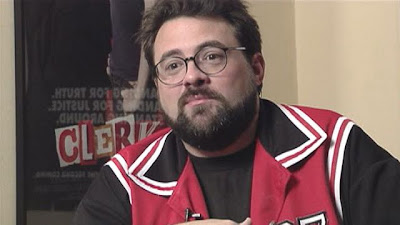
Additionally, wanting to ensure that viewers would have as much information as they wanted that couldn't fit into the running time, deleted scenes and extended conversations are contained on a second disc as witnessed in a particularly revealing interview with Kevin Smith who humbly discusses his Clerks experience and admits that he doubts he'd get chosen for Sundance today, or practical tales from the battlefield from the kindhearted Lollilove writer/director Jenna Fischer.
Likewise, since Arizona's acclaimed Phoenix Film Festival was featured in great detail for not only airing Osborne and Storm's earlier film Ten Til Noon but also screening this title as well in 2009, it was enjoyable to see from a local perspective. Celebrating the fact that the Phoenix Film Festival was actually created by independent filmmakers all too familiar with what it means to spend over a year in their shoes, Official Rejection also gives you the chance to do the same as well for its 107 minute running time that may wind up changing the way you think about not just festivals but the importance of groundbreaking, risk-taking, entertaining and worthwhile independent film in general.
Text ©2009, Film Intuition, LLC; All Rights Reserved. http://www.filmintuition.com
Unauthorized Reproduction or Publication Elsewhere is Strictly Prohibited.
FTC Disclosure: Per standard critical practice, I received a screener of Official Rejection to use for my review but this had no impact on my evaluation of the film, which incidentally championed the importance of critics whose words last forever.
7/09/2009
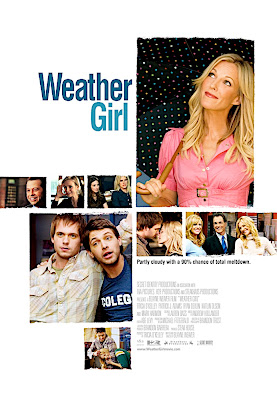
Movie Review: Weather Girl (2009)
Arriving on DVD 12/29
Movie Still Slideshow
View the Trailer
Bookmark this on Delicious
Print Page
In writer/director Blayne Weaver's utterly charming indie summer sleeper, Tricia O'Kelley plays the titular (albeit soon-to-be-former) weather girl who's as sassy as hell and she's not going to take this anymore.
As we learn in the movie's memorable opener-- she's driven sassy by being forced to be sassy. Likewise, the factors of her restlessness consist of working in an industry where the show's leads are referred to as "anchors" whereas O'Kelley's 35 year old college educated professional Sylvia is still patronizingly described as a "girl" complete with the sexist stereotype of "sassy" being part of her daily on-air introduction that's of course mimicked all over town (you've seen The Weather Man and Groundhog Day). Of course, this isn't helped by being given the thankless and tireless quest to come up with new adjectives for the word "rain" in Seattle while pointing to a green screen sharing-- what Sylvia reveals in her "career suicide" meltdown is not news but "tidbits for dumb people."
Yet, the most pressing reason that has "blacken[ed] all of" her "skies of blue"-- to quote Ella Fitzgerald-- is that she's found the underwear of the perky alcoholic co-anchor Sherry (It's Always Sunny in Philadelphia's Kaitlin Olson) in the condo she's shared with the main anchor, Dale (NCIS star Mark Harmon) for the past two years.
Confronting Dale and Sherry live and on the air of their Seattle morning program where the network affiliate manager Blair Underwood (obviously frantic about FCC violations and viewer complaints for her "R" rated tirade) wants to cut and immediately go to commercial despite the camera crew's decision to keep rolling since this is the stuff of television gold.
Ridiculing not just her position at the station and encouraging viewers to pick up a newspaper but also belittling the "amateurish" sexual technique of Dale-- her on-air blow-up soon becomes a bigger YouTube-like online hit than the Lily Tomlin/David O'Russell back-and-forth exchange (in separate videos) from the set of I Heart Huckabees.
Yet, shortly thereafter, realizing she's given up her job as well as her medical insurance, her condo, and everything else by becoming the laughingstock of the hiring circuit for-- as a friend chides-- her "weather girl" resume, Sylvia quickly seeks shelter by crashing on the couch in the apartment of her younger brother, Walt (Ryan Devlin). And, after lowering her standards, she accepts a job as a waitress for Jane Lynch (effective in a cameo that seems to be a distant and less crazy cousin to the character she played in Role Models).
While some (read: male) critics are easily dismissing the female-centric work-- albeit one crafted by a male writer/director with a knack for clever dialogue-- via that shudder inducing overused description of comparing it to a Lifetime Movie, it's still a highly entertaining feel-great rom-com that benefits considerably from its avoidance of set stereotypes.
For example, as opposed to most Sex and the City knockoffs, Sylvia's two friends (Marin Hinkle and Alex Kapp Horner) are the opposite of supportive, going as far as to set her up with Hinkle's ex on the TV show Two and a Half Men (Jon Cryer) as a man whose biological clock is ticking so hard that he wants to "fast-track" the relationship in a way that makes him-- as Sylvia describes-- "probably the creepiest person on the planet."
While admittedly the film is fairly predictable especially when Sylvia finds herself on the receiving end of the adorable puppy dog crush of Walt's highly articulate, subtly funny and openly flirtatious 29 year old best friend Byron (Patrick J. Adams) which evolves into a "friends with benefits" arrangement with Sylvia's rule that he's not allowed to fall in love with her despite their frequent couplings-- the scenes between Byron and Sylvia are some of the best ones in the film.
However, most likely this is because they may have come from a personal place as the writer/director shared in the production notes that he "got the idea for Weather Girl after dating a woman about five years older than me... The difference in age was minimal... but the pressures she felt professionally, from her friends and from society kept hammering home this idea that 'she didn't have time.' I really liked the idea of this woman who seems to have it all... but then gives it all up and has to start over again with those pressures looming over her."
Moreover, societal pressures and human relationships-- not just romantic ones-- are laced throughout and help make the movie work as Sylvia's estrangement from her friends who blankly tell her that she's cold and puts up emotional walls (which Dale has has used as the reason he's cheated) is so strong that they forget that she even has a brother at one point. And even Walt is given one revealing scene to show our disconnect from one another when he admits that he's worried when she becomes involved with Byron that she'll mess up his one only real friendship.
In fact, the dynamic between the three and the novelty of a strong emotional rollercoaster friendship between a brother and a sister-- instead of two guys just leaning on each other in a "bromance" or women sipping "cosmos"-- make this the opposite of a Lifetime feature. Likewise, it helps elevate the obviously budget-strapped indie (wherein we have to forgive a few "convenient" moments like Sylvia and Byron running into her friends illogically at night on the docks for no reason) in a way that hides its flaws via the thoughtful script and the sheer likability of the cast.
O'Kelley, Adams and Devlin in particular are all wonderful and a special mention must be given to Cryer and Harmon's knack for making what could've been a pretty clear-cut way to tackle each character into something else altogether... so that instead of just one single joke, they get a lot of mileage out of their roles whether it's Cryer's cameo as a Hummer driving baby mama hunter or Harmon's news man diva who sleeps in his makeup towel but feels that he's the victim in his infidelity.
However, to me, the real story was O'Kelley who is a terrific talent and one who energetically tapped into her character and believed so much in the work that she was on board from the start, fighting to help get funding, cast-mates and serving as a producer on the film. Additionally, I truly admired her lack of fear in showing us the flaws of Sylvia's sense of entitlement before she gets a dose of reality and when she ascertains that it's so much better to be a real woman than a "girl" on TV-- even if, unfortunately the beginning of that revelation happens to occur live on-the-air when Sylvia walks out with a pair of pink panties and a whole lot to say.
Text ©2009, Film Intuition, LLC; All Rights Reserved. http://www.filmintuition.com
Unauthorized Reproduction or Publication Elsewhere is Strictly Prohibited.
Subscribe to:
Posts (Atom)