Showing posts with label Troy Duffy. Show all posts

12/01/2009

DVD Review: Official Rejection -- Two-Disc Rejection Collection Edition (2008)


Now Available to Own


Photo Slideshow


Back in 2008, a Park City, Utah sized ski mountain of 2,051 film submission packets were sent to Robert Redford's holy grail of film festivals regardless of the fact that there were only 16 competitive slots available at Sundance. Similar to the way that Ivy League schools are flooded with applications and rake in the dough from those who realistically may have zero chance of ever getting to wear Harvard Crimson, Yale Bulldog Blue (or receive the envied Sundance swag), filmmakers will not be dissuaded from playing the lottery by shooting for those hallowed halls or auditoriums.


And the reason they go through the agony is simple: like Cinderellas waiting for their Prince Charmings or filmmakers waiting for their own versions of Bob and Harvey Weinstein, they've all heard the fairy tales of former indie icons turned major directors like Steven Soderbergh, Quentin Tarantino, Robert Rodriguez, Edward Burns, and Kevin Smith who were plucked out of obscurity and given the glass slipper of theatrical distribution, studio contracts, and best of all, the chance to pay off the dozens of credit cards a majority of entrants used to finance their films in the first place.


And even though some modern filmmakers still opt for the expensive but gorgeous look of celluloid film stock, with digital video cameras both readily available and on the cheap along with screenwriting, editing, and musical mixing computer software, we have more filmmakers than ever, opting for a do-it-yourself method and the ability to make a film for next to nothing.


While some of the '80s and '90s independent films were undoubtedly of low quality as well, today in the advent of YouTube and too-much-information, everyone can become a filmmaker. And because it seems like a great democratization of the industry, they shoot for the moon as obviously, Sundance remains the premiere festival in the country to play.


Yet as an astute interviewee remarks in this fascinating documentary, just because you can make a film, it doesn't necessarily mean you should... however, the same can be said for putting on film festivals. Essentially our country is flooded with festivals, which have become a never-ending convention for struggling filmmakers wherein some provide invaluable resources for networking and literal accolades and others which are run out of a van or as we find out in the film, barely run at all.


Yet when you understand how many official rejection letters were sent out in stark contrast to Sundance's 16 titles deemed official selections, which increasingly involve Hollywood stars slumming it in “indiewood” for the chance to appear in a film not made opposite a green screen, it's no wonder that so many filmmakers then decide to take the roughly year long festival circuit express to find if not acceptance than at least an audience.
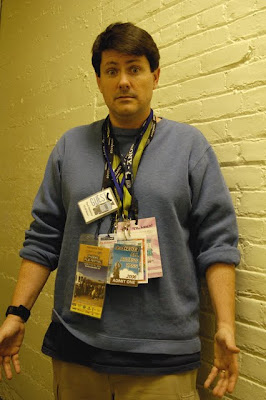

While one would assume that actually making the movie would be the biggest hurdle, as we're quick to discover in Paul Osborne's wise, heartbreaking, passionate, and darkly funny insider's documentary, once the film is finally cut the way they'd want it to play, the real work begins as marketing the movie and getting it into the hands of others becomes a full-time job.


If they're lucky enough not to have maxed out their cards on production budgets, playing the festival game suddenly begins requiring every single card in their wallets. While a majority of filmmakers still have their day jobs out of necessity unless they're being temporarily supported by a significant other and risk the high incidence of eventual breakups from separation, stress, finances, and the emotional rollercoaster of the lengthy process, they also begin their second job as their own PR mastermind immediately.


Designing and ordering postcards, fliers, stickers, and promotional items along with screeners, postage and more to create their own do-it-yourself press kits they submit along with paperback book length admission forms and of course an admission fee that may run filmmakers anywhere from $50 to $100 for each and every festival, filmmakers stockpile rejection slips until finally an acceptance appears.

Yet, then the question comes becomes, "is it the right venue to hold your premiere" as we discover that filmmakers can debut too early or too late in the film fest equivalent of knowing if it'll be a white wedding or one whereas they may as well just wear the brightest dress they can find, since the film has been screened everywhere.


Chronicling his own journey of bringing the film he wrote and his friend Scott Storm directed Ten 'Til Noon to the various festivals across the country, documentarian Paul Osborne makes what he shares is a not just a cathartic work having lived the experience but one he wished he'd had beforehand, realizing that no films detailed "the festival circuit" in a way "that could help [him] understand the politics [he] was facing." The result is Official Rejection, Osborne's fascinating, no-holds-barred examination of what really happens when the shooting ends and a lavish La La Land wrap party, red carpet premieres, international press, and/or studio run marketing campaigns aren't in a filmmaker's corner.


Featuring candid interviews with festival directors, programmers, volunteers and others who have braved the circuit including Kevin Smith, Bryan Singer, Troy Duffy, The Office's Jenna Fischer, Blayne Weaver, and several others, Official Rejection is an in-depth examination of the state of modern independent film.


Weighing the pluses and minuses of the festival circuit, we witness Osborne and Storm's own journey to find some festivals which are genuinely passionate about fostering a community and delivering excellent programming and others where the overall goal seems to be in creating a less than stellar lineup as long as they can add more “exclusive” works or world premieres to their festival guides.
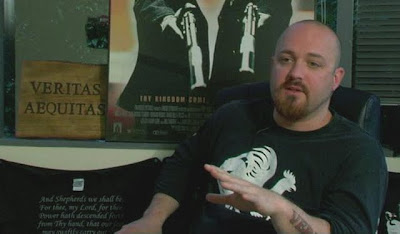

In fact, we're flabbergasted by the unprofessional tactics of either trying to blackmail a filmmaker into pre-selling their own performances in a completely different state or their movie will be pulled or by stealing movies from other festivals as a very prominent festival tries to talk Osborne and Storm out of their commitment to another festival with mean-spirited gossip and warnings.
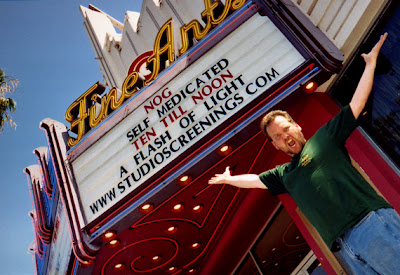

Along with author Chris Gore's well-respected Ultimate Film Festival Survival Guide, this movie should be mandatory viewing for those who attend, work, or run festivals. Furthermore, it's of particular interest to moviegoers who are simply confused by just what constitutes an independent film anymore.

Post-Miramax, the term "independent" has been thrown around as hastily as calling something "genius" and sure enough the true, few and worthwhile do-it-yourself indies (which are now nearly drowned in a sea of far too many and far too poorly made works) find themselves unwittingly in competition with big budget or studio backed films. With faux "independent" marketing campaigns, loose labeling or "independent" divisions of major studios, real independent films suffer by comparison to the Hollywood polish of movies such as American Beauty Oscar winner Sam Mendes' Away We Go, Oscar winner Steven Soderbergh's Warner Brothers feature The Informant! and Oscar nominated Jason Reitman's Up in the Air, all of which are included on my Top 10 list for 2009 alongside truly independent made works.


Similarly, I enjoyed Official Rejection on a number of levels. While overwhelmingly, it was a blast to watch as a critic who was delighted to put names with the faces of some of the individuals whose movies I've reviewed in the past (like Blayne Weaver who made the charming Weather Girl) or see a candid Kevin Smith whose new box set was right next to this screener, I found it particularly revealing as a former film festival volunteer supervisor, grant and film summary writer as well.


In this sense, Rejection provided me with a rare glimpse of perceiving the festival from the perspective of not a worker or a press member but instead via those who fly in (often on their own dime at some of the festivals showcased) and realize that just because they're in the festival, it doesn't automatically guarantee that anyone will buy their movie's tickets without some good old fashioned shoe leather, flier hand-outs, and local press visits.
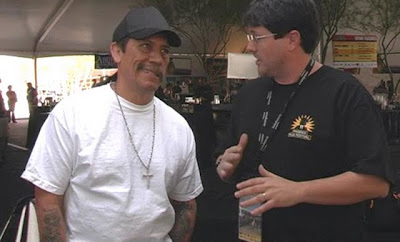

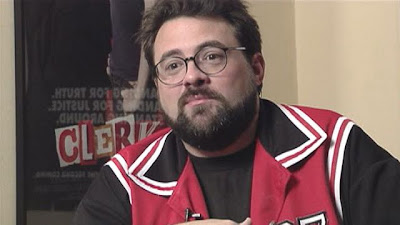
Additionally, wanting to ensure that viewers would have as much information as they wanted that couldn't fit into the running time, deleted scenes and extended conversations are contained on a second disc as witnessed in a particularly revealing interview with Kevin Smith who humbly discusses his Clerks experience and admits that he doubts he'd get chosen for Sundance today, or practical tales from the battlefield from the kindhearted Lollilove writer/director Jenna Fischer.


Likewise, since Arizona's acclaimed Phoenix Film Festival was featured in great detail for not only airing Osborne and Storm's earlier film Ten Til Noon but also screening this title as well in 2009, it was enjoyable to see from a local perspective. Celebrating the fact that the Phoenix Film Festival was actually created by independent filmmakers all too familiar with what it means to spend over a year in their shoes, Official Rejection also gives you the chance to do the same as well for its 107 minute running time that may wind up changing the way you think about not just festivals but the importance of groundbreaking, risk-taking, entertaining and worthwhile independent film in general.

Text ©2009, Film Intuition, LLC; All Rights Reserved. http://www.filmintuition.com
Unauthorized Reproduction or Publication Elsewhere is Strictly Prohibited.


FTC Disclosure: Per standard critical practice, I received a screener of Official Rejection to use for my review but this had no impact on my evaluation of the film, which incidentally championed the importance of critics whose words last forever.

2/26/2009

Blu-ray Review: The Boondock Saints (2000)


In the Name of the Father:
Troy Duffy's Cult Crime Favorite

Applies for Blu-ray Sainthood


Previously Available & Ready for Confession


Delicious
Bookmark this on Delicious
submit to reddit
Print Page

Digg!

A few years ago, I was chatting about '60s and '70s cinematic antiheroes with one of my favorite film professors. And while we both shared a love of the ambiguity and ironic endings of what could very well be the two most influential decades of filmmaking around the globe-- we also noted the way some of the most prominent characters, plot-lines, and sub-genres have been recycled again and again over the decades.

Our conversation ran the gamut and included first Quentin Tarantino's cinematic mix-tape movies like Reservoir Dogs or Pulp Fiction which made a wild cocktail consisting of elements of French New Wave, American revenge thrillers, and '70s blaxploitation movies by also impressively weaving in some elements of vintage film noir (of the '40s and '50s). Then we moved onto other works that borrowed heavily from the forefathers of the Coppola, Scorsese, Spielberg, Lucas, De Palma, Bogdanovich, and Friedkin era.


Sure enough, some of these films broke the mold and became instant '90s classics as -- (in addition to the aforementioned Tarantino works)-- we were faced with Luc Besson's The Professional, Bryan Singer's The Usual Suspects, and Guy Ritchie's Lock, Stock, and Two Smoking Barrels. Filled with impressive camera trickery, antiheroes, a little of the old Kubrickian ultra-violence and an over-usage of the "f-bomb," these films were repeated again and again and by the time we reached Ritchie's Lock, Stock-- the fingerprints of Tarantino and those who'd come before him were evident from the start.


Blending all of these elements together into a wicked formula-- you can essentially break down The Boondock Saints into recipe form as follows:

1) A seasoning of Tarantino for trying to hang with the cool kids.

2) Two parts Coppola for the mixture of Catholicism and violence.

3) One part Scorsese: Imagine if Taxi Driver's Travis Bickle had gone to the seminary instead of the adult movie theatre.

4) A generous helping of Besson, since Gary Oldman's character from The Professional as well as the "no women, no kids" line of dialogue is basically implanted directly into the script.

5) One part Ritchie as visually it's like four video games being played simultaneously by a hyper kid on Ritalin.


Nonetheless, Troy Duffy gets points for ambition. Furthermore, there's two exceedingly inventive scenes that were so cinematically audacious that they found my breath catch (more on that later). Yet ultimately we're faced with yet another stylish and hyper aware work of gunplay and revenge that would've made Clint Eastwood's Dirty Harry and Charles Bronson in Death Wish call out for merciful asylum.


Earning the type of Donnie Darko-like cult status which my former professor noted found at least one student bringing in Duffy's film to show portions of in a Contemporary Cinema presentation each and every semester-- the making of The Boondock Saints is actually so fascinating in its own right that it garnered a documentary on the topic.

To give you the Cliffs Notes version, the volatile Duffy blew a generous deal with Miramax and then went through independent channels to ensure ultimate control (even so much that his band would be included in the film). The result was that eventually it crept into a minimal theatrical run following the horror of the Columbine Massacre before-- as Duffy has argued-- Blockbuster saved his film from the waste pile by making it one of their "Exclusive" titles and a phenomenon was born.


Reuniting every cast member except for Willem Dafoe-- who is being replaced by Julie Benz-- for a forthcoming 2010 theatrical sequel by 20th Century Fox, The Boondock Saints which has been served up in a multitude of DVD formats is finally being given the Blu-ray treatment no doubt to help increase momentum for the sequel.


Set in South Boston and opening on St. Patrick's Day, the film centers on two twin brothers who begin to question their life working at a scuzzy meatpacking plant after they engage in a bar fight that leads into the death of Russian mobsters in self-defense.


However, instead of being thrown in jail, Connor and Murphy MacManus (Sean Patrick Flannery and Norman Reedus) are dubbed saints by the local press. The crime and the young men catch the interest of the organized crime expert and FBI agent Paul Smecker played by Willem Dafoe in an overly hammy performance as a flamboyantly gay investigator who-- much like Gary Oldman in The Professional-- appreciates classical music with opera replacing Beethoven.

Believing their first foray into crime was a sign that God's law is higher than that of man, the two launch into a career as full time vigilantes, describing themselves as operating much like 7-11 in that even when they're not doing business, they're always open or in this case, looking for more sinners to kill. After going shopping for the deadliest of supplies in a way that takes a fetishistic look at weaponry the way that Sex and the City did for Carrie Bradshaw's beloved shoe addiction, the brothers decide to take on murderers, mobsters, and Boston's most notorious villains.

Uniting with a lower level Italian mobster David Della Rocco a.k.a "The Funnyman," they become a trio of gun-blazing Charles Bronsons in a series of escalating crimes so filled with bullets and blood that soon mobsters realize they must bust the ruthless hitman "Il Duce" (Billy Connolly) out of prison to take on the Boondock Saints.


Heavy on the gore and somehow managing to persuade Willem Dafoe to don drag for an excruciatingly embarrassing finale for the Oscar nominee-- the film tries to dress up its thrill kill nature with biblical overtones. To this end, Boondock Saints is infused with endless prayers and Catholic dogma throughout as the boys find themselves tattooed with "Aequitas" (justice) and "Veritas" (truth) in exacting brutal revenge since they believe that-- much like their monsignor, the worst crime is apathy as referenced in an opening monologue citing the notorious case of Kitty Genovese who was murdered in plain sight in front of countless witnesses.

Yet, no matter how much Duffy wants to recall the same mixture of blood and religion and the dual nature of good and evil that Coppola used throughout The Godfather trilogy, in the end, it's all just an excuse to see some action and on that front Boondock Saints delivers, especially with the full force of Blu-ray sound behind it as we can hear every bullet fired and casing hit the ground.


To its benefit, the film features some extraordinary camerawork by cinematographer Adam Kane who also filmed the first episode of Heroes; Chapter One: Genesis before the show jumped the shark. And in the running time, the film separates itself from the pack of Tarantino and Ritchie rip-offs in two over-the-top but remarkable sequences worthy of study for those interested in the art of filmmaking.


The first finds Duffy adhering to Hitchcock's oft-discussed belief of holding off on showing something for as long as one possibly can to increase suspense. This occurs when the brothers turn themselves in for their initial crime in self-defense and in explaining the circumstances to Dafoe, we're shown a bravura work of incredible action choreography as Flannery finds himself handcuffed to a toilet, only to break free and figure out how to save his brother from death at the hands of mobsters. While definitely his jump from the fifth floor of a building seems a bit too Crouching Tiger to be believed-- the craftsmanship is first rate with all departments firing on all cylinders.


In the earlier scene, it's the editing and camerawork that jumps out at you in yet later on, it's the bravery of Duffy to mess with traditional narration that transforms yet another routine orgy of violence hit by the MacManus brothers into a work of art. Avoiding the need to show something twice or do so traditionally, we watch in awe as the crime scene master Dafoe is able to walk the rest of the Boston officers through an entire complicated crime scene to direct the action that is shown.


However, instead of simply intercutting his narration with back and forth edits, Duffy goes for something original to perhaps illustrate the way our FBI man is beginning to side with the crooks by having him explain the entire incident as it happens, walking with the trio of vigilantes, pretending to shoot, dropping down to the ground, identifying how things went down in a way that makes the entire scene fresh. Admittedly, this technique of calling attention to itself as a film is far from original as it was used when Ray Liotta's Henry Hill climbed off the witness stand in a courtroom at the end of Goodfellas to speak directly to the camera and lead us into the epilogue. Yet, when Duffy dares to try something different instead of borrowing so pointedly from other films that we're able to call them out as we watch as if it was an interactive game for movie buffs, that's when Boondock Saints truly seems worthy of its loyal and rabid fanbase.


With a bullet filled menu as each selection rings out in the sound of a gunshot-- you're able to choose from the original theatrical cut (which was trimmed due to sensitivity regarding the Columbine attacks) and Duffy's extended cut along with commentary on the theatrical cut from either Duffy or actor Billy Connolly. Also sharing outtakes and deleted scenes-- two of the cooler features for Boondock fans and action junkies is Fox's D-Box Motion Control option to get you right into the action as well as an opportunity to explore Duffy's screenplay.

Following some previews for similar Fox titles like Babylon A.D. and Max Payne-- viewers are able to jump directly into the menu for the version they wish to watch (original or extended). However, I did find there was a bit of a hiccup with the disc as it didn't offer the ability to bookmark and the menus took extraordinarily long to load even on a new Sony Blu-ray player so much so that I had to restart the film a few times just to reach the main menu. My advice to avoid the wasted time and repetition is to recommend you either watch it straight through, ensure your firmware is up-to-date (as I did right away and learned it was), and go in aware that it could take a few minutes to find the menu ready to explode before your eyes in a mixture of veritas and violence.