Soulful, stirring, and often somber, even when he isn’t playing a lover, Tony Leung will break your heart. Famously dubbed by “The Times” in London as “Asia's answer to Clark Gable,” the Hong Kong native (whose full name is Tony Leung Chiu-wai) is one of the most acclaimed and adored actors of his generation.
Routinely reading his scripts at least forty times before – as he confessed to “The Guardian” – possibly calling the writer in the middle of the night with his thoughts, for Leung (who celebrates his birthday on June 27), acting is not so much a profession as it is his addiction . . . as well as his therapeutic recovery.
Giving him an outlet for the feelings he'd been holding onto since he was a shy, repressed child whose gambler father had walked out on the family when Leung was just six-years-old, the ability to exorcise his emotions under the guise of playing someone else hooked him as soon as he signed up for an acting course at the age of nineteen.
Quickly finding stardom on the small screen in the early 1980s as the protagonist of the popular series “Police Cadet” – opposite his soon-to-be frequent leading lady Maggie Cheung – Tony Leung was one of five up-and-coming young male stars who were labeled “TVB's Five Tigers,” which you could liken to Hong Kong television's answer to the Brat Pack.
Making the move to film, Leung found his way into early critically and commercially successful ventures like Taiwanese helmer Hou Hsiao-hsien's Venice Film Festival award-winner “A City of Sadness” in 1989 and John Woo's “Hard Boiled” in 1992.
Reuniting with Woo two years after he worked with the director on his personal opus “Bullet in the Head," in the now contemporary crime classic “Hard Boiled," Leung was cast opposite one of Hong Kong's biggest box office draws, Mr. Chow Yun-fat.

A veteran performer who'd starred in the epic crime series “A Better Tomorrow,” and “The Killer,” both of which had turned him and Woo into huge box office sensations, it was Chow who was given the undisputed lead role in Woo's final Hong Kong “bullet ballet” before the director made the move to Hollywood.
The end result marked a decidedly different outing for the filmmaker. Criticized for glamorizing killers in his earliest films with Chow, in “Hard Boiled” – which underwent copious changes in its 123-day shoot after the death of screenwriter Barry Wong – Woo opted to use the same formula he'd had success with before, only this time with a police officer in the role of the protagonist.
Not playing a hitman or gangster this time but a hard-headed, impetuous cop nicknamed “Tequila” who's eager to bring down the Triads responsible for his partner's death, just as he did in “A Better Tomorrow” and “The Killer,” it's the wildly charismatic Chow Yun-fat who has the showiest role in Woo's film.
Yet, written as a cross between Don Johnson in “Miami Vice” and Bruce Willis in “Die Hard,” as marvelous as he is in “Hard Boiled,” because it's missing the same quiet poetry of his romantic antihero in “The Killer,” the film's soul is found less in Chow's lead than it is in the subtly mesmerizing turn by supporting player Tony Leung. And with this in mind, on repeat viewings, you'll notice that it's Leung who manages to sneak in and – while you're being dazzled by Chow's ability to fend off a hospital full of armed assassins while cradling newborn babies – sails away with your heart. In fact, the first person to acknowledge this was Chow himself who felt like the film's final cut removed some important moments for his admittedly one-dimensional character to show the depth of his feelings, which is why Leung's supporting turn rings so true.

At least partially inspired by Alain Delon's character in Jean-Pierre Melville's crime classic “Le Samuraï,” “Hard Boiled” finds Leung in the type of coolly contemplative role that has since become synonymous with the star while playing a police officer who's been on a deep undercover assignment with the Triads for far too long.
Torn by his allegiance to two father figures on both sides of the law who ask him to kill and protect in equal measure, the only peace Leung finds is from living a solitary life on his boat. Docked in the bay, much like his yacht, Leung is forever waiting to set out for a new life on a new land far away from everything he knows and wants to forget. Making paper cranes as a form of penance and acknowledgment of the lives he's taken, Leung's tragic yet compelling internal struggle adds emotional depth to what is otherwise a completely awe-inspiring work of action filmmaking.
Giving him the more romantic inclinations that wouldn't have been out of place for Chow's killer in “The Killer,” even though it's Chow who's in an on-again, off-again relationship with his superior (Teresa Mo) in “Hard Boiled,” it's Leung who sends her white roses and coded Elvis lyrics when he needs to convey a message to the police department.
And in this respect, Leung's performance in “Hard Boiled” marks a terrific precursor to his staggering turn in Andrew Lau and Alan Mak's 2002 “Infernal Affairs” trilogy, which was remade by Leung's favorite American filmmaker – Martin Scorsese – as “The Departed” in the states with Leonardo DiCaprio in the Leung role.

A top-notch work of Hong Kong cop noir and a great introduction to Leung for new film fans hoping to see something a little more western minded before they venture onto the actor's more daring art films, even though it was made twenty-eight years ago, “Hard Boiled” still feels fresher than most CGI heavy, assembly-line manufactured action movies being released today.
But as great as he is at adding hidden layers to his co-lead or supporting characters in his mainstream Hong Kong fare, it's the lovers that come to mind most when you think of Tony Leung and doubly so when you look back on his heyday in the '90s and early '00s.
So fiercely devoted to his craft that he'll learn anything for the right collaborator, film, and/or role, when it came time to meet up once again with his most frequent director Wong Kar-wai in Argentina for the gorgeous gay love story "Happy Together" in 1997, Leung took up not only the tango but also Spanish. Still, this was not the only time he would adopt a whole new language for a role. Most notably, Leung learned Mandarin for Zhang Yimou's 2002 stunner "Hero," which, despite being dubbed in the final release, paid off for Leung five years later when he spoke Mandarin in Ang Lee's startling film "Lust, Caution."
Yet, regardless of the dialect that Leung takes on in the multilingual "Happy Together," fans of Wong Kar-wai know that his films are truly universal. Dedicated to the human connection we need and crave in others (director Sofia Coppola is a huge fan), Wong's movies speak a language we immediately understand – a language Leung is more than fluent in throughout his filmography – the language of love.

"Let's start over." Habitually said by his “Happy Together” character's flighty lover (played by Leslie Cheung) whenever he hopes to reunite with Leung's romantically drained lead and begin anew, “let's start over” is the refrain that holds the pair in each other's orbit after they venture from Hong Kong to Buenos Aires and break up yet again.
Knowing that he can no longer let himself backslide into a relationship where the two men's affection for one another is outweighed by suspicion and mistrust, by the end of the film that garnered Wong Kar-wai the prize for Best Director at the Cannes Film Festival, Leung's protagonist knows that in order to start over, he's going to have to ignore the “let's” and go it alone.
Watched in quick succession with Woo's “Hard Boiled,” the parallels are obvious between his '92 solitary protagonist and the conflicted one he plays here who's heartbroken by his lot in life and his relationships with others, from his ex-lover to his father to a co-worker with possible romantic potential. And indeed, the double-edged sword of promise and penance wrapped up in the phrase “let's start over” seems to apply not only to his “Happy Together” character in one of Leung's strongest performances to date but to all of the men he's played for Woo, Wong, Zhang, Lee, and beyond.
Yet although his collaborations have been legendary, in the more than half a dozen films they've made together over the past three decades, in the end, it's Wong Kar-wai who seems to best understand how to use Leung's penchant for emotional complexity to disarm viewers and draw them in. Famous for his chaotic productions which find Wong shooting without a script – and often with only a kernel of an idea as to who each character should be which might change multiple times during the improvisational shoot as the actors feel things out with his guidance – the trust and respect the two have for one another is unmatched.

While “Happy Together” marked one of Leung's most soulful performances for the filmmaker, the actor is perhaps most famous for Wong's “Chungking Express” – where he played a lovesick cop so distracted by an ex that he nearly misses the chance at a new love – and the director's 2000 masterpiece “In the Mood for Love.” Starring in the latter as a repressed married man living in 1960s Hong Kong who develops an attraction to the wife of the man his wife is having an affair with (played by Maggie Cheung), "Mood" finally garnered Tony Leung the award for Best Actor from the Cannes Film Festival that everyone assumed would've been his three years before for “Happy Together.”
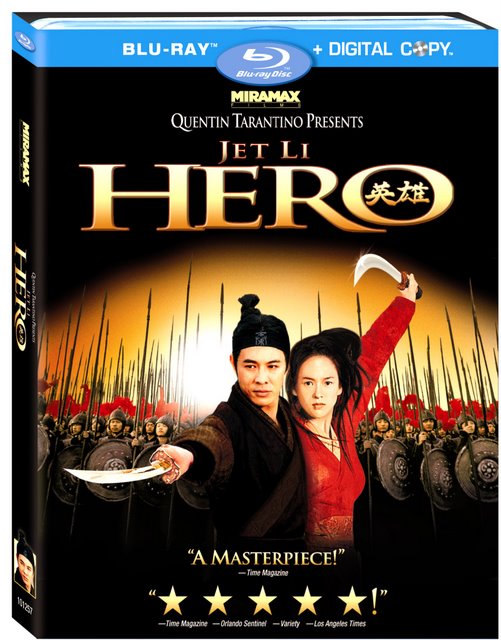
Skilled at bringing to life his own unique brand of morally and internally beleaguered men who fall in love without trying and want to start over but can't until they figure out what (and who) it is that they truly want, Leung shined exceptionally bright in Zhang Yimou's 2002 film “Hero" as the epitome of this type of role.
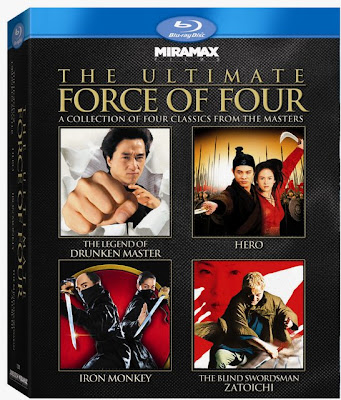
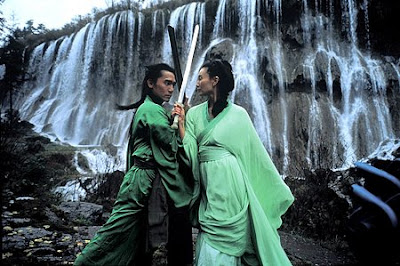
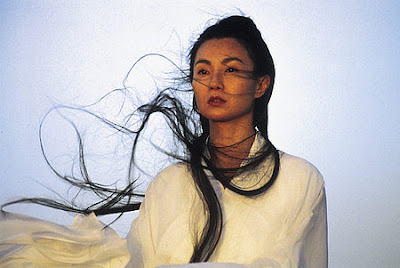
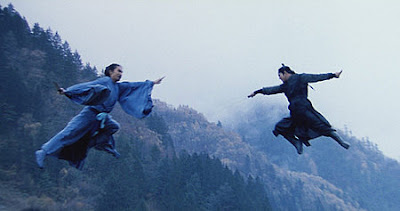
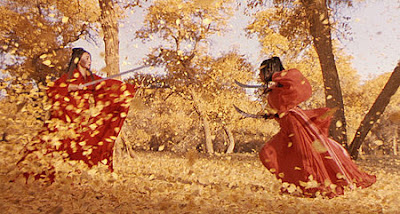
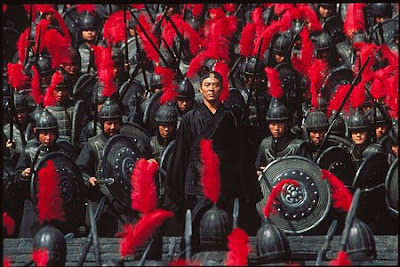
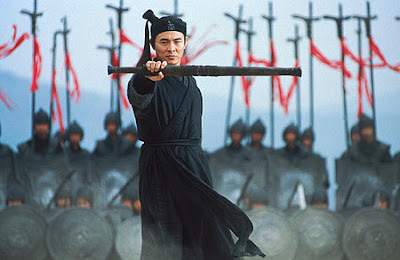
Inspired by Jing Ke's assassination attempt on the King of Qin which took place in 227 B.C., in “Hero,” Jet Li's nameless swordsman regales the king with tales of his successful battles against three of the man's most wanted enemies, including a man named Broken Sword (Leung) who fights alongside his lady love Falling Snow (played once again by Maggie Cheung).

A secondary supporting character whose true motives are uncertain for nearly two-thirds of the stylish wuxia feature, as Li shares his version of the events that brought him to the palace, we see the plot involving Leung's character unfold a handful of different ways as Li's narrative evolves from start to finish.
Is Broken Sword a jealous, possessive lover who acts impetuously and seduces Zhang Ziyi out of brokenhearted spite at Cheung's one-night affair with Donnie Yen? Is he a resigned, peaceful man who's outgrown life as a warrior? Or is he something else entirely – something that exists halfway between the two poles?
Leung's performance in “Hero” is passionate, ponderous, and (once again) predominantly quiet. A subtle turn overall, Broken Sword allows the actor to play both sides of the same solitary, zen-like coin of the man he's embodied for most of his career – a man who's looking to start again but doesn't completely know how to do so.

A gripping, somber, and lushly beautiful epic that found Leung and Cheung hired by Zhang precisely because he loved their chemistry in Wong's “In the Mood for Love,” the fascinating “Hero” questions how history is made and asks whether a sacrifice crafted from love carries just as much weight as one made of sword and blood.
Much like “Hard Boiled,” and “Happy Together,” “Hero” is proof once again that – having perfected silence as a child only to live to manifest his repressed emotions as an adult – Tony Leung plays thoughtful, quietly tormented men better than nearly anyone since Robert De Niro. (Thus, it should come as no surprise that De Niro and Leung are mutual fans of each other's work.) Always ready to learn a new skill and speak a new language besides – of course – love, in his richest and most daring performances, Tony Leung puts everything on the line to break your heart while also risking his own. He's the addiction as well as the cure.
Text ©2020, Film Intuition, LLC; All Rights Reserved. https://www.filmintuition.com Unauthorized Reproduction or Publication Elsewhere is Strictly Prohibited and in violation of the Digital Millennium Copyright Act. Also, as an Amazon Associate, I earn from qualifying purchases made off my site through ad links. FTC Disclosure: Per standard professional practice, I may have received a review copy or screener link of this title to voluntarily decide to evaluate it for my readers, which had no impact whatsoever on whether or not it received a favorable or unfavorable critique. Cookies Notice: This site incorporates tools (including advertiser partners and widgets) that use cookies and may collect some personal information to display ads tailored to you etc. Please be advised that neither Film Intuition nor its site owner has any access to this data beyond general site statistics (geographical region etc.) as your privacy is our main concern.