Photo Slideshow
Now Available to Own
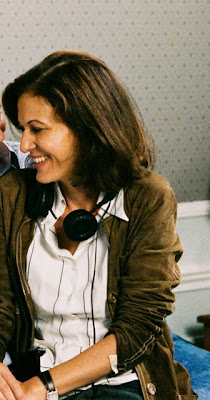
Coming Soon from Director Anne Fontaine
(One of 2009's Most Acclaimed Titles)


Bookmark this on Delicious

Print Page


Just as objects in the rearview mirror are closer than they appear, individuals who masquerade as objects are far more complicated than they appear. And granted it's tempting to sum up the trio of main characters who populate writer/director Anne Fontaine's provocative new film as though they were objects since they're initially presented to viewers in terms of their occupations of lawyer, bodyguard and weather girl.
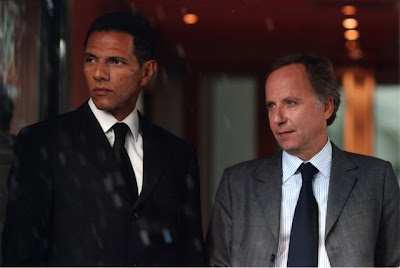
Given our preconceptions about what each of those nouns represent, Fontaine's characters don't fail to disappoint us at least in the beginning by using our connotations to deceptively stereotypical effect that's augmented all the more with pitch-perfect casting as the way the characters look fit right into the object mindset. For within the opening moments, before we're even informed that Roschdy Zem's tall, striking, quiet and imposing figure Christophe who has been following Fabrice Lucchini's intellectually conversational lawyer Bertrand all evening is in fact a bodyguard, his physique and stance suggested that already.
On “the rock” as the locals call Monaco as the latest replacement lawyer to defend a wealthy accused seventy year old murderer, Bertrand is stunned when Christophe explains that his client's middle-aged son has hired him to protect the revered lawyer since the murder victim has ties to Russian mafiosi. Although he denies the need for such a professional, since Bertrand is only skilled at mental confrontations and battles of wits, he falls into the same objectifying trap we do of trusting Zem's Christophe right from the start by following him up to the hotel where the no-nonsense professional secures the perimeter and retires to the adjoining suite.
Avoiding the obvious potential for a cop-buddy picture style dynamic of the straight-laced gentleman partnered with a by-the-book guard by just playing it for traditional laughs, while admittedly the two form an intriguing dynamic and gradually grow into friends, Fontaine's choice in how this occurs is masterful from the start. Similar to the way that the murder trial storyline begins having as the filmmaker noted a “mirror” effect on the plot concerning our trio, every single scene in the film serves a vital structural purpose with repercussions which echo unexpectedly later on demanding another viewing.
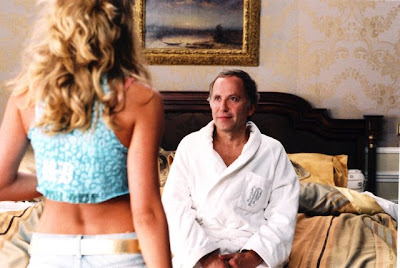
Yet to her credit as a filmmaker, we're unaware of this layered approach and just caught up in the entertaining web she weaves even if we're unsure how it will pay off or to what end a scene will serve as it continues. The strongest example of this happens within the first act of Monaco when Betrand asks Christophe to get rid of a clingy married woman he'd had an affair with who arrives without invitation or warning which the young man does coolly by sleeping with her to distract the woman long enough so that off-screen she comes to her senses and returns home.
While here in the states, this “hide me, she's crazy” idea would be fodder for a Matthew McConaughey rom-com, in Fontaine's hands, it's a crucial sequence that shows the lengths to which Christophe will instinctively go for his client even before they've bonded in a way that speeds up the process while subtly confronting their various way of handling women who use sexuality as a weapon.
Likewise it makes the perfect lead-in to their encounter with a sexy, young, free-spirited weather girl who will throw everything off course as newcomer Louise Bourgoin's effortlessly gorgeous Audrey takes the men, Monaco, and the movie by storm. While initially the words of Don Henley's “Dirty Laundry” about the “bubble headed bleached blonde” which were used effectively for Nicole Kidman's sexy sociopath social climber in Gus Van Sant's weather girl gone wild satire To Die For swim through our brain, the Princess Diana and Princess Grace obsessed Audrey is something of an enigma. From the moment she flirts unabashedly with Bertrand at the news station, we know he's a goner with the same deer in the headlights look on his face that he'd had when seeing her on the hotel's TV while Christophe bedded the previous woman.
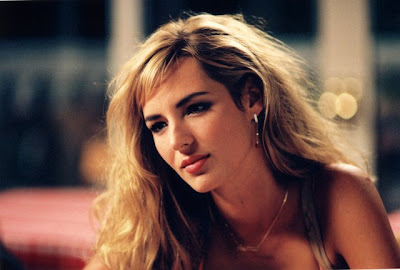
Yet when Audrey slides onto her motor scooter in a barely there white dress that could double as lingerie and zooms off in the rain, we're as curious as Christophe is suspicious about the woman with whom he'd had a previous fling years earlier. Is she a trashy gold digger or fame seeker since she laments doing the weather and discusses her idea to invent a celeb pets series? Or is Audrey a film noir siren who's mission is to distract him from the case when she seduces him so aggressively that he loses his voice? Whatever the case may be, our antennae is up and we're not sure where exactly the film is headed and how many twists will be presented similar to the twisty roads of the setting that led to the tragic death of Princess Grace.
In fact, Monaco is indeed a character in its own right with some stunning psychologically charged cinematography that's complimented by precise edits to maximize our interest in wanting to know what will happen next since Fontaine purposely maintained that pieces of the frame are sometimes out of focus. However, Fontaine never loses sight of the trio of characters and their odd reflection that's exhibited as more evidence is revealed in the subplot of the trial.
And while it's easy to get caught up in the whirlwind that is the bravely uninhibited Cesar nominated newcomer Bourgoin (who in reality is a weather girl), in the end it's her fellow Cesar award nominated Zem who fascinates deeply and remains the anchor of the film which prevents it from floating away like the airy ideas espoused by Audrey's “bubble headed blonde.”
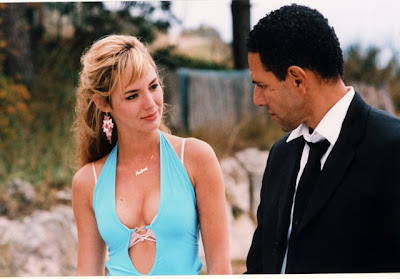
Furthermore, although Bourgoin dominates her scenes and intriguingly refers to her character in the press notes as masculine, overall the most fascinating element of the picture was in the dynamic between Christophe and Bertrand. A romance of a different kind, the men's bond is threatened when the object of Christophe's man-crush for whom he's developed a genuine affection not only stoops to be with Audrey as a middle aged cliche but also when it implies that she's an evil third wheel with a ruthless agenda who has taken Christophe's place.
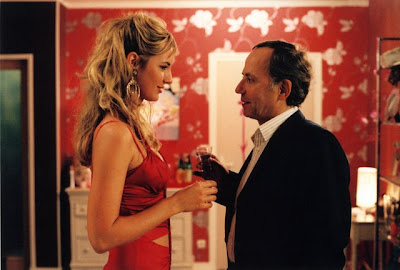
Of course, French cinema excels in blending the genres to undetectable, sophisticated effect as comedies move into thrilling territory, dramas become vaguely horrific, and romances blossom in the unlikeliest of ways and such is the case with Monaco. By presenting us with three distinct types or "objects" we've seen before and feel we can predict before the characters switch roles, Fontaine's stunner that masquerades as a daffy romance on its surface level is instead an ideal antidote to mindless summer movies and one of French film's best kept secrets this year.
Text ©2009, Film Intuition, LLC; All Rights Reserved. http://www.filmintuition.com
Unauthorized Reproduction or Publication Elsewhere is Strictly Prohibited.
Now Available to Own
Coming Soon from Director Anne Fontaine
(One of 2009's Most Acclaimed Titles)
Bookmark this on Delicious
Print Page
Just as objects in the rearview mirror are closer than they appear, individuals who masquerade as objects are far more complicated than they appear. And granted it's tempting to sum up the trio of main characters who populate writer/director Anne Fontaine's provocative new film as though they were objects since they're initially presented to viewers in terms of their occupations of lawyer, bodyguard and weather girl.
Given our preconceptions about what each of those nouns represent, Fontaine's characters don't fail to disappoint us at least in the beginning by using our connotations to deceptively stereotypical effect that's augmented all the more with pitch-perfect casting as the way the characters look fit right into the object mindset. For within the opening moments, before we're even informed that Roschdy Zem's tall, striking, quiet and imposing figure Christophe who has been following Fabrice Lucchini's intellectually conversational lawyer Bertrand all evening is in fact a bodyguard, his physique and stance suggested that already.
On “the rock” as the locals call Monaco as the latest replacement lawyer to defend a wealthy accused seventy year old murderer, Bertrand is stunned when Christophe explains that his client's middle-aged son has hired him to protect the revered lawyer since the murder victim has ties to Russian mafiosi. Although he denies the need for such a professional, since Bertrand is only skilled at mental confrontations and battles of wits, he falls into the same objectifying trap we do of trusting Zem's Christophe right from the start by following him up to the hotel where the no-nonsense professional secures the perimeter and retires to the adjoining suite.
Avoiding the obvious potential for a cop-buddy picture style dynamic of the straight-laced gentleman partnered with a by-the-book guard by just playing it for traditional laughs, while admittedly the two form an intriguing dynamic and gradually grow into friends, Fontaine's choice in how this occurs is masterful from the start. Similar to the way that the murder trial storyline begins having as the filmmaker noted a “mirror” effect on the plot concerning our trio, every single scene in the film serves a vital structural purpose with repercussions which echo unexpectedly later on demanding another viewing.
Yet to her credit as a filmmaker, we're unaware of this layered approach and just caught up in the entertaining web she weaves even if we're unsure how it will pay off or to what end a scene will serve as it continues. The strongest example of this happens within the first act of Monaco when Betrand asks Christophe to get rid of a clingy married woman he'd had an affair with who arrives without invitation or warning which the young man does coolly by sleeping with her to distract the woman long enough so that off-screen she comes to her senses and returns home.
While here in the states, this “hide me, she's crazy” idea would be fodder for a Matthew McConaughey rom-com, in Fontaine's hands, it's a crucial sequence that shows the lengths to which Christophe will instinctively go for his client even before they've bonded in a way that speeds up the process while subtly confronting their various way of handling women who use sexuality as a weapon.
Likewise it makes the perfect lead-in to their encounter with a sexy, young, free-spirited weather girl who will throw everything off course as newcomer Louise Bourgoin's effortlessly gorgeous Audrey takes the men, Monaco, and the movie by storm. While initially the words of Don Henley's “Dirty Laundry” about the “bubble headed bleached blonde” which were used effectively for Nicole Kidman's sexy sociopath social climber in Gus Van Sant's weather girl gone wild satire To Die For swim through our brain, the Princess Diana and Princess Grace obsessed Audrey is something of an enigma. From the moment she flirts unabashedly with Bertrand at the news station, we know he's a goner with the same deer in the headlights look on his face that he'd had when seeing her on the hotel's TV while Christophe bedded the previous woman.
Yet when Audrey slides onto her motor scooter in a barely there white dress that could double as lingerie and zooms off in the rain, we're as curious as Christophe is suspicious about the woman with whom he'd had a previous fling years earlier. Is she a trashy gold digger or fame seeker since she laments doing the weather and discusses her idea to invent a celeb pets series? Or is Audrey a film noir siren who's mission is to distract him from the case when she seduces him so aggressively that he loses his voice? Whatever the case may be, our antennae is up and we're not sure where exactly the film is headed and how many twists will be presented similar to the twisty roads of the setting that led to the tragic death of Princess Grace.
In fact, Monaco is indeed a character in its own right with some stunning psychologically charged cinematography that's complimented by precise edits to maximize our interest in wanting to know what will happen next since Fontaine purposely maintained that pieces of the frame are sometimes out of focus. However, Fontaine never loses sight of the trio of characters and their odd reflection that's exhibited as more evidence is revealed in the subplot of the trial.
And while it's easy to get caught up in the whirlwind that is the bravely uninhibited Cesar nominated newcomer Bourgoin (who in reality is a weather girl), in the end it's her fellow Cesar award nominated Zem who fascinates deeply and remains the anchor of the film which prevents it from floating away like the airy ideas espoused by Audrey's “bubble headed blonde.”
Furthermore, although Bourgoin dominates her scenes and intriguingly refers to her character in the press notes as masculine, overall the most fascinating element of the picture was in the dynamic between Christophe and Bertrand. A romance of a different kind, the men's bond is threatened when the object of Christophe's man-crush for whom he's developed a genuine affection not only stoops to be with Audrey as a middle aged cliche but also when it implies that she's an evil third wheel with a ruthless agenda who has taken Christophe's place.
Of course, French cinema excels in blending the genres to undetectable, sophisticated effect as comedies move into thrilling territory, dramas become vaguely horrific, and romances blossom in the unlikeliest of ways and such is the case with Monaco. By presenting us with three distinct types or "objects" we've seen before and feel we can predict before the characters switch roles, Fontaine's stunner that masquerades as a daffy romance on its surface level is instead an ideal antidote to mindless summer movies and one of French film's best kept secrets this year.
Text ©2009, Film Intuition, LLC; All Rights Reserved. http://www.filmintuition.com
Unauthorized Reproduction or Publication Elsewhere is Strictly Prohibited.