Showing posts with label Columbus Short. Show all posts

9/11/2009

Movie Review: Whiteout (2009)


Photo Slideshow


Read the Graphic Novels


Delicious
Bookmark this on Delicious
submit to reddit
Print Page

Digg!

MovieBlips: vote it up!

Citing everything from a shower scene as the sole high point by the overwhelming boys club of critics to an overly computer generated opening plane crash-- recently horrific reviews have likened Dominic Sena's latest film as being ideally suited for the common usage of the product that shares its title or have toyed with the movie's setting of Antarctica to describe it in terms of an avalanche of awfulness.



However, if you shovel beyond the surface level ice and strip down the layers of some plot contrivances and structural missteps that were piled on like the fifteen layers of clothing you would need to survive in that environment, you may be surprised to discover that Whiteout actually contains some pretty solid elements for what could've been a mighty little sleeper of a thriller.


Working from Jon and Erich Hoeber's screenplay adaptation of the 1998 Eisner nominated graphic novel which was released in four installments by Oni Press from creators Greg Rucka and Steve Lieber, the movie bounces back from an admittedly video game like and possibly plot spoiling prologue of sorts after gunfire erupts on a Russian plane and they crash to the ground with the introduction of our strong, conflicted heroine.

Played by Kate Beckinsale, we follow U.S. Marshal Carrie Stetko as she returns to the South Pole based American research station Amundsen-Scott and steps into that much discussed shower. While my heterosexual male colleagues checked out of critic mode temporarily, honestly Beckinsale's shower scene reveals about as much skin as an evening television program and is roughly on par with a shampoo or shower gel commercial.

And as we later discover, getting acquainted with Carrie and another colleague in and around her bathroom does have a purpose. Instead of just passing it off as gratuitous, it does pay off later metaphorically as we're hit with brutal Memento influenced bathroom-set violent flashbacks of Carrie before she traded the continental U.S. for the solitary surrounding of miles of snow.
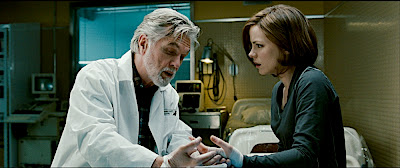


Like an old cop movie cliche, she's just about to resign and return home when she and her closest ally Doc (Tom Skerritt) along with a refreshingly well-adjusted war veteran pilot Delfy (Columbus Short) discover an especially gruesome crime scene in the middle of the unforgiving landscape. With no tracks, climbing gear, or trace of the weapon, the Marshal who is used to dealing with misdemeanors becomes embroiled in Antarctica's first homicide. And while she and Doc briefly discuss just sending the body off to the next stop to analyze, Carrie realizes she can't abandon the reason she became an officer.
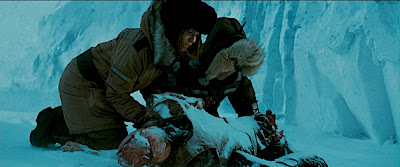


As one body grows into multiple murders, an unidentifiable killer welding an ice axe chases Carrie Stetko as the movie morphs from "C.S.I.: Antarctica" to Dead Calm meets "Friday the 13th on Ice." And although I was able to guess the murderer among the tiny main ensemble cast of Beckinsale, Short, Skerritt, Gabriel Macht (as a UN sent investigator) and a few other inhabitants, the ultimate a-ha moment is rushed in the last twenty minutes in a ludicrous, dissatisfying finale with a run of the mill motive and weak showdown.

For instead of playing it as a straight mystery or a spooky thriller with another nail-biting chase pitting Carrie against the freezing temperatures and the murderer, Whiteout suffers unevenly with its cinematic hybrid and may also have been plagued with the daunting task of trying to cram four graphic novels into one roughly two hour movie.


As such, Beckinsale's Carrie is the only character remotely fleshed out via the gritty flashback sequences that reveal her past and also given the partial bathroom setting and what took place offers you an immediate sense of whom the culprit will turn out to be in case you hadn't guessed in the opening act. Yet unfortunately she's never given a true opportunity to right the wrong of her past or the way she's been senselessly punishing herself for it since the Whiteout finale goes for a cop-out instead of a cop-on-the-case resolution.


However, this being said, she fares much better than her male counterparts like Skerritt and Macht who are essentially playing "types" yet admirably Short's charm and humor give his character the most life and onscreen joy. While overall, producer Joel Silver's film is surprisingly better than most critics would have you believe and it's a damn sight more watchable than Smilla's Sense of Snow, I couldn't help wishing they would've taken Whiteout's strong building blocks and turned it into what for a moment seemed like a twenty-first century icy version of Dead Calm.
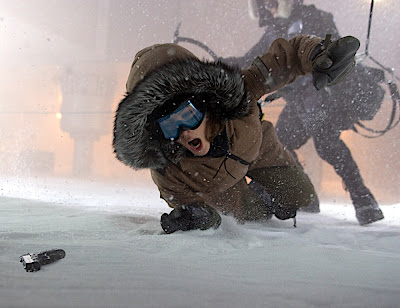


And as a a writer who can't simply trash a film without trying to figure out what went wrong and how to rectify it, my brain was put into overdrive especially since female heroes are few and far between in Hollywood and I desperately wanted Beckinsale's film to be the brainy woman's answer to the junk usually hurled our direction.
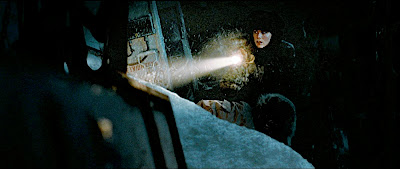


While I won't know precisely what the most crucial elements were without taking in the graphic novel, I felt that Whiteout could've been incredibly enhanced by possibly ditching the opening sequence to make the discovery of the plane far more surprising as well as giving our murderer a motive that's much more unique than a '60s style heist film from the plane's cold war era.
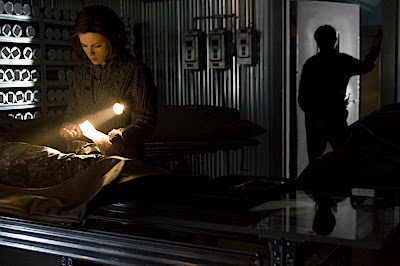


Likewise by inserting more characters and red herrings, the filmmakers could've cashed in on the ultimate atmosphere of claustrophobia when Carrie and a small handful of colleagues (one of whom is the villain) are stuck there for the winter. And again by encouraging the writers to view films of varying success levels like Blair Witch Project, Panic Room, P2, The Mist, and Dead Calm to see how to make the most of "group-think" and having characters confined as evidenced in producer Joel Silver's Die Hard series, I know it would've gone from a relative C+ to a much more frightening, realistic and psychologically engrossing work.


Although most reviewers have gone overboard in telling you to stay away as if the movie was on par with some of the true over-produced, silly with CGI works of the last year including Macht's beautiful bomb The Spirit, Watchmen, Quantum of Solace, and others, I'd still give it a cautious low recommendation. While it's definitely rental worthy for the gorgeous scenery also, it's also intriguing for writers to try and use the otherwise promise filled movie as a great creative exercise in analyzing just how it would've gone from an indecipherable blizzard to an intoxicating yet undeniably freaky frozen sensory feast.


Text ©2009, Film Intuition, LLC; All Rights Reserved. http://www.filmintuition.com
Unauthorized Reproduction or Publication Elsewhere is Strictly Prohibited.

3/24/2009

DVD Review: Cadillac Records (2008)


Now Available on DVD


Purchase the Incredible Soundtracks
(Regular & Deluxe Editions)


Delicious
Bookmark this on Delicious
submit to reddit
Print Page

Digg!


Although pop culture would tell you otherwise, rock 'n roll did not begin with Elvis Presley at Memphis, Tennessee’s Sun Records. Instead, rock had its origins in the blues and later rhythm and blues. And while arguably the first bona fide rock 'n roll star was none other than Chuck Berry—Berry’s story along with the other pioneers of rhythm and blues that led to rock 'n roll as we now know it today has basically been left in the dust.


While interviews with artists like Eric Clapton, the Rolling Stones, Bob Dylan and other musicians along with musical scholars will cite there early blues influences and a few years ago an entire PBS documentary was dedicated to the subject-- writer-director Darnell Martin said to change all that in a minor way with her stunning, underrated ensemble piece Cadillac Records.


Although admittedly, some of the facts have been blended together and some of the personalities have been left by the wayside to squeeze in what Martin explains was “the absolute truth” of the stories she wanted to tell “about how the blues became popular music, how it affected civil rights,” by whittling down her 150 page first draft to a feature-length movie running just 109 minutes, she achieves a wonderful success that works on two levels.


Firstly, she's made it one hell of a great film about the blues (which in reality is surely about the history of the American people) by calling attention to artists that have been long forgotten and secondly, like a cool walking musical encyclopedia, Martin earns in n honorary title as professor in making us want to not only seek out the recordings by these amazing artists but also learn more about them as human beings.


Purporting to tell the history, inception, and impact of Chicago's own Chess Records initially created by first-generation Polish immigrants Leonard and Phil Chess (although Phil is mostly absent from the film aside from a few scenes in which we infer he’s the “other white guy” next to Adrien Brody), Martin simultaneously weaves in the story of the artists who would join the label including Leonard Chess’s first great star, Muddy Waters (Jeffrey Wright).


In yet another phenomenal, chameleon-like performance by the great Jeffrey Wright -- the type of which we’re beginning to take for granted on—he tackles Muddy first as a sharecropper in Mississippi whose life was forever changed by a happy accident when his voice was recorded by two men from Fisk University who had initially set out see record the fault music of the late Robert Johnson. After they learned that Johnson had passed away, they were directed to Muddy’s porch and following an impromptu recording that gave the future “Hoochie Coochie Man” and “Mannish Boy” the first opportunity to hear the way he sounded on vinyl, he memorably noted he felt as though, “I’m meeting myself for the first time.”


It was with those determined and confident words that Muddy packed his guitar and headed north without looking over his shoulder to Chicago where he formed two important relationships. The first was with Geneva (Gabrielle Union) who would become his longtime love and the second was none other than Leonard Chess, with whom Muddy began making records, taking part in payola schemes, getting him as well as the rest of the Chess lineup of artists unprecedented air-play and treating them to shiny new Cadillacs sometimes without informing them that it was being taken out of their royalties.


Admittedly in the 1950s, both the friendship and relationship -- especially when money was involved -- between both white and black individuals was charged with complexity over whether or not the musician was being exploited and the idea that a white man may have been needed to be the front for the organization in order to lead to the era of Motown but Martin never makes any concrete judgments about her characters.

This is especially evident as other artists join the roster and Martin manages to interlace some double-standards and new thoughts coming from all involved—mostly in the form of Muddy’s greatest harmonica player and the seventeen year old hot-headed prodigy Little Walter (Columbus Short) and the fiery and proud Howlin’ Wolf (Eamonn Walker) who has extremely firm ideas about what we sense he felt was an evolved version of “slave” and “master.” Rounding out Martin’s ensemble piece, we’re also introduced to the terrific writer and current owner of Chess Records who has turned it into a museum, Mr. Willie Dixon (Cedric the Entertainer), and two of the most legendary acts—Chuck Berry (Mos Def) and Etta James (Beyonce Knowles).


Although it was Muddy that paved the way, eventually it was Berry’s blend of country and rockabilly helped destroy racial barriers playing sold out gigs to white and black listeners alike along with appearing on television. Yet, unfortunately while his song “Sweet Little Sixteen” was blatantly stolen by The Beach Boys for the background of “Surfin’ USA,” and his career was cut short when he was imprisoned for driving a white female minor across state lines (making his dalliances with young women not that much different than Jerry Lee Lewis and Elvis Presley), soon a savior managed to enter the recording studio at precisely the right moment in the form of the exquisite yet contradictorily volcanic Ms. Etta James (Knowles).


Despite her deceptively sweet appearance, James was a woman who as Leonard described “lived the blues” instead of just singing about them. With a horrific addiction to heroin and countless family problems including a failure to get her rumored father Minnesota Fats to acknowledge his paternity, James as played by Knowles is walking heartbreak. Anyone who thought that the singer’s vast improvement as an actress in Dreamgirls was a fluke will be immediately taken aback by her dynamic portrayal in this film.


In the part written exclusively for the musician by Ms. Martin and amazingly shooting all of her scenes in just six days, Knowles is able to effortlessly capture James’ tough-talking demeanor, her more vulnerable side opposite Oscar winner Adrien Brody (in a few scenes that really send sparks flying), and most importantly bring the house down in recording session performances that will send shivers down your spine as she sings not just “At Last,” but also “Once in a Lifetime,” and “I’d Rather Go Blind.”


While indeed there is some accurate criticisms about liberty being taken with the facts, Martin surpasses expectations by avoiding the trappings of strict biopic and moving into a far more daunting challenge of bringing to life several figures at the same time. To tell you just the Leonard Chess story, or just the Muddy Waters story, or just the Chuck Berry story, or just the Etta James story wouldn't have captured the real story namely that of the blues which is what provided the soundtrack of the American experience.


Over the past few years, we've been inundated with biopics and while some of them have been exceptional such as James Mangold’s Walk the Line-- the decision to move away from that tried and true paradigm and instead embrace the idea of presenting us with an authentic sense of time and place is what sets Cadillac Records apart.


In the incredibly worthwhile roughly twenty-seven minute making-of-featurette “Playing Chess,” the filmmaker accurately describes the approach in the work of the cast as “everybody’s playing a different instrument.” Effectively managing to make the most of their limited budget by ensuring the production and costumer designers always knew what was going to be seen by the camera at any given moment to avoid unnecessary expenses, the largely female production team discuss the methods they used in augmenting the story from using both color and texture to truly “sell the period.”

Employing a large amount of blues, greens, purples and browns near the opening—Martin reveals in the design featurette “Once Upon a Blues,” that she was extremely careful about avoiding the color red until the moment Chuck Berry and rock ‘n roll are officially introduced. In addition to providing deleted scenes, the filmmaker also takes part in a feature-length commentary track that would be of extreme interest to music buffs as Martin’s knowledge of the characters, Chess records, music, and the time period is extraordinarily detailed, which is evident from the start as she helps clear the air on factual items that didn’t make it into the movie.


Unfortunately overlooked in a crowded December filled with a large amount of Oscar bait pictures making their way daily into theatres across the states, luckily Sony Pictures Home Entertainment’s underrated gem is now available in both DVD and Blu-ray high definition where the sound on even the DVD alone manage to heighten the sound of James’ “At Last” or Waters’ “Mannish Boy” to concert level quality despite your sound system setup.

Download the Standard or Deluxe
Soundtrack From iTunes
(Click the Icons Below)


Download "The Best of Chess"
(The Original Recordings of the Songs
Heard in the Film Via the iTunes Album Icon Below)